
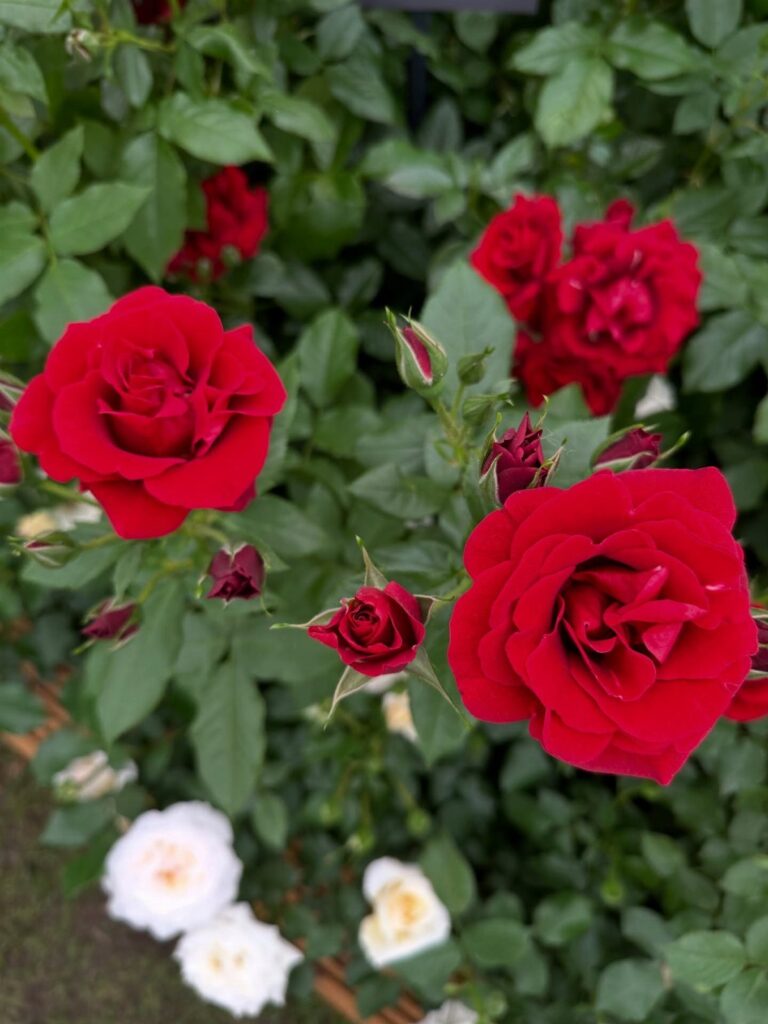
These bushes run from native sumacs you plant and forget to tropical powder puffs that spend winter indoors, with most falling in the zone renters and first-home owners can handle in a weekend.
The single factor that sorts them is not color but season: whether you need impact in late winter, spring, or high summer, since a yard full of azaleas delivers nothing once their window passes.
Check the hardiness zone on each label before you buy; the spread runs from quince that handle northern winters to hibiscus that stay south, and guessing wastes a full growing season.
1. Azalea
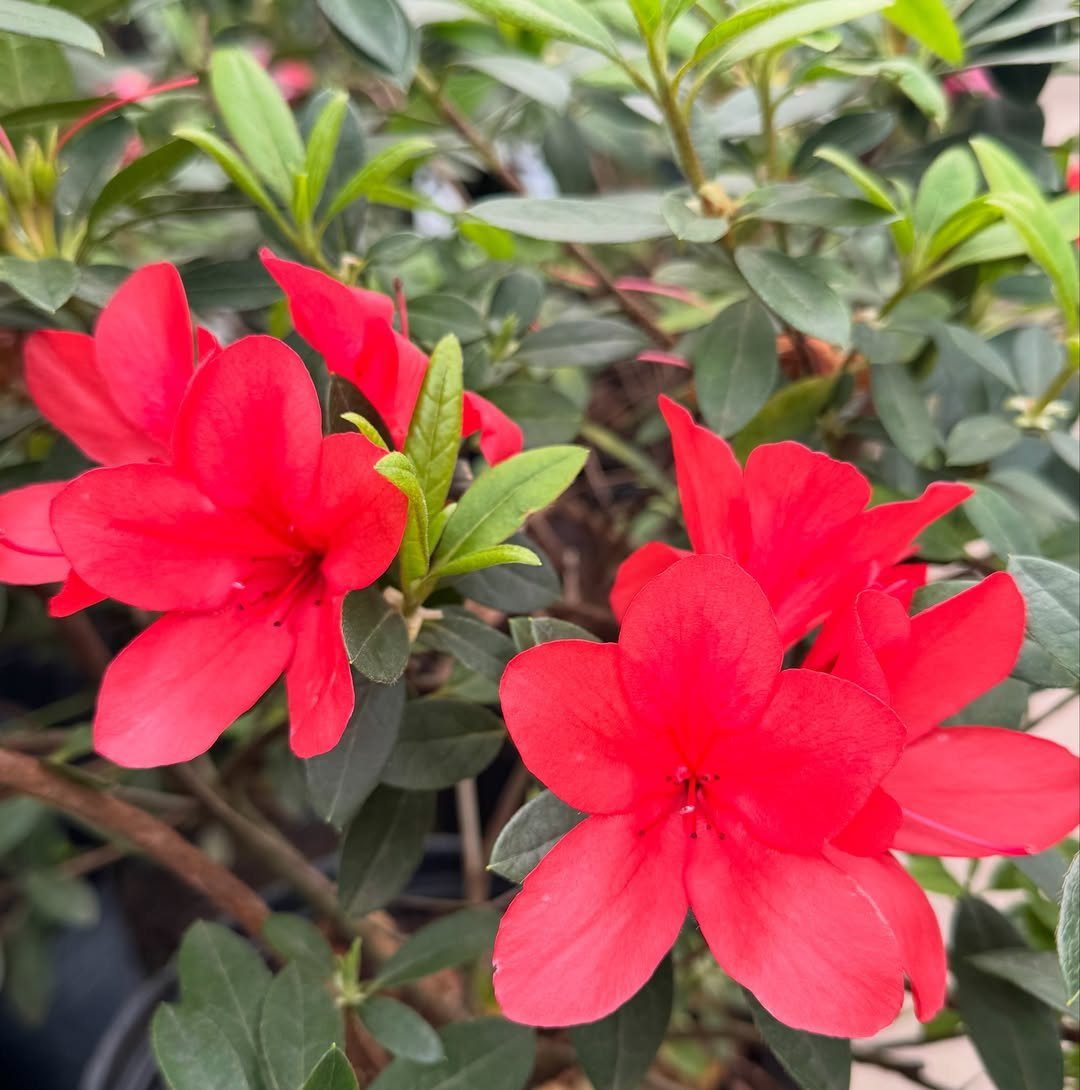
Azalea shrubs deliver some of the densest color you can get from a flowering bush, with each bloom clustering so thickly the foliage nearly disappears.
I would plant this where you walk past it daily; the impact rewards close-up viewing and the spring show lasts longer than most shrubs at this price point.
Give it partial shade and acidic soil, which in practice means amending with peat or pine bark if your ground leans alkaline. Water consistently at first, then it largely handles itself.
Azalea fits renters who want a weekend upgrade that reads as permanent landscaping, since a mature shrub in a pot moves with you.
But reblooming types, including the hardier evergreen Autumn Ruby that grows to only 2½ feet, can continue flowering off and on all summer into fall, ranking them among the best shrubs for the front of the house.
— Bob Vila
2. Hibiscus
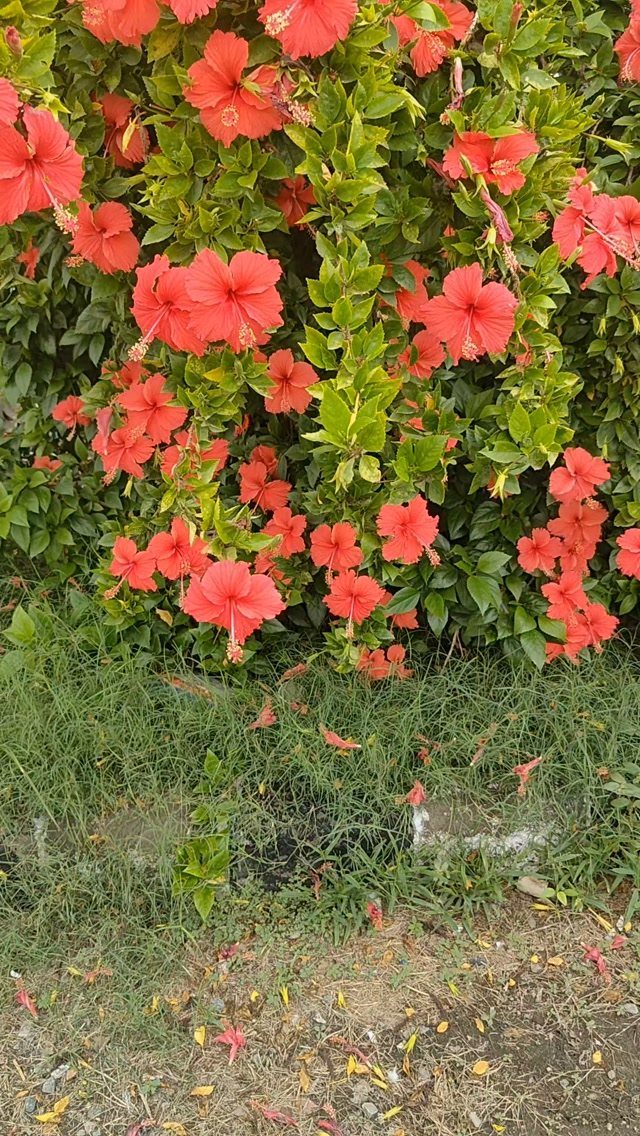
A hibiscus bush asks for heat and returns oversized blooms that read tropical even in a standard suburban yard.
I like the shrub form over the tree standard for first-home owners; it fills faster and bounces back from hard pruning if you misjudge the shape.
Plant after your last frost date in full sun, and expect daily flowers that each last a single day, replaced by the next morning.
The watering is the catch: hibiscus wilts dramatically and recovers, but repeated stress weakens the root system. Container-grown specimens need more attention than ground-planted ones.
In zones 9-11, this behaves as a perennial; farther north, treat it as an annual or overwinter indoors.
3. Bottlebrush
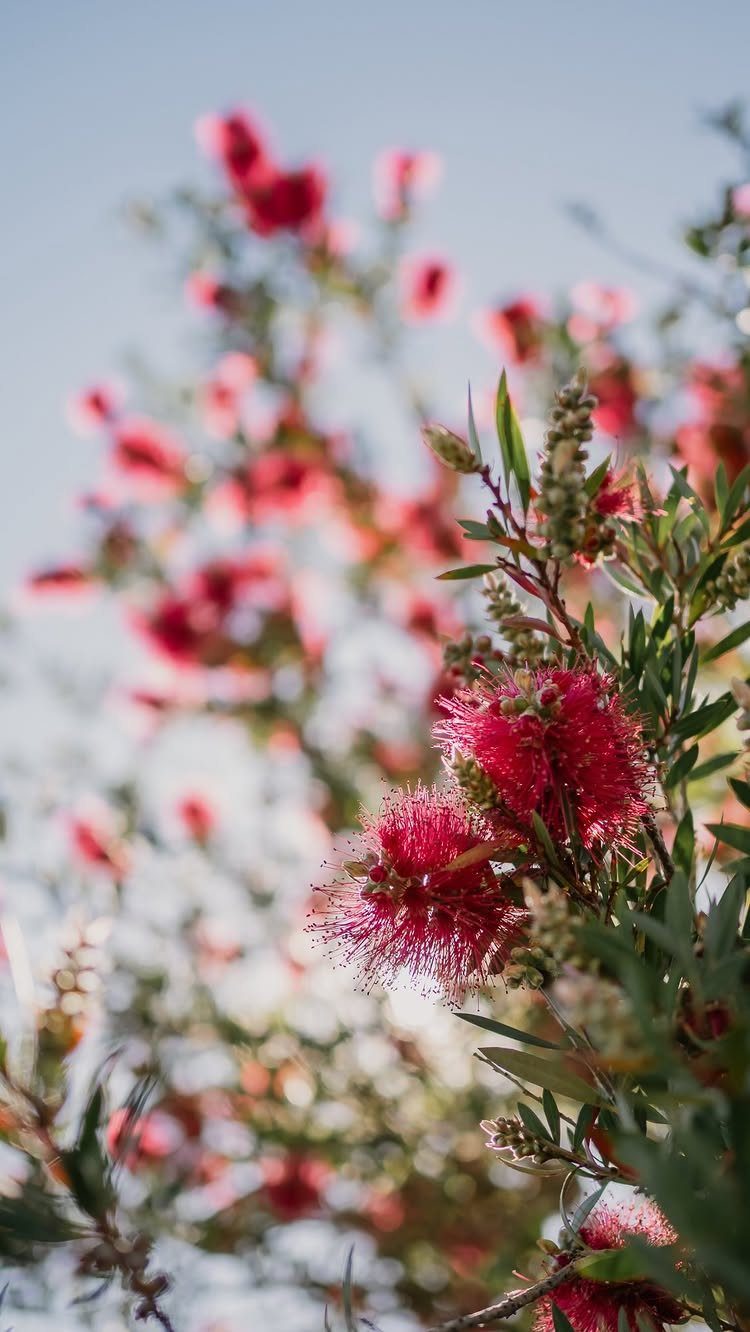
The flowers on this shrub look exactly like the cleaning tool, cylindrical and bristled with hundreds of stamens in true red.
That structure makes them a magnet for hummingbirds, which I consider the best return on a flowering shrub if you have a window to watch from.
Bottlebrush tolerates poor soil and drought once established, a rare combination for something this showy.
I would avoid heavy clay unless you raise the root zone or amend generously; wet feet kills more of these than dry spells. Prune after flowering to keep density, since blooms form on old wood.
Hardiness runs zone 8-11, so northern gardeners should plan for container overwintering or accept it as a summer annual.
4. Aphrodite Sweetshrub
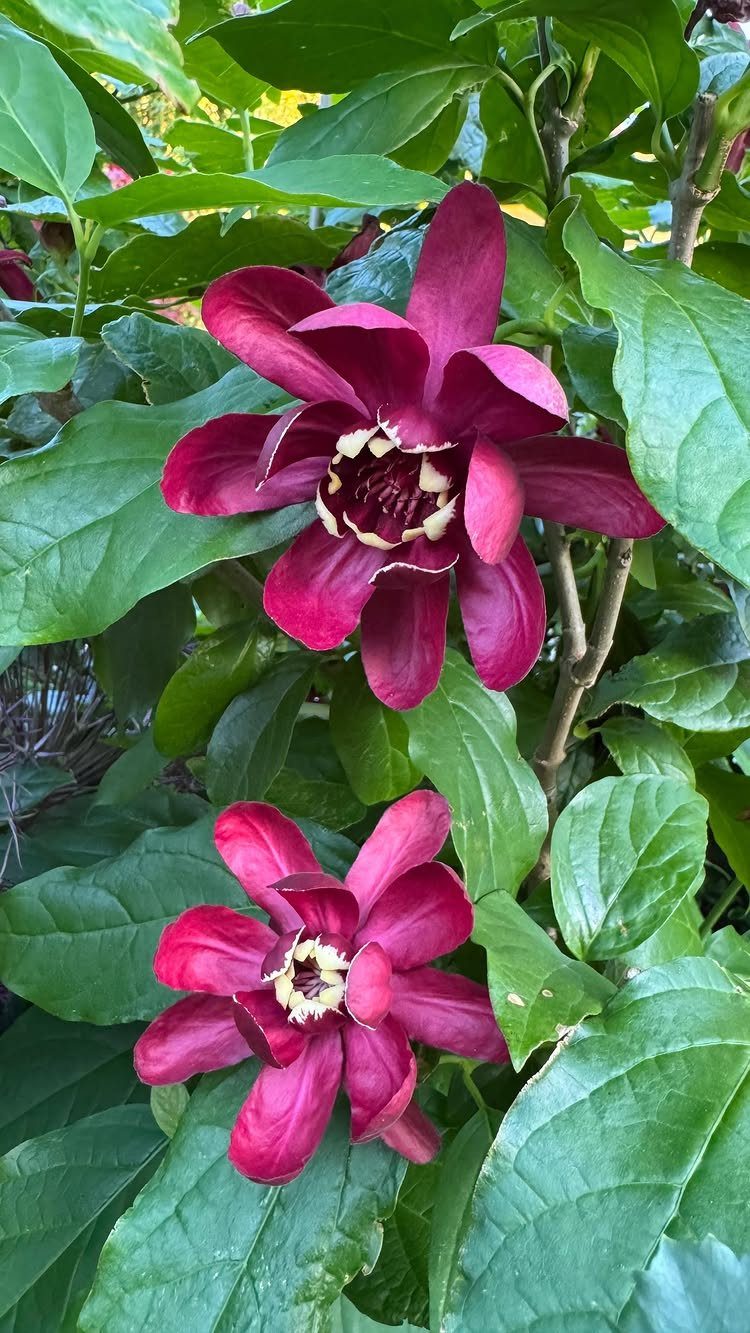
This is the shrub I would choose for a path or doorway, not for its look alone but for the scent: ripe melon and banana, strongest in morning sun.
The flowers are small, dark red, and tucked among leaves, so the photo rewards a close look that casual passersby might miss.
Aphrodite stays compact and handles shade better than most red-flowering options, which opens up placement under eaves or between houses where direct sun is scarce.
I find the fragrance variable by plant, so if smell matters, buy in bloom and verify.
Fall color adds a second season of interest in yellow tones before leaf drop.
5. Butterfly Bush
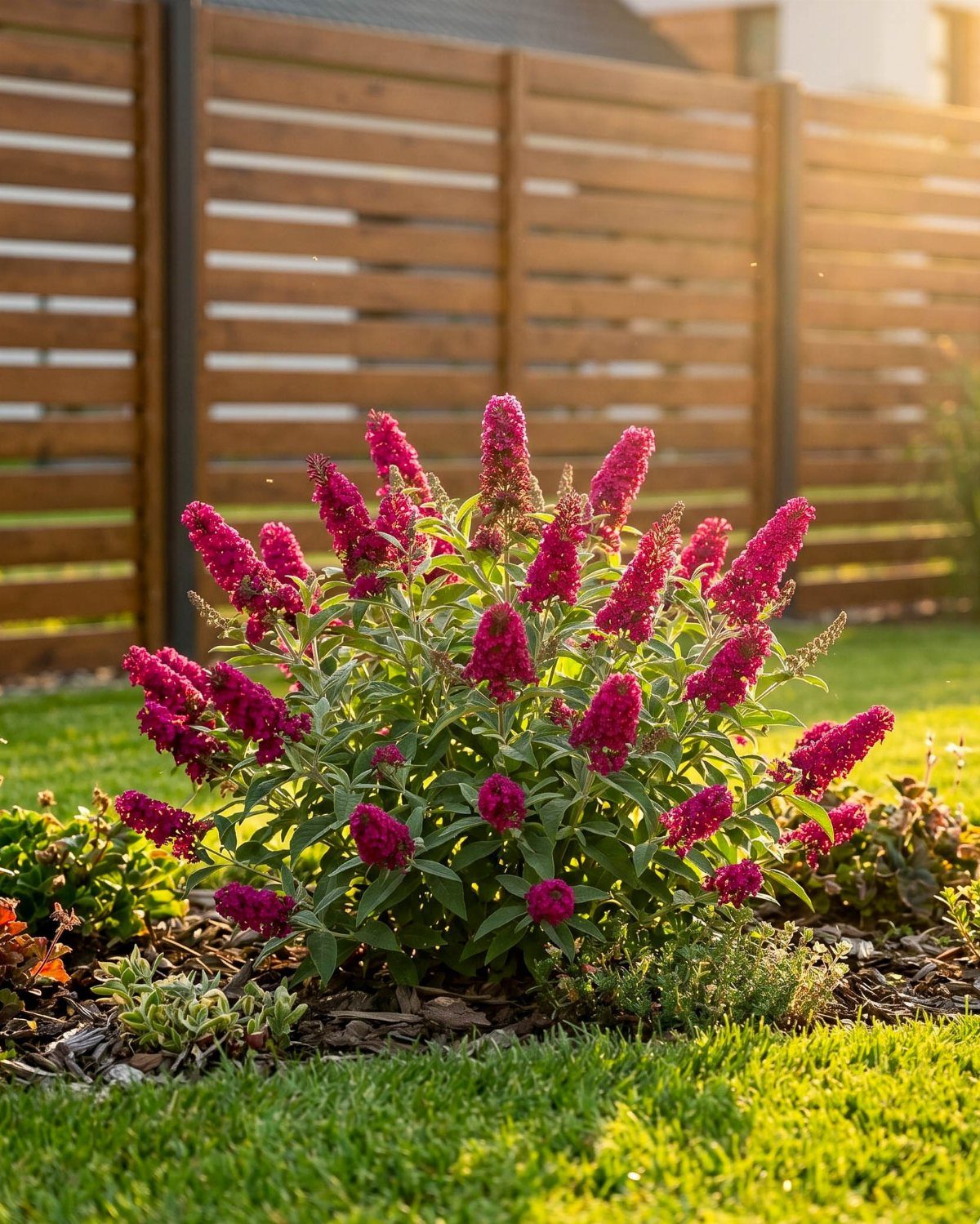
Reddish-magenta cones on this shrub read as red from a distance and function as a pollinator hub up close.
I would plant it where you can ignore the foliage, which turns coarse and sparse after bloom; the flowers carry the whole show from July to frost.
Deadheading extends flowering and prevents self-seeding, since some states list butterfly bush as invasive.
The dwarf varieties now common, under 5 feet, suit rental beds where you do not want a plant that claims the whole space. Full sun and any well-drained soil; this is genuinely low-input once roots take hold.
Cut back hard in late winter for the best shape, nearly to the ground in colder zones.
6. Red Crepe Myrtle
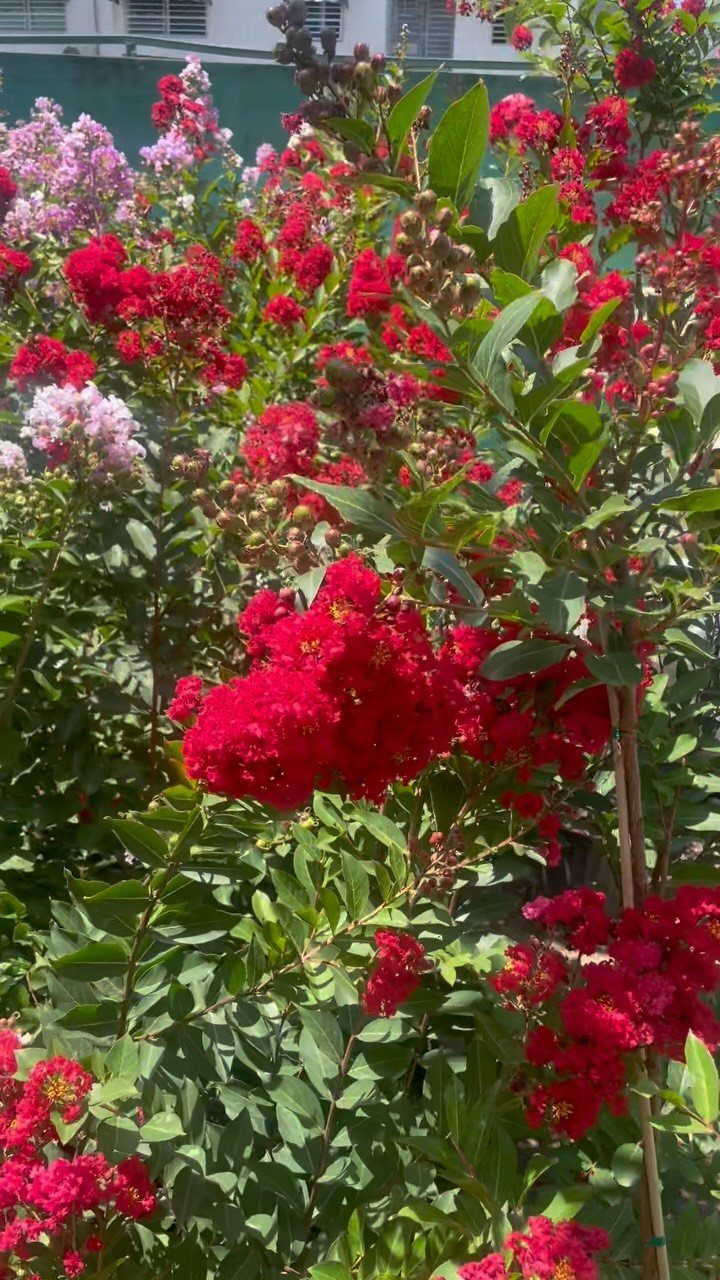
Crepe myrtle earns its place with bark that peels in winter and ruffled summer blooms that arrive when azaleas have finished.
The red varieties run slightly smaller than the pinks and whites, which I prefer for foundation planting where scale matters.
Plant in full sun; shade produces mildew and fewer flowers. I would leave lower branches and let the trunk slowly expose itself, rather than the severe "crepe murder" topping still common in parking lots.
Check the label; dwarf selections exist and suit most home lots better than the full-size shrub form.
7. Scarlet Sage
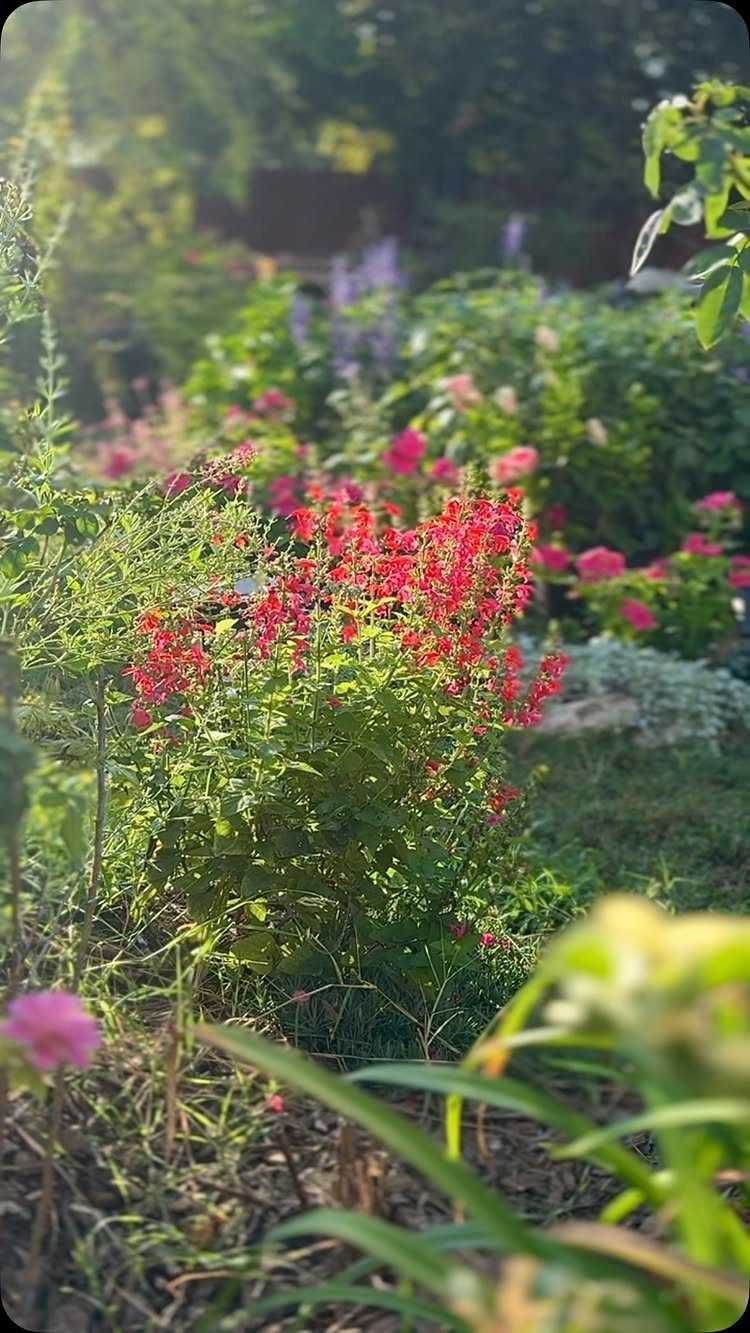
I would use this as the filler between slower shrubs; it establishes fast and dies back clean in winter where frost hits.
Full sun and lean soil suit it better than rich beds; too much nitrogen produces leaves and fewer flowers. Once roots take hold, rainfall handles most of the summer.
The annual form is what most gardeners grow north of zone 8, so plan on replanting or let it self-sow in open ground.
8. Carolina Allspice
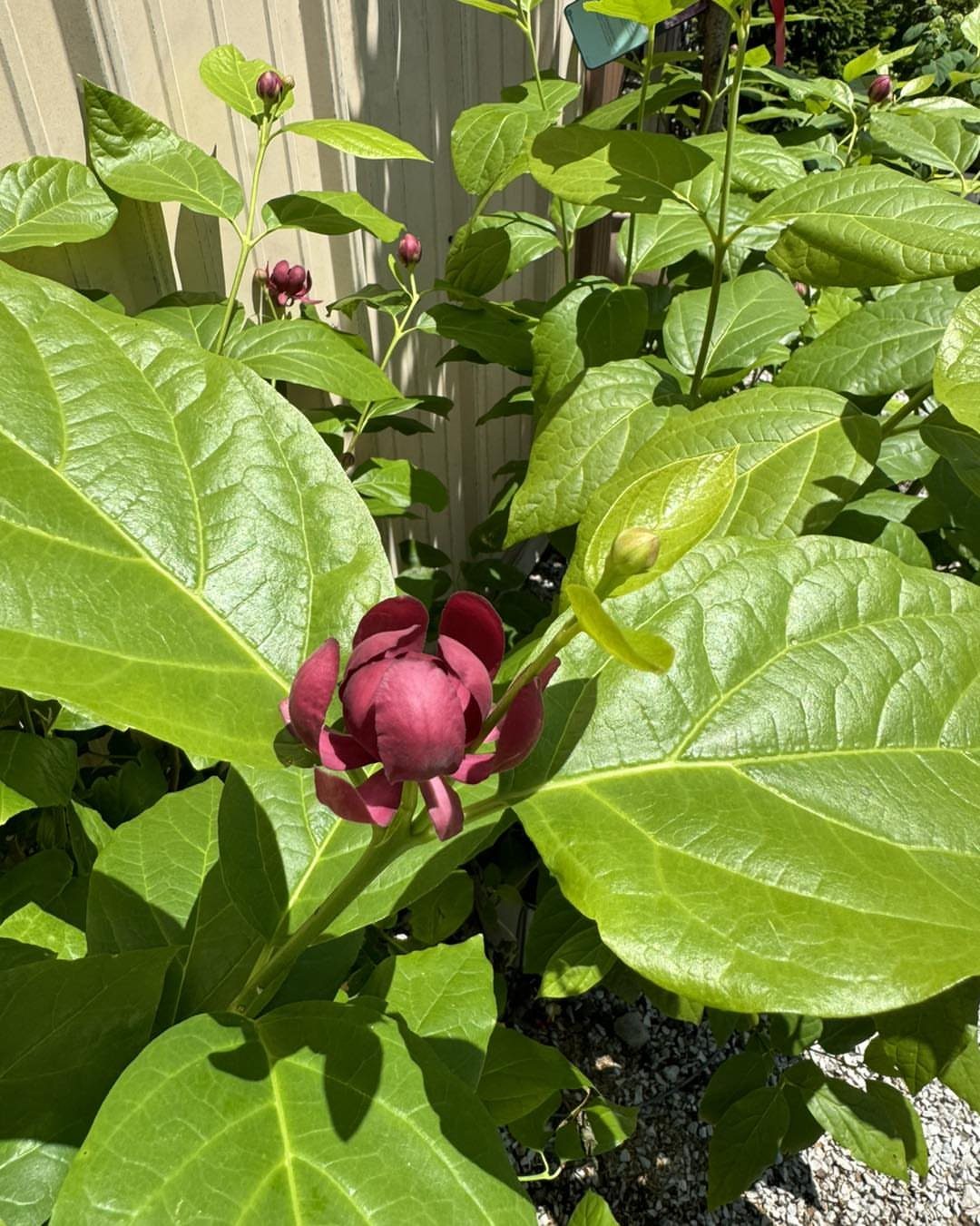
Carolina Allspice earns its keep with flowers you smell before you spot, and a rounded habit that needs little shaping from the gardener.
I would place this near a screen door or window that opens; the fragrance carries on humid air.
It handles shade that would dull most red bloomers, and the maroon flowers hold for weeks against those large leaves. Soil can be average to poor; this is a native that grew here before anyone amended the ground.
Fall foliage turns yellow, a brief second act before winter bareness.
9. Rhododendron
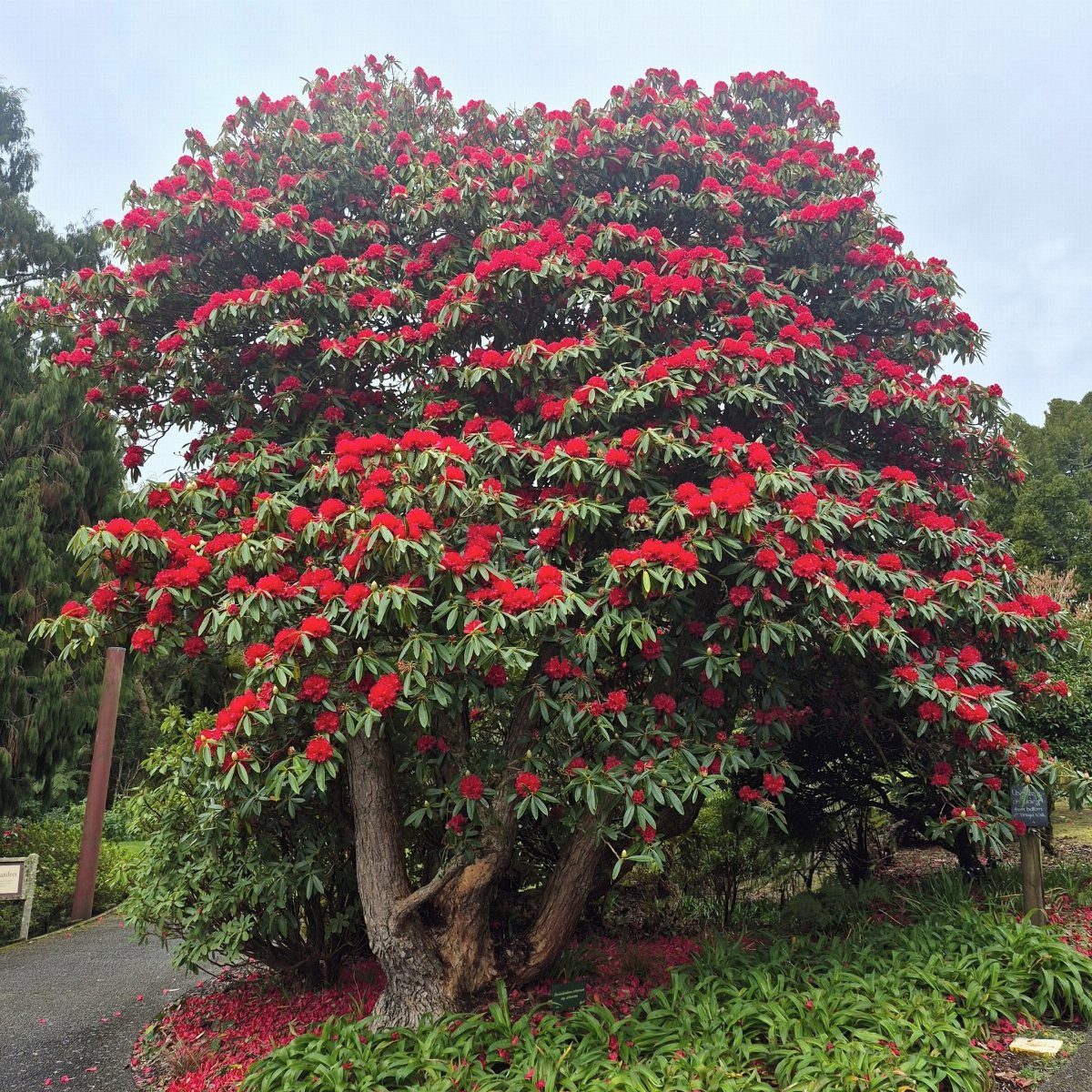
A mature rhododendron in full bloom carries real weight in a garden, the kind of presence that makes a gravel path feel planned rather than utilitarian.
I would site this where scale matters; a single large specimen anchors a corner better than 3 small shrubs trying to do the same job.
Acidic soil and filtered light are the requirements, which means pine-neighbor plantings or deliberate amendment with sulfur. Mulch to keep roots cool; summer drought stress shows up the following spring in fewer buds.
Hardiness varies widely by variety, so match the label to your zone and winter lows.
10. Climbing Blaze Red Roses
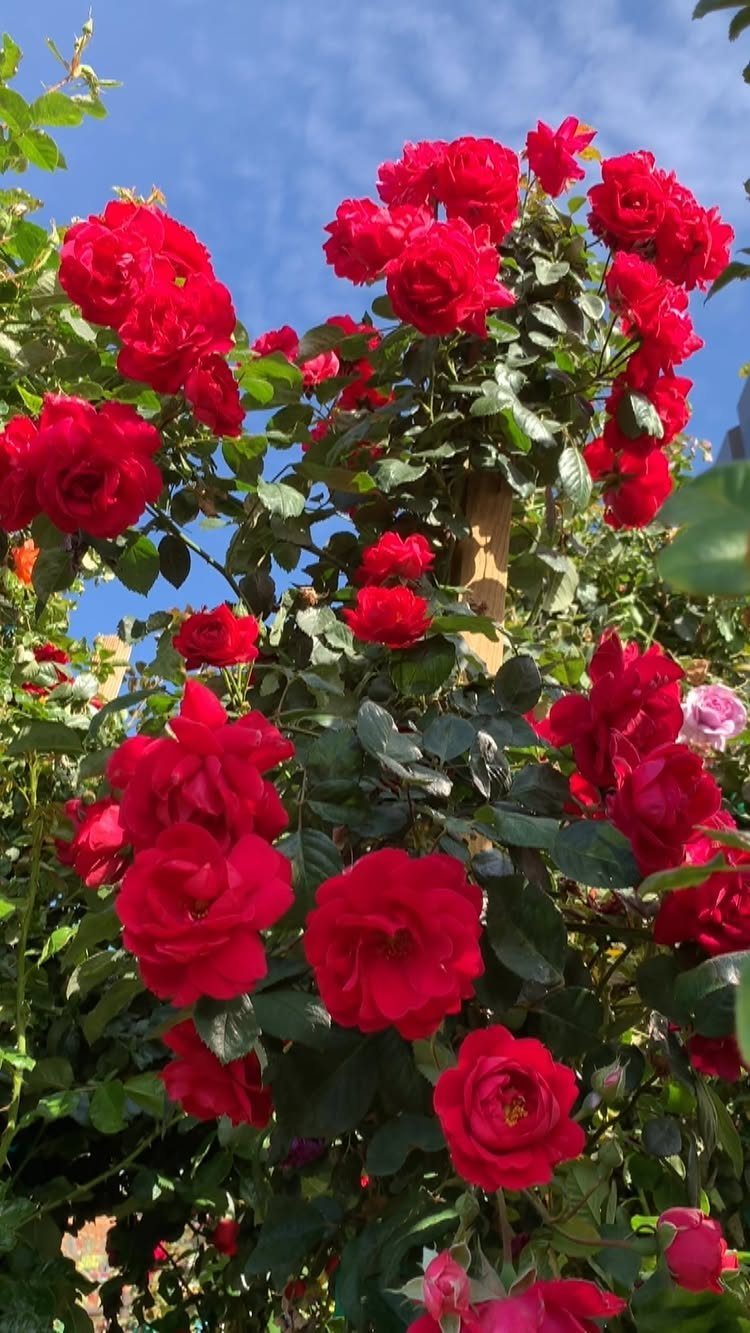
Blaze climbs with a vigor that needs structure from the start, wooden stakes or a trellis set before the roots take hold.
I would train the canes horizontally at first; that angle forces more lateral growth and the blooms cluster heavier.
The color runs true scarlet, a clarity that holds even in midday sun when paler reds wash out. Prune in late winter, removing oldest canes at the base to keep the base open and disease-resistant.
This is a repeat bloomer, so you get color from late spring through fall; the foliage stays respectable through summer if black spot is kept in check.
11. Weigela
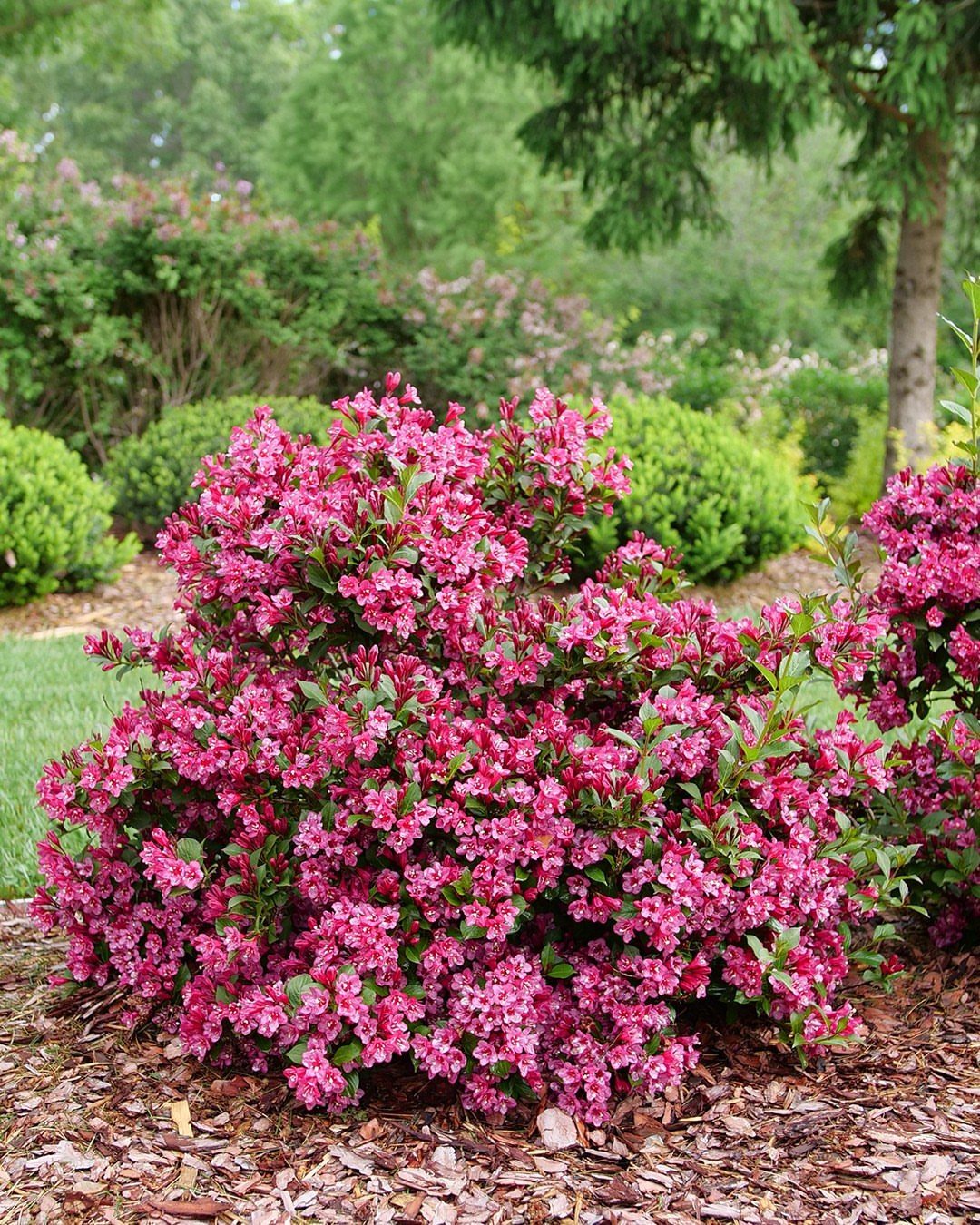
Weigela packs its flowers along arching stems so densely the leaves nearly disappear, a rounded mound of color that needs no deadheading to continue.
I would choose this for a rental bed or first border; it tolerates hard pruning if you misjudge the space, and reblooming varieties now extend the season into late summer.
Sun produces the best color; shade shifts the magenta toward pink and reduces density. Most selections run medium-tall, so check the label against your window heights before you buy.
Old wood flowers first, new wood follows; prune after the spring show if shaping is needed.
12. Glowing Embers Hydrangea Shrub
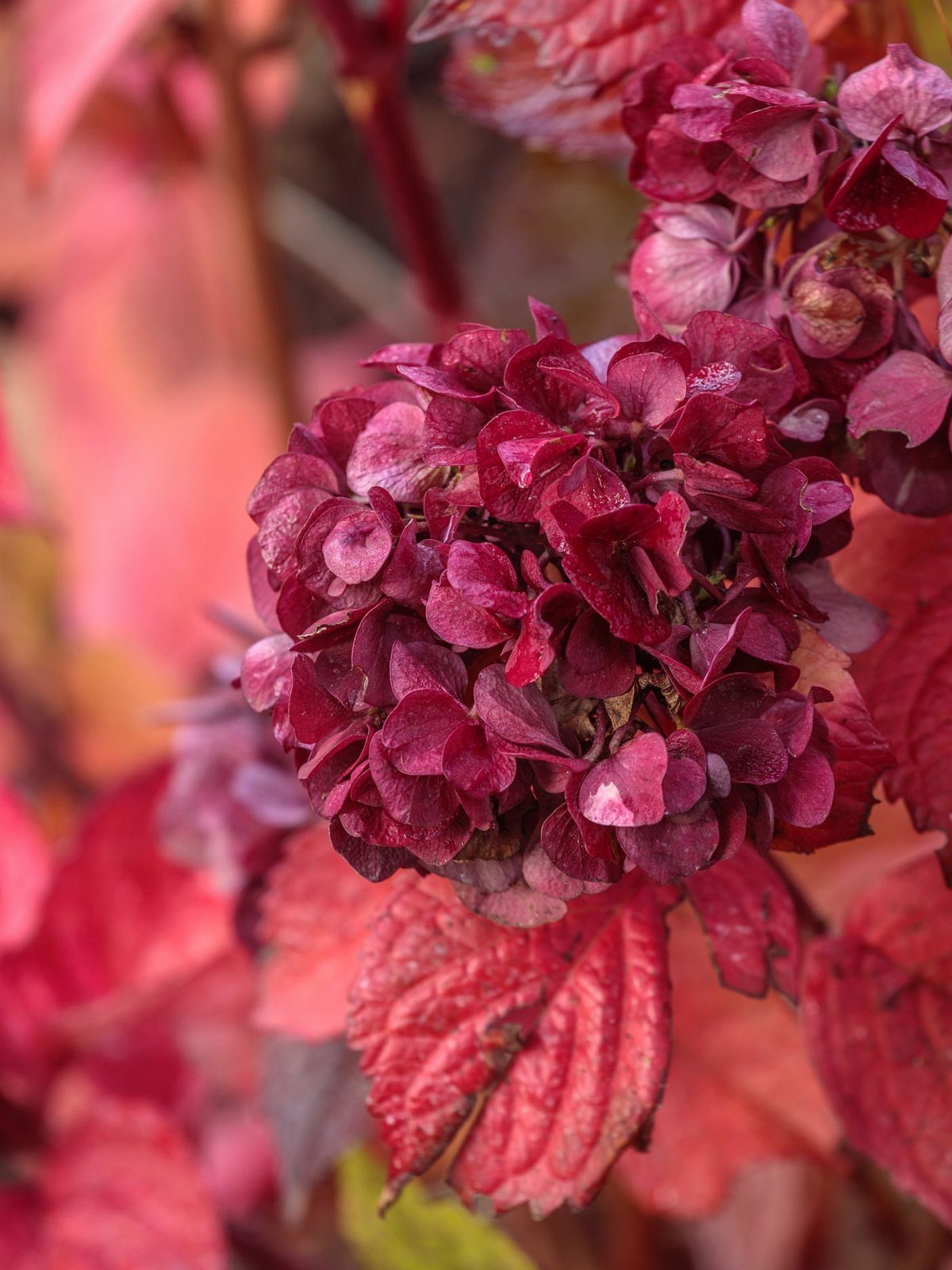
Glowing Embers opens brick-red and ages toward deeper tones, the kind of color shift that keeps a shrub interesting up close through autumn.
I would plant this where the afternoon backlight hits; the aged flowers turn almost translucent against low sun.
Hydrangea shrubs need consistent moisture, a real difference from the drought-tolerant options on this list. Morning sun and afternoon shade prevent wilting in summer; leaf scorch is the penalty for too much exposure.
Flower color shifts with soil pH, but this selection holds red better than most; aluminum sulfate is not needed to keep the tone.
13. Flowering Quince
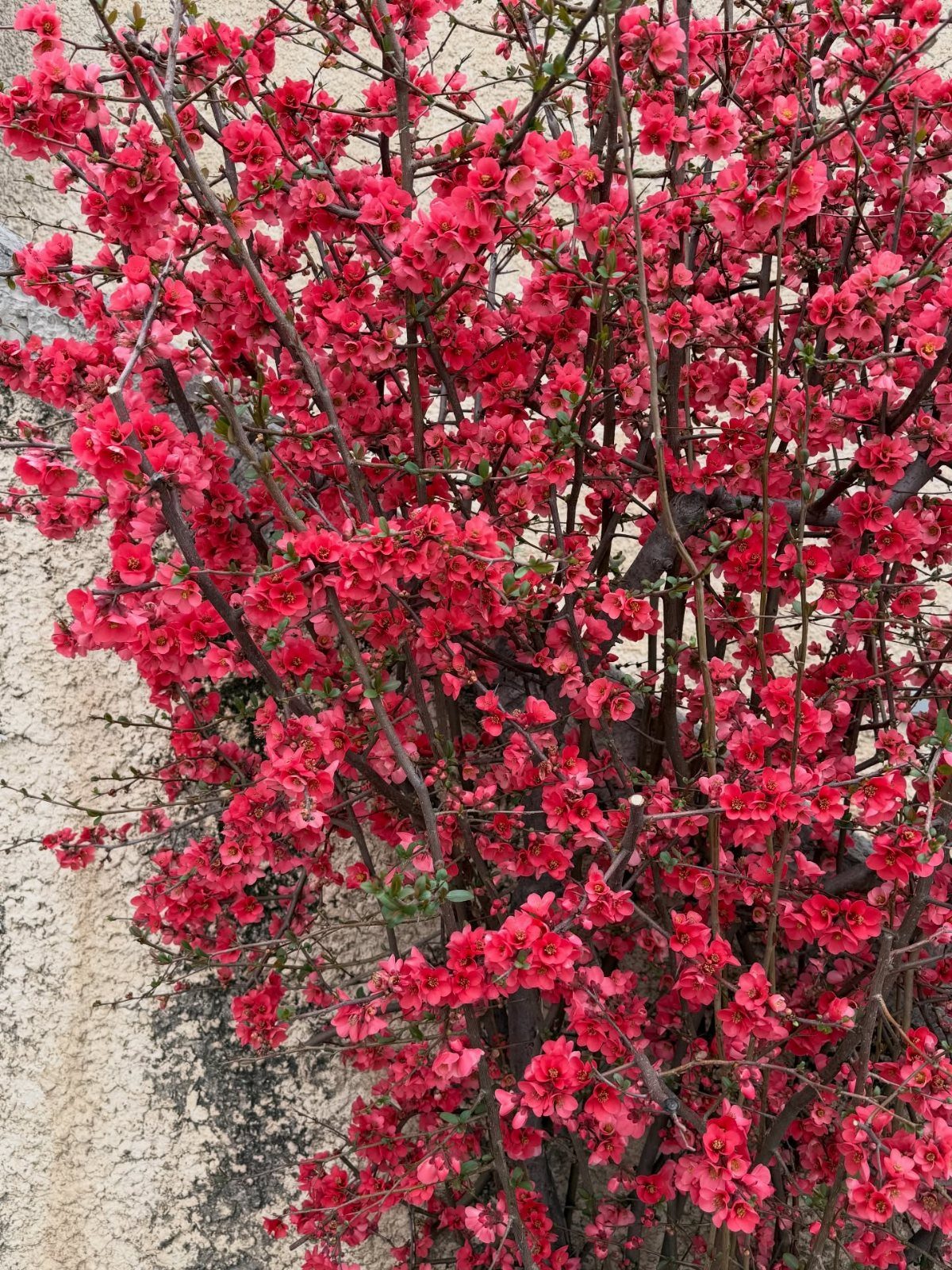
Bare branches in late winter carry these ruffled red blooms weeks before anything else opens, a shock of color when the yard still reads brown.
I would plant this where you see it from a kitchen window; the early timing counts for more than the flower form.
The thorns are real, so site it back from paths and pet traffic.
Cut back after blooming to keep it tidy, because the buds for next spring already sit on this year’s stems. Fruit follows the blooms, tart and usable if you are inclined.
Hardy to zone 5, this shrugs off cold that would kill tender alternatives.
14. Staghorn Sumac
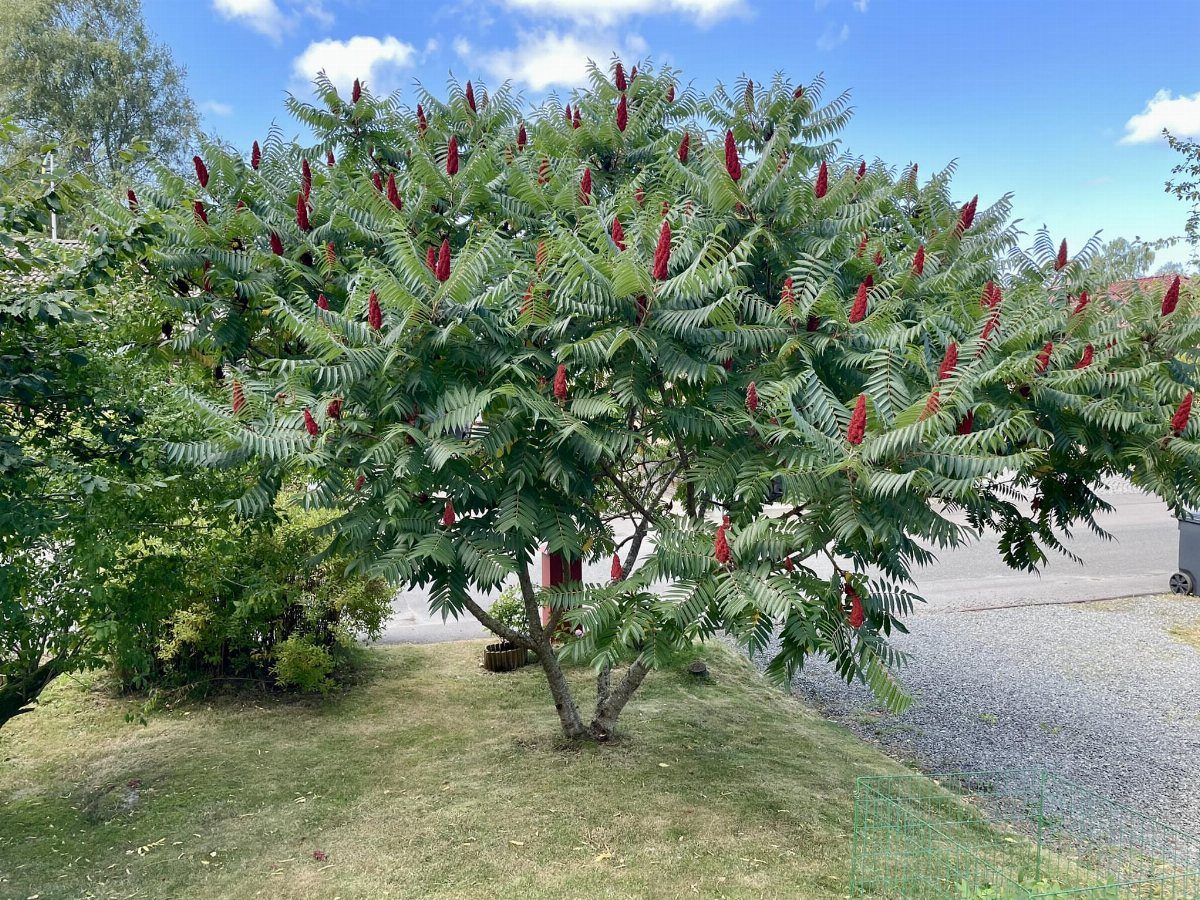
Velvety red fruit cones rise above feathery compound leaves in late summer, a texture pairing that reads exotic despite this being a native from Quebec to Georgia.
I would use this at the back of a border or to screen a fence line; it spreads by runners and needs room to colonies.
The fall color runs brilliant orange-red, a second act that lasts until hard frost.
Birds eat the seeds in winter when other food is scarce. This is not the poison sumac of swamp edges; the red cone shape distinguishes them clearly.
15. Red Camellia Shrub
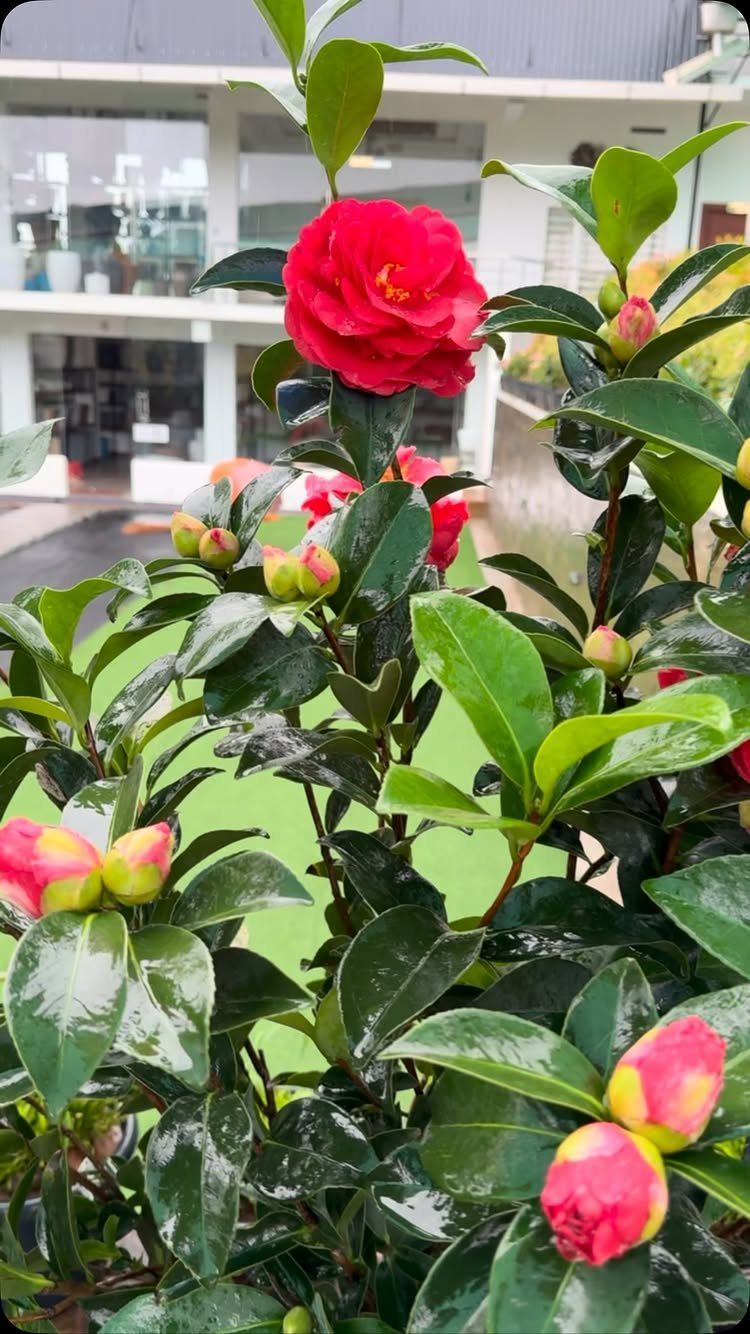
Glossy evergreen leaves and waxy red blooms in late winter carry this shrub through the season when most of the yard reads bare.
I would plant this where the flowers catch morning light against dark foliage; the contrast does the work.
Morning sun and afternoon shade prevent bud drop, the common failure in hot climates. Acidic soil and steady moisture matter more than rich feeding; a thick mulch of pine straw handles both needs.
Hardiness runs zone 7-9, with some varieties tolerating zone 6 in sheltered spots. Buds form in fall, so avoid pruning after August.
16. Red Powder Puff Bush
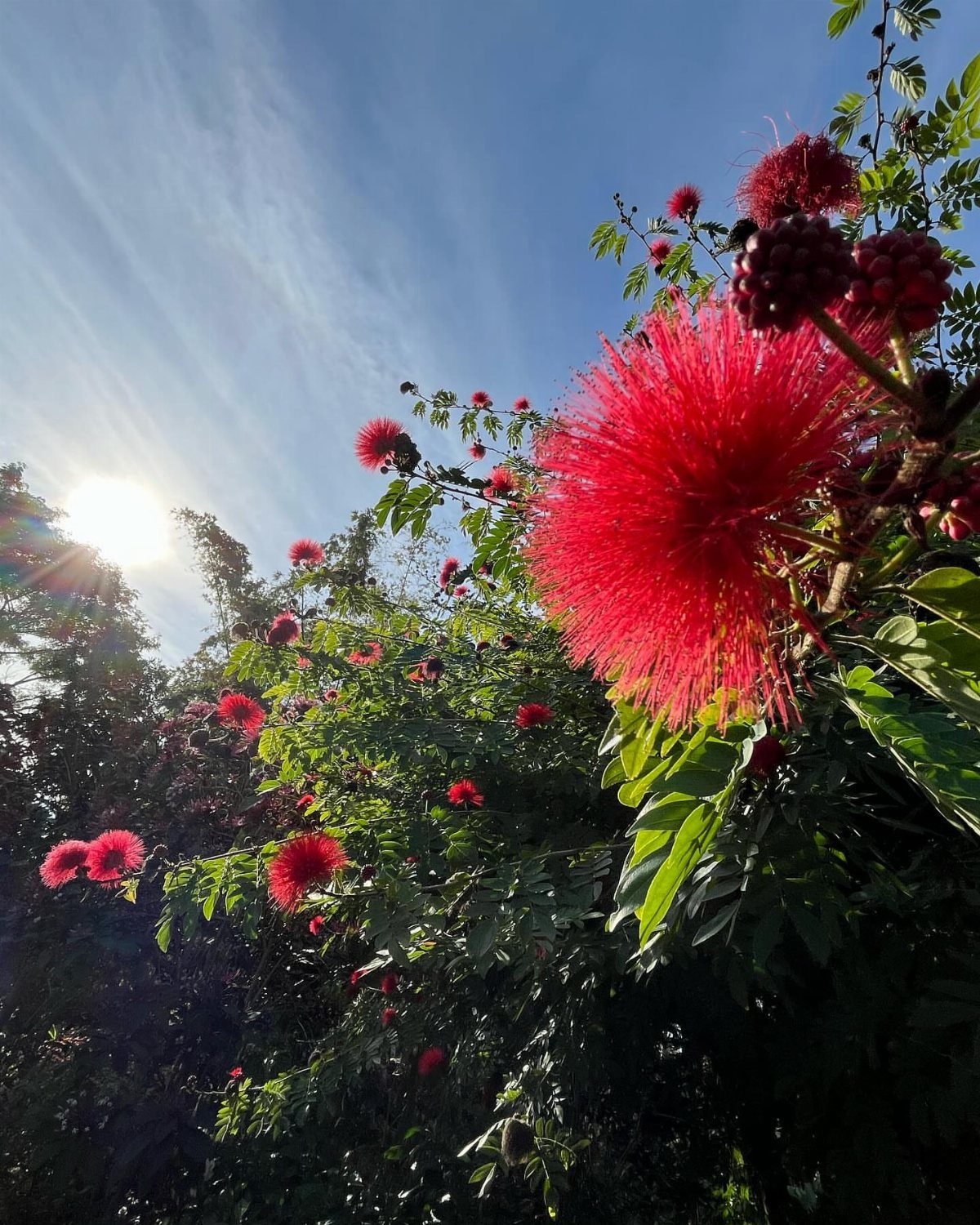
Fuzzy red spheres the size of golf balls cover this shrub in cycles through the warm months, each bloom lasting a few days before the next wave replaces it.
I would grow this in a container that moves indoors for anyone north of zone 9; the show is worth the trouble.
Full sun produces the heaviest flowering, and the fine-textured leaves handle humidity without mildew. Trim after each round of flowers to keep it full; the next buds push out on fresh growth.
Hummingbirds work the flowers closely. The tropical look is the tradeoff; this needs protection once nights drop below freezing and will not survive a hard freeze unaided.
Choosing the Right Bushes
Match the mature spread to the space you actually have before you buy. A butterfly bush left alone reaches five feet in every direction, and pruning to fit is work you sign up for at planting.
Walk your site at morning and afternoon to catch where sunlight falls; the red-flowering options split cleanly between full-sun species and those that handle shade, and guessing wastes a season.
Native or adaptive plants need less intervention once roots take hold, which matters on a weekend timeline with no budget for replacement.
I would check state extension lists for what already grows locally; a plant proven to your heat, humidity, and soil chemistry asks less of you than one bred for conditions three zones away.
Planting and Caring Tips
Spring and fall are the planting windows that give roots time to establish before stress hits.
Summer planting in hot climates means hand-watering through weeks of peak heat, and winter cold on fresh roots risks losses you could avoid by waiting.
I would dig the hole, fill it with water, and watch how fast it sinks; standing water after an hour means raising the bed or choosing a different spot.
Most of these shrubs need consistent moisture only through the first growing season; after that, rainfall handles the work in normal years.
Fertilizer is rarely the fix for poor flowering. Too much nitrogen produces leafy growth at the expense of blooms, and a soil test runs cheaper than a bag of product you do not need.
Maintenance and Troubleshooting
Weeding matters most while shrubs are still filling out and need every bit of water and light they can get.
Bare soil around a young plant loses moisture fast and invites competition the roots are not ready to handle. I lay mulch after watering, keeping it back from the trunk itself to avoid rot.
Pruning serves different purposes by species. The entry for each shrub above notes which, and I would mark your calendar when you plant rather than trust memory.
Dead or diseased wood comes out whenever you spot it.
Clean cuts at a slight angle, just above a node, heal faster and leave less entry for problems. Disinfect blades between plants if you cut anything that looks suspicious.
Frequently Asked Questions
What bush has red flowers?
Azalea, hibiscus, bottlebrush, and weigela all carry true red blooms, each with a different season and habit.
Azalea packs the densest spring color, while hibiscus runs tropical with daily flowers that each last one day. Bottlebrush draws hummingbirds with cylindrical red spikes, and weigela arches its stems under a heavy load of magenta-red clusters.
What is the prettiest flowering bush?
Prettiest depends on what you value, though I would point to hibiscus for sheer bloom size and azalea for density of color.
A hibiscus bloom reads tropical even in a standard yard, while a mature azalea in spring can bury its foliage entirely under bloom. For close viewing, Aphrodite Sweetshrub adds ripe melon fragrance that the photo cannot capture.
What are some examples of red-colored shrubs?
Red Crepe Myrtle, bottlebrush, and Red Powder Puff Bush all show clear red rather than pink or magenta.
Red Crepe Myrtle stays more compact than the pink and white varieties, which makes it easier to keep in scale along a foundation or a narrow bed.
Bottlebrush earns its name with cylindrical blooms bristled in true red stamens, and Red Powder Puff covers itself in fuzzy red spheres through the warm months.





