
These ideas run from a trellis you build in an afternoon with no budget to a natural swimming pool garden that needs professional plumbing and a long-term plan.
The one that fits your yard is the one that matches how much of your own labor you can put in and whether you need to take it with you when you leave.
The black plastic crates lined with burlap in the vegetable garden cost next to nothing and move with you; the dry-stacked stone wall on a slope is heavy work that stays put.
1. Outdoor Living Room Patio
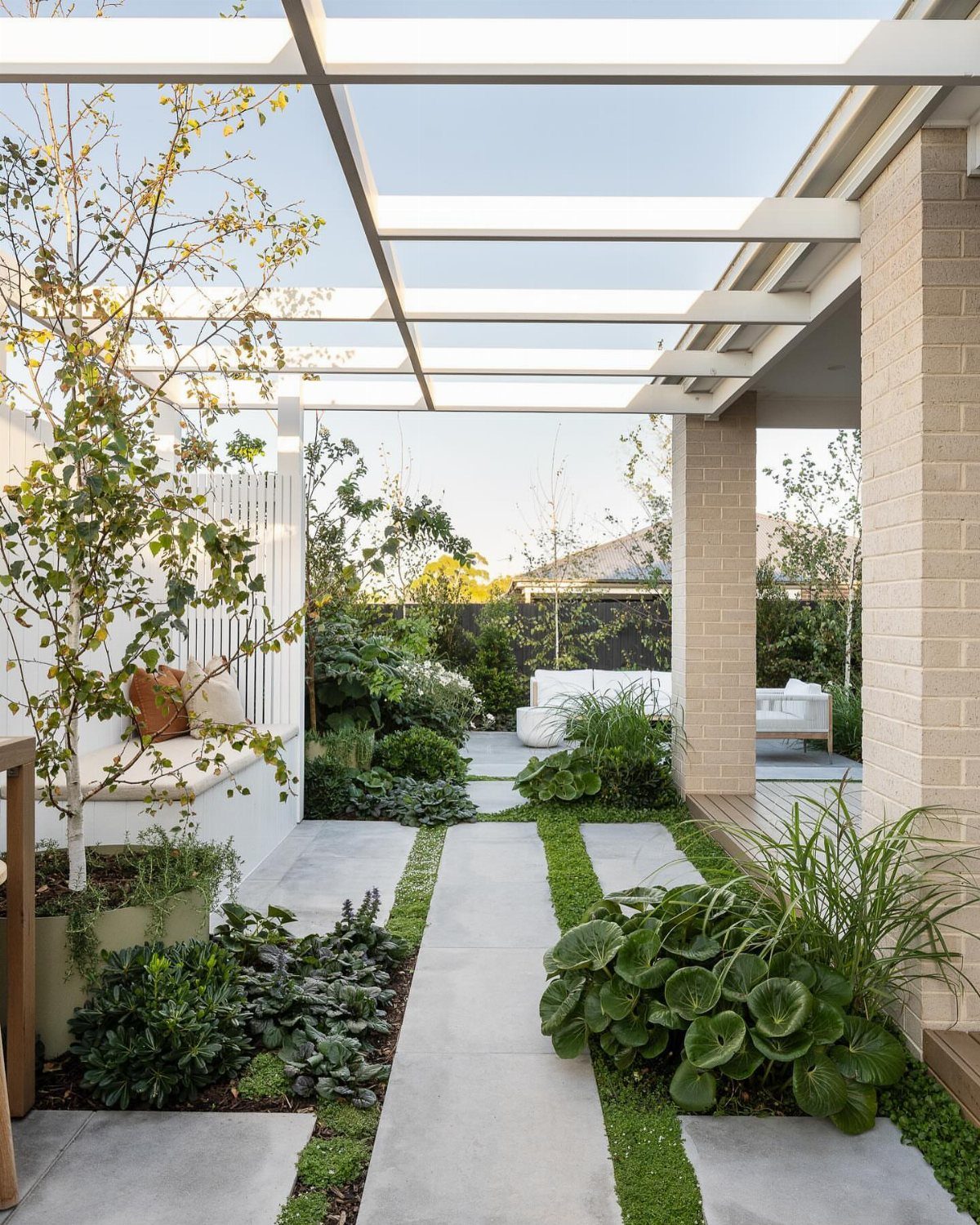
A living room patio treats the outdoors as square footage you actually use, not just maintain.
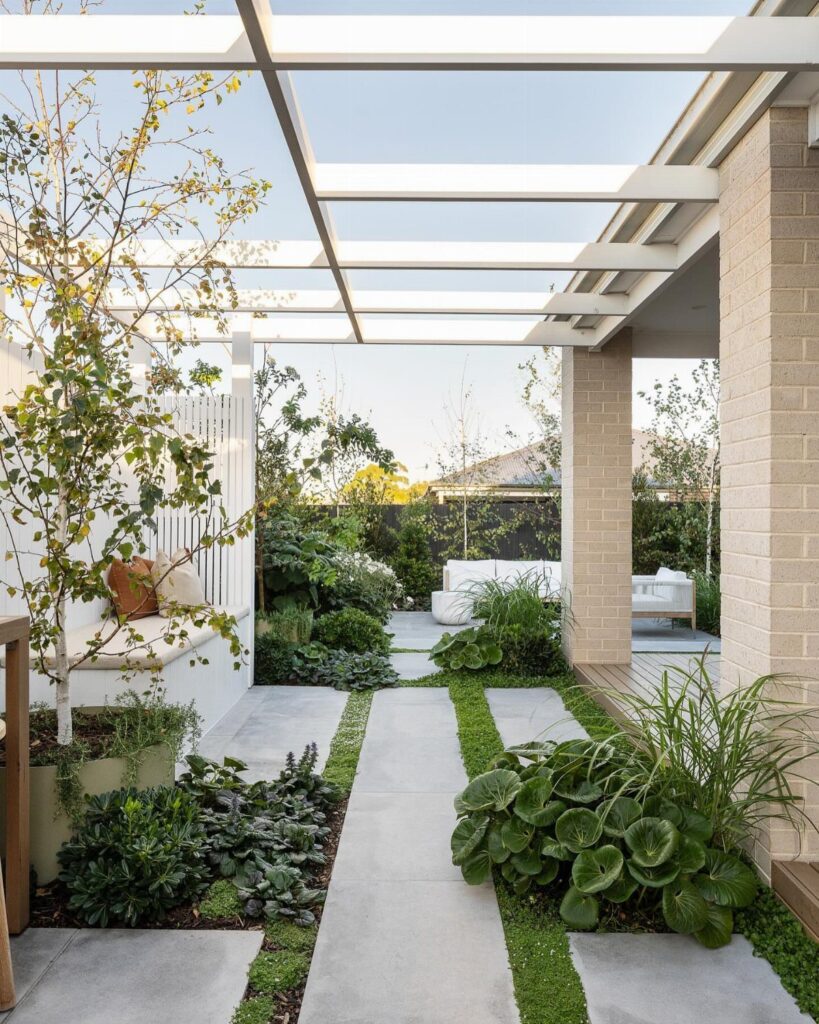
The pergola overhead gives you structure without a roof permit, and those grass strips between pavers do the work a French drain would, letting rain sink through instead of pooling.
Built-in bench seating with cushions beats hauling chairs in and out; I would spend the money on outdoor-rated foam so the seats keep their shape past one season.
This setup suits anyone who wants the yard to feel finished without a month of weekends.
2. Vegetable Garden
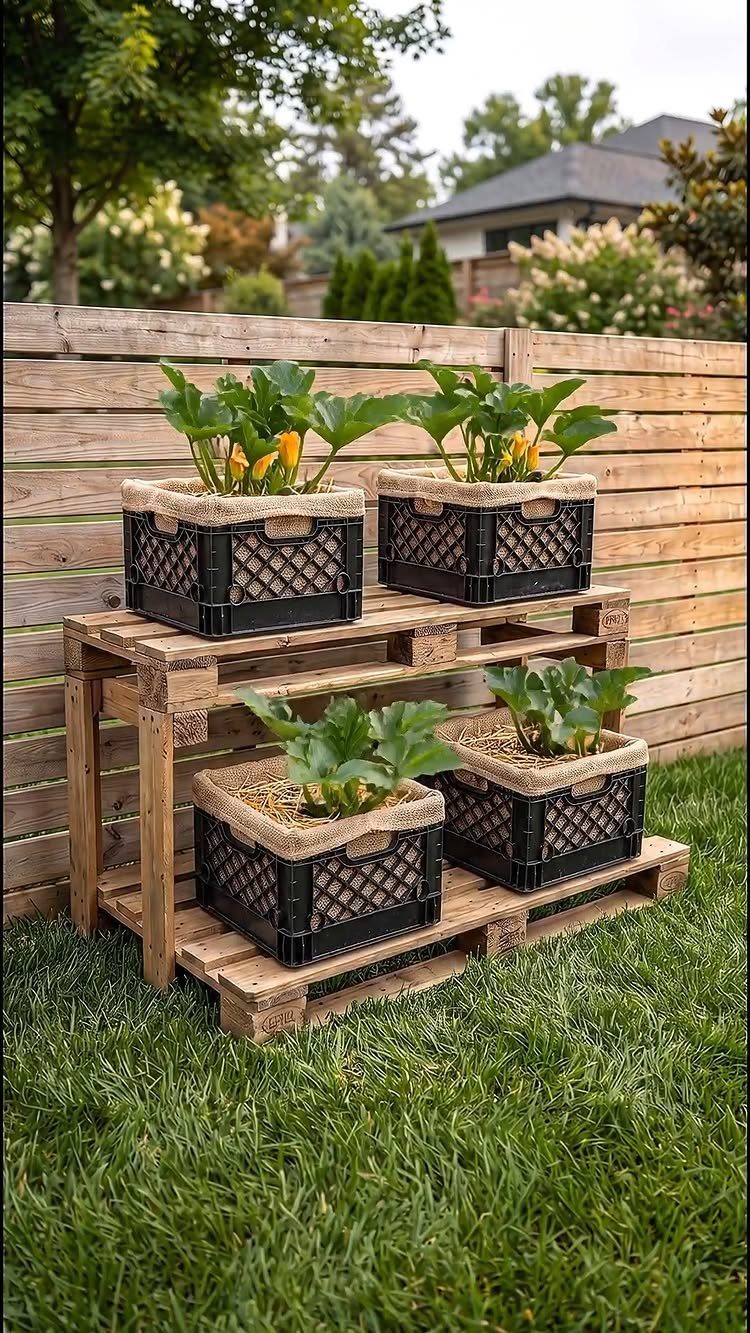
Growing food in a small yard means thinking vertical. A pallet stand turns 4 crates into a tiered plot that keeps squash off the ground and saves your knees.
Black plastic crates lined with burlap cost next to nothing; the burlap lets water through and rots away cleanly after a season or two.
I would set this on grass rather than concrete so any overflow feeds the lawn instead of staining it. For renters, the whole thing moves with you.
3. Outdoor Fire Pit
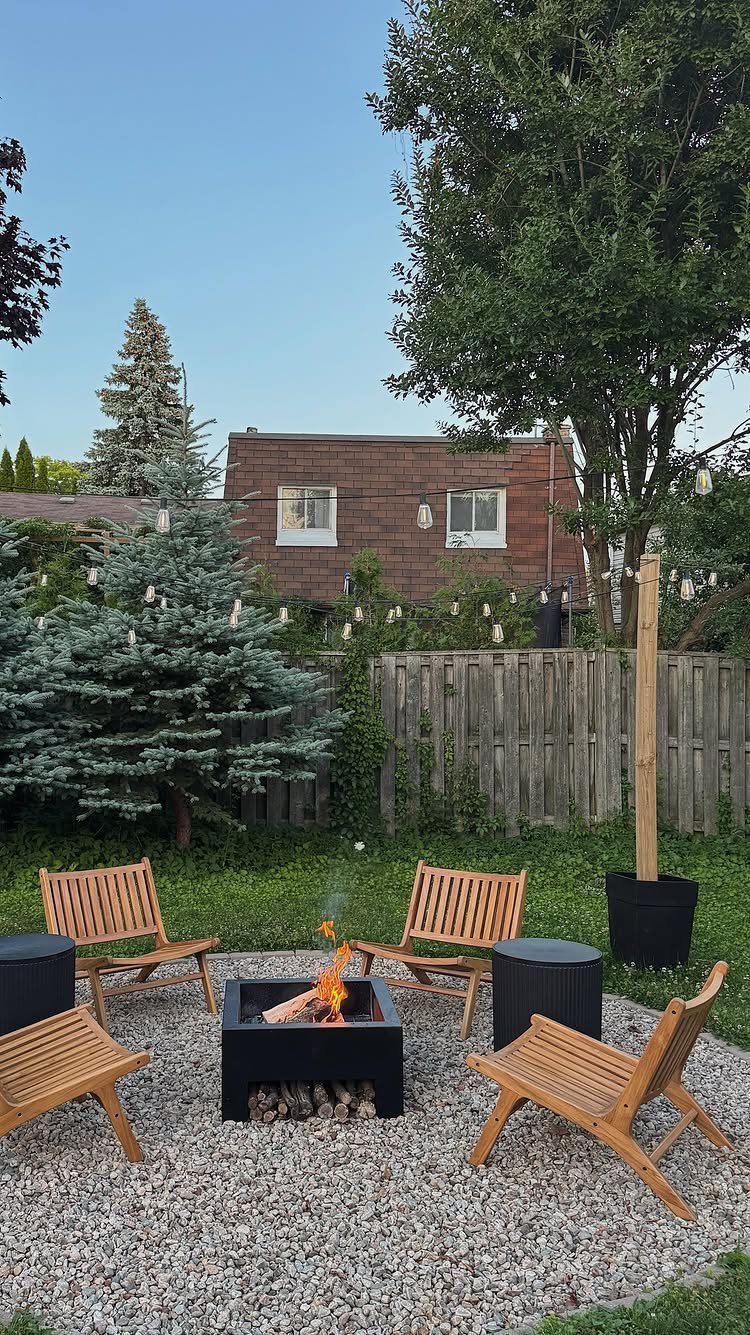
A fire pit pulls people outside after dark better than any landscaping feature. A square metal bowl and gravel base keep the setup simple: no gas line, no masonry, no permit in most counties.
Wooden lounge chairs soften the hardscape and string lights overhead mean you do not need to run electricity to the pit itself.
I would leave plenty of gravel clear around the bowl for safety, and keep a water source within garden hose reach. This is weekend work, not a summer project.
Nothing screams summer more than the sound of a crackling campfire. Firepits make perfect focal points in a backyard, so if you want one, consider planning the rest of your landscaping around it.
4. Arbors and Pergolas
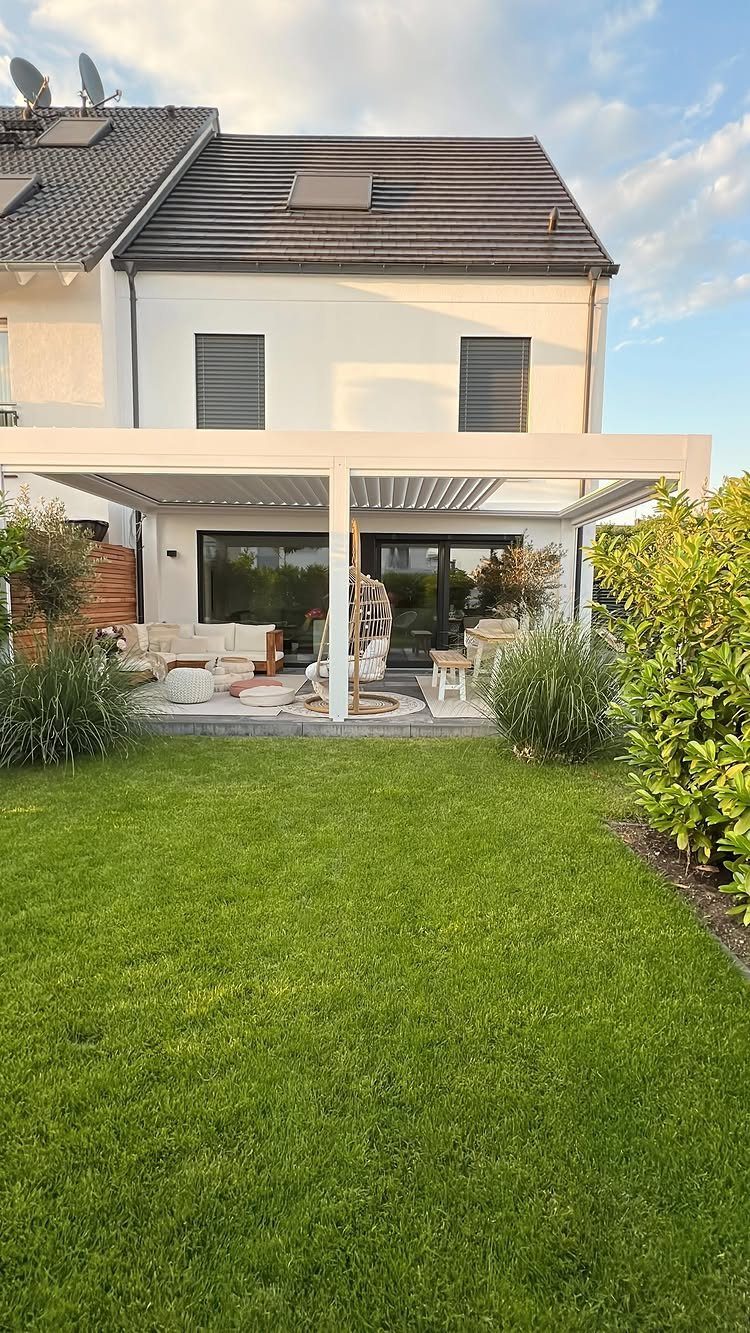
A pergola attached to the house extends your roofline without extending your mortgage. A white louvered version gives you shade you can adjust, unlike a fixed beam that traps heat or lets it through at the wrong angle.
I would orient the louvers to block western sun, which is the light that makes a patio unusable at dinner hour.
The hanging chair and poufs signal that this is a room, not a passage; spend your money on the structure and buy the seating secondhand. Modern lines suit a flat yard where traditional posts would look busy.
5. Layered Flower Beds and Borders
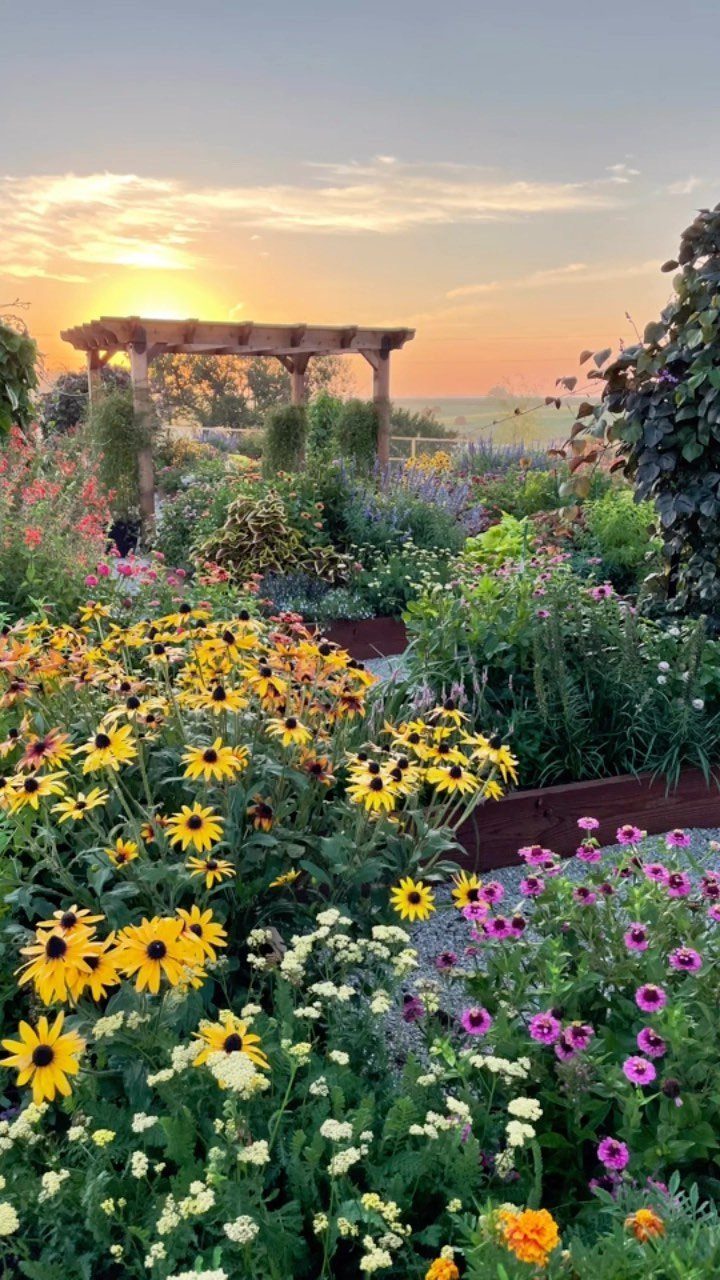
Layered beds work because they put tall plants where you see them against sky, short ones where you walk, and mid-height fillers in between.
Gravel paths keep your shoes clean and your back straight; you are not bending into mud to deadhead.
Black-eyed Susans and zinnias are annuals or short-lived perennials that do not ask for rich soil; yarrow is a long-lived perennial that also tolerates poor ground.
I would plant the yarrow at the back for its height and its tolerance for dry spells, then let the zinnias fill gaps with seed you save from year to year.
Golden hour light flatters yellow blooms; plan your seating to face west.
6. Patio Containers
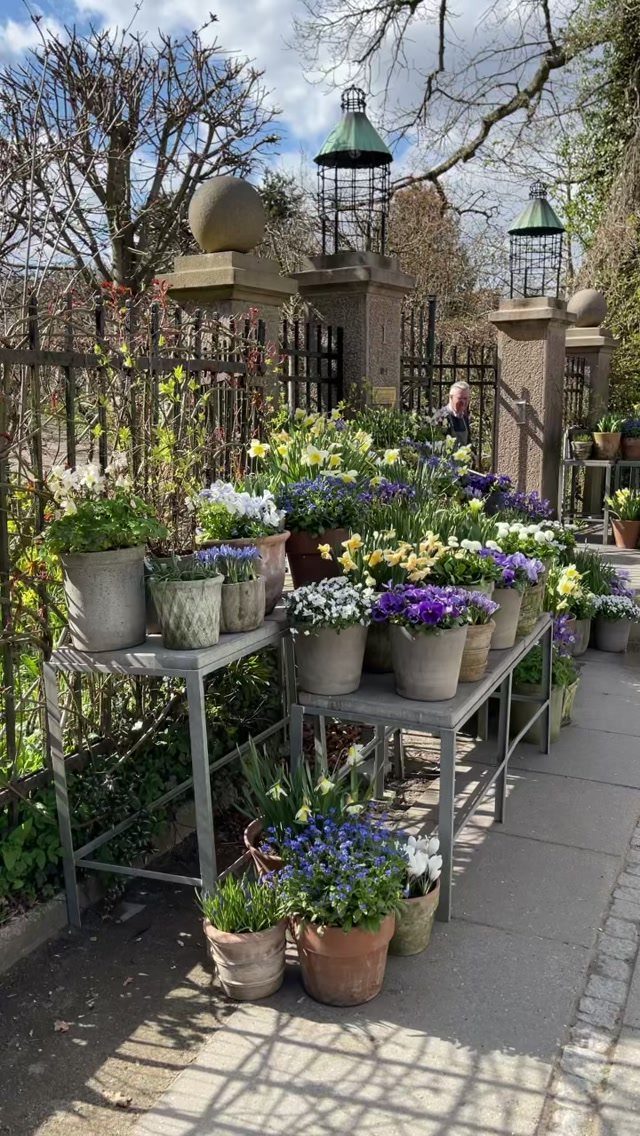
Containers move your garden onto pavement, steps, or a rental where digging is not an option. Metal stands lift pots to eye level and keep the collection from looking like a nursery staging area.
Ceramic and stone pots hold moisture better than terracotta, which dries out in a day of sun.
I would cluster odd numbers, three or five, and let one tall grass or small shrub carry each group so the eye has somewhere to land.
The man in the background gives the scale: these are large pots, which means less watering and happier roots.
7. Landscape Lighting
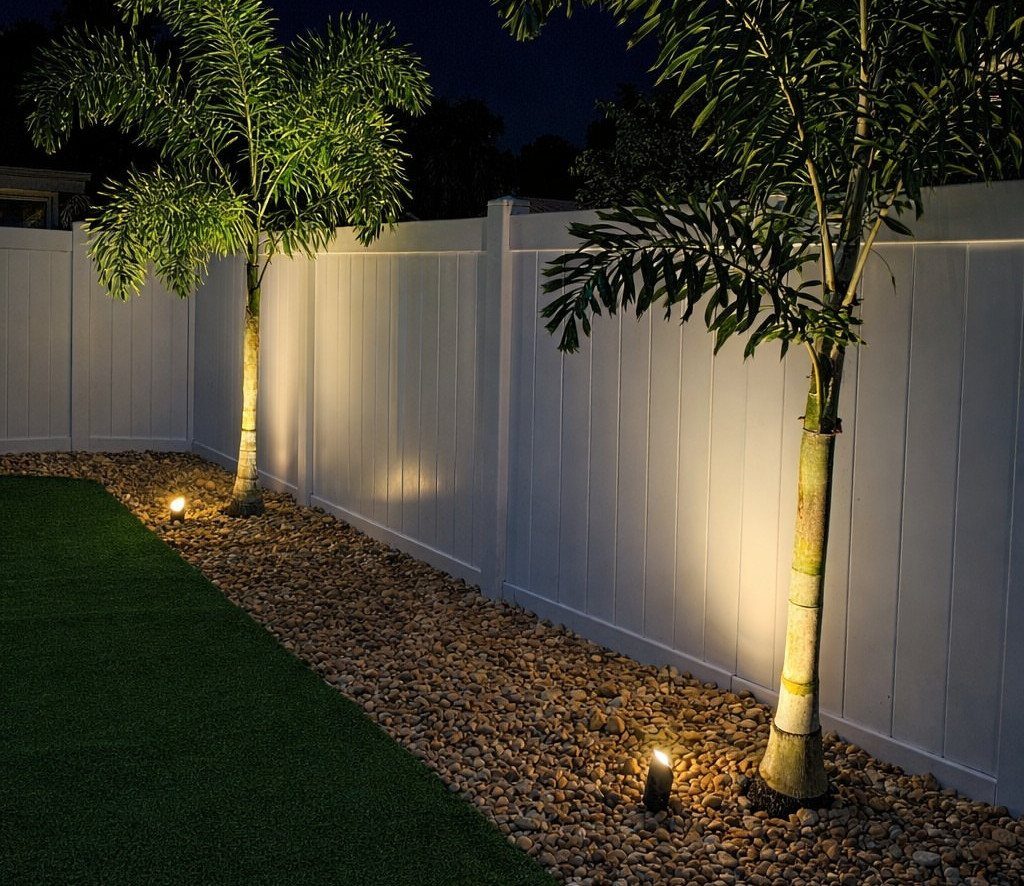
Uplighting trees from ground level gives you moonlight without the moon. Small fixtures hide in mulch or rock, and a transformer on a timer means you are not running outside at dusk.
LED spots at 3000K warm white flatter bark and leaves; cooler temperatures read as security lighting.
I would space them along the fence line and aim slightly upward, never directly into branches where glare bounces back. The palm trunks do the sculpting; your job is placing the light.
8. Modern Garden Fencing Panels
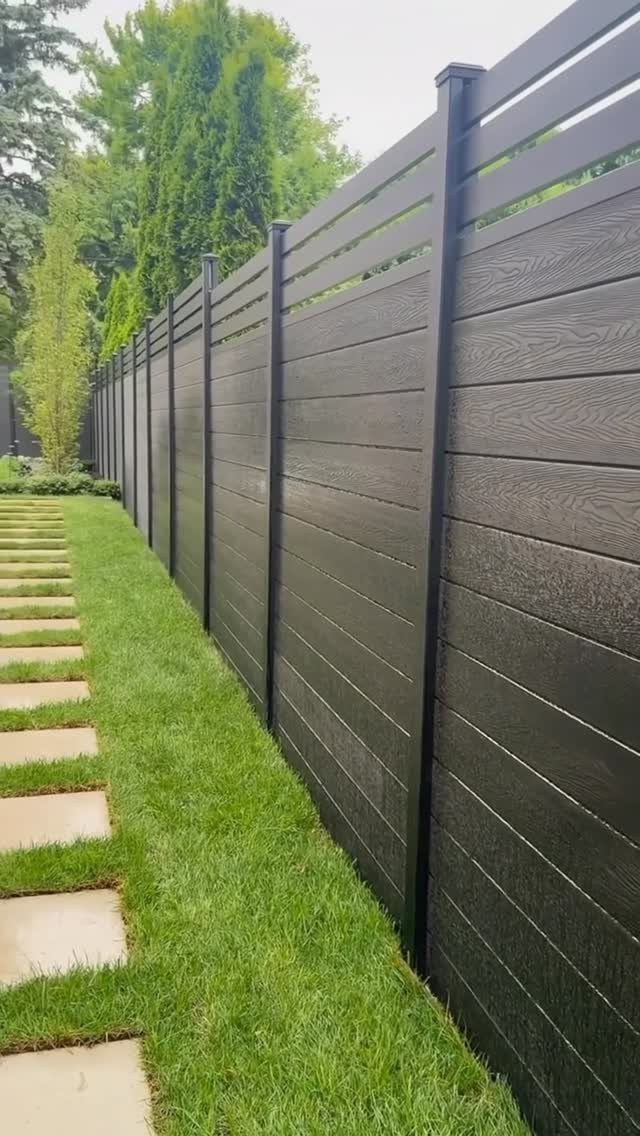
Horizontal slats read as modern because the lines draw the eye along the yard, not up and over it. Composite boards in black hide dirt and do not need staining on any regular schedule.
I would set the bottom rail 2 inches above grade so grass clippings and mulch do not pile against it, and I would cap the posts so water does not sit.
Modern garden fencing panels with horizontal slats suit level lots where a tall fence would feel like a cage with vertical boards.
9. Natural Swimming Pool Garden
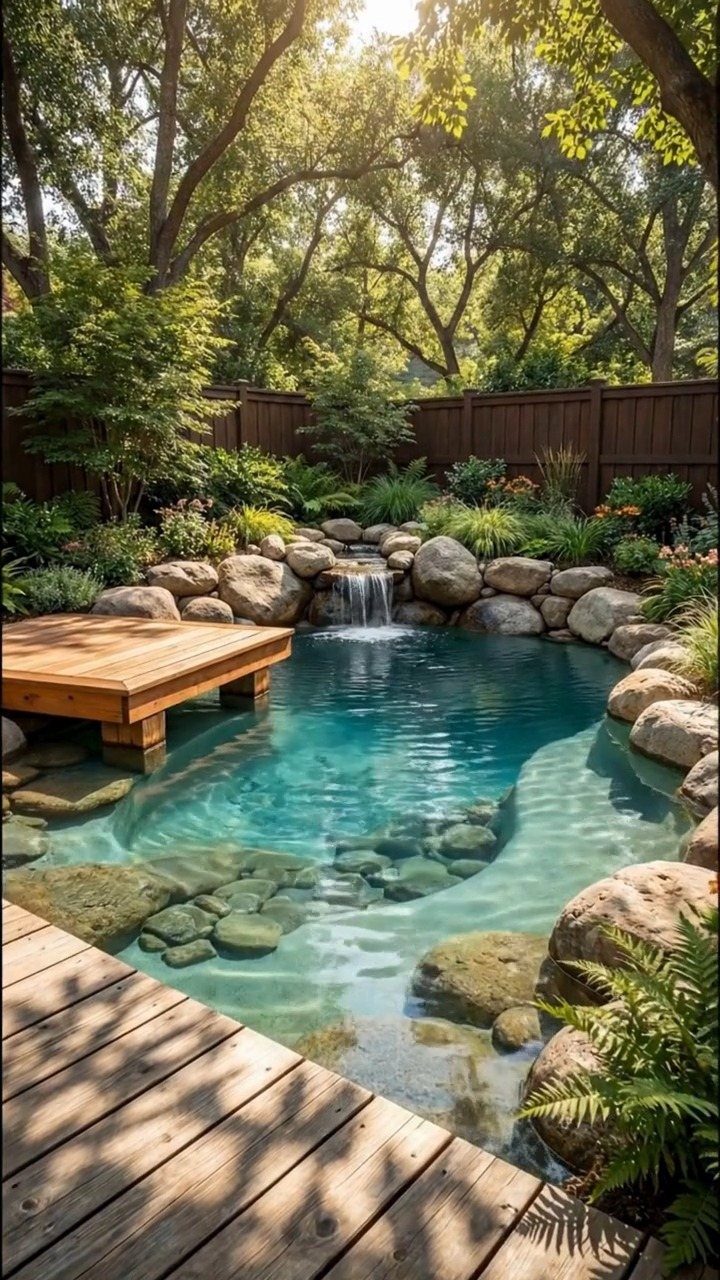
A natural pool uses gravel beds and plant roots instead of chlorine, which means no red eyes and no chemical cost. The swimming zone is separate from the regeneration zone where water hyacinth, rushes and sedges do the filtering.
Boulders and ferns soften the edge so it reads as pond, not pool. I would budget for a professional design on the plumbing; get the water flow wrong and you get algae, not clarity.
The wooden deck overhanging the water gives you a place to sit without taking up lawn. This is not weekend work, but it is the version I would build if I planned to stay in the house.
10. Encourage Climbing Plants with a Trellis
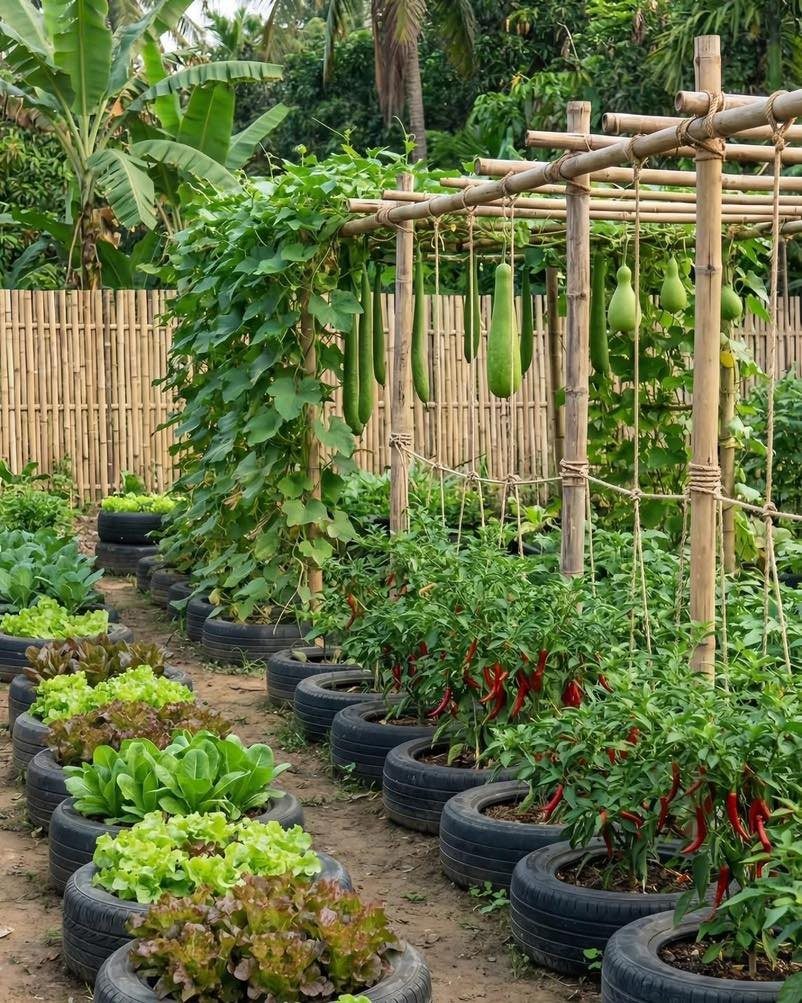
Bamboo poles lashed together make a trellis that costs nothing and lasts two or three seasons before it gray and splits.
The grid pattern suits cucumbers, beans and small gourds; heavy melons need wider spacing or they will sag the frame.
Tire planters beside the trellis use what is free, though I would drill drainage holes and line with landscape fabric so soil does not wash out.
The vertical space above the tires doubles your planting area in the same footprint. This setup suits renters and anyone with more enthusiasm than budget; when the bamboo gives out, you replace it in an hour.
11. Incorporate Curves Into Your Garden Design
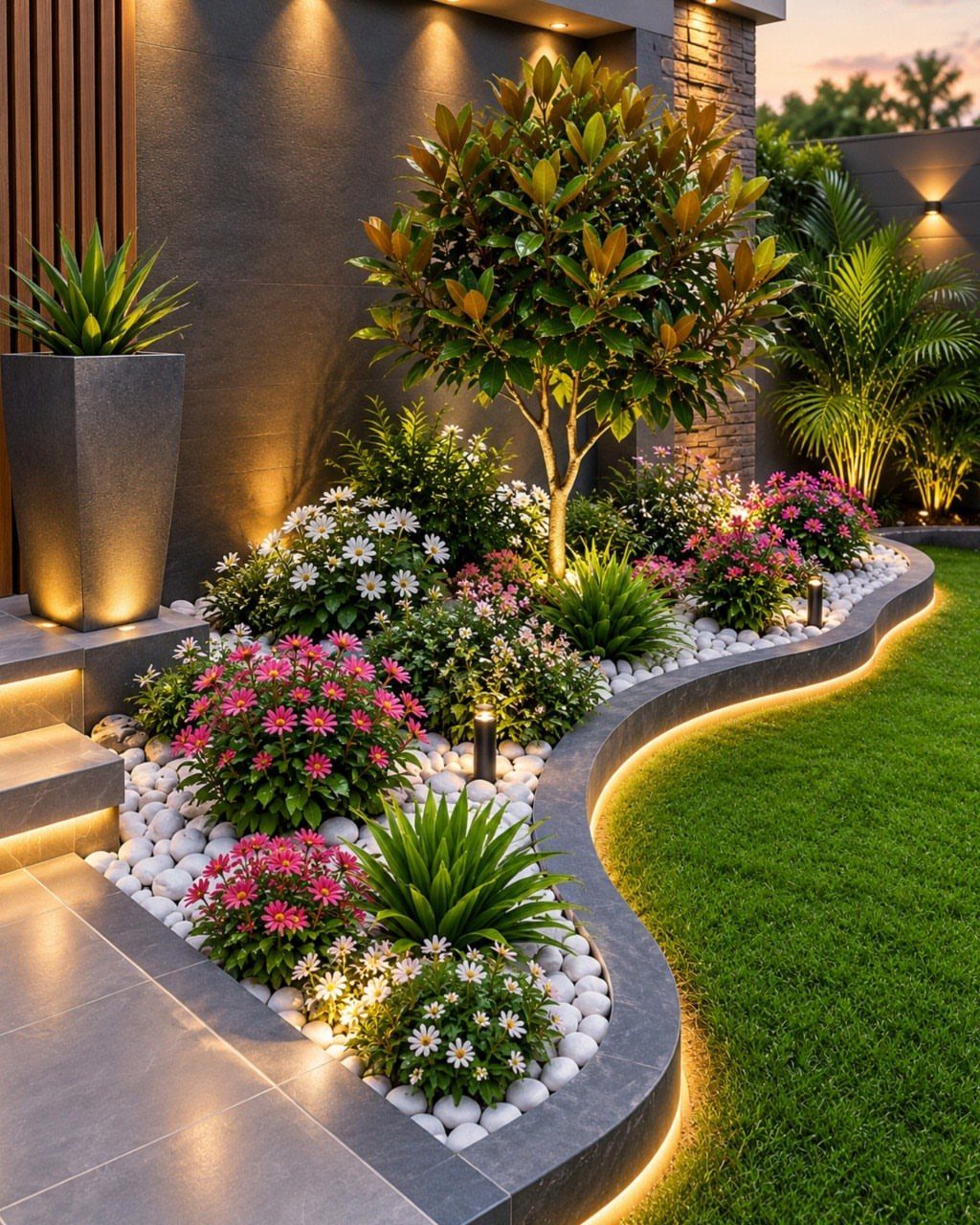
Curved beds break up a rectangular yard without the cost of a designer.
Strip lighting tucked behind the border faces inward, so you see the glow on plants, not the fixture itself. I would keep the curve gentle; tight radiuses mean more cuts and gaps.
White stone mulch reflects the light upward, which helps the flowers read after dark. This suits flat ground where a straight edge would look like a driveway extension; the curve says garden instead.
12. Sloped Garden Walls
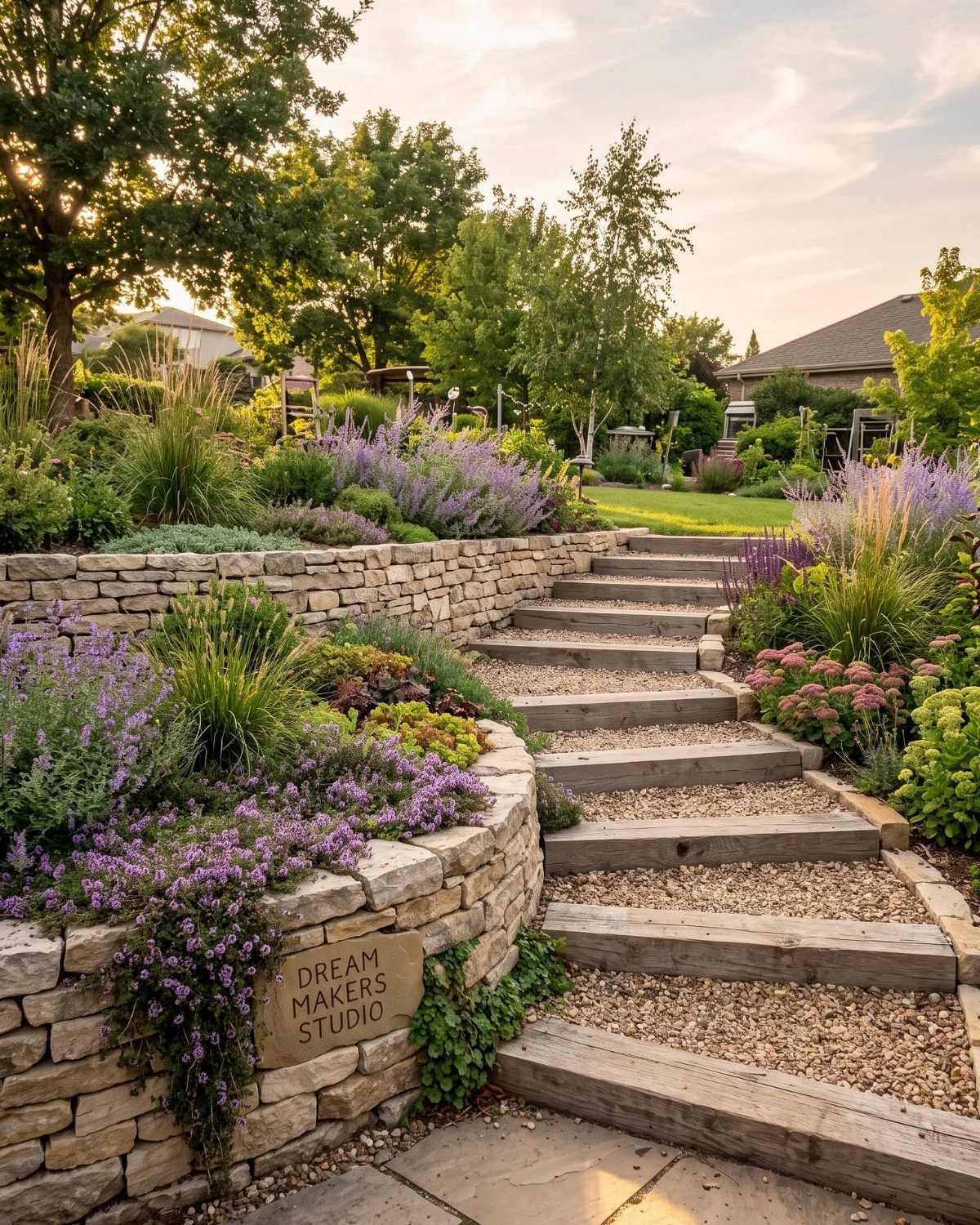
Dry-stacked stone walls on a slope hold soil with friction and weight, not mortar, which means they flex with frost and drain through the face. Timber steps set into the wall give you a path without pouring concrete.
Gravel behind the wall and between the stones keeps hydrostatic pressure from pushing the face over; skip the drainage and the wall bows within a year.
I would plant trailing thyme or sedum in the gaps so the stone greens over by the second season. This is heavy work, but terracing a slope into levels you can actually reach turns an unmowable bank into planting space.
13. Tropical Planting Patio
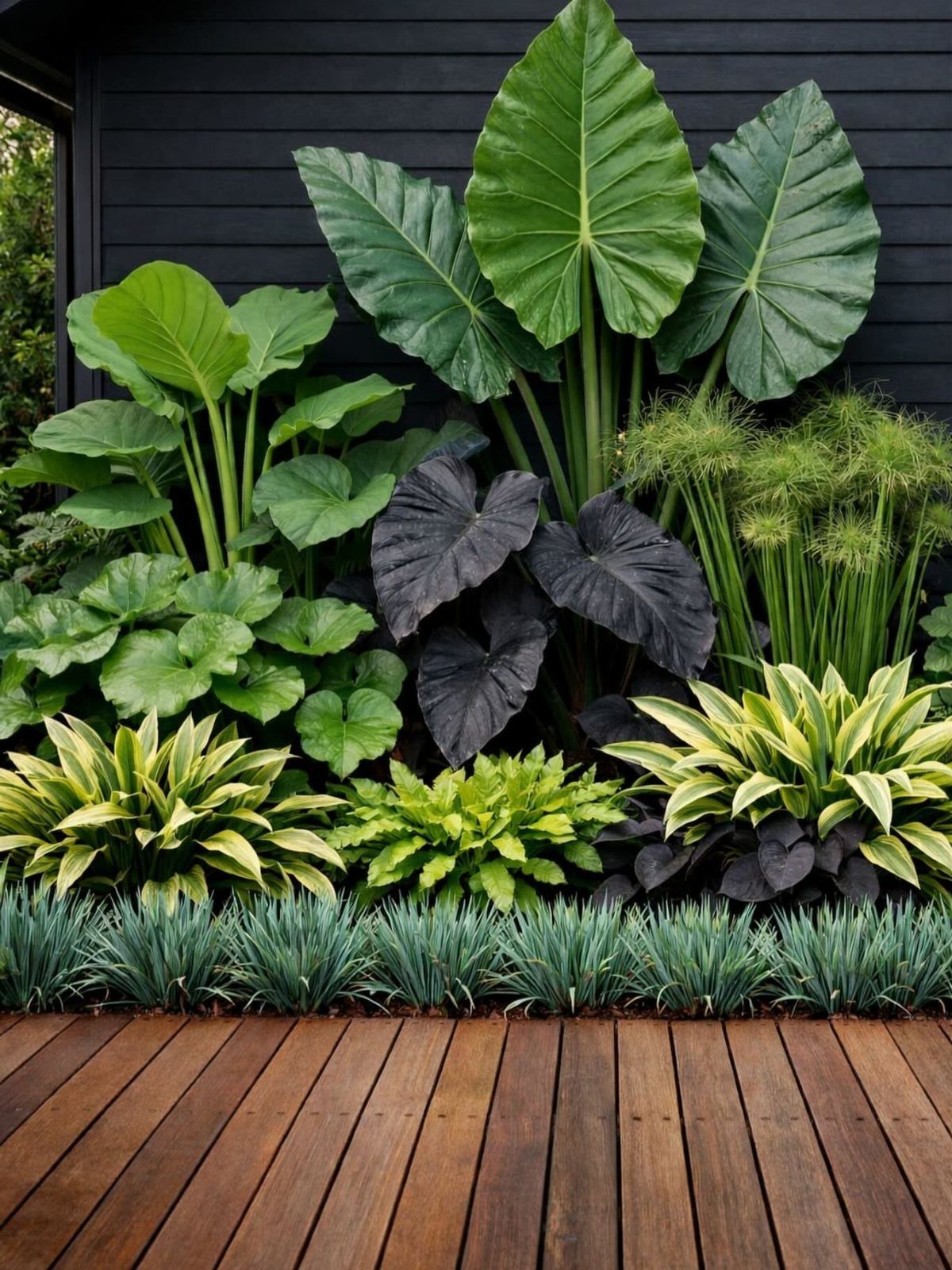
Tropical planting only works when leaves overlap enough to hide the structure underneath.
Dark paint behind the foliage recedes visually and makes the green read louder; I would stain or paint any wall that faces the plants rather than leaving it natural wood.
Small grasses at the border keep the edge neat where large leaves would flop onto the boards. This suits humid climates where succulents fry and ferns thrive; in dry zones you are fighting the air.
14. Decorative Gabion Wall
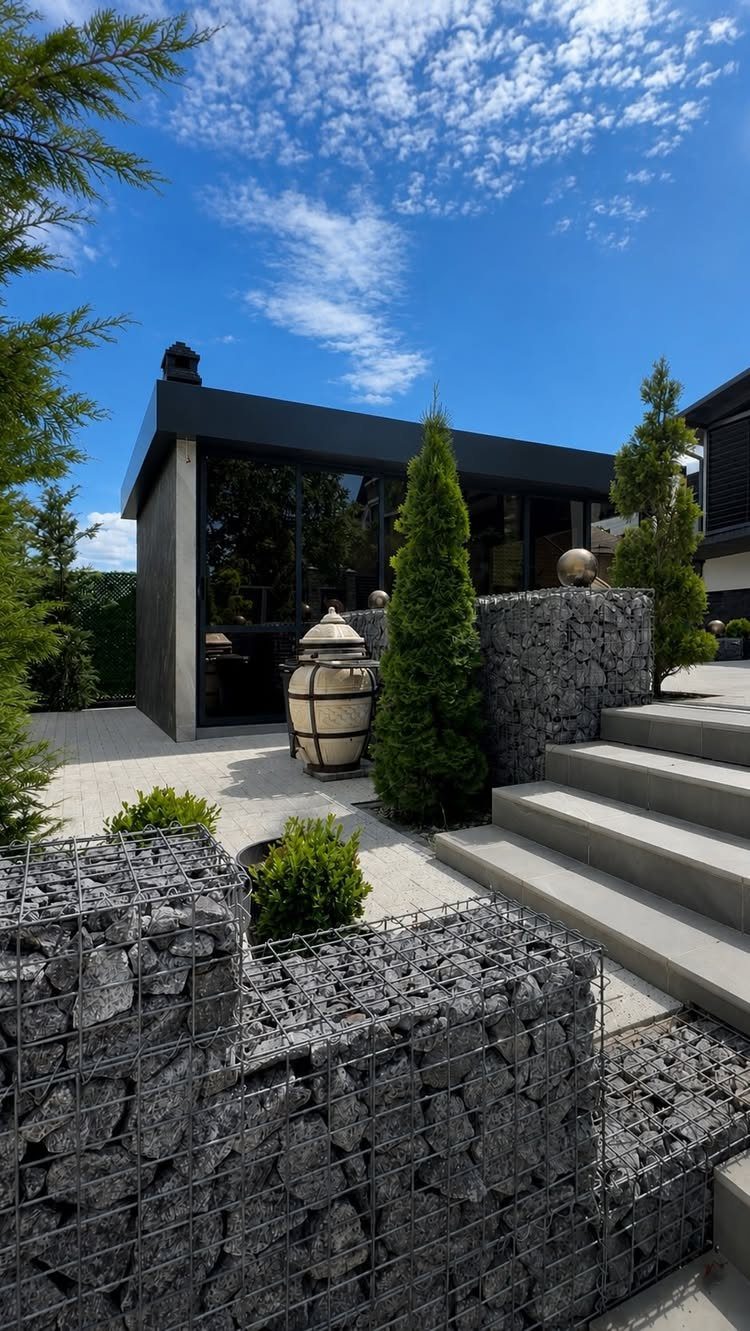
Wire cages filled with stone do the work of a retaining wall without the masonry skill. The gaps between stones drain water through the face, which is why gabions handle frost better than solid concrete.
I would sort the stone before filling so the faces that show are flat and roughly similar in tone; random fill looks like a construction site.
Cypress behind the wall softens the industrial edge, and the wire rusts to a color that reads as weathered, not abandoned.
The tandoor nearby signals that this is a working yard, not a display; the wall holds heat and defines the cooking zone without sealing it off.
15. Raised Beds
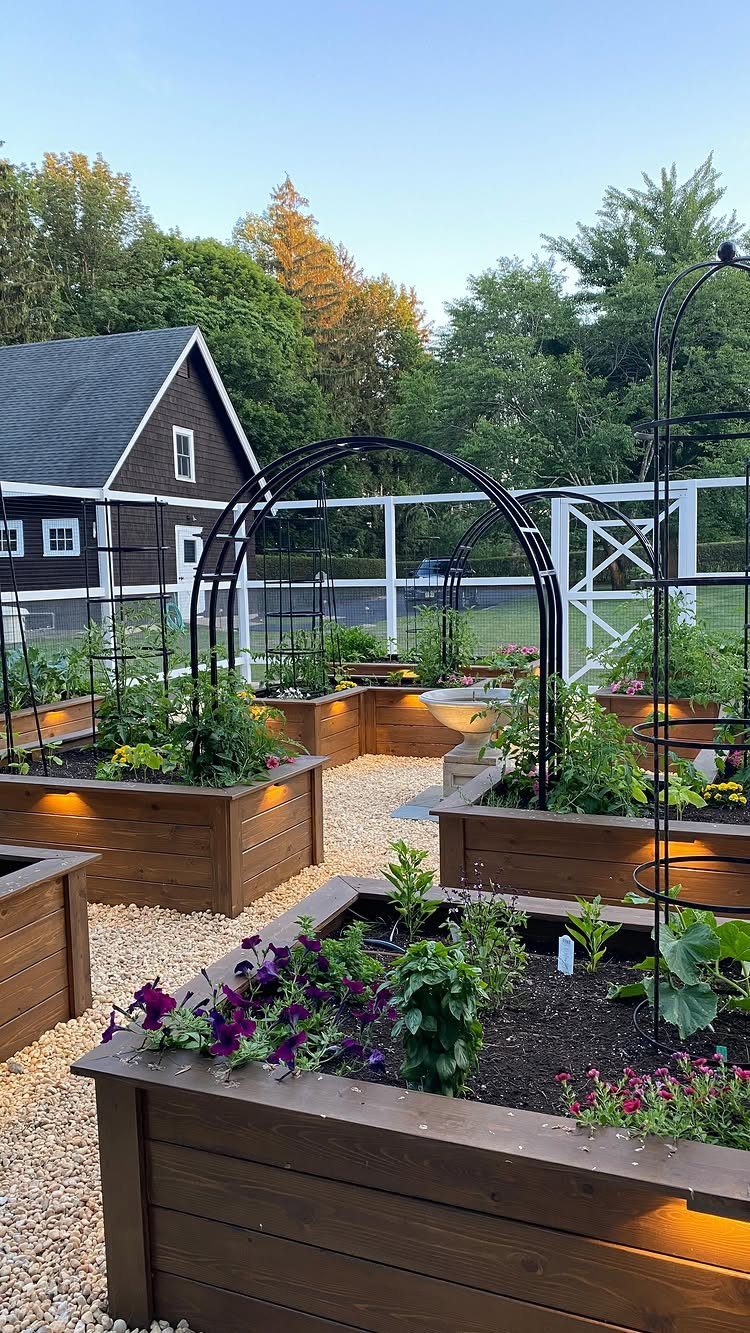
Dark stain on the wood disappears against soil and ages better than natural cedar, which silvers unevenly.
Integrated lights on the bed corners mean you can garden after work without carrying a headlamp. I would line the inside with landscape fabric stapled to the top edge so soil does not stain the boards.
Metal arches between beds support beans or squash in summer and look structural bare in winter. This layout suits anyone who wants the garden to read as designed, not accumulated.
16. Rock Garden
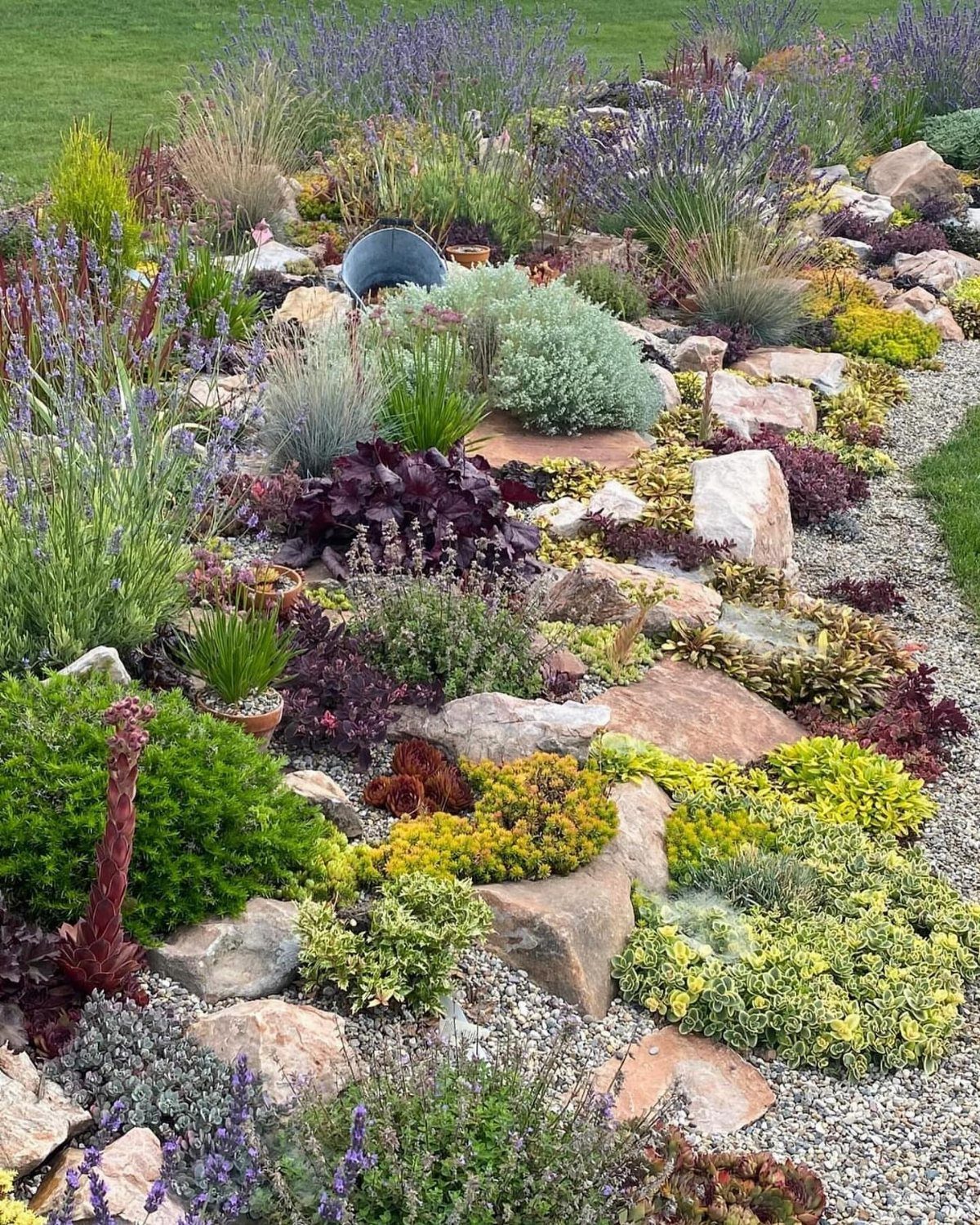
Slope is the reason to build this, not an obstacle to overcome. Large rocks set into the grade hold soil with their weight while gravel between them lets water pass; the combination handles drainage and erosion at once.
Lavender, succulents and ornamental grasses are all plants that would rather be dry than drowned. I would place the rocks while the soil is moist and workable, then let the ground settle a week before planting.
The gravel paths are not decorative; they are how you reach plants without compacting the root zone. This is the garden for anyone who has killed too much by overwatering.
17. Outdoor Dining Area
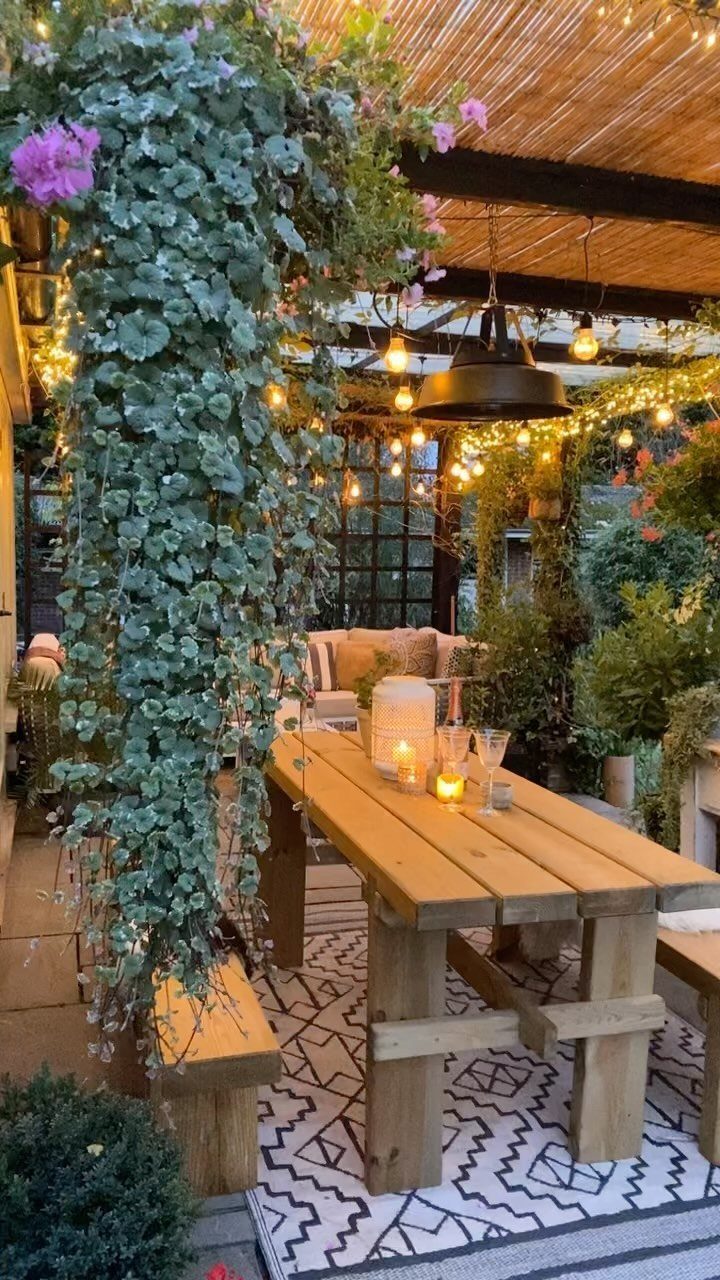
A pergola overhead turns a table into a room. String lights on the beams give you evening light without wiring a fixture, and hanging plants soften the structure so it does not feel like a bare frame.
I would spend money on the rug first; it defines the zone and keeps chairs from scratching the deck. Wooden benches seat more people than chairs of the same length and do not blow around in wind.
Candles on the table are enough for intimacy; anything brighter competes with the string lights. This suits anyone who eats outside more than twice a week and wants the setup to stay put.
18. Shady Area with Trees
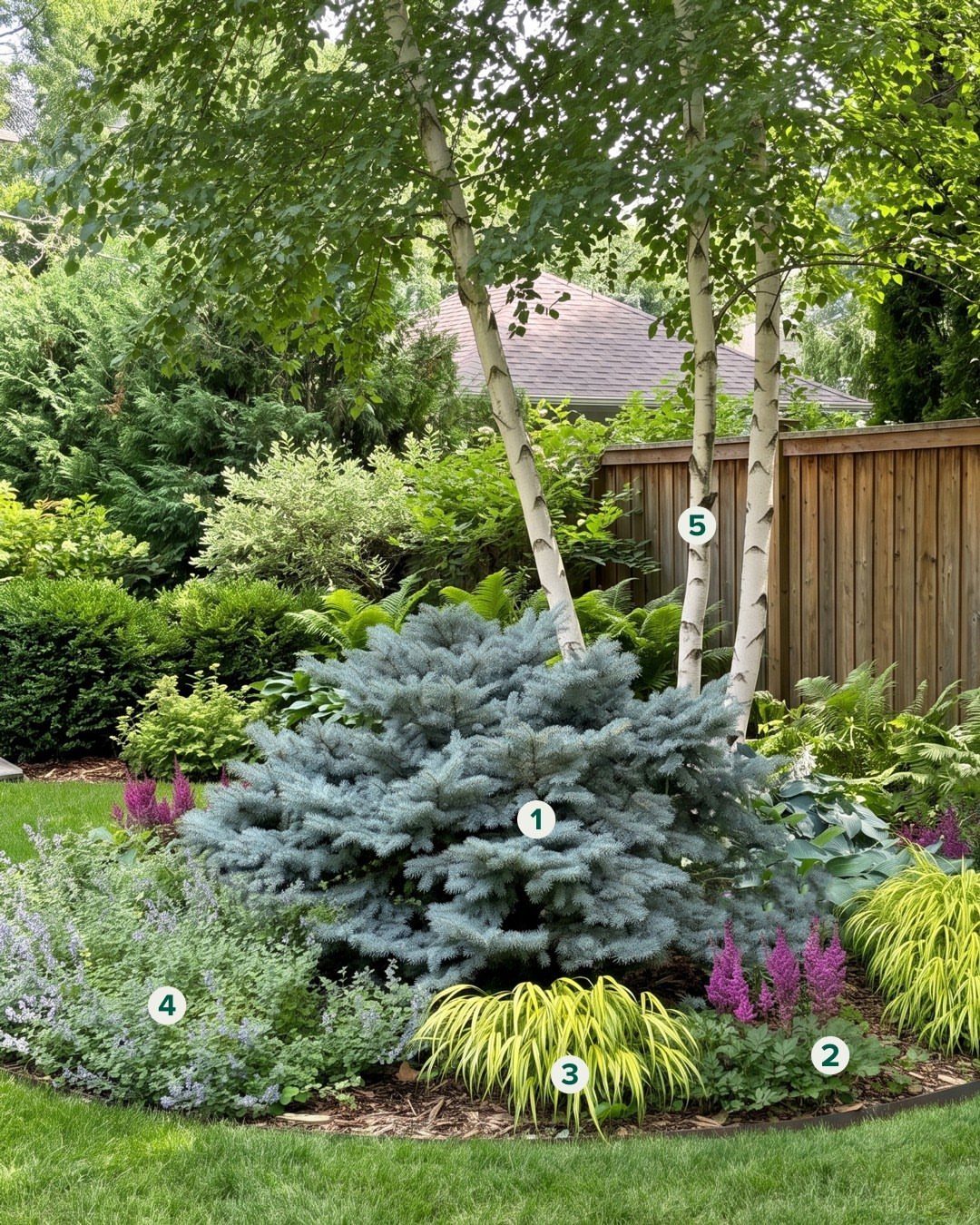
Birch trees let light through their canopy in a way oaks do not; you get shade and still grow flowers underneath.
A dwarf evergreen in the center gives the bed bones through winter after the perennials and deciduous trees drop their leaves.
The numbered labels are optional; the layout itself is what makes the plant groupings easy to follow.
I would place the spruce off-center and let the birches form a loose group rather than a line; symmetry reads as formal in shade where you want relaxed.
Ferns and grasses handle the root competition that kills thirstier plants. This is for the yard that bakes in afternoon sun and needs refuge without a structure permit.
19. Use Native Plants
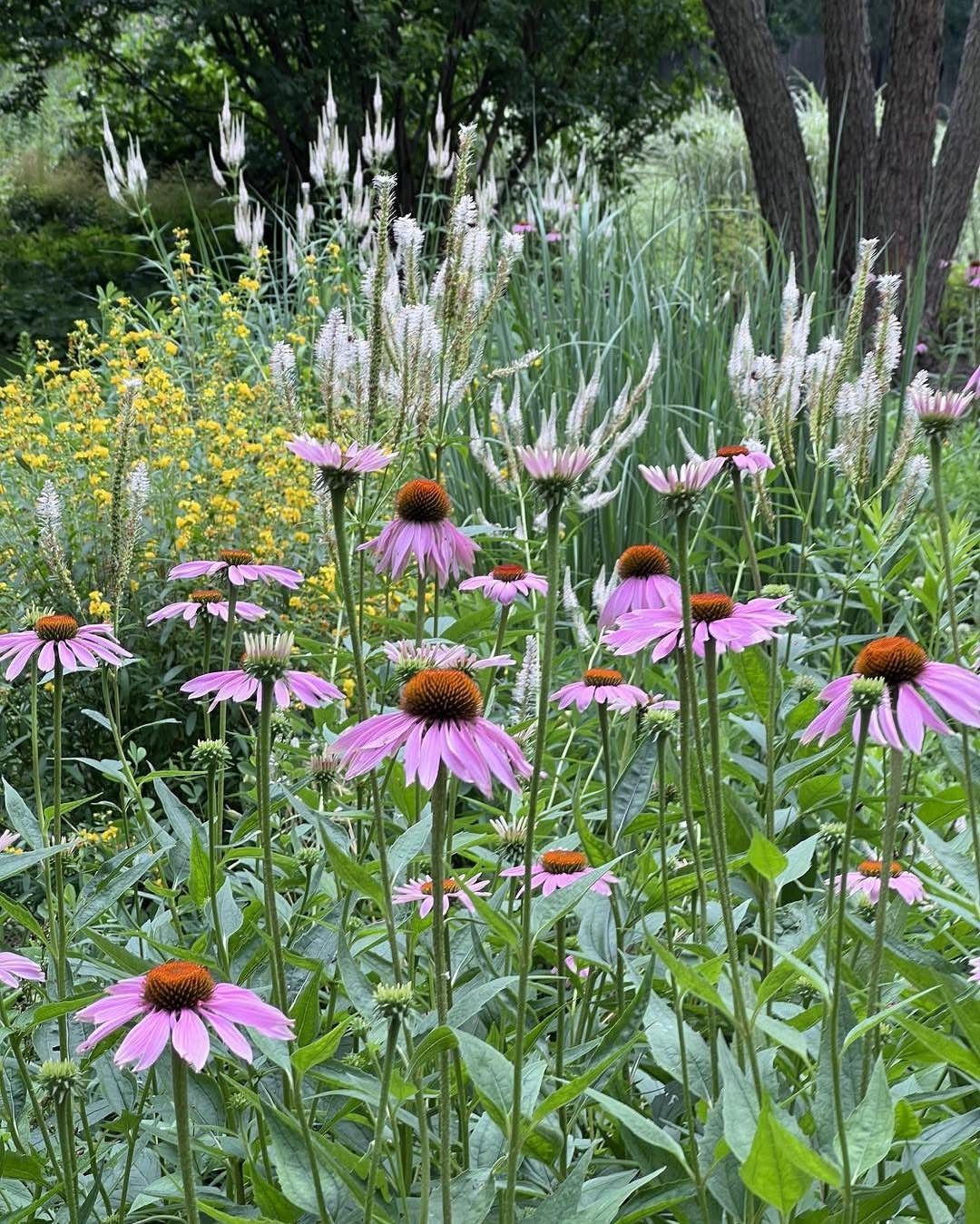
Purple coneflower and Culver’s root are Midwest prairie plants that handle summer drought without supplemental watering once established. They also feed the insects your local birds actually recognize; a monarch caterpillar will not touch a tropical hibiscus.
I would plant in drifts of five or seven, not singles, so the color reads from the driveway.
The mix of heights, from the low coneflowers to the tall white spikes, gives you June through September bloom without a calendar plan.
This is the lowest-work option in the whole list; skip it only if you are after a plant that does not grow anywhere near you.
20. Ponds and Fountains Water Features
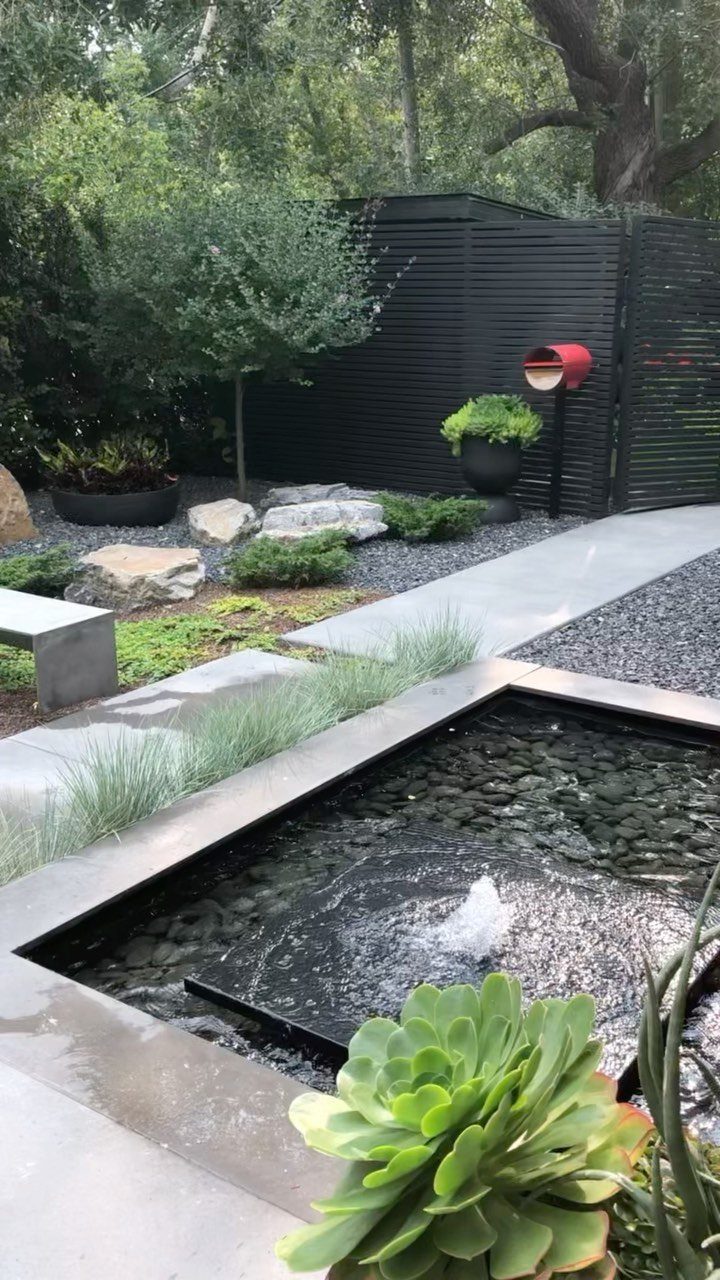
A rectangular basin with a single bubbler gives you sound without the maintenance of a pond ecosystem. The stone surround matches hardscape already in the yard so the water reads as built-in, not dropped in.
Dark gravel around the edge hides splash and algae film that would show on pale stone.
I would run the pump on a timer, midday and evening, rather than all day and night; the motor lasts longer and your water bill stays flat.
This size suits a patio corner where a full pond would crowd the seating. The succulents nearby are your clue: this is for dry climates where standing water would evaporate fast and breed mosquitoes.
Focus on Native Trees & Plants
Native plants earn their place because they already know your yard.
Trees and shrubs do the structural work: privacy, shade, winter bones. Match them to your light, whether that is full sun under open sky or the partial shade birch canopy allows.
Design to Your Climate
Your climate sets the plant list, not the other way around.
Where summers run hot and dry, I skip the lawn expanses and look at gravel beds with succulents, ornamental grasses that shrug off drought, and stone mulch that does not ask for water every other day.
I would match every plant to the light it actually gets.
Full sun, partial shade, and full shade are not suggestions; they are conditions that kill or thrive. Soil type matters too, sandy or clay or loamy, and how wet it stays after rain.
A plant that flowers in June and one in September keep the bed alive longer than a single flush of color.
Design for it by choosing plants that want what your site already gives: your rainfall, your sun angles, your soil. Fighting those with irrigation and fertilizer is a project, not a garden.
Evaluate Your Site
Measure before you buy. The shape and size of your yard determine what fits, and existing plants may already do work you would otherwise pay for.
Track light through the day.
A corner that reads as full sun at 9 AM may be deep shade by 3 PM when the house shadow moves. Know which is which before you place a sun-loving perennial in a spot that only gets morning brightness.
I would note soil moisture while you are watching light: where puddles linger, where dust blows by noon. These spots need different plants, or different preparation.
Slope matters too.
Frequently Asked Questions
How do I design my backyard?
Map the space with a tape measure and watch how the light moves across it from morning to evening; that sunny patch at breakfast can turn into shade by afternoon.
Note where water lingers and where dust blows by noon, then match plants to those conditions rather than forcing irrigation and fertilizer.
The shape, size, and existing plants determine what fits; work with your rainfall, sun angles, and soil instead of against them.
What are some budget-friendly landscaping ideas?
A trellis built from lashed bamboo poles runs maybe $15 and holds up for a few seasons, and tire planters next to it keep rubber out of the landfill.
I would drill holes in the bottom and line them with landscape fabric so the soil does not turn to soup.
Stacked black crates lined with burlap become a tiered vegetable bed for under $20, and the whole assembly lifts into a truck bed when your lease ends.
Purple coneflower and other natives settle in and then barely need you, once their roots find their depth. Plant them in uneven clumps of five or seven so the color carries from the street.





