
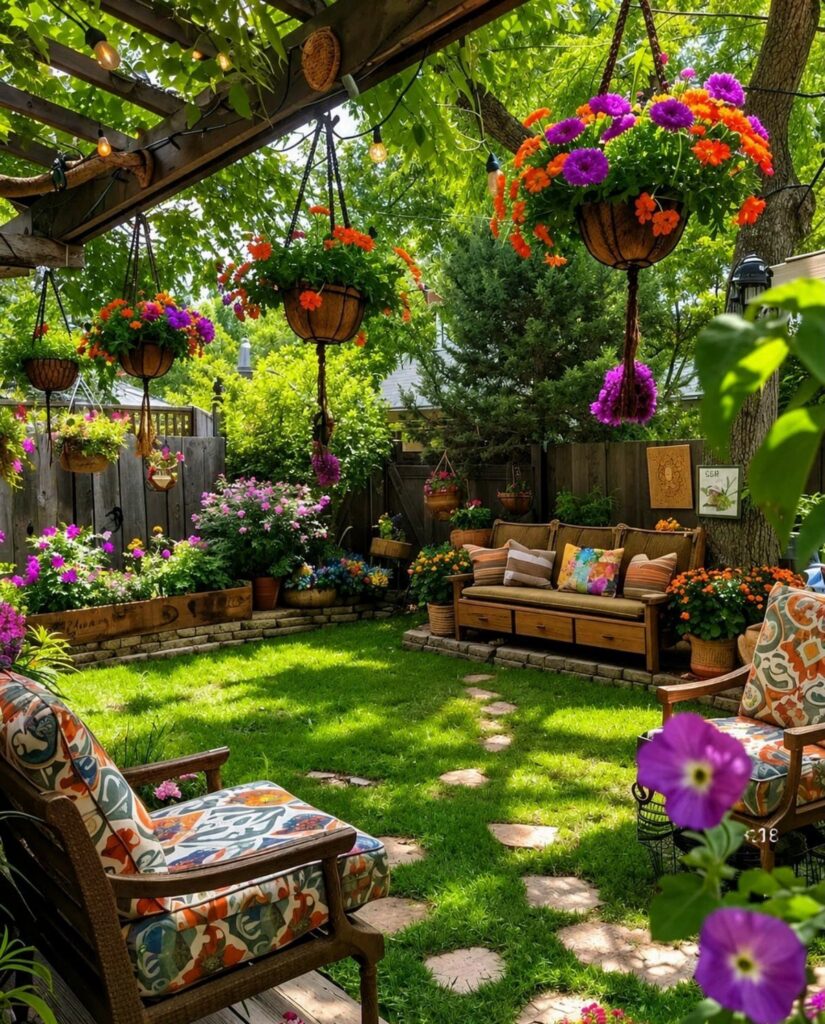
What separates the project you will actually finish from the one you abandon half-built is whether it earns daily use; a refrigerator drawer and a photocell timer get touched every evening, while a television you cannot see in daylight sits ignored.
1. Outdoor Kitchens
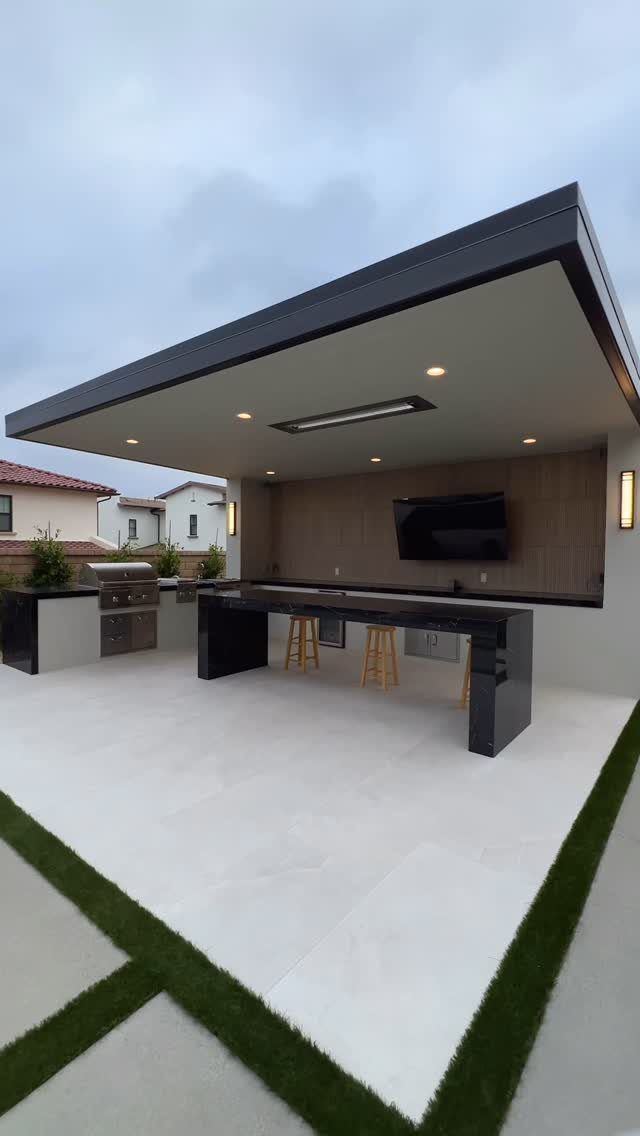
Outdoor kitchens work best when they cover the basics you will actually use: a built-in grill, prep space, and somewhere people can lean while you cook.
A bar overhang with stools and a television mounted under cover turns the pavilion into a room that happens to be outside.
I would skip the TV and put that budget toward a small refrigerator drawer instead; cold drinks matter more than a screen I will not watch in daylight.
2. Cozy Fire Pits
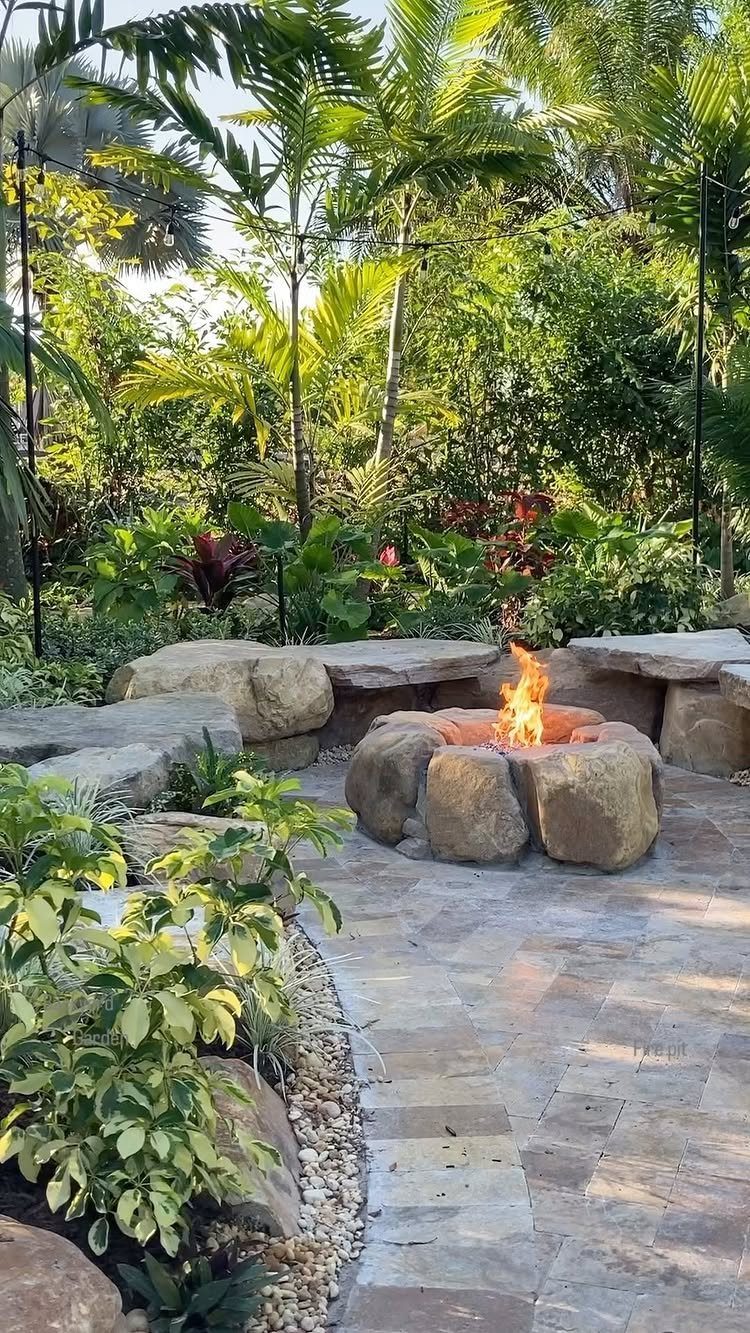
A fire pit built into the patio surface, not dropped in as an afterthought, anchors the whole yard the way a living room sofa anchors a house.
Stone slab benches radiating from the ring give you seating without chairs to store.
Natural gas lines remove the woodpile and the smoke, but I like wood for the sound and the free fuel if you have a neighbor with a downed tree.
A mortared stone pit with a proper base costs more than a metal ring from the hardware store, but it will not shift or crack after one winter.
3. Pergolas or Gazebos
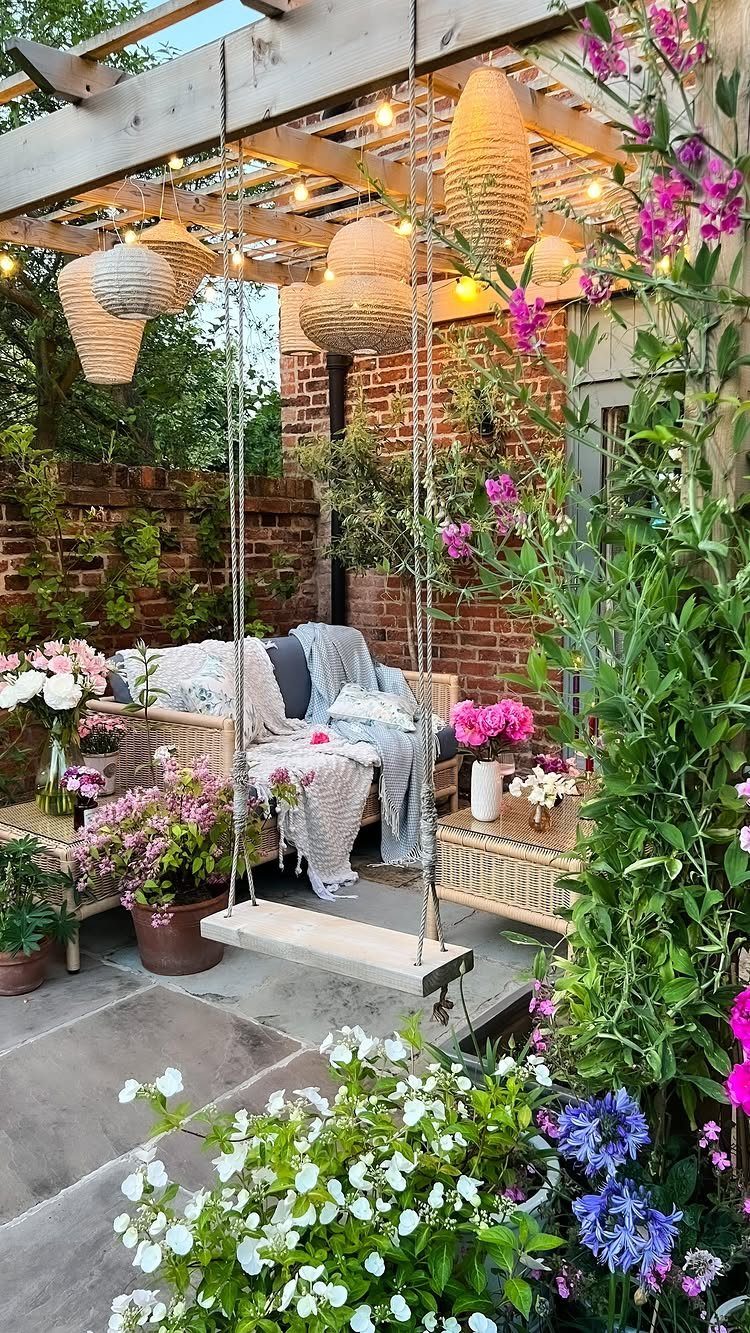
Wood overhead turns a patio from a hot slab into a destination, and the structure itself gives you something to decorate.
Paper lanterns and string lights hang from the rafters here; the swing suspends from a beam rated for the load, which is a detail you plan before you cut anything.
I prefer pergolas to gazebos for most backyards because they do not require full footings and a roof permit.
The open rafters still filter enough sun to make midday sitting possible. Pressure-treated lumber is the cheapest option for a frame you build yourself; cedar or redwood costs more but lasts longer with less checking.
4. String Lights
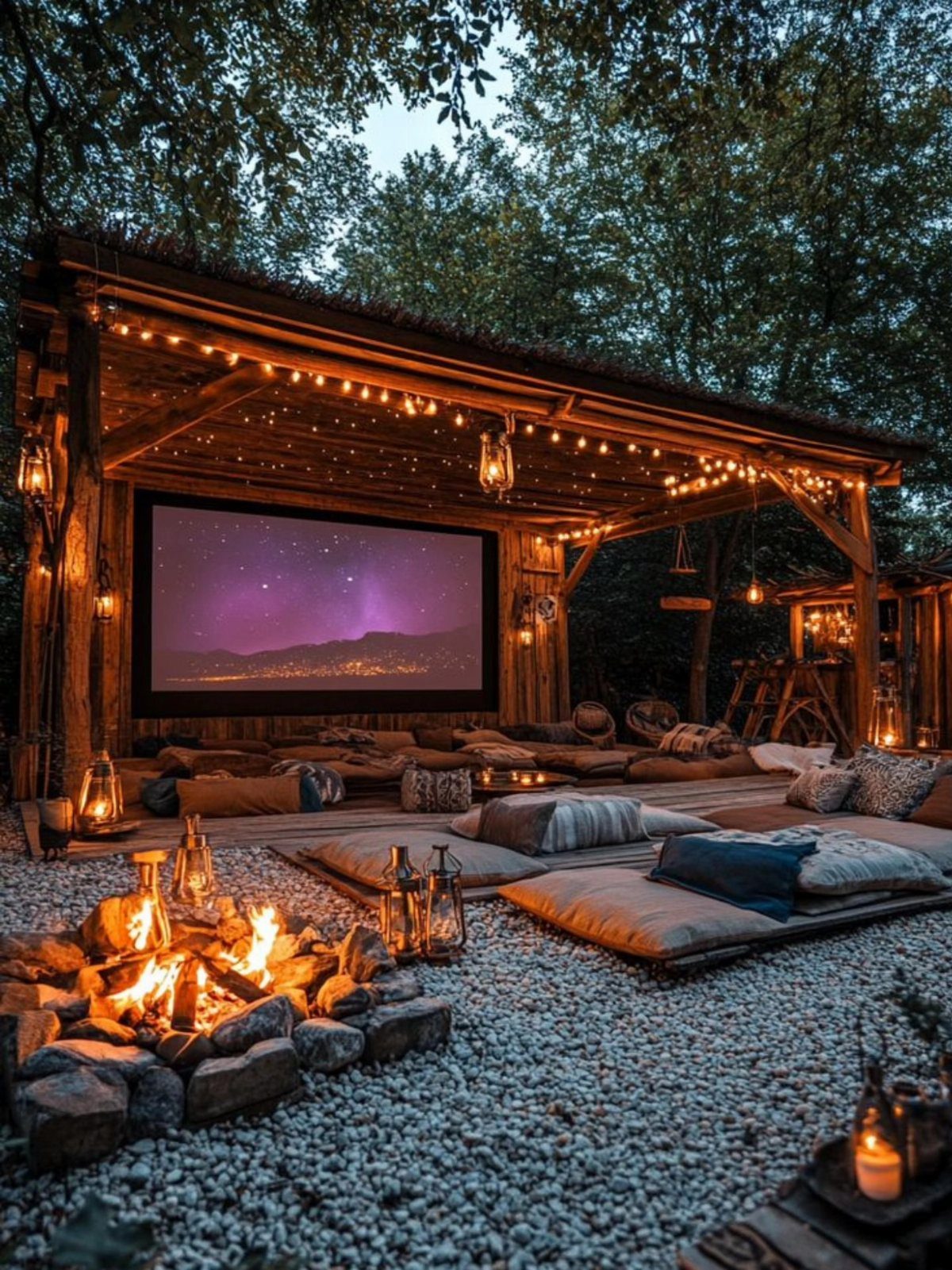
String lights do not light a space so much as declare that the space is finished and ready for use.
I run mine on a photocell timer so I am not crawling under the pergola to flip a switch. LED bulbs last longer and draw less amperage, which matters when you are plugging into a single outdoor outlet.
Measure your area and plan on enough cord to zigzag back and forth with some slack; the spend stays modest if you skip the Edison bulbs.
5. Inviting Patios
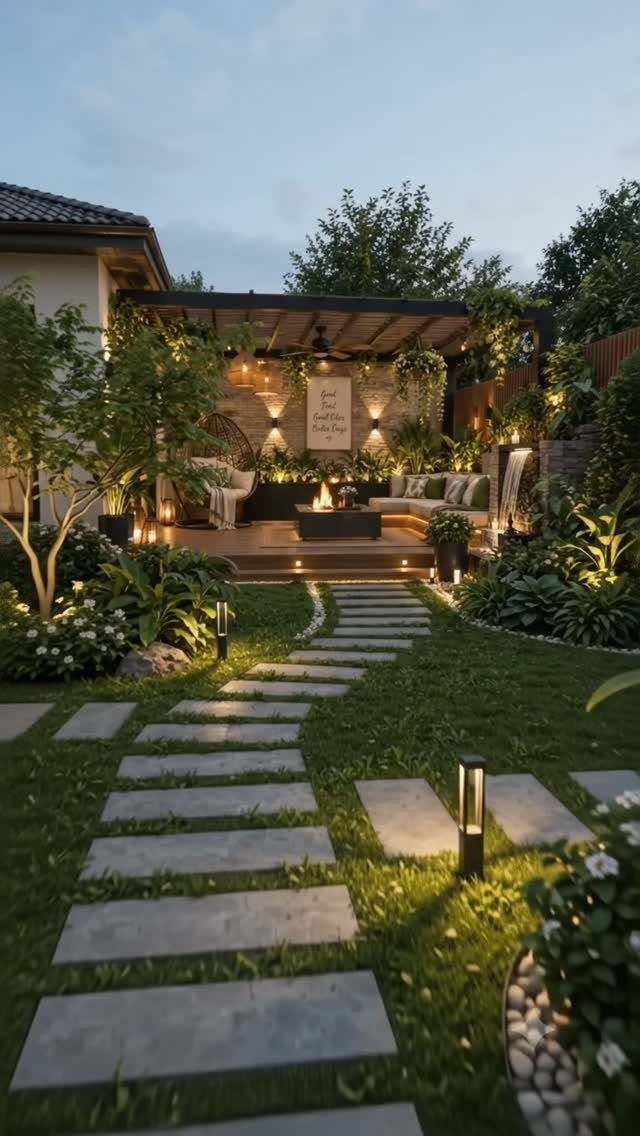
A winding approach to an outdoor seating area makes it feel like a destination.
That is a move you can steal even if your patio is already built: lay a casual path from the back door or garage so the patio feels discovered rather than stumbled onto.
Covered seating with a fire pit extends your season past the first frost in most climates. The hanging chair here is a single accent piece; I would not fill a small patio with them, but one sets the tone.
Stone or concrete pavers on a compacted base cost more if you hire it out than if you install them yourself, but either way the base prep is the step you cannot skip.
6. Vertical Gardening
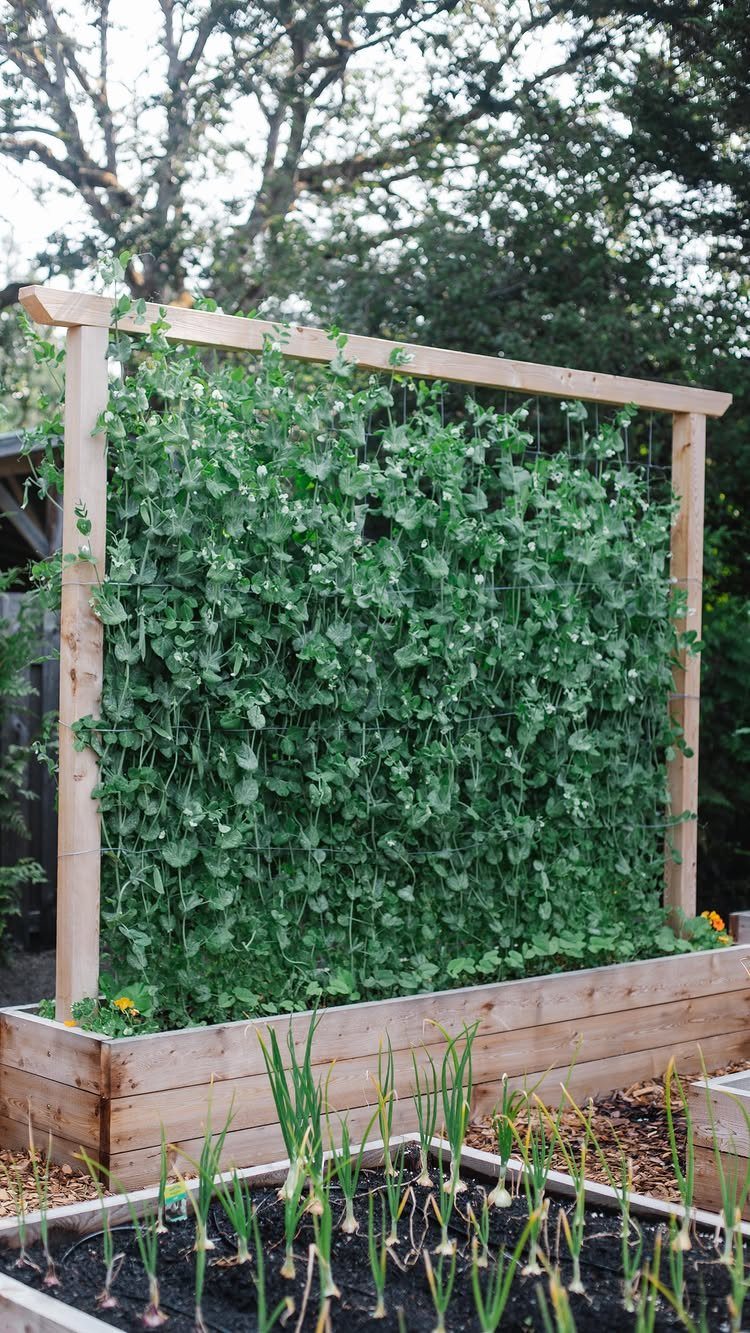
A trellis against a raised bed triples your harvest from the same footprint by directing growth upward instead of outward.
I build my trellises from cedar with galvanized staples to hold the net, set back from the bed edge so falling pods land in soil, not on the path.
Peas want the early season cool; beans and cucumbers replace them on the same structure once summer heat arrives. A modest trellis costs little in lumber and netting, and you can build it in an afternoon.
7. Water Features
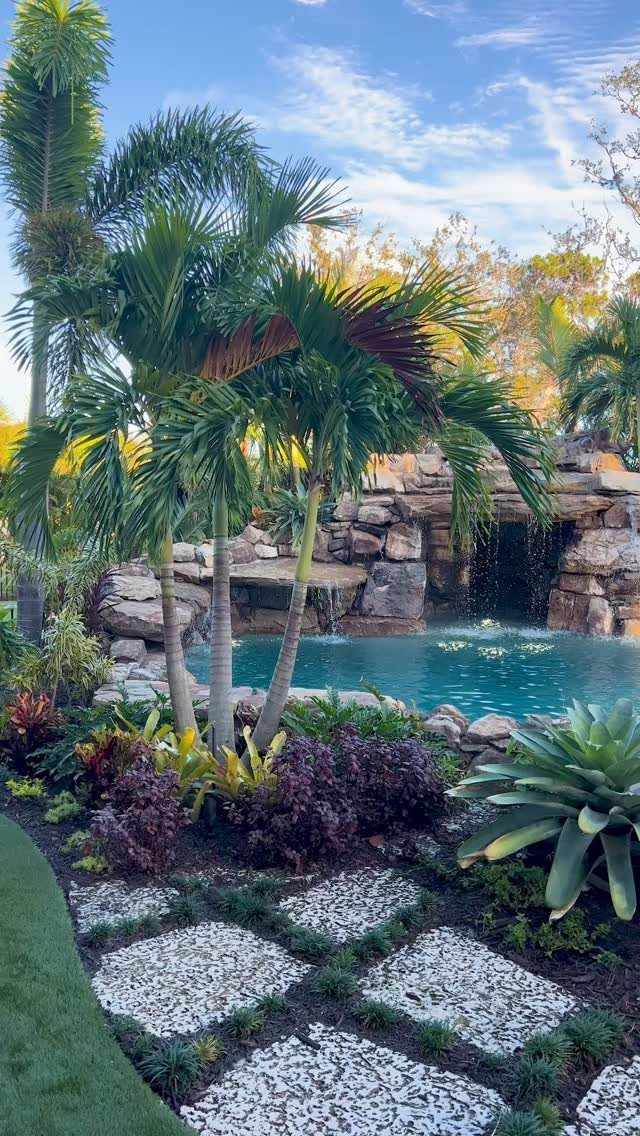
Stone waterfalls drown out traffic noise better than any speaker system, and the humidity they throw off keeps tropical plantings lush through dry spells.
The grotto form works as a swimming pool feature or as a standalone basin fed by a recirculating pump.
A rock waterfall this size needs a reservoir you can access for cleaning; leaves and algae collect fast in open water.
I would build in a bottom drain and put the pump on a timer so it runs evening hours when you are outside to hear it.
8. Outdoor Decks
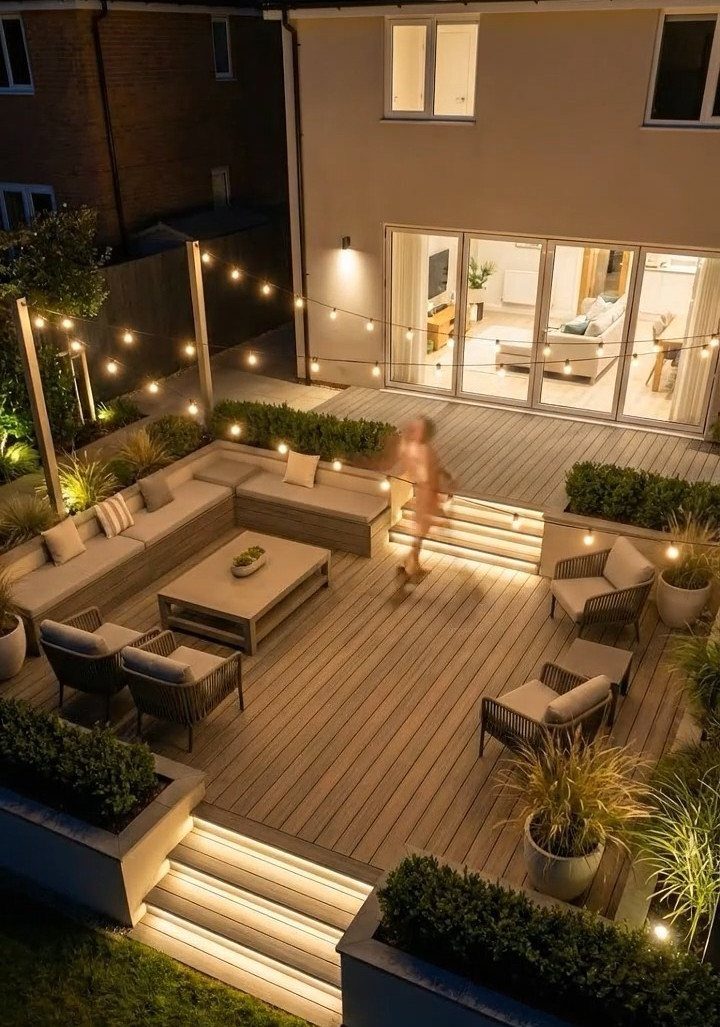
Multi-level decks separate conversation from traffic without walls: the upper tier near the house for cooking, steps down to a lower lounge.
Built-in benches save the space and cost of separate furniture, and the lighting in those steps is safety, not decoration, once guests have had a drink.
Composite decking costs more upfront than pressure-treated lumber but needs no staining and far fewer fasteners over its lifetime. I would still frame in treated wood; the structure lives under cover and the composite skin takes the weather.
9. Luxurious Hot Tubs
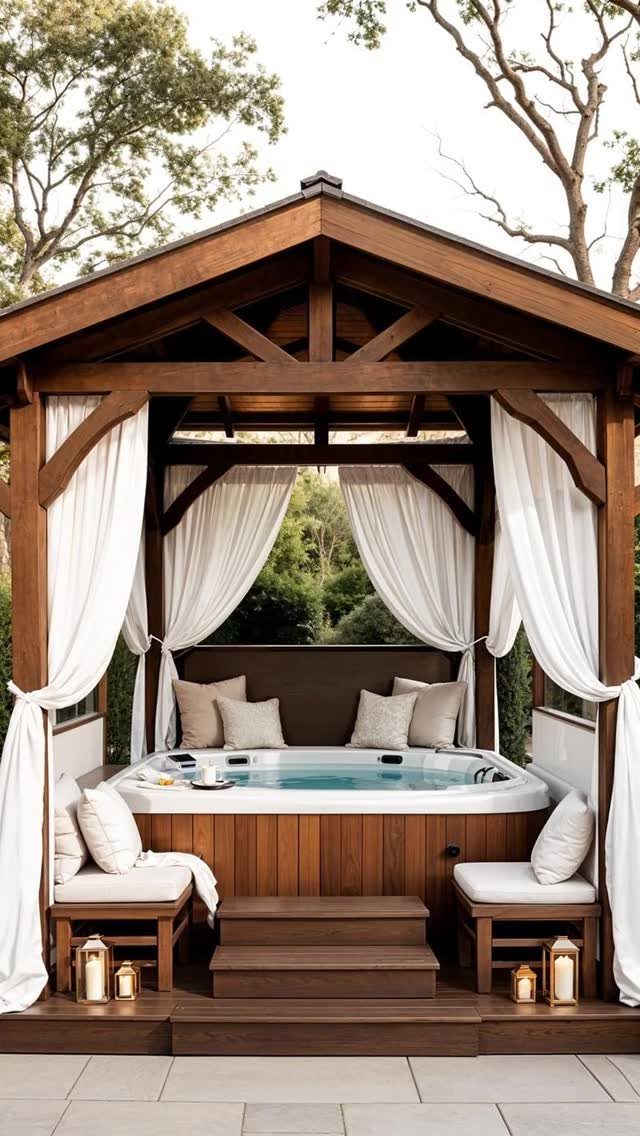
A hot tub inside a gazebo becomes usable in weather that keeps an open tub empty. Curtains block wind and define the space as a room; candles on the surround are the light source, not a secondary effect.
Built-in benches around the perimeter give you dry seating while someone soaks, and they hide the equipment access panel from view.
I would plumb for drainage in that gazebo floor; splashed water and chemical drips will rot untreated wood in 2 seasons.
10. Garden Rooms
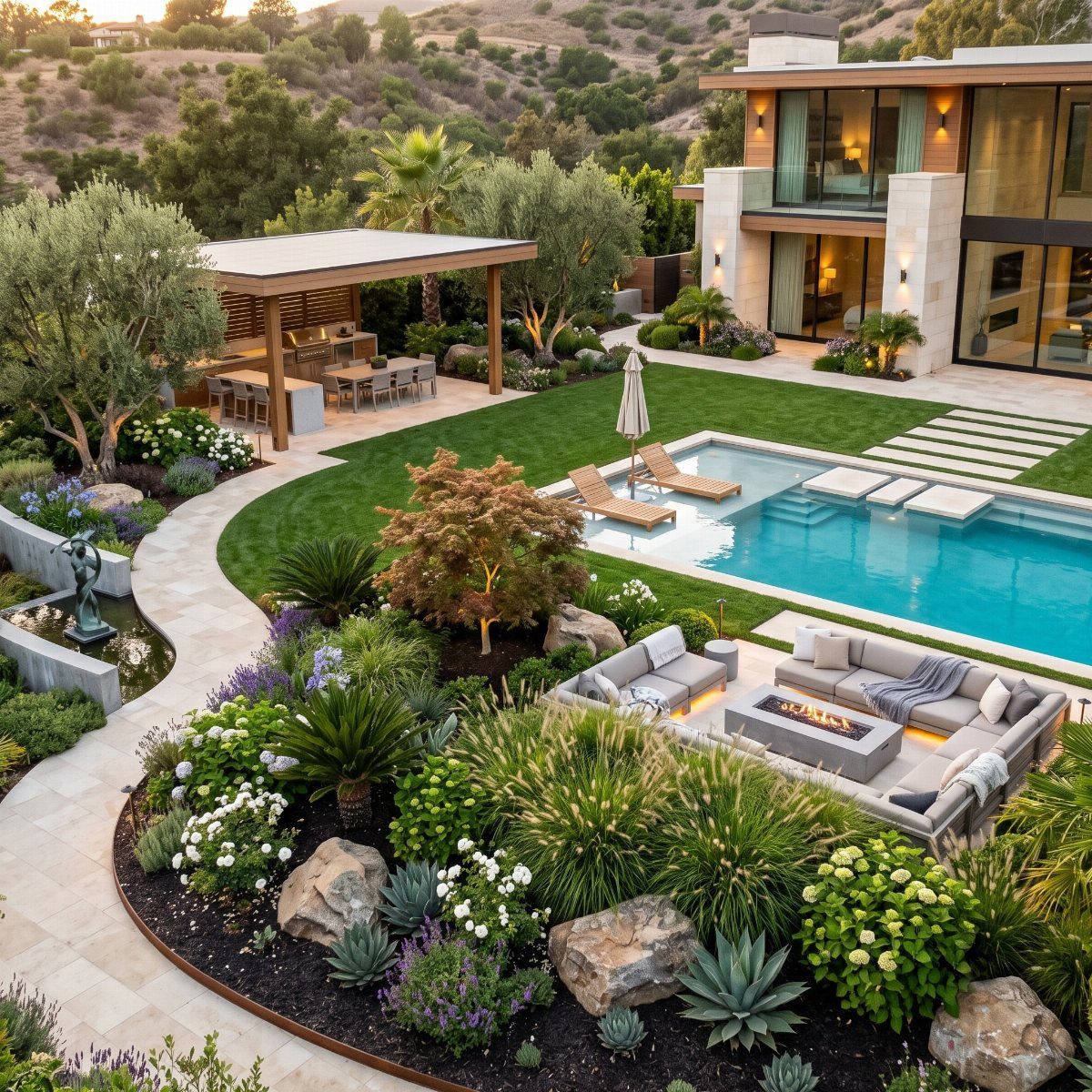
Stone pathways force a slower pace and mark where one area ends and another begins. The curve here is deliberate; straight lines read as service paths, curves read as garden.
A sunken fire pit lounge gains wind protection from the grade change and feels private without fencing.
The outdoor kitchen stays near the house for the grill gas line and the refrigerator outlet; running those across a yard costs more than the path stone.
I would start with the kitchen location and let the rest of the layout follow.
11. Outdoor Sofas
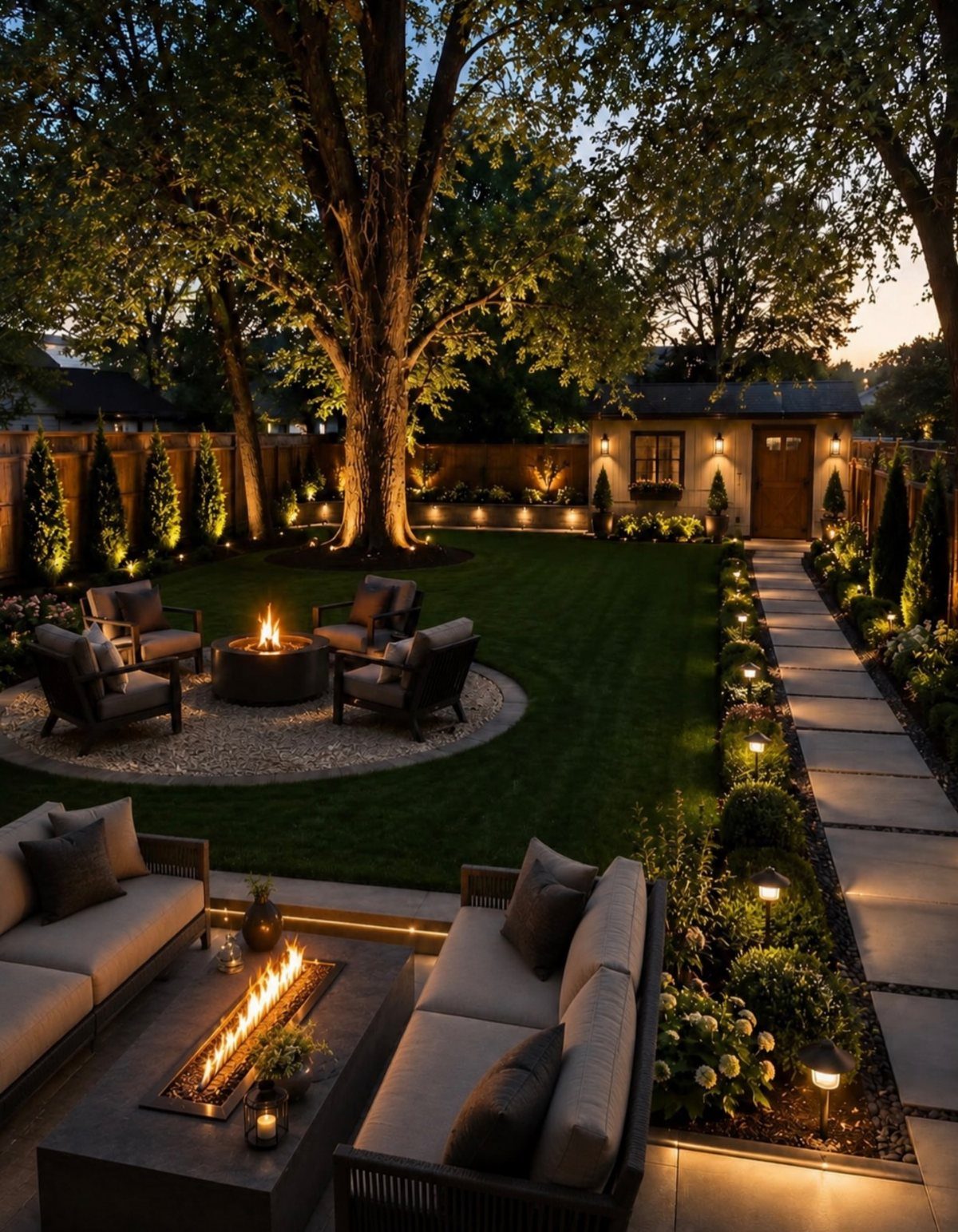
Outdoor sofas around a fire table give you the living room setup most people actually use: facing each other, with a surface for drinks in the middle.
The fire table puts out less heat than a pit but needs no wood and lights with a dial.
Wicker or resin wicker holds up longer than natural rattan in sun and rain; the frame underneath matters more than the weave.
I would buy covers and use them. All-weather cushions last longer out of the wet.
12. Natural Swimming Pools
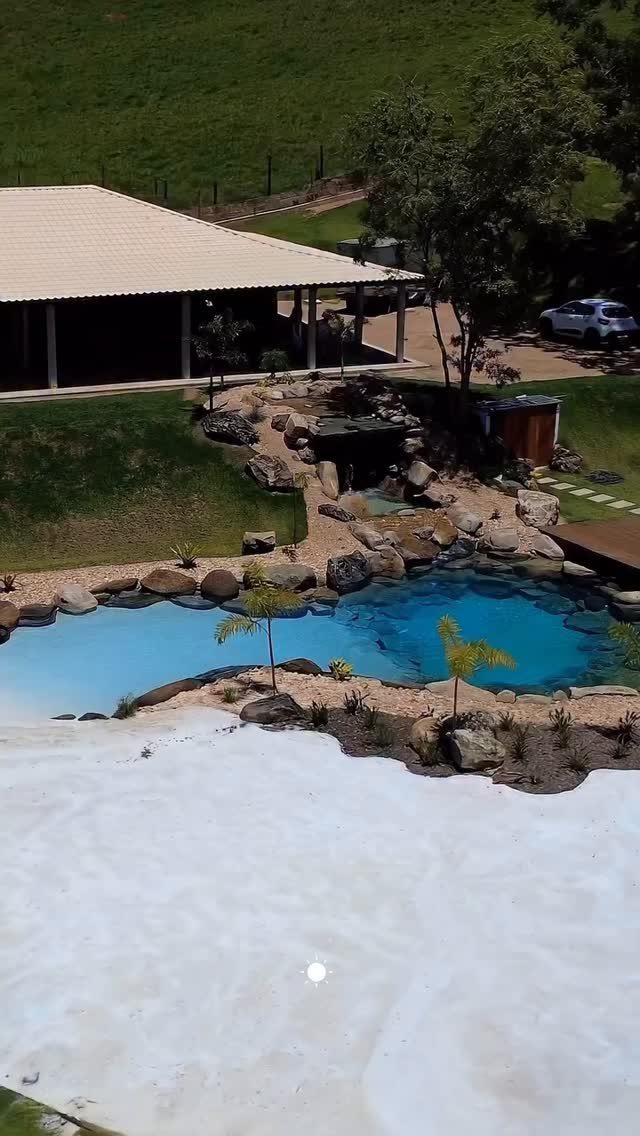
Natural pools use plant zones instead of chlorine, which means no chemical burn on your eyes and no weekly testing. The rock edging here is structural as well as pretty; it shelves the transition from swimming gravel to planted marsh.
These pools cost more to build than conventional ones and need more square footage for the regeneration zone, which takes up a large share of total water area.
Running cost after that is negligible; a small solar pump circulates water through the plants. I would not attempt one without a builder who has finished at least two.
Choosing Plants
Test your soil before you buy a single plant. Compacted lawn soil lacks nutrients and drains poorly; a simple jar test tells you whether you are working with clay, sand, or something worth keeping.
Amend the planting area with compost or aged manure to build structure, not just dump fertilizer on top.
Match each plant to the light it will actually get.
Full-sun vegetables and shade perennials fail in swapped spots, and no amount of water fixes that mistake. Native plants adapted to your region need less irrigation, no chemical pesticides, and still pull in pollinators that boost your vegetable harvest.
Choose varieties with staggered bloom times and winter interest from bark, berries, or colored foliage so the garden carries weight past September.
Budgeting for Improvements
Map costs before you lift a tool. A mortared stone fire pit, a composite deck, and a natural swimming pool with regeneration zone each run to different price tiers, and guessing wrong leaves half-finished work sitting for a year.
Spread major projects across seasons if the total stings. Frame the deck this fall, lay composite boards next spring; build the raised beds now, add the trellis when the first crop finishes.
Phasing works when each stage stands complete on its own, not when it leaves bare dirt or exposed framing you trip over for months.
Put the money where it earns use.
A refrigerator drawer in the outdoor kitchen and a photocell timer for string lights cost little and get touched daily; a television you cannot see in daylight is a line item I would delete.
Frequently Asked Questions
What does it mean to dream about a backyard?
I stick to real gardens you can build, not dream symbolism. It focuses on physical backyard projects and garden design rather than psychological or symbolic meanings of dreaming about outdoor spaces.
What are some new backyard ideas for 2026?
Outdoor kitchens with built-in grills and prep space, fire pits mortared into stone rather than dropped in as metal rings, and pergolas built from pressure-treated lumber or cedar are solid directions.
String lights on photocell timers, vertical trellises for raised beds, and natural swimming pools with plant filtration zones instead of chlorine also rank high for anyone building now.
Each of these gets used on a real schedule rather than sitting as decoration.
What is the rule of 3 in landscaping?
I do not use the rule of 3 in anything here; I group plants by height and spread so the eye moves, not by counts.
It does advise grouping plants by light needs and using staggered bloom times, but not the odd-number grouping principle common in design guides.
How to design your dream garden?
Start with what you will actually use daily, then let the rest follow. Keep the outdoor kitchen close to the house if you want gas or electric; trenching utilities across a lawn runs past what most weekend budgets allow.
Test soil pH and amend with compost before buying plants, match each variety to its light requirement, and choose natives adapted to your region for lower water and no chemical pesticides.
Phase major work so each stage finishes completely rather than leaving bare framing or dirt you trip over for months.





