
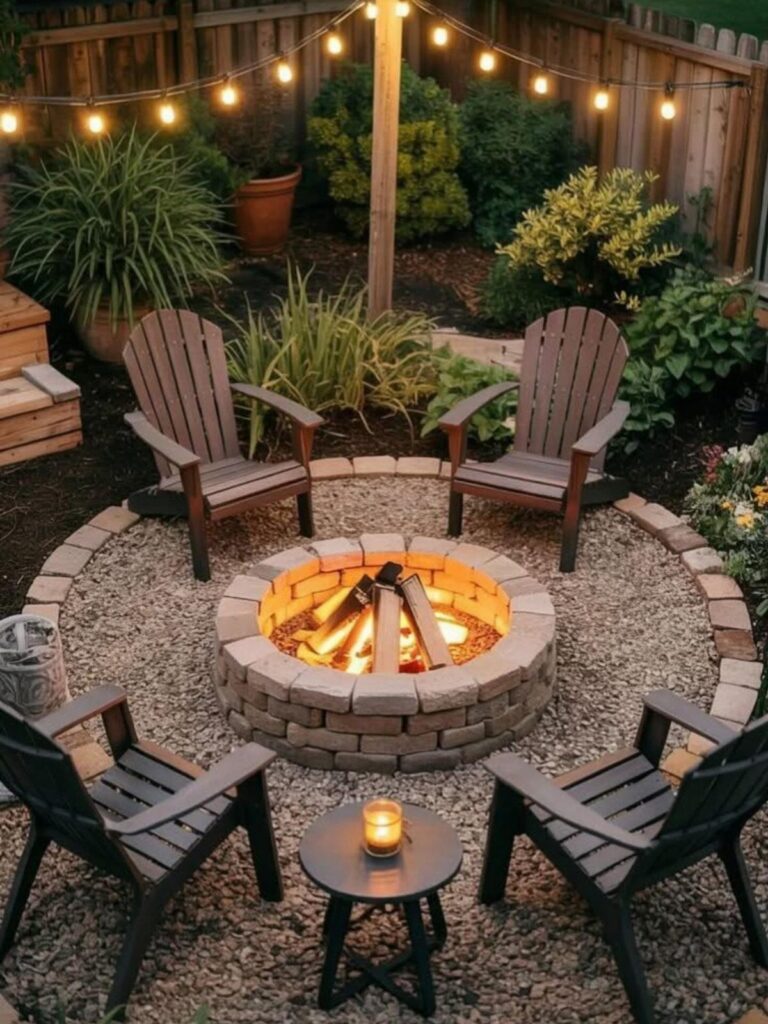
The ideas below run from a single ton of gravel to a two-weekend bar build, and the deciding factor is how many Saturdays you can give, not how much you can spend.
The rust-finished galvanized steel on that bar came from toilet bowl cleaner, and that kind of detail is what separates a real project from a catalogue photo.
1. Vertical Gardening
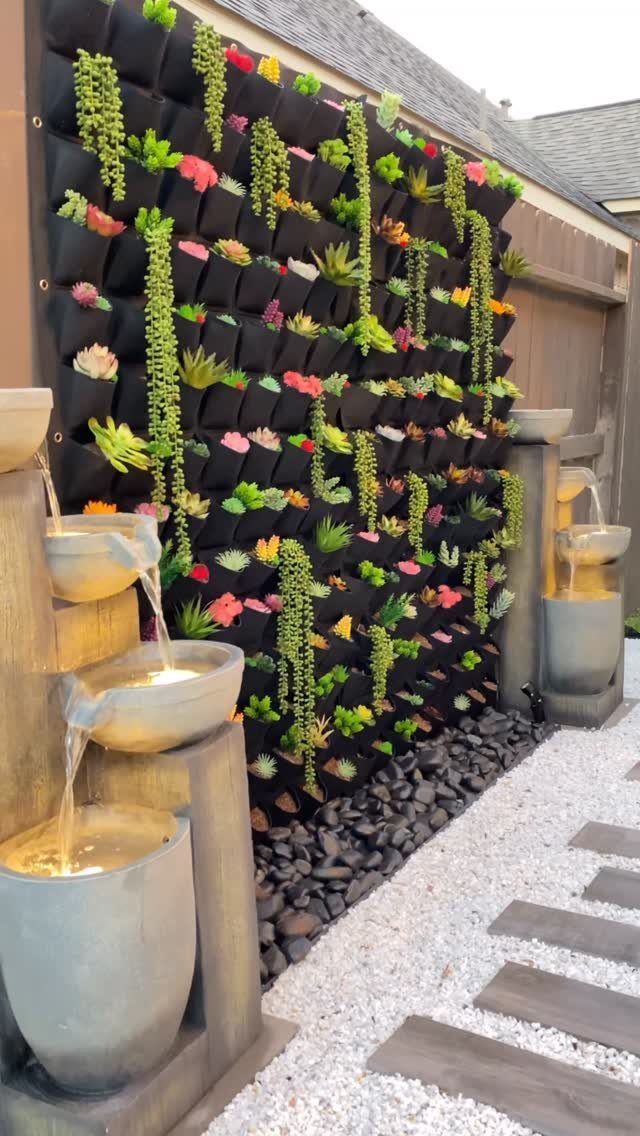
A pocket planter screwed to a fence turns dead vertical space into growing room. Black fabric pockets drain fast and cost less than the solid planters, though you replace them sooner.
Succulents work because they stay small and handle the heat that builds on a fence face. I would hang it where morning light hits and add a drip tray underneath, since gravel patios let water through everywhere.
2. Low-Cost Lighting Solutions
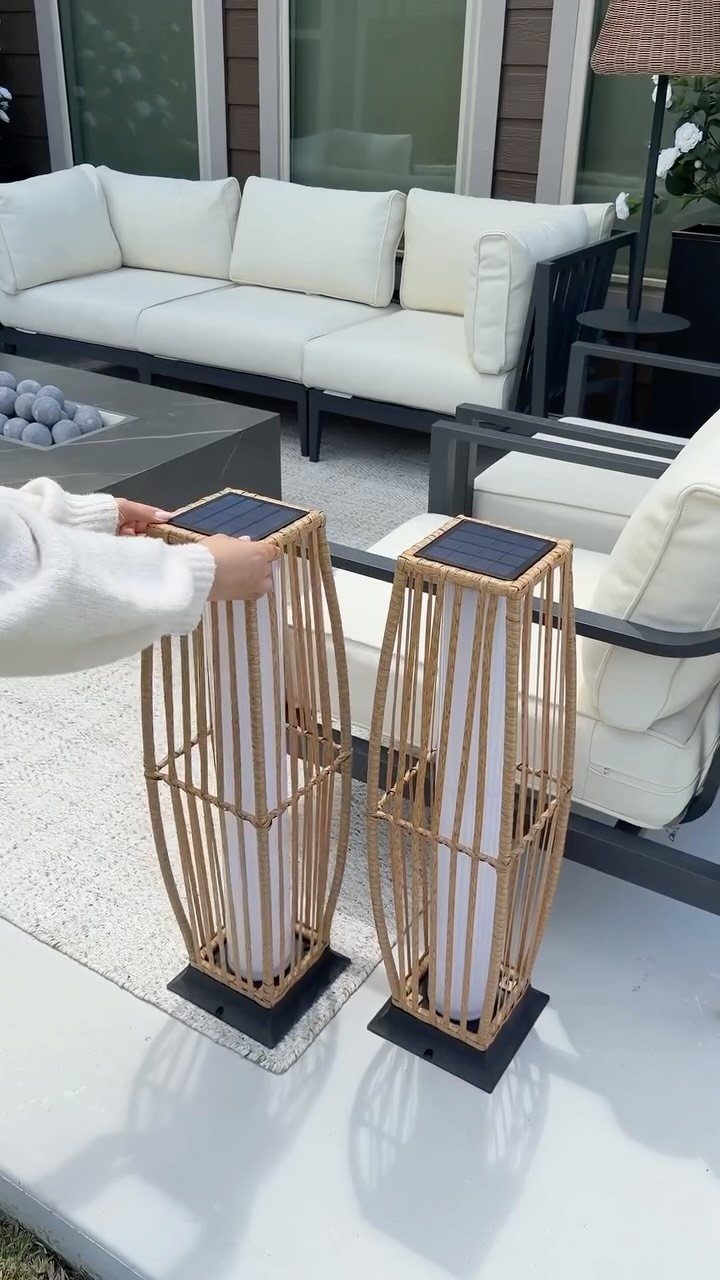
Solar lanterns in a rattan-style weave give you light without running cable or paying an electrician. The tall floor versions stand on their own, so you move them as the party shifts.
They charge through the day and run for hours after sundown, though I have found they dim faster on cloudy weeks. Two flanking a seating area do the job; more feels like a hotel lobby.
3. Gravel Patio
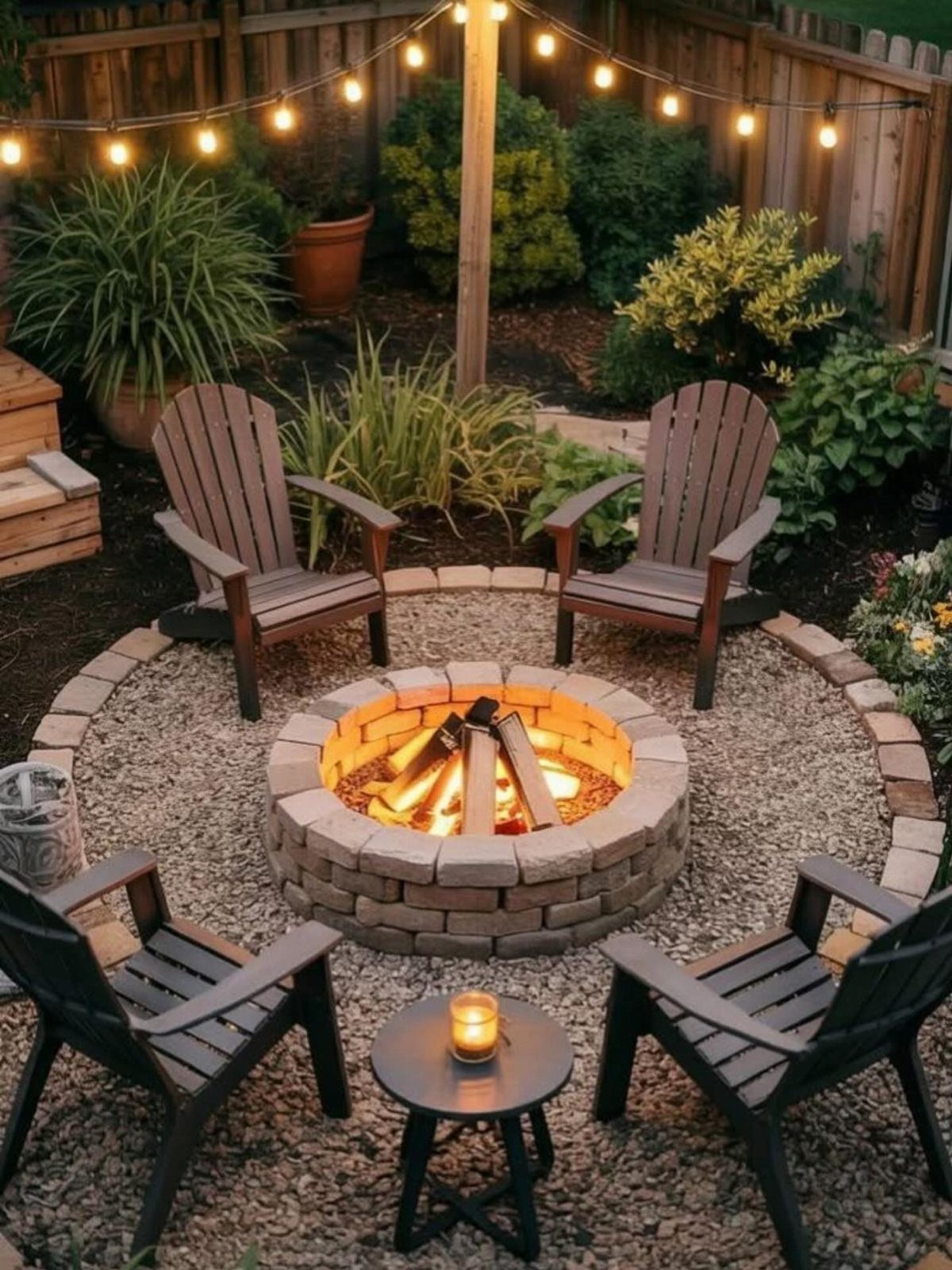
Gravel is the cheapest hard surface you can lay yourself. A small patio needs roughly a ton of clean stone delivered, plus brick or stone edging to keep it from migrating.
You will rake it level, tamp the base, and weed through it for years, but you will also skip the concrete pour.
4. DIY Pallet Lounge Furniture
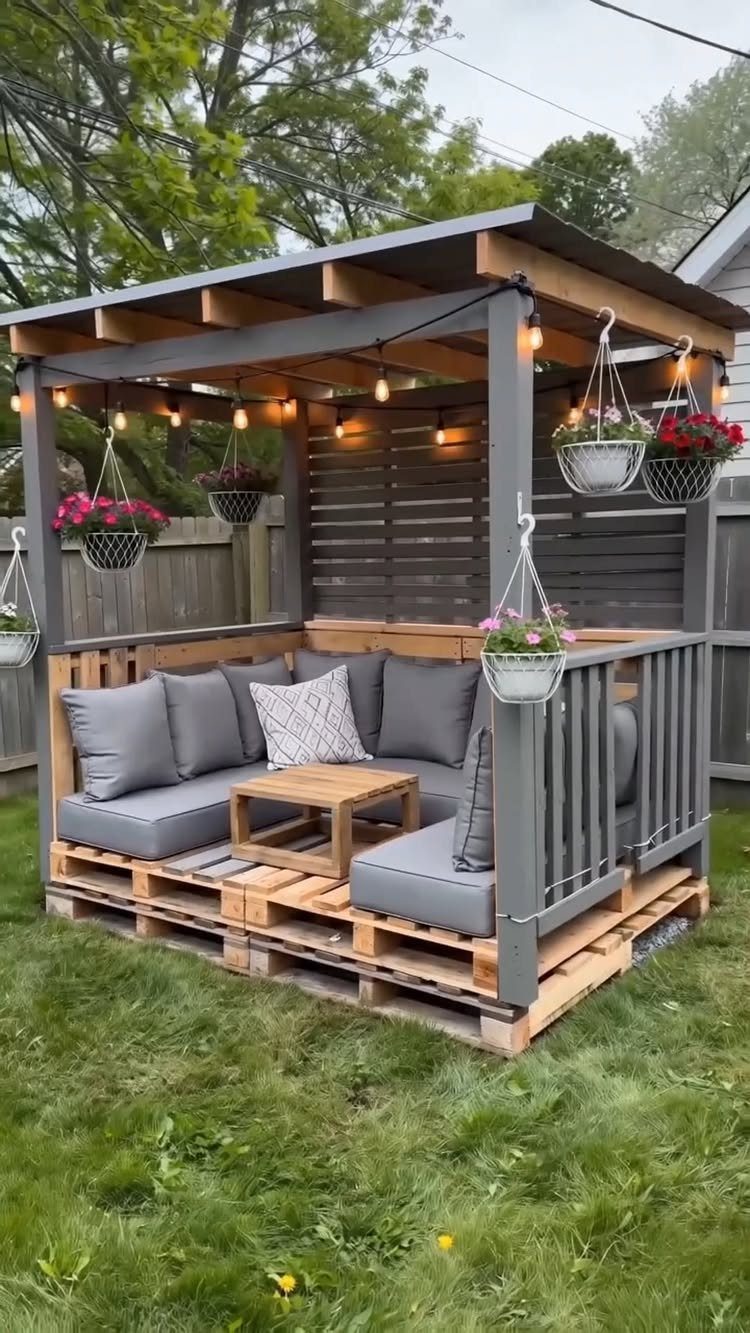
Pallets break down into a sectional frame faster than you expect. I would build the frame on a Saturday and hunt Facebook Marketplace for cushions on Sunday.
5. Built-In Corner Bench
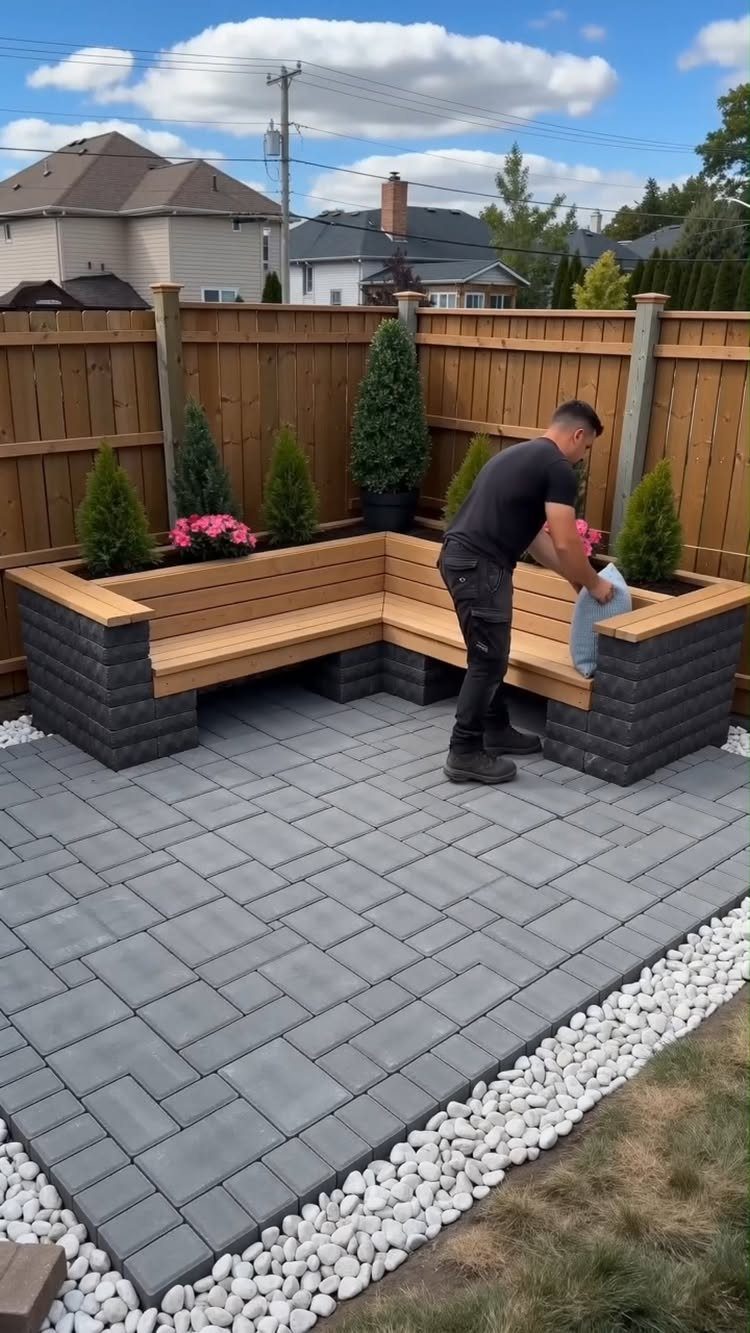
A corner bench built from retaining wall blocks and timber turns an awkward angle into the most used seat on the patio.
No mortar, no posts in the ground, no permit. I like that the wood lifts out if it rots, and the blocks stay put for the next version.
6. Outdoor Rugs and Cushions
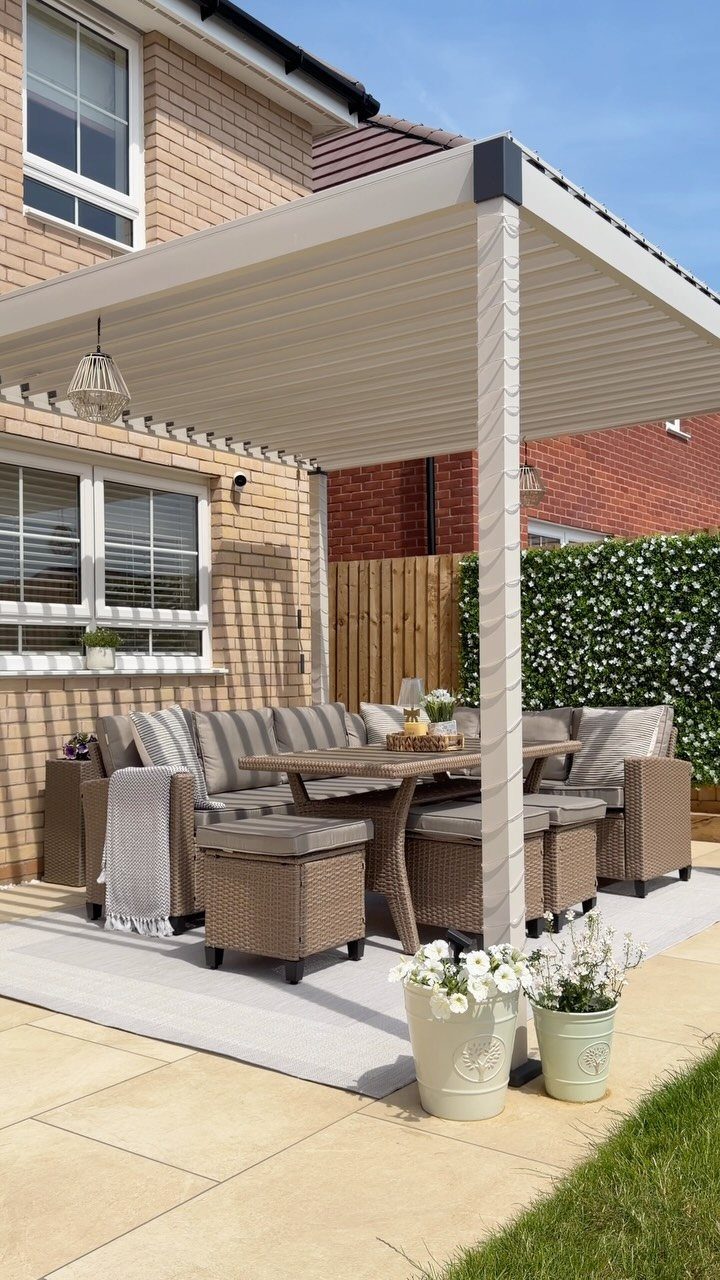
An outdoor rug and fresh cushions reclassify a concrete slab as a room.
Polypropylene rugs hose clean and come in sizes that fit most patios. I would buy the rug first, then choose cushions to it, since rug stock turns over faster than pillow patterns.
7. Repurpose & Upcycle
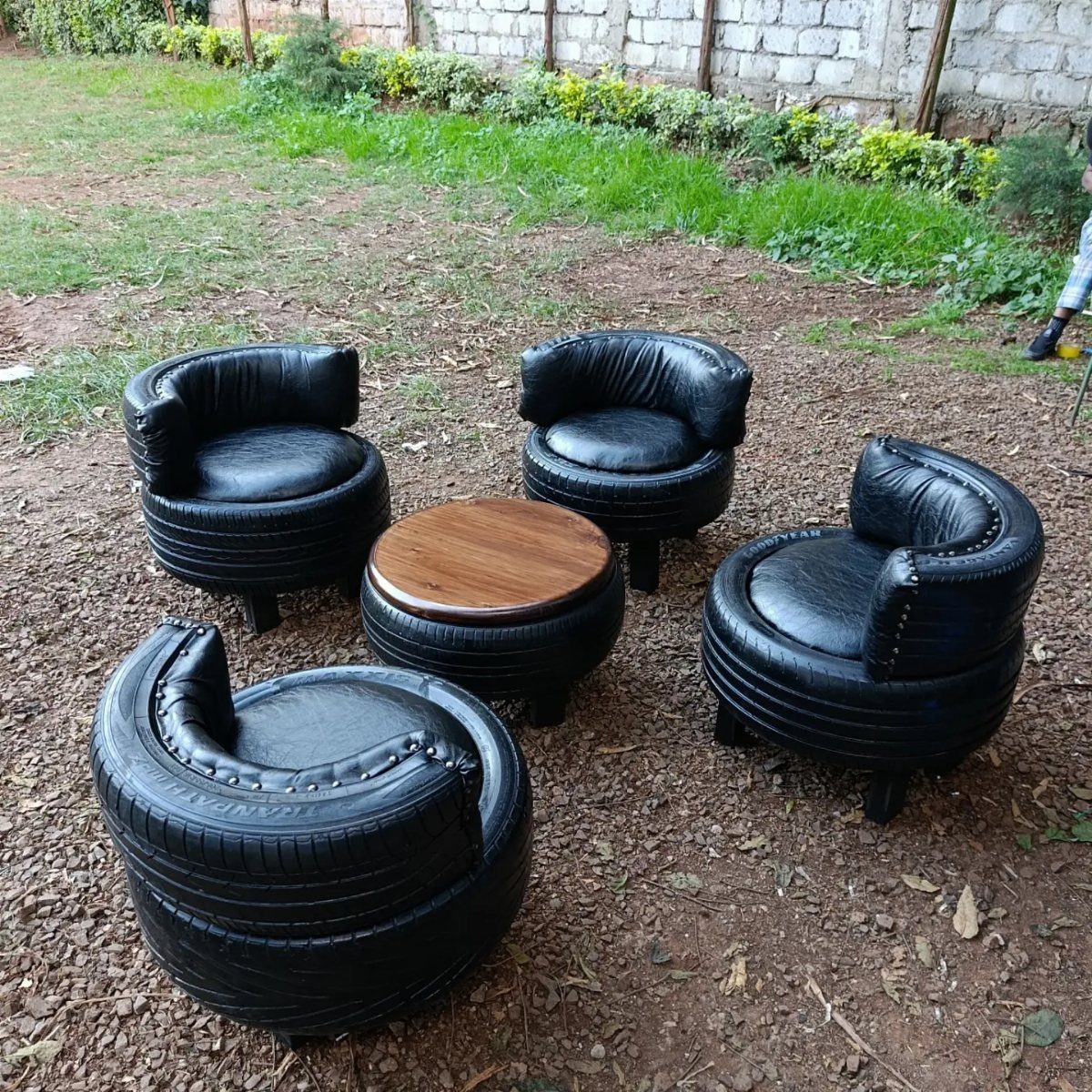
Car tires stacked and strapped make side tables and chairs that shrug off rain. Black paint unifies the look; cushions top the seats and the table.
I would use outdoor foam wrapped in marine vinyl so water runs off instead of soaking in. The rubber keeps the piece heavy enough not to shift on gravel.
You will spend Saturday cleaning and painting, not building from plans. The trade is that tires hold heat in full sun; I would place them where afternoon shade falls.
8. Build Your Own Patio Bar
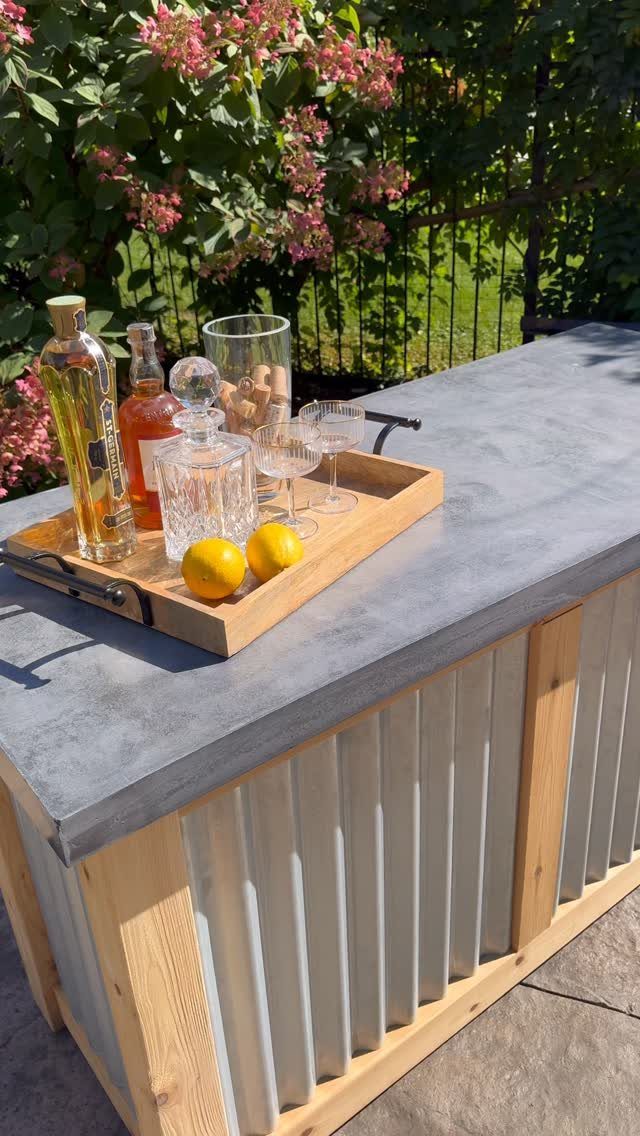
A bar built from lumber and corrugated metal sheet stands on its own feet against a wall or fence.
The concrete-look top is cast or bought as a slab; the metal front is galvanized steel patinated with toilet bowl cleaner for a mottled rust finish, a technique the builder of this one figured out.
I would seal the patina with clear coat so the rust stays surface-only and does not run onto the concrete.
The whole frame goes together with screws, not welding. Two weekends: one for framing and sheeting, one for the top and finish.
Smart Shopping Tips
Thrift stores, flea markets, and yard sales are where patio pieces go to get a second life. Clearance sales at big-box stores hit hardest in late August, when seasonal inventory gets shoved to the back wall.
Patience pays more than gas money here. I make a saved search for "outdoor cushions" or "pallet wood" and check it twice a week; the good stuff lasts hours, not days.
A little strategy means not buying the first rattan lantern you see, because another seller will have the matching pair next week.
Planning Your Patio
I start every patio plan with a hard list of what actually happens out there: morning coffee, weekend grilling, or kids drawing with chalk. Those uses decide which pieces earn money now and which can wait.
A budget only works when it is split by job, not by aisle.
I put structural money first: the surface you stand on, the seating that holds weight, the shade that keeps you outside in July. Decorative trim and extra lanterns come from whatever is left, and they always can come later.
Something will cost more than you guessed, usually the base layer or the delivery fee, and having that buffer means not stripping the plan mid-project.
DIY Projects
DIY works best when the project matches your tools and your Saturdays. Pallet frames need a circular saw and a sander; tire furniture needs a wire brush and paint space you do not mind smelling for a weekend.
I match the project to what I already own, because renting a nail gun for one bench erases the savings.
Online tutorials fill the gaps between knowing what you want and knowing the cut order.
I watch 3 builds start to finish before I buy wood; each builder solves the problem differently, and the second or third usually has the simpler joint.
Reclaimed material is free until it costs you time.
I budget an extra half-day for cleaning, stripping, or straightening anything that came from a demolition or a curb pile. The personality is worth it, but only if you counted the hours.





