The best herb planter boxes are the ones you will actually tend, and that choice depends on whether your back can handle bending, your balcony has floor space, or your windowsill gets more than four hours of sun.
A 12-inch soil depth in a raised bed lets cilantro and parsley send taproots straight down instead of bolting early, but that same elevation dries out faster in high wind.
1. Raised Herb Planters
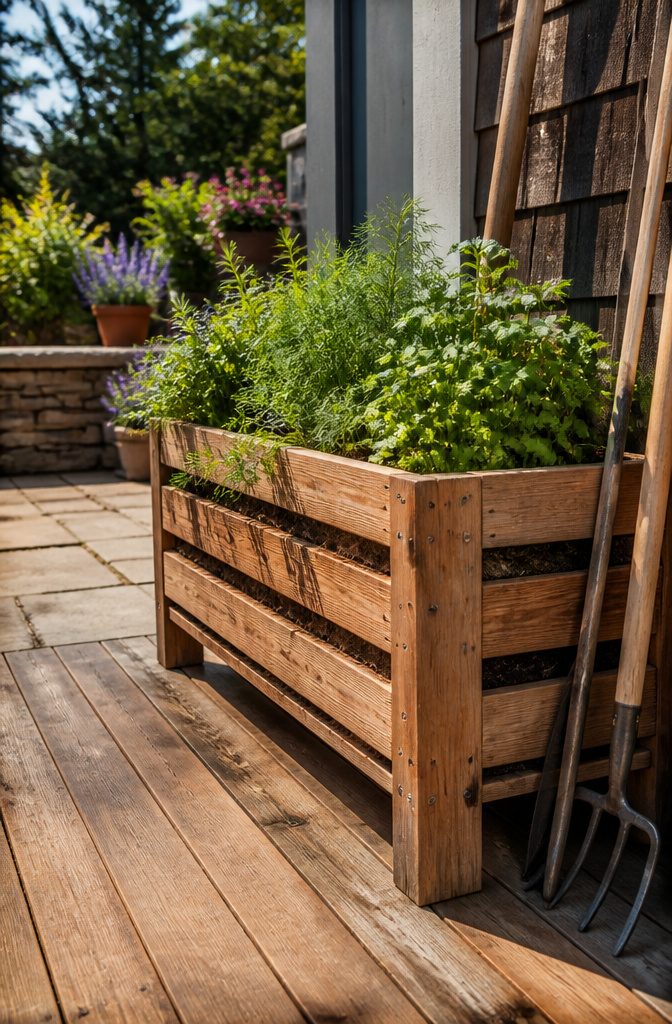
Raised herb planter boxes earn their floor space the moment you realize you are not bending to weed them.
A 12-inch soil depth is the figure to remember, because that single foot of elevation is where cilantro, dill, and parsley can finally send their taproots straight down instead of circling shallow soil and bolting early.
Six inches will keep most annual herbs alive, but the extra room changes maintenance in ways that matter for a weekend gardener.
Drainage improves, moisture holds more evenly through a hot afternoon, and the soil warms faster in spring because the whole mass sits above the cold ground.
Raised beds do take upfront assembly and the cost of fill dirt, and they dry out faster in high wind.
For anyone already nursing a sore back or planning to check these boxes daily for kitchen snipping, that elevation pays for itself before the first harvest.
Keep the width to at least a foot if you want multiple herbs in one box, and give each plant five inches of elbow room or the dill will shading out the parsley by July.
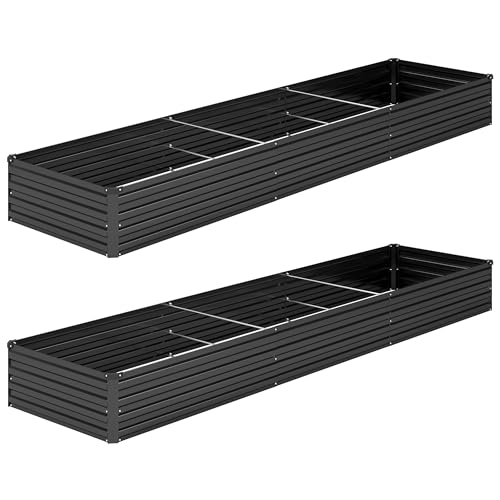
Size: 144"(L) x 24"(W) x 12"(H),Planter raised bed provide outdoor sufficient space to grow vegetables,flowers,galvanized garden bed
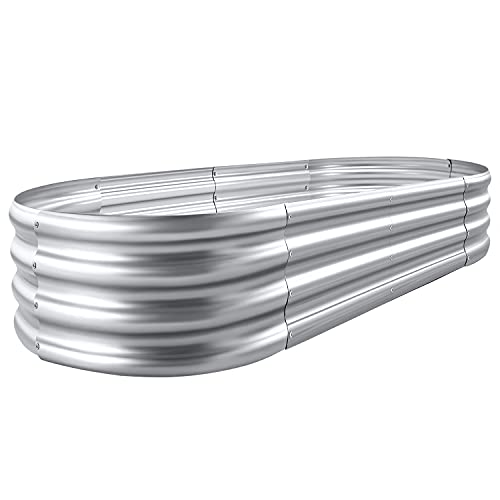
Each raised metal garden bed size: 4×2×1ft ,7.14Cu

100% Cedar Wood: Our garden bed is constructed using sustainably sourced cedar wood, known for its durability against the elements.
2. Vertical Planters
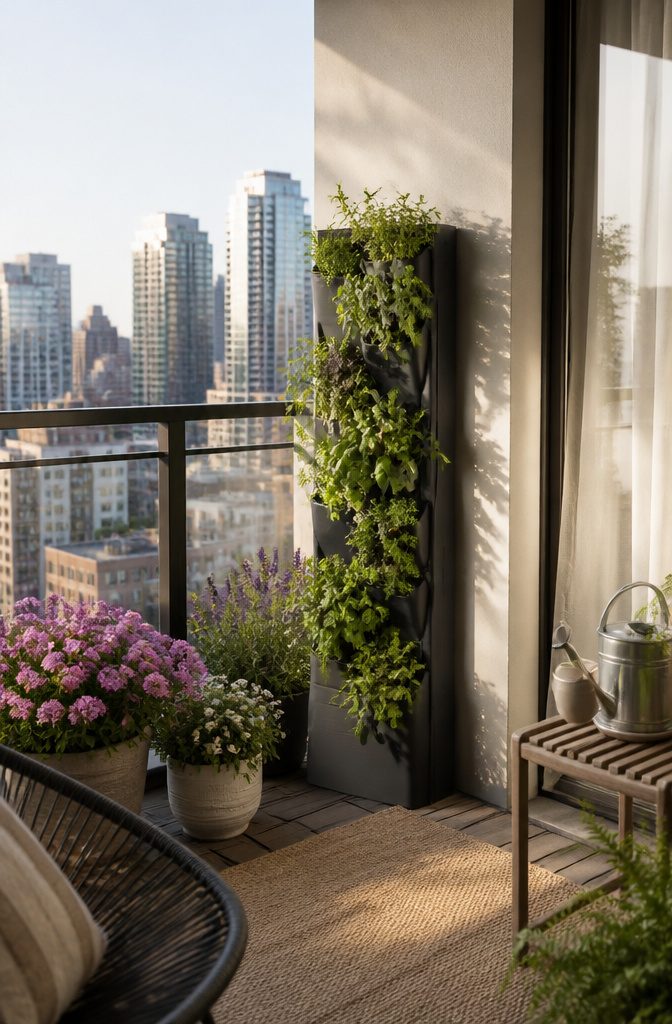
A 22.25" by 27.5" footprint giving about six linear feet of growing space is what makes vertical herb planter boxes work on a balcony where a single long bed would block the door.
The stack buys you planting depth in layers instead of spreading it across the floor. I have watched friends try to squeeze a traditional raised bed onto a narrow terrace and end up with a walkway they cannot use.
Watering is where the trade-off shows.
The top tier drains through to the bottom ones, so the lower herbs sit wetter and the top dries faster. You learn to check the bottom soil with a finger rather than trusting the surface look.
Root space is another limit: six inches of depth in a vertical stack suits thyme, parsley, and compact basil, but a rosemary shrub wanting to lignify will fight the walls.
Indoor-outdoor flexibility is the quiet advantage.
A plastic three-level planter that resists splintering or warping can start seeds inside in late winter, then move out once frost passes. That same move would crack a wooden box or split a cheap ceramic stack.
For a renter with one weekend and a hundred dollars, vertical wins when floor space is the bottleneck. Choose it when your priority is access to herbs, not a statement piece.

3-TIER VERTICAL DESIGN: Features three spacious planting tiers, each measuring 33.9 inches wide, to maximize your growing space while keeping a compact footprint.

Space-Saving 3-Tier Design: The 3-tier planter box design will not take up too much floor space, which can separate and organize the sections as well as grow different kinds of plants. The trapezoidal design allows all plants to enjoy full sunlight for better growth. The box bottom of each tier is equipped with drainage holes to help drain excess water and prevent root rot

【Material Description】The vertical raised garden bed consists of a sturdy metal frame and 3 plastic boxes (Dimension: 16.8 x 7 x 5.5 inches). It is lightweight, rust-resistant, and easy to move, making it a great choice for both indoor and outdoor use.
3. Container Planters
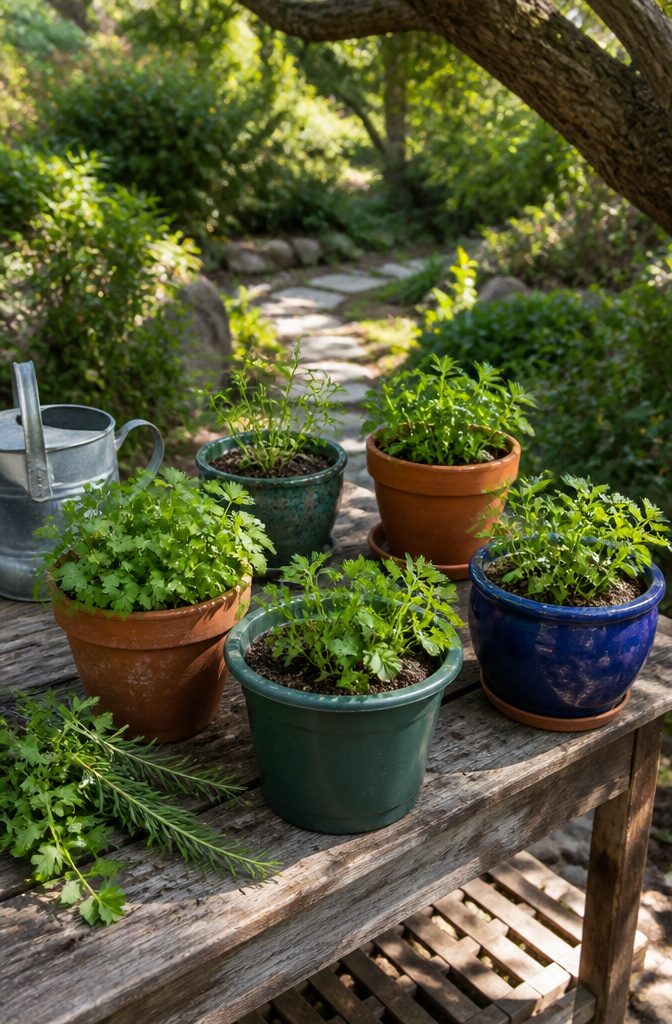
A container planter is the first place most people start with herb planter boxes, and the choice usually comes down to material and whether water can actually escape.
Six inches of soil depth handles most annual herbs, though dill, parsley, and cilantro push tap roots deep enough that 10 to 12 inches keeps them from stalling out midsummer.
Width matters too if you are grouping several plants together; give each herb at least five inches of elbow room or the thyme will strangle the chives before you get a second harvest.
Terracotta breathes and keeps roots from overheating, but it dries fast and cracks in a hard freeze. Plastic holds moisture longer and weighs less, which matters if you are moving pots in and out with the seasons.
Glazed ceramic splits the difference on temperature, though a solid piece can trap water against the crown. Whatever material you choose, drainage holes spaced every three to four inches across the bottom matter more than the pot’s looks.
Herbs rot from the roots up faster than they die of thirst, and Mediterranean types like rosemary and thyme will turn up their toes in standing water within a week.
If the container you want lacks holes, drill them before you fill it; retrofitting a soggy pot means starting over with new plants.

This faux driftwood planter is made of resin (NOT WOOD), durable and sturdy. High durability makes our resin flower pot be well used both indoor and outdoor. Plants Are NOT Included.

An indoor herb garden:Our herb planter is the perfect solution for creating an indoor herb garden. It is a planter set with a tray, and it does not include plants and seeds. These planters are designed specifically for herbs and are suitable for indoor or outdoor use. Made of durable metal with a glossy white finish, they are not only functional but also add a farmhouse touch of style to your space.

Drain Holes Design -- Window planter box design with many small drain holes,prevent excessive watering, maintain soil drainage and ventilation.
4. Smart Planters
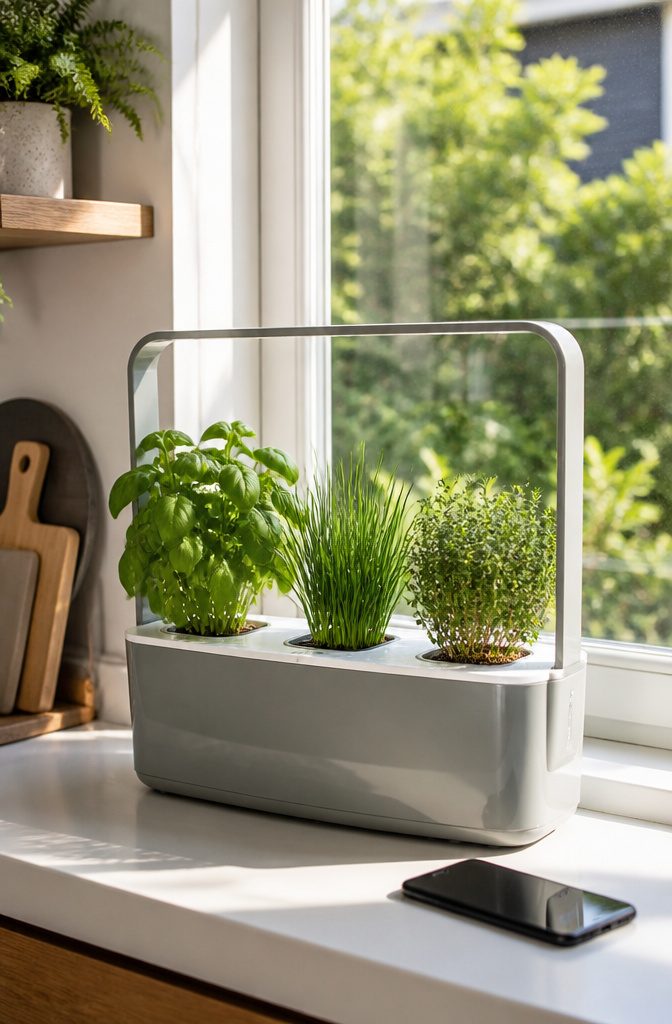
Automated watering in herb planter boxes starts to make sense once you are growing in more than three containers or keeping plants on a balcony three flights up.
A reservoir and wick system buys back the daily check-in, which matters if you travel for work or forget to water until the basil droops.
The pump-driven versions with soil sensors and app alerts track moisture more precisely than a finger pressed into the mix, but that same precision becomes a liability when the sensor drifts and you stop looking at the plant itself.
I think the maintenance trade-off is real. A simple gravity-fed drip line needs seasonal cleaning of its emitters, and a smart planter with a reservoir wants a vinegar flush every few months or algae takes hold.
Electronics shift the task from observation to calibration: you are troubleshooting float switches instead of noticing yellow lower leaves.
For a windowsill setup with four pots, that overhead is overkill. For a vertical wall of twelve planters in afternoon sun, it can be the difference between a harvest and a dried-out row.
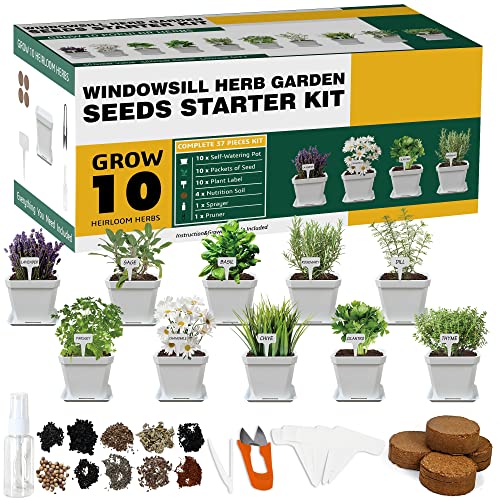
MEET ALL NEEDS FOR HERB GROWING: Package comes with 10 types of herb seeds, 10 pots, 10 plant markers, 4 soil discs, 1 water bottle, 1 mini metal pruner, and an instruction & growing guide. The herb grow kit is super simple and easy to use, perfect for garden beginners.
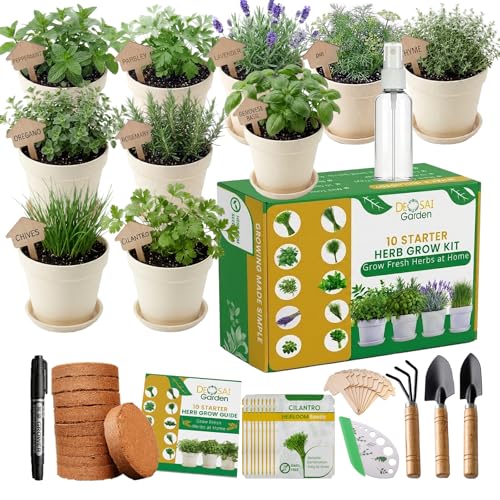
𝐂𝐎𝐌𝐏𝐋𝐄𝐓𝐄 𝟏𝟎 𝐇𝐄𝐑𝐁 𝐒𝐓𝐀𝐑𝐓𝐄𝐑 𝐊𝐈𝐓 DESAI Garden herb growing kit includes chives, oregano, Genovese basil, cilantro, thyme, rosemary, peppermint, parsley, lavender, and dill seeds. This premium herb seeds variety pack allows every home chef to harvest fresh ingredients directly from their own thriving indoor garden.

Complete All-In-One Kit - No need to buy separate supplies. This herb starter set comes with 4 plastic planter pots, 4 soil discs, 4 plant markers 4 heirloom herb seed packets, and essential planting tools—everything you need to start your indoor herb garden immediately.
5. Windowsill Planters
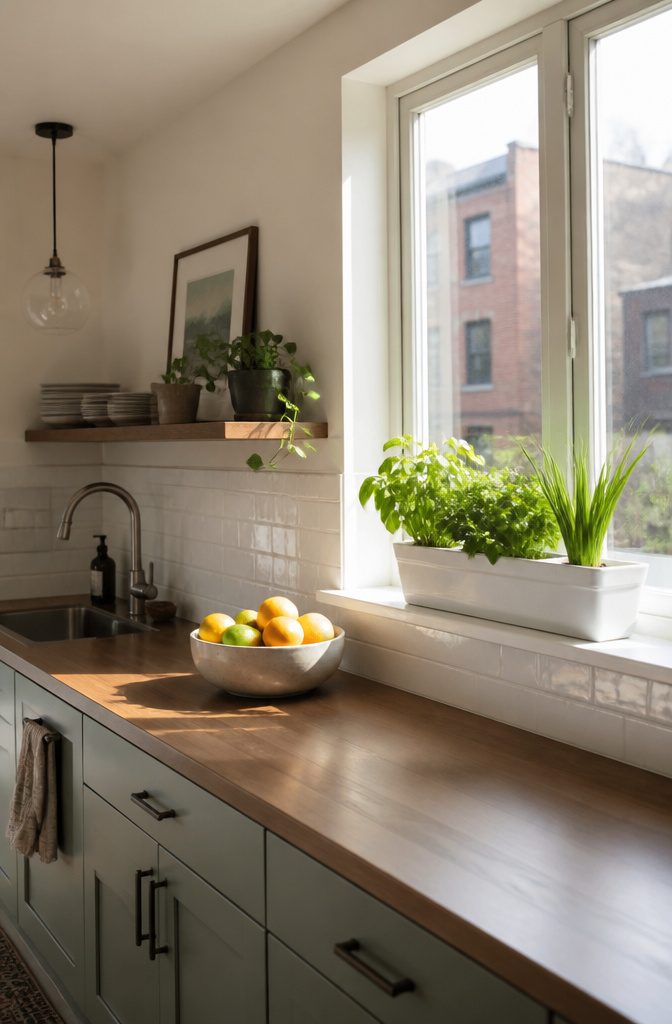
Compact planters built for kitchen windowsills promise the dream of clipping fresh basil while the pasta water boils.
The reality is harsher. Most windowsills in American apartments face north or another building, and even a south-facing window delivers only 4 to 6 hours of usable light on a good day.
Basil wants that sun; parsley and chives forgive lower light, but basil turns leggy and bitter without it. A grow light hung a few inches above the leaves fixes this, yet most windowsill kits skip mentioning that added cost entirely.
Drainage trays matter more indoors than out. Water that escapes a planter box ruins a windowsill in one season of use, and the saucer that comes with most kits is rarely deep enough for enthusiastic watering.
I would rather see someone choose a planter with a proper reservoir or commit to watering in the sink, not on the sill.
The one honest case for these planters is access, not abundance. One compact box with three herbs you actually cook with beats a six-pot kit of seeds you will not touch.
Choose one with space for a few types of herb that you’ll use often.
That line is the entire strategy.
A windowsill planter fails when it tries to be a full garden. It works as a single row of daily-use herbs, moved to the counter under a grow light if the window disappoints.

【Indoor Herb Garden】Experience the joy of gardening with our specialized indoor herb planter. This set includes a planter with a tray but does not come with plants and seeds. Designed specifically for herb cultivation, these planters can be used both indoors and outdoors. Crafted from durable metal with a sleek, glossy white finish, they blend functionality with a farmhouse style to enhance your living space.
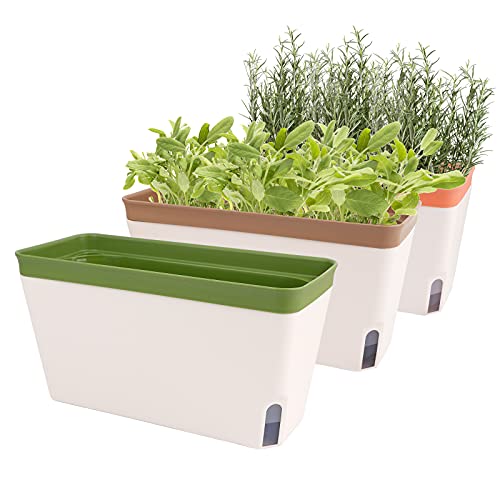
SELF-WATERING PRINCIPLE: Through two absorbent cotton ropes, the self watering pots provide water to the soil and keep the soil moist through the principle of osmosis, without having to water the plants regularly. Even if you leave home for a few days, it can help you take care of the plants and avoid plants die from water shortage.

Convenient Self-Watering Design: Features a distinctive two-layer self-watering system; The inner container elevates the plants and includes water-absorbent strips at its base; This ingenious design maintains soil moisture at an ideal level, preventing it from becoming overly saturated and safeguarding against root rot
6. DIY Planters
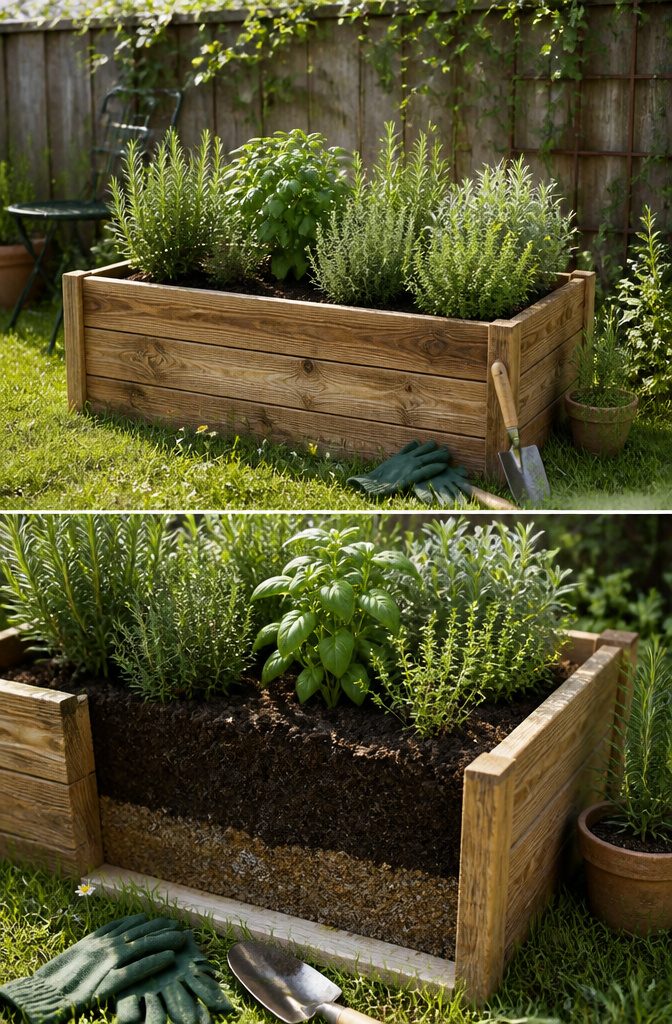
Cedar, steel, and terra cotta clay sit closest to their natural state, which is why they are my three favorites for a build that lasts.
Cedar resists rot without the chemicals in pressure-treated lumber, and a steel Behrens tub at 17 gallons gives you a food-grade container that will not rot at all.
Untreated pine works too, but you will need outdoor paint to protect it from rotting, and even then it is the weaker choice.
The equal parts soil mix matters as much as the box. Topsoil, compost, and coarse paver sand, mixed by hand until it feels light and combined, gives Mediterranean herbs the drainage they expect.
Earthworm castings on top settle them in. A weekend build with cedar or a scrubbed steel tub runs under $50, which beats buying a finished planter that still needs the same soil work.
The hairdryer trick for sticker residue, 30 seconds of heat before peeling, is worth the time saved on a steel tub.

DIMENSIONS: 32. 3 in. L x 14. 7 in. W x 30. 7 in. H

✨【PP Material&Lightweight】Our raised garden bed made with high-quality reinforced PP material ,offering outstanding durability and all-weather adaptability in a lightweight design, perfect for all your outdoor gardening tasks.
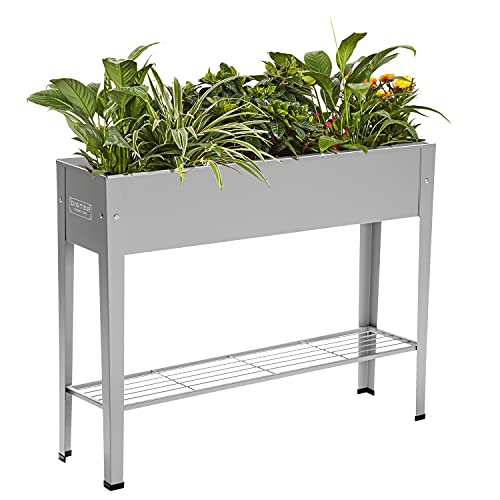
Ergonomic: The raised planter box with legs eliminates the need for excessive bending, making gardening easier.
Best Herbs to Grow
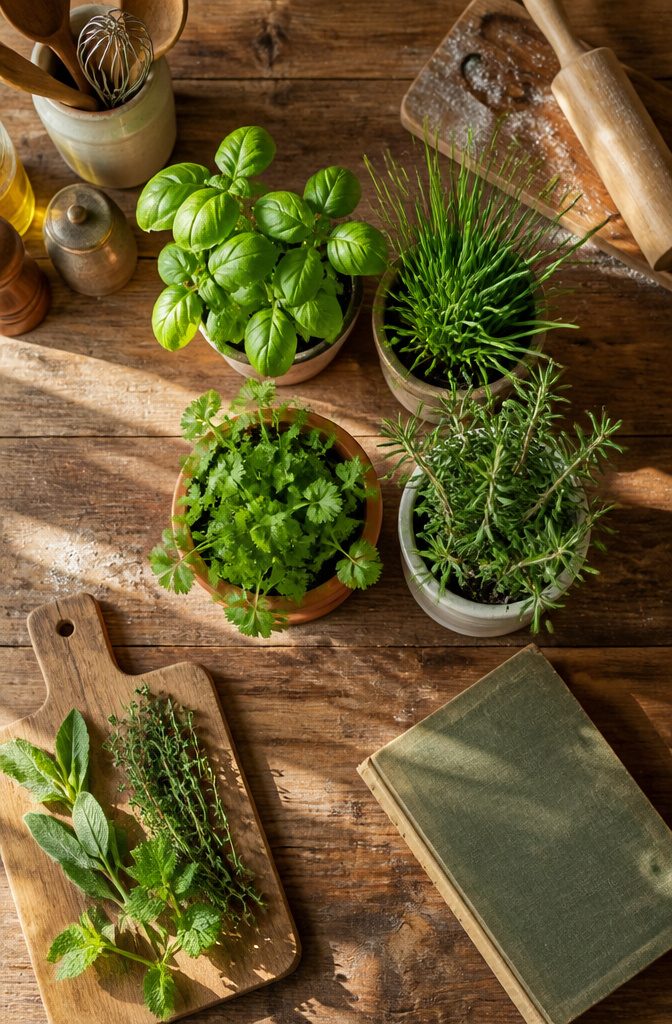
The herbs that earn their spot in your box are the ones you’ll actually snip into dinner.
Basil, chives, parsley, thyme, oregano, mint, and cilantro all handle small containers well, but the choice should start with your cooking, not with what’s "easy."
- Basil wants warmth and steady moisture; pair it with parsley and cilantro, which prefer the same conditions, not with drought-loving thyme.
- Chives are the most forgiving starter herb, nearly impossible to kill and quick to regrow after cutting.
- Thyme, oregano, and rosemary share dry-soil preferences and do well grouped together; skip the fertilizer or their flavor thins out.
- Mint needs its own pot. It spreads aggressively and will crowd out anything else you plant with it.
- Parsley and cilantro grow a taproot, so give them at least 12 inches of soil depth; the 6-inch minimum most herbs manage won’t cut it.
Perennials like thyme, oregano, chives, and mint survive winter in many regions; basil and cilantro are annuals you’ll replant yearly.
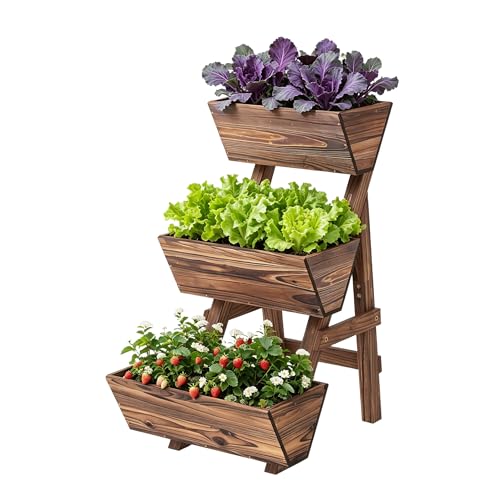
【Space-Saving 3-Tier Design】: The 3-tier planter box design will not take up too much floor space, which can separate and organize the sections as well as grow different kinds of plants. The trapezoidal design allows all plants to enjoy full sunlight for better growth. The box bottom of each tier is equipped with drainage holes to help drain excess water and prevent root rot

🪴【Perfect Design】: The 3-tier planter box design will not take up too much floor space, which can separate and organize the sections as well as grow different kinds of plants. In addition, the trapezoidal design allows all plants to enjoy full sunlight for better growth. The box bottom of each tier is equipped with drainage holes to help drain excess water and prevent root rot.

[MINIMAL FOOTPRINT & MAXIMIZED SUNLIGHT] Save your valuable floor area! Designed to occupy very little ground space, this ergonomic trapezoid 5-tier vertical garden planter raised bed maximizes your growing capacity vertically. The smartly staggered structure ensures no plant is shaded, allowing every leaf to receive full sunlight and moisture. Whether on a narrow balcony or compact patio, this versatile vertical raised garden bed is perfect for harvesting fresh veggies, herbs, and blooms!
Soil Mix
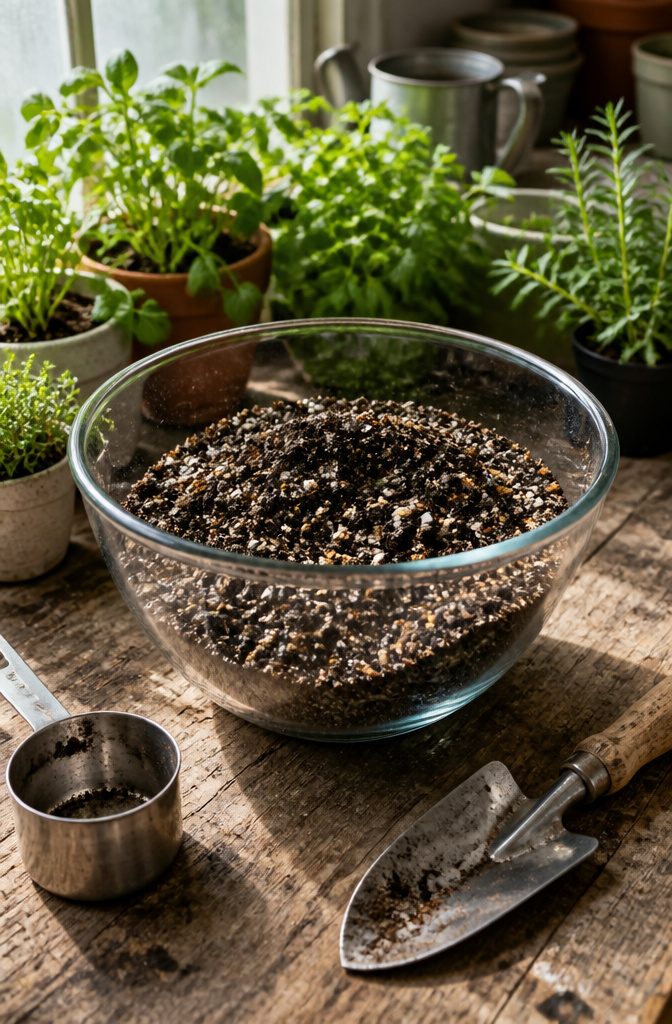
Soil in herb planter boxes lives or dies on drainage, not richness.
Most culinary herbs trace back to Mediterranean hillsides where water runs through fast and roots never sit soggy. That is the mix you are aiming for, not a bagged potting soil that holds moisture like a sponge.
The blend that gets there is equal parts topsoil, compost, and coarse sand. The sand is the part people skip, and it is the part that saves the planting.
Paver sand from the construction aisle at a hardware store has the right grit; play sand or masonry sand is too fine to open up the pore spaces.
Mix the three together by hand or with a small trowel until a handful shows even color and texture throughout, no streaks of any single ingredient.
Compost feeds the herbs some, but heavy fertility backfires. Overfed basil grows lush and mild; rosemary and thyme stretched on nitrogen lose the concentrated oils that make them worth growing.
A light sprinkle of earthworm castings on top at planting time gives settling roots a nudge without pushing soft growth.
To test whether your mix drains fast enough, water a filled container and watch.
The water should sink visibly and stop pooling at the surface within seconds. If it sits and glistens, the sand fraction is too low or too fine, and root rot is already waiting.

HERB PLANTER INDOOR - Create your own indoor herb garden for your windowsill or counter. These spacious square herb planters are the perfect size for your herbs and spices.
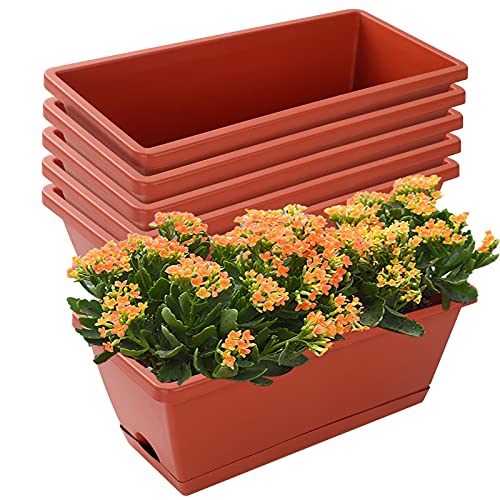
WINDOW BOX PLANTERS DIMENSIONS - Includes pack rectangular plastic planters. The size of plastic flower planters: L16.6 x W7 x H5.9 inches, large enough to support any projects and ideas. Great for herbs, flowers, foliage, grass, cactus, succulents, ferns, arborvitae and more.

Indoor Herb Garden Planter with Tray - Add greenery to your home with this vintage metal windowsill planter. Herb planters for indoor plants with a farmhouse touch. Place the indoor herb planter on your kitchen counter or display the small herb planter as an apartment window planter.
Watering Without Rotting Roots
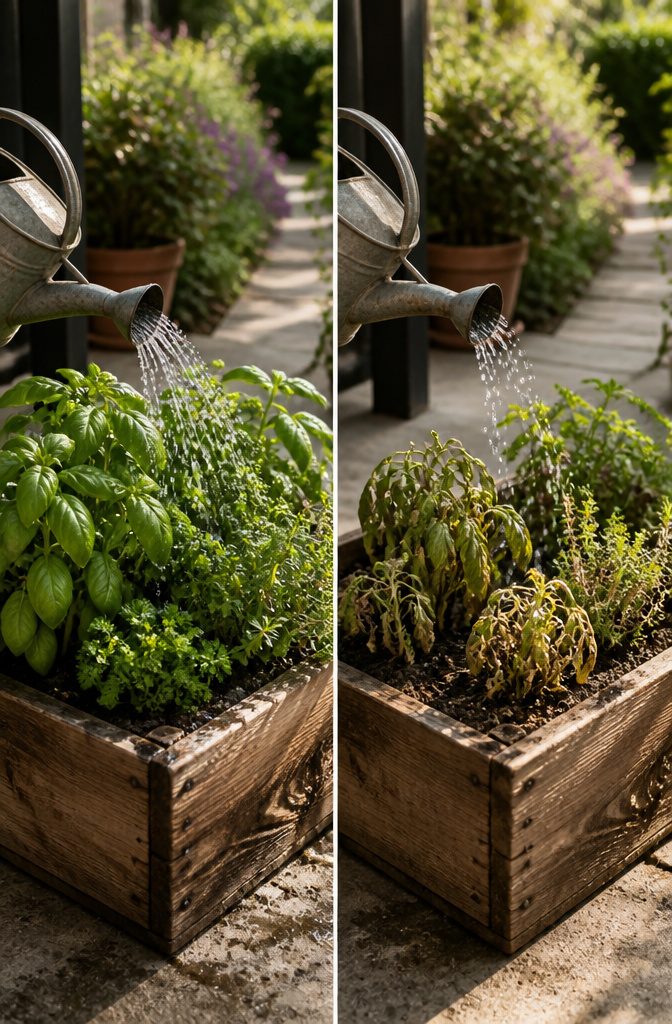
The soil in herb planter boxes dries from the top down, so the surface can look dusty while the lower root zone stays soggy.
Water when the top inch of soil feels dry to your finger, then add enough that it runs out the drainage holes.
Basil and parsley want that inch to come back around quickly, maybe every couple of days in summer heat. Rosemary and thyme can wait longer; their roots tolerate, even prefer, a partial dry spell between drinks.
Fixed schedules fail because a 6-inch pot in full afternoon sun evaporates differently than a 10-inch pot in morning light, and a mature plant drinks faster than a seedling.
The same box that needed water Tuesday might still be damp Friday if clouds rolled in. A moisture meter removes the guesswork for finicky herbs, but your finger works fine once you trust what it feels.
Dry crust on top with cool, dark soil underneath means hold off. Crumbly soil all the way down means water now.

15 Herb Seeds Variety Pack. 4300 Seeds Included: Start your own herb garden with this all-in-one heirloom herbs seeds kit. Includes Genovese Basil, Sweet Basil, Italian Oregano, Rosemary, Thyme, Cilantro, Dill, Mint, Sage, Lavender, Chives, Garlic Chives, Parsley, Chervil, and Scallions. Each herb seed packet is USA-sourced and tested for high germination. Grow these herb garden seeds in your backyard, windowsill, raised beds, or pots for fresh flavors all season long.

USDA CERTIFIED ORGANIC & NON-GMO: Grow your own fresh culinary herbs with peace of mind. Our open pollinated, heirloom variety pack is 100% clean, natural, rigorously tested for germination, and proudly certified organic by Oregon Tilth.

【Everything in One Box, Even the Tools】3 self-watering planters with the wicks already fitted, 5 herb seed packets (Basil, Thyme, Parsley, Cilantro, Mint), 3 coco coir soil discs, a mini 3-piece tool set, plant labels, and a step-by-step guide. Three cups, five packets - plant three now and keep the other two sealed for the next round. The only thing you add from your kitchen is water and a bowl for soaking the soil.
Sunlight and Spacing
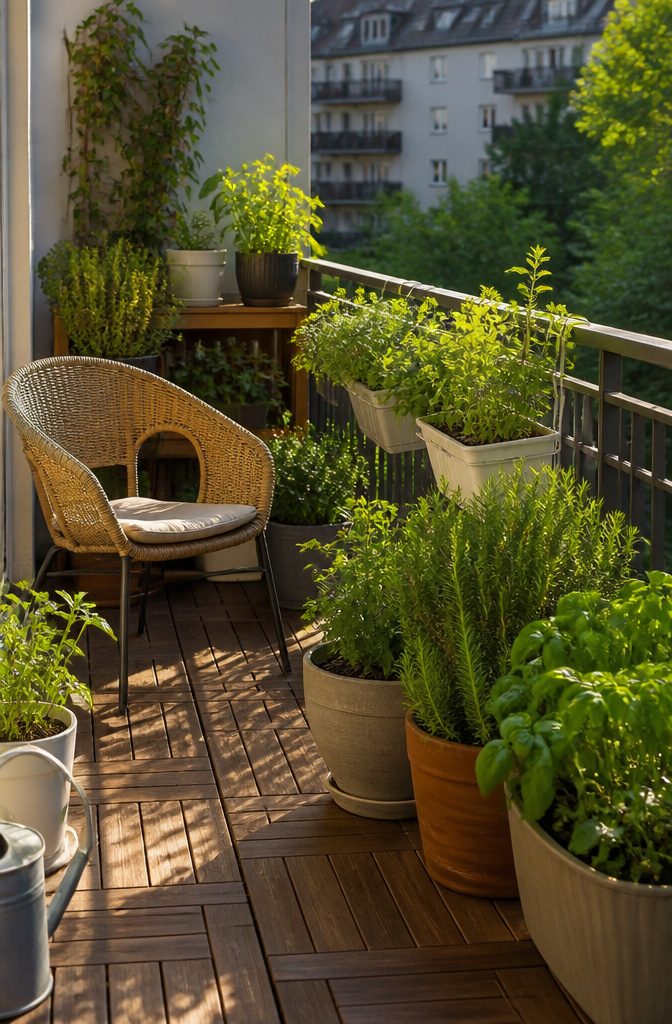
Six hours of direct sun is the minimum most annual herbs need to develop real flavor, and a planter that sits in partial shade all morning will produce leggy, bland growth no matter how good the soil is.
The advantage of growing in herb planter boxes is mobility; a box on casters or a lightweight rail planter can follow the sun as the seasons shift, or slide into afternoon shade when July heat starts stressing the leaves.
Spacing is what separates a usable harvest from a crowded mess.
Basils and parsleys, the leafy herbs that prefer steady moisture, need room to bush out. Rosemary and thyme, the Mediterranean group that likes drier soil and sharper drainage, stay more compact but still need air circulation to avoid mildew.
Four to twelve inches between plants, chosen based on the mature spread of each variety, keeps roots from competing and lets you actually reach in with scissors.
Overcrowding ruins the whole thing. Herbs packed tight look lush for a week, then shade each other out, weaken, and attract fungus because no leaf dries properly.
A planter box with fewer plants and honest spacing gives you cuttings all season; a stuffed one gives you replacement shopping.

Convenient Self-Watering Design: Features a distinctive two-layer self-watering system; The inner container elevates the plants and includes water-absorbent strips at its base that ensure good drainage function; This ingenious design maintains soil moisture at an ideal level, preventing it from becoming overly saturated and safeguarding against root rot

WINDOWSILL HERB GARDEN: Set of 3 steel herb pots on a matching tray with a leather carry handle, sized for a kitchen windowsill, shelf or countertop. Move all your herbs to the sun in one go. Herbs and seeds not included
Harvesting for More Growth
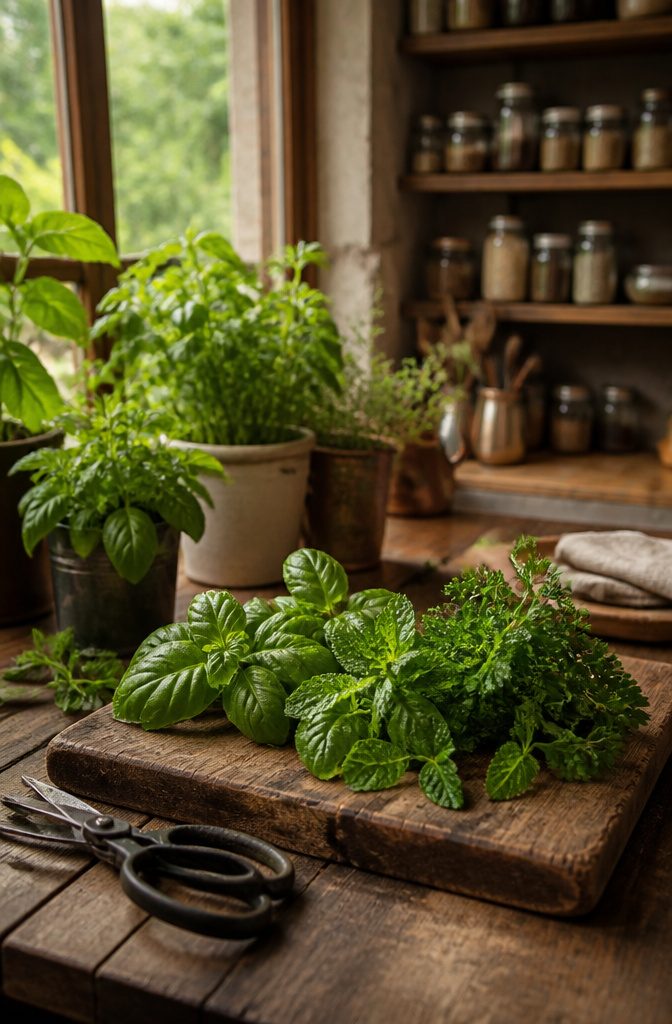
Cutting back a leafy herb like basil or mint feels wrong the first time, but taking the top third to half of the stem is exactly what forces the plant to branch.
New growth emerges from the leaf nodes just below your cut, so one stem becomes two, then four. The herbs that look fullest by midsummer are the ones someone was brave enough to shear regularly.
The mistake most beginners make is waiting too long and plucking individual leaves instead.
That leaves bare stems behind, and the plant stretches upward getting leggier and less productive. Snip stems cleanly rather than pinching, and always leave a couple of inches of growth so the plant can keep photosynthesizing.
A planter box packed tight with herbs especially needs this discipline; without it, the center goes woody and the edges flop over the sides.
If you overwinter perennial herbs in your box, a deeper prune in spring, cutting back by half to two-thirds, resets the shape and keeps the flavor fresh on new growth.
The harvest you take is not a loss. It is the maintenance.
Frequently Asked Questions
What herbs grow best in a small herb garden?
Basil, chives, parsley, thyme, oregano, mint, and cilantro all handle small containers well.
Start with chives if you are new to growing; they are nearly impossible to kill and regrow quickly after cutting. Match herbs by water needs, not just by what looks good together.
How deep does a container need to be for an herb garden?
Six inches of soil depth covers most annual herbs, but dill, parsley, and cilantro need 10 to 12 inches because they grow a taproot that stalls in shallow soil. The extra depth keeps them from bolting early in summer heat.
Can I grow an herb garden indoors year round?
Yes, as long as your plants get enough light.
Most south-facing windows in American apartments deliver only 4 to 6 hours of usable sun, so a grow light hung a few inches above the leaves is often necessary to keep basil from turning leggy and bitter through winter.
How often should I water herbs?
Water when the top inch of soil feels dry to your finger, not on a fixed schedule.
Basil and parsley want moisture every couple of days in summer; rosemary and thyme prefer a partial dry spell between drinks. Fixed schedules fail because sun, pot size, and plant age all change how fast soil dries.
Should I harvest herbs often?
Yes. Take the top third to half of the stem on leafy herbs like basil and mint to force branching from the nodes below.
Snip stems cleanly instead of plucking individual leaves, and always leave a couple of inches so the plant keeps photosynthesizing. Without regular cutting, the center goes woody and the edges flop.
What size planter for herb garden?
A width of at least 12 inches lets you group multiple herbs in one box, and each plant needs five inches of elbow room or the aggressive spreaders will shade out their neighbors by midsummer.
For single containers, six inches of depth suits compact herbs; go to 10–12 inches for taprooted types.
What herbs cannot be planted together in pots?
Mint needs its own pot; it spreads aggressively and will crowd out anything else.
Beyond that, group by water needs: basil, cilantro, parsley, and dill prefer steady moisture, while rosemary, thyme, and oregano like drier soil and sharper drainage. Mixed water needs in one container mean something dies.
Are planter boxes good for vegetables?
Vegetables with deeper roots than herbs would need more soil depth than the 6-inch minimum most herbs manage.