
The Steadyrack Classic is the best eco-friendly bike storage idea for most households because it turns a bike into something you roll flat against the wall, no lift required, then pivots 160 degrees so several bikes can pack into a narrow garage without fighting each other. You need wall studs to bolt into, which rules out most renters, and at 35 lbs per rack the limit stops short of heavier e-bikes unless you step up to the Proflex model. The library-on-the-wall analogy holds: pull one bike without disturbing the rest, but a household fleet gets expensive fast since each bike needs its own unit.
1. Wall-Mounted Pivot Racks
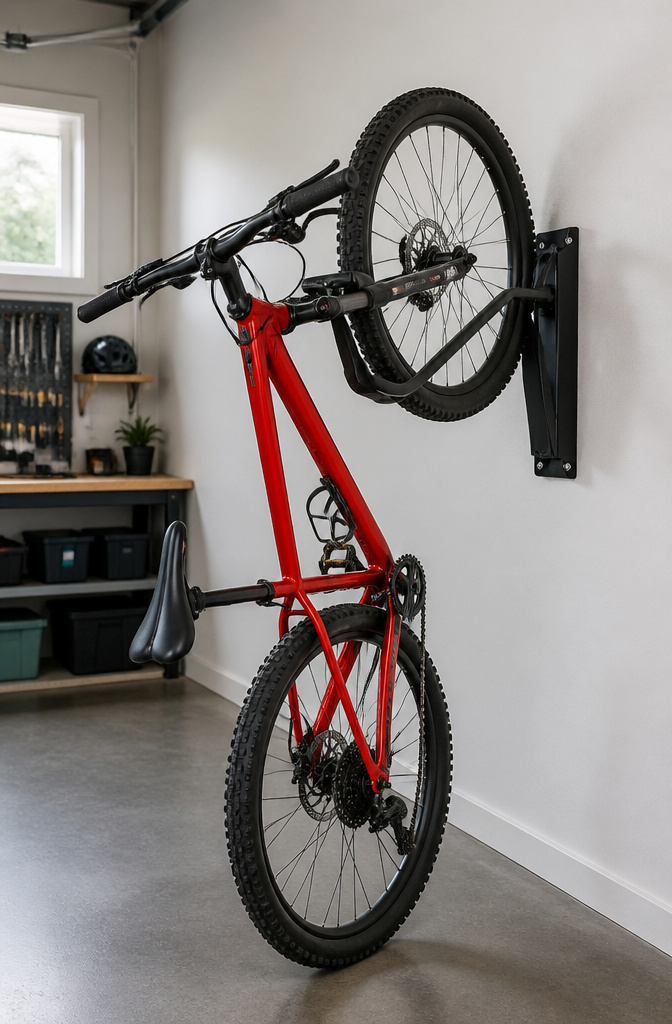
Wall-mounted pivot racks turn a bike into something you can almost roll into place. The Steadyrack Classic opens flat against the wall, then folds out when you need it. You tip the bike onto its rear wheel and walk the front tire into the cradle, which only touches the rubber, not the rim or frame. It handles wheel sizes from 20 to 29 inches and carries up to 35 lbs, with alternate versions for fat tires or fenders if your setup needs them.
Once loaded, the bike pivots side to side up to 160 degrees, so multiple mounts can sit closer together than fixed hooks would allow. That swivel is the real space saver in a narrow garage or apartment storage nook.
"Positioning bikes vertically saved me a lot of space, especially as I needed to store multiple bikes and still maintain easy access… Your bikes become almost like a library on the wall."
The library analogy holds: you can pull one bike out without disturbing the rest. But the system only works if you can drill into studs, which rules out most renters. Heavier e-bikes also push past that 35 lb limit unless you step up to the newer Proflex model. Each bike needs its own unit, so a household fleet gets expensive fast. For the right wall and the right bike, though, the pivot design is hard to beat for keeping floor space clear while keeping every bike reachable.

【Strong, Safe & Secure】 monTEK bike wall mount is made of heavy-duty solid steel are able to hang weights up to 30 kg / 66.2 lbs. Rubber coated wall bike rack relieves pressure on the wheels, rims, and spokes and protects from unwanted scratches. Bike Wall Storage - Hang and store your bike in a vertical position, allowing for convenient storage and removal.

【Strong, Safe & Secure】 monTEK bike wall mount is made of heavy-duty solid steel are able to hang weights up to 30 kg / 66.2 lbs. Rubber coated wall bike rack relieves pressure on the wheels, rims, and spokes and protects from unwanted scratches. Bike Wall Storage - Hang and store your bike in a vertical position, allowing for convenient storage and removal.

【Strong, Safe & Secure】 MONTEK bike wall mount is made of heavy-duty solid steel are able to hang weights up to 30 kg / 66.2 lbs. Rubber coated wall bike rack relieves pressure on the wheels, rims, and spokes and protects from unwanted scratches. Bike Wall Storage - Hang and store your bike in a vertical position, allowing for convenient storage and removal.
2. Secure Wall-Mounted Lock Storage

A wall-mounted lock that actually earns its security rating is rare, and the Hiplok Airlok is one of the few. It carries a Sold Secure Diamond rating, which matters if your insurer asks questions after a theft. The catch is what that rating demands: a masonry wall, four substantial bolts, and ball bearings driven into the bolt heads so they cannot be backed out. Hiplok is explicit that mounting anywhere else voids the certification. Drywall, wood framing, even a shared garage wall in a rental: none of these qualify.
The unit itself hides its hardened steel skeleton behind a plastic cover with a rubber-lined cradle for the top tube. Once the bike hangs, a steel rod locks upward from below, and a heavy chain secures the wheels. Top tubes up to 60 mm fit, though integrated e-bike displays mounted there may interfere.
Who should skip this? Renters with drywall-only walls, or anyone whose garage is finished over studs. The Airlok is premium-priced against standard wall hooks, but that cost lines up with other Diamond-rated anchors. For the right wall, it doubles as display piece and fortress. For the wrong one, it is an expensive reminder to read the mounting requirements before ordering.

Reliable Mounting: Designed with sturdy materials, the bike storage solution provides a stable and secure way to mount your bike indoors; helps free up floor space in garages or apartments
![Housolution Bike Wall Mount with Fixed Hook, [4 Pack] Bike Storage Rack | Bike Rack Vertical Stand for Garage - Easily Hang/Detach - with Screws Iron Bike Hanger Brackets](https://m.media-amazon.com/images/I/51pFhj43yoL._SL500_.jpg)
🛵 Heavy Duty Bike Rack: Made of strong iron material, provide a high load capacity, up to 77-99lbs/35-45kg. Strong enough to hold all kinds of bicycles, like mountain bike, road bike, cruiser bike, kids bike, etc.
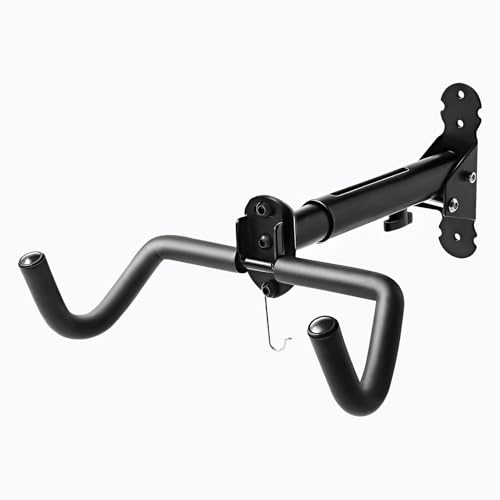
Fits Most Bikes - Gootus wall mount bike storage system is compatible with road bikes, mountain bikes, cyclocross, hybrid, and kid bikes. Note: Not suitable for step-through frame bike, or bicycles with wide handlebars more than 31.5 inches / 80 cm, long wheelbases or fat bikes
3. Portable No-Lift Stands
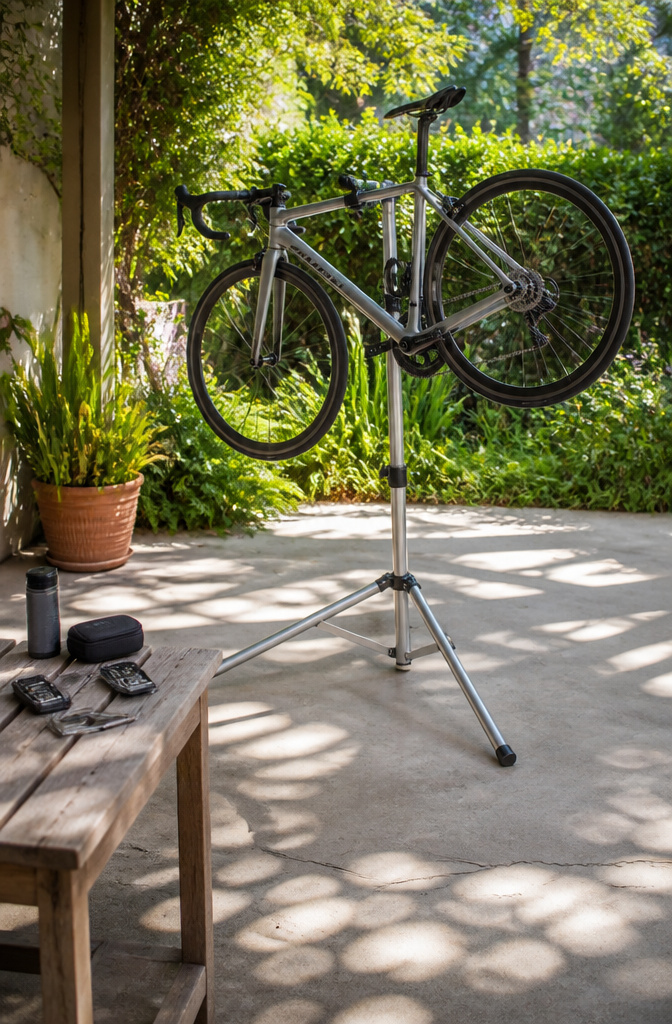
A portable stand that needs zero installation is where the Feedback Sports Rakk earns its keep. It arrives fully assembled, weighs just 5 lbs, and folds small enough to stash behind a door or toss in a car trunk. The wheel tray accepts tires from 20 mm road widths up to 2.4 inches, and the spring-loaded arm holds the bike horizontally with no frame or rim contact. Rubber feet keep it steady on garage concrete or uneven ground outside.
Roll the bike on, roll it off. No lifting, no drilling, no landlord to clear it with. That matters for renters who need their security deposit back, or for anyone whose storage spot changes with the season.
The Rakk still eats floor space, so skip it if you are chasing permanent wall storage or running fat tires wider than 2.4 inches. For those cases, the Rakk XL handles 2.5 to 5 inches, but at that point you are into a different product and a different tradeoff. The base Rakk suits the rider who wants the bike upright and accessible without committing to a wall.

🚴 Best for: Road, MTB, Hybrid, e-Bikes, eMTB, BMX, City... (NO FENDERS!).

Fits Most Bikes - Gootus wall mount bike storage system is compatible with road bikes, mountain bikes, cyclocross, hybrid, and kid bikes. Note: Not suitable for step-through frame bike, or bicycles with wide handlebars more than 31.5 inches / 80 cm, long wheelbases or fat bikes

🚴 Best for: Road, MTB, Hybrid, e-Bikes, eMTB, BMX, City... (NO FENDERS!!!).
4. Freestanding Multi-Bike Stands

A freestanding multi-bike stand keeps your walls untouched and your bikes upright without a single hole drilled. The Topeak TwoUp Stand expands between floor and ceiling with a foot pedal to lock tension, stacking two bikes vertically in the process. I like that it adds storage where a simpler rack offers none, though the continuous pole running floor-to-ceiling can obstruct the room and the crank position needs watching so it does not rub. Plywood spreaders above the ceiling plate help distribute load and protect drywall from cracking.
The BirdRock Home 3 Bike Stand takes a different approach: three bikes roll into wheel slots on the floor, no lifting required, with tires up to 4 inches wide supported. A storage basket and removable side hooks hold helmets or pumps. Assembly runs about twenty minutes, and bikes with very small wheels tend to flop sideways in the rack.
Both suit renters who cannot modify walls and homeowners reluctant to. Neither works well in tight floor plans; the BirdRock in particular spreads bikes across a wide footprint. If square footage is scarce, a vertical wall-mounted or gravity stand saves more room.

HEAVY DUTY BIKE U-LOCK: Master Lock 8320D keyed bike lock helps secure bicycles in busy urban areas; Ideal as a bicycle U-lock and anti-theft bike lock for everyday outdoor security

SPACE-SAVING SWIVEL BIKE RACK – Store your bicycle vertically and swivel it to the left, right or center to make better use of garage, apartment or indoor storage space. Ideal for keeping bikes organized around parked cars and other tight areas.
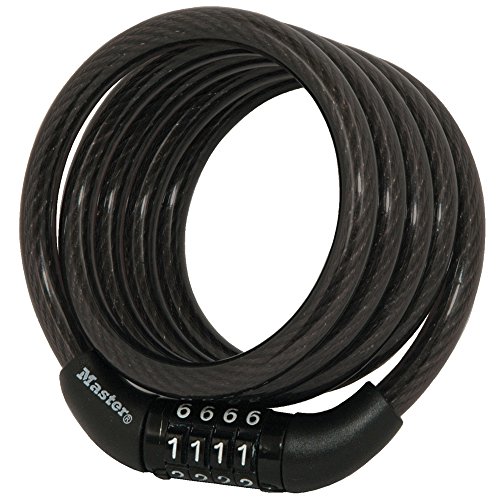
VERSATILE BIKE LOCK: Master Lock 8143D cable bike lock helps secure bicycles, e-bikes, scooters, strollers, grills, kayaks, outdoor gear and more; Ideal for everyday bike security and basic theft deterrence
5. No-Drill Lean Solutions
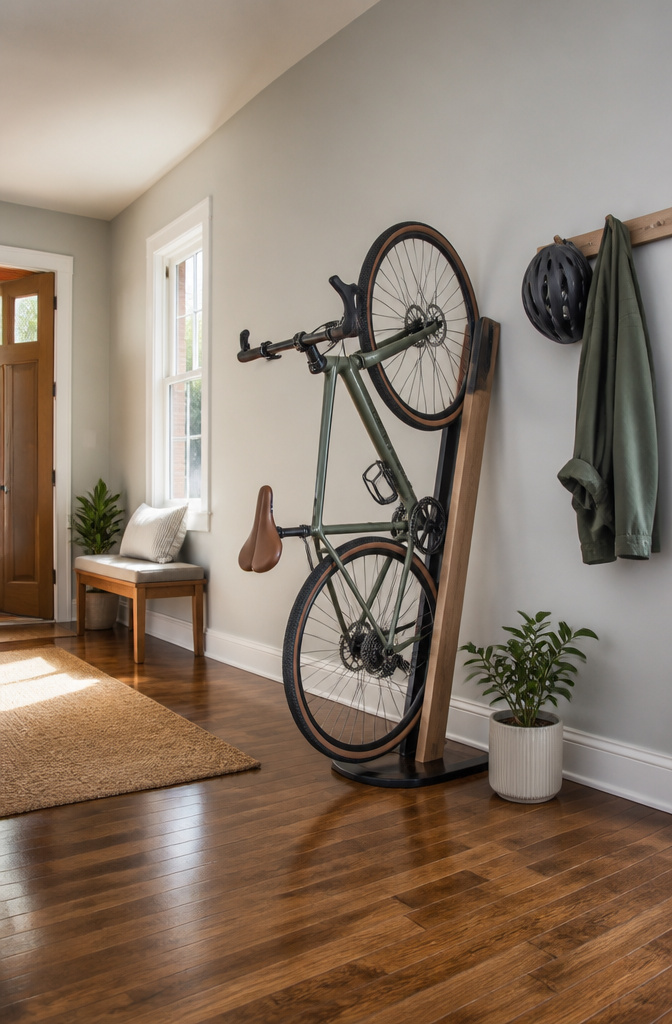
The Saris Bike Bunk was the first thing I looked at when my landlord made his "no holes in anything" policy clear. It leans against the wall using its own weight: an angled base converts the bike’s downward force into horizontal pressure, pushing a padded back against the drywall without a single screw. For renters, that is the door it opens.
Two bikes is the stated capacity, but the physics get tight in practice. The stand has no adjustability for sloping top tubes, so a larger frame sits at a steep angle and eats the vertical room a standard ceiling provides. If you are tall or your bike is, one bike may be the real limit. You also have to lift to load it; there is no pivot or tray to help.
The base uses no-slip bumpers, which means polished concrete or slick tile can defeat the whole concept. Active kids in the space are another reason to skip this, since a bumped bike becomes a falling bike with nothing anchoring it to the world. Where the floor has grip and the foot traffic is adult, though, the access is instant: no hooks to align, no lifting overhead, just roll it in and roll it out.

🔐Heavy-Duty Security Anchor - The anti-theft ground anchor lock integrated 14mm hardened carbon alloy steel locking ring and thickened base (915g/2 lb/set), with 4 reinforced anchor points, resisting bolt cutters, and the anti-pullout metal balls can be hammered into the hexagonal holes of bolts, physically filling recesses to prevent the bolts from being loosened with tools

Package includes(without retail package): 2 x Bicycle Lock Holder

Heavy duty 5mm thick steel anchor motorcycle anti theft protects the anti-theft chain to prevent theft of motorcycles, bicycles, scooters, machinery, etc. in garages, basements, private parks, etc. Compact size design
6. Weatherproof Outdoor Sheds

Keter and similar resin sheds run from compact boxes up to the Newton Plus at 7.5 by 13 feet, which gives most households room for two bikes plus gear. The panels are corrugated plastic over a metal frame, and the assembly lands somewhere between flat-pack furniture and a weekend project that needs two people and a poured slab or gravel base. Security and weather protection are the real payoff: a locked shed keeps rain, snow, and UV off your frame, and the structure itself is a theft deterrent in a way a cover or tent is not.
This option is not for everyone. No outdoor space rules it out entirely, and strict HOAs sometimes ban sheds outright or limit dimensions so severely that only the smallest units qualify. Price sits well below custom wood or metal builds, but it is not cheap; skip the bargain brands like BillyHo or Arrow, which tend to fail fast enough that you end up building twice. For renters with a patio or first-home owners with a small yard, the mid-range resin shed hits a practical balance: real protection, no foundation crew, and a lifespan that justifies the Saturday spent on assembly.

Built To Last – Made from steel and UV treated plastic, our racks are strong and built to last, holding up to 35Kgs.

🚴 Best for: Road, MTB, Hybrid, e-Bikes, eMTB, BMX, City... (NO FENDERS!!!).
![Housolution Bike Wall Mount with Fixed Hook, [2 Pack] Bike Storage Rack | Bike Rack Vertical Stand for Garage - Easily Hang/Detach - with Screws Iron Bike Hanger Brackets](https://m.media-amazon.com/images/I/41F-T8q4gxL._SL500_.jpg)
🛵 HEAVY DUTY MATERIAL:Made of high quality sturdy iron, the bike wall mount is wear-resistant and durable. The unique structure makes the force more balanced and stable. It has an excellent load capacity, up to 77-99 pounds/35-45 kg. Let you use it for a long time. (Note: Please install the hooks in the direction shown in the main picture, otherwise the hooks will be subject to uneven stress and fall off.)
7. DIY PVC Pipe Racks
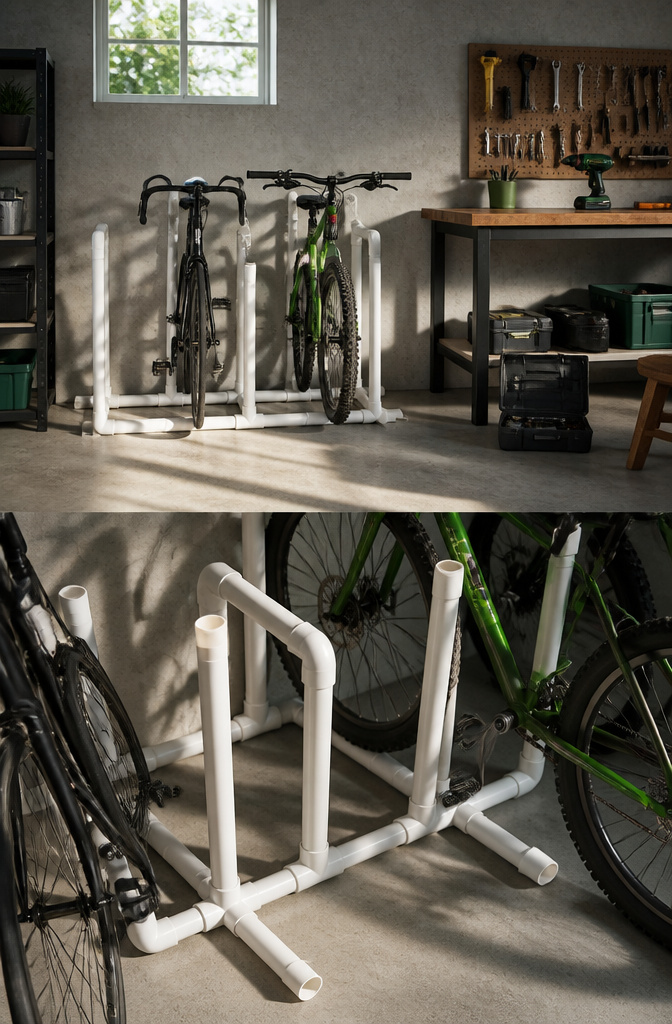
PVC pipe racks sit in that sweet spot between weekend project and functional storage. A few lengths of schedule-40 pipe, some corner fittings, and a hacksaw will get you a frame sized exactly to your bike’s wheelbase and your wall’s empty stretch. The material costs less than finished wood, and the plastic itself carries a quiet sustainability argument: it will not rot, rust, or need replacing in five years. That durability matters for eco-friendly bike storage ideas more than the origin of the polymer.
The tradeoff is aesthetic. What you gain in customization, you lose in the warm look of timber or metal. Painted matte black, PVC can disappear against a dark wall; left white, it reads unmistakably as hardware-store plumbing.
Skip this build if you do not own a pipe cutter or a miter box with a fine blade. A ragged cut wobbles the joint and the whole rack leans. The same goes if your storage area faces the living space and you want something that looks designed rather than improvised. For a garage corner or a basement you do not photograph, the pipe rack holds two bikes off the floor in an afternoon, then stays there for a decade.

IDEAL STORAGE SOLUTION FOR BIKES OF ALL TYPES: Perfect for apartments, homes, garages, and sheds, this wall rack provides a secure and efficient storage solution for most road bikes, cyclocross bikes, hybrid bikes, and XC mountain bikes.

Durable and Reliable: Sturdy steel wall mount bike rack with scratch-proof coating; ratchet gear system ensures dependable bike wall hanger; adjustable arm angles for different bike shapes and sizes

Practical storage space:thanks to the innovative design and the integrated shelf, this bicycle stand offers you space for bicycle accessories as well as a small storage area
8. Ceiling-Mounted Overhead Racks
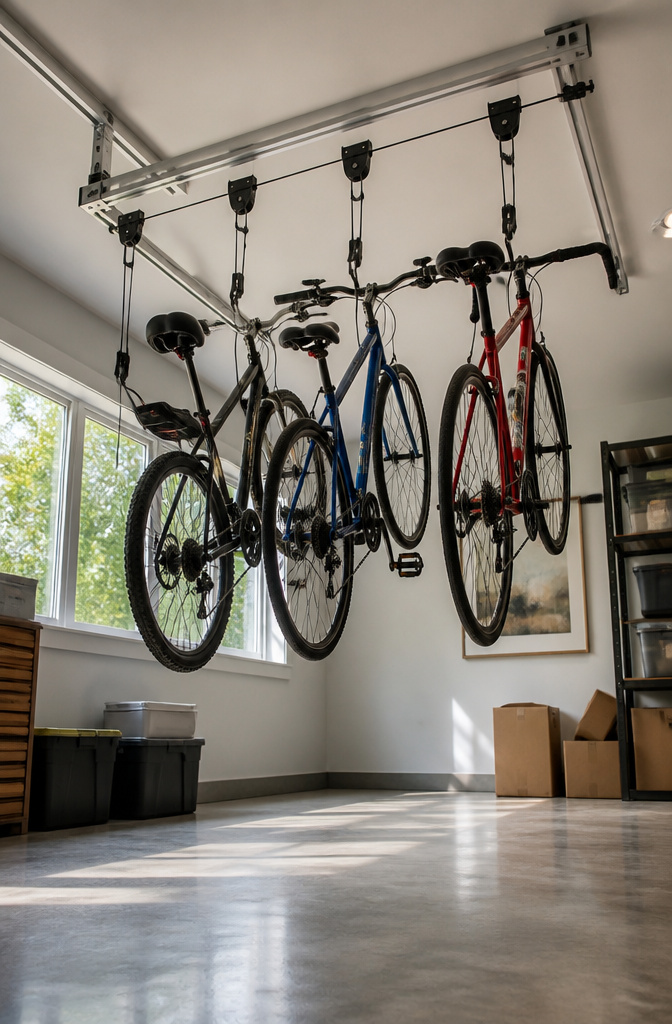
Ceiling-mounted overhead racks turn the dead zone above a parked car into usable square footage. Pulley lifts or fixed mounts hoist bikes out of the way entirely, which matters in a garage where floor space is already claimed by lawn equipment, bins, and the occasional project table. The trade is physical. Every retrieval means lifting a bike overhead, and some systems ask you to hold that weight while you guide hooks into spokes or frame tubes.
High ceilings are non-negotiable here. Low ones leave the bike dangling in your sightline or, worse, your forehead’s path. The same goes for heavy bikes and riders with back or shoulder issues. A 50-pound electric bike on a manual pulley is a different proposition than a 20-pound road frame, and the rack itself does not do the work for you. The passages note these systems can handle roughly that 50-pound mark per bike, with expandable tracks holding up to six bikes in a five-foot section. That density is hard to beat for sheer space efficiency, but only if your body agrees to the terms.

NO LIFTING: Simply balance the bike on its rear wheel and push it into the rack, our racks have a unique self-adjusting receiver feature, no heavy lifting needed. Fits tires up to 2.1 inches wide, perfect for wheels 20-28 inches in diameter.

【Sturdy &Durable】Bike rack build in sturdy heavy-duty and rust resistant alloy steel, and durable plastic rubber coated spokes and protects from scratches.

🚴 Suitable for Road, MTB, e-bikes, beach cruisers, BMX, fenders, kids' bikes, and more.
9. Simple Wall Hooks
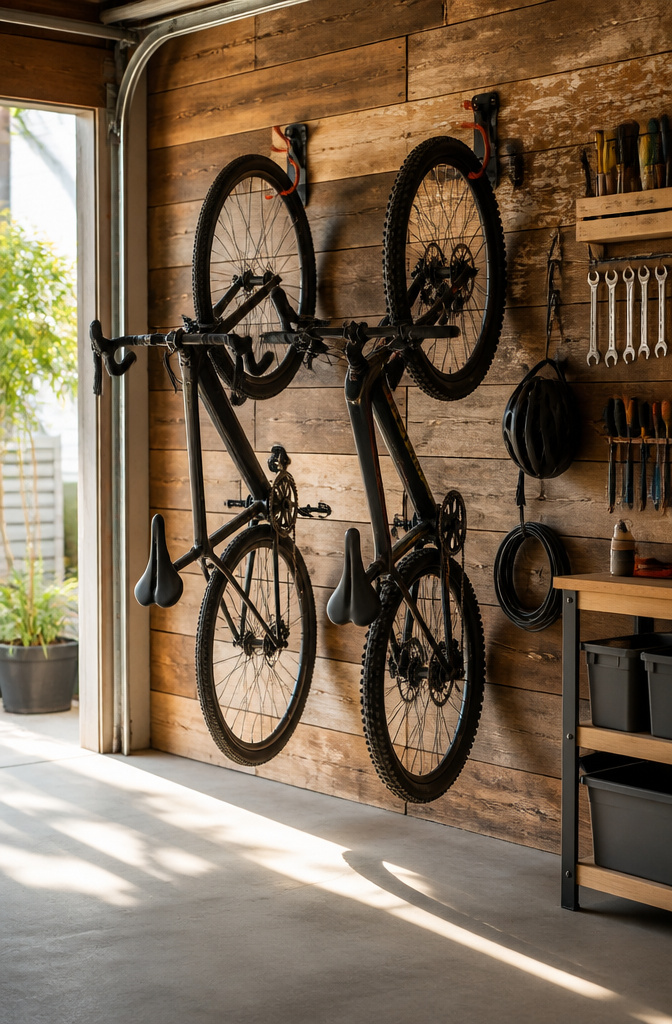
Basic wall-mounted hooks are the cheapest way to get a bike off the floor, and the steel ones with rubber coating run about $20 for a pair that holds two bikes. The hook cradles the front wheel, so the bike hangs vertically against the wall. That orientation saves several square feet of floor space per bike, which matters in a small apartment or a garage crowded with other gear.
Most styles handle road bikes, mountain bikes, hybrids, anything with tires up to about 2.5 or 4 inches depending on the model. The catch is the installation. You drill into a wall stud or use heavy anchors, and that drilling is permanent. Renters with standard leases should skip this category entirely unless their landlord signs off. Another group that should think twice: anyone with very wide handlebars. Drop bars tuck in fairly tight, but a 780-millimeter mountain bike bar can stick out far enough to block a hallway or get bumped every time someone walks past.
Loading the bike takes lifting, and with a heavier rig or a fat tire, the maneuver gets awkward fast. The look is utilitarian, garage-grade rather than living-room ready. For homeowners who own their walls and want the most storage per dollar spent, hooks are hard to beat. For everyone else, the next sections cover options that leave the drywall intact.

3ft chain lock for bike: With 6mm thick security heavy-duty chain links, our bike chain lock is made of heavy-duty steel known for its cut-resistance. Regular lubrication for the lock hole and keyhole will prolong the lock’s service time.

VERSATILE BIKE LOCK: Master Lock 8122D outdoor bike cable lock with combination helps secure bicycles, e-bikes, scooters and other outdoor equipment; Ideal as a bicycle lock and basic theft deterrent for everyday security

Portable & Rugged: The Sportneer bike u lock is both portable and heavy-duty. It measures 7.76x5.02inches, with a thickness of 0.67inches/17mm, and weights 1.64lbs. Plus, its unique polygonal lock body design and silicone coating resist water, dust, and dirt, keeping your bike scratch-free and in tip-top shape.
10. Sliding Track Systems
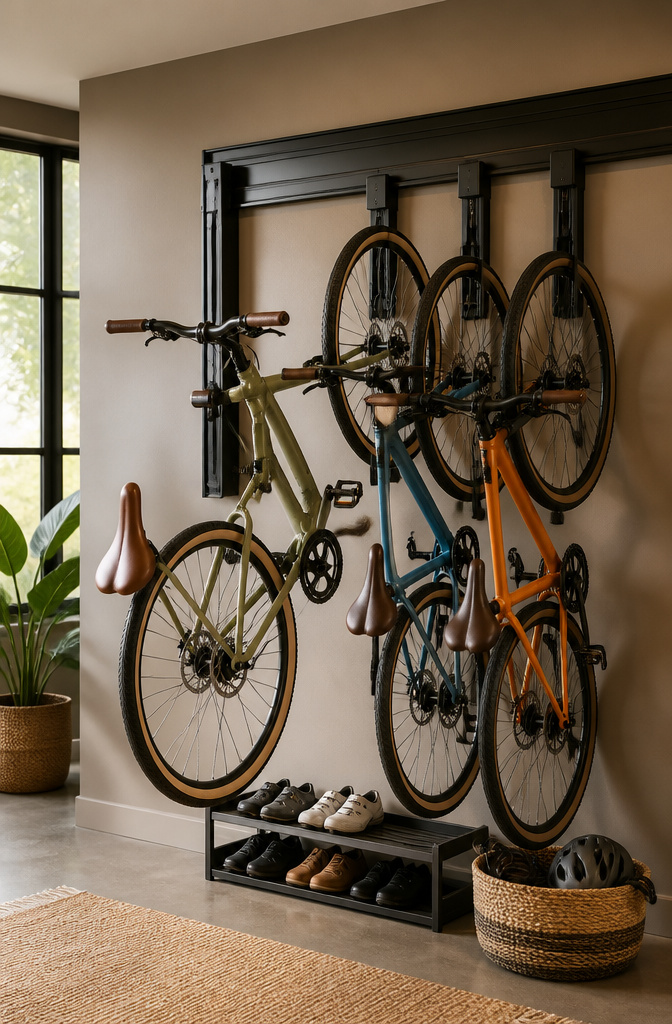
Sliding track systems keep bikes accessible without demanding the full footprint of a traditional rack. Hooks ride on a rail and shift sideways, so you can pack several bikes into a garage wall and still pull out the one in the middle without moving the rest. The Stashed SpaceRail swivels and locks its hooks in place when unloaded, which stops them from sliding around while you load a heavy frame. Most systems mount to either wall or ceiling; the ceiling option works when wall space is taken by shelving, though it needs enough overhead height to let the bikes hang clear.
The track itself protrudes a few inches from the mounting surface, so a very narrow passage, like a tight hallway or a shallow alcove behind a door swing, can leave you bumping the rail every time you walk past. If your space is that slim, this system fights back.
For multiple bikes, the compact operation pays off. You can top-and-tail frames on a ceiling rail to double density, and industrial-grade hardware carries warranties up to 25 years. Fat bikes are the common exception: standard hooks top out around 4-inch tires, and the adapters sold to bridge that gap tend to hang the rear wheel too low. If you ride fat tires, budget for a wider hook or look elsewhere.

PERMANENT LOCKING POINT for use indoors or outdoors to keep vehicles and bicycles safe

Upgraded Size & Enhanced Security: Built for stronger protection, this ergonomic heavy-duty U lock weighs 3.4 lb and features an 18 mm hardened steel shackle that withstands up to 12 tons of hydraulic cutting force. Available in 4 sizes; this measures 7.8 x 9.2 in (outer) and 5.5 x 7 in (inner), making it ideal for securing wide-fork bikes, fat-tire bikes, motorcycles, e-bikes, and scooters to bike racks, fences, or poles. Also includes a 6 ft x 0.4 in steel cable for added locking flexibility

Secure & Portable: The key can only be pulled out after the bike chain lock is locked, which prevents the key from being lost. Titanker bike lock comes with 2 keys. You can take one of the keys to use in daily life, and you can leave another key at home in case you accidentally lose one
11. Protective Bike Covers
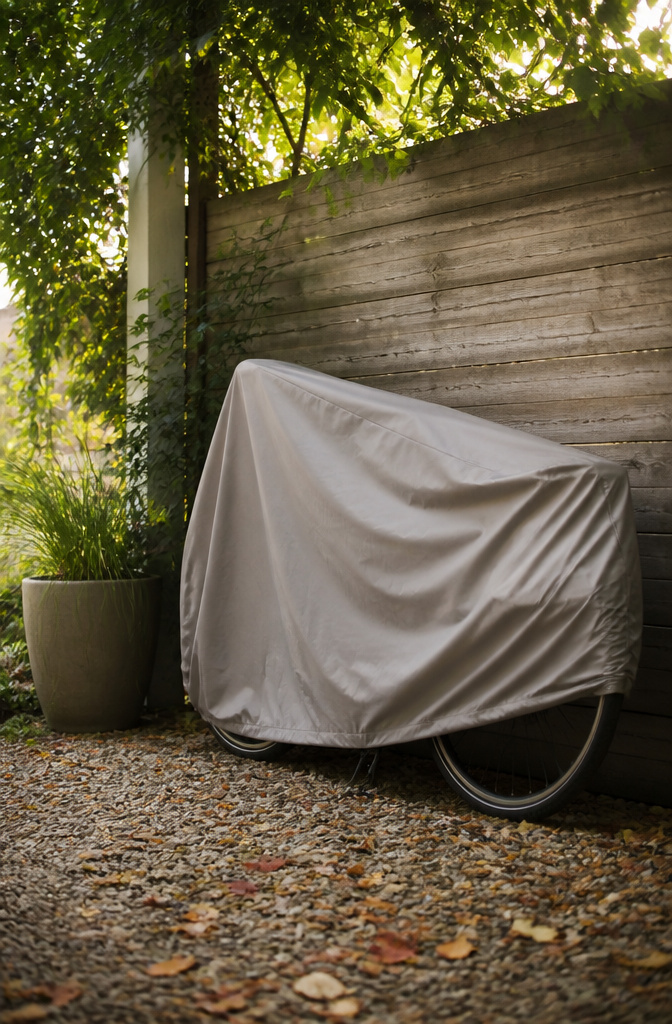
A protective bike cover runs about $20–$40 and buys you a season or two of keeping rain, snow, and UV off the frame and drivetrain. The material is usually a waterproof polyester or oxford fabric with a drawstring hem, light enough to throw on in ten seconds after a ride. For renters with no garage or homeowners whose shed is already full of lawn equipment, this is the cheapest weather defense that does not need a permit, a drill, or a Saturday of assembly.
The catch is exactly what the price suggests. A cover keeps the weather out but does nothing against theft; anyone can lift it and walk off with the bike underneath. If your storage spot is a shared driveway, an apartment carport, or anywhere passersby reach, you will still need a heavy-duty lock and ideally a ground anchor to make the cover part of a real system rather than a false comfort.
Skip this entirely if your bike lives indoors. The fabric traps moisture against the frame if the bike is already damp, which in a dry hallway or spare room is solving a problem that does not exist. Same for anyone whose primary worry is security over weather; the cover actually advertises that something worth stealing sits beneath it.
Where covers earn their keep is in combination. Drape one over a bike locked to a patio rack, or throw it on a stand in an open carport. The cover handles the elements, the lock handles the risk, and your budget stays under what a basic shed would cost.
Small-Space Storage Strategies

Wall-mounted racks, ceiling mounts, and portable stands each solve a different small-space problem, but the choice starts with measuring what you actually have. A horizontal wall mount keeps the bike flat against the wall and works best where width is cheap and depth is scarce. Vertical storage, whether wall hooks or ceiling pulleys, trades height for floor space; the Impresa wall or ceiling hooks support up to 100 lbs and handle tires up to 4 inches wide, though you will lift the bike to load them. For renters or anyone avoiding holes, the Feedback Sports RAKK sits on the floor at 13.25 x 17 inches, weighs 5 lbs, and holds the bike upright by the tire with no frame contact. The real limit is not the rack but the swing radius: a ceiling-mounted bike needs clearance below it for the full length of the frame plus your reach, and a wall hook needs the bike’s height plus enough room to roll the wheel in without scraping handlebars. Measure twice, buy once, and if the space serves double duty, a folding wall rack or a lean-to stand like the Saris Bike Bunk leaves no trace when the bike is out for the day.
Security and Theft Prevention

The Hiplok Airlok is the only wall mount that earns a Sold Secure Diamond rating, which matters if your bike lives in a garage or carport where a opportunistic thief can work undisturbed. What reads as a sleek cover plate hides a hardened steel frame that bolts through to masonry, with ball bearings pressed into the bolt heads so they cannot be backed out. A steel rod locks upward through the frame once the bike hangs, and the included chain secures the wheels. The catch: Hiplok only warranties the Diamond rating on brick or concrete block. Wood stud walls, common in American townhouses and apartments, void that claim entirely.
For renters who cannot drill into masonry at all, a weatherproof shed with a locking roof becomes the practical fallback. The Suncast 6′ x 4′ Glidetop and the nearly identical Rubbermaid Slide-Lid both measure about 58 x 80 inches externally, with a sliding roof that lets you walk bikes straight in rather than wrestle them through a door. Double-thick resin walls over a steel frame resist prying, and both the roof and doors take a padlock. The floor is reinforced for the weight, though you will still want a ground anchor or a heavy chain looped through the frame for real security.
Between these two paths, the choice is really about what your walls let you do. Masonry owners get the cleaner footprint of the Airlok; everyone else trades some floor space for a shed they can take with them when the lease ends.
Sustainable Materials and Eco Credentials

Recycled plastics and sustainably sourced wood each carry real weight when you are trying to keep a bike storage project from becoming future landfill. The Keter Premier Jumbo shed is built from double-thick ribbed wall panels that measure 190.5 x 109.3 x 132.5 cm externally; those dimensions and the integrated floor panel mean it handles two or three adult bikes without flexing or leaking. A shed that stays rigid for a decade beats a cheaper one that cracks in three years and ships off to the dump.
Wood is the other honest path. A DIY plywood rack needs only a single sheet cut into three pieces: top, bottom, and dividers. plywood from a managed source sequesters carbon and can be sanded or patched when it dings, which plastic cannot. The real eco credential is longevity; a material that outlasts three replacements saves triple the embodied energy no matter what it is made of.
The sliding systems fall somewhere between. The Stashed SpaceRail swivels and locks, but the 1UP RS Slide and Ceiling Sam Bike Slide Pro skip those features at lower cost while keeping USA manufacturing. Shorter shipping distances cut fuel, though the tradeoff is hardware that may need earlier replacement if the hooks wear.
Easy Access Without Heavy Lifting

A ceiling rack that asks you to hoist a forty-pound bike overhead is sustainable in material only if your shoulders agree. The pivot designs and floor stands below keep the bike near the ground and the effort minimal.
The Steadyrack roll-in design lets you guide the front wheel into a cradle and swing the bike flat against the wall, no lift required. It holds the tire, not the rim, and pivots side to side so bikes can nest closer together. Drilling into wall studs is mandatory, and the cost multiplies quickly if you are storing several bikes.
For a single bike and no installation, the Feedback Sports RAKK sits on the floor at 5 lbs and 13.25 x 17 inches, fully assembled. You roll the front or rear tire onto the tray and push back against a spring arm. It touches only rubber, handles tires from road-skinny up to 2.4 inches, and connects to additional RAKK units if you expand later. The trade is footprint: it does not reclaim wall or ceiling space, so it suits a garage corner more than a narrow hallway.
Sliding track systems also keep the load at waist height, though the passages do not specify dimensions or prices for these. The principle matches the others: the bike moves to you, not the reverse.
Match the choice to the bike’s weight and your own. A light road bike on a Steadyrack is one motion. A sixty-pound e-bike on a ceiling hoist is a different calculation entirely, and no recycled steel in the hardware changes that math.
Frequently Asked Questions
What are the best bike storage solutions for small spaces?
Wall-mounted racks, ceiling mounts, and portable stands each solve a different small-space problem. Horizontal wall mounts work best where width is cheap and depth is scarce, while vertical storage trades height for floor space. For renters or anyone avoiding holes, the Feedback Sports RAKK sits on the floor at just 13.25 x 17 inches and weighs 5 lbs. The real limit is not the rack but the swing radius: measure your space twice, including handlebar clearance and your own reach, before buying.
How can I secure my bike storage outdoors?
Use a weatherproof shed with a locking roof and pair it with a heavy-duty lock and ground anchor. The Hiplok Airlok is the only wall mount with a Sold Secure Diamond rating, but it requires masonry walls and voids that rating on wood framing. For renters who cannot drill into masonry, resin sheds like the Suncast Glidetop or Rubbermaid Slide-Lid let you walk bikes straight in through a sliding roof and take a padlock on both roof and doors. A cover alone handles weather but does nothing against theft; it needs to be part of a system, not the whole system.
What are some DIY bike storage ideas?
PVC pipe racks and wooden racks are both workable weekend builds. A PVC frame needs only schedule-40 pipe, corner fittings, and a hacksaw with a fine blade for clean cuts; it will not rot or rust, though it reads as hardware-store plumbing unless painted. A plywood rack needs just one sheet cut into top, bottom, and dividers, and sustainably sourced plywood sequesters carbon and can be patched when dinged. The real eco credential for either is longevity: a material that outlasts three replacements saves triple the embodied energy.