

Clever home storage ideas in 2026 run from free egg cartons to a $5 VARIERA insert, and the one that fits your room depends on whether you own your walls or answer to a landlord.
The chip-bag hanger trick costs nothing if you already own the clips, but only works on wire shelving with a front lip thick enough to catch the hook.
1. Hang Chip Bags from Wire Shelves
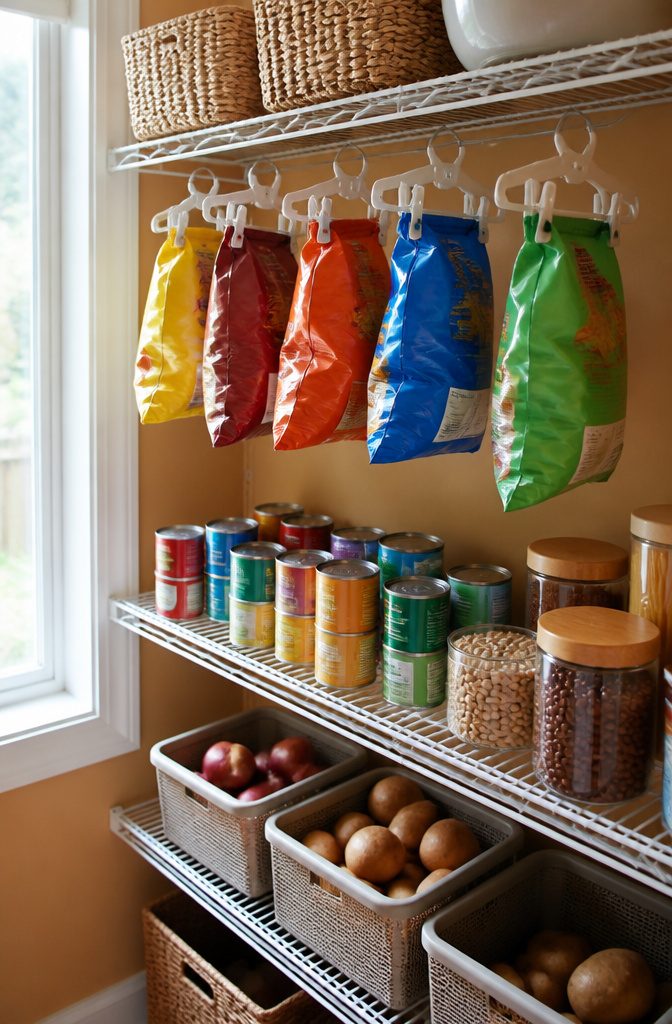
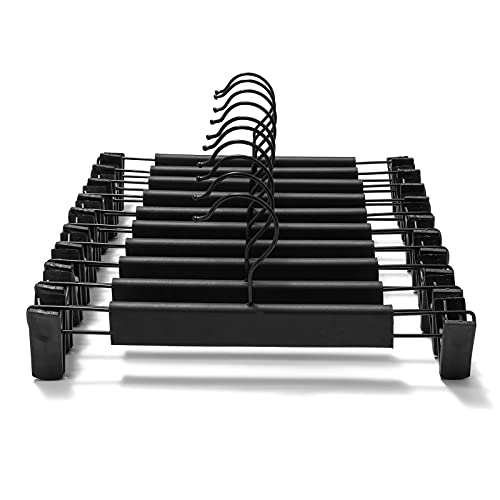
Plastic pants hangers with clips, the kind that usually hold dress slacks in a closet, suspend open chip bags from wire shelving so the contents stay sealed and visible.
The clips grip the folded top of a bag tight enough to keep chips from going stale, and hanging the bag frees the flat shelf surface underneath for cans, boxes, or whatever else needs a stable base.
Wire pantry shelving is where this move shines, since the grid gives you plenty of spots to hook the hanger.
A standard wire shelf with its front lip and cross wires will hold the hanger hook without any modification. The bag hangs in the air gap between shelves, so you are using volume that was otherwise wasted.
The hanger approach works best for bags you open and close often, not for long-term backup stock. The plastic clips can fatigue over time, especially on heavier bags, so the light stuff, chips and pretzels, gets priority.
For a few dollars, assuming you already own the hangers or can find them at a thrift store, the gain is immediate shelf space where you need it most.
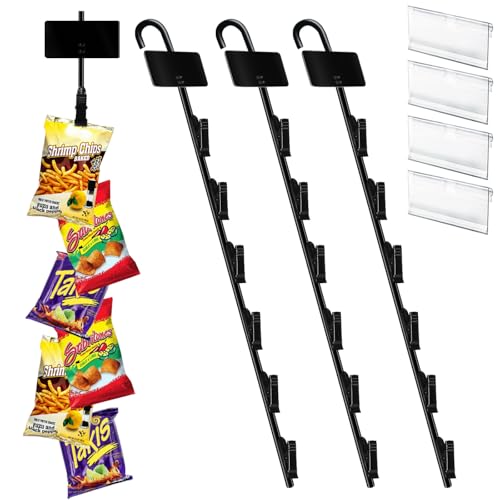
Maximize your retail space with our innovative hanging merchandise strips chip rack. Its space-saving design allows you to neatly display a wide variety of products, optimizing your valuable floor space. This rack is suitable for a wide range of products, including packaged goods, toys, cosmetics, and more, and it enhances visual appeal and accessibility. By strategically positioning smaller items at eye level, you can increase impulse purchases and boost sales.

What's Included: Our package includes 12 hanging merchandise strips with 12 hanging stations per strip and 12 S-shaped hooks, measuring 24.8 inches long, 1.2 inches wide and 0.08 inches thick (Note: The bags to be hung have to be hole punched for this to work.)
EFFICIENT STORAGE SOLUTION: These heavy duty s hooks are a simple and brilliant storage solution for hanging anything in your kitchen,closet, workshop or garage where space is limited,just simply hang them on pot rack,wall rails or shelves.With these S hooks you can easily organize your kitchenware,pans,pots,utensils,spoons like a professional chelf. Get everything within your arm reach,don't let clutter distract you and waste your precious time.
2. Storage Bins on Cabinet Door Backs
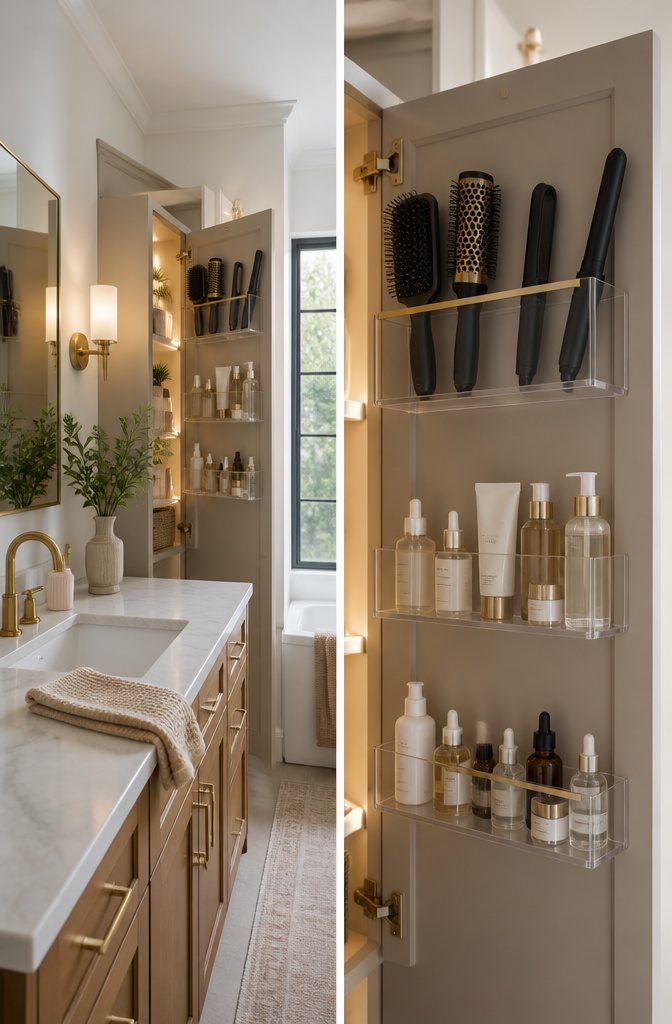
The back of a bathroom cabinet door is dead space until you stick something there.
Shallow bins or adhesive organizers turn it into storage for hair tools, skincare bottles, or the dental supplies that otherwise clutter the sink. I like this move because the stuff you reach for twice a day stays accessible but invisible.
Two ways to mount: small screws if you own the place and the door is solid enough to take them, or Command strips if you’re renting or just don’t want to mar the finish.
The strips hold better than you’d think on a smooth painted door, though a textured or thermofoil surface can fight the adhesive.
Over-the-door shelving works too if you want zero commitment, but it adds bulk that bins on the flat don’t.
The real limit is depth. Anything deeper than about two inches risks knocking against the cabinet frame when you close the door, so measure the gap before you buy.
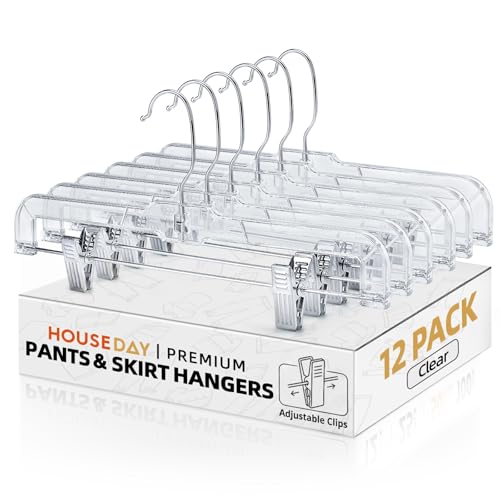
Heavy Duty Pants Hangers - Made of durable plastic, Our pant hangers with clips can hold 5lbs things in each side easily without deformation. These plastic pant hangers proved to be sturdy enough.They not only can hold jeans and skirts, tank tops, dress, ties, belts, nightgowns, shawls, also great for hanging your value clothes like suit ,coat ,shirt.
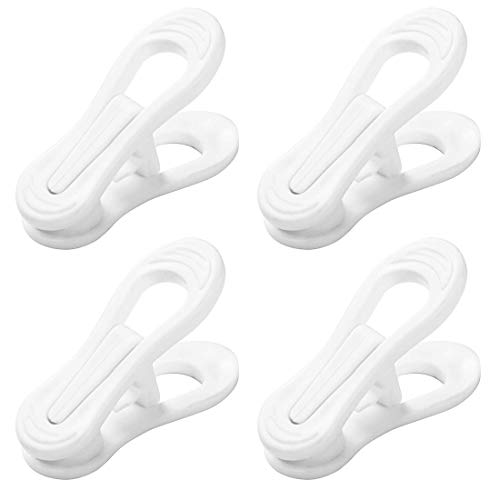
Multi-Purpose Plastic Clips: 20 pieces of plastic clips for hanging clothes and organizing hangers

12 Inch Closet Hangers for Pants & Shorts: Compact 12" clip hangers for tight spaces, small closets, toddler clothing, or drying laundry. Suitable for skirts, trousers, and slim-fit jeans
3. Lazy Susans for Pantry Corners
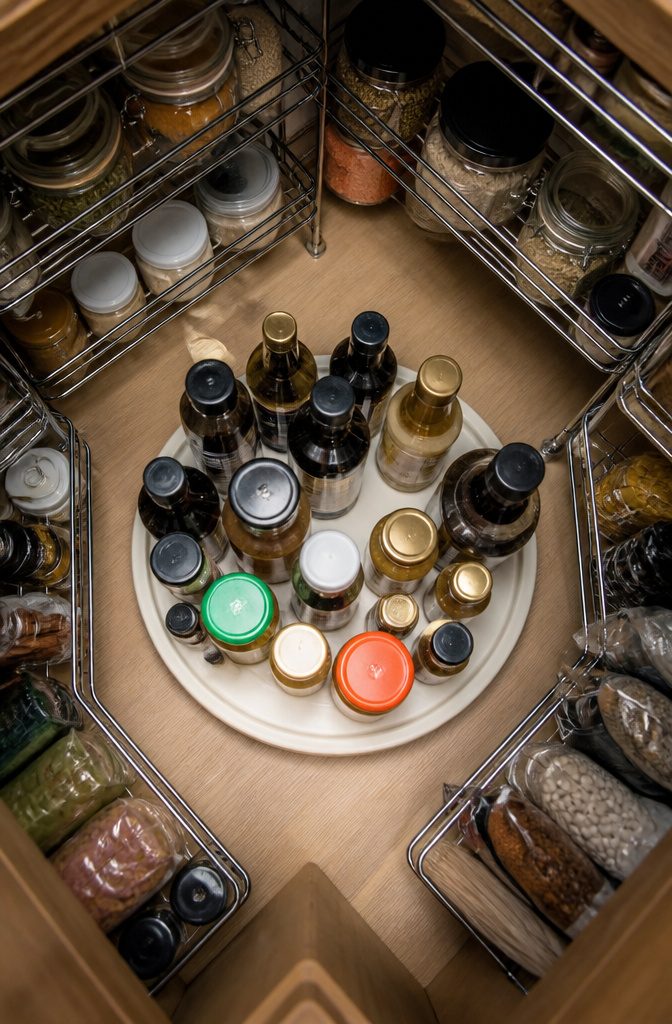
Pantry corners collect forgotten jars like they’re running a witness protection program for condiments. A lazy Susan turns that dead square into something that actually spins to your fingertips instead of forcing you to excavate behind the rice cooker.
I learned this the hard way after stacking bottles three-deep in a corner cabinet and finding five-year-old tarragon vinegar in the archaeological layer.
The rotation matters more than the size; even a 10-inch turntable keeps spices in play, and a 12-to-14-inch model handles taller bottles without tipping them into a domino chain.
Plastic works for light dry goods, but weighted bamboo or metal keeps oil bottles steady when you spin hard.
If your shelf is wire rather than solid, set a thin cutting board underneath first or the turntable wobbles on the gaps.
Two stacked lazy Susans, one for short spice jars and one above for oils, can squeeze a full corner workflow into about 16 inches of vertical space.
The real win comes morning after morning when you spin the hot sauce into reach instead of knocking over the soy sauce fishing for it.
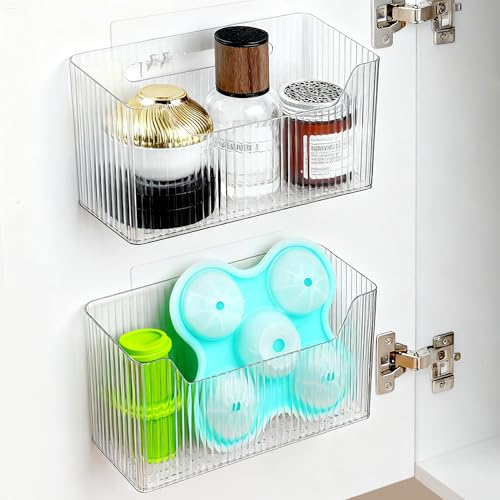
Designed for Inside Cabinet Door Storage: This cabinet door organizer is specially designed to hang inside cabinet doors, creating instant storage for bathroom or kitchen essentials. Keep items hidden yet easily accessible.

MORE REPLACEMENT OPTIONS : We will provide 4 adhesive stickers(more than normal), with 2 as replacements for backup, this allows you to quickly replace the adhesive sticker when it loses its adhesive force or when you need to change the installation location

Space-Saving Cabinet Door Storage - AENTGIU 4 Pack wall mount system storage bins with large size 11.4"L x 4"W x 5.3"H with a 3.6QT capacity(Total 14.4QT), is a great way to maximize unused wall & cabinet space anywhere. Keeps kitchen clean, organized, and no clutter. Storage container adds storage space and complement your decoration
4. Small Appliances on Rolling Plant Stands
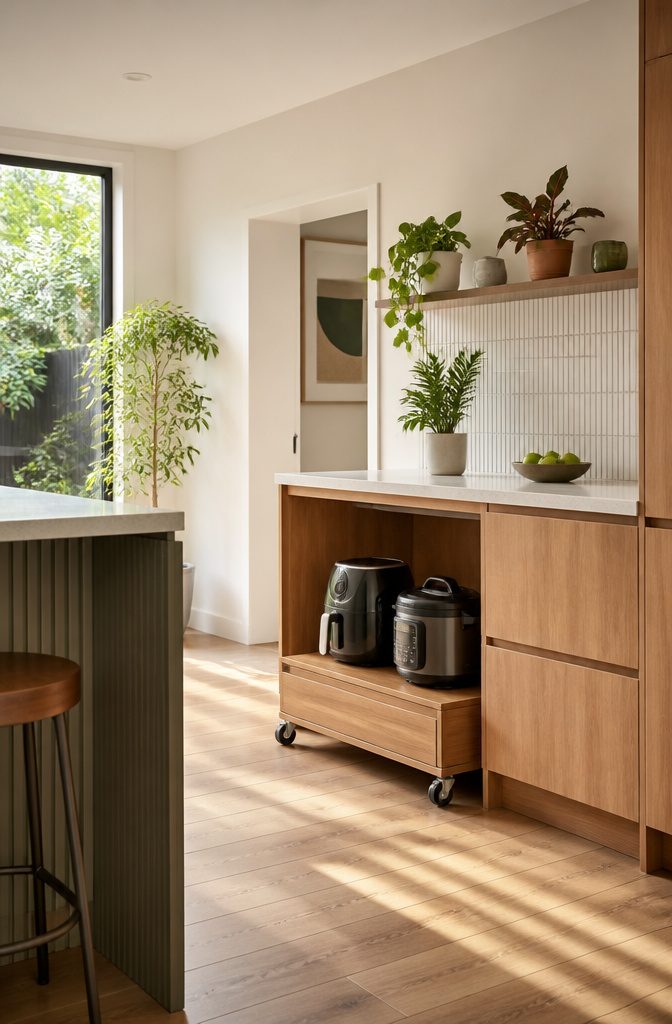
Rolling plant stands were built for heavy terra cotta, which makes them a solid match for the Instant Pot or air fryer that otherwise colonizes counter space.
The wheels let you pull the appliance out to where you actually need it, then roll it back against the backsplash or into a cabinet gap when the rice is done.
The stands run cheap at hardware and garden stores, and the low profile keeps the appliance height reasonable so it still fits under standard upper cabinets.
Weight capacity is the detail to check before you buy, since a stand rated for a fern may not handle a loaded pressure cooker.
The small footprint also means you can park two or three appliances on stands in a row and pull only the one you need, rather than playing cabinet Tetris every evening.

Maximize Vertical Space: This spice rack organizer fit for narrow cabinet because 2 tier design that doubles storage capacity without occupying additional horizontal space. This small lazy Susan Improves the utilization of compact space and stores more items in a limited area

USE IN EVERY ROOM: This 12 inch two-tier turntable brings order to your kitchen countertops, bathroom shelves, refrigerator, pantry, closet, home office, laundry room, garage, and craft room - one organizer that works everywhere you need it

Adjustable Height Lazy Susan: This 2 tier lazy susan organizer with adjustable height which can perfect fit with different height seasoning bottles,spices,snacks,bathroom essentials etc. 2 tier design providing more storage capacity , Making the most use of the limited space in your home to keep things neat and organized.
5. Hanging Closet Organizer for Board Games
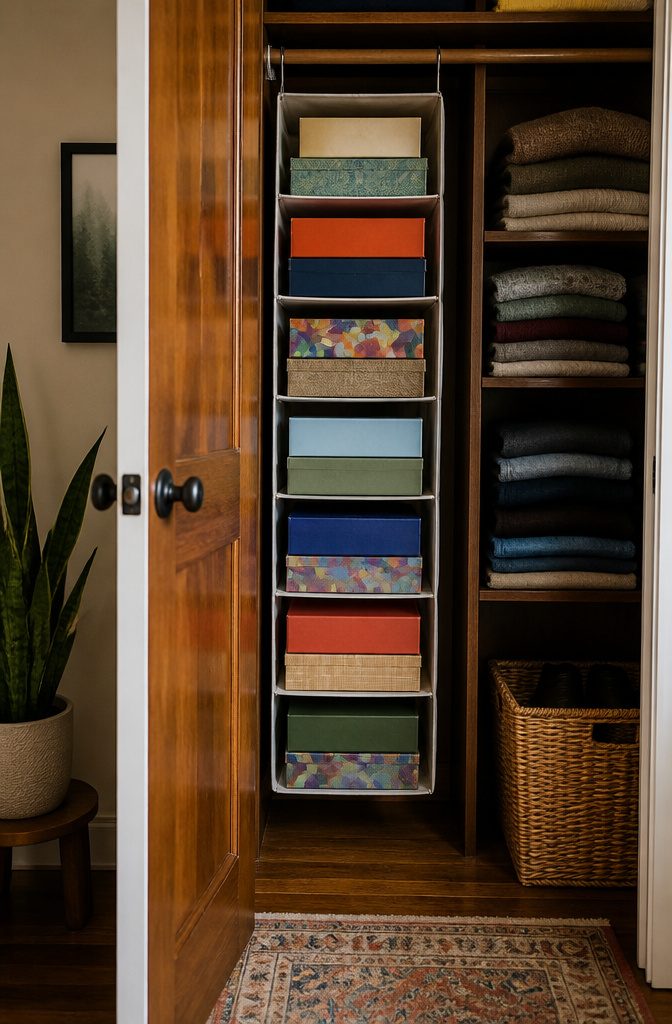
Board game stacks have a way of turning into Jenga towers the second you need the one on the bottom.
A fabric hanging closet organizer with square compartments solves this by letting you store boxes vertically, titles facing out, no digging required.
The compartments are sized for standard game boxes, and the whole thing hangs on a closet rod with hardware you already have.
The vertical orientation is what saves the shelf space: a column of boxes that once sprawled across two feet of shelf now occupies the depth of a closet, roughly a foot.
Weight adds up fast with thick boxes, so the organizer’s fabric sides matter. Rigid sides would bow; fabric lets the compartments sag just enough to cradle a heavy game without tearing seams.
Renters get the win here.
No drilling, no brackets, and the organizer travels with you when the lease ends. The one tradeoff is dust: closet air is still air, so a quick wipe of the box tops every few months keeps the edges from graying.

HIDDEN STORAGE: Organizer hangs on the back of a standard cabinet door (up to 0.75” thick) with sturdy steel bracket and protective non-slip padding.

Adjustable and Secure Design: Our over the door hair dryer rack features adjustable height between the storage baskets, allowing you to customize spacing for different items. Included with 4 non-marking screw stickers, used in the center hole part of the shelf can make the shelf securely attaches to the door, preventing swaying and noise when picking up items.

【3 Tier Over the Door Organizer】With black metal material, simple design ceates a suitable over the door storage organizer for matching your different home decor. The structure is simple. You not need drilling on the wall to avoid damaging. Only if you place the hooks over the door. Please note: The over the door shelf is suitable for doors about 1.9 inches thick. Door gap (>2mm) will be helpful to close the door successfully after you hang the door rack.
6. Silverware Organizer as Wall Jewelry Holder
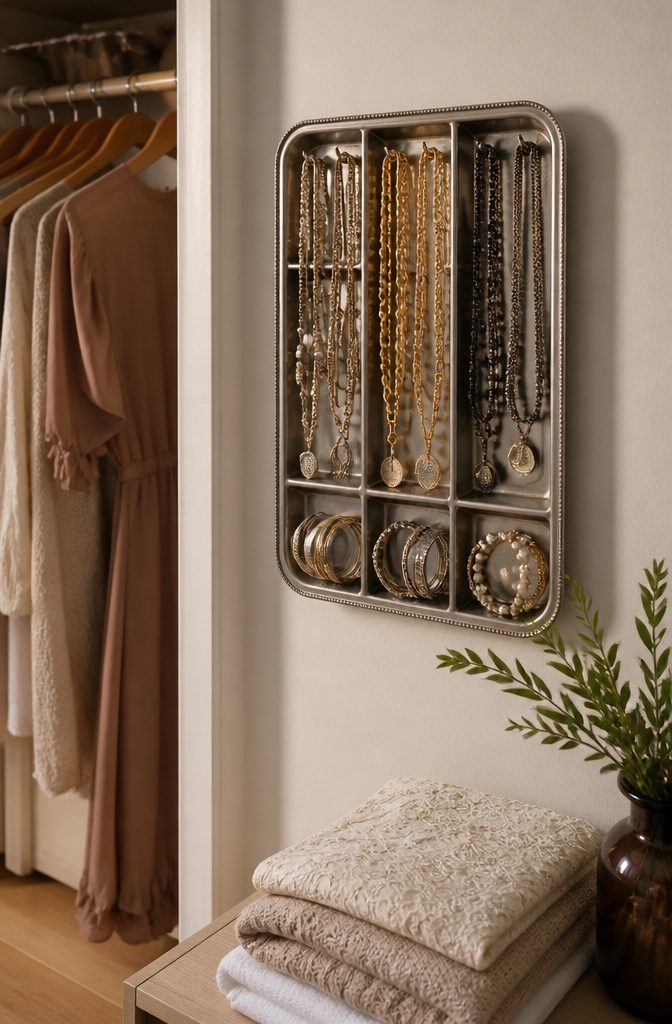
A divided silverware tray mounted on a closet wall or the back of a door sorts necklaces, earrings, and bracelets into compartments you already own.
The shallow depth keeps chains from tangling, and the pre-formed sections mean you are not measuring drawer liner or cutting foam.
The one upgrade worth making is a few mug hooks screwed to the inside of the larger compartments.
Bracelets and long necklaces slip off flat wood; hooks give them a catch that costs maybe two dollars at a hardware store and saves ten minutes every morning.
Wall-mounting is the part that separates a clever reuse from a drawer that happens to sit upright. Two picture hooks or a small French cleat keeps the tray flat against the surface so earrings do not slide behind it.
A closet interior works better than a bedroom wall for most renters, since the tray is still plainly a kitchen object up close.
Paint helps if you want it to read as intentional, but the compartments do the real work either way.
【1️⃣ Designed for Wall Mounting Support】 These wire shelf clips are designed to secure wire shelving to the wall for added stability. Ideal for closet storage racks and lightweight shelving systems in bedrooms, kitchens, laundry rooms, and utility spaces.

Designed Use: Designed to secure and support wire shelving systems in closets, pantries, laundry rooms, and storage areas

Double Rack Configuration: the set contains 2 chip display racks, each about 12.2 x 30 inches, with 36 clips per rack; It can hang multiple snack bags at the same time, satisfying bulk display demands at retail checkouts and party venues; The 2 pack design enables separate display of different snacks in various areas, which is convenient to apply and avoids confusion between different products, improving the efficiency of product selection for consumers
7. Hand Weights in a Wine Rack
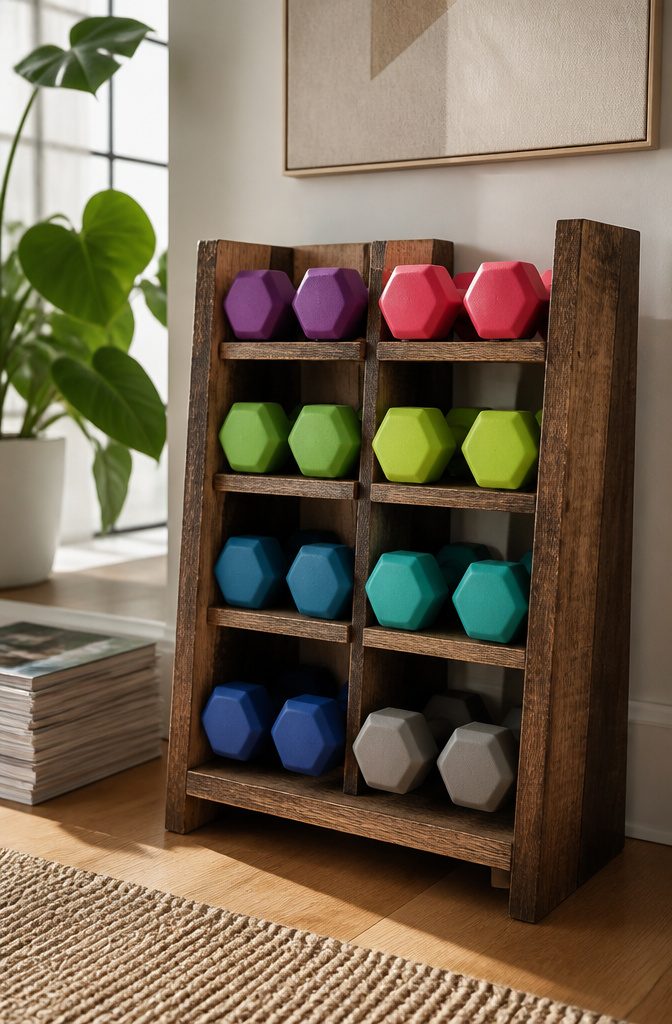
A wooden wine rack with its bottle slots turned upright holds dumbbells and hand weights better than most purpose-built gym storage.
The slots keep each weight standing on end, sorted light to heavy in a row that takes up maybe a foot of floor depth against a wall.
Metal racks work too, though the rubber coating on hex dumbbells grips wood more quietly when you slide one in or out.
The trick is matching the slot width to the handle diameter, not the bell ends. Most standard wine slots run about three inches across, which fits a 15-pound neoprene dumbbell handle fine but may swallow a 2-pound pair whole.
A rack with adjustable dividers solves this, or you can pack the gap with a rolled hand towel so smaller weights do not tip through and clang against the back rail.
If the rack still lives in a living corner rather than a dedicated gym space, the bottles-or-weights camouflage the source mentioned actually works both ways: a line of dark dumbbells reads as sculptural from across a room, especially in a black metal frame, and the whole thing looks intentional rather than like equipment you have not put away yet.

✅30 Pack Value Set: Includes 30 hanger clips for everyday use and easy replacement. A simple and affordable way to upgrade ordinary plastic hangers without buying expensive new sets.
【Recommend Reasons】-Messy closets are usually unattractive, bad looking, and painful. The junk makes it hard to find something to wear for any occasion fast. Even worse, it may come wrinkled and out of shape. Hangers are one of the best ways to keep the closet organized. Using this item for pants saves time and maintains its quality.

👖 STURDY & DURABLE: Our durable clothes hangers feature non-slip pinch clips with rubber to protect your clothes and securely hold garments like skirts, dresses, pants, shirts, shorts, trousers, and lingerie without damaging the fabric.
8. Christmas Ornaments in Egg Cartons
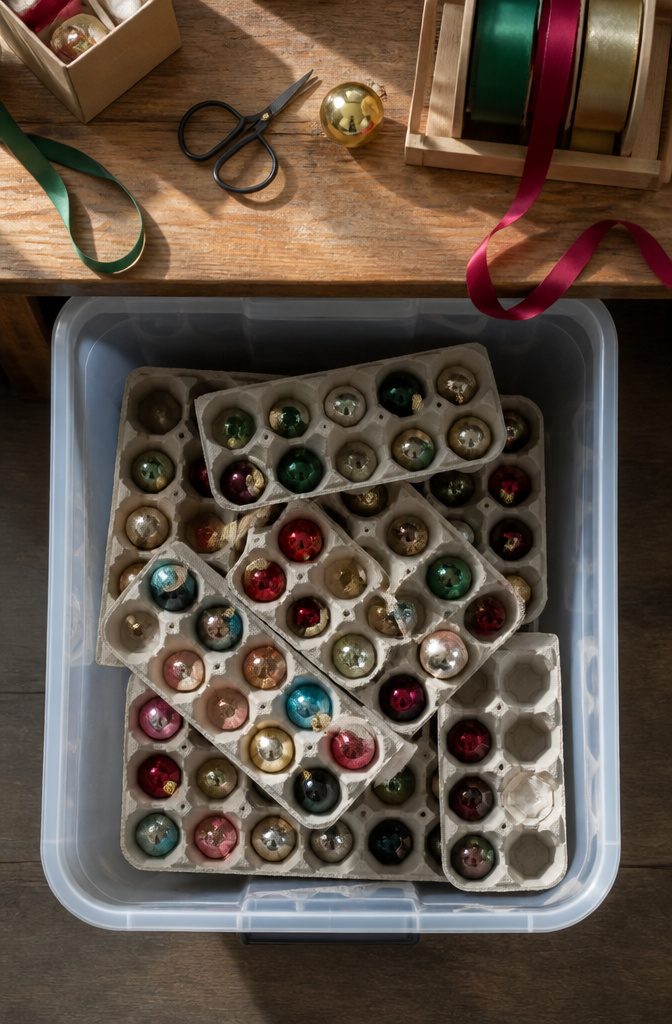
Cardboard egg cartons divide into exactly the right size pockets for individual glass ornaments, and the paper pulp cushions against bumps better than the plastic ones.
I stack three or four cartons in a bin, heaviest shapes on the bottom, and the compartments keep the hooks from tangling and the paint from chipping where ornaments knock together.
The cartons are free after the eggs are gone, so this storage costs nothing beyond the bin itself, and come January I do not have to hunt for specialty dividers.
Small ornaments fit perfectly, though larger baubles over about three inches need their own layer without a lid pressing down.
A strip of masking tape across the top of each carton marks the shape inside, so next year I find the icicles without opening every box.

Durable and Easy to Maintain: Constructed from food-grade PET plastic, these kitchen organizers are shatter-resistant and built for longevity. Measuring 4.33 x 3.55 x 4.53 inches, they are easy to clean with mild soap and water, offering versatile storage solutions

【Versatile Multi-use Storage Solution】Sinnsally cabinet door storage organizer is great for storing and organizing food container lids, tumbler lids, scrub brushes and other kitchen essentials. Ideal for small homes, bathroom, RVs, or apartments. It is a versatile storage solution that can be used in a variety of ways.

Durable Material: Our storage organizer bins is made of pet material, with dimensions of 7.5 * 4.6 * 3.2 inches. It is sturdy and durable, not easy to peel off can use for a long time.
9. IKEA Shoe Rack as Linen Closet
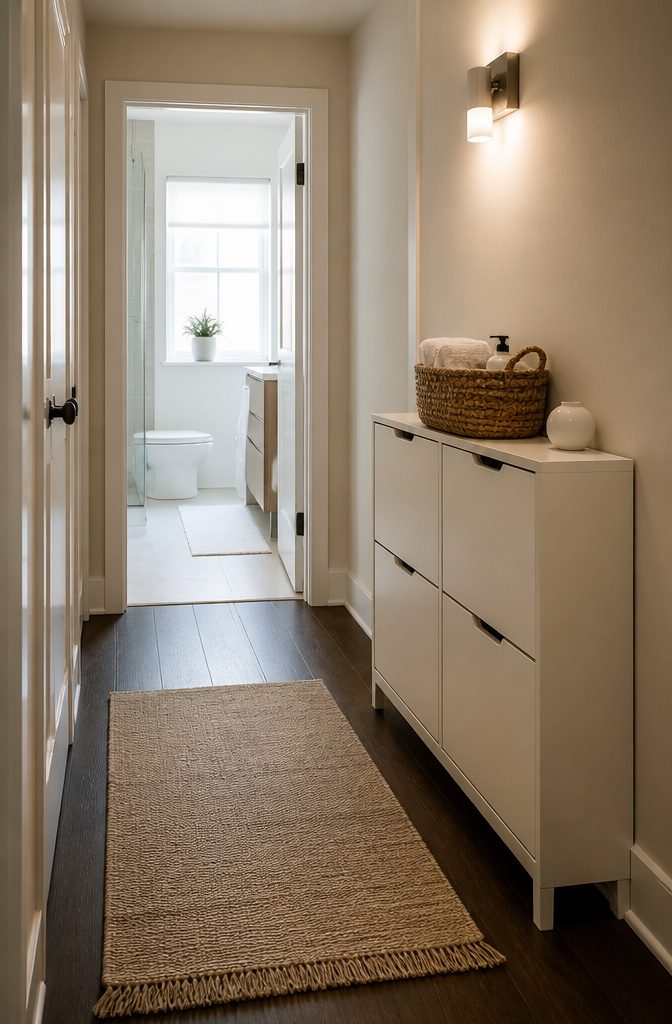
The IKEA GULLABERG shoe cabinet is slim enough to slide into hallway dead zones most people write off as unusable.
At roughly five inches deep, it sits flatter than a radiator cover and still swallows a surprising load of rolled towels, washcloths, and spare bedding.
Rolling matters more than folding here; a tight roll lets you stack vertically and pull one without toppling the rest.
I keep mine just outside the bathroom door in a hallway barely wider than a mop closet.
The shallow depth means the doors swing clear even when someone passes, and the flat top catches a small basket for the washcloths I grab most often.
For spare bedding, the lower compartments hold a rolled duvet and two pillowcases without strain, though a thick comforter needs to live elsewhere.
The finish is plain laminate, so it handles steam better than raw wood would in a bathroom-adjacent spot. If your hallway runs cold, the closed doors also keep linens from picking up that stale closet smell open shelving invites.
Rolling beats folding for every item that goes inside; the difference in usable space is roughly a third more per compartment, and the pull-out motion actually works.

Cool D-Shape Design Save Space: As the character 'D' shows, the front side of the D-shape lazy susan fit flush against the door. compared with other round lazy susan, our D-shape spice racks will maximize the storage space for your wall-mounted cabinet, fridge, or pantry.
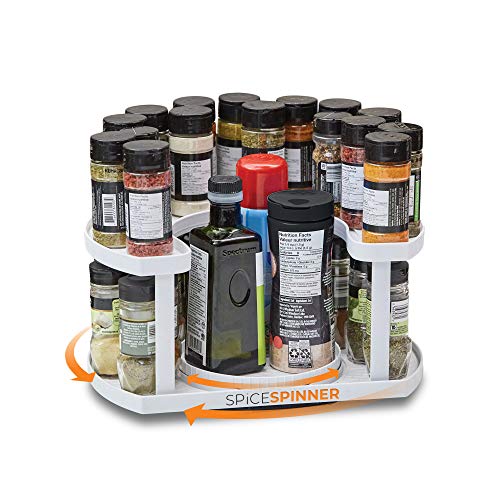
DUAL SPIN LAZY SUSAN – Built-in turntables keep all your spices at your fingertips with a simple spin. Makes everything visible and provides storage for taller items. Reclaim unused space in your cabinets and keep everything in view!

CORNER CABINET STORAGE - Maximize your cabinet space with the iDesign Clear Wedge bins, perfectly sized for any corner cabinet lazy susan; Purchase four 1/4 bins form a complete circle, keeping spices, condiments, and more neat and organized; Comes with 2 bins.
10. IKEA Bag Holder for Wrapping Paper
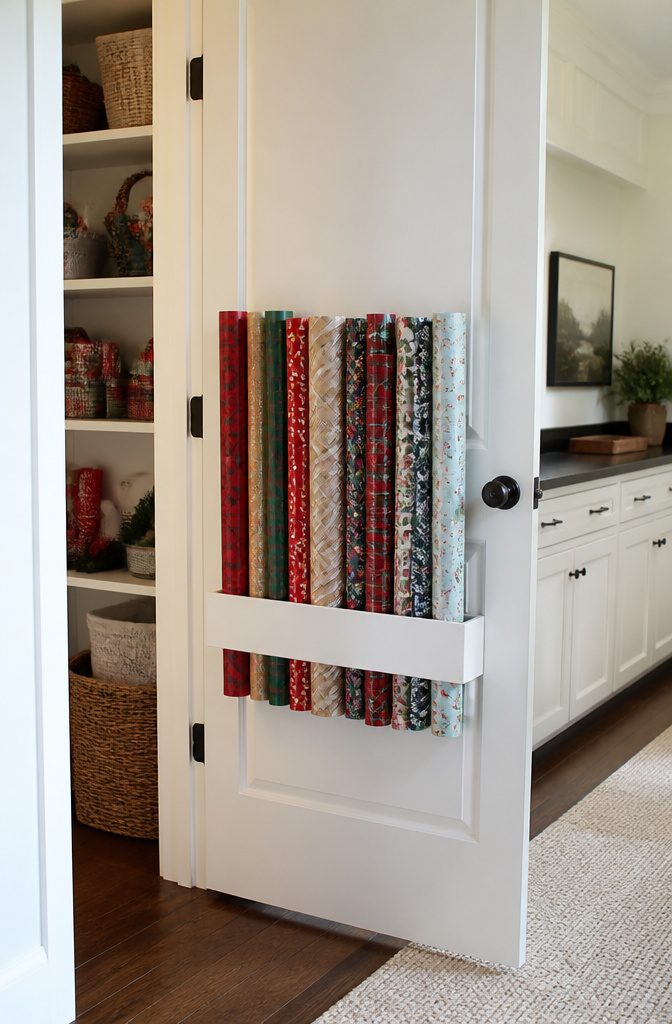
The rolls that live behind a closet door or slide under a bed have a way of unrolling themselves into a creased mess by December.
Mounting the IKEA VARIERA plastic bag dispenser horizontally turns that same vertical clutter into a file you can actually browse.
Screwed to a wall or the inside of a closet door, the dispenser holds rolls upright in individual slots, so a single roll slides out without disturbing the rest.
The narrow profile keeps it off the floor and out of the way of hanging clothes, and the white plastic disappears against most closet interiors.
A door mount works only if your door clears the jamb when it swings; check that gap before you drill. Wall space inside the closet, even a strip above the shoe rack, tends to be safer and just as reachable.

Declutter Your Space with Additional Storage: Hangs behind standard doors to keep clutter off the floor while still keeping essentials easy to reach and organized

Space-Saving Door Storage - Add storage without using floor space. The 6-shelf over the door organizer creates vertical room for bathroom essentials, closet accessories, nursery supplies, pantry snacks, and kids' items.

【Heavy-Duty Metal Construction】Our VyGrow Over The Door Organizer is crafted from high-quality heavy-duty metal, ensuring maximum strength and durability compared to ordinary fabric products. This sturdy door organizer hanging is designed to withstand high weights without deforming, making it perfect for your closet, pantry, or bathroom.
11. Tension Rods for Vertical Baking Sheets
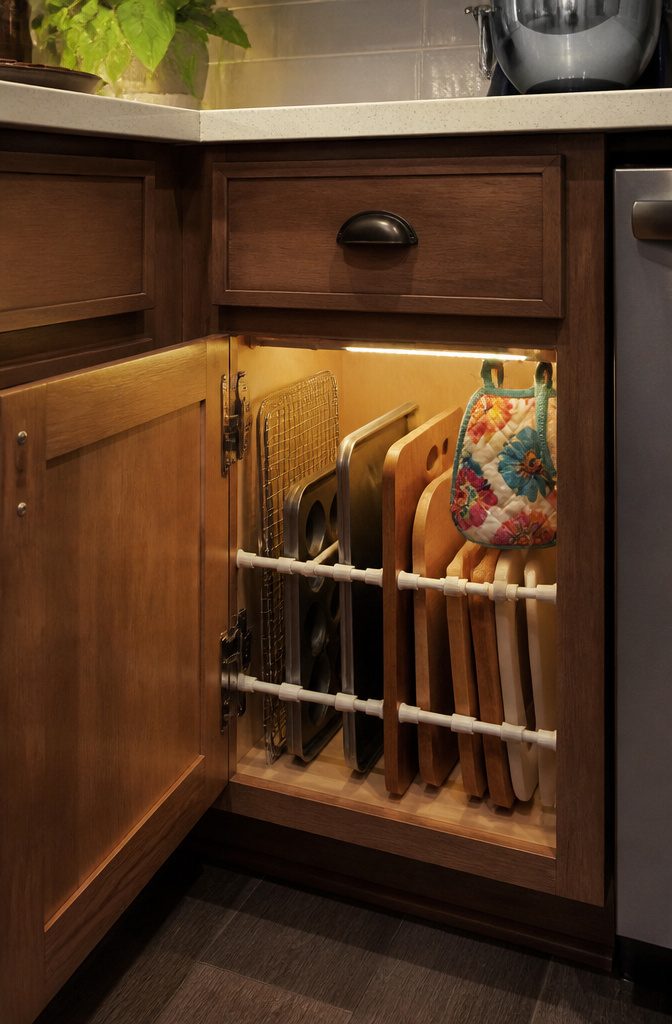
Stacked baking sheets turn into a game of Jenga every time the one you need is on the bottom.
Short tension rods installed vertically inside a cabinet fix this by creating slots that hold sheets, cutting boards, and cooling racks on edge, where you can see the full edge and pull one out without disturbing the rest.
The rods need to sit deep enough in the cabinet that the door closes flat; a half-inch gap behind them usually does it. Spring-loaded ends press against the cabinet floor and ceiling, so no drilling is required.
That matters for renters, and it matters for anyone who realizes two months later that the spacing was wrong. Slide the rods closer or farther apart to fit a thin jelly-roll pan or a thick butcher block.
I have seen this done in cabinets as narrow as twelve inches, though the rods themselves come in shorter lengths for tighter spaces.
The only real failure mode is loading the front slot too heavy; the rod bows slightly and the sheet leans. Putting the heaviest board toward the back keeps the tension even.
12. Cookie Tins as Sewing Boxes
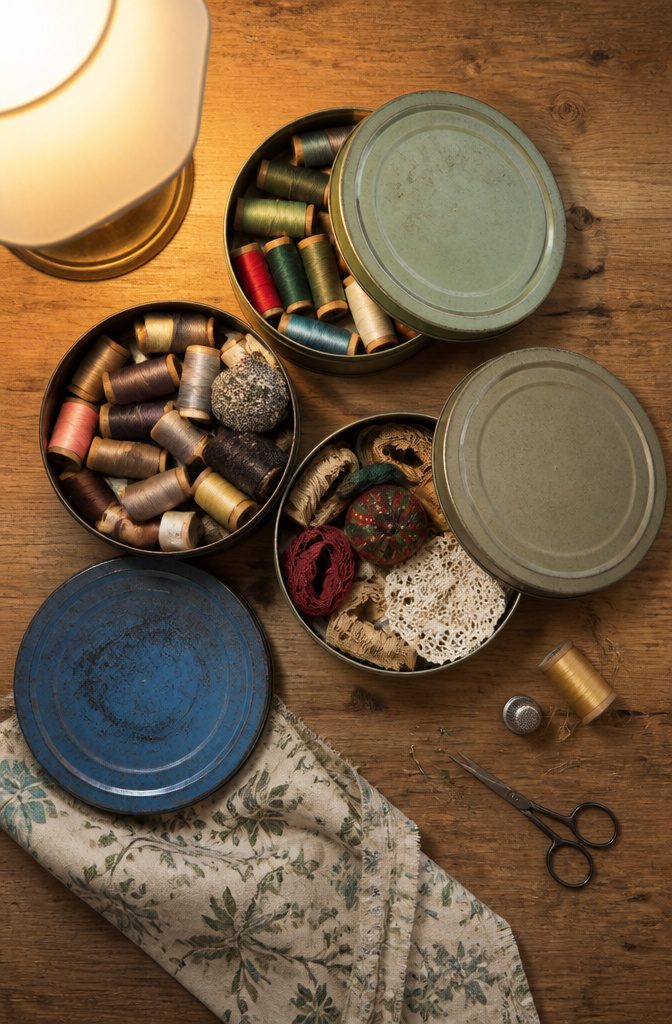
Round metal cookie tins with tight lids are the right depth and diameter to keep thread spools upright and pins from scattering, which is why so many households still reach for the same solution grandmothers used.
The lid snaps down hard enough that nothing shifts when the tin gets knocked around in a drawer.
Stack three or four and they take up less shelf space than any plastic organizer I have priced, and the weight keeps the stack from sliding.
I keep one tin for thread, one for pins and needles, and one for buttons and snaps.
The only real limit is the shape: round tins waste a little corner space in a square drawer, but they fit fine along the back of a shallow shelf where rectangular boxes would tip.
If the tin still smells like shortbread, a night with the lid off and a bowl of baking soda inside fixes that.
13. Food Lid Organizer from a Bin and Cooling Rack
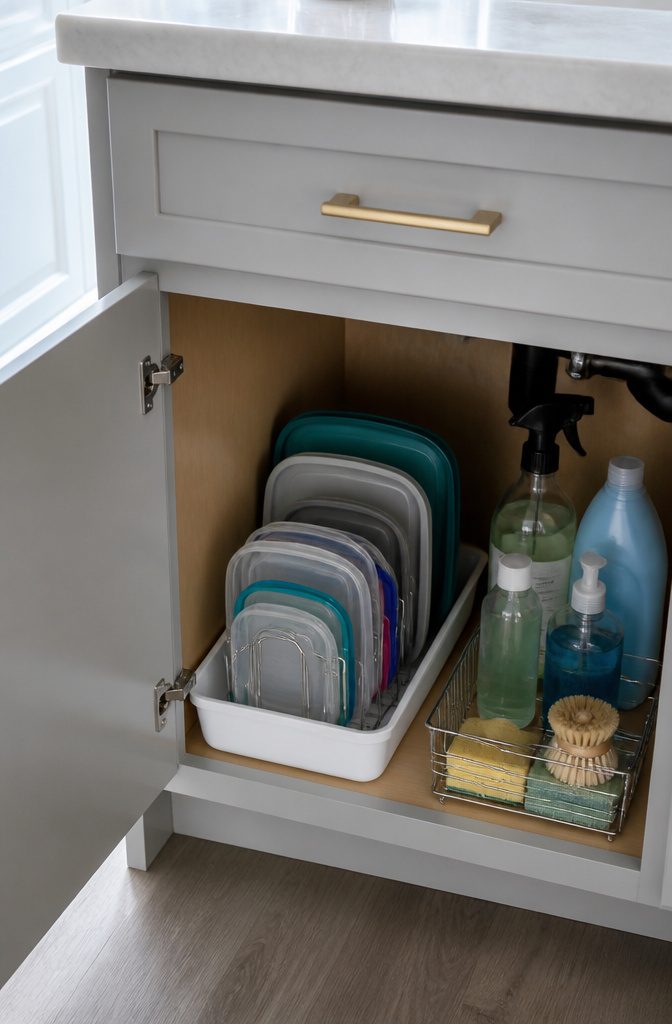
A shallow plastic bin and a wire cooling rack solve the lid avalanche that happens every time someone opens the cabinet above the stove.
The cooling rack stands upright inside the bin, its wires creating vertical slots that sort lids by size so the small ones stop sliding under the large ones.
Water or oil that clings to a freshly washed lid drips through the rack and pools in the bin below instead of on the shelf, which matters more than I expected before I tried it.
The pair needs to fit together without forcing: the rack should stand snug against the short ends of the bin, and the bin needs to be shallow enough that you can reach over the top edge to grab a lid.
A rack with tight wire spacing works better than a wide grill pattern; lids tilt and slip through gaps bigger than half an inch.
I looked for this combo in the organizing aisle of a big-box store rather than buying either piece online, because the fit is the whole point and plastic bins vary more than their labels suggest.
14. Cleaning Supplies in a VARIERA
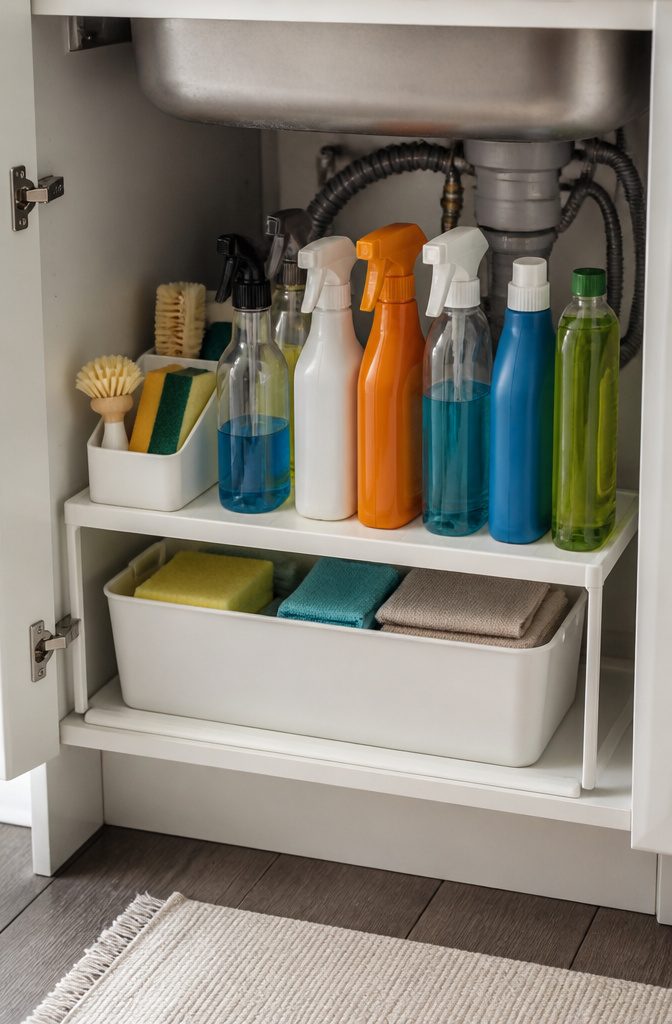
The space under a sink tends to swallow spray bottles whole.
They tip, they leak, they hide behind the drain pipe where you forget you own them. A VARIERA shelf insert at $5 fixes this by turning one cavernous cabinet into two stacked zones.
I set the insert toward the back of the cabinet so taller bottles sit below with their triggers facing forward.
The upper shelf catches scrub brushes, dusters, and the refill pouches that otherwise avalanche when you reach for the Windex. The wire frame keeps drips from pooling, and the white finish hides hard-water spots better than raw metal would.
For a bathroom setup where supplies are lighter, a pair of VARIERA boxes side by side does the same work without the height.
One box holds toilet-bowl refills and a brush; the other takes hair-product bottles and a microfiber stack. The move that saves the most grief: assigning each box to a single chore so nothing migrates.
Grab the kitchen box for the Saturday wipe-down, the bathroom box for the Sunday scrub, and you skip the ten-second hunt that turns into a five-minute excavation.
15. Silicone Cupcake Liners for Drawer Dividers
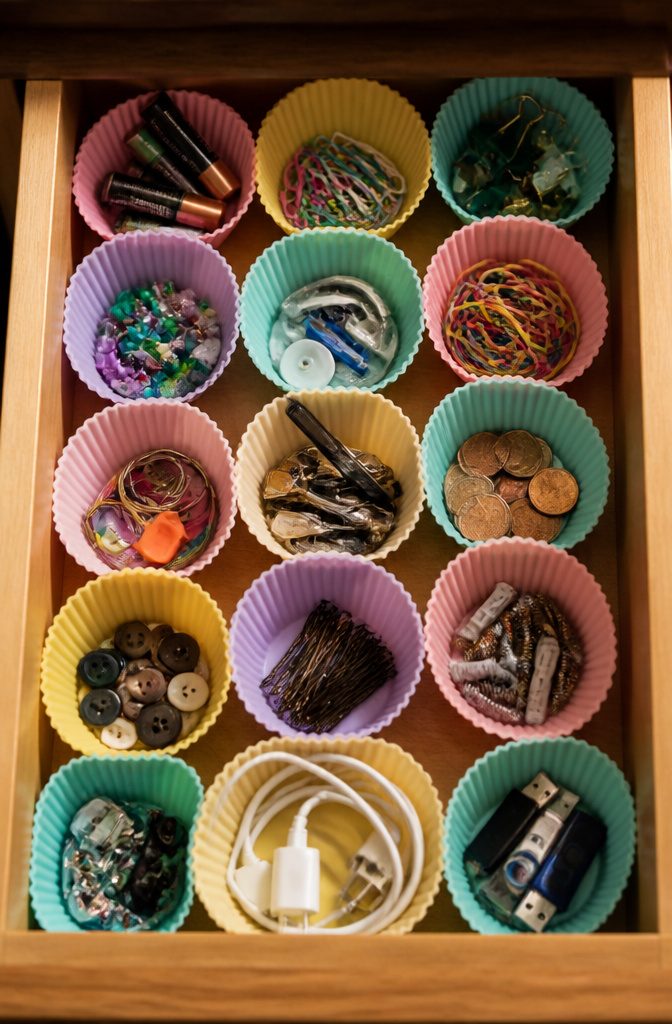
Reusable silicone cupcake liners pull double duty once they leave the kitchen.
The same flexible cups that keep orange wedges from soaking a lunchbox work just as well inside a junk drawer, corralling paper clips, batteries, hair ties, and the other small items that otherwise dissolve into one undifferentiated pile.
The silicone grips the drawer bottom just enough to stay put when you open and close it, but lifts out cleanly when you want to rearrange.
A standard muffin-tin size fits most drawers without cutting; mini liners handle the truly tiny stuff like safety pins and push pins. A dozen liners for under ten dollars replaces the usual flimsy plastic trays that crack inside a year.
The only real limit is depth. These cups sit shallow, so anything taller than a AA battery still wants a deeper bin.
For the layer of small things that usually roams free, though, they divide space without committing to a permanent layout, which matters when your storage needs shift every few months.
16. Hanging Closet Organizer for Paper Products
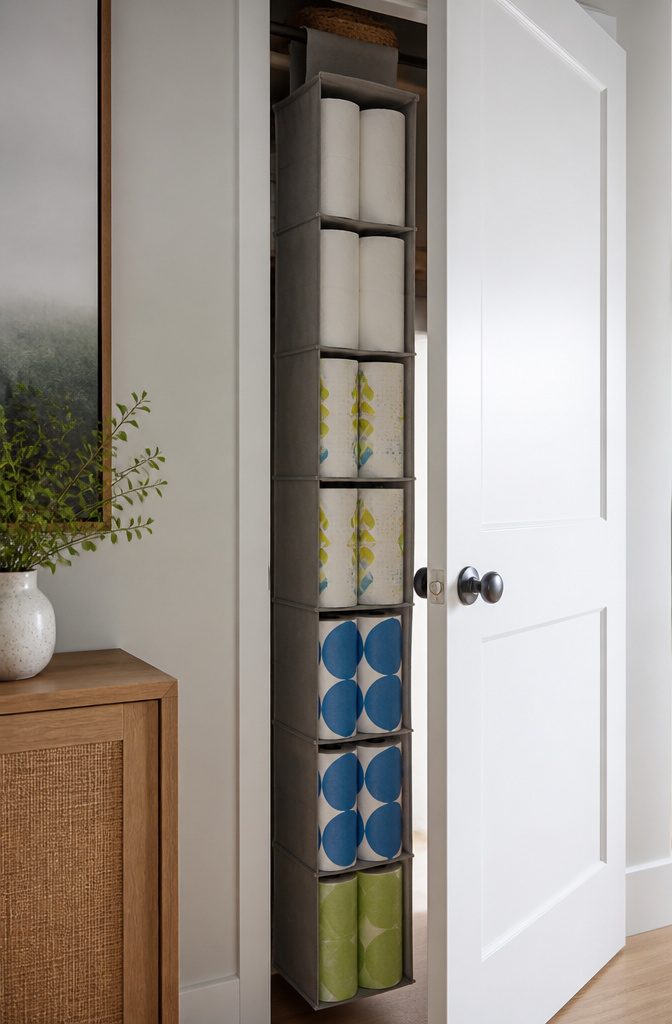
A hanging closet organizer with narrow slots solves the paper product problem that bulk buying creates.
Those economy packs of paper towels or toilet paper from warehouse clubs save money per roll, but they need real estate most closets do not have.
The lower shelves are the right spot for this. Gravity does the work of keeping rolls upright and reachable, and the narrow slots keep a twelve-pack from becoming an avalanche every time you pull one free.
Toilet paper and tissue boxes sit flat on the same shelves without modification, so one organizer handles three different stockpiles.
The tradeoff is visibility. A closet organizer hides your supply behind a door, which means you track inventory by memory or by the gap where the last row stood.
That works fine for toilet paper, which runs out on a predictable rhythm, but paper towel usage spikes around holidays or projects and can catch you short.
I keep a single roll in its usual kitchen spot as a buffer and treat the closet stock as the backup it is.
This setup shines in rentals where adding shelves means asking permission you will not get, or in older homes where the linen closet was sized for a different era of shopping.
17. Sponge Holder for Fridge Packet Storage
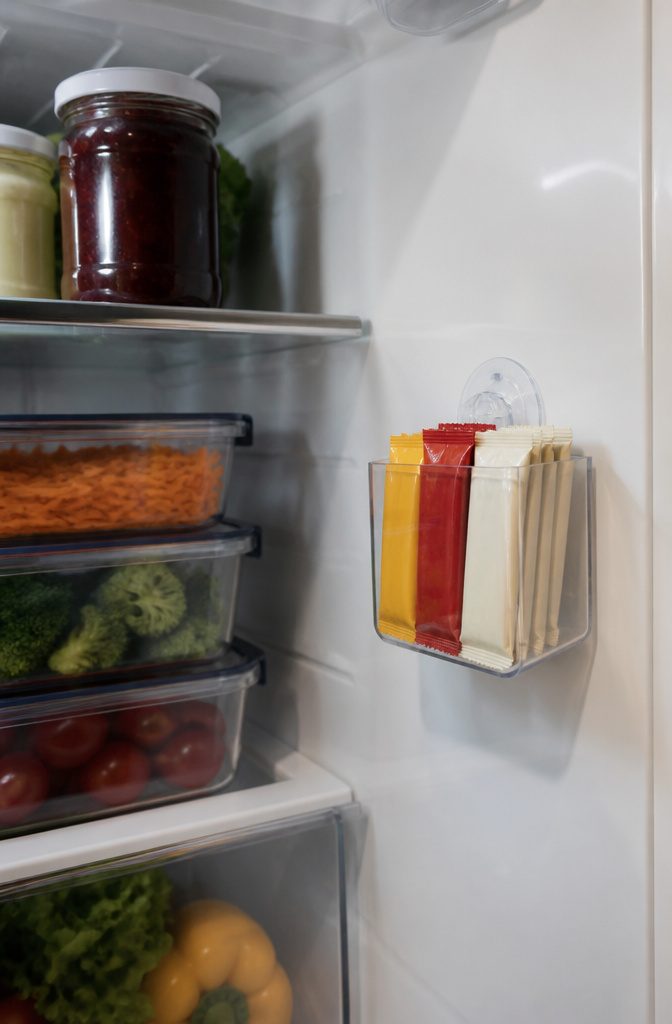
A small suction-cup sponge holder stuck to the inside wall of a refrigerator corrals the sauce packets and condiment cups that otherwise vanish into drawer corners.
The plastic body costs less than $10 and grips any smooth surface, so the location is flexible: high for adult reach, low if kids need access, or tucked beside a shelf where the door still closes flush.
Take-out soy, ketchup, and hot-sauce singles stay upright and visible instead of sliding under wilted produce. The open grid also means you spot the nearly-empty packet before it crusts over, which drawer storage never seems to prevent.
18. Sponge Holders for Shower and Vanity Space
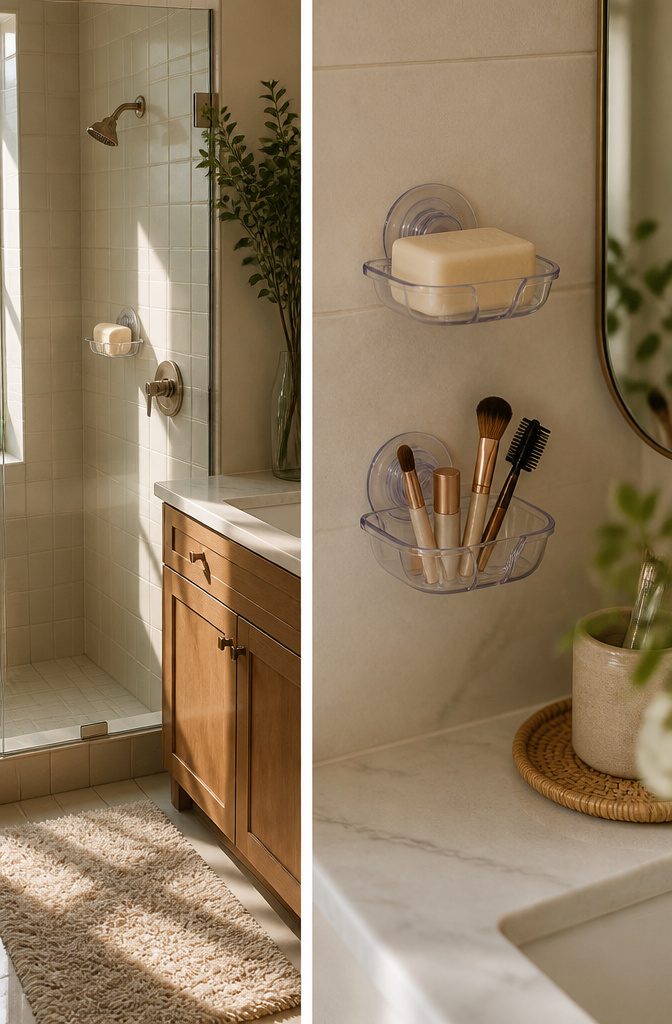
A plastic suction sponge holder runs less than $10 and mounts to any smooth surface without drilling, which makes it fair game for rooms beyond the kitchen sink.
In the shower, the wire frame keeps a bar of soap from turning slimy on a ledge and gives a razor a dry perch off the tile.
On the vanity mirror, the same holder corrals tweezers, an eyelash curler, or a couple of makeup brushes right at eye level, reclaiming the counter space they used to clutter.
The suction starts and stops where you put it, so renters can walk away with their hardware when the lease ends.
19. Linens Stored Where They Are Used
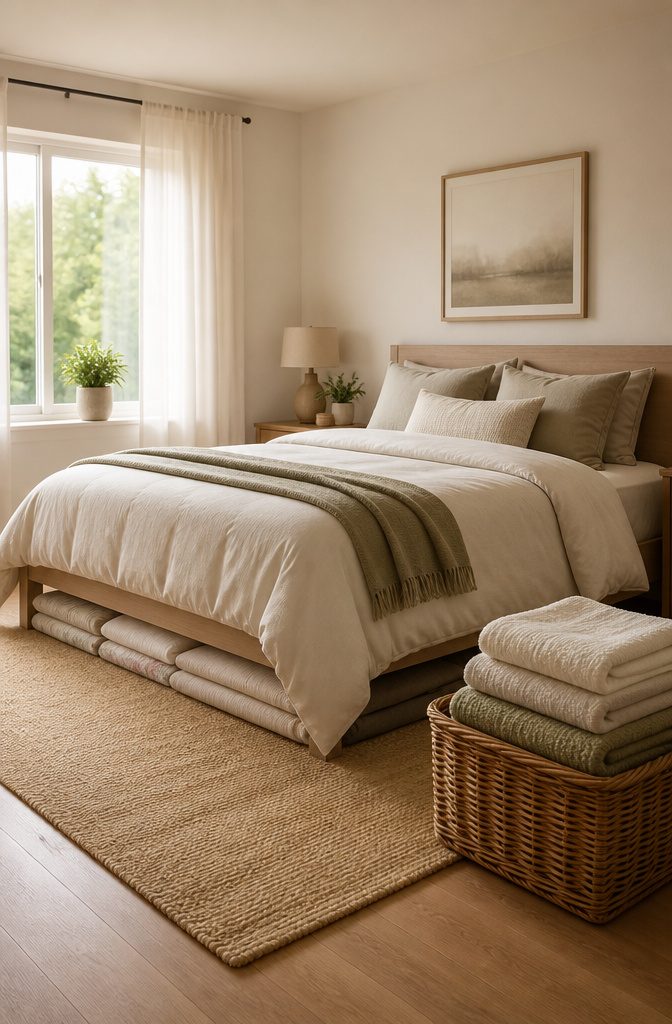
Sheets folded wide and thin slide under the mattress they are meant for, out of sight and kept from dust.
I tried this in a guest room with no linen closet to speak of, and the trick is remembering they are there; the first time I put fresh sheets on that bed, I had already made it before I recalled the set waiting underneath.
Fold them flat enough that you do not feel the stack when you lie down. A low profile matters more than a perfect crease.
Bathroom towels live just as well in the bathroom itself, and kitchen linens belong in the kitchen.
The alternative is one overstuffed closet somewhere else in the house, and every time you need a hand towel you are walking a hallway for it.
Under-bed boxes with lids or flaps keep the contents from getting dusty, and they work for linens the same way they work for out-of-season clothes.
The bedroom stores what the bedroom uses. The same rule holds room by room, and it saves more space than it costs.
20. Baking Sheets as Temporary Fridge Shelves
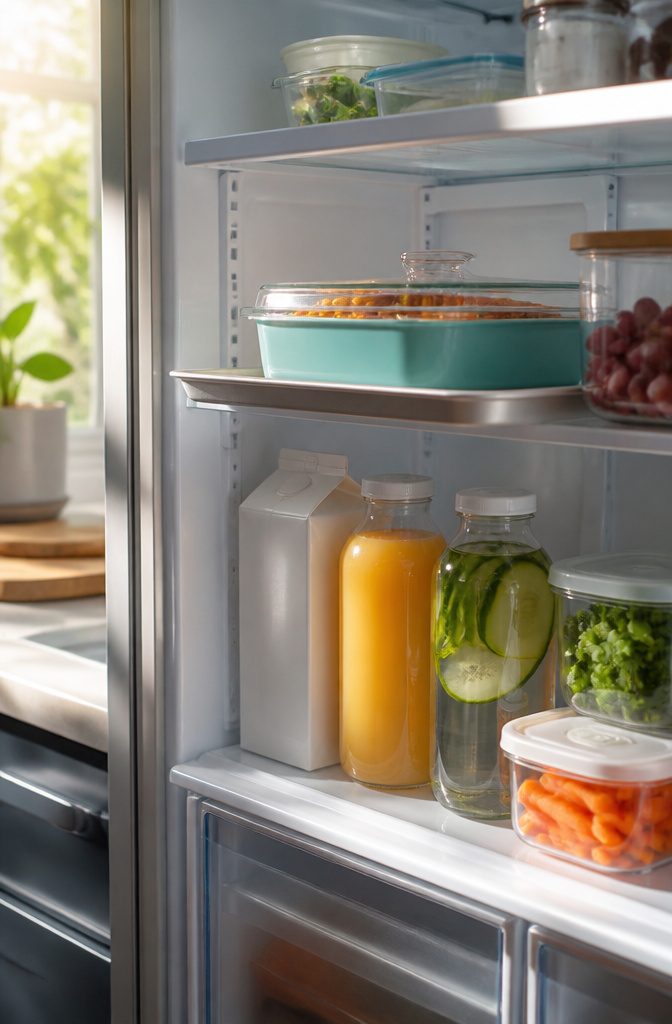
A half-sheet baking pan turns any flat refrigerator shelf into a temporary second level when you need it, which is usually the night before a holiday or the afternoon of a potluck.
The rim keeps a Pyrex dish from sliding, and the air gap underneath still leaves room for short cartons or a six-pack.
I have seen this save a Thanksgiving platter when the main shelves were stacked with brined turkey and three kinds of stuffing.
The move works because the sheet is barely there: maybe three quarters of an inch of height, so tall items above it still fit if your fridge has standard spacing.
Slide it out with the platter on top when the party ends, and the shelf goes back to normal. No hardware, no commitment, and the sheet goes right into the dishwasher with the serving dishes.
Frequently Asked Questions
What are some clever storage ideas for small spaces?
Hang chip bags from wire shelves using plastic pants hangers to free flat shelf space underneath, or slide a slim IKEA shoe cabinet into hallway dead zones to store rolled linens in just five inches of depth.
Tension rods installed vertically inside narrow cabinets hold baking sheets and cutting boards on edge, and suction-cup sponge holders on fridge walls corral sauce packets without taking up drawer room.
How can I maximize storage in my kitchen?
Add lazy Susans to pantry corners so jars spin to your fingertips instead of disappearing behind stacks, and set a thin cutting board underneath on wire shelves to stop wobbling.
A half-sheet baking pan turns any fridge shelf into a temporary second level for holiday platters, while a cooling rack standing upright in a shallow bin sorts food lids by size and catches drips below.
What are some creative ways to organize a small bathroom?
Mount shallow bins or adhesive organizers on the back of cabinet doors for hair tools and skincare bottles, using Command strips if you are renting.
A plastic suction sponge holder on the vanity mirror keeps tweezers and makeup brushes at eye level, reclaiming counter space, and a VARIERA shelf insert under the sink splits one cavernous cabinet into two stacked zones for spray bottles and scrub brushes.