
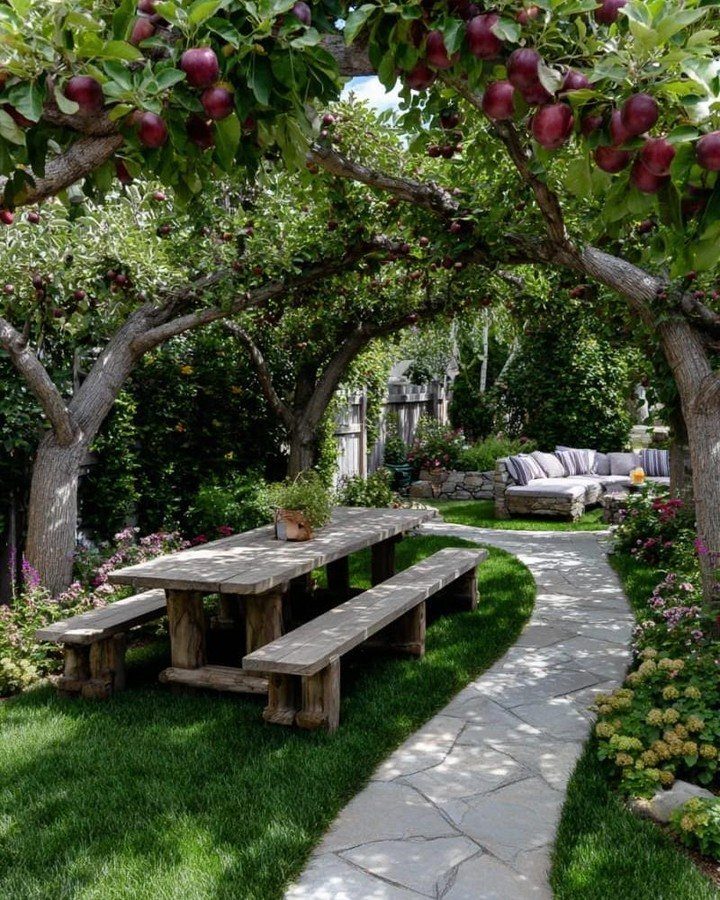
These projects start with cinder blocks and 2x10s you can handle in an afternoon and go up to a wooden pergola set in concrete, with most asking for a single weekend and money you already planned to spend.
What decides which one belongs in your yard is how much you want to change the space and what you are willing to build yourself versus buy finished and place.
1. Striped Tablecloths
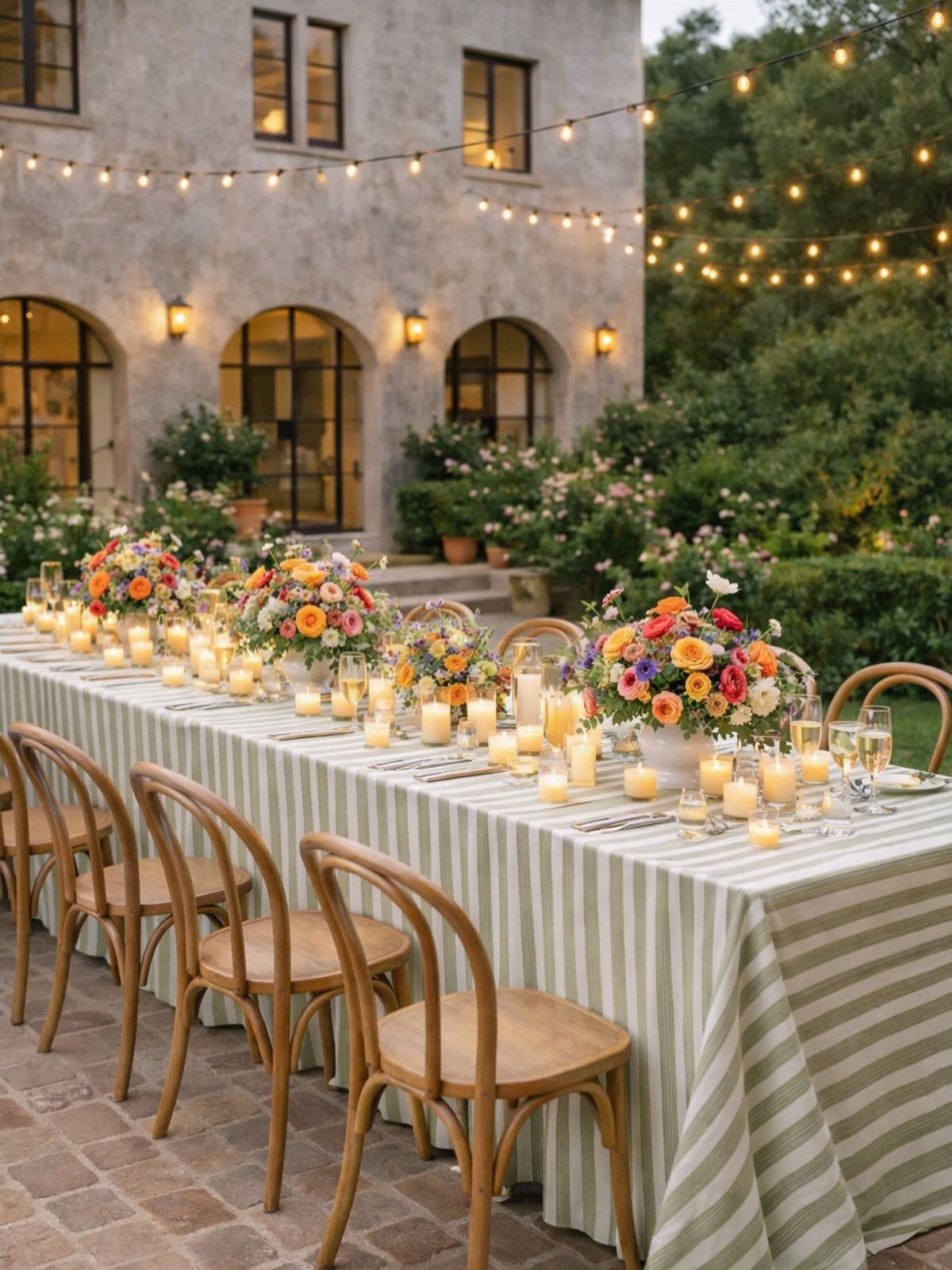
A striped tablecloth turns any picnic table into a place worth lingering. A green-and-white stripe reads classic without feeling themed, which matters if you use the same table for July 4th and a random Tuesday dinner.
Cotton or a cotton-poly blend holds up best outside and washes out wine spills. I buy mine a size larger than the table so the overhang hides bench edges too.
2. Fringed Balinese-Style Parasols
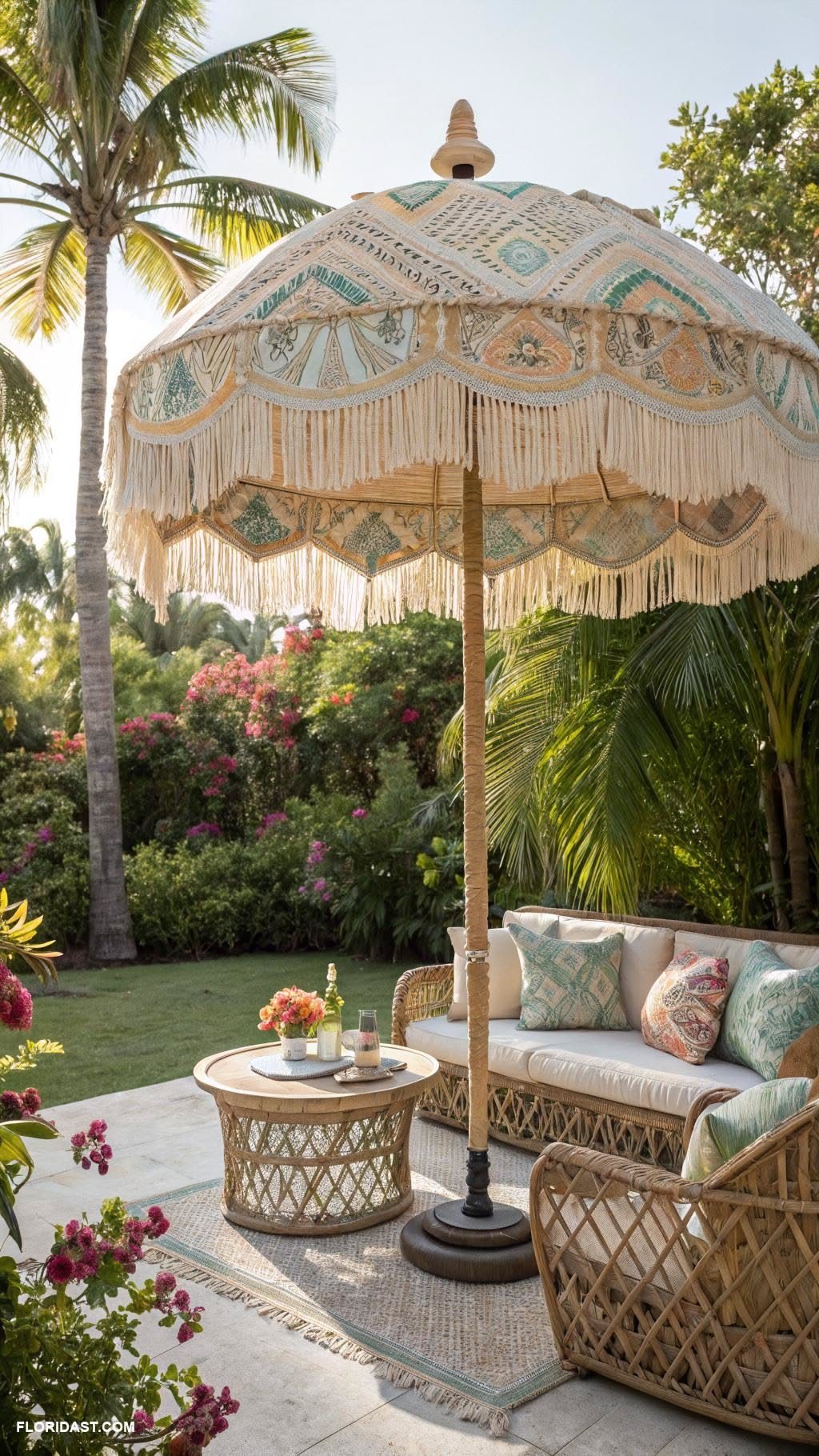
Fringed Balinese-style parasols do what an umbrella cannot. They cast a wide, soft shade and move a backyard toward somewhere else entirely, which is the point if your view is mostly your neighbor’s siding.
The fringe catches breeze and hides uneven edges where the fabric meets the frame. I have seen these last 2 seasons in Florida humidity before the fade becomes noticeable; store it dry and the color holds longer.
3. Treat Outdoor Seating Like Indoor Furniture
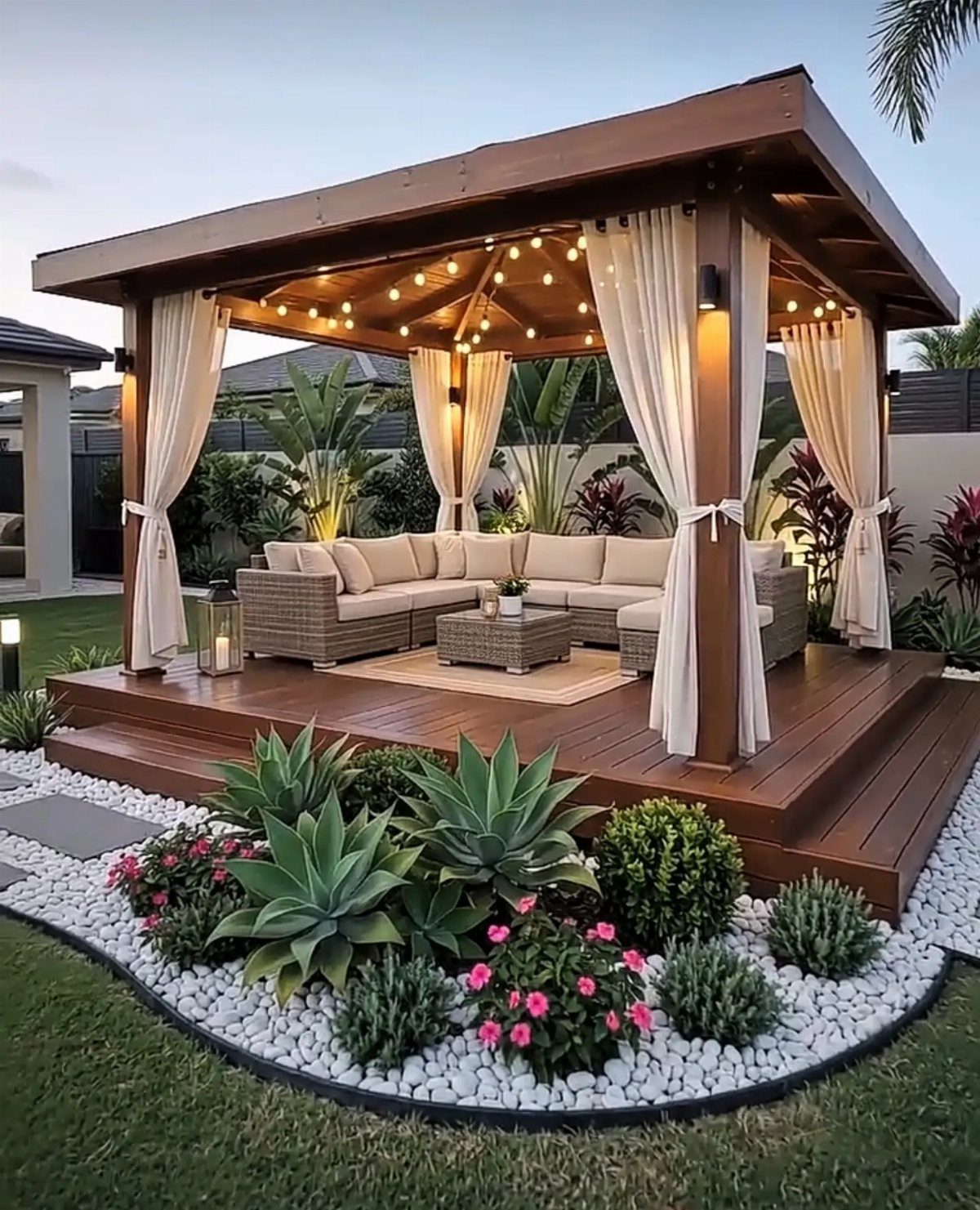
Outdoor seating treated as carefully as indoor seating is how you get a space people actually use after sunset.
The move is sizing a sectional for actual conversation, adding a rug that defines the room, and hanging curtains to soften a pergola’s frame.
The rug needs to be polypropylene or another outdoor-rated weave; indoor wool molds in 2 rains. I hang curtains on tension rods inside the pergola posts so they slide open when the wind picks up.
4. Circular Bench Around a Tree
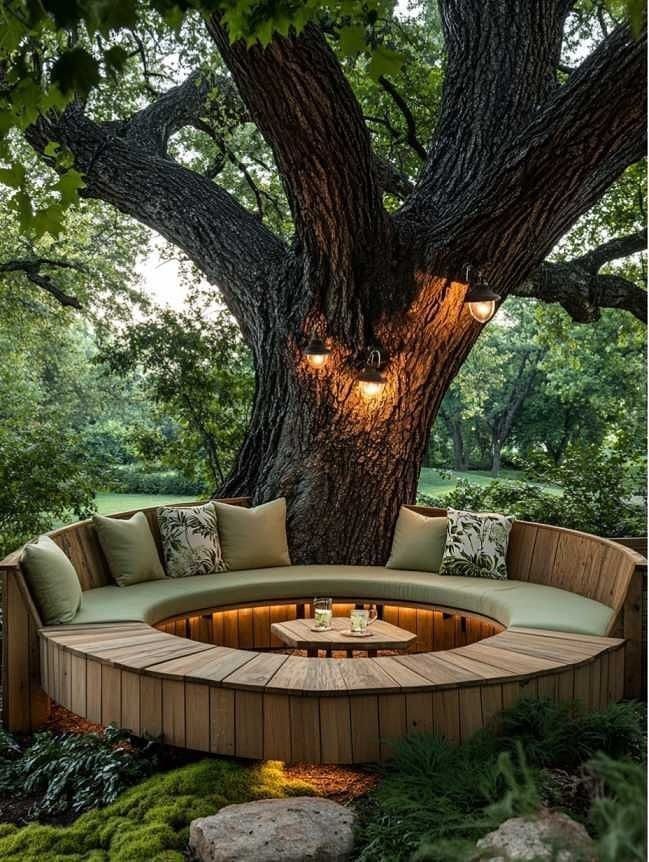
A circular bench around a tree gives you seating where roots and shade already decided the best spot would be. The curve follows the trunk naturally, and the bench becomes something built in rather than placed.
Pressure-treated 2x4s or cedar boards make the frame; I leave a gap between bench and bark so the tree keeps growing. Battery-powered LED strips under the seat rail turn on at dusk without wiring.
5. Circular Plunge Pool
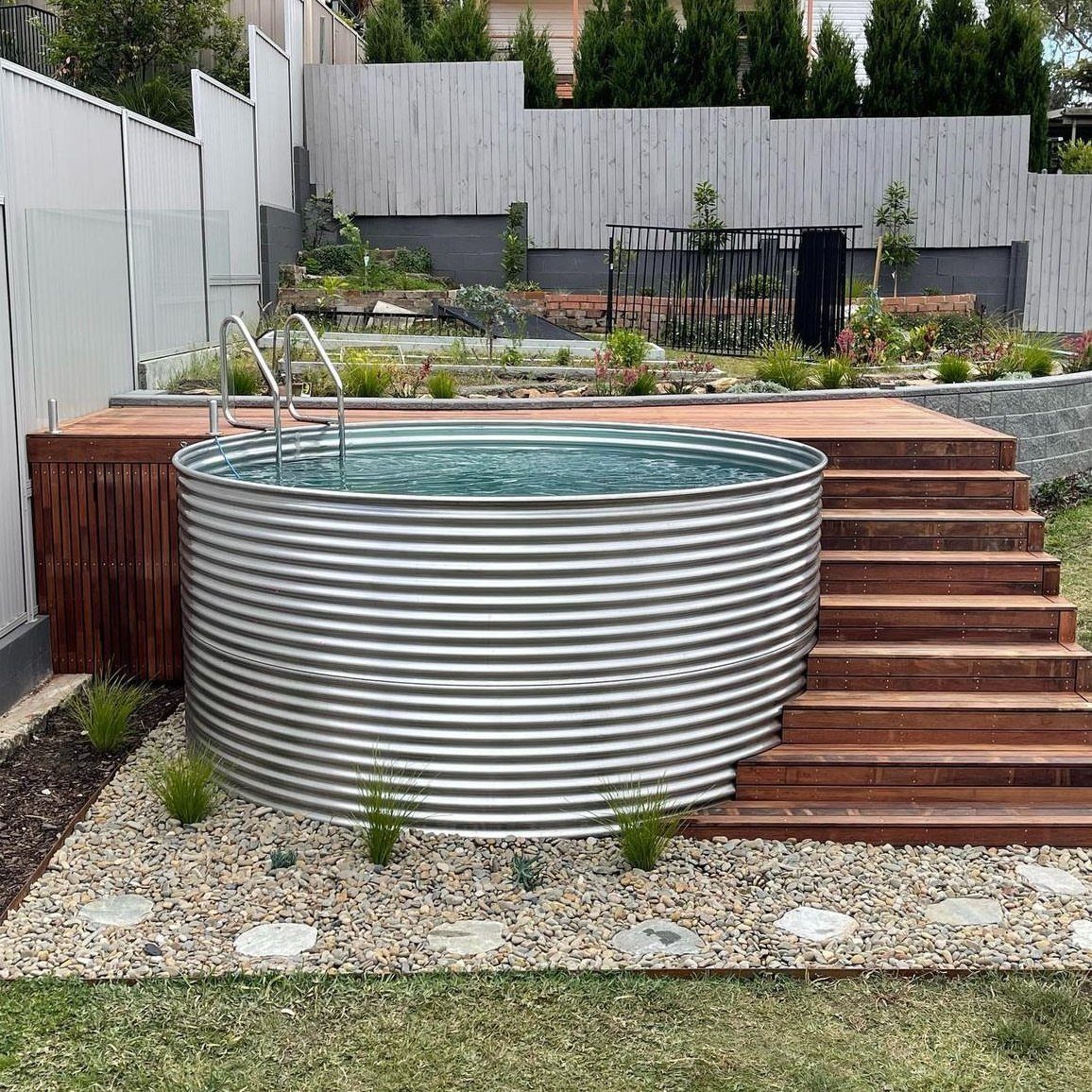
A circular plunge pool fits where a full pool never would. The corrugated metal sides are stock water tank material, galvanized steel made for agriculture, which cuts cost well below a conventional pool before you build the deck surround.
The wood deck built around it hides plumbing and gives you a place to sit. I would plan for a small pump and filter even in a plunge pool; still water turns green fast in most climates.
6. Cottage Garden
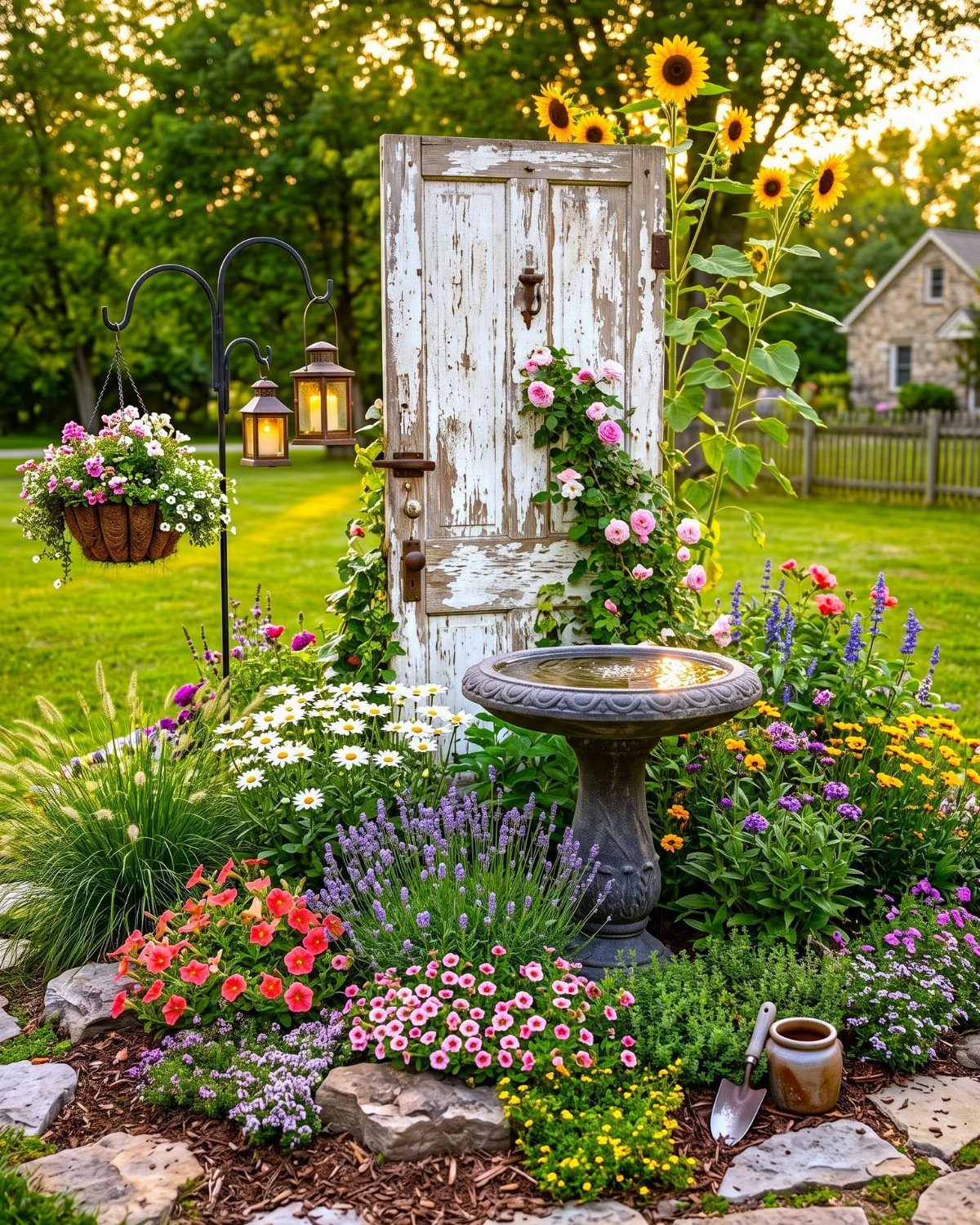
A cottage garden fills the gap between lawn and formal landscaping with something that looks like it arrived on its own.
The weathered door standing in the bed is the trick; it gives height and a focal point before anything blooms.
I plant dense and let things self-seed.
Sunflowers, zinnias, and cosmos crowd out weeds and ask for nothing but decent soil and water the first month. The stone border keeps the shape intentional even when the planting gets loose.
7. Potted Plants and Terracotta Vessels
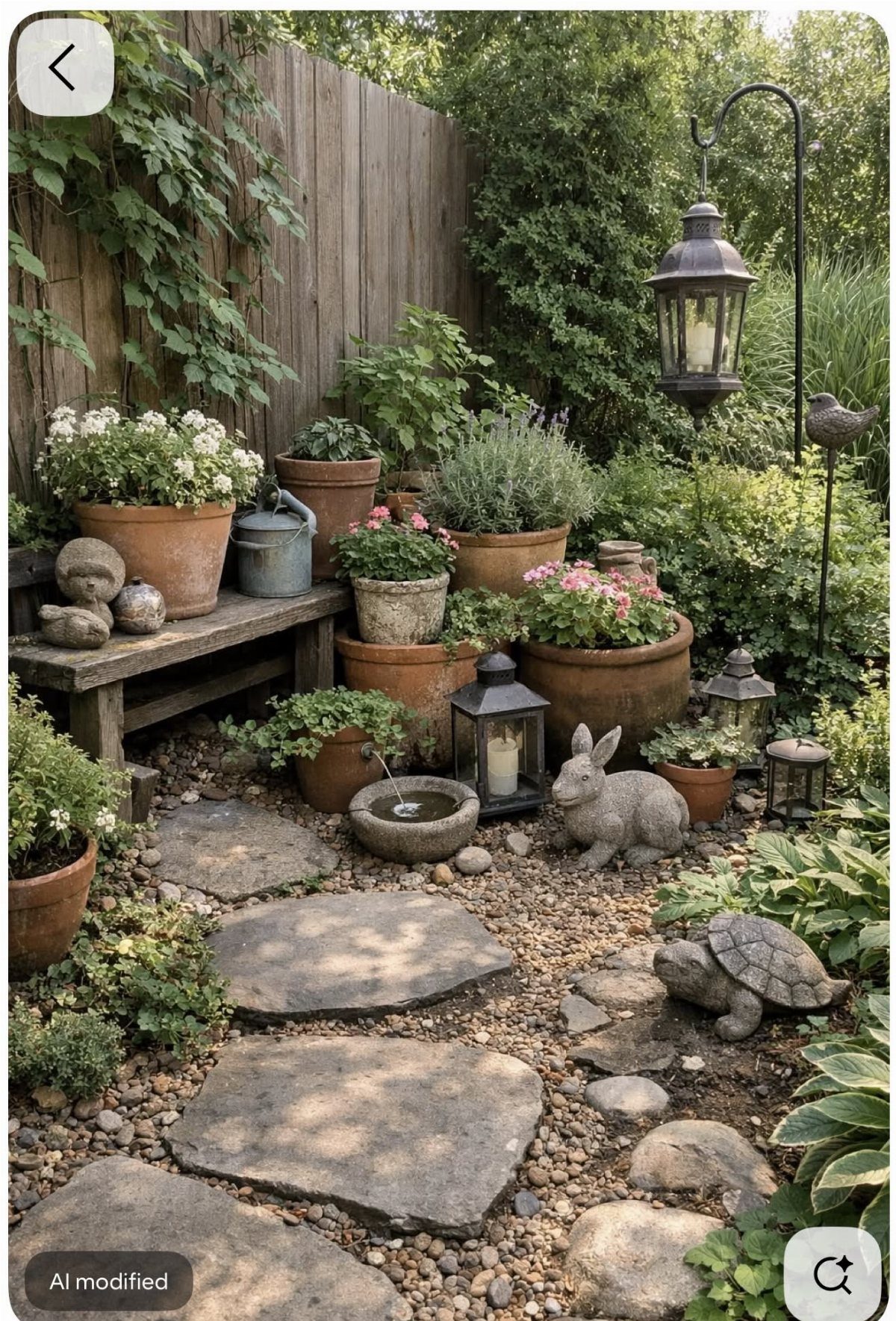
Terracotta vessels do what plastic cannot. The clay breathes, which keeps roots healthier through wet spells, and the color warms up gravel or stone in a way that black nursery pots never will.
I cluster 3 sizes at different heights rather than lining them up; the arrangement fills space without looking arranged.
Unglazed terracotta dries out faster than glazed, so I sink a plastic pot inside the largest ones and water through the rim gap.
8. Coordinate Your Furniture with Your Flowers
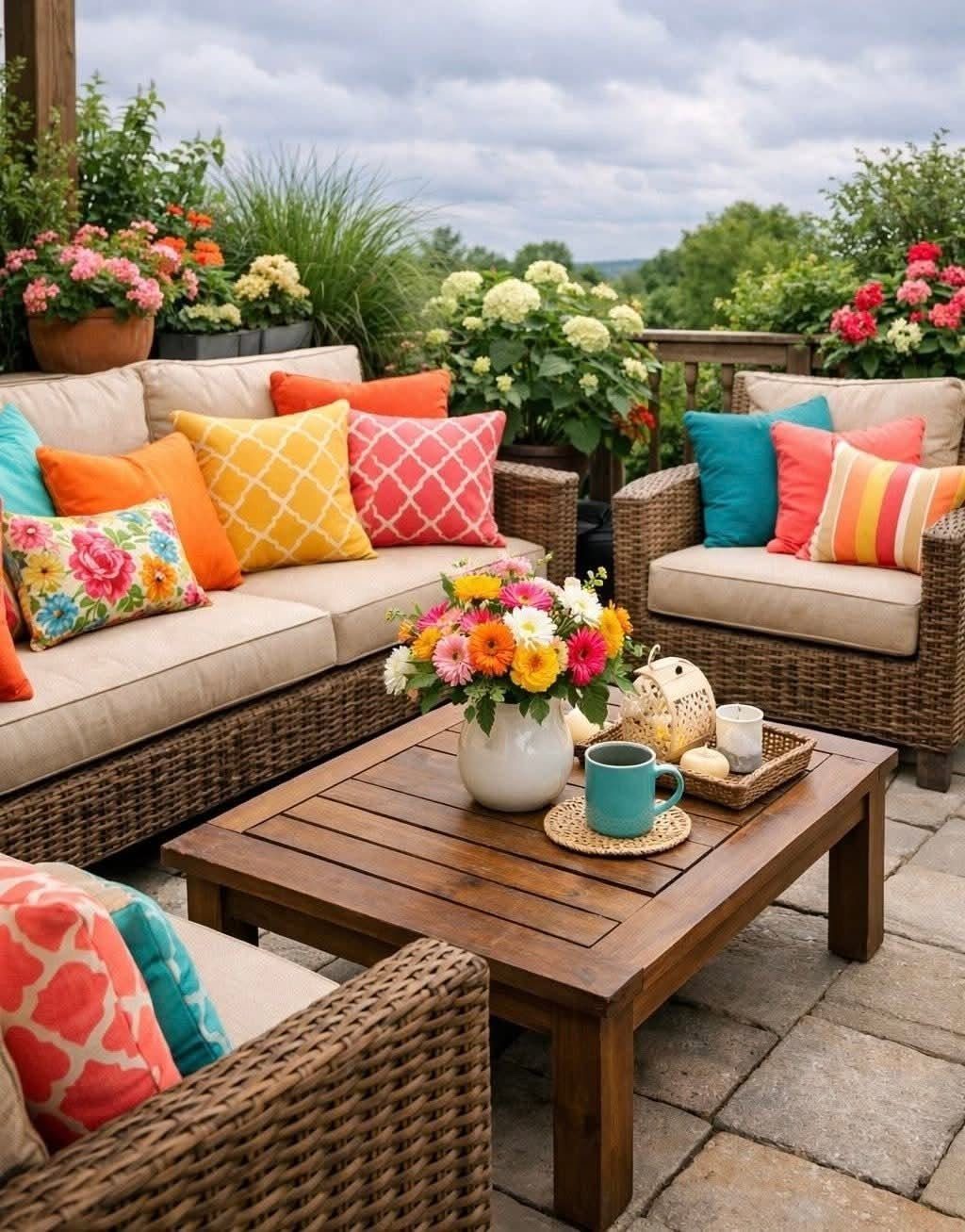
Matching furniture to blooms sounds fussy until you see it done. The wicker frame stays neutral; the pillows and the potted plants behind carry the same pink-to-orange range, so the eye reads it as intention rather than accident.
I start with one bloom I know I want, zinnias or geraniums, then pull two colors from it for cushions.
The third color lives in a throw or a pot. Nothing needs to match exactly; repetition at 3 distances is what ties it together.
9. Anchor Your Patio with an Outdoor Fireplace
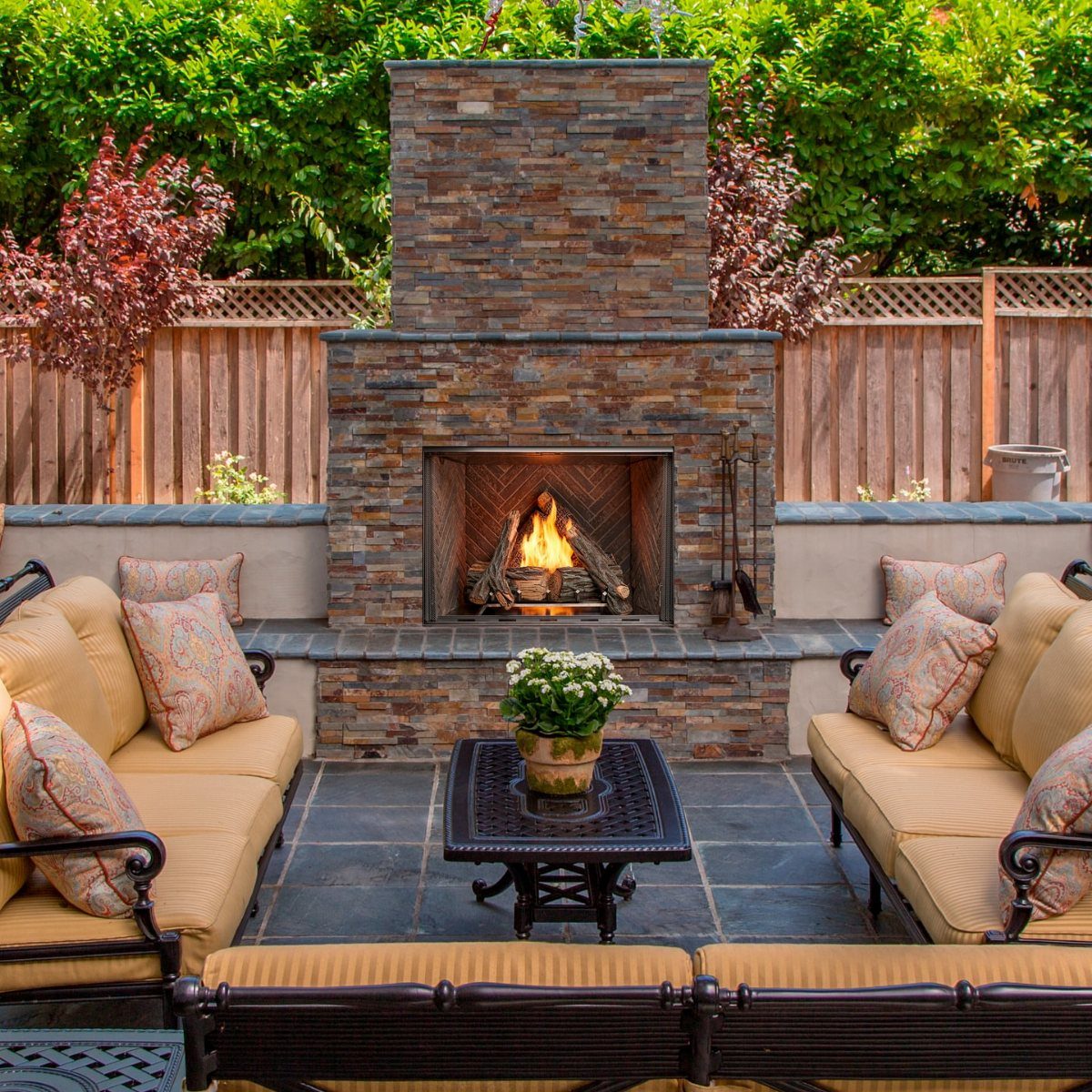
A fireplace turns a patio into a room that happens to be outside. Build the stone surround to proportions that read like indoor masonry; that is the move, treating it as architecture rather than as an appliance parked on decking.
The seating faces inward, not toward the yard, which is how you get conversation after dark. I would budget for gas over wood if neighbors are close; the smoke drifts less and you use it on weeknights without the setup.
10. Wooden Raised Planters
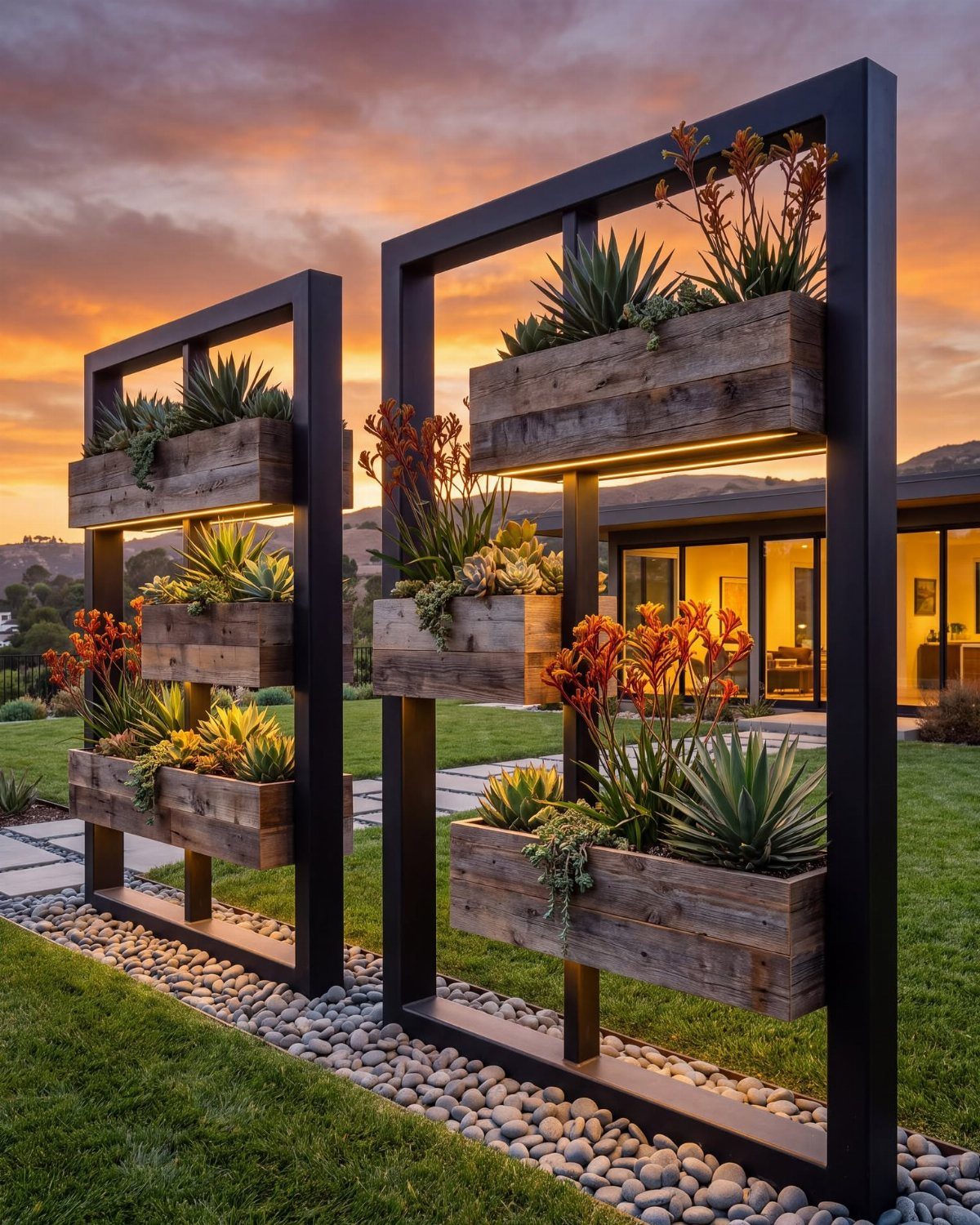
Raised planters save your back and your soil in one move. A metal frame for structure and wood boxes for planting keeps the look lighter than all-timber construction.
The integrated lights are a detail worth copying. Cedar or redwood holds up in direct soil contact; line the box with landscape fabric to extend its life.
11. DIY Backyard Ideas
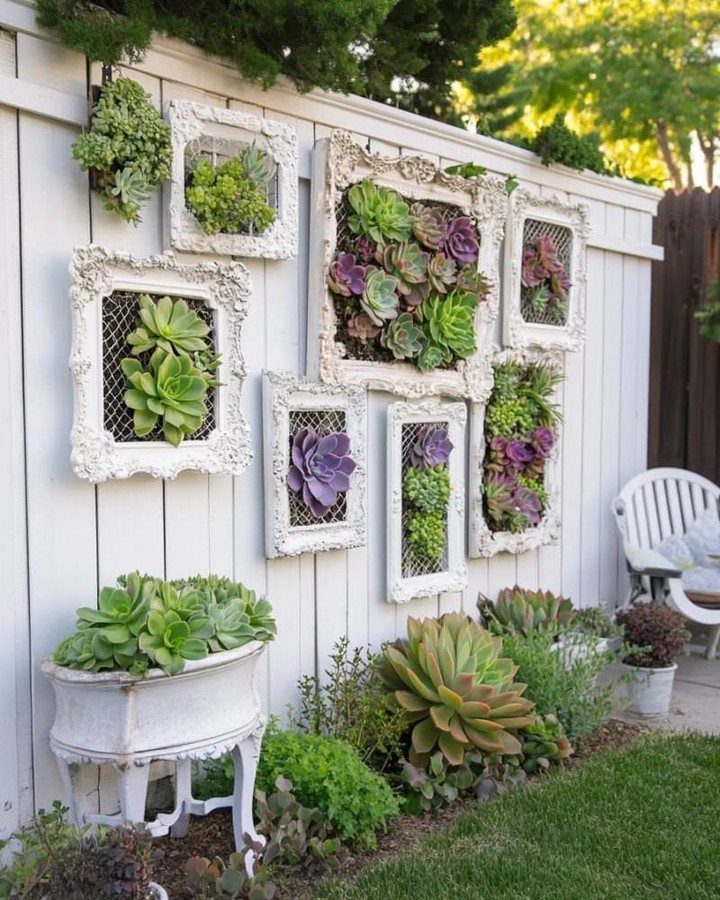
Succulents in picture frames are the kind of project that uses what you already have. The frame backs are replaced with wire mesh and cactus soil; the plants root through and hang on vertically.
I build these with thrifted frames and cuttings from friends.
An afternoon of assembly, then lie flat while roots take before mounting on fence or wall. White paint against white fence keeps it graphic; raw wood and dark frames read more rustic if that suits your space.
12. Hanging Egg Chair
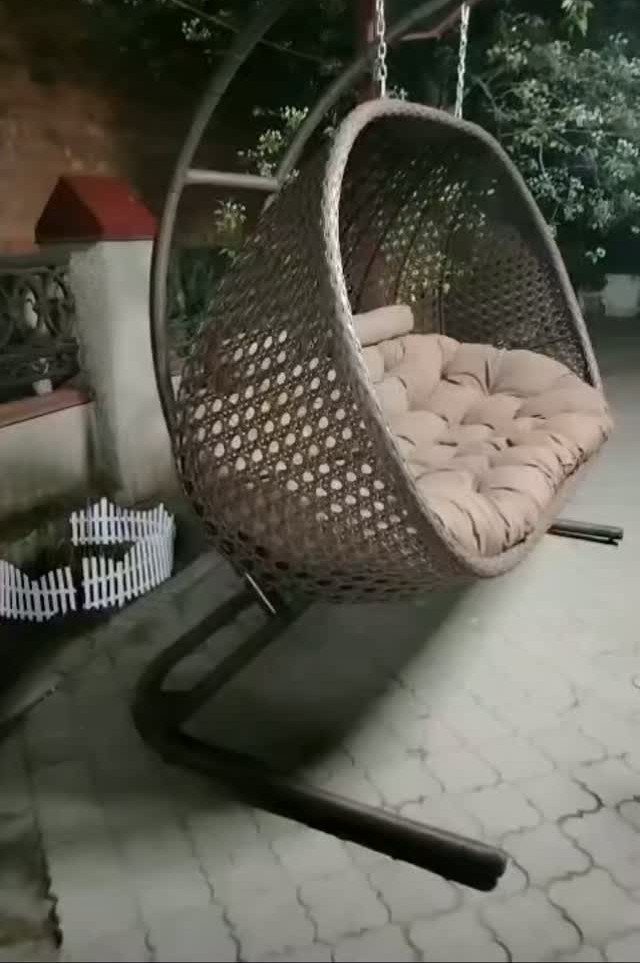
A hanging egg chair gives you motion without a porch swing’s footprint. The stand lets you place it anywhere level; a synthetic wicker weave means no rot and no bringing it in for winter.
The cushion is where comfort lives, and where cheap versions fail.
I look for a thick seat with a removable cover, because outdoor fabric fades and the wash-and-replace option matters more than the frame warranty. One person fits; two is a squeeze.
13. Wooden Pergola
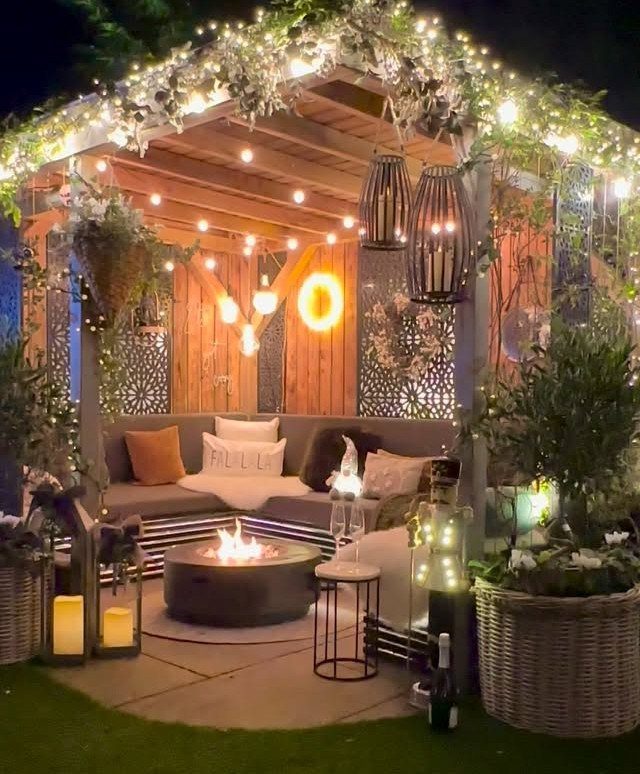
A wooden pergola frames your seating like a room without walls. The posts and beams give string lights something to hang from, and the partial roof breaks sun at noon without blocking it entirely.
I build with cedar or pressure-treated 4x4s, set in concrete if wind is a factor.
The open slat roof is what separates a pergola from a gazebo; keep it open if you want stars, add a retractable canopy if rain is common.
14. Outdoor Rugs, Cushions, and Greenery
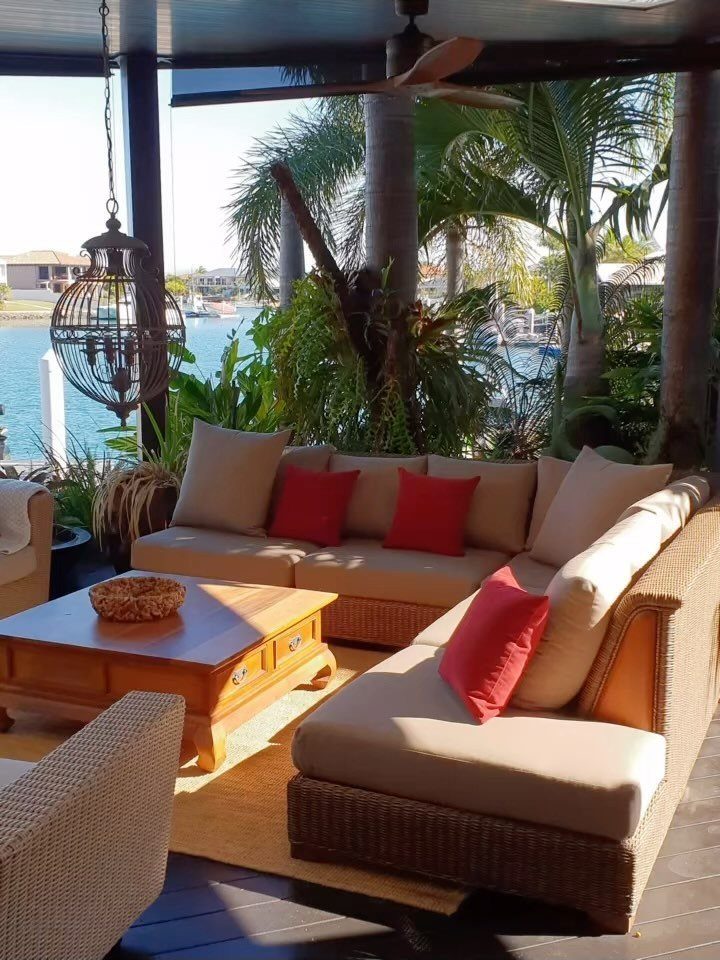
Wicker and tropical plants share a texture that synthetic materials imitate badly. The rug anchors the seating so it does not float on the patio, and the cushions give you color without painting anything permanent.
I choose polypropylene rugs with a low pile; high loops trap pollen and hose poorly. The greenery closest to the seating should be in pots you can move when wind or bugs shift direction.
15. Colorful Adirondack Chairs
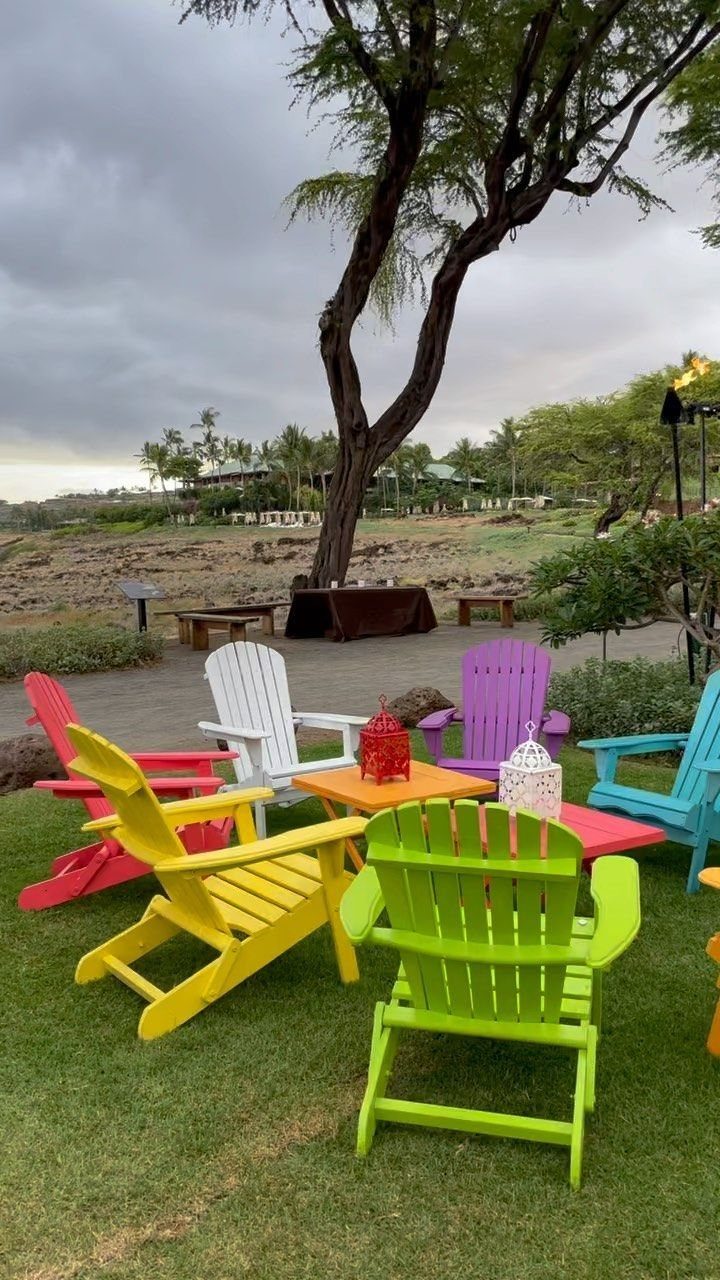
Painted Adirondack chairs in a circle turn a lawn into a gathering spot without building anything. Each chair is its own color, so the arrangement reads as playful rather than mismatched.
The wide arms hold a drink; the pitched back angles you toward conversation, not the view.
I would buy solid wood over the folding resin versions; they rock less on uneven ground and take paint that does not chip in year two.
16. Circular Fire Pit Benches
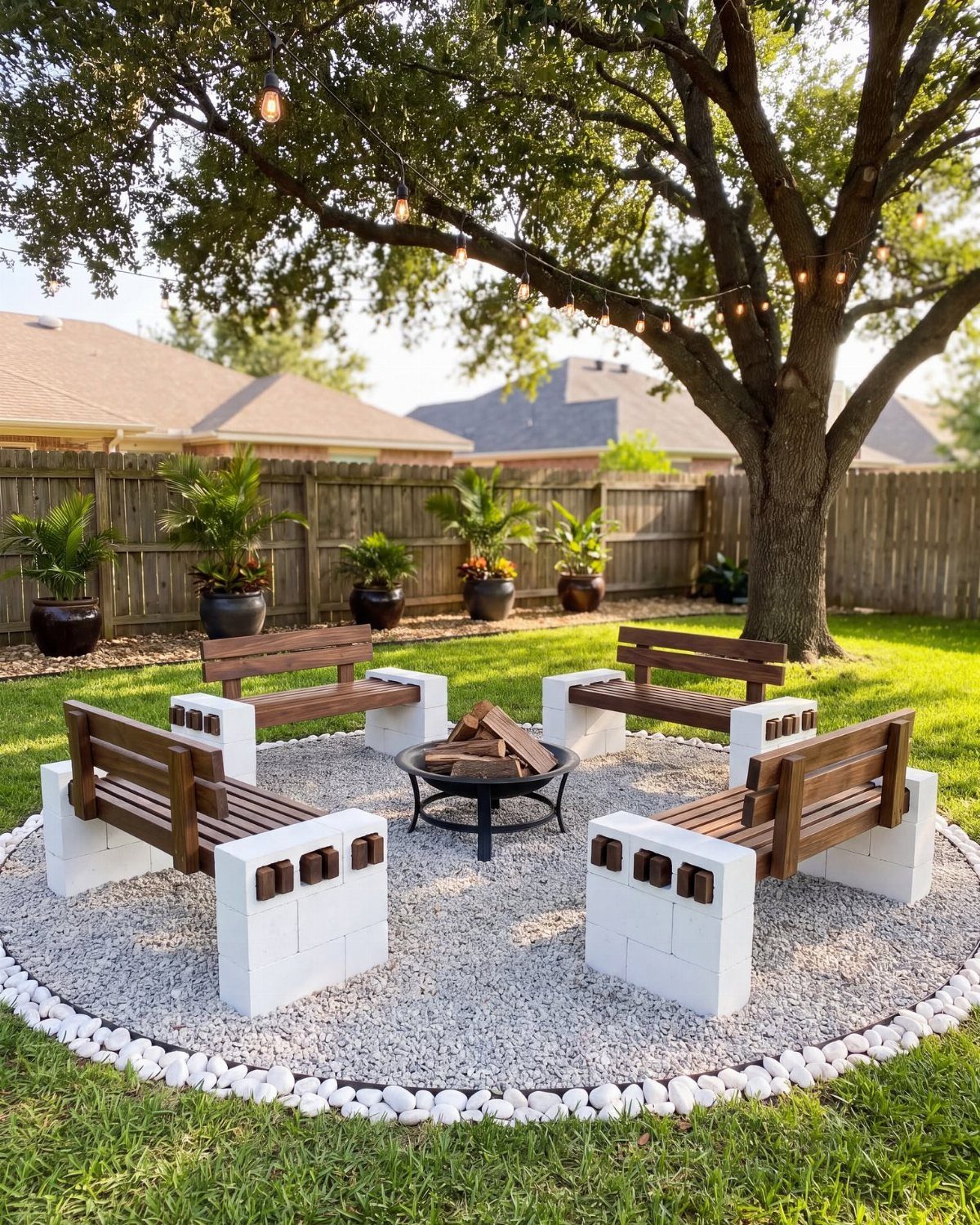
Cinder blocks and 2x10s make a fire circle in an afternoon for the cost of a cookout. The blocks stay where you stack them; the wood lifts out if you need to mow or re-level.
Four benches beat one ring because you can adjust the gap for different groups. I would seal the wood and plan to replace the boards every few years; the blocks last, the pine does not.
17. Outdoor Movie Lounge
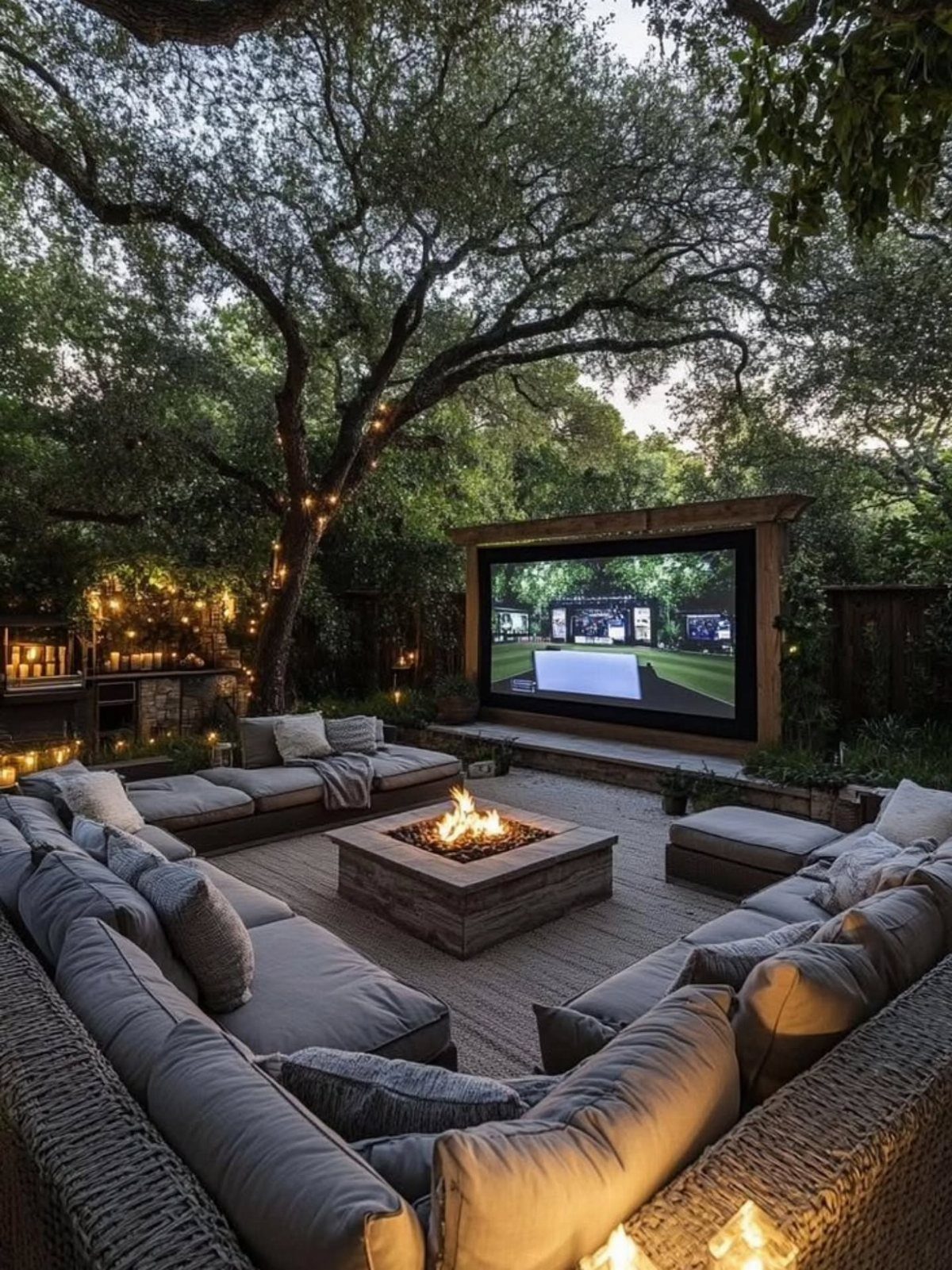
A framed projector screen over a fire pit turns an ordinary night into something the kids remember.
The sectional faces the screen, the fire stays in the corner of your vision, and string lights give you enough glow to find popcorn without washing out the picture.
I run the projector from a laptop on a patio table and power everything from one outdoor outlet. The screen frame is 1x3s and blackout cloth; store it flat so the wrinkles fall out by the second scene.
18. Driftwood Wall Art
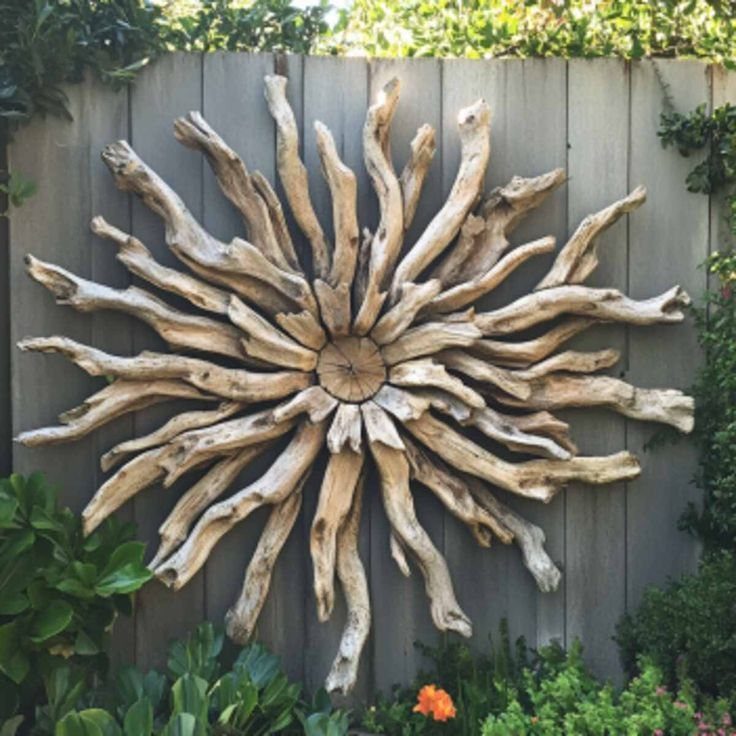
Weathered wood arranged in a sunburst gives a fence the focal point a garden bed cannot grow fast enough. The grey tones read against grey stain; the shape carries what the material has lost in detail.
I collect pieces with enough curve to radiate, then drill and wire from the back so no hardware shows. A marine-grade sealant slows the grey-to-silver fade if the fence gets sun all day.
19. Decorative Garden Birdhouses
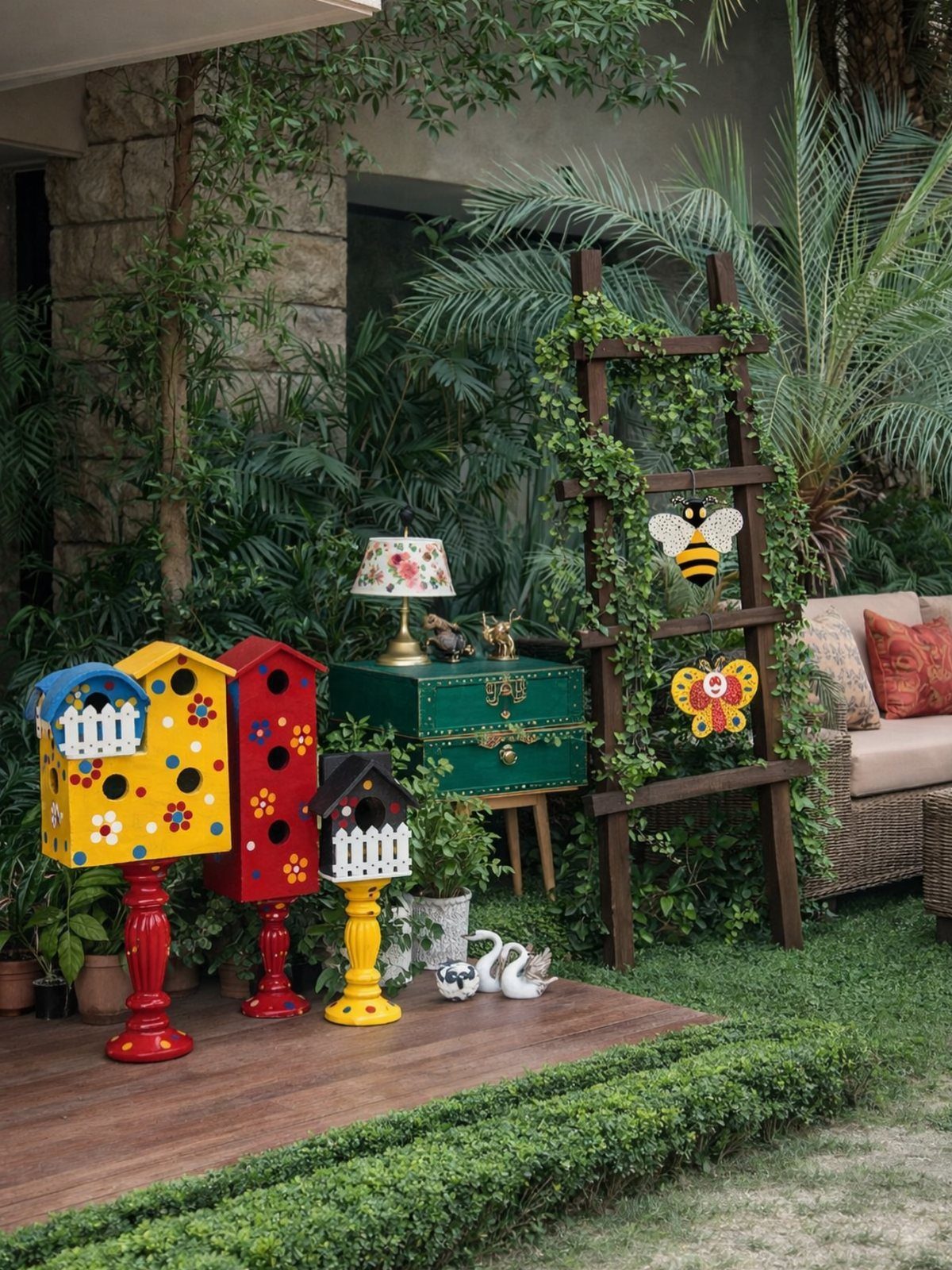
Painted birdhouses on stands turn a deck corner into something deliberate without asking for tools or a weekend.
The pedestals lift the color to eye level where you actually notice it, and the grouping of 3 gives you a height variation a single post cannot.
I would keep the houses hollow or blocked; functional birdhouses need cleaning and attract wasps.
Outdoor acrylic or a spray sealant keeps the paint from chalking in sun, though I expect to touch up every couple of seasons. Move the stands when you rearrange furniture; this is decoration that travels.
Outdoor Lighting Ideas
String lights need something to hang from, which is why a pergola frame earns its keep after dark.
I space bulbs a little wider than feels natural at first; tighter reads cluttered, wider leaves dim gaps. Warm white, around 2700K, flatters skin tones and food better than daylight tones.
Lanterns on the ground or table give you light at eye level where string lights cannot reach.
Battery-operated LED candles inside solve the wind problem and stay lit past midnight. I move mine to where people actually sit, not where the patio layout left an empty corner.
The combination matters: overhead strings for overall glow, lanterns for pockets of brighter light where hands hold cards or drinks.
Neither alone does what both do together. I plan for one outdoor outlet to handle projector, lights, and phone charging; extension cords across walking paths are a hazard I avoid by thinking it through first.
Budget-Friendly Decor Tips
Gravel and stone pavers beat poured concrete on cost and let you phase the work one seating area at a time. The stone gives you a level surface for chairs; the gravel fills gaps and drains rain without pooling.
A fire bowl sits on the stone center, wood seating on the gravel edge, and the whole arrangement reads as intentional even if you built it in Saturday stages.
I would buy the bowl first and arrange seating around its heat radius before committing to paver placement.
Raised planters built from dimensional lumber and a metal frame cost less than finished garden beds and give you growing space above compacted yard soil.
The integrated lights some plans include cost extra upfront but save digging trenches later. I line with landscape fabric either way; it extends wood life by keeping damp soil from direct contact.
Terracotta pots from a nursery or big-box store run cheap at smaller sizes.
Clustered on the gravel, they give color while slower landscaping fills in. The clay weathers; I expect that and let it happen rather than fighting it with sealants.
Seasonal Decor Considerations
Outdoor fabric fades. That is not a defect; it is UV chemistry, and planning for it beats pretending it will not happen.
I choose cushions in colors that shift gracefully, not brights that turn muddy. Removable covers let me wash pollen in spring and store dry in fall, which extends life more than any spray treatment.
String lights left up through winter in cold climates take ice load and moisture in sockets.
I take mine down when the patio empties; the half-hour of winding beats replacing a fried strand in April. In milder zones, LED bulbs survive what incandescent filaments would not.
Wood furniture needs different care by season. Cedar and redwood hold natural oils that resist rot, but horizontal surfaces still cup and crack if water sits.
I stand cushions on edge to dry after rain and store them flat in a shed or bin when the season ends. The furniture stays out; the textiles travel.
Greenery in pots moves when frost threatens. The same cluster arrangement that looked good in June lets me carry tender plants to shelter in October, while hardy ones stay to structure the winter patio.
I plan for this mobility when I buy; a pot too heavy to lift is a plant I will lose.
Frequently Asked Questions
What are some easy outdoor decor ideas?
String lights, potted plants, and a striped tablecloth over your picnic table will shift the feel of a backyard fast.
For string lights, I space bulbs about 12 inches apart on the wire; any wider and the eye catches the dark between them instead of the light.
3 terracotta pots in staggered heights, set on an upturned pot or a brick if needed, give the same fullness as a planter box without the single-file look.
A fringed parasol costs less than a permanent shade structure and moves where you need it.
How can I make my backyard cozy?
Treat your outdoor seating as carefully as indoor seating: size a sectional for actual conversation, add a rug that defines the room, and hang curtains to soften a pergola frame.
I buy 2700K bulbs for anything near where people sit; daylight LEDs make a burger look gray and everyone look tired.
Battery-operated LED lanterns at table level give you light where hands hold drinks, which overhead strings cannot reach. The combination matters; neither alone does what both do together.





