
These ideas run from a solar watering-can to a full pergola bench build, most of them finished in a single weekend with hand tools.
What picks one over another is whether you own the ground you stand on or carry your garden with you when you leave.
The terracotta lavender pots that crack in a hard freeze sit on boards until spring, same as the bistro tables that outlast every wooden café chair I have seen rot.
1. Dense Planting
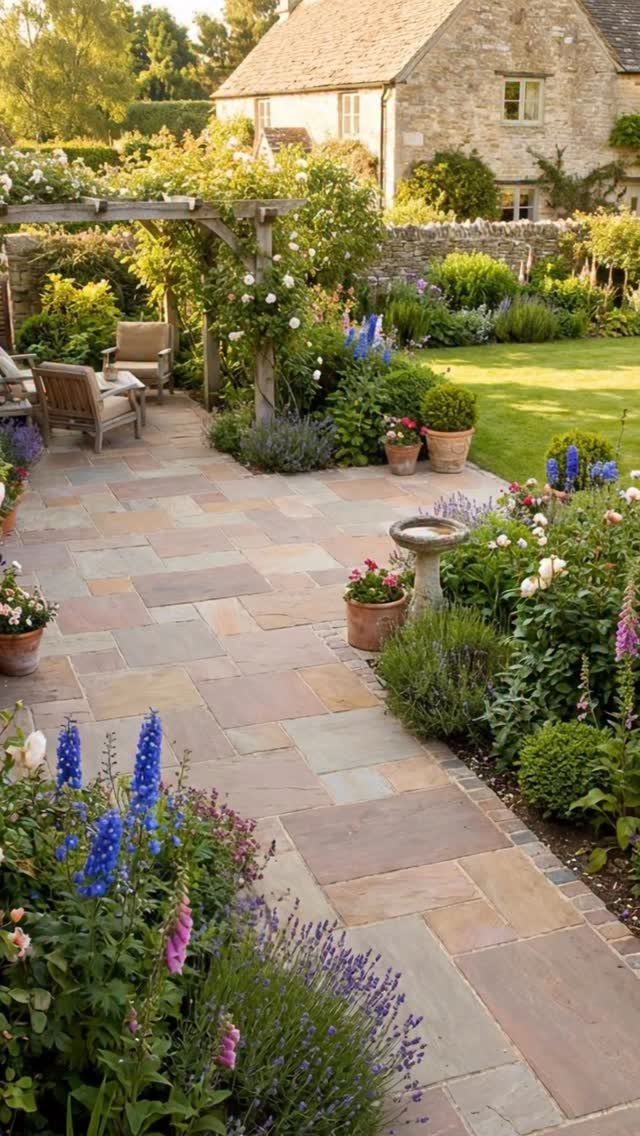
Tight packing is what separates cottage style from every other garden look.
I plant annuals close enough to let them fill in until the ground disappears; this works in a small bed if you choose fast spreaders like zinnias and cosmos.
A birdbath or single upright element breaks the mass so it reads as intentional, not neglected. In my own beds I add one hard piece at intervals or the eye has nowhere to rest.
2. Evergreens and Seasonal Bloomers
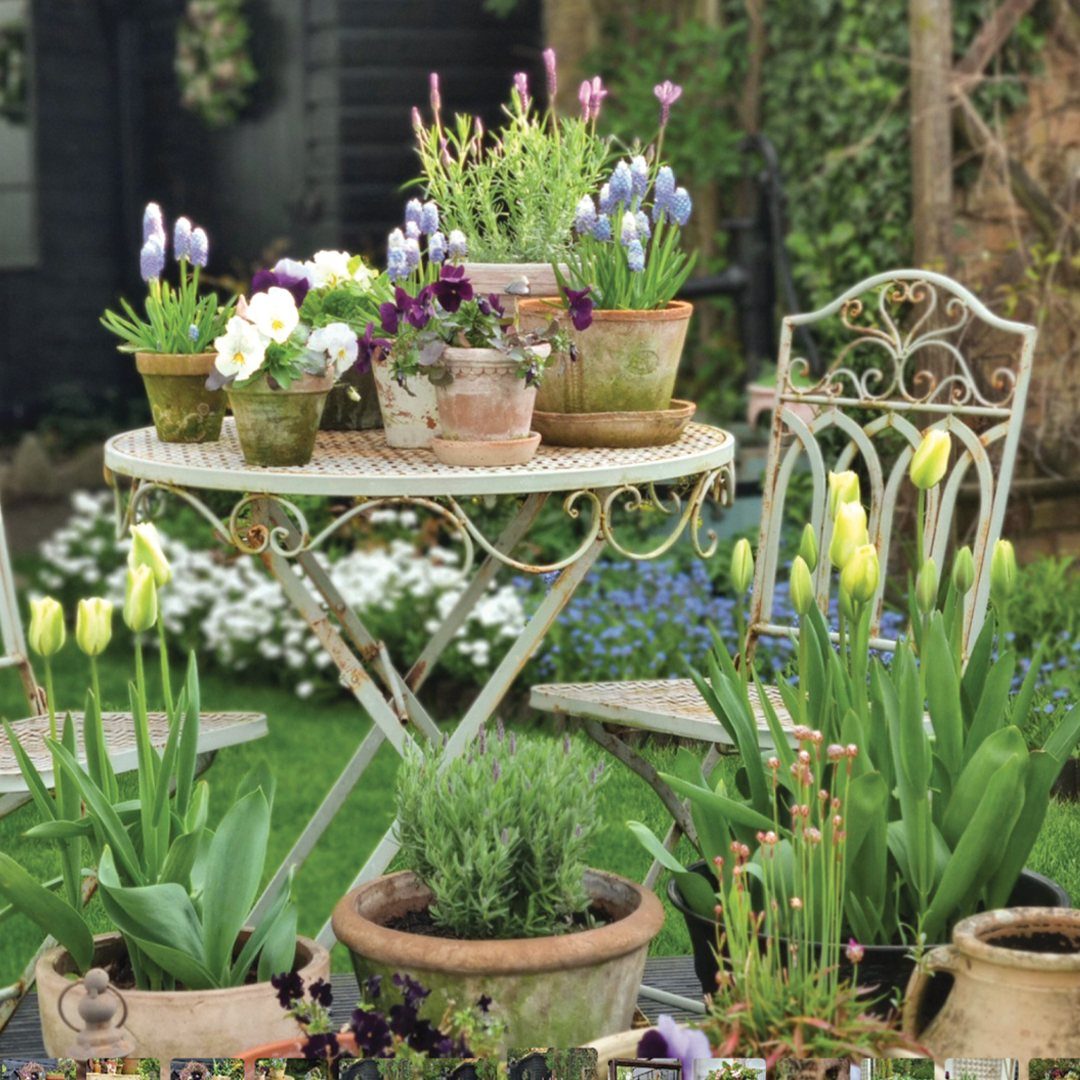
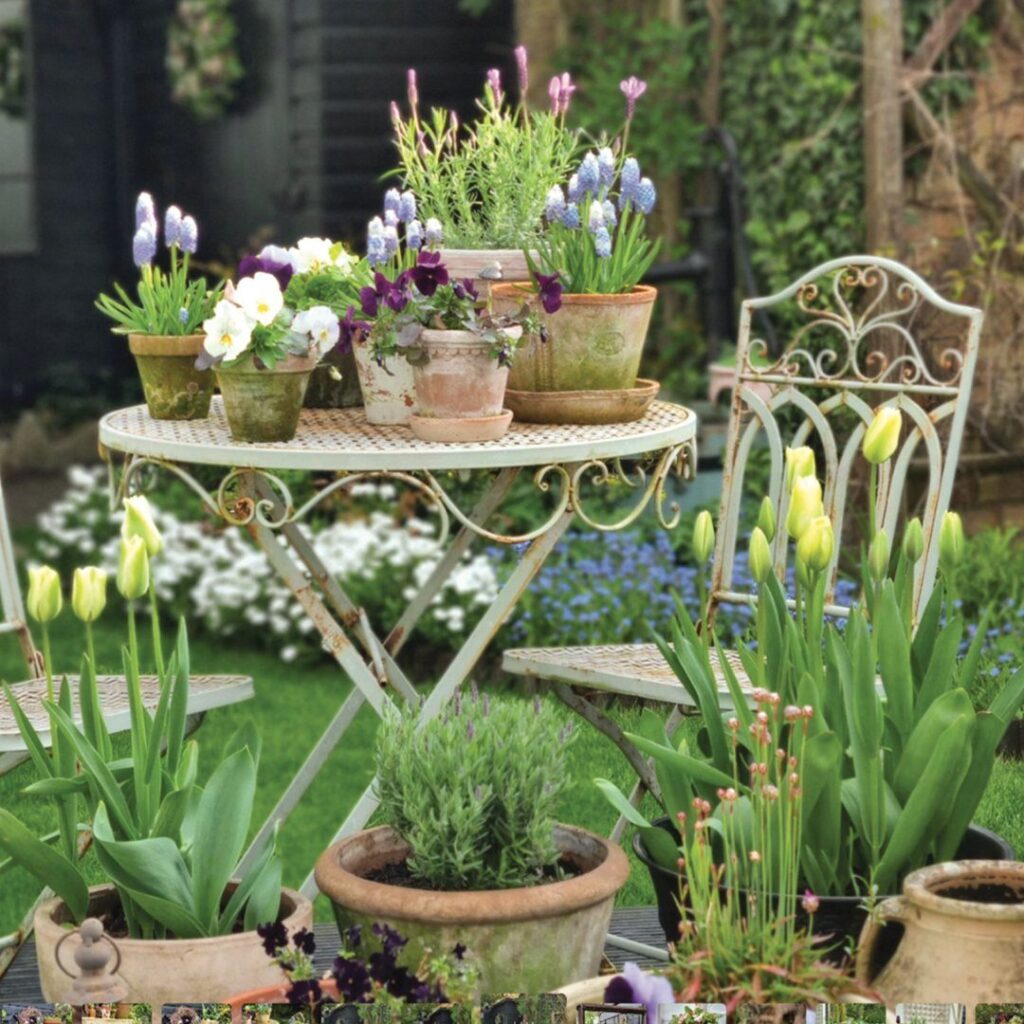
Spring bulbs in pots on a bistro table give you bloom where no soil exists. I keep evergreens in the ground nearby so something carries the bed through summer once the tulips finish.
For renters, this is the movable half of the equation: pots come with you.
Lavender in a terracotta pot lasts several years if you let it dry between waterings; pansies are the cheap annual layer you swap out by Memorial Day.
3. Raised Borders
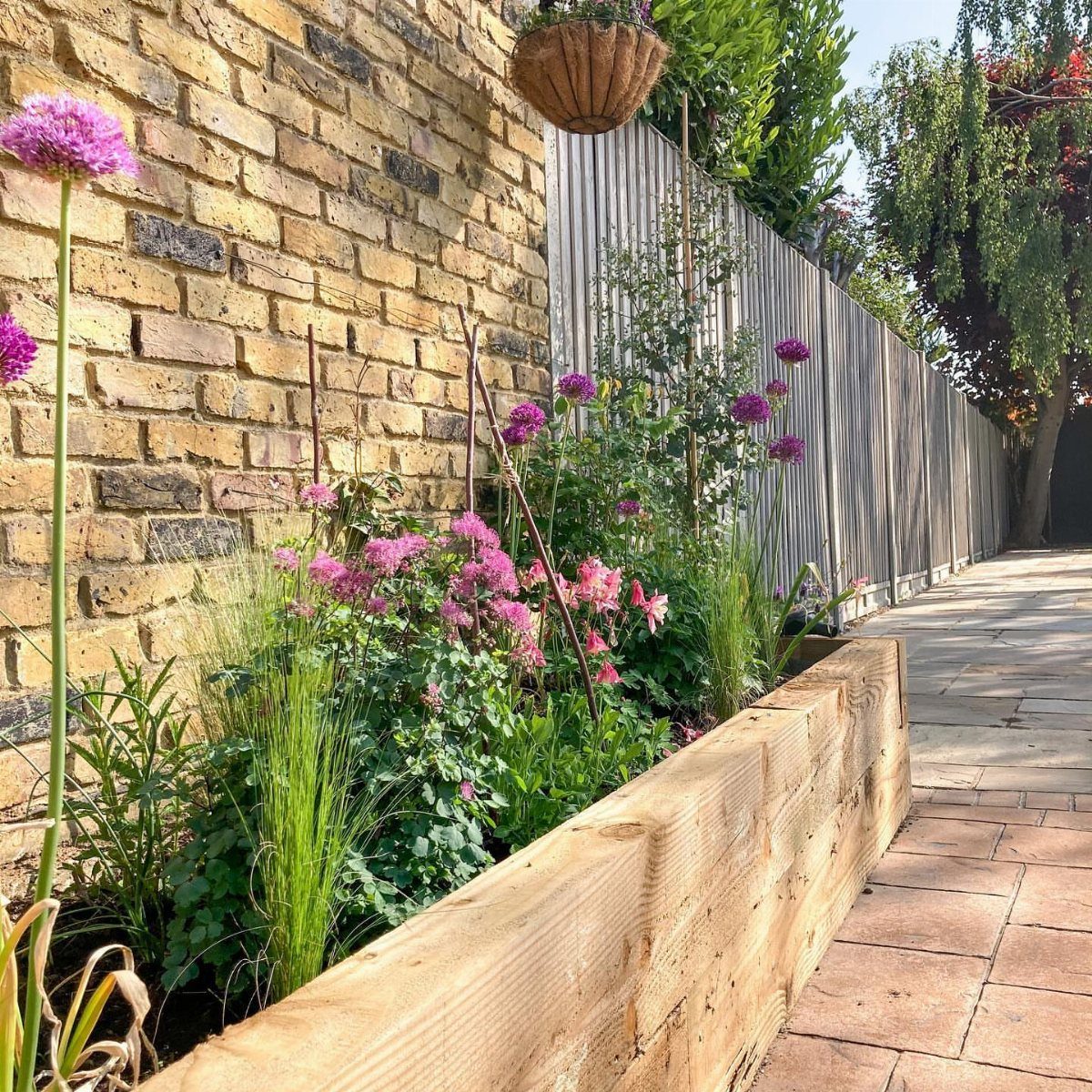
Raised borders lift the planting plane to where you actually see it from a window or patio chair.
Cedar boards keep the cottage profile that composite never quite matches, though they will eventually rot; the cost and lifespan vary by grade and climate.
I build mine deep enough to handle most perennials and give the roots drainage that flat beds rarely get against a brick wall. The height also saves your back.
4. Climbing Plants
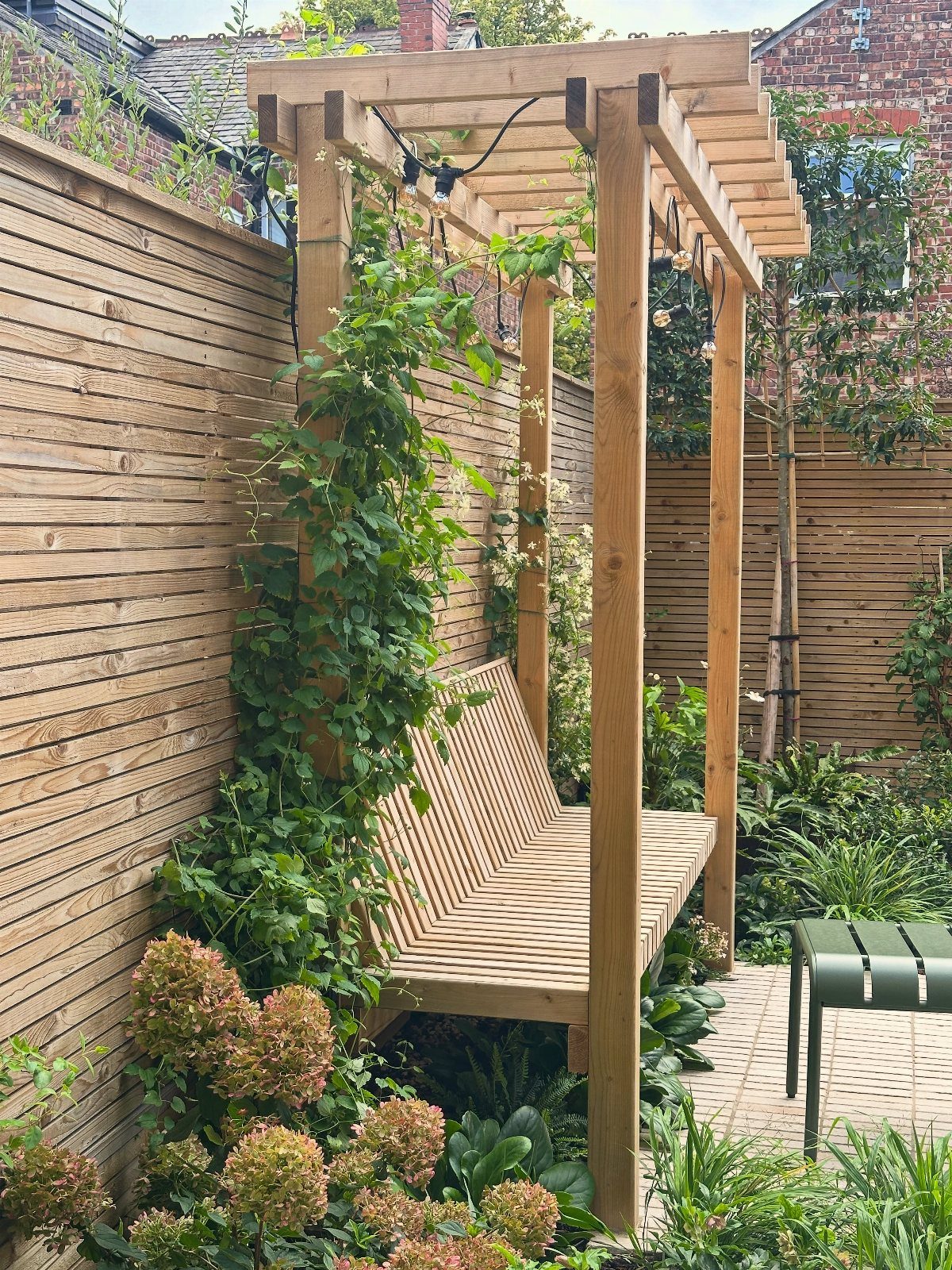
A pergola bench with vines overhead turns a narrow strip of path into a destination. I choose clematis over roses for this; no spraying, and the woody base stays neat while the top greens out.
Give climbing plants their first year with little to show.
I run twine from each post to the beam so tendrils have something to grab; by year two the structure disappears beneath leaf. The shade underneath is what makes it worth building, but plan for dripline from the foliage.
5. Shrubs
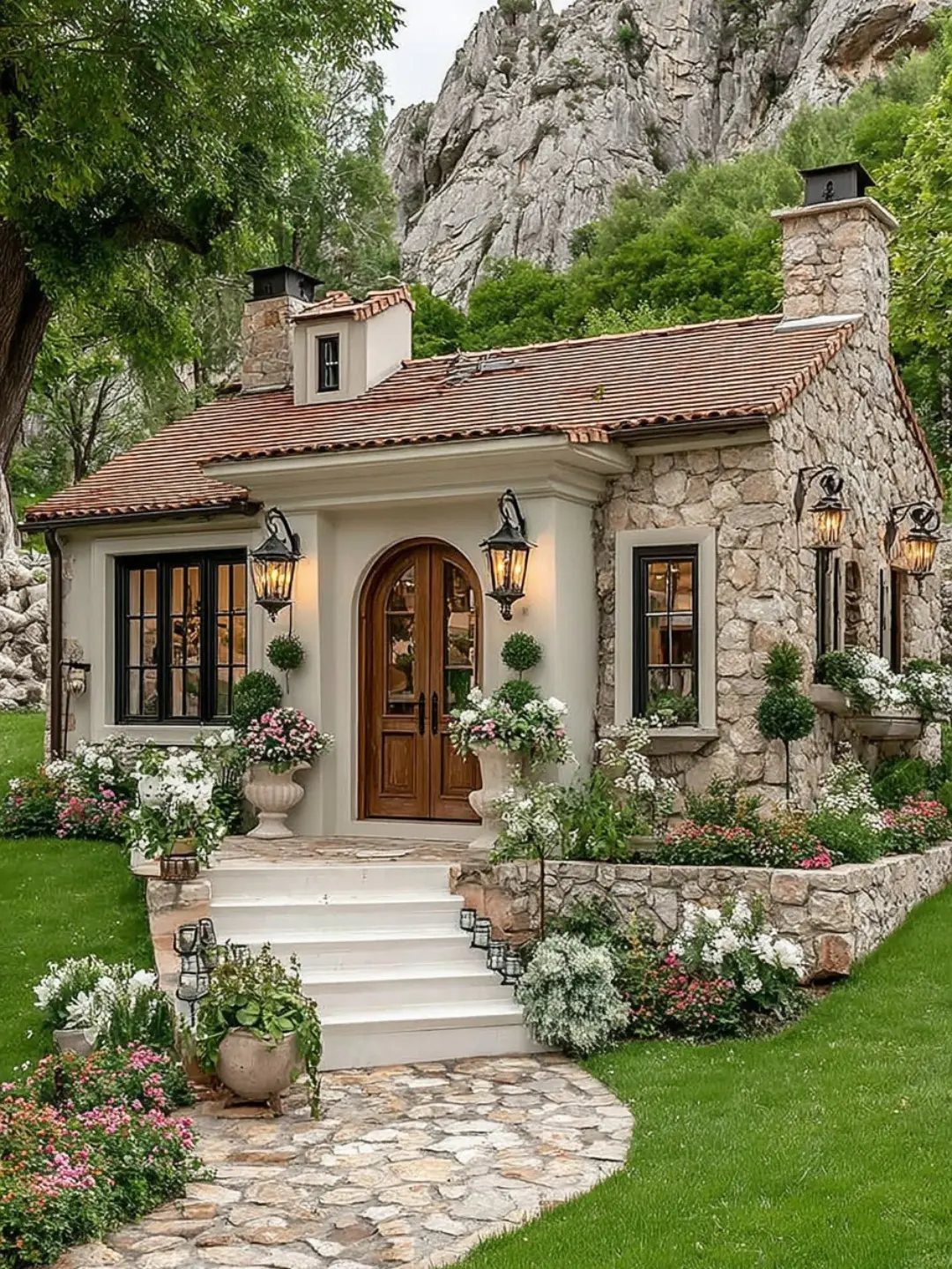
Shrubs give a cottage garden its bones when everything else dies back.
A container shrub in a mid-size pot fills a small space in 2 seasons. Plant deep enough that the root flare sits level with the soil, then mulch to the drip line without touching the stem.
6. Curving Pathways
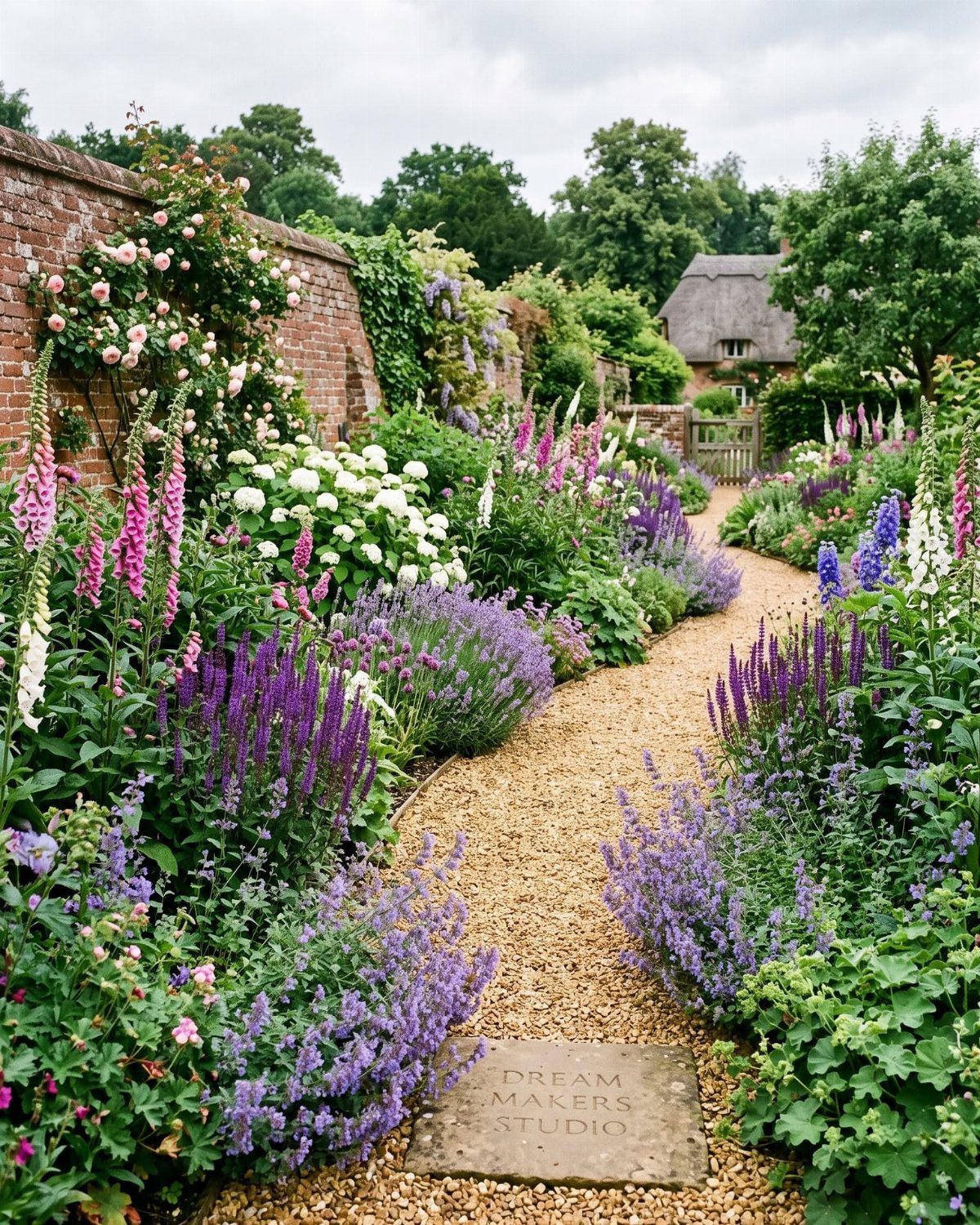
Gravel curves slow the eye and the feet; straight paths read as service access, which is not the feeling you want beside a thatched cottage or its modern equivalent.
I lay crushed stone over a compacted base; without the base, you rake gravel back into the lawn every March.
The engraved paver in the foreground is a cheap personalization at most landscape suppliers if you order at the same time as the path stone. One per turn is enough; more than that and the garden starts reading as signage.
7. Garden Seating
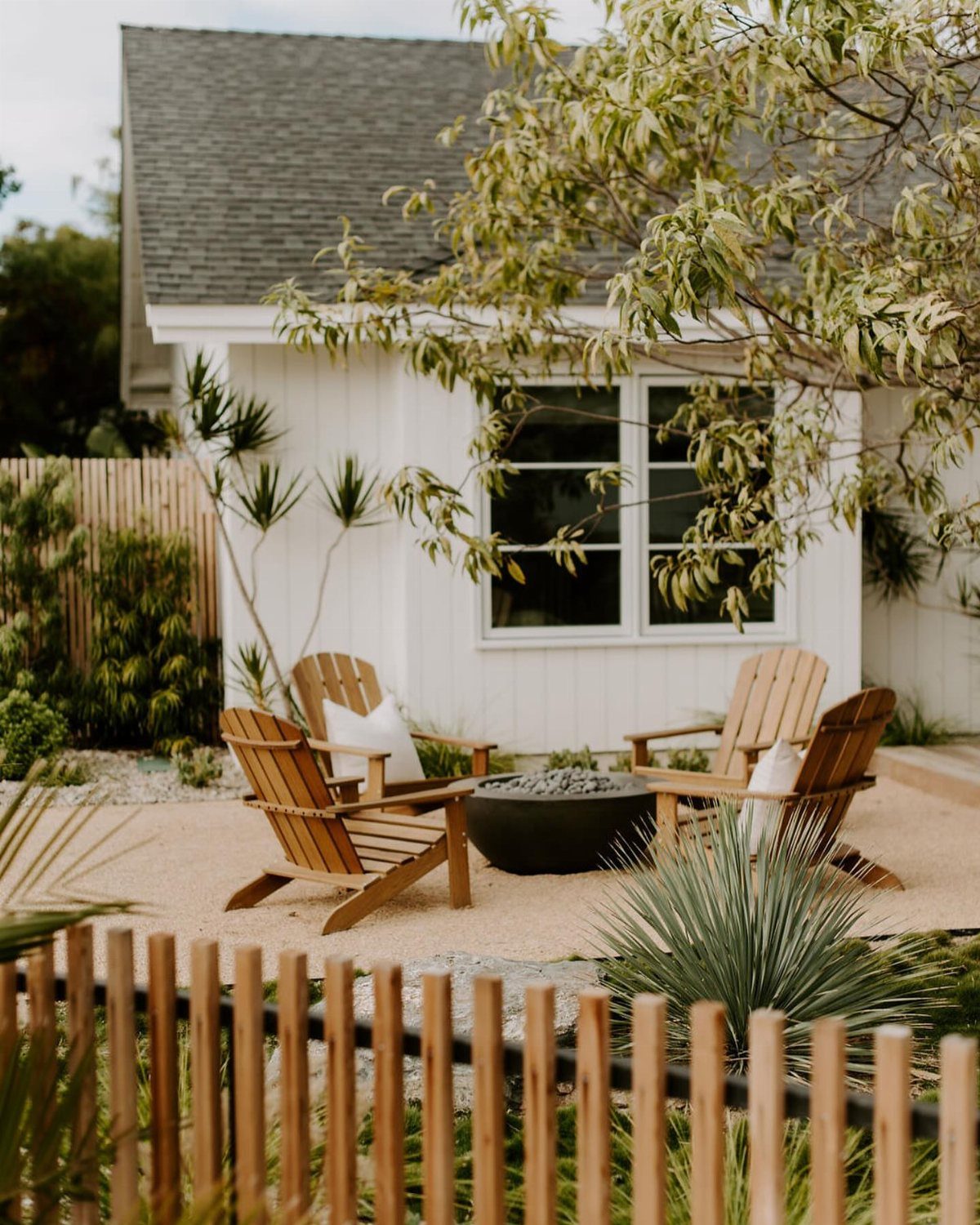
4 Adirondack chairs around a fire pit on gravel give you a reason to stay outside after sunset. The low profile keeps sightlines open across a small yard, and the wide arms hold a drink without a side table.
I build my fire pits wide enough for chairs to sit close, lined with steel so the conversation still feels intimate. Gravel drains better than pavers and costs less, though it tracks into the house on shoe soles.
8. Solar Lights
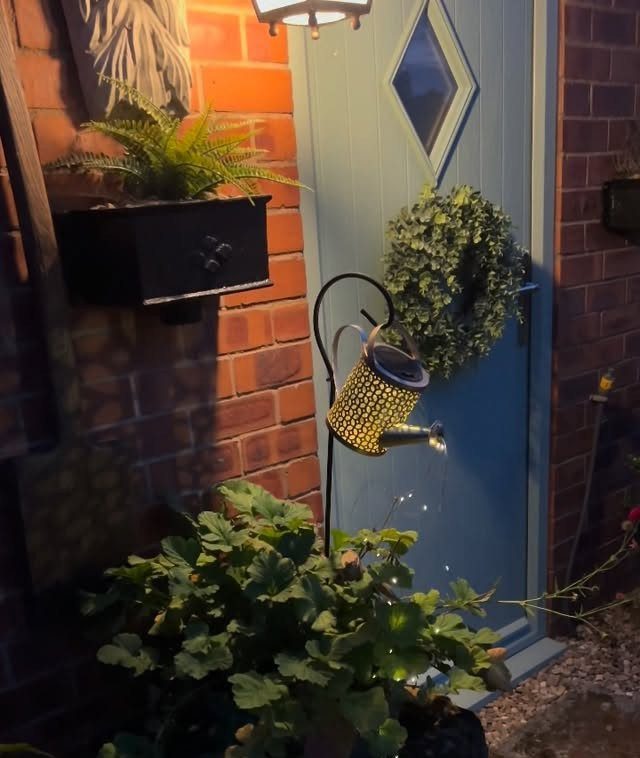
A solar watering-can spilling fairy lights over a pot turns a plain wall into evening texture.
The panel needs a full day of direct sun to run the strand into evening; I place mine where afternoon light hits, not tucked under an eave.
These kits run cheap and last a few seasons before the battery fades. I buy the kind with replaceable batteries; sealed units become trash the moment they dim.
9. Use Containers
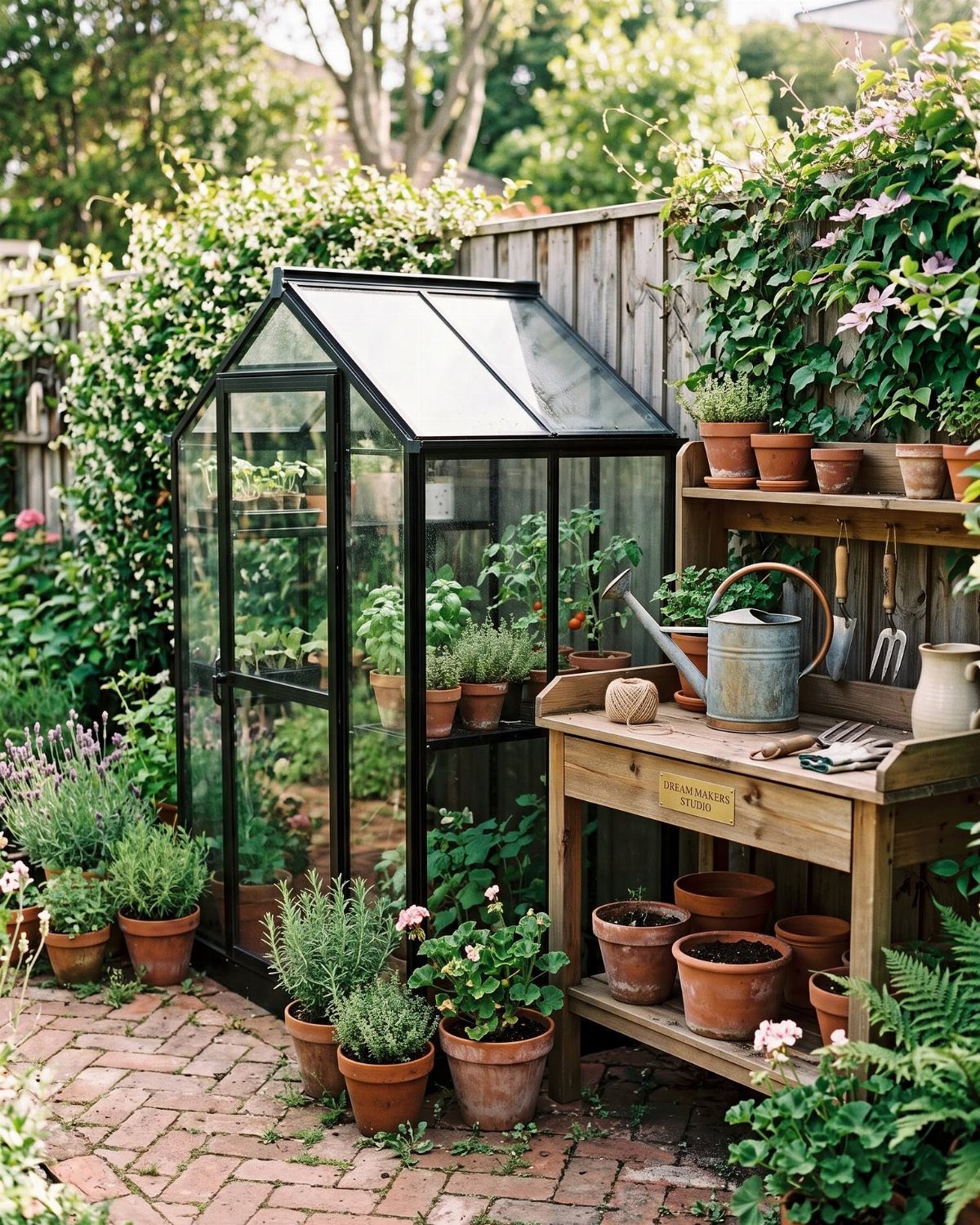
A greenhouse frame and potting bench against a fence turns a narrow strip into a working garden room.
Terracotta dries out faster than plastic in summer heat, so I water more often and group pots to shade each other; it also cracks in a hard freeze, so I lift mine onto boards before the first real cold snap.
The bench gives you a surface at hip height for potting and for staging plants before you commit them to the ground. I keep my soil in a bin beneath; the setup stays neat enough for a rental patio.
10. Create a Secret Garden
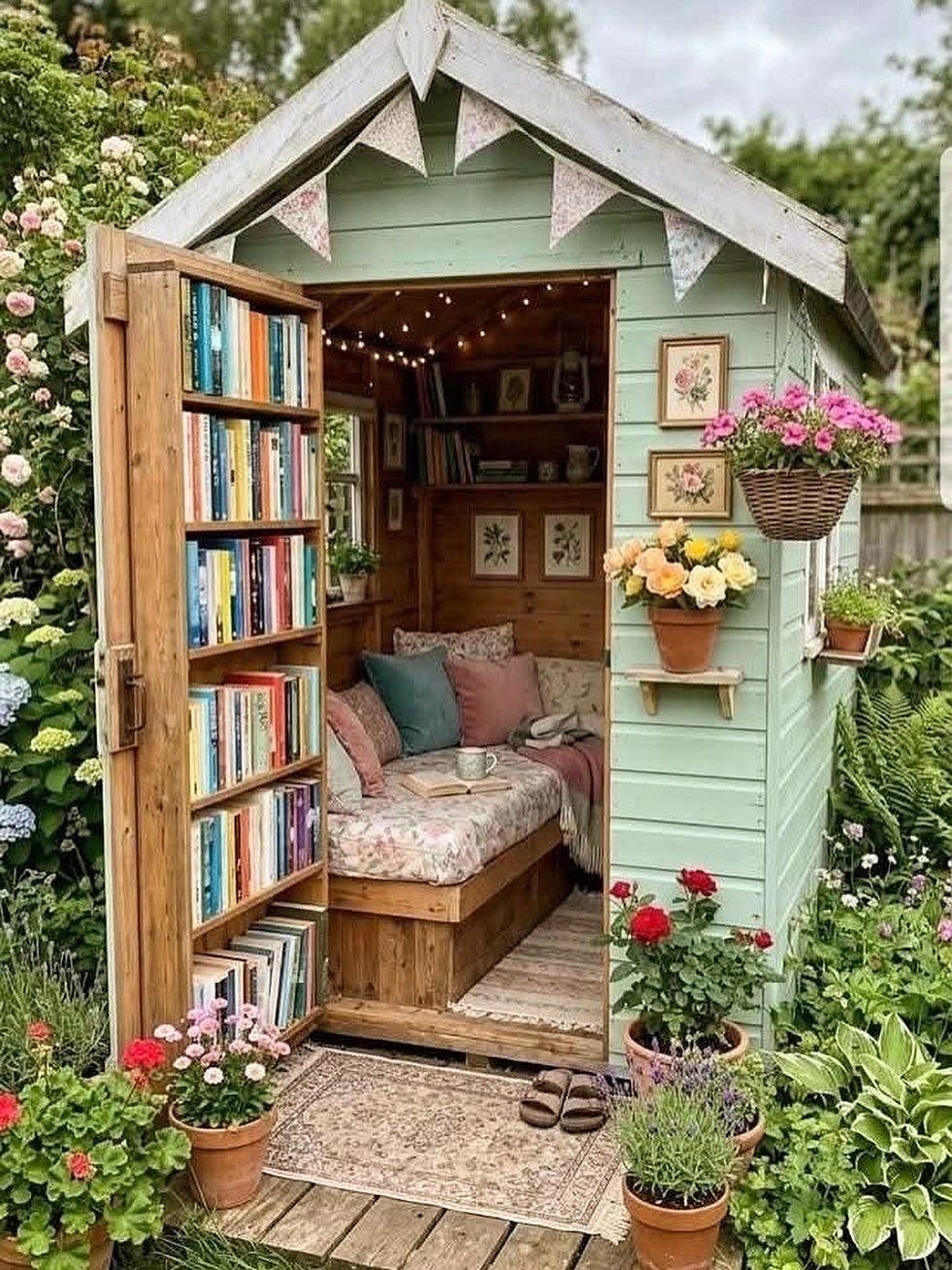
A shed fitted with a daybed and shelves becomes a room that happens to smell like tomato vines.
The door does the work: left open, it frames the nook like a picture; closed, it hides the clutter of books and cushions from the main garden.
Paint the interior a color that reads as shadow from outside, a muted tone that lets the eye pass over it until you step in.
String lights run on battery packs if no outlet reaches; plan for where the pack hides.
11. Create a Garden Theme
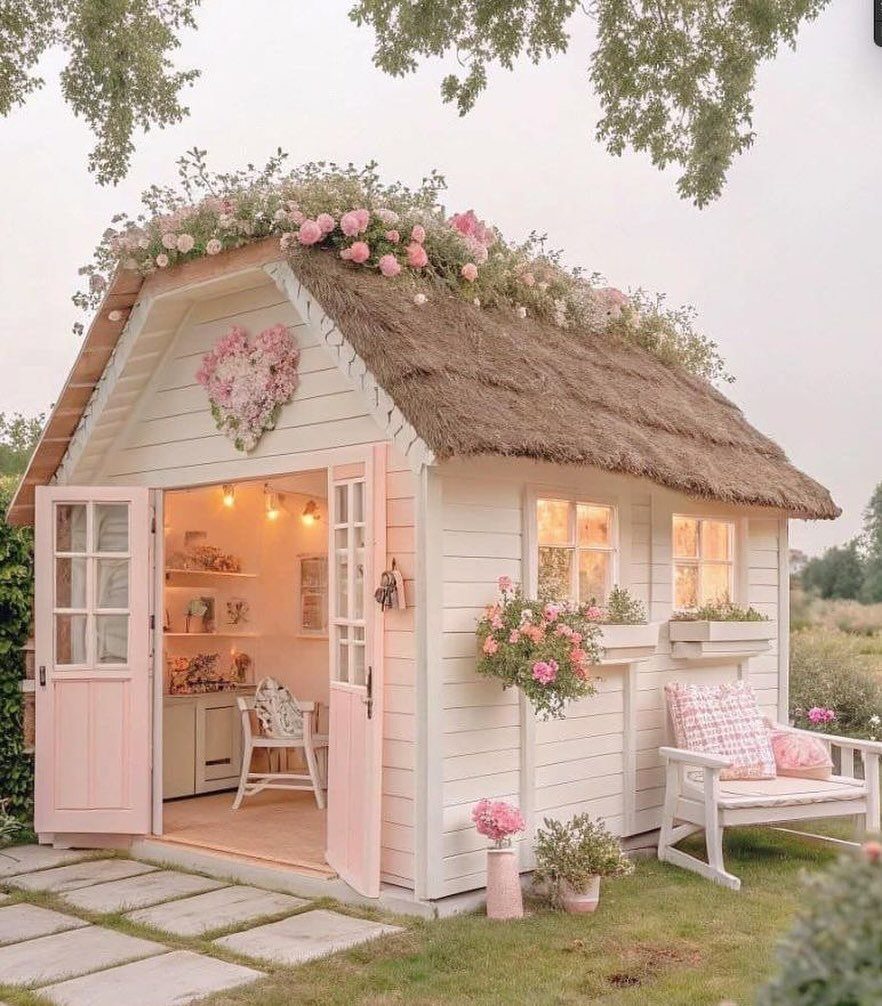
A thatched roof and painted doors on a shed commit to a story the rest of the garden follows.
Window boxes carry the pink door color into living material. I plant them with the same palette I use at the entry, so the theme reads as intention rather than costume.
12. Wood, Stone, and Wrought Iron
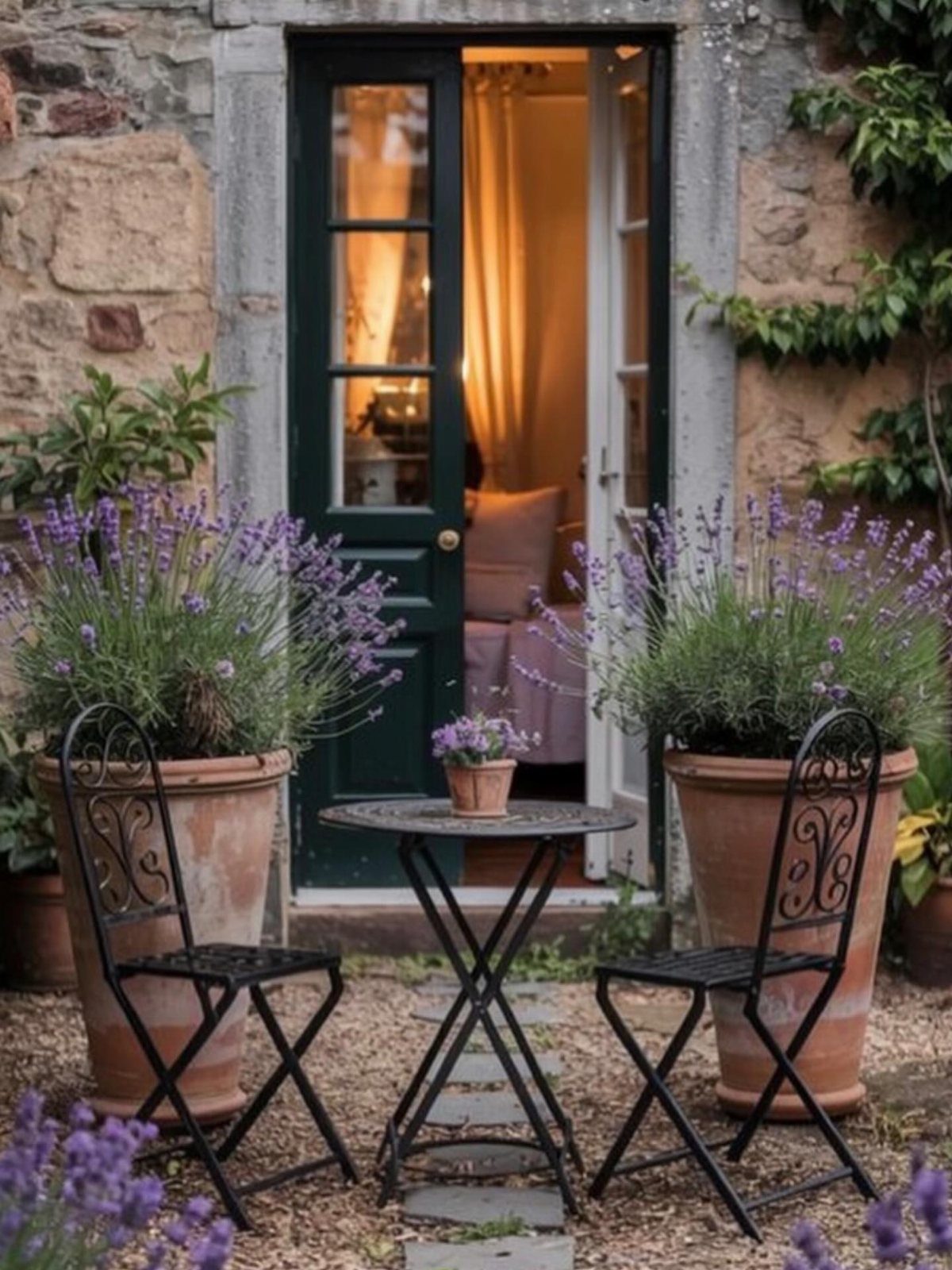
Wrought iron bistro sets outlast every wooden café chair I have owned. The weight keeps them steady on gravel, and the openwork lets rain through instead of pooling.
A bistro table runs small, just enough for two cups and a plate; the two-chair setup suits a space where a larger set would block the path.
Terracotta lavender pots on either side repeat the iron lines in soft plant form. I shear mine hard in late August so the mounded shape stays tight against the stone wall behind.
Caring for High-density Plantings
Dense cottage beds need more attention than they look like they do. I watch how plants fill in over the first two seasons, then divide clumps every three to five years before they crowd each other out.
Reduced air circulation is the real risk; it invites rot and weakens stems that need to hold each other up.
I check mature width before I buy, not after I plant. Nature Hills lists this in their plant highlights, and I treat that number as the minimum gap, not the maximum.
Choosing the Right Plants
Start with perennials that match your zone, then fill annual gaps around them. Phlox at the front of a tiered bed overflows reliably once established; boxwoods or a larger evergreen in the middle tier carry structure through winter.
For low-maintenance choices, catmint, daylily, foxglove, hydrangea, iris, lilac, stonecrop and yarrow need little once they settle in.
Native species are easier still; they handle the rainfall and soil you already have. I avoid high-care plants in small cottage beds because one demanding specimen takes time I would rather spread across the whole garden.
Creating a Relaxing Atmosphere
Place seating where you will actually pause, not just where it photographs well.
A wooden or iron bench against a wall gives you a backrest and a view outward; in a small yard, the bench style counts less than where you put it.
Battery-powered fairy lights are a smart choice for cottage gardens: their packs last a season or two, same as cheap solar units, but you replace the batteries instead of the whole strand.
A rose-covered archway reads as cottage if you have the sun and the patience for one. I prefer clematis for lower care, but either one needs its first year to climb before the structure disappears beneath it.
Cottage gardens have an ethereal charm that lures you in and offers refuge from the craziness of the modern world.
— Veranda





