
A rock garden can be as small as a windowsill tray or as involved as a build with rented machinery and delivered boulders.
What decides which idea is yours is how much weight you can move alone and whether you have ground to dig into or only a surface to set something on.
The copper bowl spilling pebbles and the buried reservoir for a recirculating stream are two of the eleven; one asks for patience with metal edging, the other for conduit buried below the frost line.
1. Herb Garden Rockery
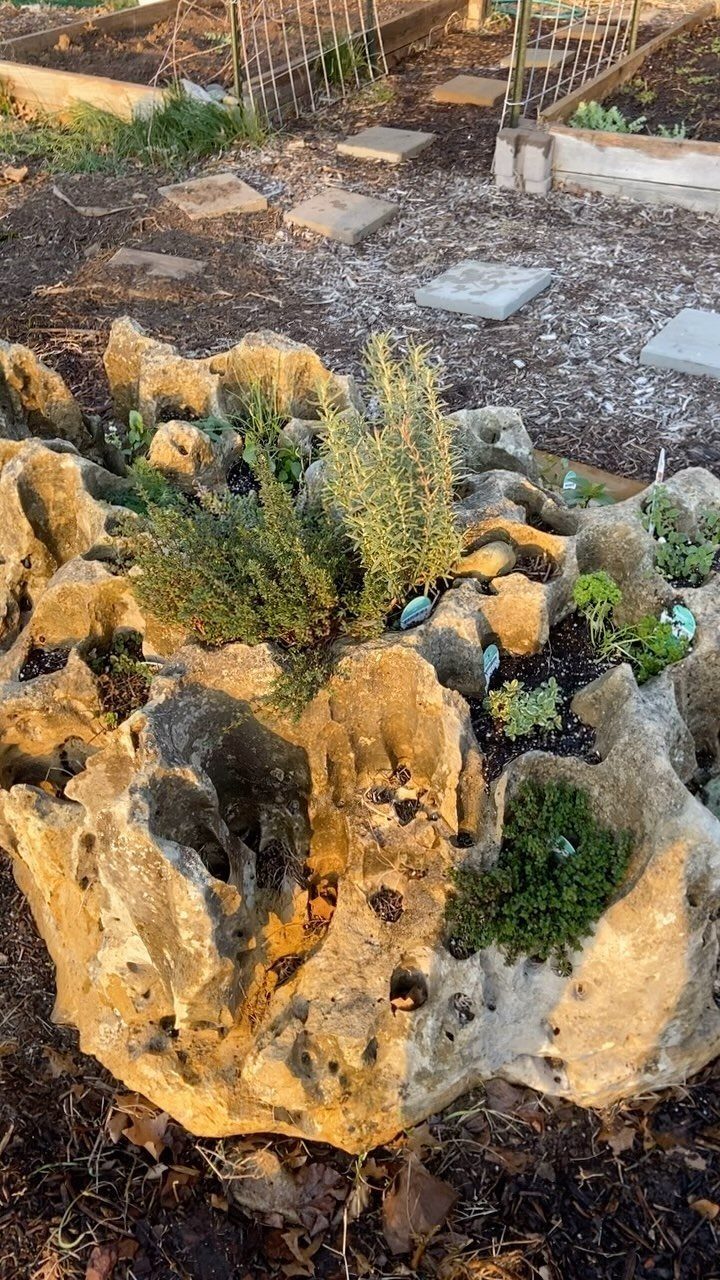
A porous rock with natural pockets and hollows makes a planter that drains itself.
I plant rosemary and thyme in the crevices; both want sharp drainage and sun, which the rock provides. Labels help me remember what I put where, since herbs look similar at first.
This suits renters because the whole thing lifts out.
No bed to dig, no landlord to ask. A few stones from a landscape yard, potting mix for succulents or cacti, and a weekend afternoon.
2. Zen Garden
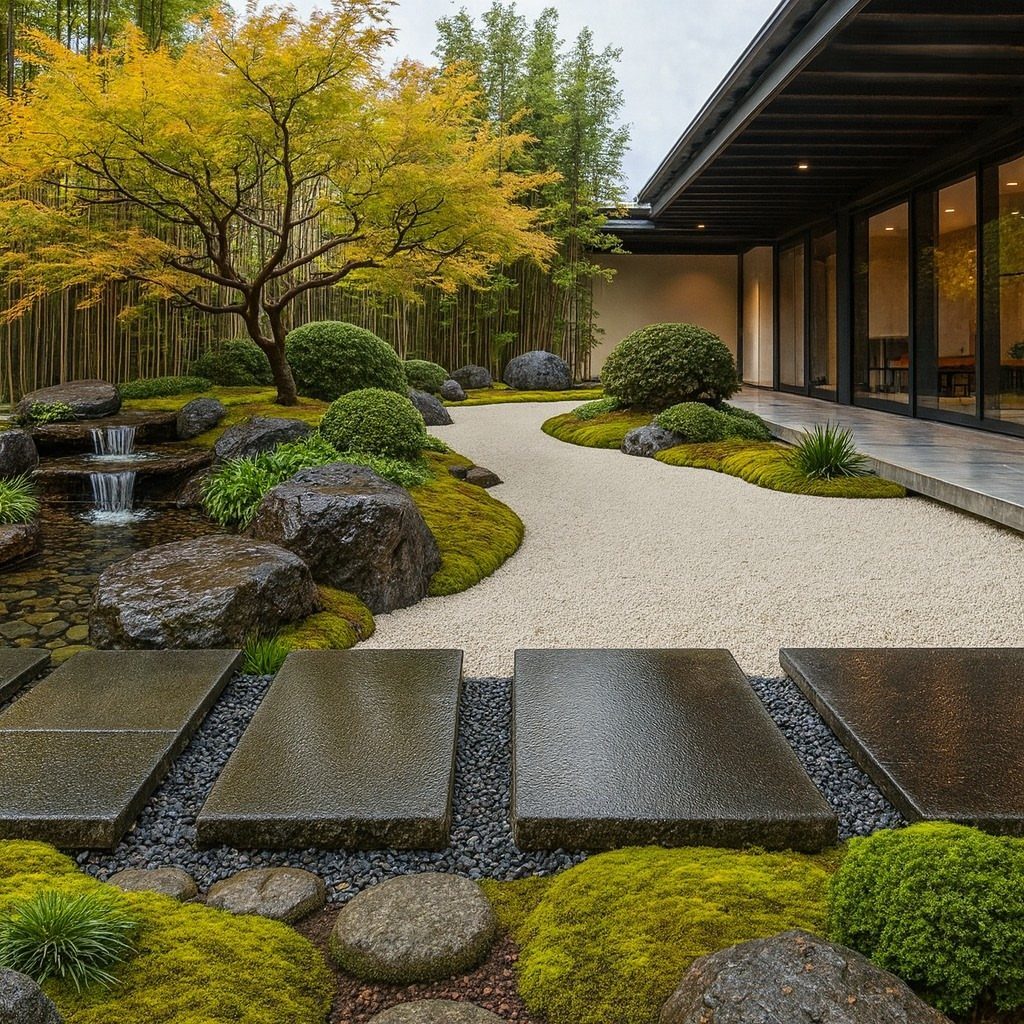
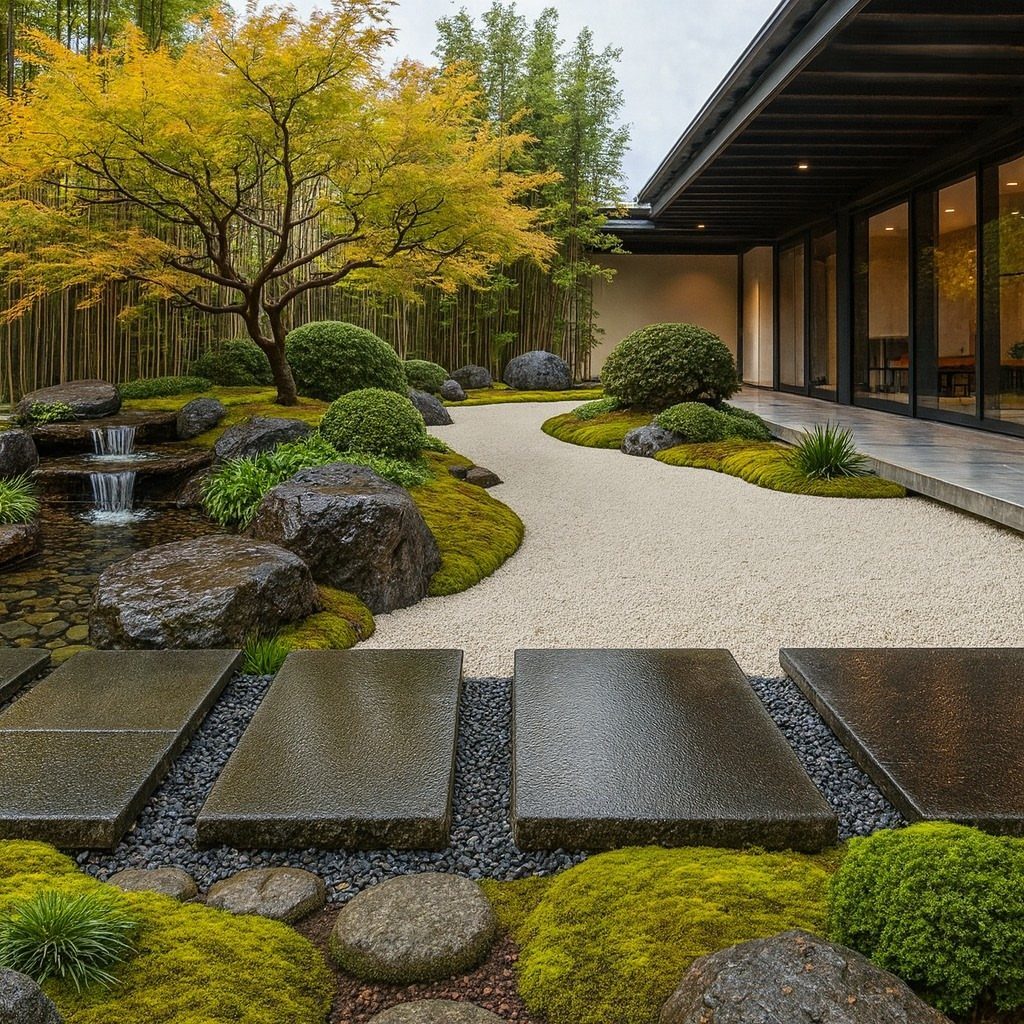
Raked white gravel holds the pattern you draw in it. Mossy rocks and a small waterfall give the eye somewhere to rest; the bamboo screens what is behind.
I find the maintenance honest: the rake comes out weekly, the moss wants shade and mist, and the pump for the waterfall needs winter protection if you are north of zone 7.
The rectangular stone steps are the path through it. They must sit level in the gravel base or they rock underfoot.
3. Succulents in Rock Garden
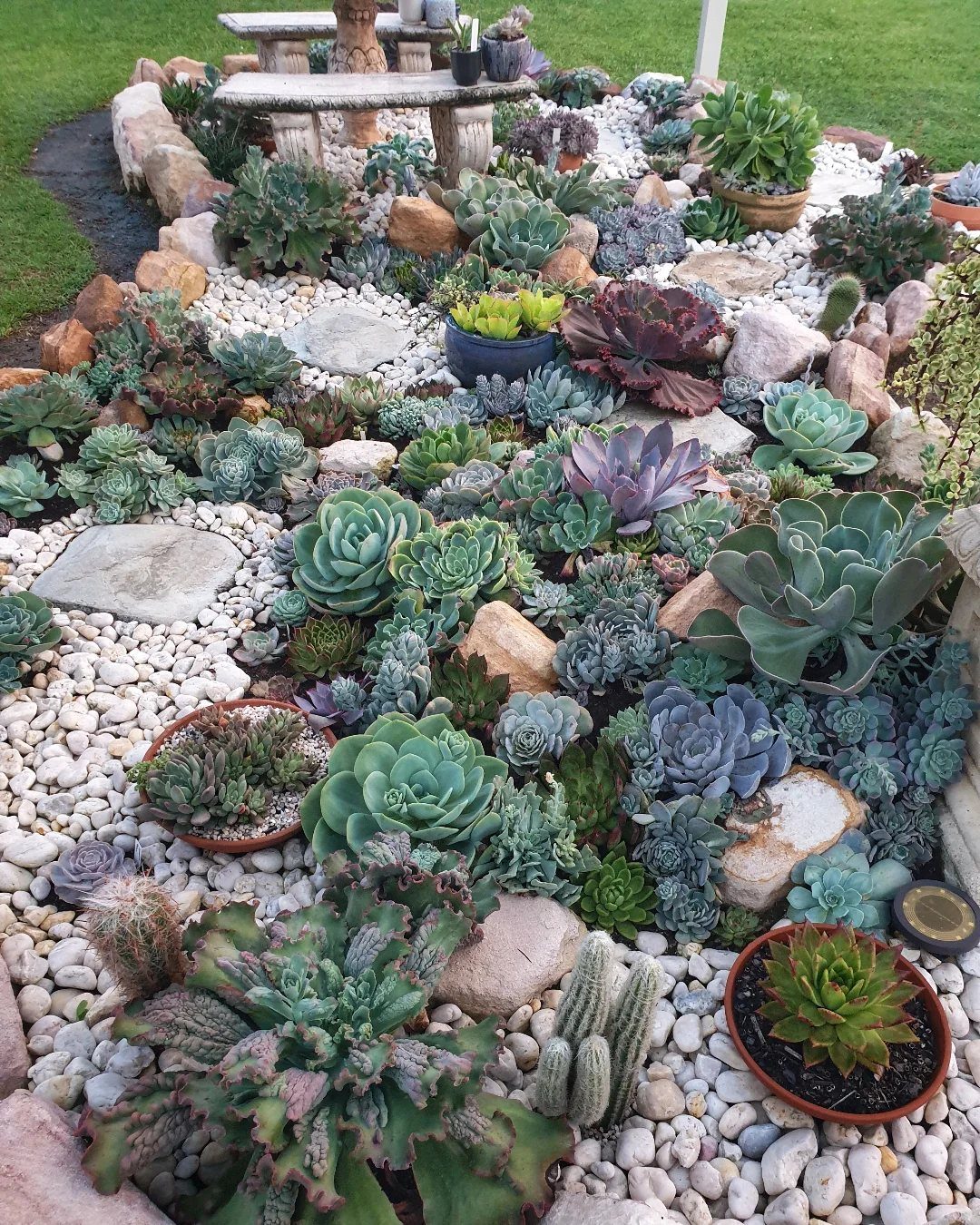
Succulents among white pebbles and large rocks ask for almost nothing beyond what they get.
The pebbles keep soil off the leaves and slow evaporation; the rocks hold heat into the evening, which these plants prefer. A stone bench nearby means I sit where I can see the colors shift in late light.
I would choose cold-hardy varieties if this is year-round outdoors: sempervivum, sedum, certain opuntia. Tender echeverias and aeoniums stay in pots I move to shelter.
4. Ornamental Grasses Among Rocks
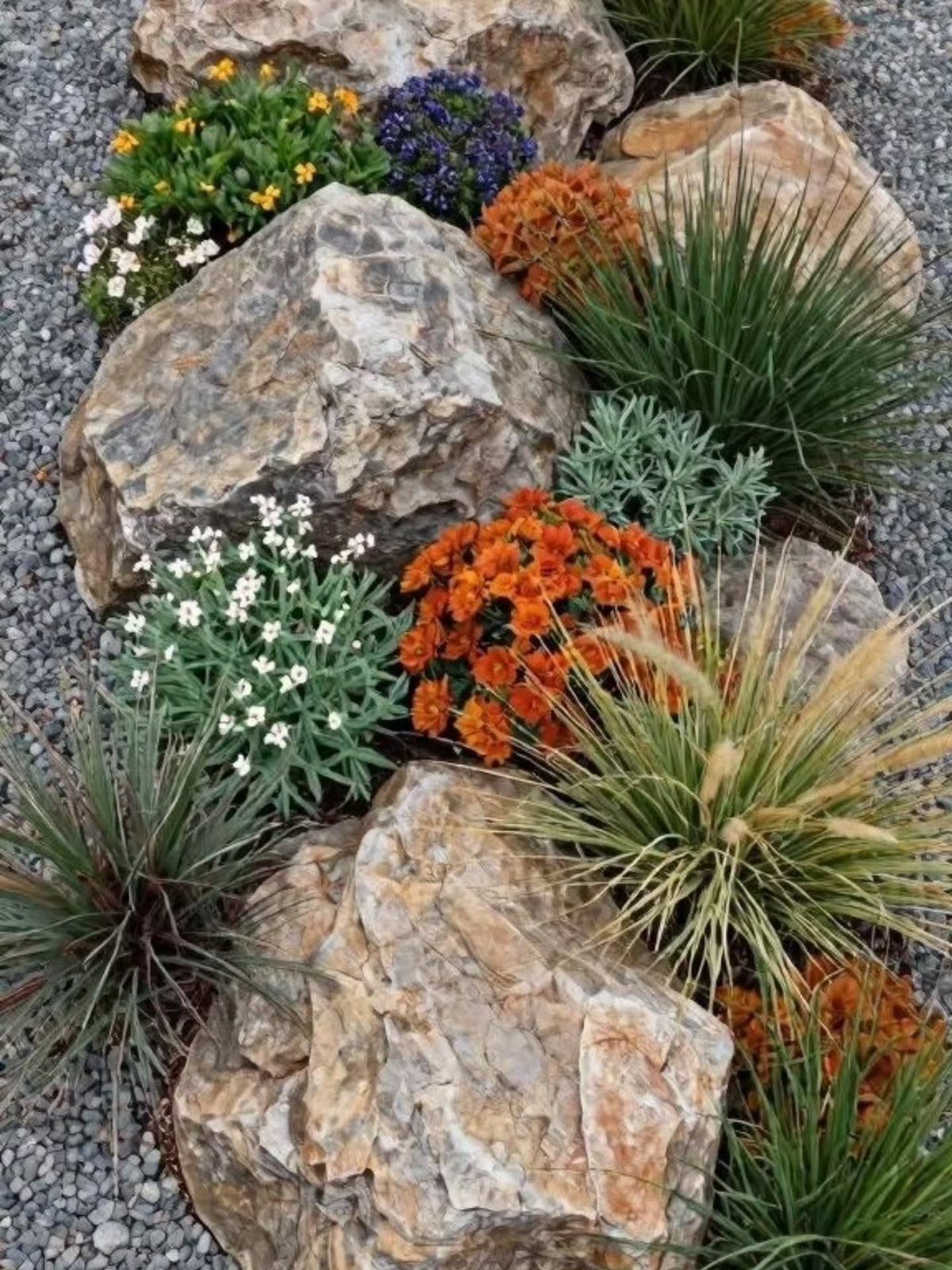
Tall grasses between rocks move when the wind hits them, which a rock bed alone never does.
I plant in drifts of 3 or 5, not singles; the clumps expand to fill the gravel over 2 or 3 seasons. Late-season asters or rudbeckia carry color after the grasses have browned.
Gravel mulch suppresses weeds without rotting the grass crowns. I refresh it every other spring.
5. Small Streams Surrounded by Rocks
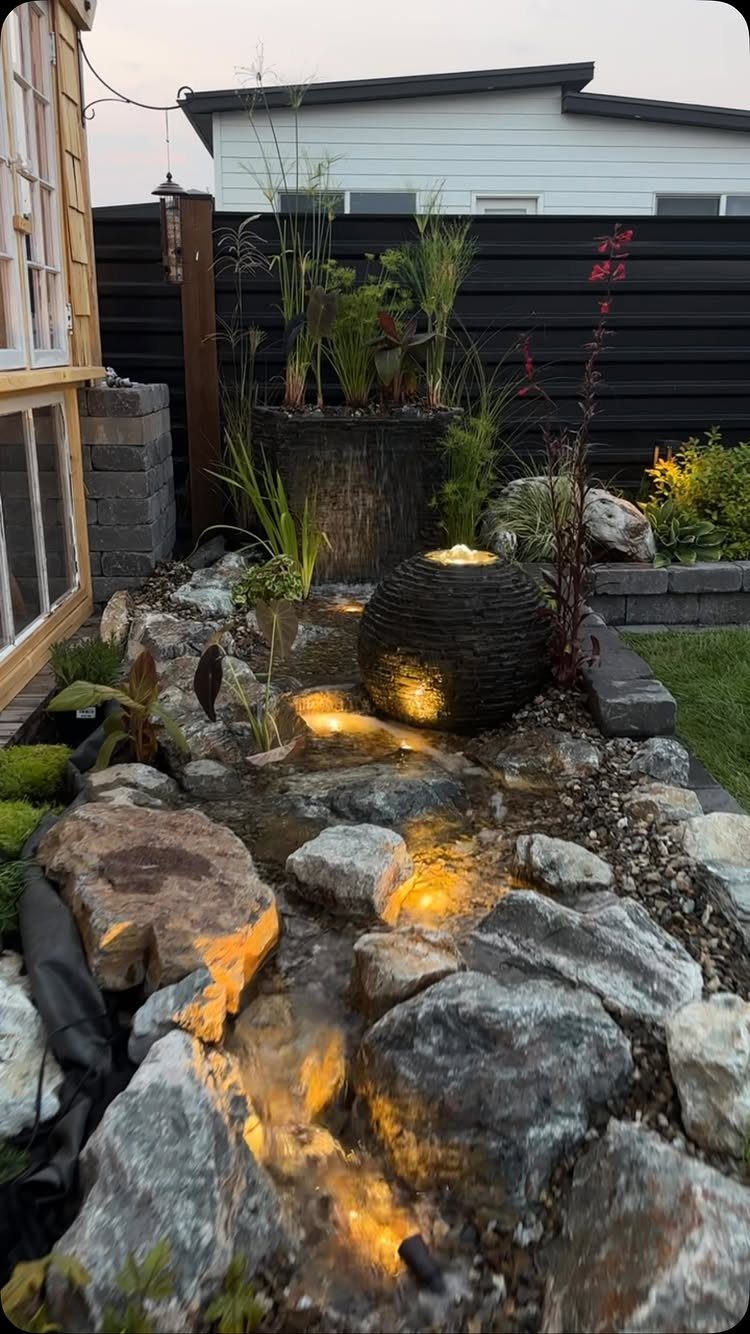
A recirculating pump moves the water over stones and back to the start; no stream connects to a drain or a hose.
Submerged lights run on low voltage, which I wire through conduit buried below the frost line. The round stone fountain is separate from the stream, fed by the same pump or a second one.
I would build this on flat ground with a buried reservoir, not try to cut into a slope. The basin holds the water that disappears in the gravel; without it, you are topping off daily.
6. Alpine Wonderland
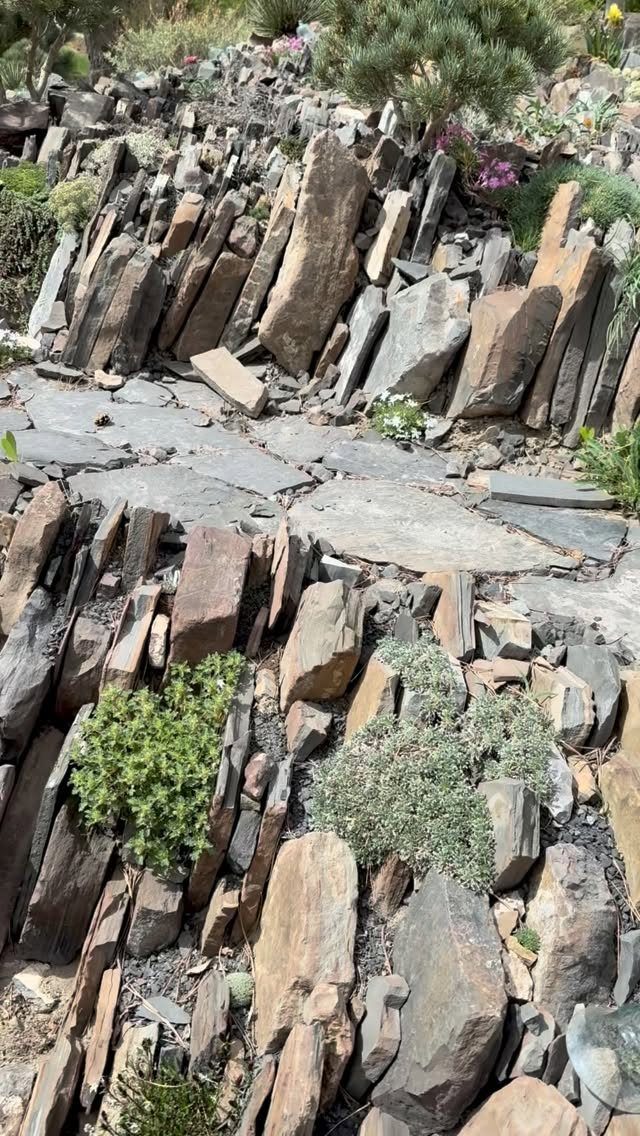
Vertical slate slabs set on edge mimic the way mountains fracture.
The crevices between them hold soil just deep enough for alpine plants and dwarf conifers; roots spread sideways where they cannot go down. A stone path through the middle keeps feet out of the planting.
I would face the slabs toward afternoon sun and away from the wettest winds.
Alpine plants rot in winter damp more than they freeze. Grit in the planting mix, half by volume, is the difference between thriving and dying back to nothing.
7. Rock Steps
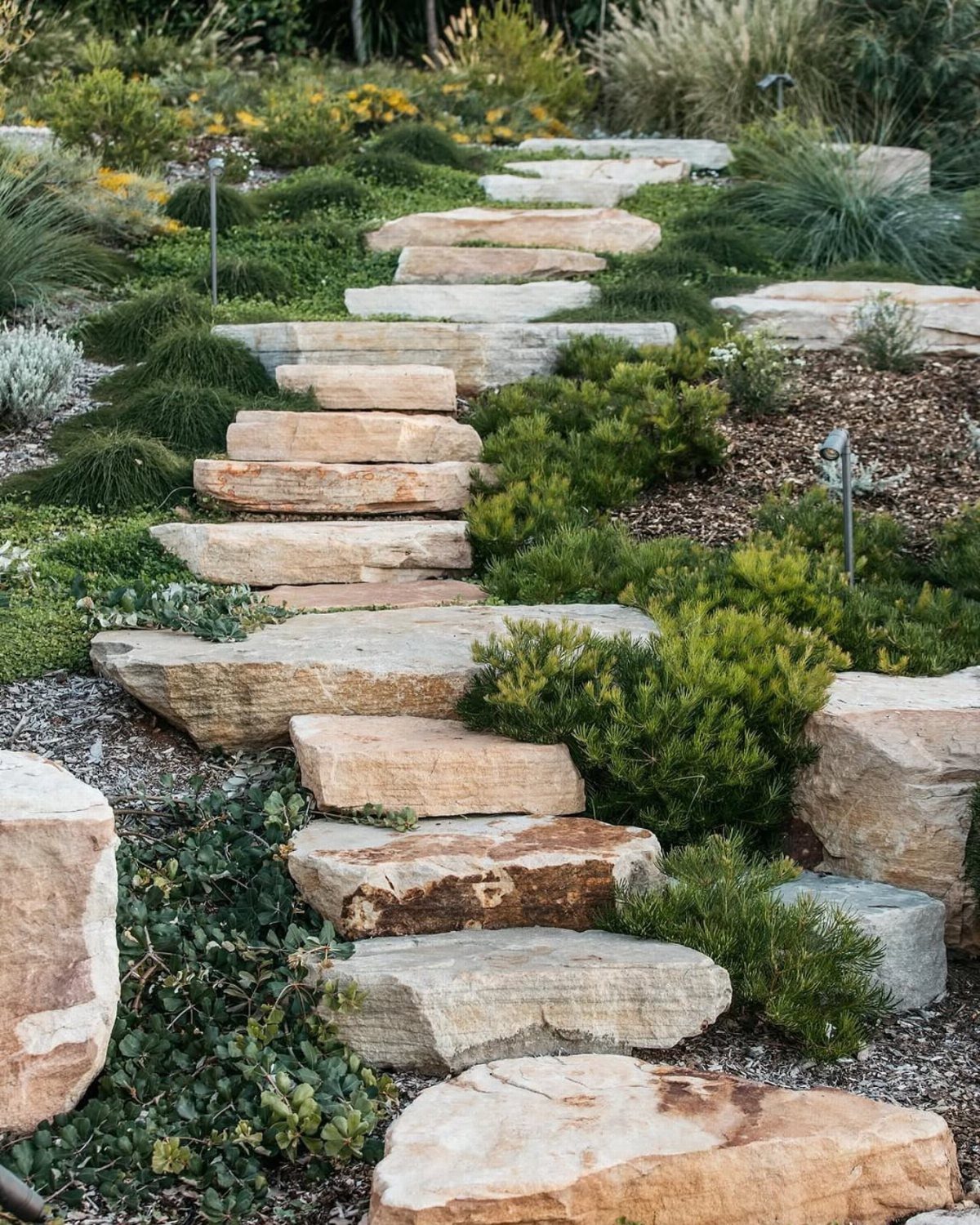
Sandstone slabs set into a slope become stairs that belong to the garden rather than sitting on top of it.
I would set each slab deep in compacted gravel, with a slight backward tilt so water runs off the tread. Low grasses and creeping thyme planted in the gaps soften the edges without hiding the stone.
Landscape lighting at the riser of each step catches the texture after dark without glare. A gentle curve slows the descent and gives you something to look at on the way down.
8. Modern Rock Garden
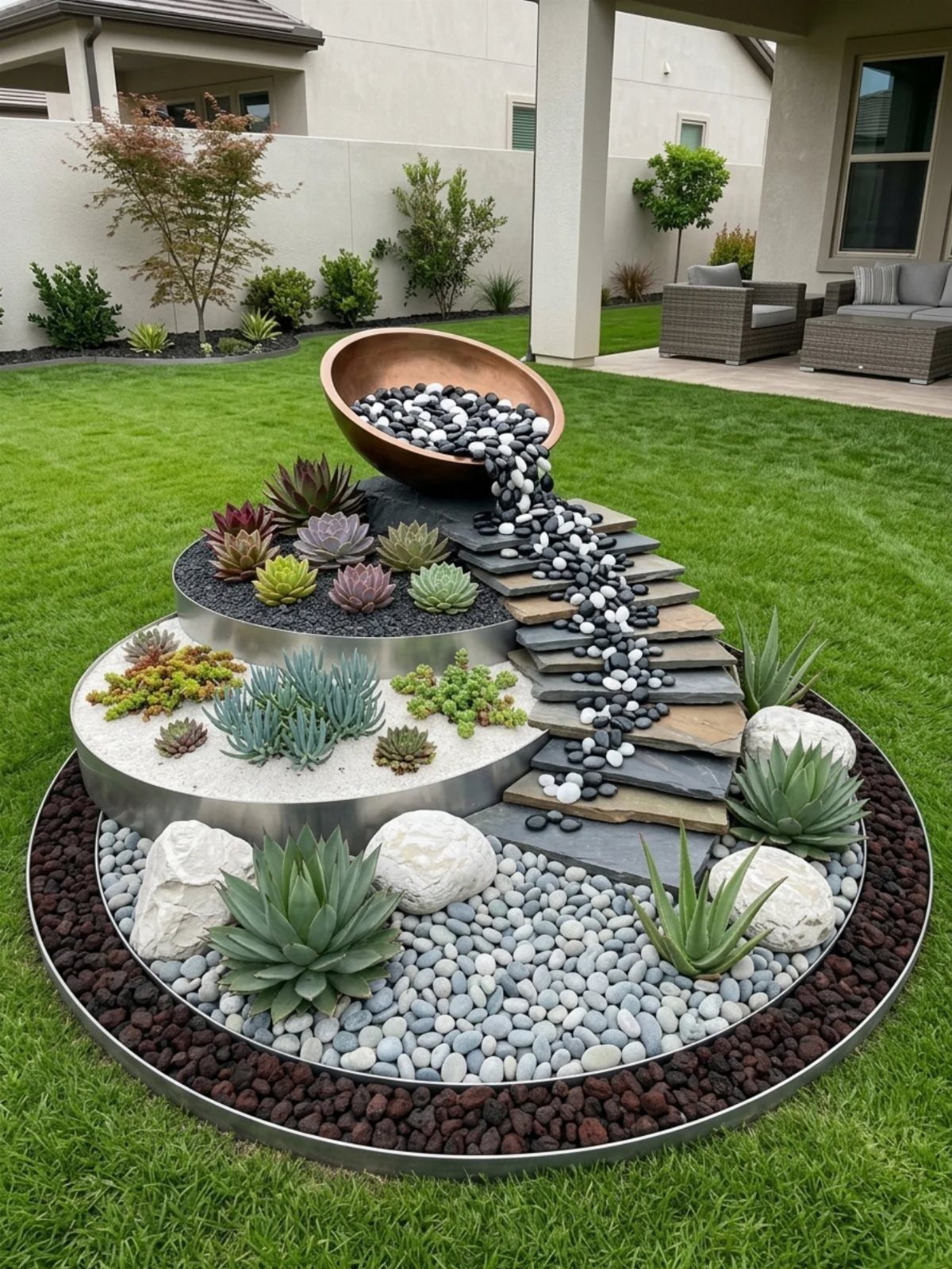
The copper bowl spilling pebbles is the focal point; I would keep the plant palette tight, 2 or 3 succulent varieties repeated, so the hard materials do the talking. Black and white stones against the pale slate give contrast without color.
This asks for a level site and some patience with the edging.
The metal border must sit true or the whole thing looks off. I would build it where I see it from a window, since the geometry rewards daily viewing.
9. Boulder and Gravel Garden Bed
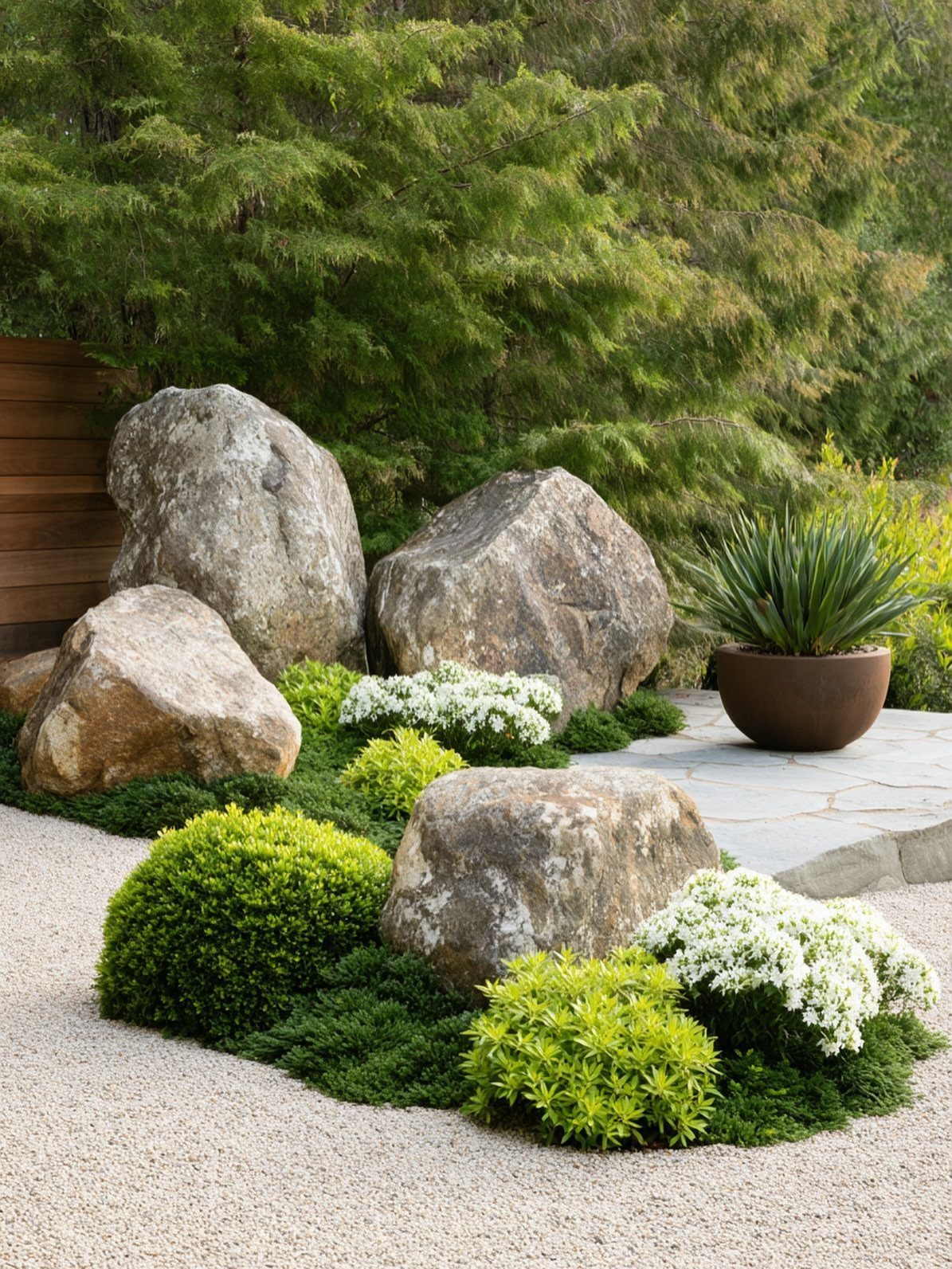
Single large boulders anchor a bed better than a cluster of small ones, which read as rubble. I would space them at roughly twice their height apart, set halfway into pale gravel so they look settled rather than dropped.
Low shrubs filling the gaps between stones give the bed its finished look after a few seasons of growth.
A flagstone edge gives a clean border against lawn without a visible barrier. I would avoid dark mulch; the pale gravel keeps the heat off the roots and shows off the stone.
10. Flowering Perennial Rockery
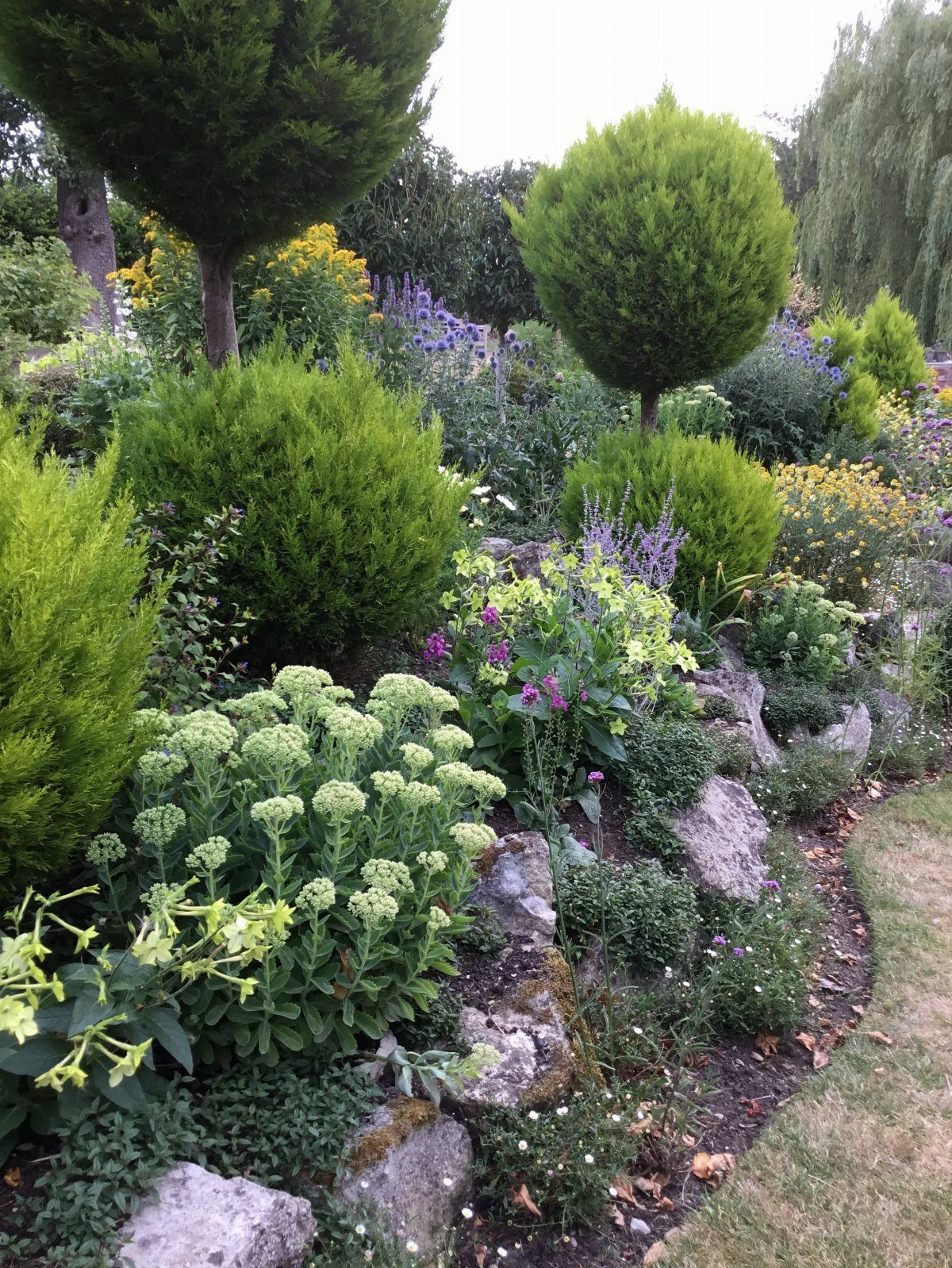
Grey limestone and flowering perennials suit a border where you want color from April to September.
Sedum and compact shrubs give year-round structure; let seasonal blooms move through in waves. I would plant for succession, with early bulbs in the crevices, then cranesbill and salvia, then aster to finish.
The rocks must sit stable or the soil washes out in rain.
I pack the base with grit and lean each stone slightly into the slope. This is not a low-water scheme; the perennials want moisture in summer, so I would not try it far from a hose.
11. Miniature Tray Rock Garden
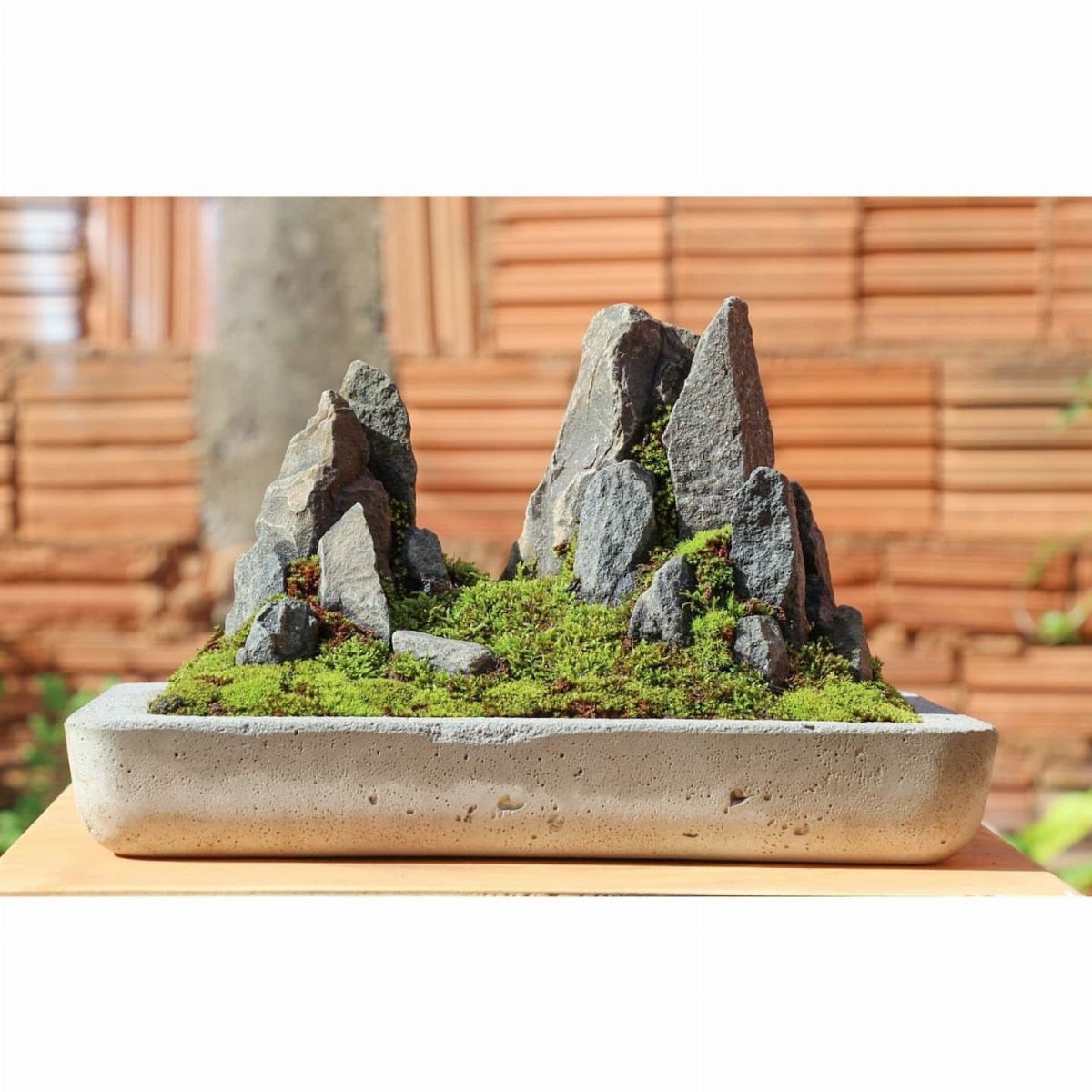
A shallow tray of jagged grey stone and moss is a garden for a windowsill or a table where nothing else fits.
The upright rocks suggest mountains; the moss fills the valleys. I would mist it with rainwater, since tap water leaves mineral marks on the stone, and rotate it weekly so growth stays even.
A concrete tray holds moisture without rotting; ceramic looks finer but may crack in frost. This is the cheapest entry on the list, and it travels with you when you move.
Maintenance Tips
New alpines need water until their roots find the crevices, and summer heat makes the difference between establishment and failure. I check the soil at finger depth and water when it feels dry underneath the surface.
Weeds compete harder in a rock garden than in open soil because the drainage is sharp and nutrients are scarce. I pull them young, before the roots thread between stones.
Gravel mulch does 2 jobs: it keeps soil off succulent leaves and it blocks slugs.
For aphids, a hard spray of water knocks them off; I go out in the evening for the adults if I see notched leaves that mean vine weevil.
Ants colonize the dry pockets around alpines but do not harm the plants; extra water discourages them without drowning roots.
Birds pull at cushion plants and fresh succulent growth until the plants anchor. I push sticks among them for a few weeks, angled so a bird cannot land flat.
Building a Rock Garden
I test drainage before anything else. A hole filled with water that sits for hours means I dig in grit and coarse sand, or I choose a different spot.
The largest rocks, the keystones, go in first; they shape everything that follows. I set each one with about a third of its mass below ground, tilted back so water runs off and the face reads as weathered, not placed.
A dolly or hand truck handles anything I cannot lift alone, and I do not hesitate to rent machinery for a boulder that anchors the whole design.
Smaller stones fill gaps in a way that looks accidental, not arranged. My planting mix is one part loam, one part horticultural grit, and one part leaf mold; it drains fast but holds enough for roots to grip.
I make the plan on paper before I move the first heavy stone, because once they are in, they stay.
Cost Considerations
Rock prices split wide by type and size.
Single boulders run $50 to $400 each; river rock, sold by the load, runs $200 to $600. Delivery is a separate line item and it adds up, especially for dense stone that loads heavy.
I would not try to guess the total from a photo.
I measure my area, decide on coverage depth, and call the yard with those numbers; they convert to tons and quote delivery by zone. A full bed with multiple boulders and a gravel base crosses into the low thousands fast.
Labor is the hidden cost if I do not handle the heavy stones myself. Rental equipment for a day, split with a neighbor on a second project, pays for itself against a crew on a modest build.
Frequently Asked Questions
How to use rocks to decorate a garden?
Rocks create structure by defining areas and anchoring the design. The biggest rocks go in first, buried roughly one-third deep and angled slightly backward so rain sheets off the front instead of pooling.
I tuck smaller stones into the spaces between in loose groups that look like they settled there naturally, never in a row.
What type of gravel is best for a gravel garden?
River rock works for borders and drainage; pea gravel covers large areas; pale gravel keeps heat off roots and shows off stone against it.
I refresh mulch gravel every other spring, and I avoid dark mulch where I want the stone to read clean.
Are rock gardens low maintenance?
They need less than traditional gardens but not none.
Weeds compete harder in sharp drainage, so I pull them young; gravel mulch blocks slugs and suppresses weeds. Established succulents and alpines want only occasional deep watering, though new plants need steady moisture until roots find the crevices.
What is a rock garden?
It is an intentional arrangement of rocks and plants built to look natural, often recreating the growing conditions of mountainous areas.
A rockery is the same thing by a different name; both are raised features of rock and gritty soil planted with alpines, dwarf shrubs, and small perennials.





