
A large backyard can swallow money and weekends whole if you let it, or it can work on a real budget and still leave time to sit by the fire, pick tomatoes, or let the dog run.
What you actually do out there decides everything else: cook, sit, grow food, watch birds, walk a path after dark.
1. Fire Pit Area with Seating
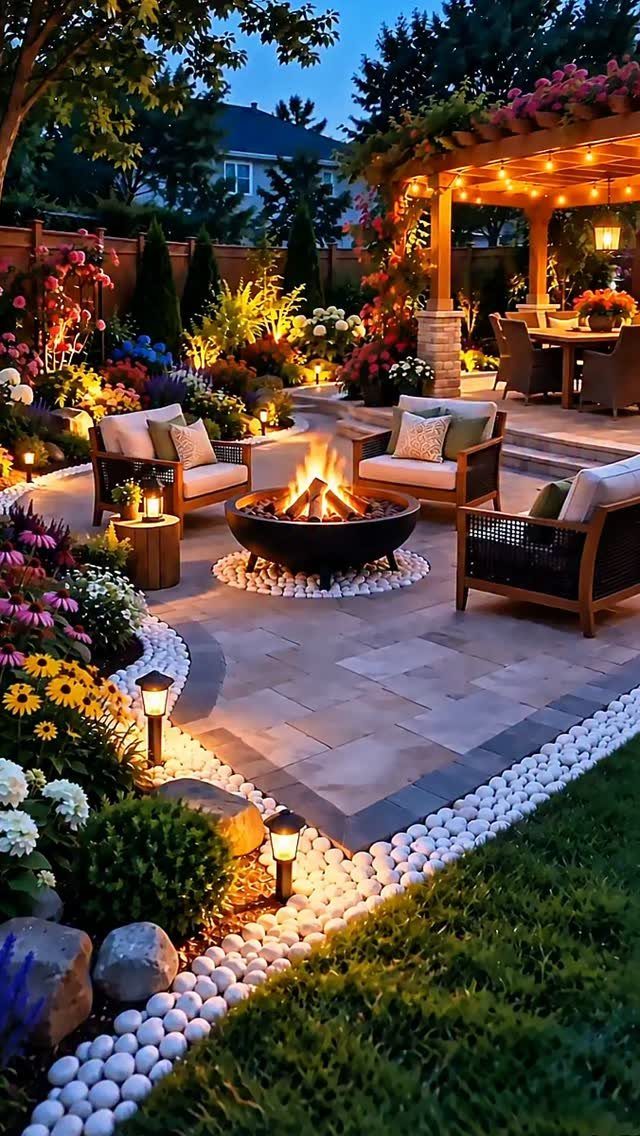
A fire pit turns the center of a yard into a room without walls. I like gas for the instant start and no ash, though wood gives you that smell and the snap of real flame.
For seating, armchairs set close around the pit keep everyone near enough to feel the heat without singeing their knees.
Stone or pavers underneath beat bare grass, which will die back and turn muddy. A pergola a few steps from the fire zones the space: open flame for gathering, covered dining for when the mosquitoes come out.
Nothing screams summer more than the sound of a crackling campfire. Firepits make perfect focal points in a backyard, so if you want one, consider planning the rest of your landscaping around it.
2. Plant a Vegetable Garden
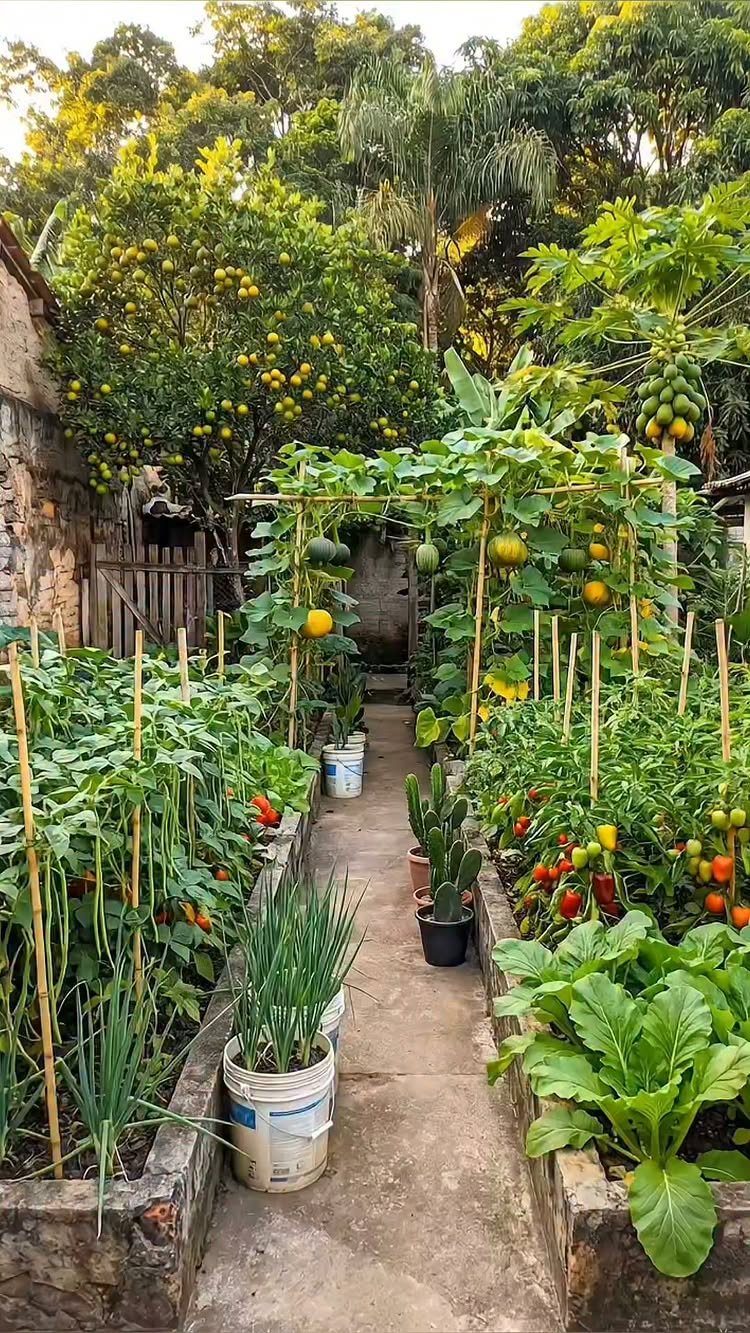
Stone raised beds warm the soil faster than ground-level dirt and save your back.
I built my first ones with concrete block, but these mortared stone walls look sharper and last longer. An arch trellis is squash territory: train vines upward and you double your square footage without giving up the walkway.
Peppers and greens fill the lower levels, while papaya and orange need the sun at the bed’s edge or in open ground behind.
Fruiting plants need direct light most of the day; leafy greens tolerate partial shade and the cooler soil on the north side.
3. Create a Shade Garden
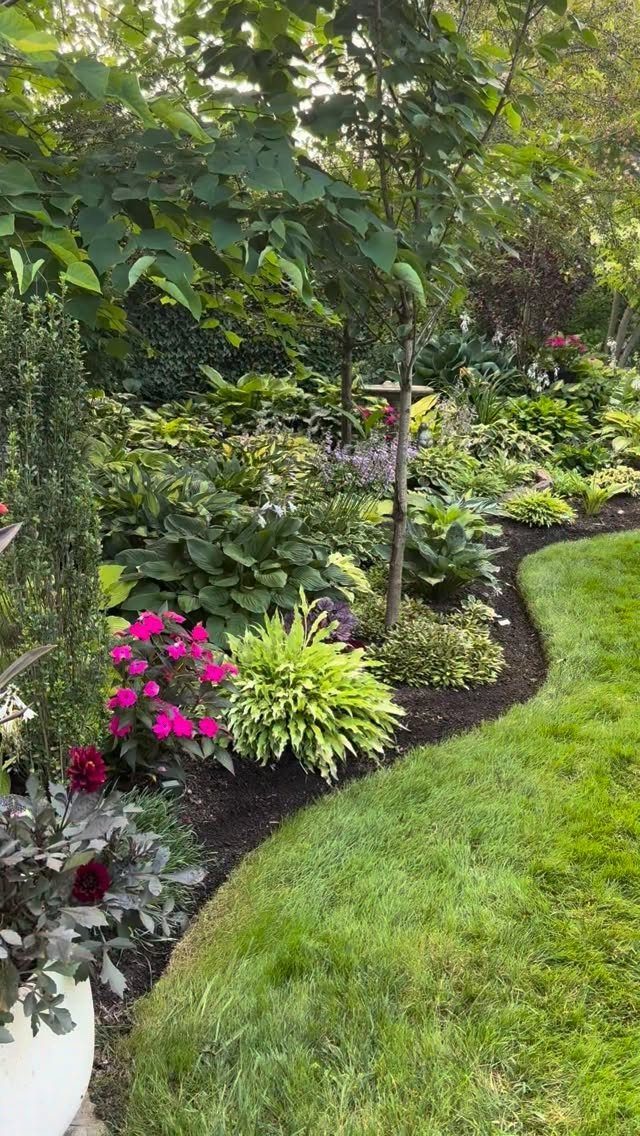
Hostas and impatiens are the workhorses here because they do not waste energy fighting for light they will never get.
I group hostas by leaf size, small ones forward, so the texture reads in layers even when the blooms are done.
A mulch border does 2 jobs: it keeps down weeds the canopy blocks from drying, and it signals where the shade garden ends and the lawn begins.
Water less often than your sunny beds; roots in shade stay moist longer and rot fast if you treat them the same.
4. Design a Flower Garden
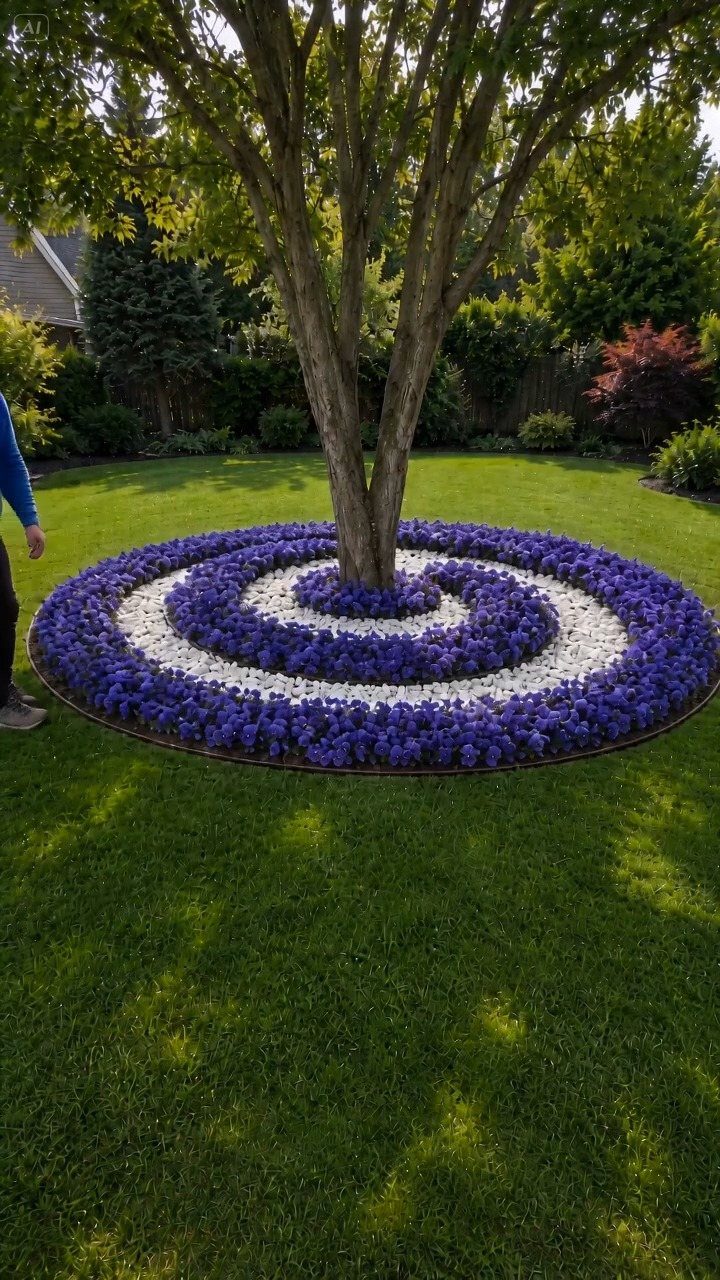
A spiral of purple and white radiating from a tree trunk turns a single specimen into a sundial of color.
I prefer low annuals like these purple petunias or verbena for the first year, then swap in perennial dianthus or creeping phlox as the bed fills in.
The white stones are not just decorative; they reflect light back up into the canopy and keep mud off your shoes after rain.
Leave clearance from the trunk so you are not burying the root flare, and refresh the edge twice a season where the mower creeps in.
5. Install an Outdoor Kitchen
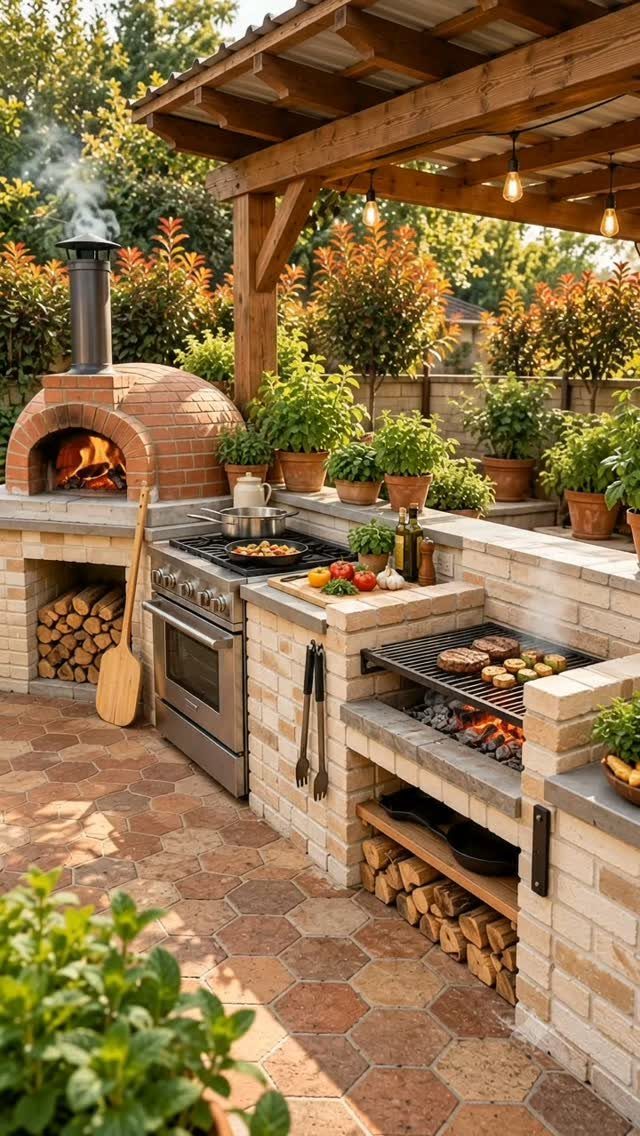
A brick pizza oven anchors this kitchen, but I would start with the grill and prep space if the budget is tight.
A wood-fired oven needs real time to heat, so it is a weekend project, not a Tuesday dinner solution. Stainless steel cabinets under stone counters give you storage that survives rain; wood frames rot unless you seal them yearly.
The pergola overhead is load-bearing for a fan or heater, which extends the season by a month on each end. Run gas and electric before you lay the patio; retrofitting means tearing up stone.
6. Add a Pool
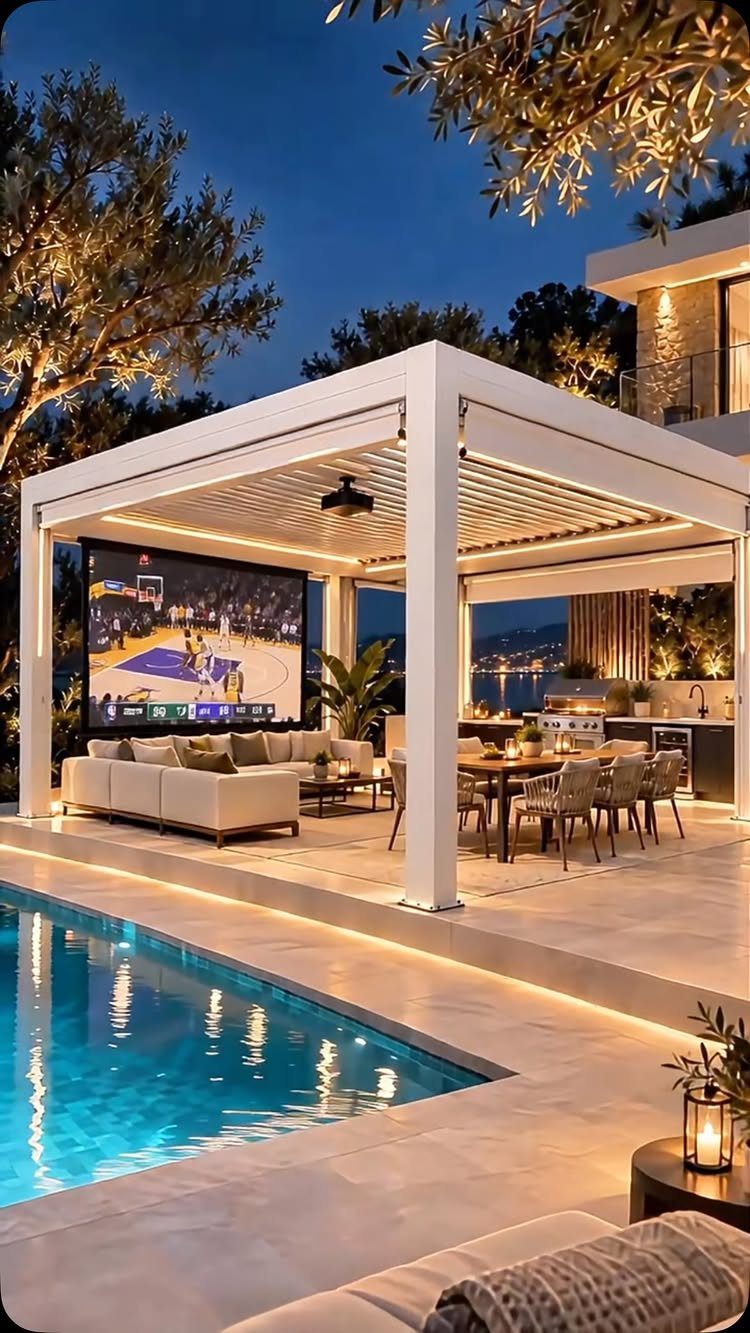
A pool this size is not a solo build. I have helped friends with vinyl liner installs, but a gunite or shotcrete shell with an integrated spa and vanishing edge is contractor territory, serious money and a summer of disruption.
A pergola lounge and outdoor kitchen let the pool become one room in a larger house: you swim, you eat, you watch the game on the screen, and you never go inside.
If that scale is not yours, a stock tank pool with a deck surround gives you the plunge for a fraction of the cost and a weekend of work.
7. Plant an Orchard
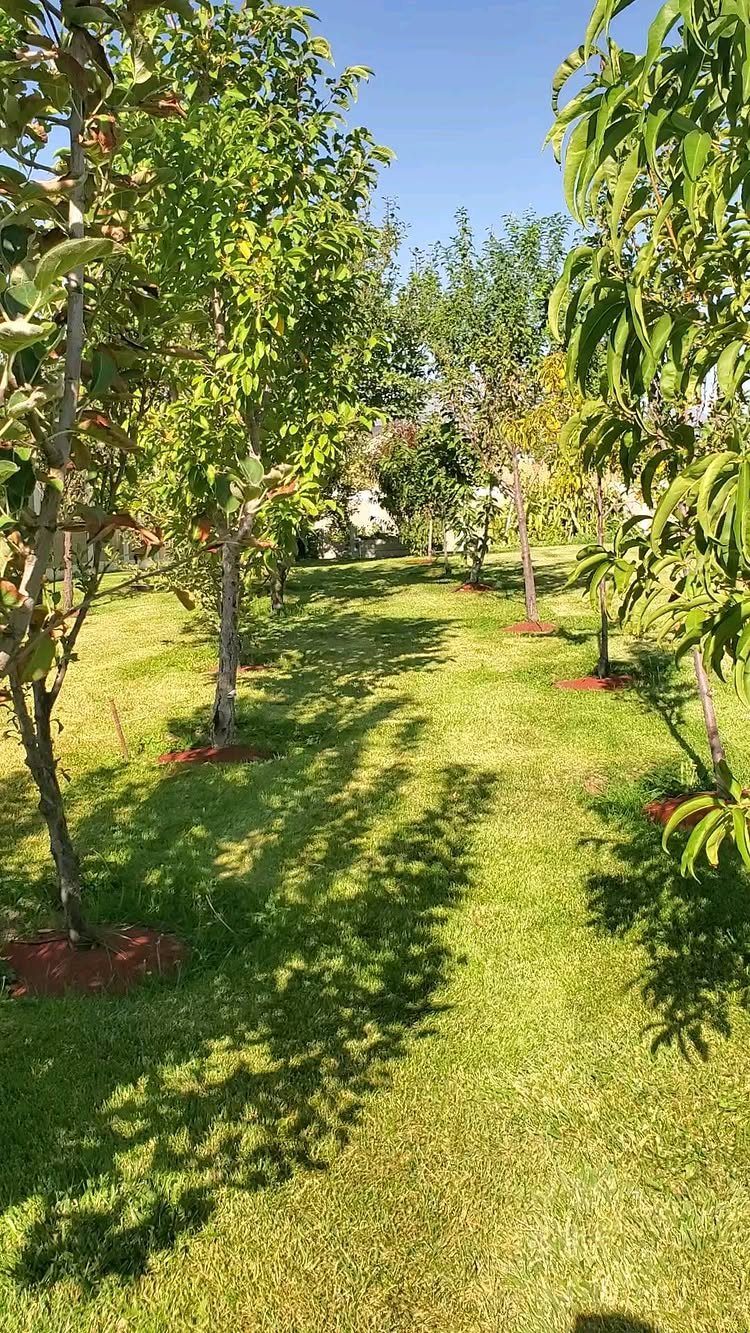
Fruit trees in rows turn lawn into a working landscape. Standard spacing for apples and pears leaves room to mow between until the canopy fills; dwarf rootstock can sit closer.
Mulch rings keep string trimmers away from bark and hold moisture through July. Plan for staggered harvests: early peaches in August, late apples in October, so the kitchen never drowns.
8. Pathway and Accent Lighting
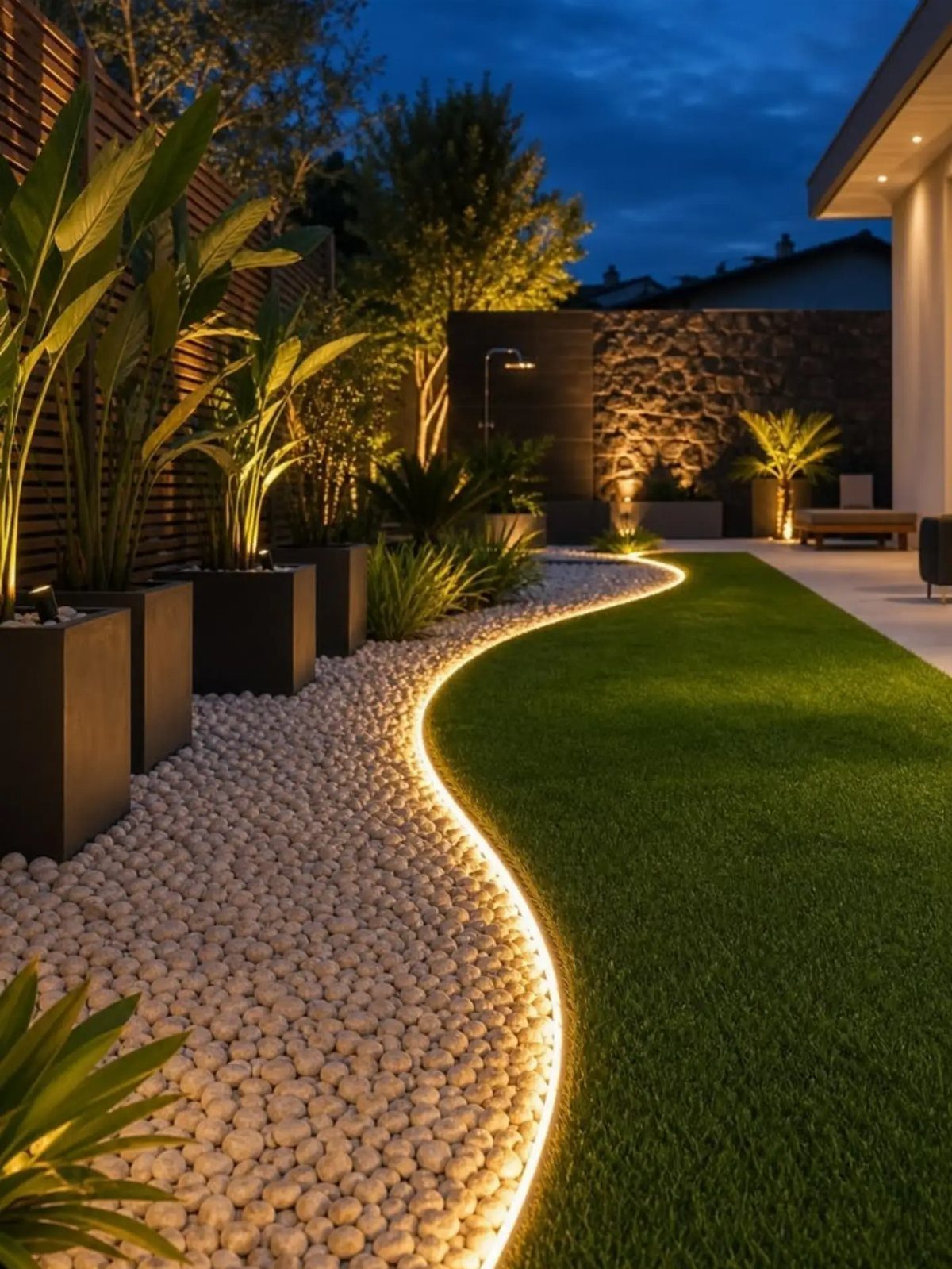
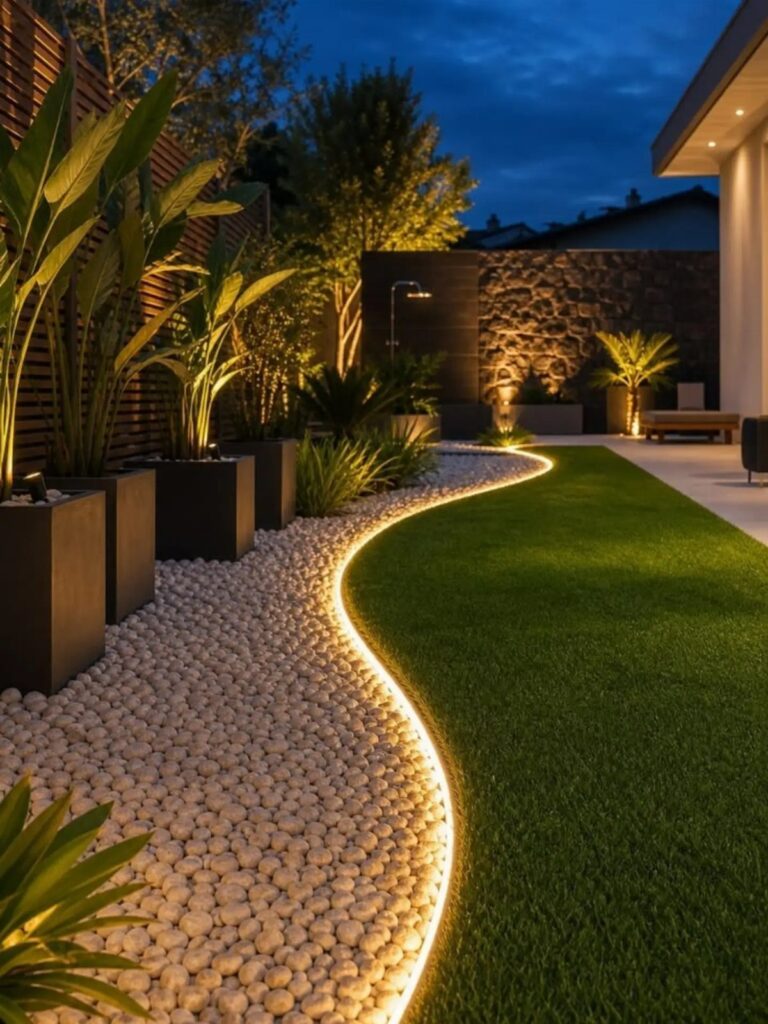
Light strips tucked against pathway edges do the job of lamps without the posts.
Warm white LEDs, 2700K or thereabouts, keep the yard inviting rather than clinical; run them on a transformer with a dusk sensor so you are not hunting switches in the dark.
Uplights on stone and pots add depth, but the strip itself is the guide: it turns a winding walk into something you can follow with a drink in your hand.
9. Use Vertical Gardening
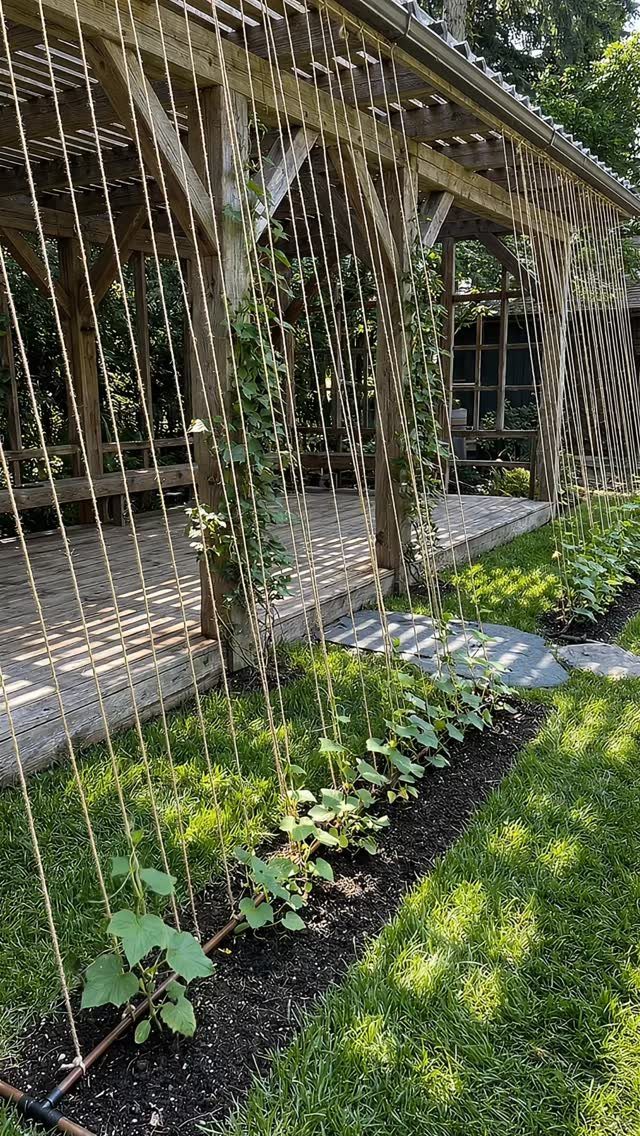
String lines from pergola to bed give climbers a direct route up. I have used twine for beans, but nylon rope lasts seasons and handles heavier vines like clematis or small squash.
Tie the vine off steep enough that it grips before it has a chance to sag. The vertical plane buys you back the square footage the deck took, and the shade shifts through the day as the leaves fill in.
10. Incorporate Native Plants
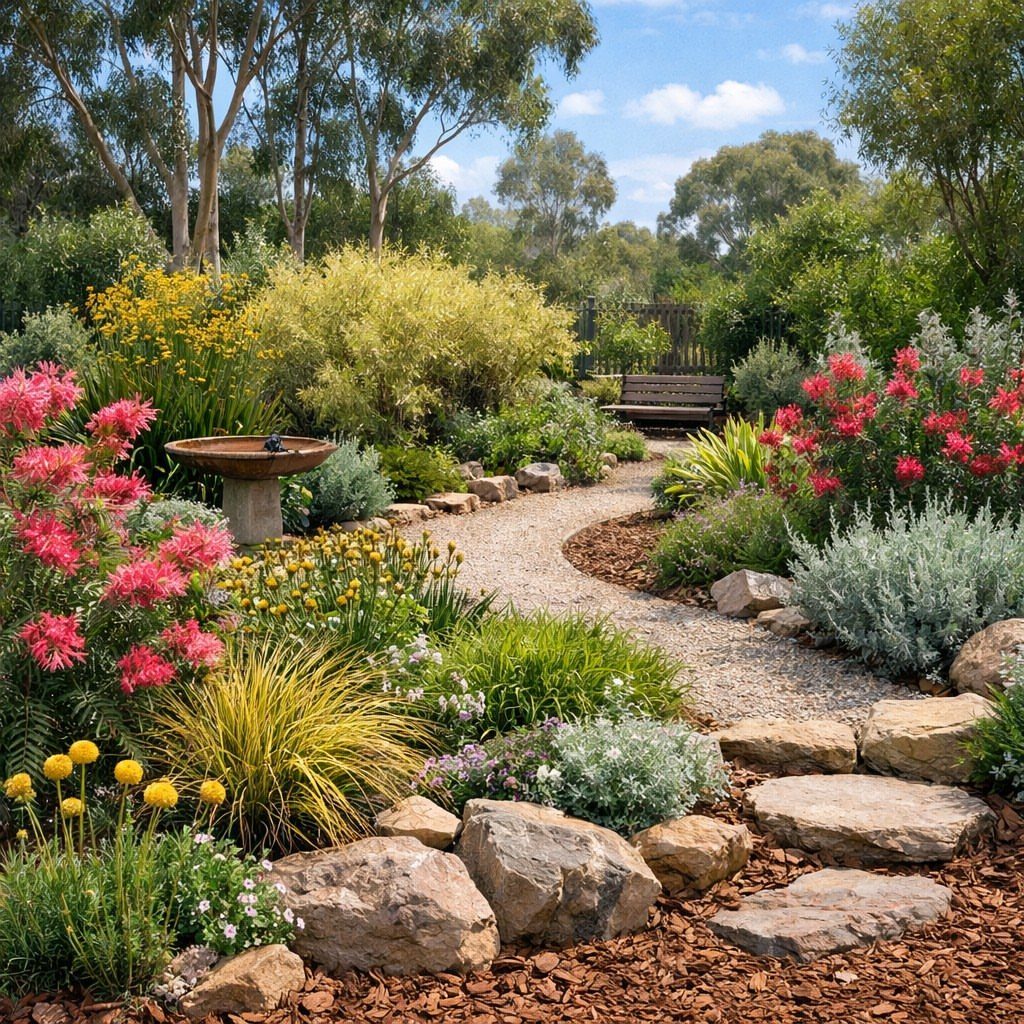
Gravel paths through native plantings need less water, less fertilizer, and less of your Saturday than lawn ever will. I choose plants by zip code, not by catalog zone; the local extension office lists what actually belongs where you live.
Boulders and a birdbath give structure before the perennials fill out, and the bench goes where afternoon shade already falls, not where you wish it would.
11. Install Raised Beds
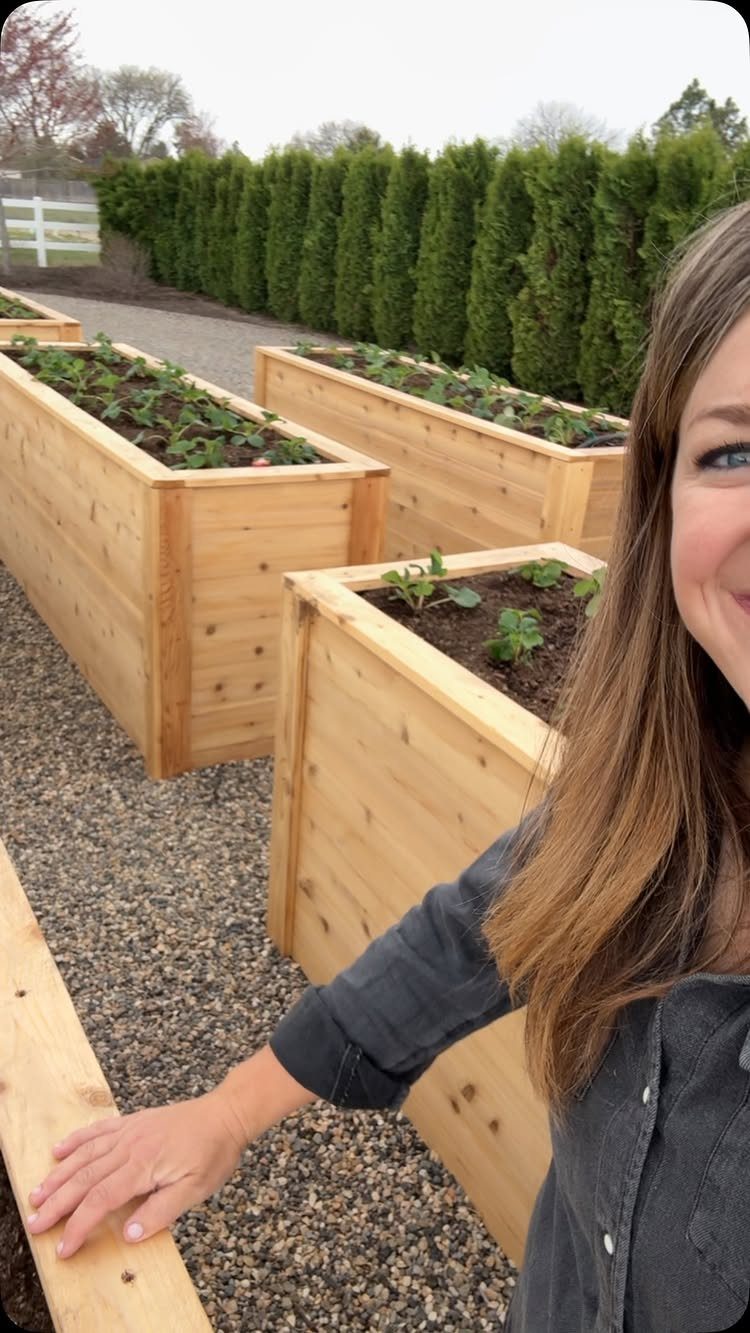
Cedar 2x6s with interior bracing and metal brackets at joints will not bow outward when the soil settles and swells. Gravel underneath drains, blocks weeds, and lets you level the boxes without digging.
Deep soil warms fast in spring and gives tomatoes the root run they need. Taller beds suit root crops and save your back; the trade is more cedar and more fill dirt up front.
12. Tall Shrubs and Trees
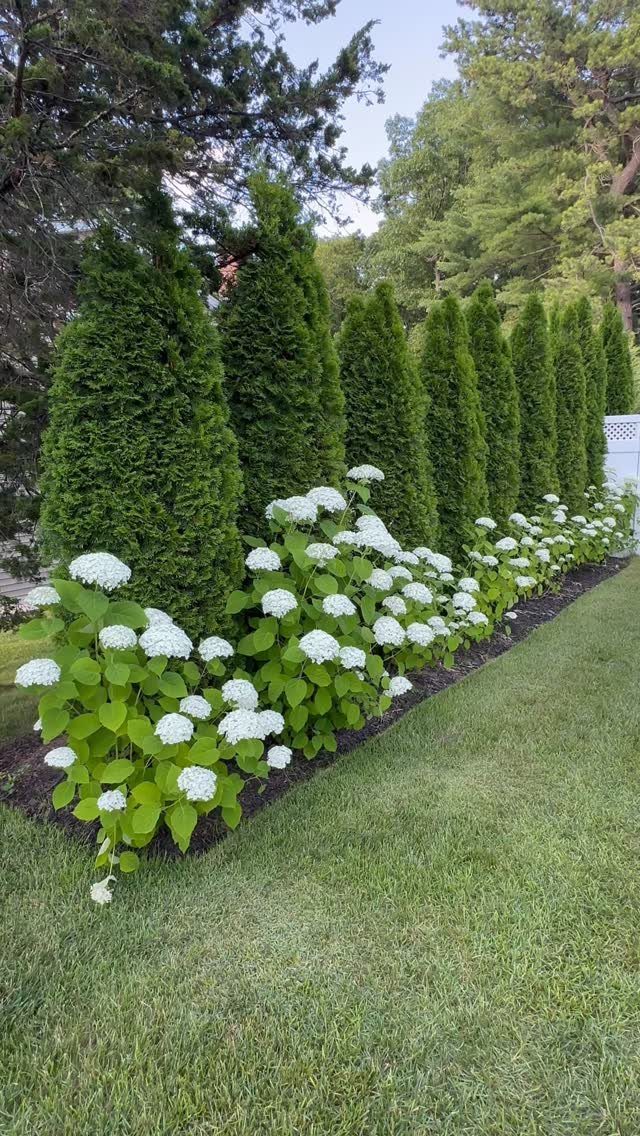
Arborvitae in a backbone row with hydrangeas in front gives you evergreen structure and summer flowers from the same bed. I space the conifers close enough that they touch while still young; the hydrangeas fill the gap while you wait.
The white blooms read clean against dark green, and the whole planting screens the neighbor’s garage without a permit or a fence post. Shear the arborvitae in late June, not August, so new growth hardens before frost.
13. Stamped Concrete Patio
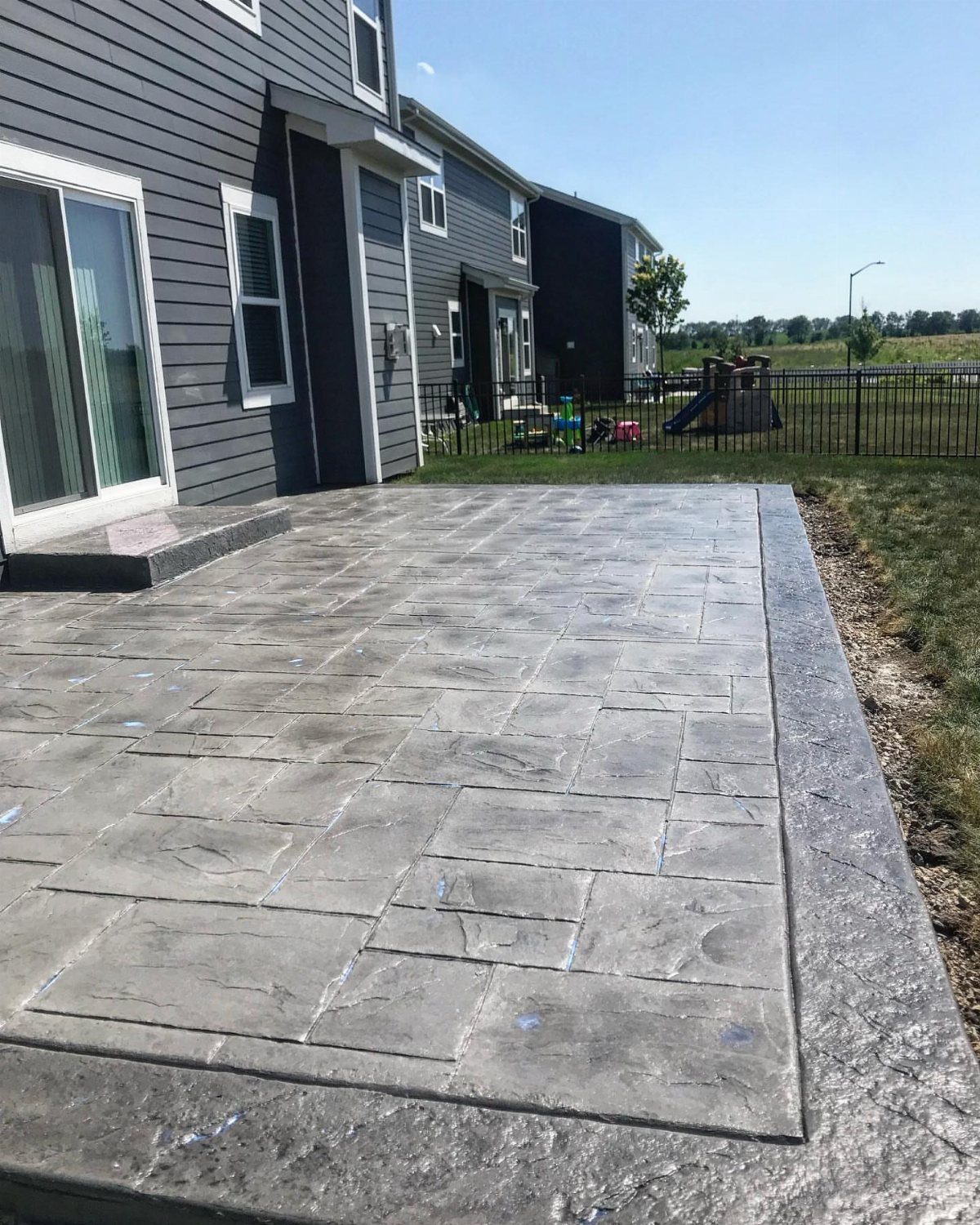
Stamped concrete costs less installed than real stone, and the gap is wide enough to notice.
I like it for the border detail: the installer stamps a darker pattern around the edge and scores control joints so the cracks fall where you want them.
Seal it on schedule or the color fades to chalk; the label will say how often. A broom-finish border adds traction where the grill drips grease.
14. Add Contrast with Purple Foliage
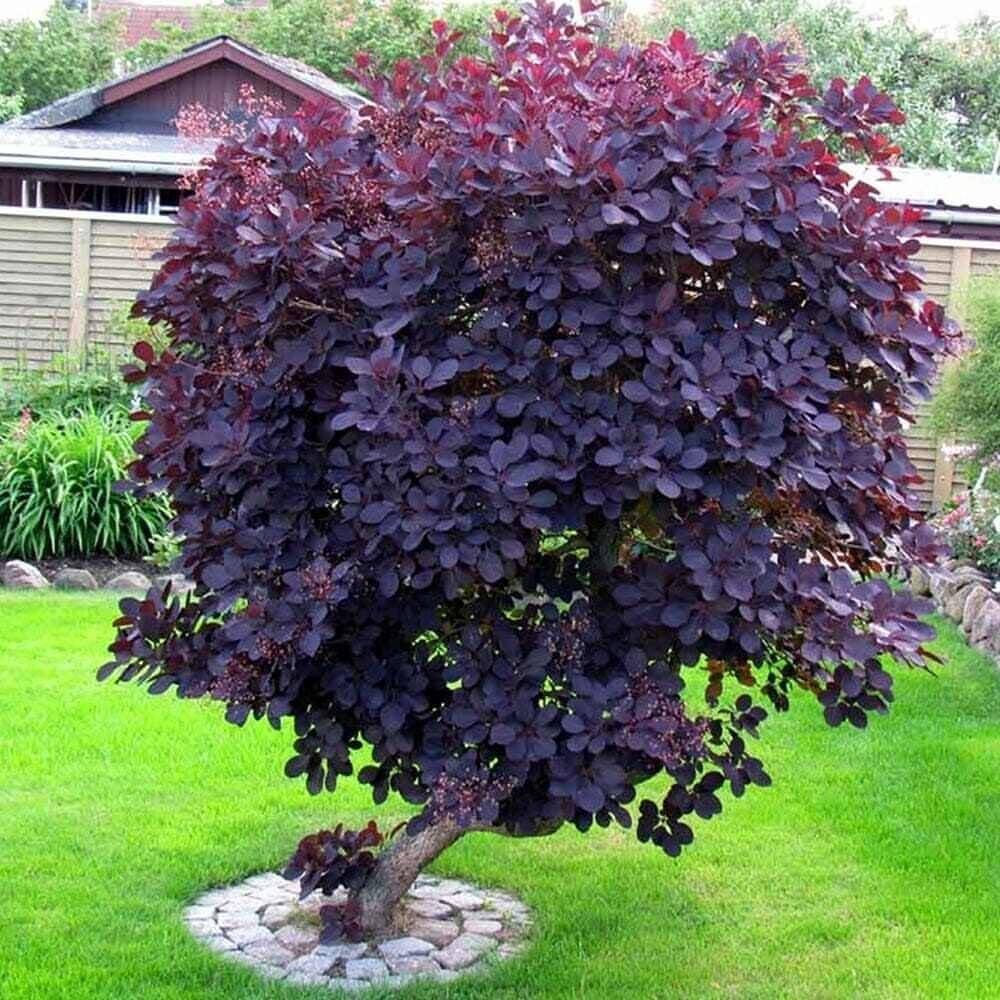
A single smokebush in open lawn is enough.
The purple reads against green grass without any companions; add more and the effect scatters. I let mine grow tall for the haze of summer bloom, though hard pruning keeps it shrub-sized and the foliage darker.
The stone ring is optional but smart: it keeps the mower from nicking bark and defines the space while the plant fills in.
15. Hidden Garden Space
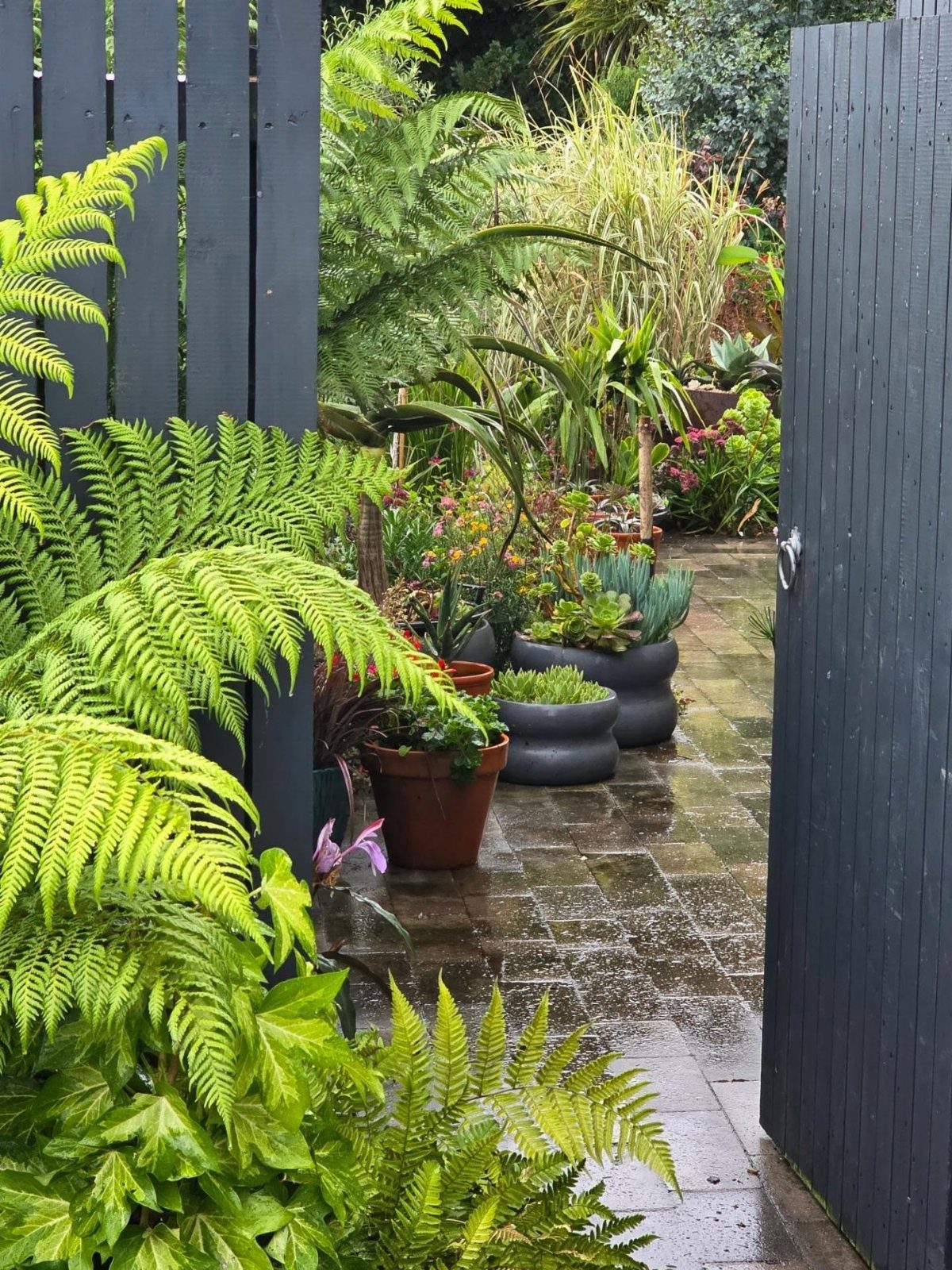
A gate in a fence or hedge turns walking into discovery. The path beyond needs no destination; the point is the threshold.
I set the gate slightly off the main sightline from the house so you stumble on it rather than plan for it. Stone underfoot stays cleaner than mulch, and potted plants move with the seasons while the ferns establish.
16. Build Multi-Level Decks
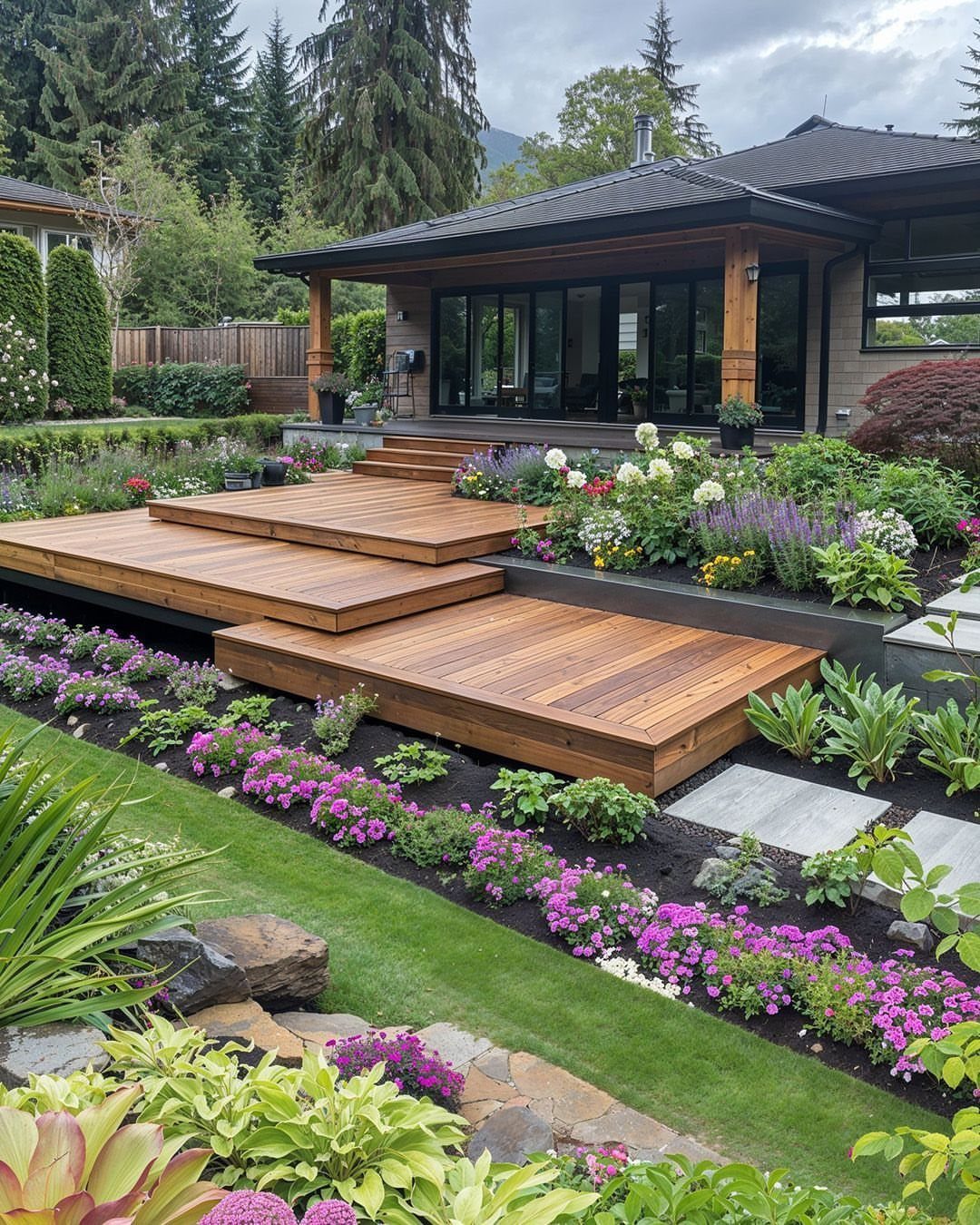
Steps between levels do not need railings until the drop exceeds a certain height in most codes, but I add them anyway for the visual anchor.
The change in elevation lets you put dining up top where the view is and lounging below where afternoon shade falls.
Each tier needs its own drainage plan; water that sheets off the upper deck will rot the lower posts if you do not gap the boards or run flashing.
17. Garden Sculptures
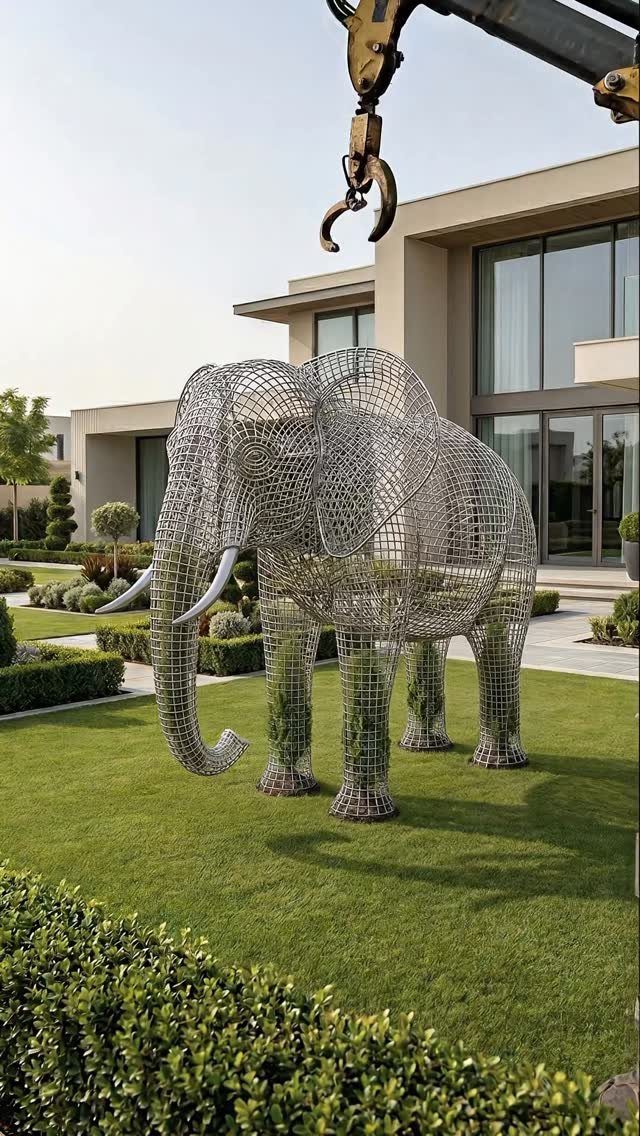
A single large piece beats 3 small ones in open grass.
Scale matters: a tall elephant reads intentional, a small rabbit reads forgotten. I prefer raw steel or weathering Corten over painted finishes; the rust settles in and the maintenance drops to zero.
Installation is the hidden cost; a piece this size needs a crane pad and a flatbed, not 2 friends and a pickup.
18. Create a Bug Hotel
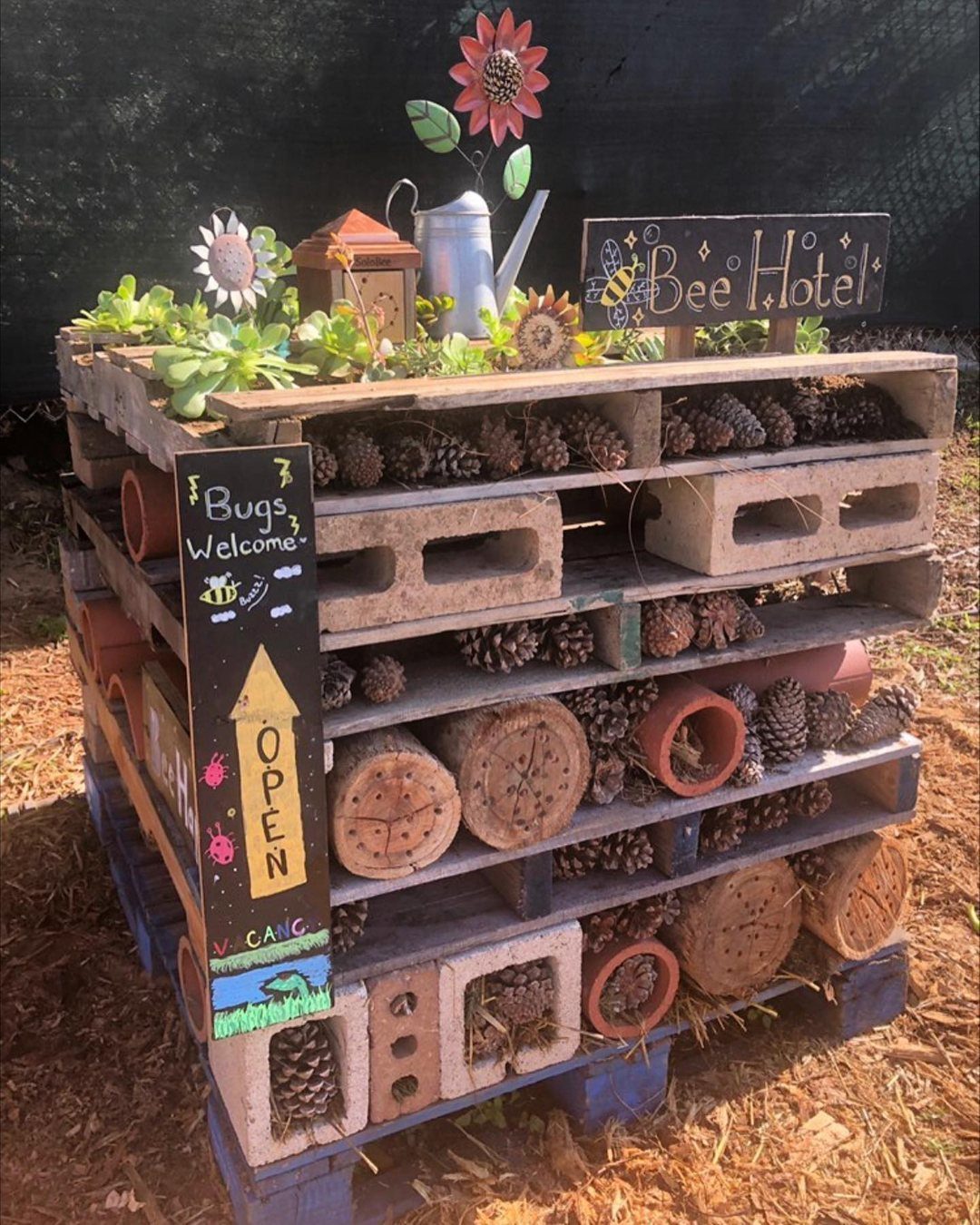
Solitary bees and overwintering beetles need cavities of different sizes, so fill the gaps with pinecones, hollow logs, and broken terracotta. I skip the honeybee focus; native bees are solitary and need narrow tubes, not hive boxes.
A roof of corrugated plastic keeps the interior dry enough to prevent mold but open enough for air. Move it to fresh ground every other year so pests do not build up in the nesting material.
Consider Functionality
A backyard works better when each corner has a job. I start with what I actually do out there: cook, sit, grow food, let the dog run.
Once those jobs are clear, the style almost chooses itself. A modern house wants clean lines carried outside; a cottage reads wrong with too much concrete.
The house sets the rules, but the land finishes them.
Slope, wet spots, and where the neighbor’s roof dumps water all steer where paths run and where beds sit. Outbuildings need the same thought as the main house.
A barn or shed planted in the middle of the flow breaks the yard into pieces; set it with a path to the door and a few flowers at the base, and it ties back in.
Plan for Maintenance
Every choice I make in the yard comes back to Saturday mornings. Some plants want more of them than I have.
Soil is the first thing to test. Turf ground is usually packed tight and short on nutrients; new beds need loosening and something mixed in before anything will thrive.
Plants matched to the light and dirt they actually get need less rescue later. Natives, in particular, tolerate the conditions that kill fussier imports.
Hardscape buys time back. Stamped concrete, gravel paths, and stone beds do not wilt in August or seed themselves into the lawn.
I still have to seal the concrete and pull weeds from the gravel, but the hours drop. Where the yard outgrows my schedule, I hire out the mowing and save my own time for the parts I enjoy.
Incorporate Wildlife
Wildlife shows up when the yard offers more than lawn.
Water is the fastest draw: even a small pond with a few plants brings frogs and the insects they eat. I skip the koi unless I want fish as pets; the wildlife does not need them.
Long grass is harder to sell, but it works.
A patch left uncut through summer fills with self-seeded flowers that pull in insects on their own. Mowing strips around the edge keep it looking intentional rather than neglected.
Shelter matters as much as food. Nesting boxes set well away from the house attract birds without the mess at the windows.
A wildflower strip or insect hotel draws bees, ladybugs, and lacewings into your large backyard. Those insects handle pollination and pest control without a single purchase.
Frequently Asked Questions
What to do with a massive backyard?
Give each corner a job. The house sets the rules, but the land finishes them: slope, wet spots, and where the neighbor’s roof dumps water all steer where paths run and where beds sit.
What are some good landscaping ideas for a large yard?
Designate zones for different activities. Hardscape buys time back: stamped concrete, gravel paths, and stone beds do not wilt in August or seed themselves into the lawn.





