
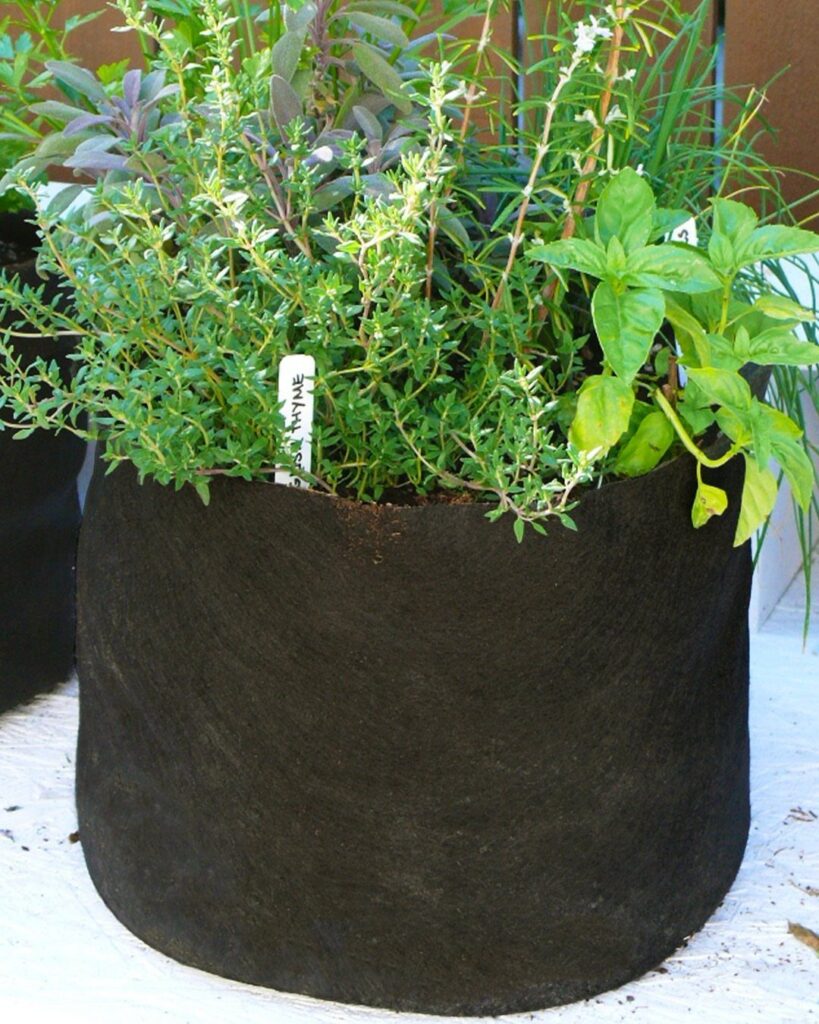
These setups range from a single plastic pot to a full raised box, all sized for a weekend build and a real apartment budget.
What actually matters is not how much you want to grow; it is how much direct sun your balcony gets, since 6 hours of light separates full-flavor basil from spindly shade growth.
One renter had substantial basil once she found the right rail.
1. Sunny Balcony
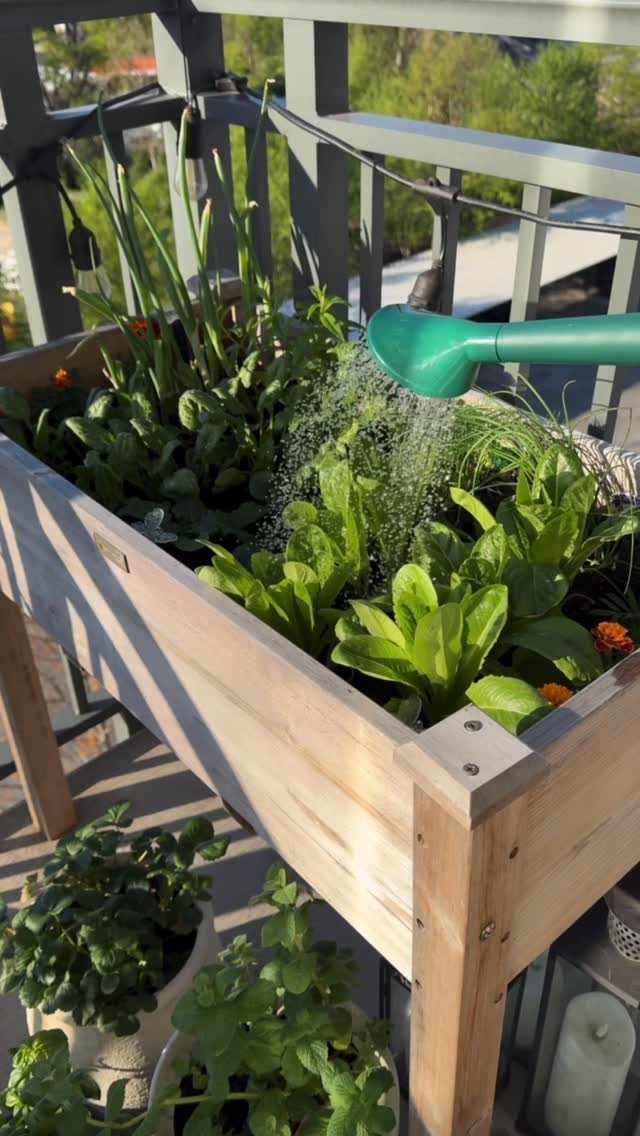
A raised wooden planter box catches morning sun on a balcony floor and turns it into usable growing space, with room to tuck smaller pots underneath.
Most apartments have one side that faces south or west; herbs need six hours of direct light to produce full flavor, so start by tracking which wall gets sun longest.
A raised box that stands on the floor keeps the garden at waist height for watering and still leaves the railing open.
Basil, parsley, and cilantro all respond fast once they get steady light; one maker noted her crop was already substantial after 7 days.
This setup suits renters who want something permanent-looking that still moves with them: the box lifts off, soil and all, when the lease ends.
2. Railing Planters
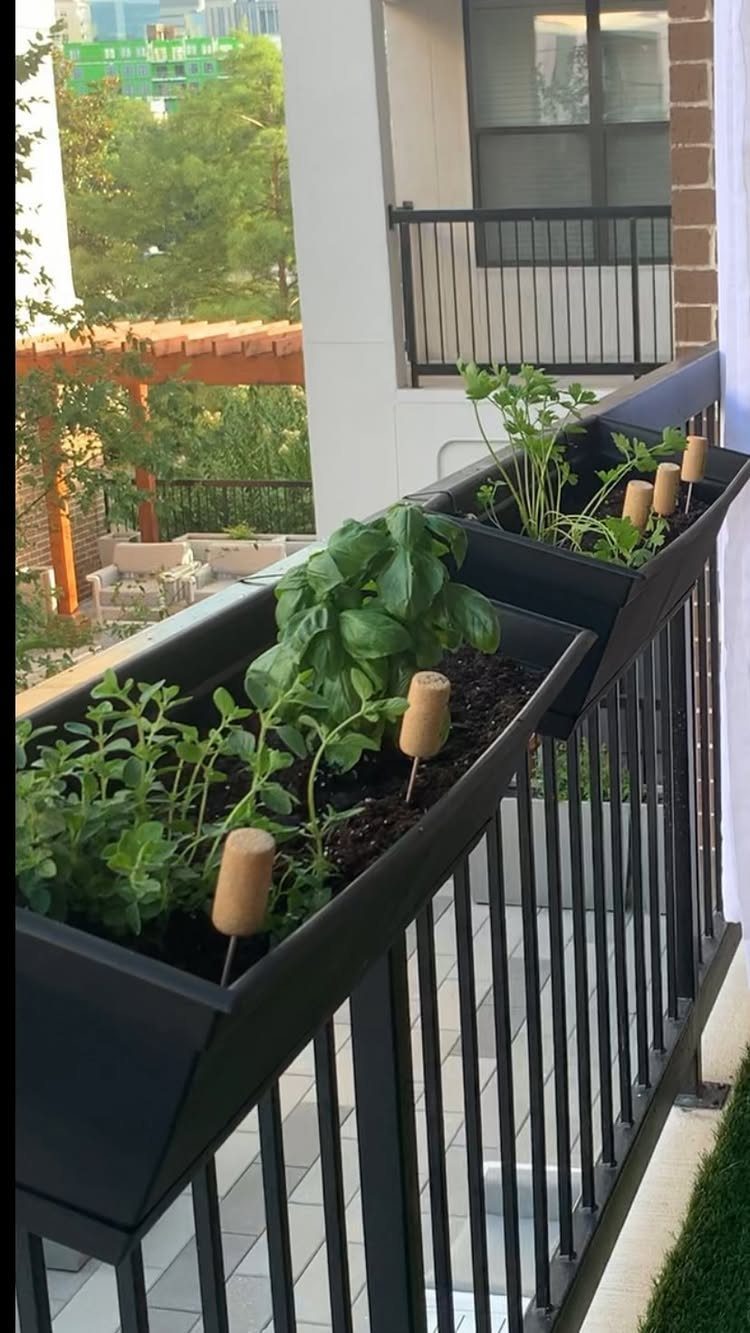
Black metal boxes that hook over a balcony railing give herbs a foothold without stealing floor space. I like these for narrow balconies where a chair and a grill already compete for room.
They sit outside the railing line in most cases, so they do not shrink your walking path. Basil and parsley marked with wine cork stakes work in these; any shallow-rooted herb does.
Check your lease or building rules first, since some landlords restrict attachments to railings. Weight matters too: wet soil runs heavy, so I would verify the bracket capacity before filling.
3. Vertical Gardening
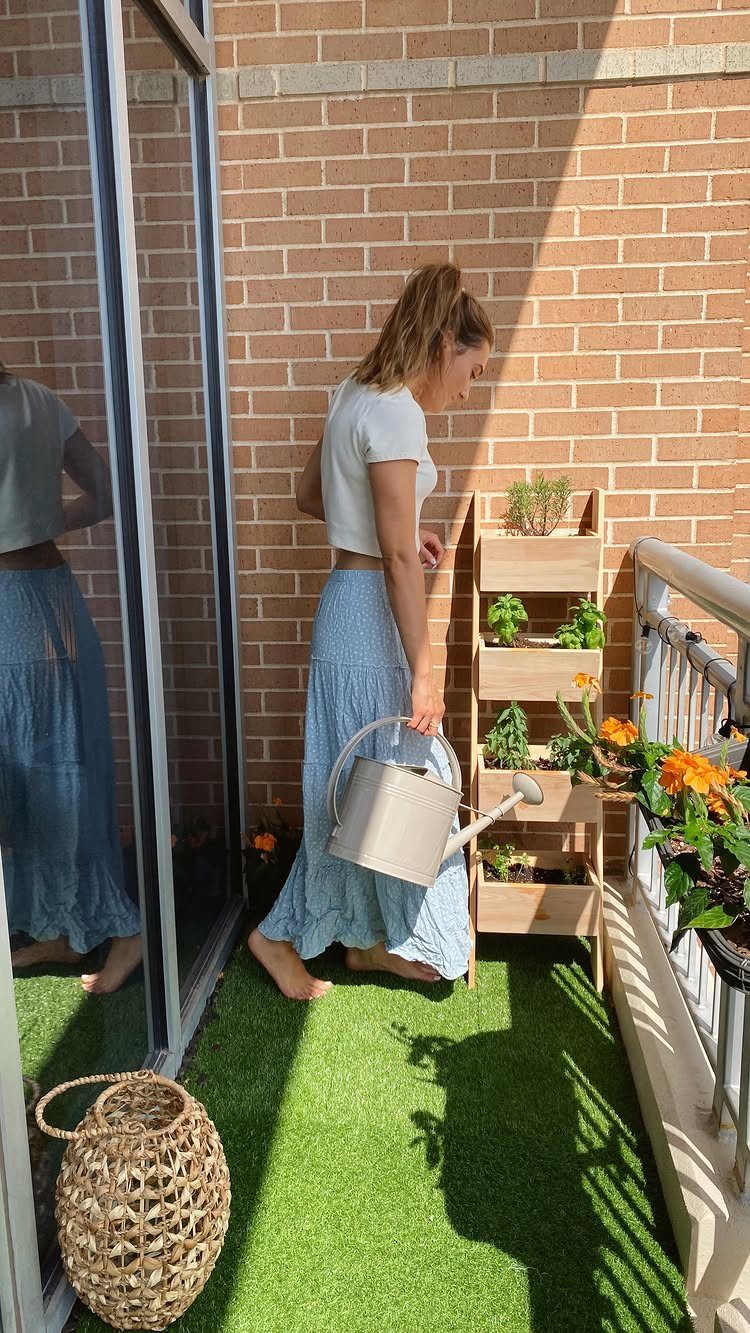
A wooden stand with staggered shelves lets you stack herbs in the footprint of one. The version that leans against a brick wall with artificial turf underfoot suggests a balcony so small it needs every inch.
Watering from the top tier down saves steps; the lower plants catch runoff. Heartwood from rot-resistant species lasts outdoors without paint or sealant, though I would still set the feet on saucers to keep moisture from the bottom shelf.
This design works best for herbs you harvest often, since the upper pots need a step stool or a reach.
4. Trough Planters Along the Floor
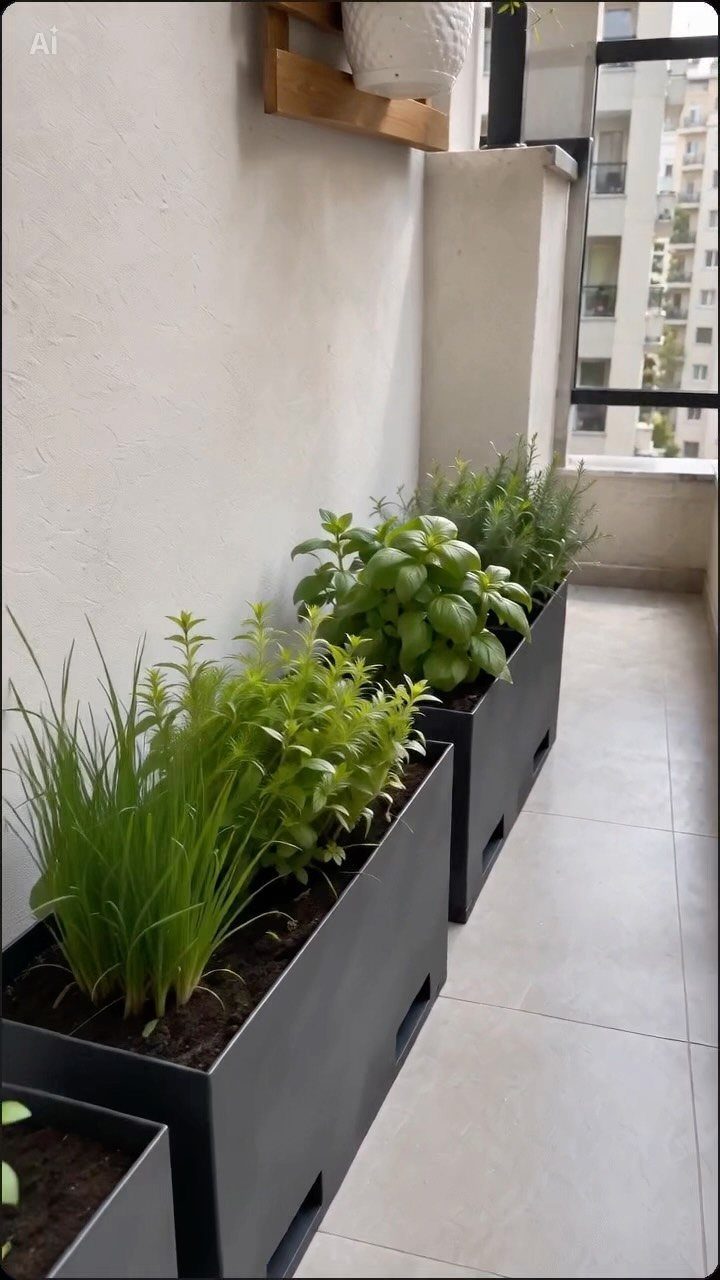
Long rectangular boxes lined up against a wall turn a narrow balcony strip into a full herb row. I would leave space between boxes for passage, or push them flush to the wall if the balcony is truly tight.
Drainage holes are non-negotiable: water pooling in a trough rots roots fast. These sit low, so they suit plants you do not harvest daily; bending or kneeling is part of the routine.
5. Fabric Grow Bags
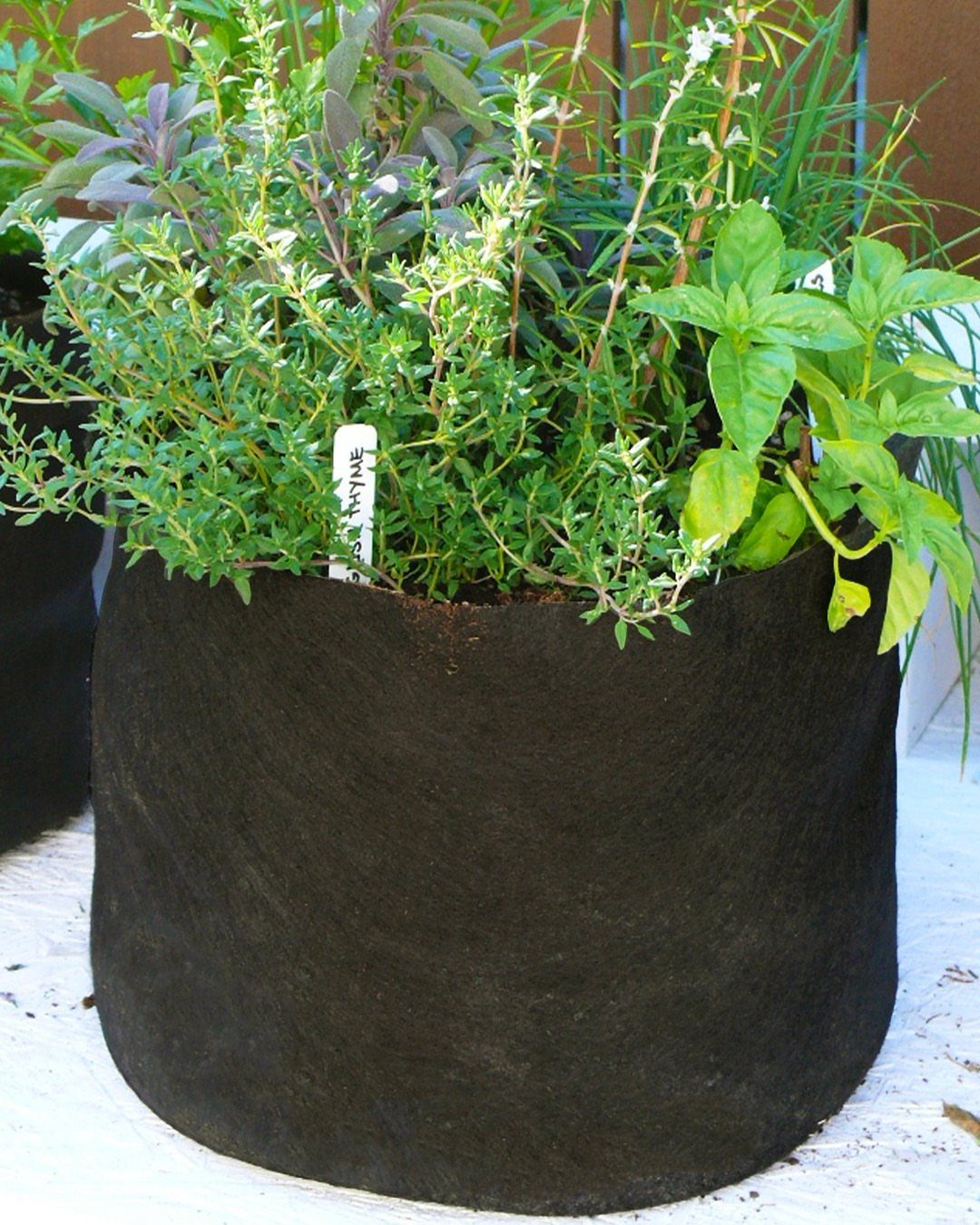
Black fabric pots air-prune roots as they reach the sidewalls, which keeps herb plants from getting pot-bound.
Thyme, basil, and sage all thrive in fabric; I would add mint to its own bag, since fabric does not contain runners the way a hard pot can.
The material breathes, so overwatering is harder to do, but it also dries faster in summer heat. A 5-gallon bag handles most herbs for a full season, and at the end of the year it folds flat for storage.
I would set these on a tray or saucer, since the fabric wicks moisture onto whatever sits beneath it.
6. Large Round Herb Planters
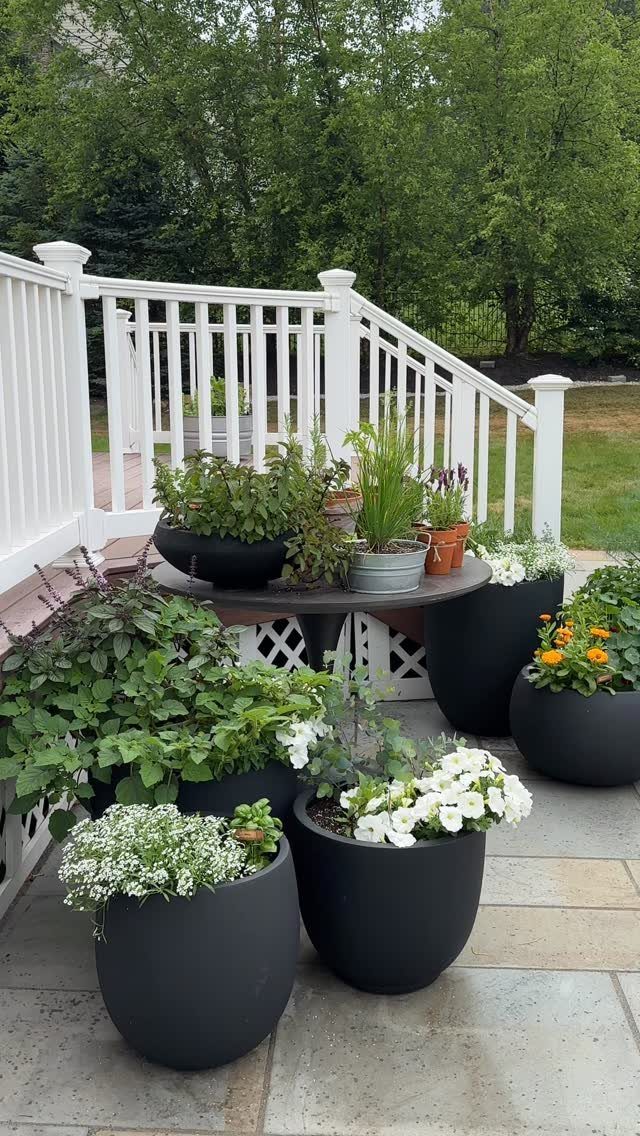
Wide cylindrical pots give mixed herbs the root room to grow into full bushes rather than spindly sprouts. Dark grey planters on a stone patio beside stairs, grouped with smaller pots, give variation in height.
A wide diameter handles several herb plants together; I would pair upright rosemary or dill with lower thyme or oregano so nothing gets shaded out.
These are heavy once filled, so I would place them before adding soil and plan to leave them through the season.
The shape is common enough to find at any hardware store, and the neutral color disappears against most balcony finishes.
7. Single-variety Plastic Container Herb Pot
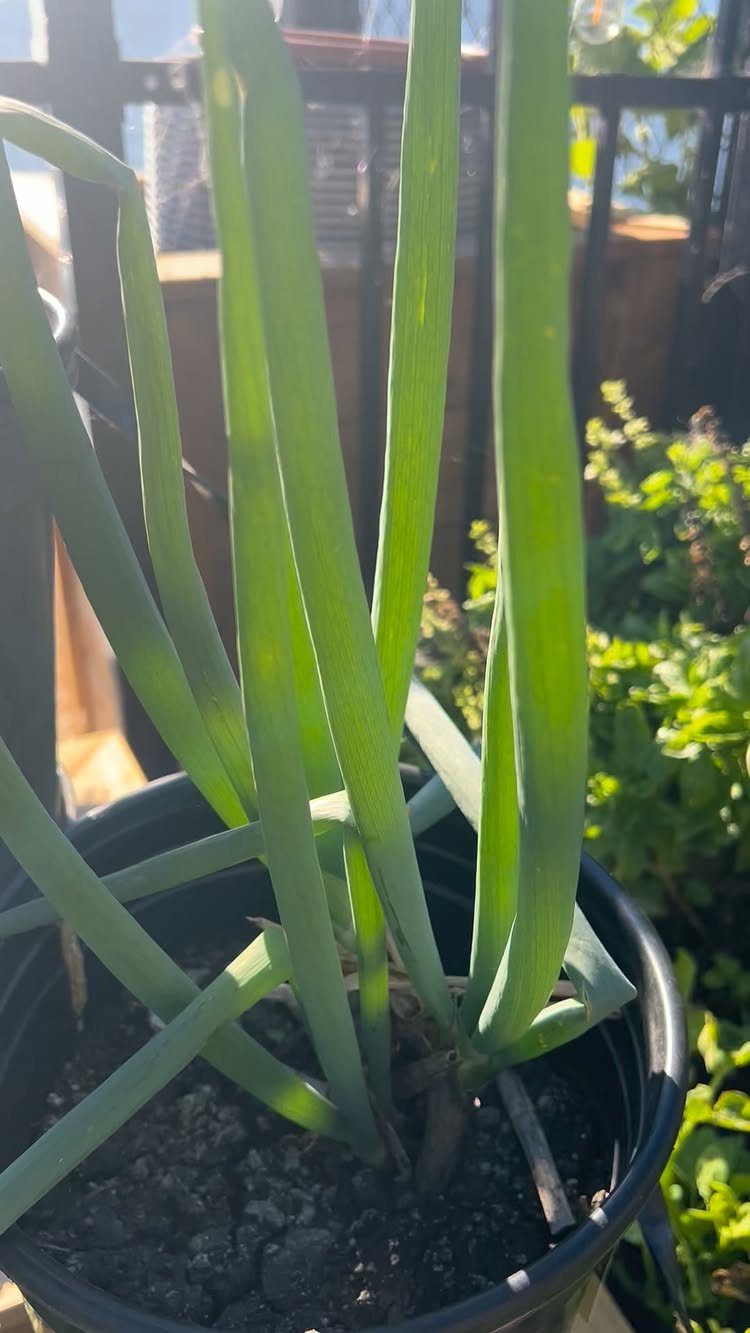
One black plastic pot dedicated to chives keeps the setup simple and the cost low enough that the plant itself is the biggest investment.
Plastic holds moisture longer than terracotta, which matters on a balcony that catches afternoon sun; chives tolerate a bit of dryness but wilt fast if neglected over a weekend.
I would drill extra drainage holes if the pot came with only one, since standing water rots the slender roots.
This suits renters who want just one reliable herb rather than a full collection.
The pot is light enough to move indoors if a cold snap hits, and black plastic does not show soil stains the way white or terracotta does.
One variety per pot also means no competition for water or root space; the chives fill out faster.
Herb Care Tips
Pests rarely trouble herbs, but I still scan leaves when I water. Aphids and mites show up first as pinholes or sticky residue; catching them early means a spray of soapy water instead of a lost plant.
Dead leaves collect at the base of even a tidy balcony garden, and those are what draw problems, so I clean them out weekly.
Overwatering kills more herbs than underwatering. I skip the calendar and use my finger: an inch into the soil, dry means water, damp means wait.
When I do water, I pour slowly until it runs from the holes, then I empty the saucer. Sitting water rots roots from below while the top looks fine.
Herb Growth Requirements
Full flavor only develops once herbs get enough direct sun to really photosynthesize.
My Mediterranean herbs, basil and rosemary among them, get the brightest rail spots; mint, parsley, and cilantro handle a step back into partial shade and still produce, just slower.
In smaller pots I rotate weekly so the plants bush out evenly instead of leaning hard toward the light.
Shade-grown herbs do not fail, they pace themselves. I match the plant to the real estate: thyme and oregano can share a bright corner, while chives tolerate the margin that gets morning sun only.
Benefits of Herb Gardening
Those plastic clamshells of basil at the grocery store add up fast when I cook with fresh herbs most nights.
Growing my own cuts that line item to the cost of seed or a starter plant, and the supply lasts the season.
The return is not just financial. Pinching stems and checking soil each morning pulls me out of the apartment’s circulation and into something slower.
The ritual itself is the benefit: hands in soil, the smell of thyme or sage on my fingers, a reason to step outside before work.
Frequently Asked Questions
What are the best plants to grow on an apartment balcony?
Basil, parsley, and cilantro are the three I tell people to start with: they germinate in days and you will see something green happening before you lose patience.
Rosemary and thyme want the railing itself, the hottest brightest edge you have; mint and parsley will still grow if they sit one row back where the wall throws afternoon shade.
I walk my balcony at 9 a.m. and again at 4 p.m. to see where the light actually lands, then I decide who goes where.
What herbs should not be potted together?
Mint gets a pot by itself, always; the roots run sideways under the soil and strangle whatever else is in there. Oregano spreads wide and fast too, so I give it its own space.
Mediterranean herbs like thyme, sage, and rosemary prefer dry soil, while basil, parsley, and chives like more moisture, so I group by watering needs rather than mixing the two types in one pot.





