
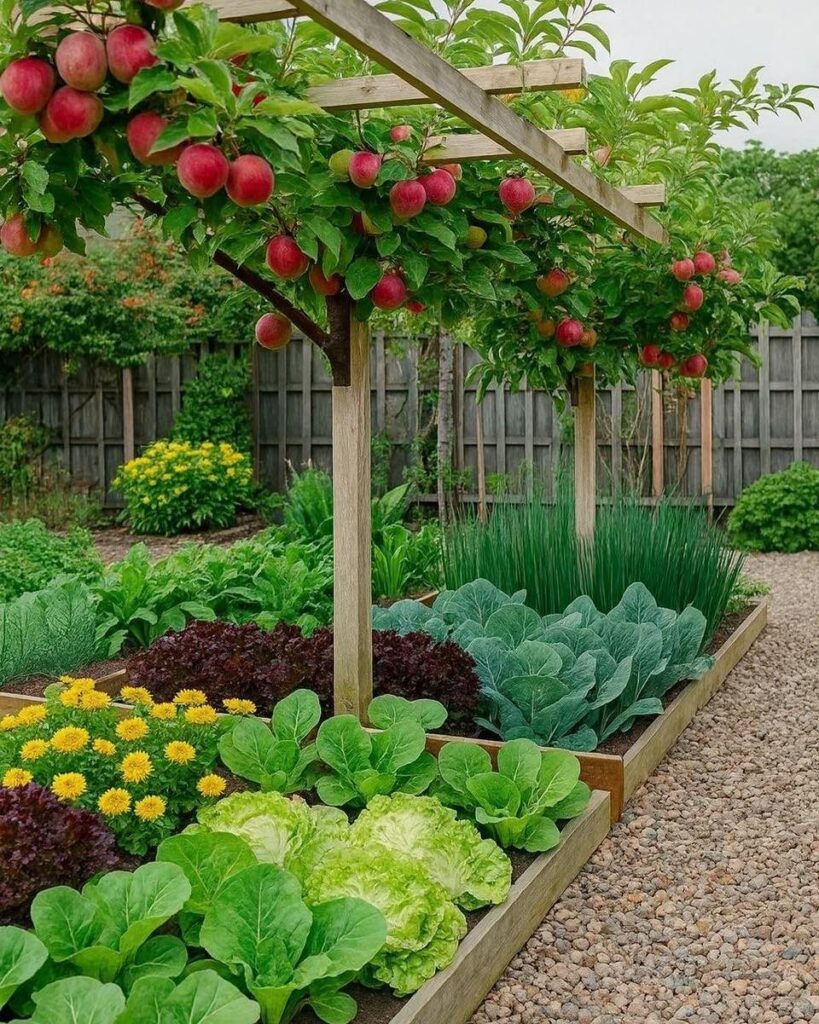
Backyard vegetable gardens run from a bucket you already own to a cedar-framed raised bed and a vertical hydroponic tower, which is why the right choice depends more on your hours than your dollars.
The deciding factor is whether you can check soil moisture every morning or need a setup that forgives a missed day.
I would line any raised bed with hardware cloth before filling it, since moles do not care how carefully you mixed your compost.
1. Raised-Bed Gardening
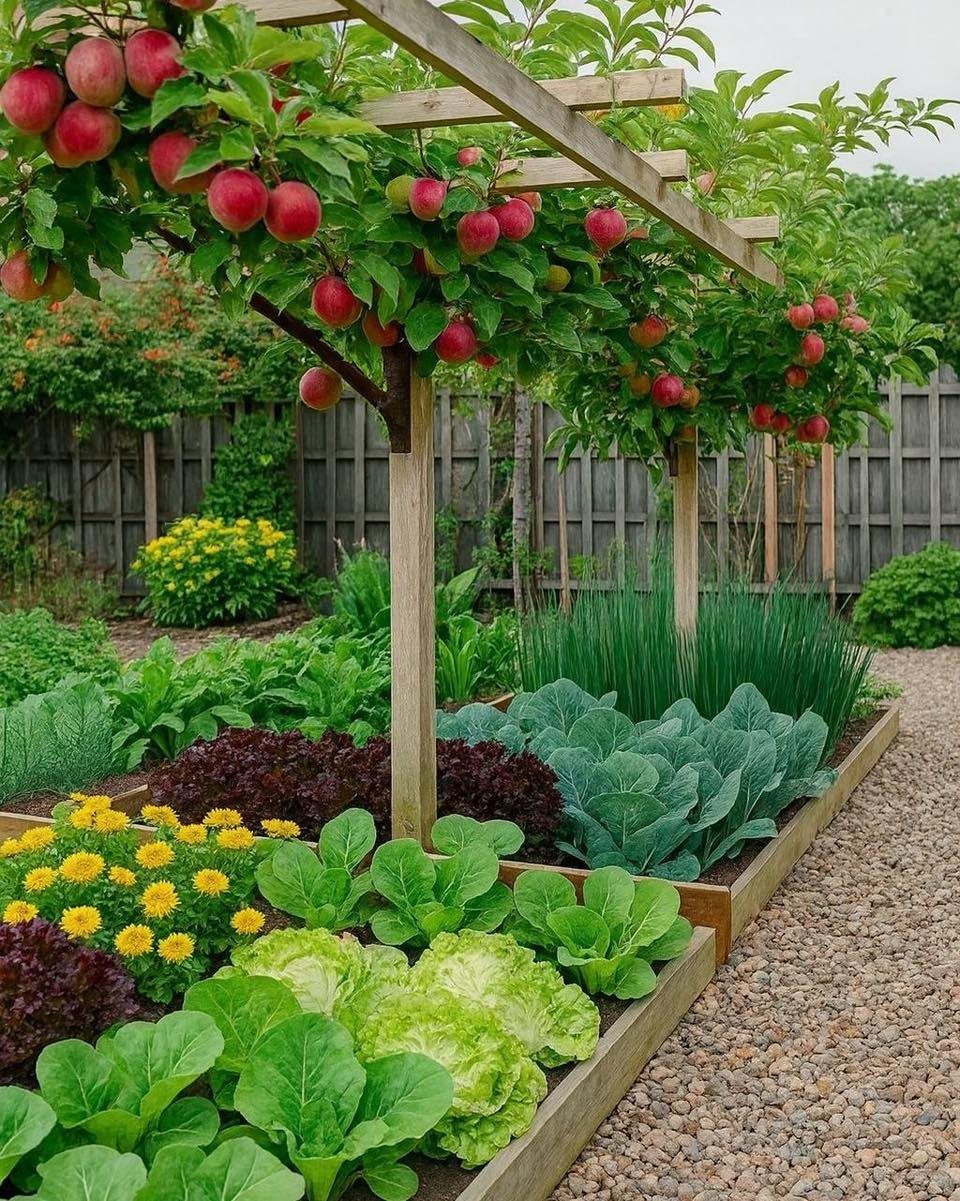
Raised beds lift your soil up where you can reach it without bending to ground level, and they drain faster than flat ground after heavy rain.
Raised beds run wood boards high enough to hold a mix that looks darker and looser than the gravel paths around it; that contrast is what you’re buying, the ability to control what your roots sit in.
I would line the inside with hardware cloth if your yard has a mole problem, though that adds a small cost and an hour of stapling.
Cedar or redwood holds up longer than the pine you see at big-box stores, but even pine gives you several years if you stain the exposed grain.
2. Vegetables in Pots
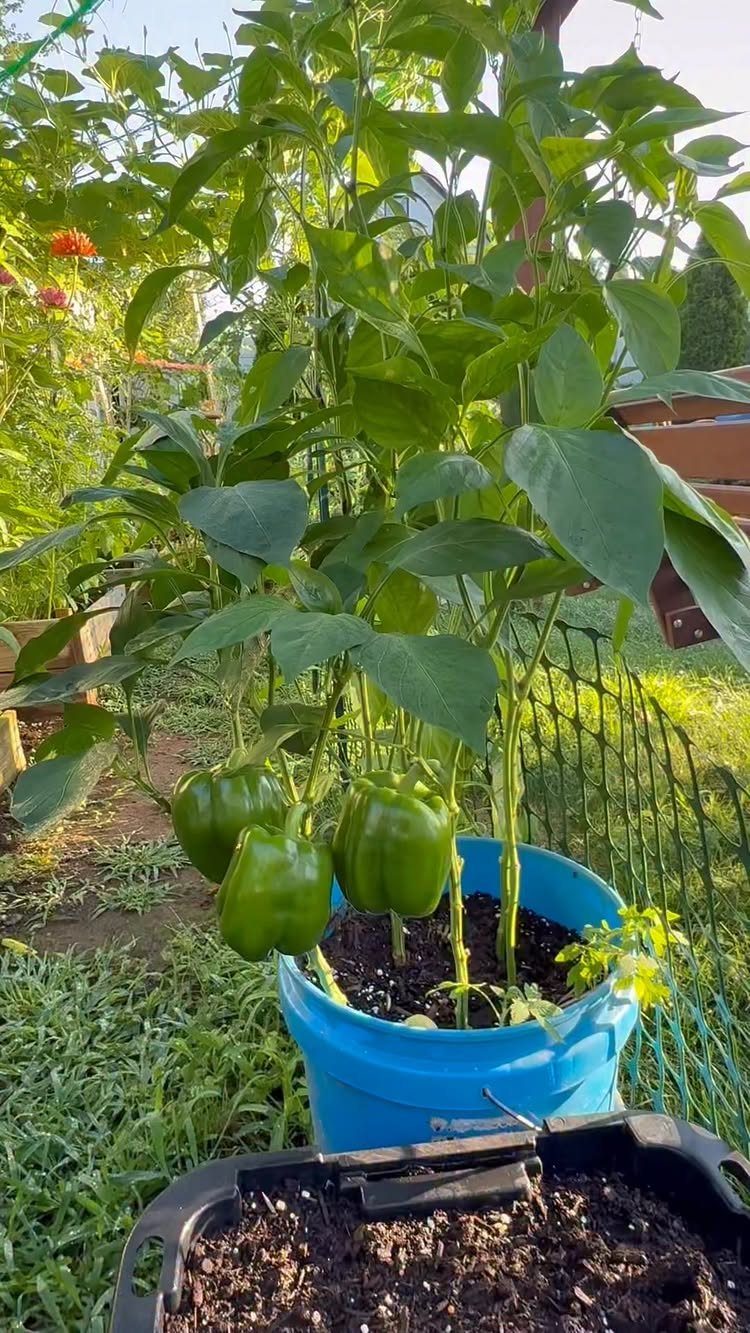
A 5-gallon bucket with holes drilled in the bottom handles one pepper plant through a season, and you probably own half a dozen already.
Peppers want the soil to dry slightly between waterings, which is easier to judge in a pot than in ground that stays wet underneath.
Move the bucket late in the day if the afternoon sun starts curling leaves; that is the whole advantage, the pot goes where the plant needs it.
3. Herb Gardening
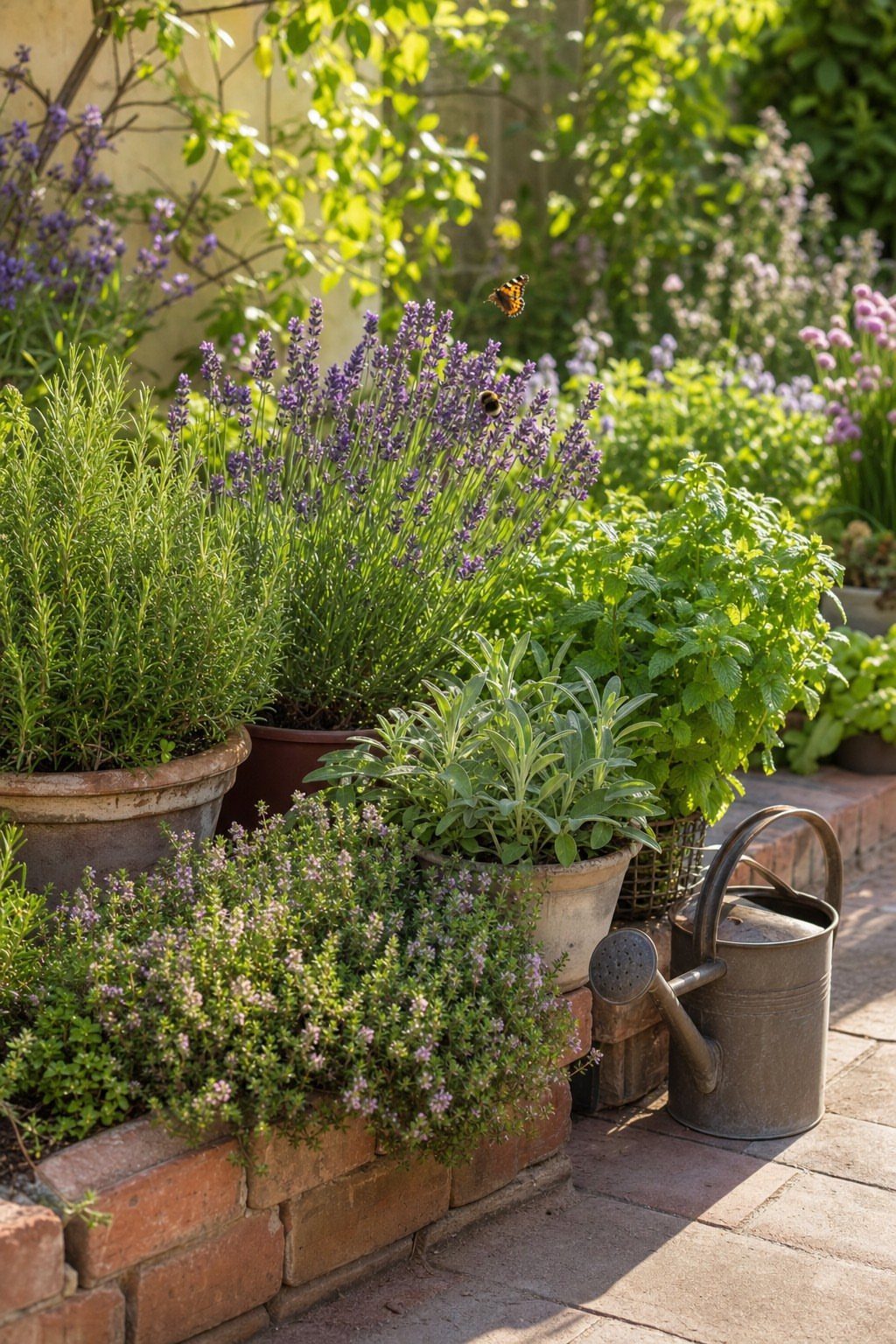
The metal watering can is decorative in the photo, but a 2-gallon plastic version with a long rose spout costs under $10 and does not dent when you drop it.
Clip stems often; herbs grow bushier for it, and you are growing them to use.
4. Grow Some Greens!
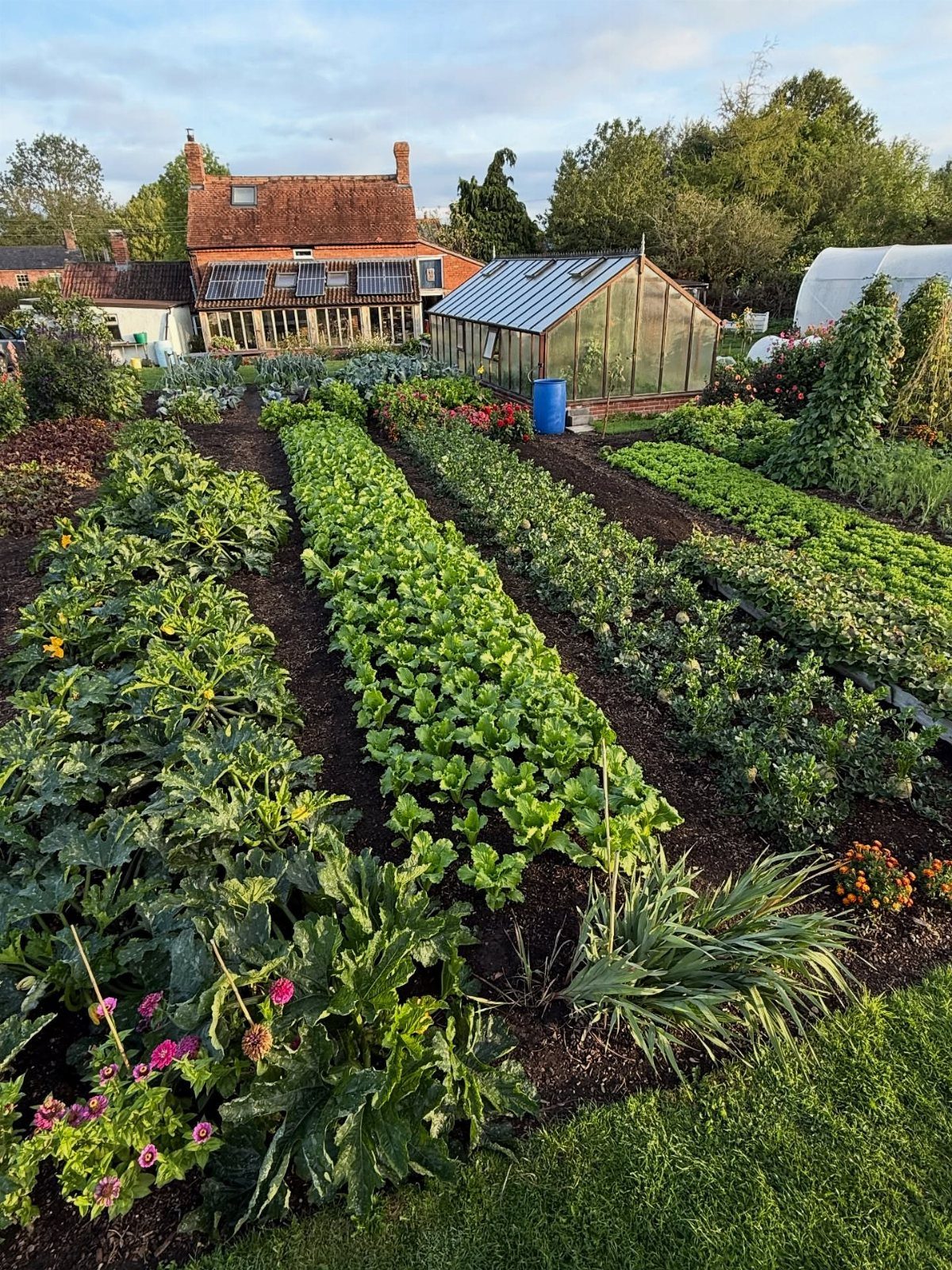
Long rows of lettuce, spinach, and kale mature quickly, which means you can plant successive batches through spring in most zones.
Zucchini at the far end needs more room than the leafy crops, so put it at the back where its leaves will not shade shorter plants by August.
A simple row cover of floating fabric, held down with U-pins, keeps cabbage moths off the greens without any spraying.
5. Trellised Tomato Plants
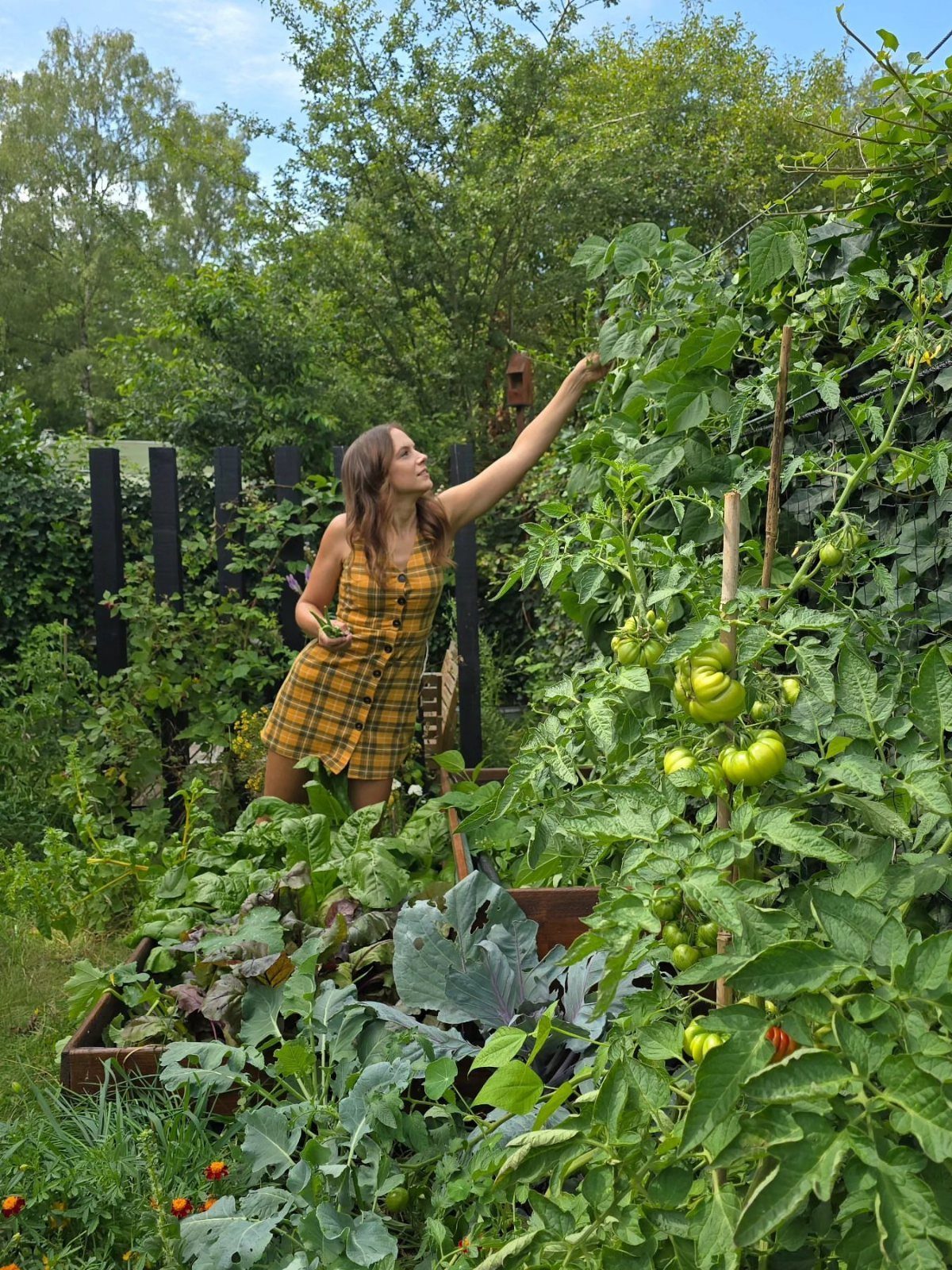
I use cedar stakes driven well into the ground, spaced along the row, and tie the main stem with soft twine in a figure-eight loop that allows for swelling.
Beans climbing the same stakes are a smart pairing, since they fix nitrogen the tomatoes will draw heavily on.
6. Pergola Garden Entrance
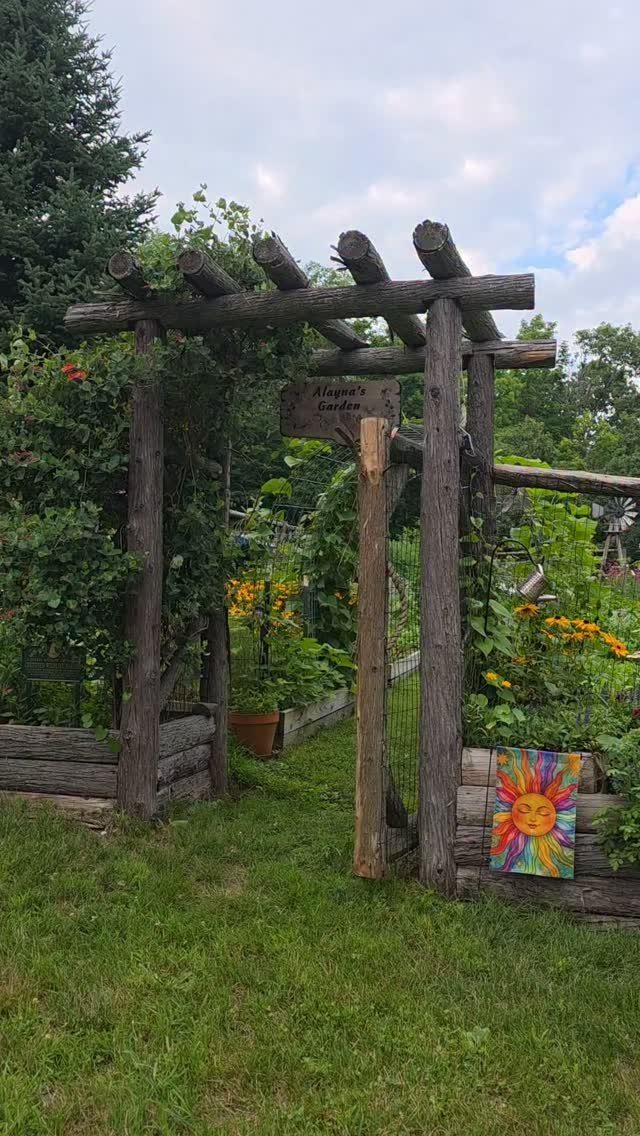
A log pergola marks where the garden begins in a way a gate alone does not, and the overhead beams give you something to train grape or honeysuckle across for shade by late summer.
The sign and flag are personal touches that cost little and make the space feel claimed.
Set your posts in concrete below your frost line, which runs deep in most of the northern half of the country; frost heave will push a shallow post out of plumb in 2 seasons.
7. Vertical Hydroponic Tower
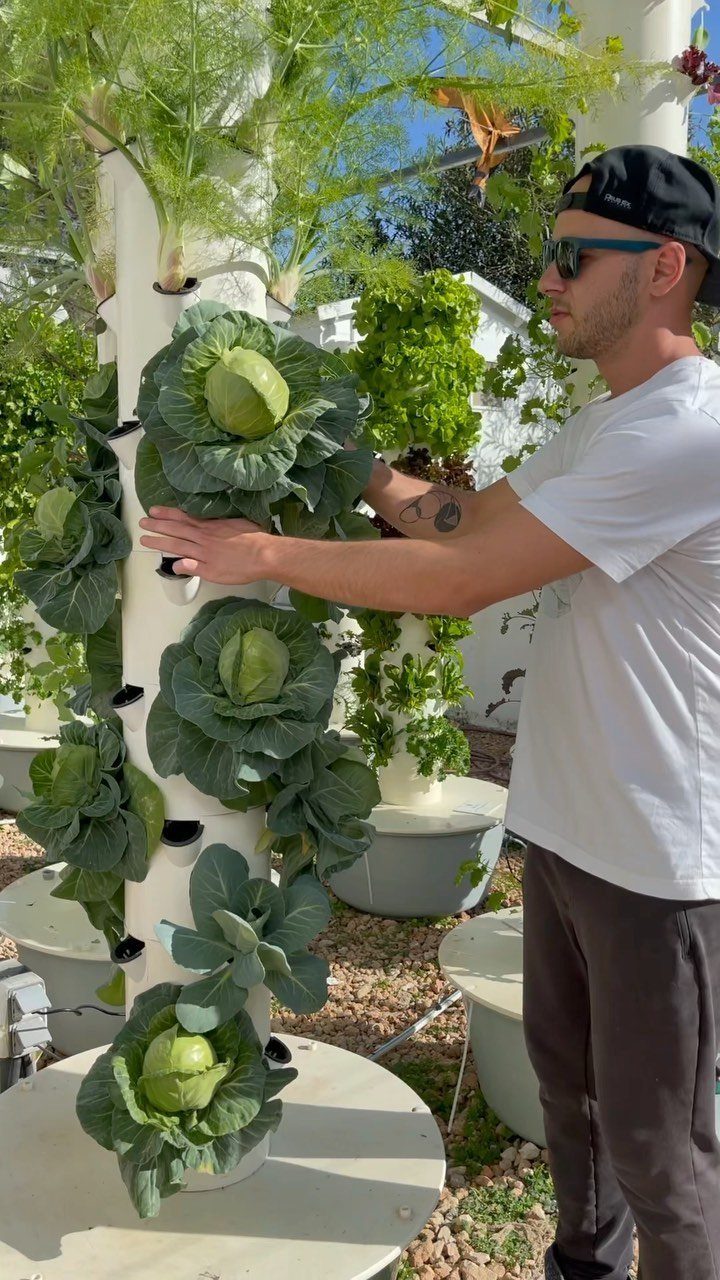
Hydroponic towers run water and nutrients through a closed loop, so the setup costs more than soil but removes the guesswork of feeding schedules.
The white plastic columns stack several planting ports high, which fits a balcony or a corner of patio where a bed would not.
I would start with leafy greens; cabbage heads need more root space than lettuce and can stall if the pump timer runs short. A small solar panel can run the pump off-grid, though a standard outdoor outlet is simpler.
8. Vertical Bottle Garden
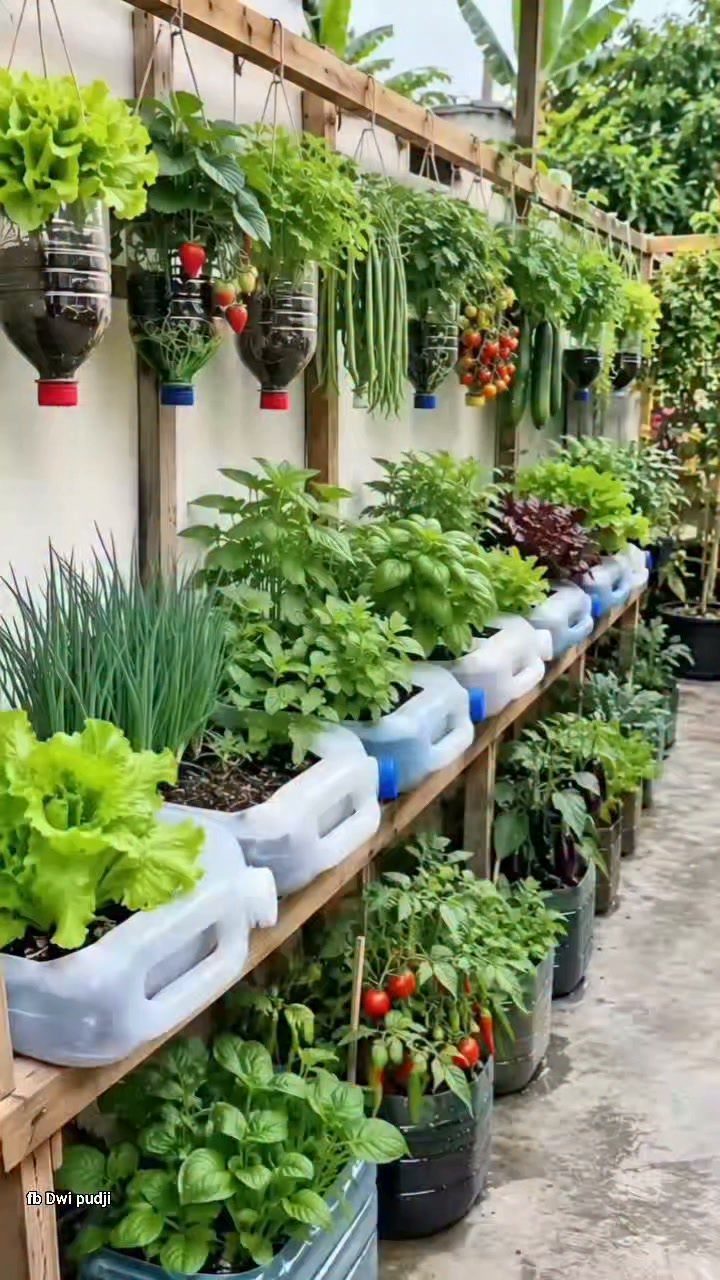
Plastic jugs and bottles cut at the shoulder become planters that weigh almost nothing, hung from a wooden frame built from two-by-fours and eye screws.
Open-side bottles dry out fast in afternoon sun; I would line the back wall with reflective white paint to bounce light and keep the bottles from baking, and leave the caps off so water can actually drain.
Herbs and loose-leaf lettuce do better here than tomatoes, which want deeper soil and more consistent water. This is the lowest-cost vertical garden I know of, and the frame folds flat for winter storage.
9. Vegetable Beds with Chicken Coop
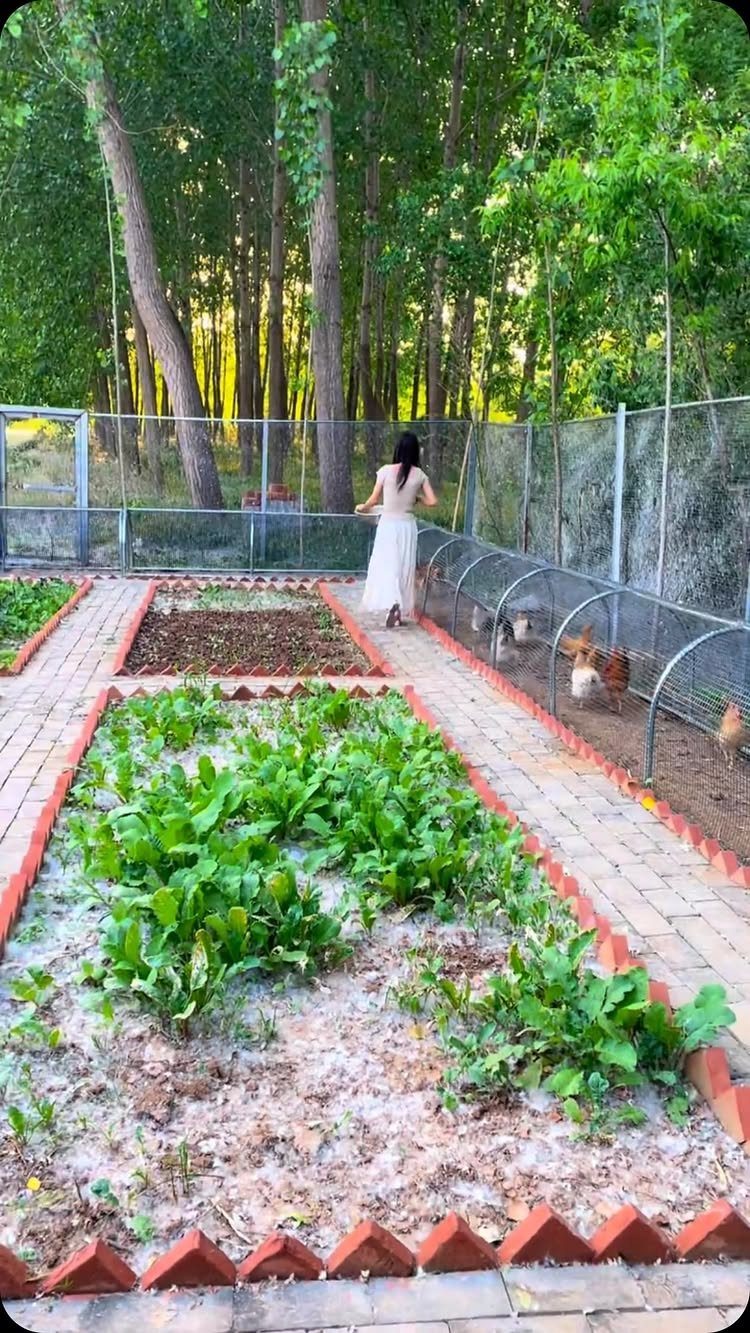
A wire tunnel lets chickens range between beds without digging up what you planted, and their droppings stay contained where you can rake them out for compost.
Brick edging keeps both the soil and the tunnel path neat, though poured gravel or pavers work the same way for less labor.
I would run the tunnel along the north side so the birds do not shade low crops in morning light.
The fencing needs to be half-inch hardware cloth, not chicken wire; raccoons pull through the wider gaps. This suits yards with some slope, since the tunnel follows grade where a fixed coop would need leveling.
Pest Control Strategies
Companion planting works because some pests locate crops by smell. Basil planted near tomatoes confuses hornworms, and marigolds along bed edges deter root-knot nematodes below ground.
If aphids still cluster on new growth, an insecticidal soap spray coats their bodies and suffocates them; it breaks down in hours and does not linger where bees forage.
I check the undersides of leaves every few mornings during peak season, since a small colony removed by hand never needs chemicals.
Seasonal Planting Tips
Cool-season crops germinate in soil as cold as 40°F, which means starting spinach and lettuce well before your last spring frost date.
The same crops go in again in late summer for fall harvest, timed so mature size hits before hard frost.
Warm-season tomatoes and peppers need soil warm enough to root properly; black plastic sheeting laid before planting absorbs solar heat and can push that workable date earlier in short-season areas.
Cold-season growing under a mini hoop tunnel or greenhouse cover keeps carrots and kale harvestable through winter in zone 5 and warmer; choosing varieties labeled for overwintering matters, since standard types stall in low light.
Successive planting on a short rhythm prevents a single glut of lettuce or radishes, and the calendar shifts by your frost dates, not the month.
Soil Preparation Advice
A mix of one-third compost, one-third coarse peat or coconut coir, and one-third perlite or coarse sand drains fast enough for peppers and stays loose enough for carrot roots to run straight.
Before filling, loosen the native soil with a fork so water does not pool at the interface.
Each season, I add an inch of finished compost across the surface rather than tilling; the worms carry it down and the soil structure stays intact.
A simple soil test every second spring, done through your county extension office, tells you whether phosphorus or potassium is actually low before you amend; nitrogen washes through regardless, so leafy crops get a sidedress of composted manure mid-season if growth slows.
Frequently Asked Questions
What are some easy vegetable garden ideas?
A simple frame of cedar or pine boards, screwed together and set on level ground, gets you planting without the year of digging and amendment that raw yard soil often needs.
Container gardening in 5-gallon buckets handles peppers or herbs with no digging, and you can move the pot where the sun is right.
If you already keep hens, a bent-wire tunnel arched between beds lets them scratch and drop nitrogen where you want it, while the mesh keeps their feet out of the seedlings.
How do I keep pests out of my garden?
Certain pairings mask the smell that draws trouble: basil tucked against tomatoes makes hornworms lose the trail, and marigolds rooted at bed corners release compounds that root-knot nematodes avoid.
For aphids that slip through anyway, a spray of plain insecticidal soap coats their soft bodies and blocks breathing; it falls apart in water within hours, so bees that land later take no harm.
Most mornings in July and August I walk the rows with my coffee, flip leaves, and rub out the first green or black clusters before they count as an infestation.
What vegetables pair well in a garden?
Pole beans and tomatoes can climb the same trellis line, though the beans are doing it for themselves, not for the tomatoes; the nitrogen they fix stays locked in their roots until long after harvest.
Tall zucchini belongs at the back of a bed so its August leaves do not shade shorter greens, and cool-season lettuce, spinach, and kale mature fast enough to plant in successive batches through spring.





