
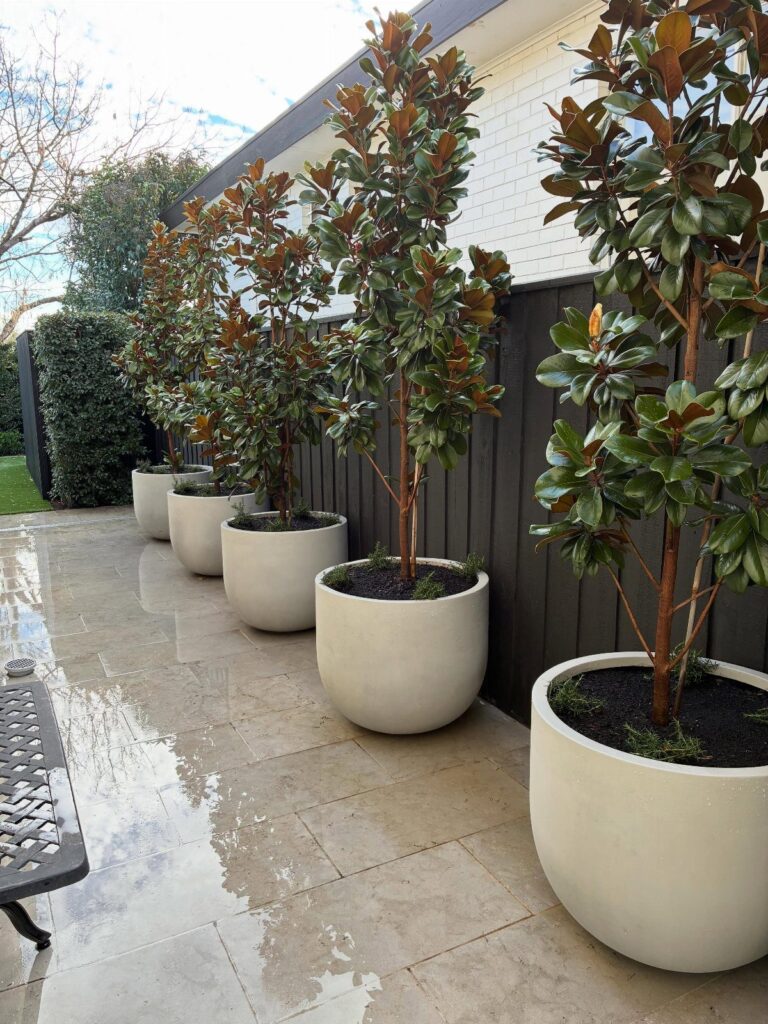
Large outdoor potted plants run from a flat of impatiens to stone urns heavy enough that resin copies exist for a reason.
The choice comes down to how many times you want to carry that pot: annuals stay out all season, a Japanese maple needs winter indoors, and a root-pruned shrub in an urn is not something you move twice.
I would start with the glazed ceramic and light blue against the Japanese maple’s orange-red dissectum leaves, because that pairing tells you right away whether you are tending a container or committing to one.
1. Golden Creeping Jenny
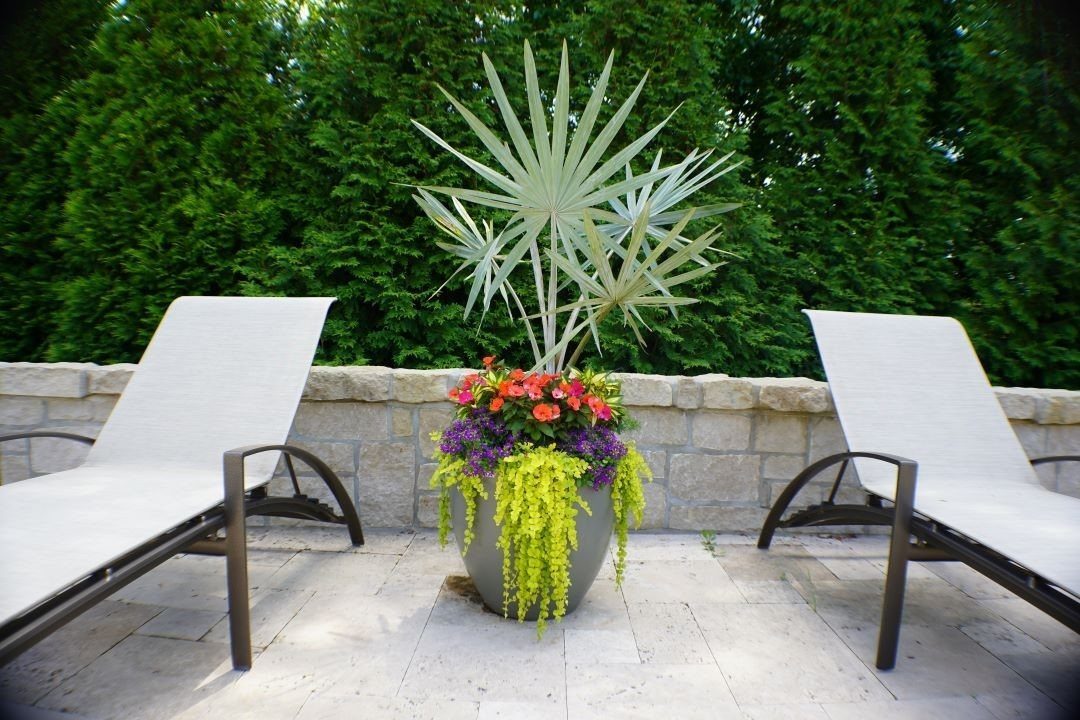
Golden Creeping Jenny spills over pot edges in a way that softens hard lines without asking much of you.
Golden creeping Jenny works best as a spiller paired with something upright; the lime-green trailers catch light against grey stone and keep the pot from looking stiff.
It roots easily, fills fast, and takes the chill down to about zone 4 if you sink the pot in the ground before frost hits.
In a container I treat it as annual, though cuttings overwinter in a kitchen window without fuss.
2. Heucheras
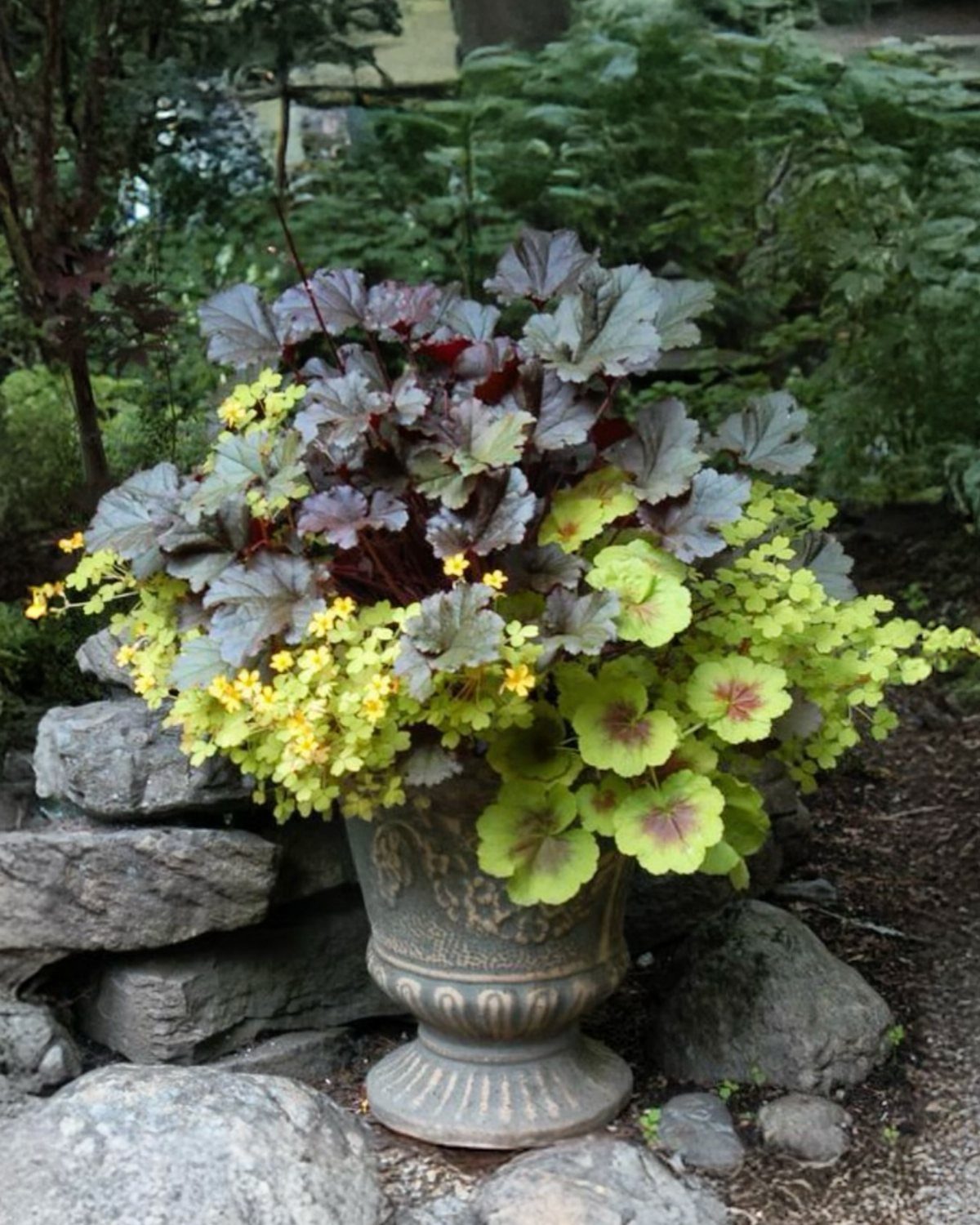
An urn of heucheras reads as deliberate without the maintenance of flowers. Purple and chartreuse heuchera leaves carry a whole arrangement, and that mix of warm and cool tones is what makes the planting work against pale stone.
I would choose a container with some age on it, something that echoes the ruffled leaf edges rather than competing. Part shade keeps the color strongest; afternoon sun bleaches the purple to tan by August.
3. Hostas
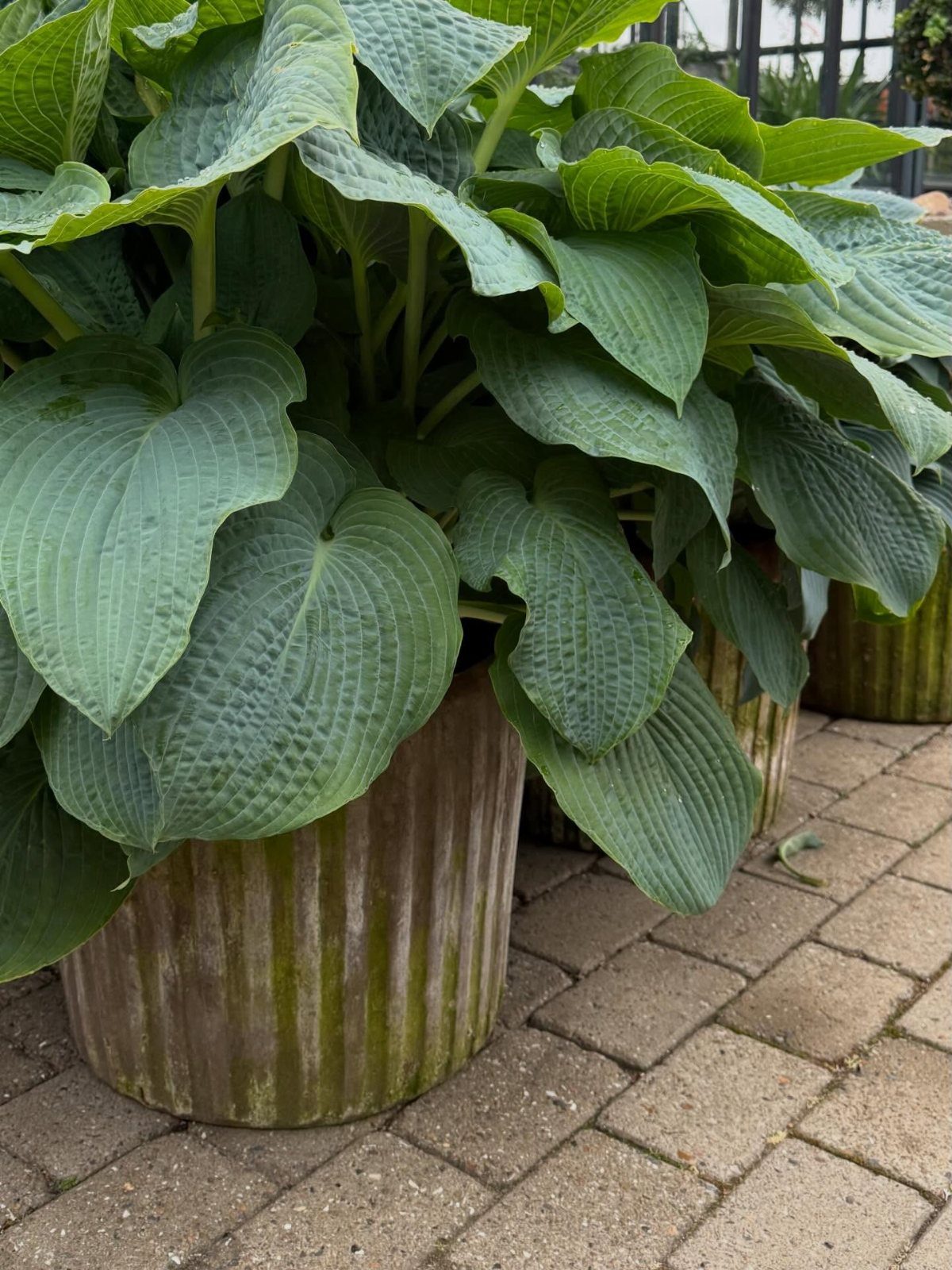
Hostas in ribbed pots line up with the repetition of a hedge, but each one stays movable and cheap to replace if a slug finds it.
Hostas want root coolness; I would not set these out on south-facing concrete where the pot cooks by noon.
Big-leaf hosta varieties need water twice a week in high summer, more than you’d guess from how tough they look. Come fall the foliage yellows and collapses, so have a spot to tuck them out of sight.
4. Impatiens
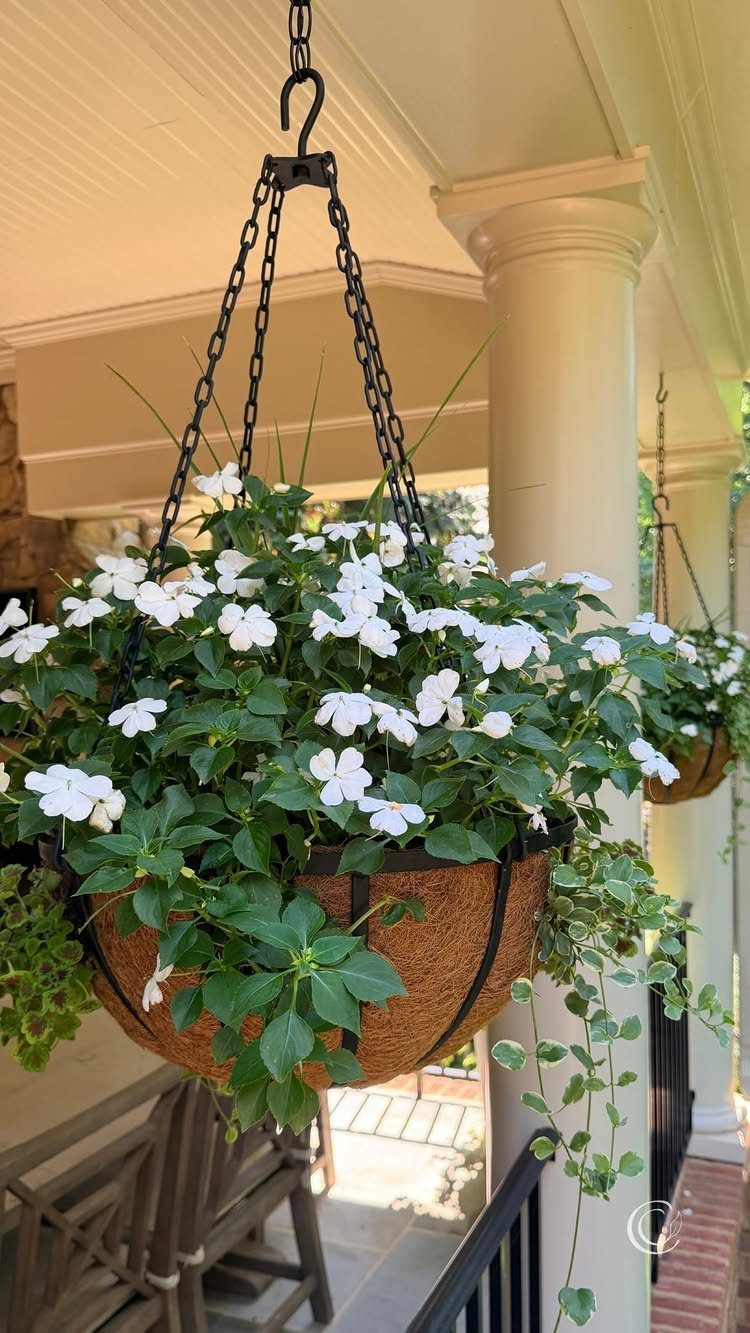
A coir liner dries out faster than plastic, so in July shade impatiens need daily attention or a self-watering insert to keep them from wilting to a crisp.
I buy impatiens as plugs in spring and feed weakly if I want the bloom mound to keep spilling until fall. They are annuals, full stop, so I do not bother with the ones that sulk indoors.
5. Japanese Maple
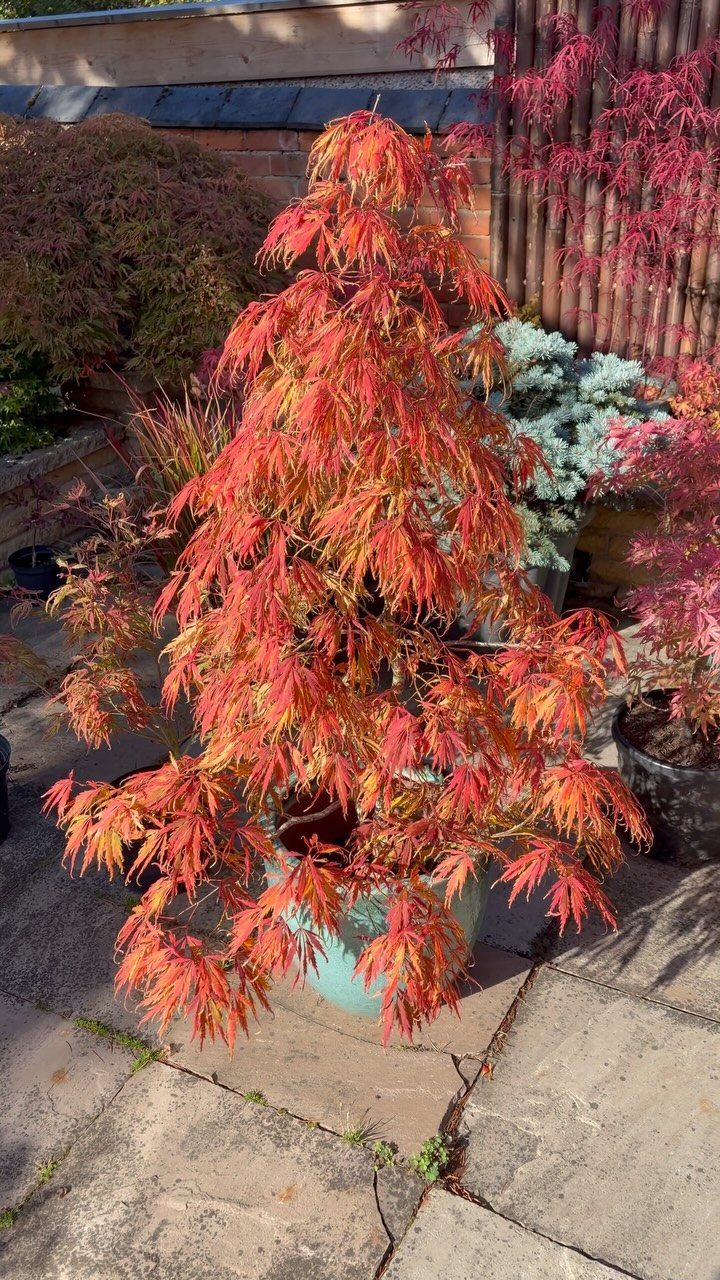
A Japanese maple in a pot is a long-term decision if you choose the right cultivar, or a short-term mistake if you reach for the cheapest grafted variety.
The orange-red leaf looks like a dwarf dissectum, the kind that stays small and weeps rather than fights the pot edges.
I would use a glazed ceramic that holds moisture, the way that light blue does, because maples in terracotta dry unevenly and scorch at the leaf tips.
Afternoon shade is non-negotiable; morning sun only, or the color burns to brown by August.
6. Potted Pink Bougainvillea
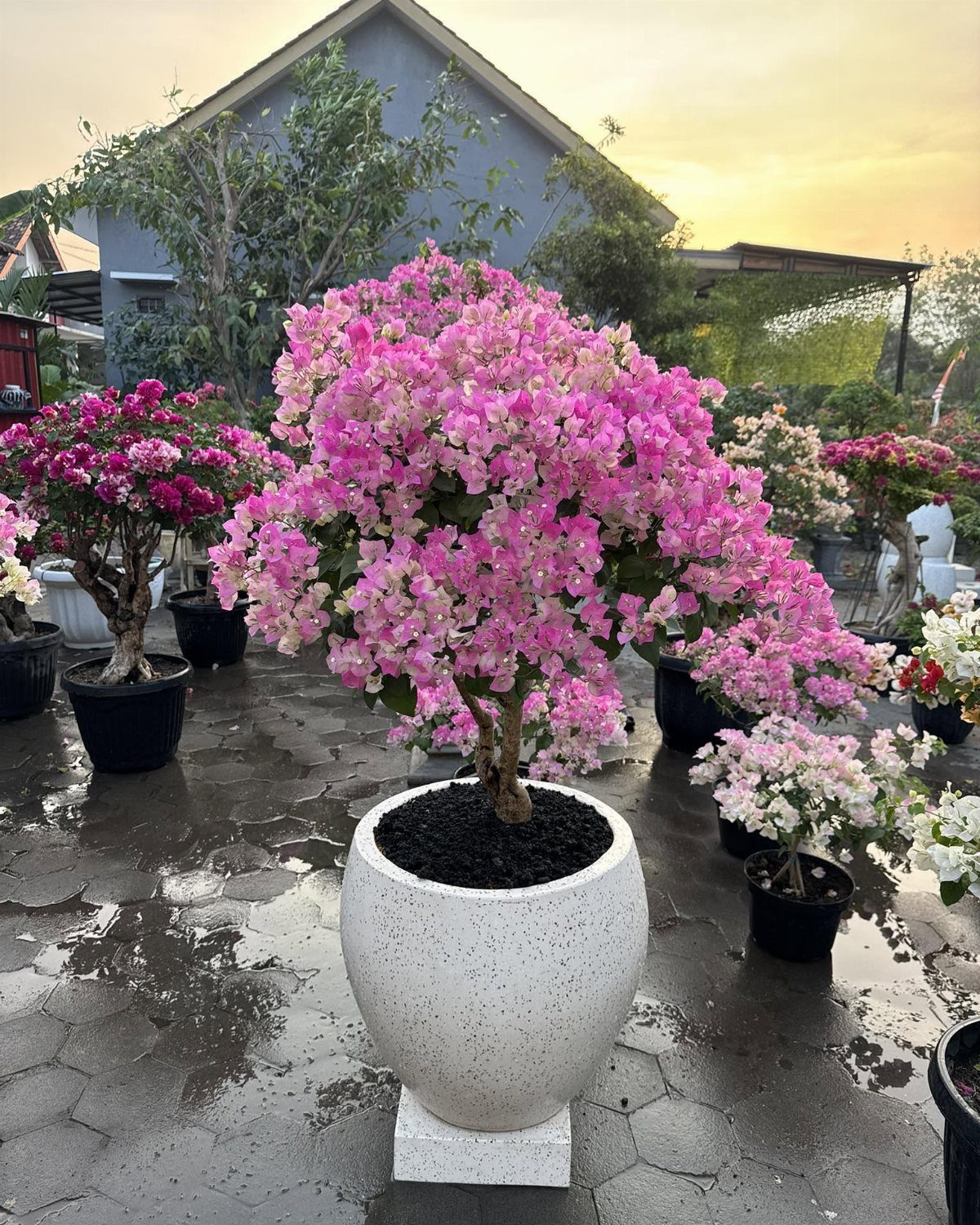
Bougainvillea trained to a standard, pruned into a small tree, gives you the tropical hit without the monster swallowing your fence line.
The pink bracts against that white speckled pot read as deliberate coastal, though I have seen the same setup work on a city balcony with southern exposure.
It wants heat, drought between waterings, and a winter dormancy indoors if you are north of zone 9.
I would not attempt this in a climate where I could not carry the pot inside; the shock of a single hard freeze kills the graft.
7. Elephant Ears and Mixed Foliage
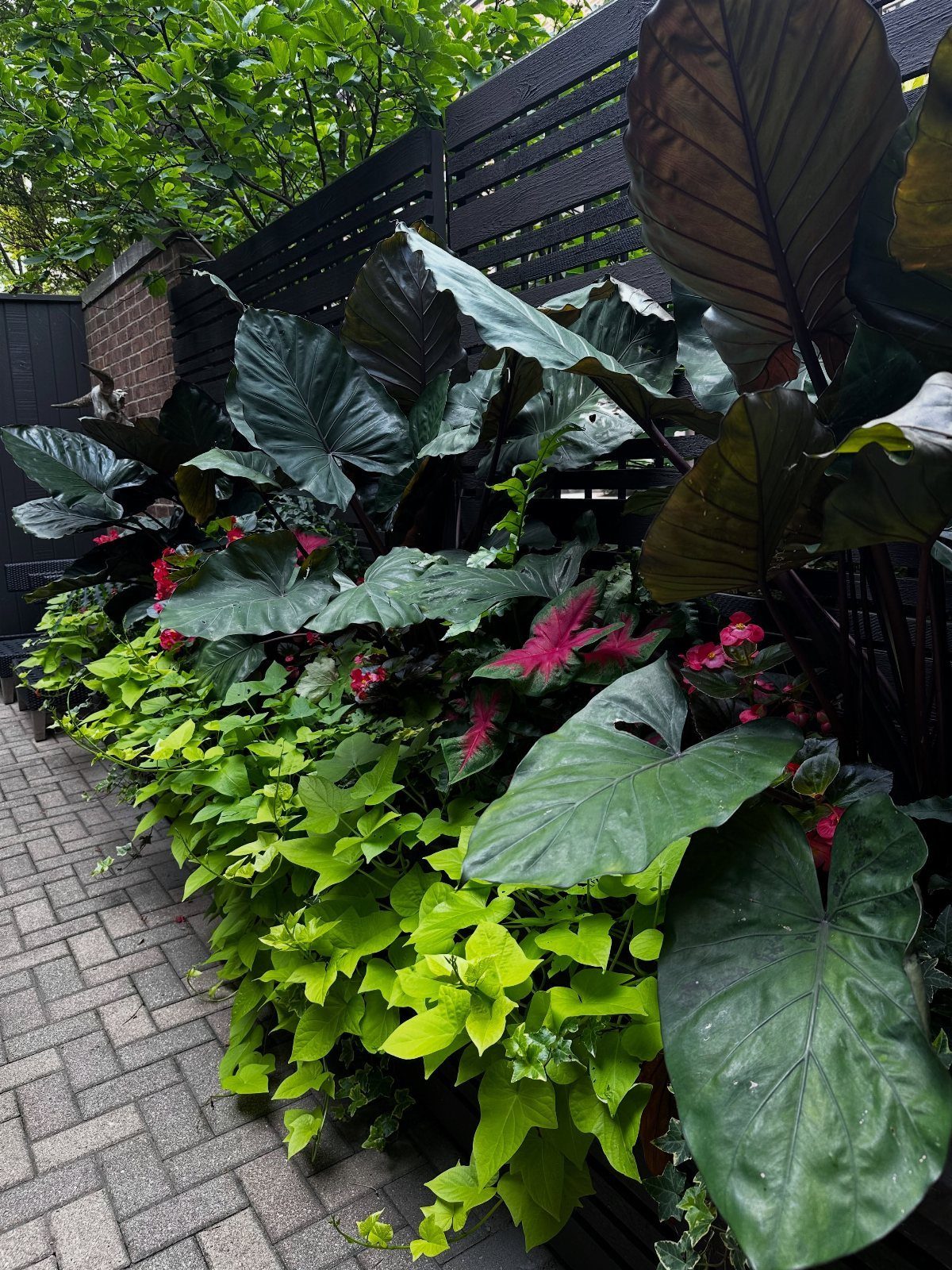
The black planter lets the lime sweet potato vine read as neon against the dark elephant ear leaves; that contrast of warm and cool is what carries the arrangement.
I would start the caladiums from tubers in late May, since they want soil as warm as they look.
Elephant ears need consistent moisture to reach that size; a drip tray or self-watering box saves you from twice-daily checks in July heat.
This grouping works for a spot that gets morning sun and afternoon shade, where the dark leaves keep their depth instead of scorching to brown.
8. Flowering Silk Tassel Shrub
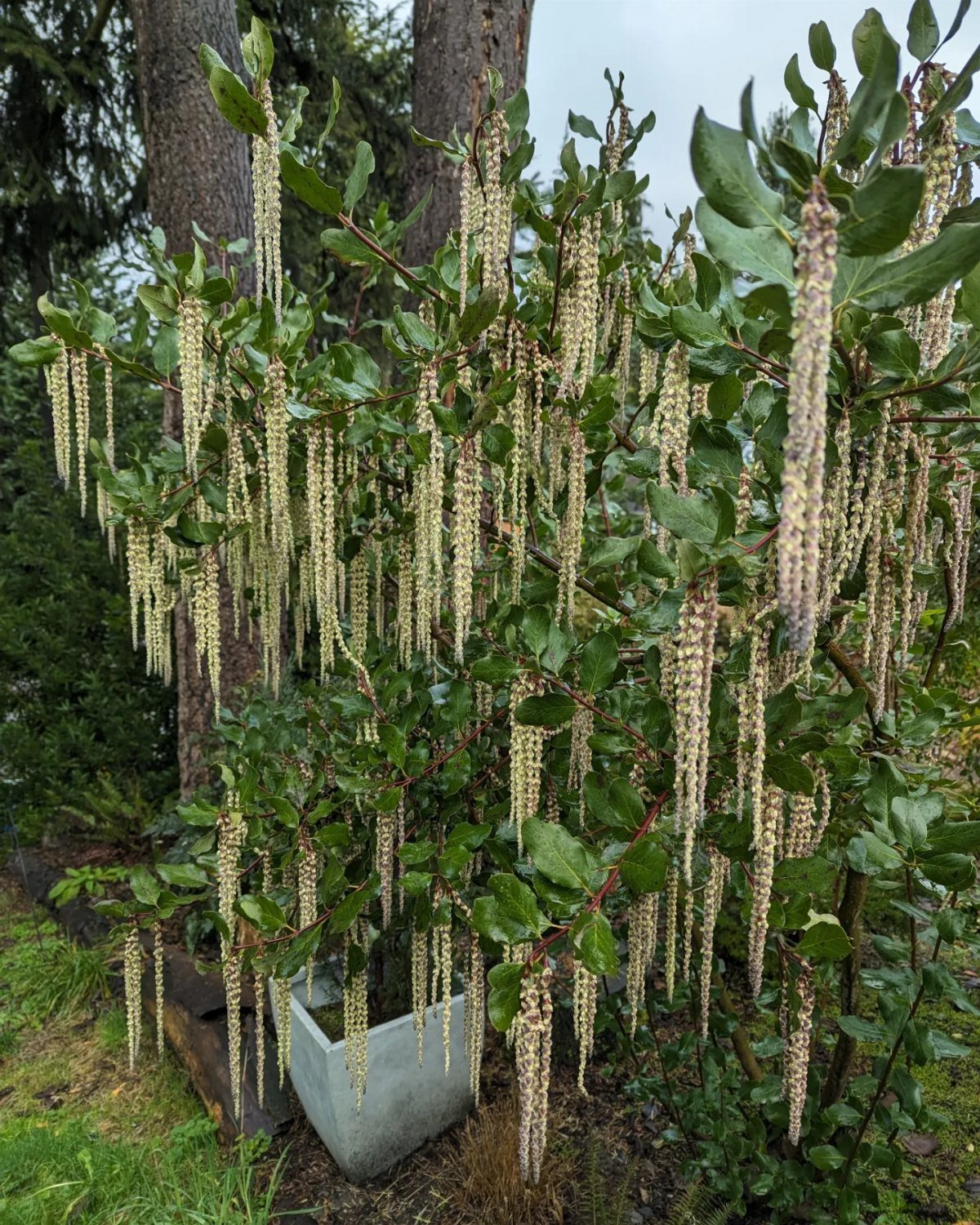
Long catkins on a shrub in a pot feel unexpected, the way a cut branch might look indoors but alive and left alone.
The grey rectangular planter reads as built-in, which suits a permanent placement where you do not want to move things seasonally.
I would treat this as a spring-only display; the catkins drop and the shrub greens out by June, so have a hosta or coleus ready to slip in after.
Shade-tolerant, slow-growing, and indifferent to pruning: the silk tassel asks little once it is potted in a mix that drains.
9. Formal Shaped Trees in Urns
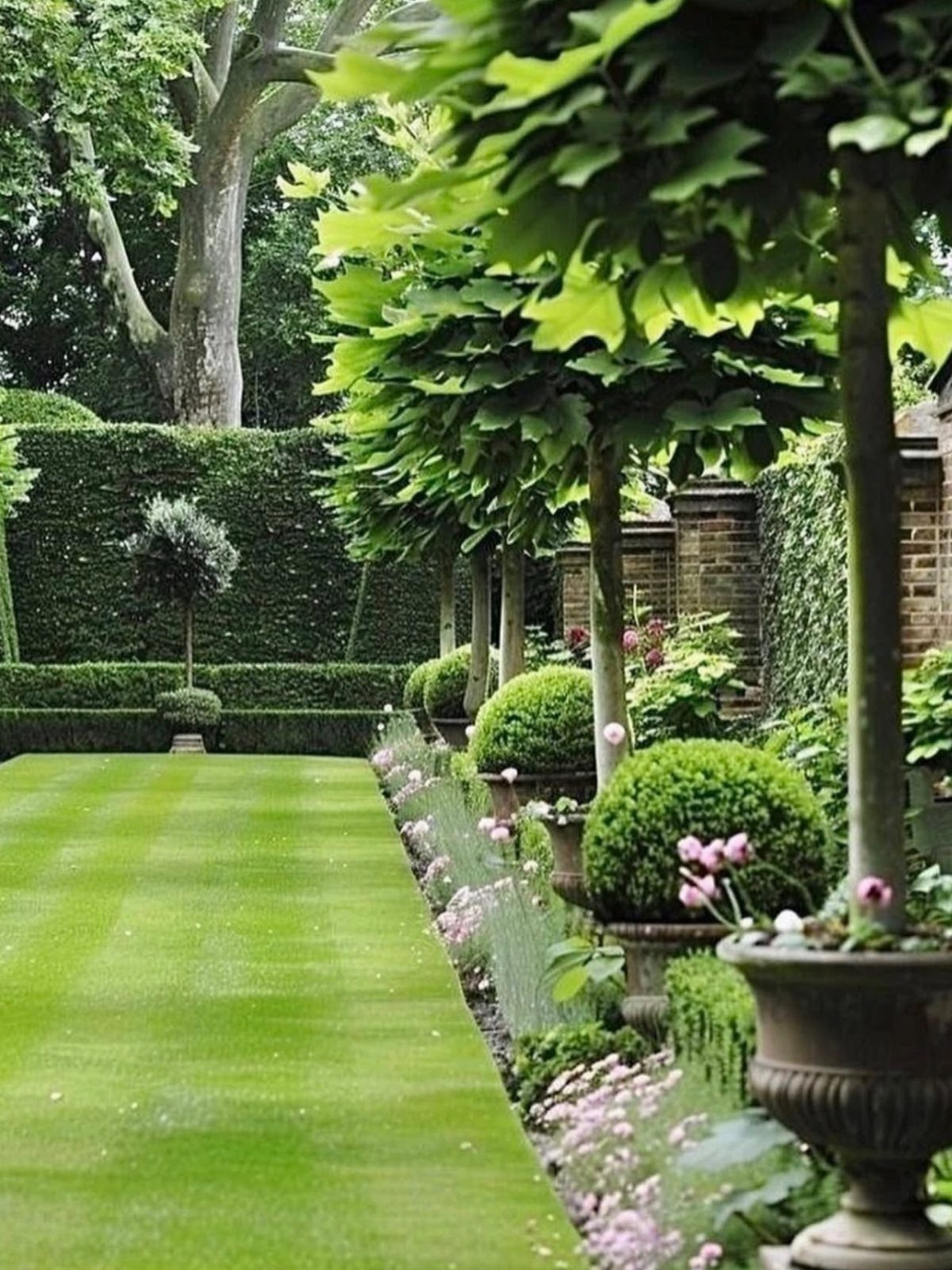
Stone urns heavy enough to hold their ground against wind and bumping shoulders are an investment, but they are also the whole look; resin copies lighten the load if you are placing them yourself.
The striped lawn behind these tells me the shaping is done with shears on a real schedule, not once a season.
Boxwood or Japanese holly keeps the tight sphere; either takes years in the ground first, then a hard root prune to move to the pot.
I would not attempt this look with a plant you intend to keep mobile; the root disturbance shows in yellow patches.
10. Mixed Arrangement in a Glossy Planter
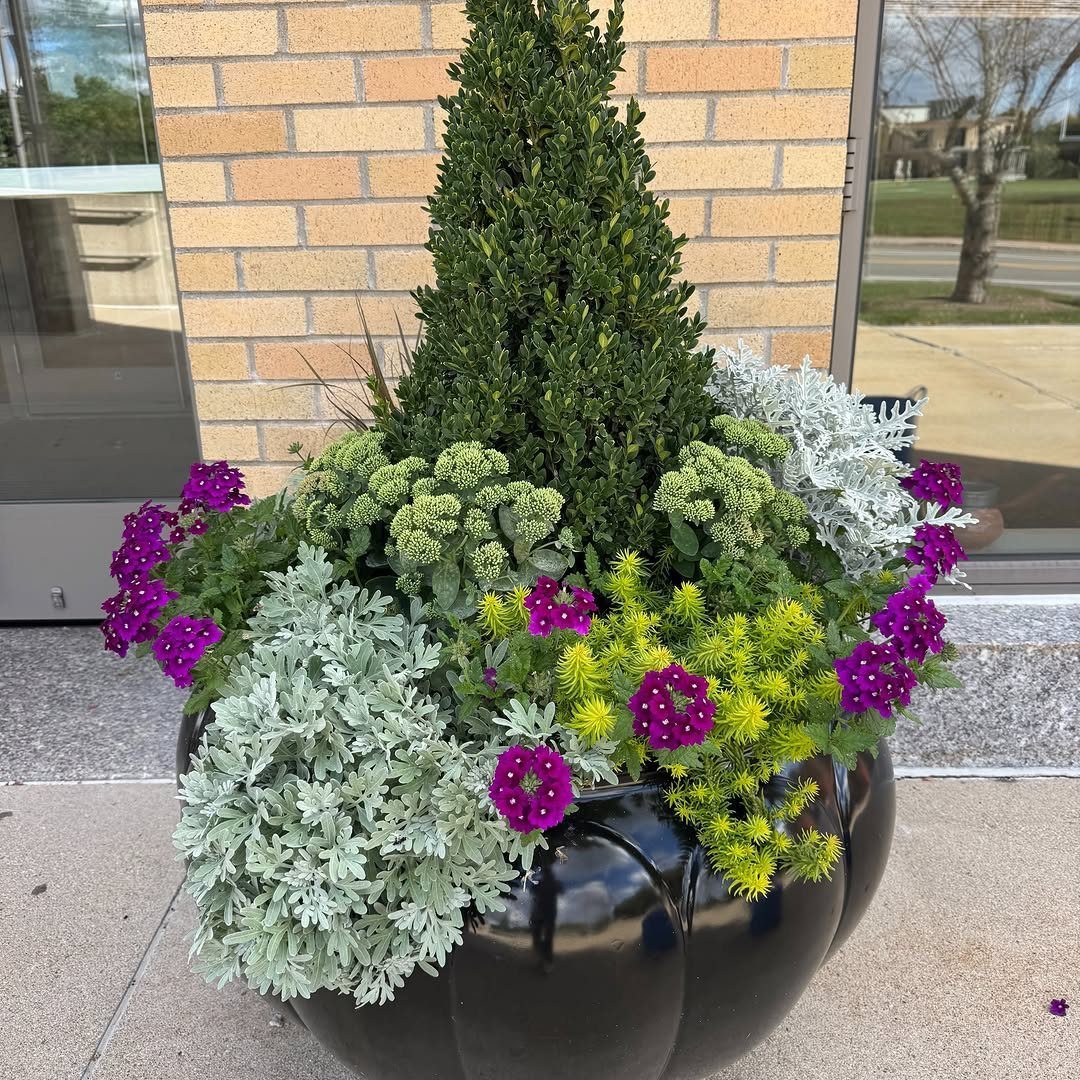
A black glossy pot reflects sky and brick, so the arrangement reads against 2 backgrounds at once; the dusty miller silvers catch that light and keep the eye moving.
The conical evergreen gives winter structure when the sedum and annual purples are done. I would plant the evergreen off-center, weighting the back so the trailing and mounding plants fill forward without hiding the shape.
This is one container that looks deliberate from the day you set it in; the glossy finish does not forgive a half-empty soil line, so pack it full from the start.
The planter is hand-thrown and painted with soft beachy hues inspired by the sand and sea. It’s easy to make a statement with even the simplest plants when they are growing from this stunning piece.
11. Purple Flowers in Pedestal Planter
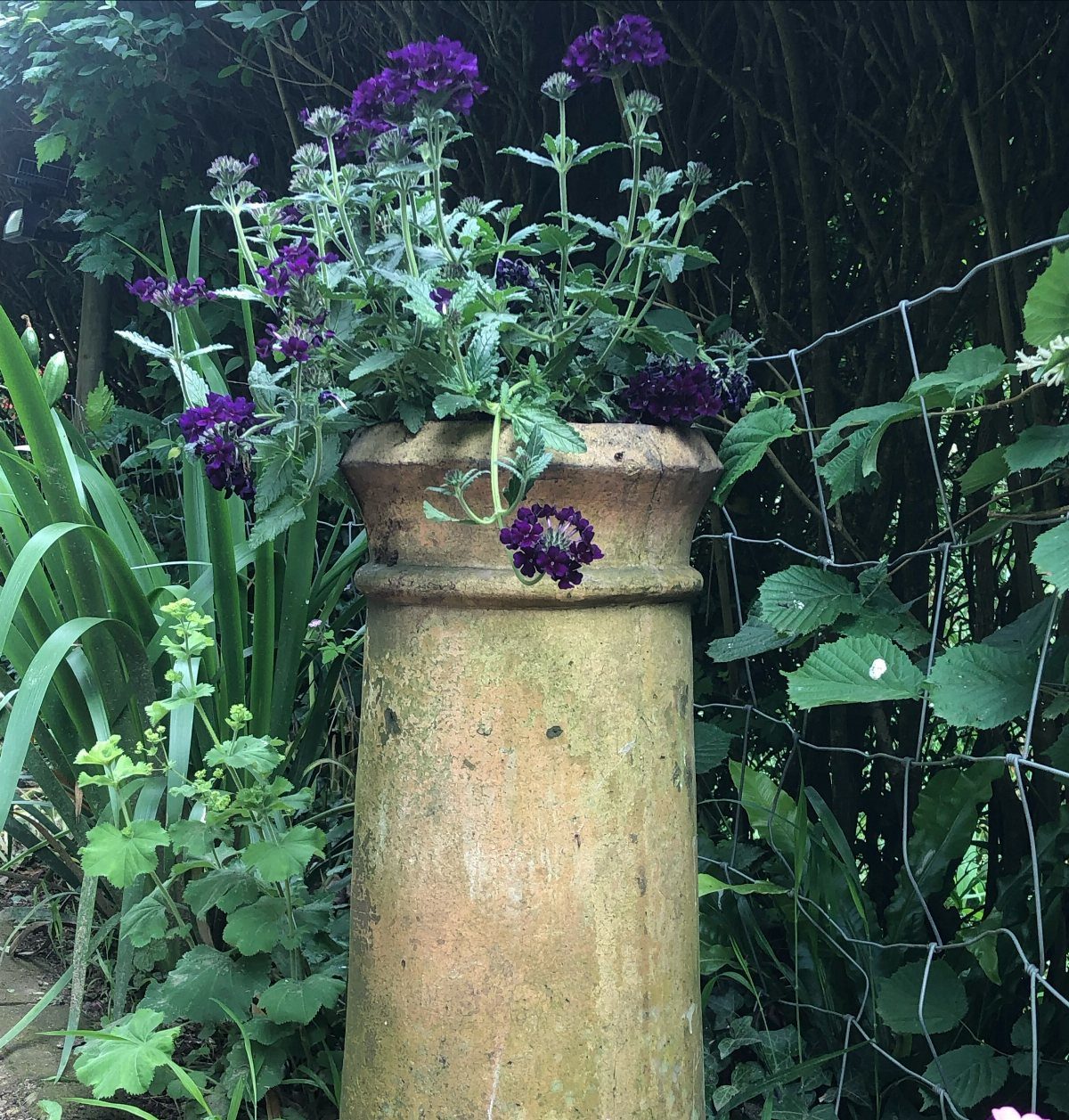
A chimney pot’s height lifts verbena to where you actually see it, not down at shin level where groundcover belongs. The weathered terracotta against that particular purple reads as found object rather than purchased set, though both are doing work.
Verbena wants heat and drier soil than it looks like it should; I would line the pot with plastic punched with holes, since terracotta breathes fast and the pedestal shape is awkward to reach for daily watering.
Spill is half the point here, so I would choose a trailing variety and let it go.
Frequently Asked Questions
Where can I get large indoor plant pots?
Most garden centers and home stores carry them, but the weight matters more than the label.
I look for ficostone or cement-fiberglass blends that stay under 30 lbs even in an XL size, since resin copies of stone urns are easier to place yourself without the hernia.
A glazed ceramic holds moisture better than terracotta for plants like Japanese maple, though terracotta breathes fast if you need drier soil for verbena.
What is the most low maintenance outdoor plant?
Golden creeping Jenny is the plant I point people to when they want something that just gets on with it: it roots from any node that touches soil, fills a pot edge in a few weeks, and never asks for deadheading or a second feeding after spring.
Hostas run close behind if you keep them out of cooking sun and have a spot to tuck the yellowed foliage in fall.
The silk tassel shrub is nearly as hands-off once potted in draining mix, though it greens out by June and needs a seasonal swap.
What potted plants can survive winter outside?
The rule I follow is 2 zones hardier than your climate, since container roots get no insulation from ground warmth.
Bougainvillea is not worth the risk north of zone 9 unless you have indoor winter space; Japanese maple handles outdoor winter fine down to zone 5.
What flowers look best in pots?
Impatiens in a coir liner mound and spill from shade containers through fall if you feed weakly and keep the moisture steady.
Verbena on a pedestal lifts color to eye level where you actually see it, and trailing varieties soften the pot edge. For structure without bloom, heuchera leaves in purple and chartreuse carry the arrangement against pale stone without the deadheading.
What are the easiest container plants for patios?
Hostas in matching ribbed pots give you that neat, hedge-like row on a patio and still lift out for a party or a storm; water deeply twice a week in July and August, and set them on feet or a deck so south-facing concrete does not fry the roots by lunch.
Impatiens are annuals that only need a coir liner to hold moisture and weak feeding to bloom until frost.





