
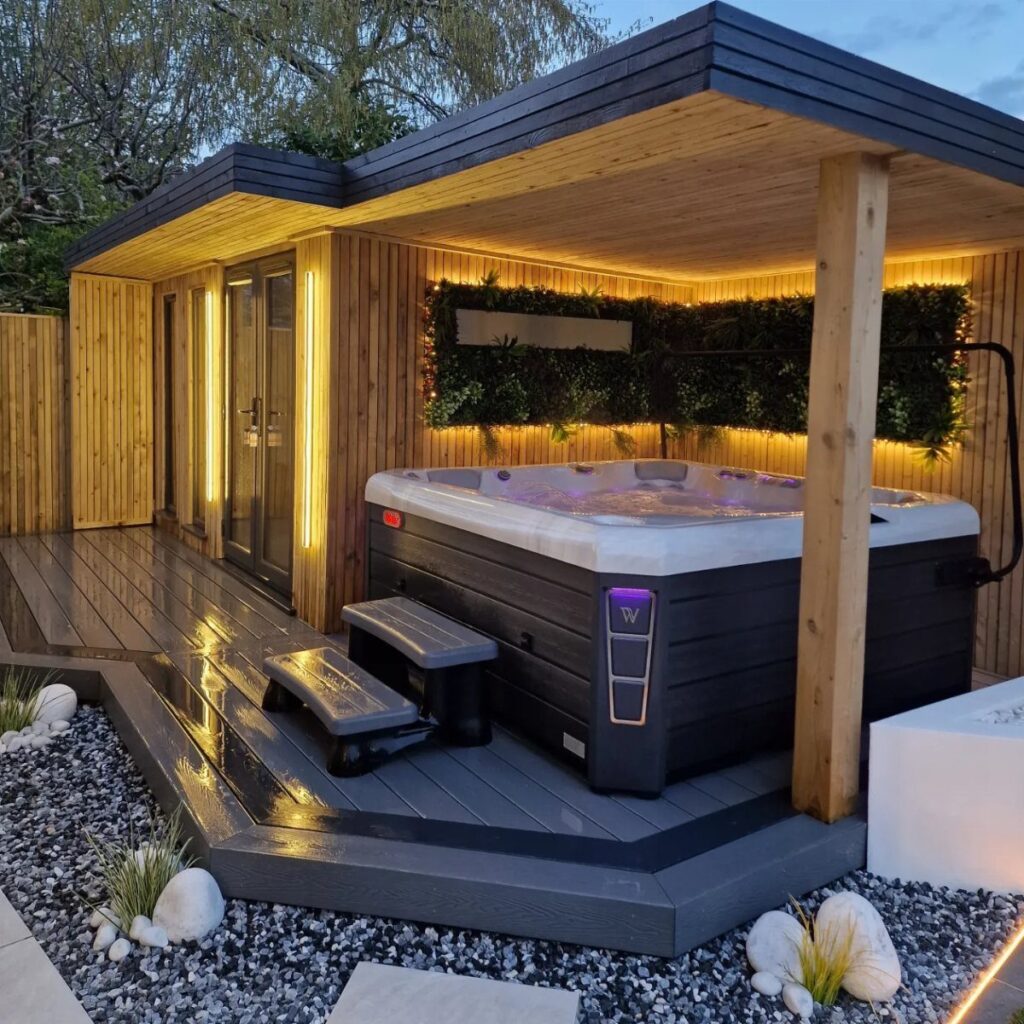
A covered hot tub in the backyard can be as simple as string lights around the rim or as involved as a retractable glass enclosure that needs a crew and a real budget.
The deciding factor is how many months of the year you actually plan to soak, because a pergola built from pressure-treated 4x4s handles a summer evening fine but will not get you through a northern winter.
For year-round use in cold climates, the shed conversion with a dedicated circuit and a floor drain is one of two options on this list that keeps the water running without a full addition permit; the other is a retractable glass enclosure.
1. String Lights Around the Hot Tub
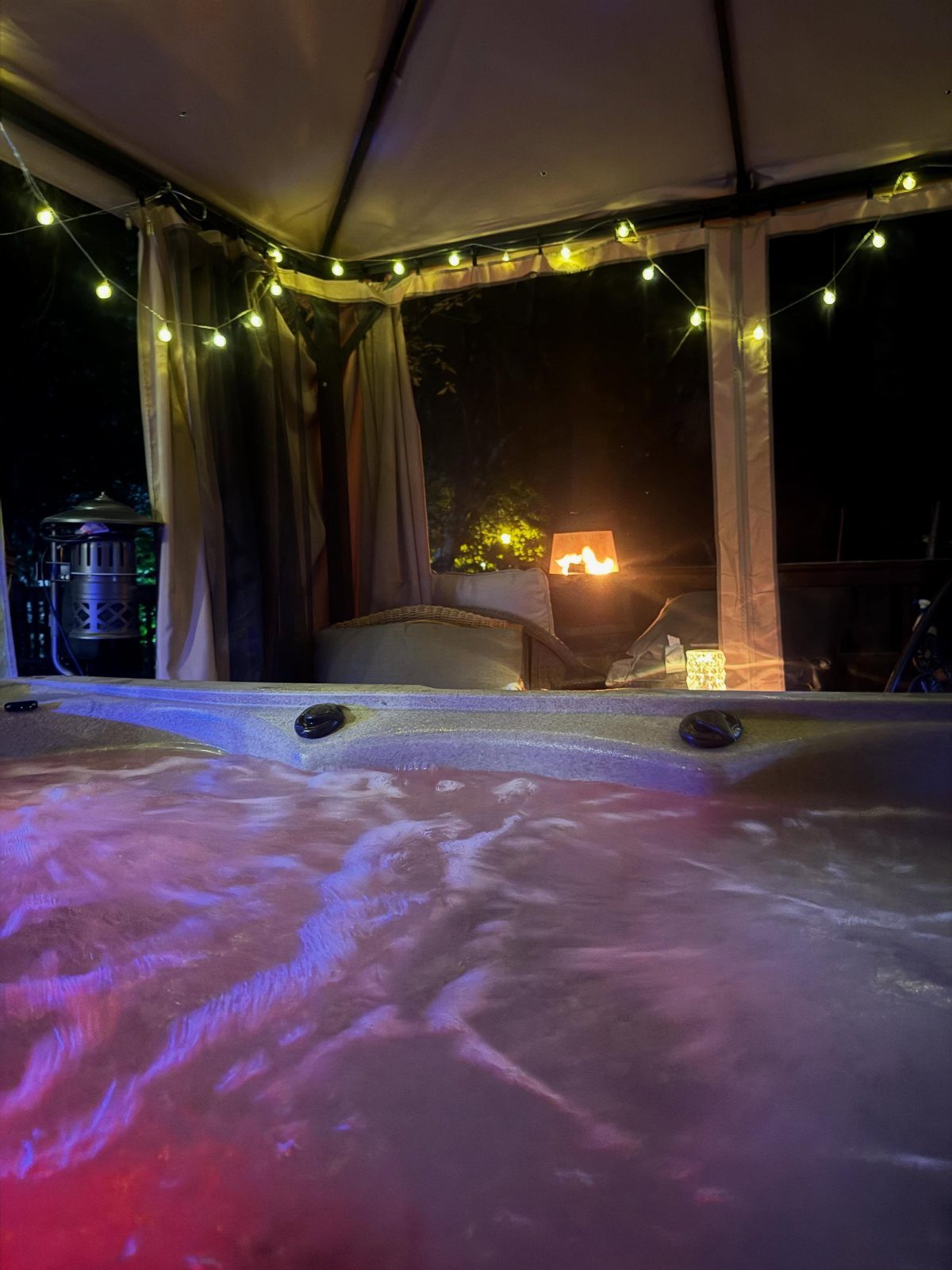
String lights turn a hot tub from a backyard appliance into something you actually want to spend an evening in.
I run mine on a timer so they kick on at dusk without me having to dry off and fumble for a switch.
The look works on any budget: a strand of LED globes from a hardware store, or solar ones if you do not have an outdoor outlet nearby.
I hang them in loops rather than straight lines; the sag catches the light better and hides a crooked anchor point.
2. Pergola or Canopy
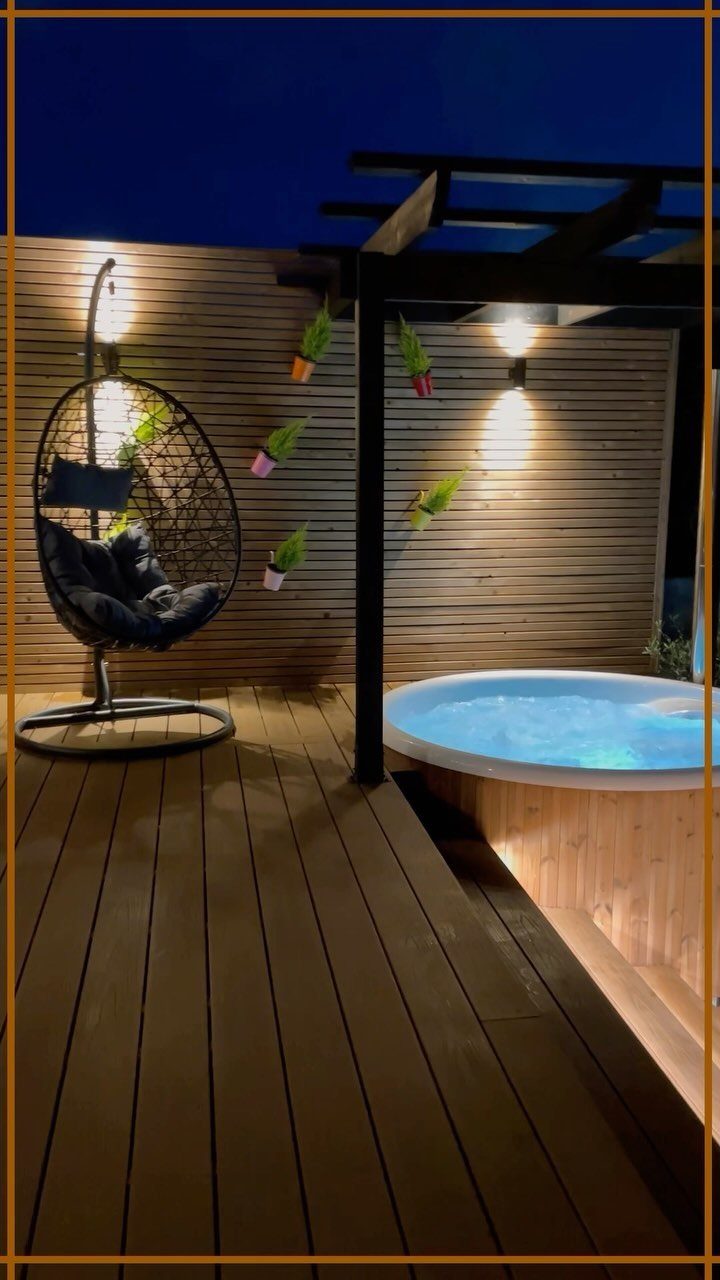
A pergola gives you shade without trapping heat, which matters on a July evening when a fully enclosed cover turns into a sauna.
I built mine from pressure-treated 4x4s and corrugated polycarbonate panels; the panels block rain but let light through, and the whole frame cost less than a prefab kit.
Anchor posts in concrete if your area gets wind; a friend skipped that step and now his lists 3 degrees.
3. Hot Tub Enclosures
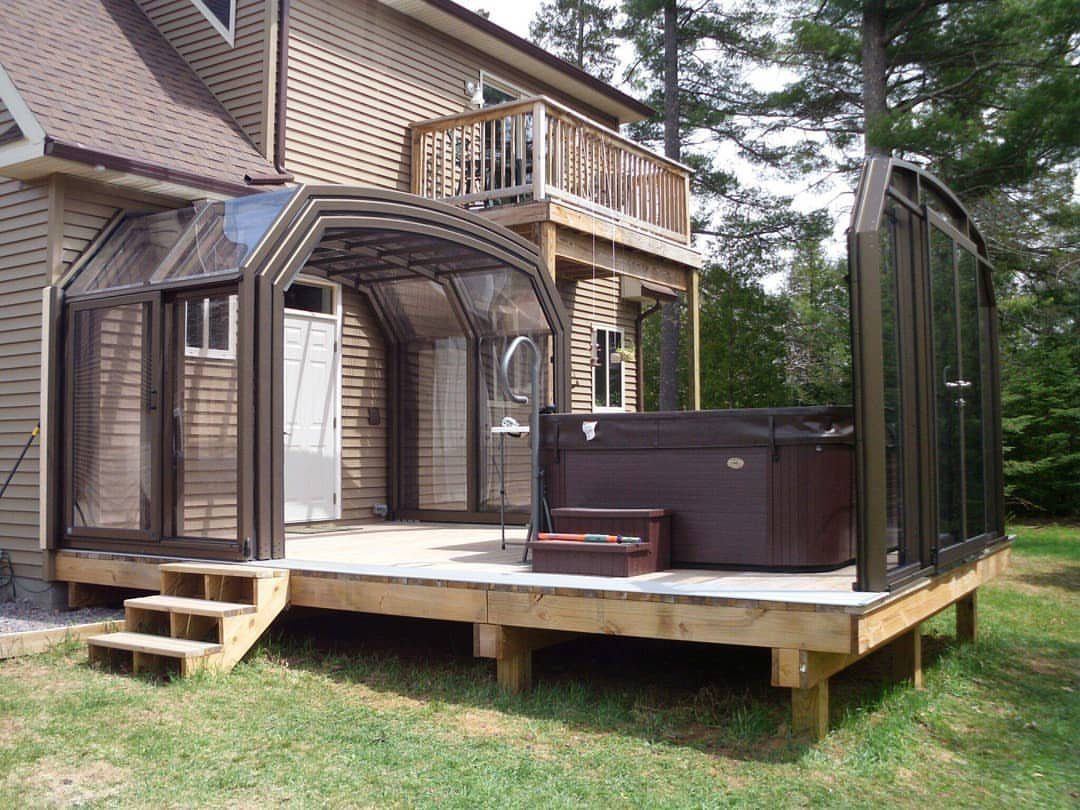
A retractable glass enclosure is the most weatherproof option short of building an addition.
The frame mounts to your deck or patio, and the panels slide open in summer or seal shut when a storm rolls in. I have seen them handle snow load fine, though I would verify the rating for your zone.
Cost and permanence are the real questions here.
This is not a weekend project; you are hiring a crew or at least a second pair of hands for the panel install. For a year-round soak in a cold climate, though, it beats draining and winterizing.
4. Hot Tub Covers
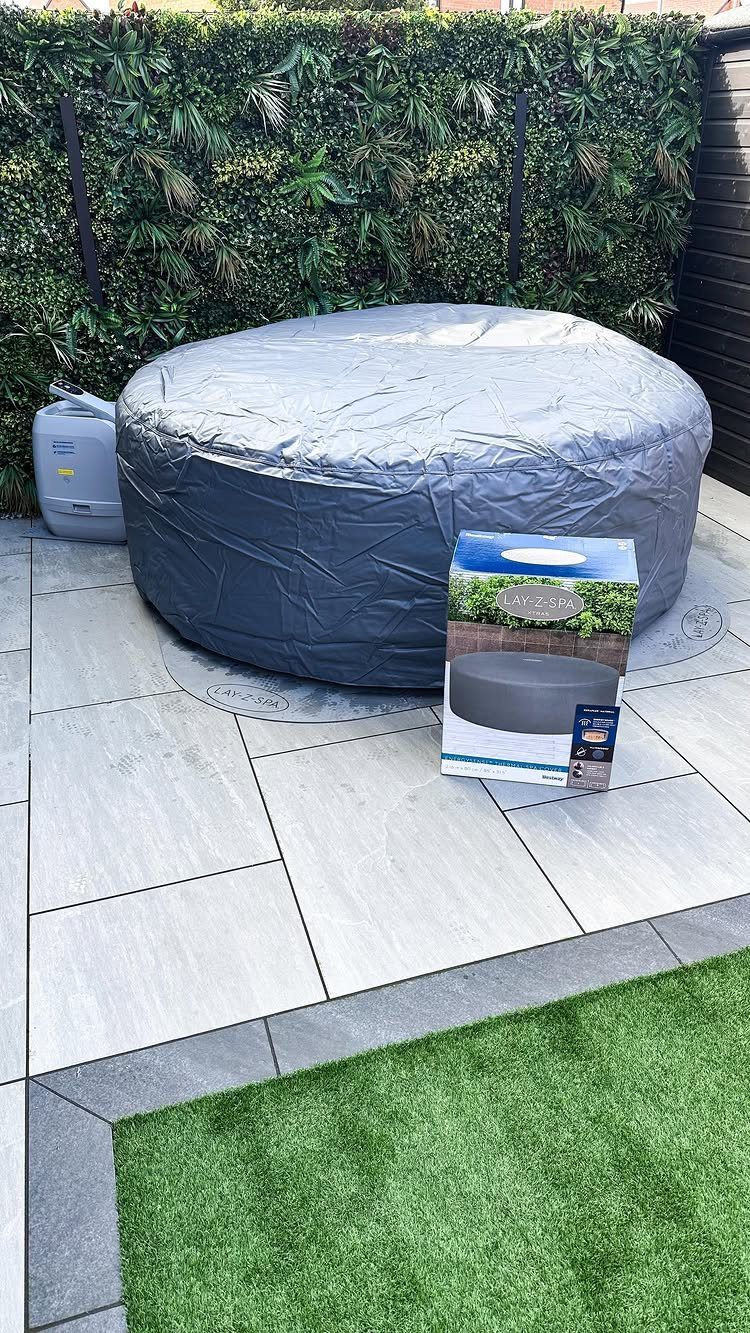
A cover is non-negotiable for safety and for keeping your heating bill from doubling. A fitted thermal cover that zips over the whole unit works on inflatable tubs; hard-shell tubs use a hinged lid that folds back.
I replace mine when the foam cores start soaking up water and getting heavy.
A waterlogged cover is a back injury waiting to happen. Check the strap anchors monthly; once they tear out, the cover flaps in wind and the vinyl splits.
5. Spa Steps
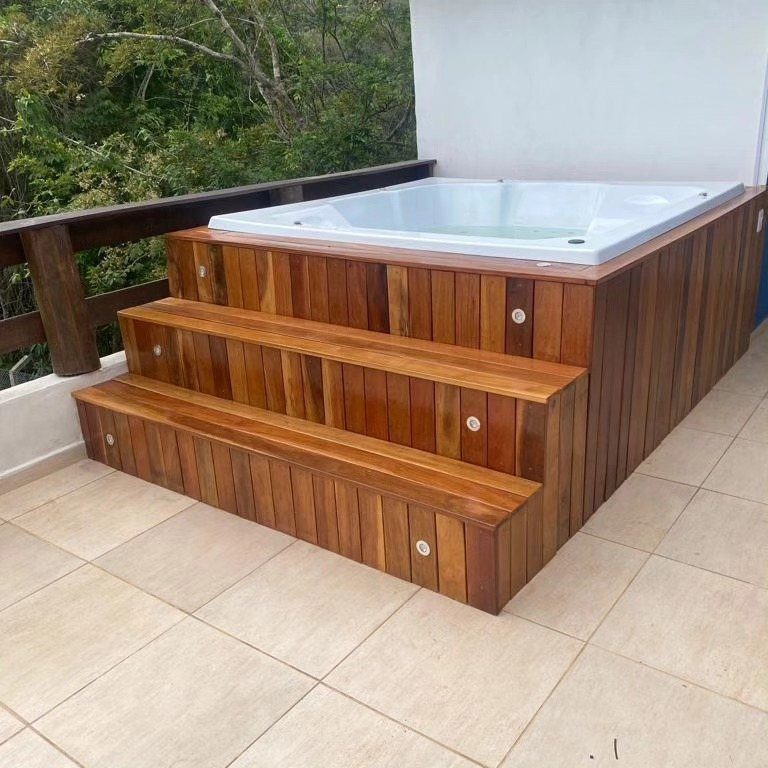
Built-in steps with lighting look expensive but add up to a simple carpentry job: box frames in pressure-treated lumber, faced with the same cedar or composite as the tub surround.
Solar pucks set into routed holes light the steps at night.
I set my top step well below the rim, which puts the seat at thigh height for most adults.
Go wider than you think; a 36-inch tread lets two people pass without choreography. Seal end grain with epoxy or you will be replacing rot sooner than you think.
6. Gazebo with Privacy Curtains
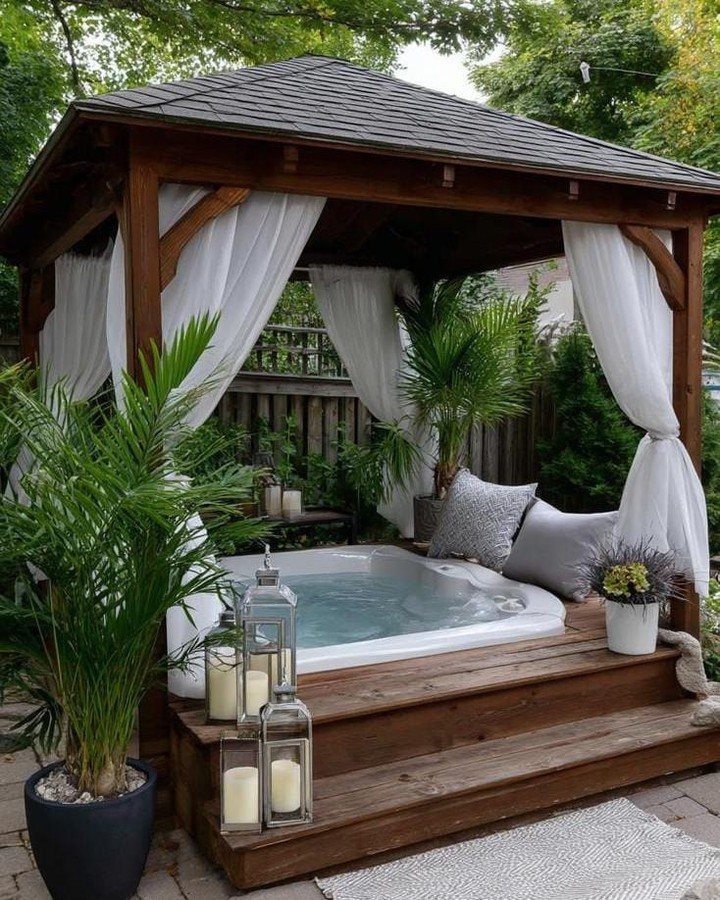
A gazebo with curtains gives you the enclosure feel without the enclosure price or permit hassle.
I use outdoor-rated drapes with grommet tops; they run less than a custom order and last a couple seasons in full sun before fading.
7. Hot Tub Inside a Garden Shed
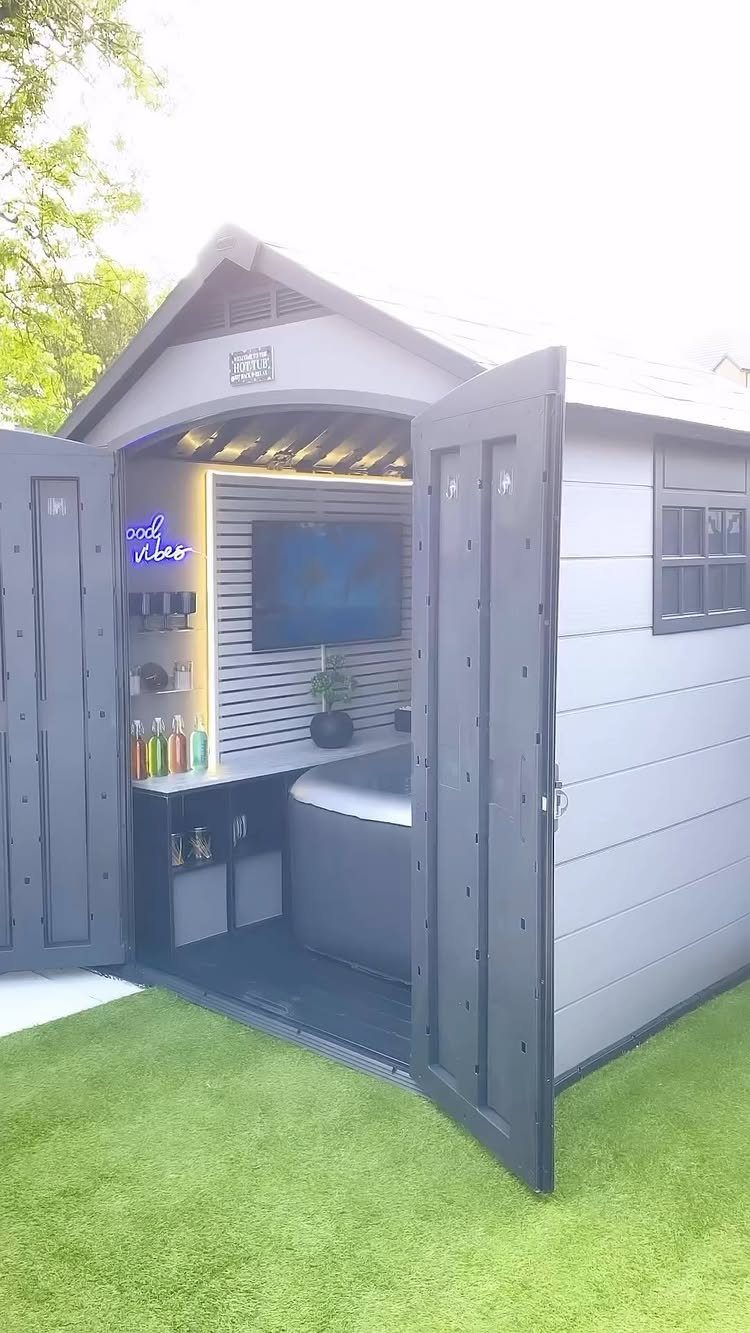
A garden shed turned hot tub room gives you walls and a roof without the permit fight of an addition. Close the doors and you have a private soak even in the middle of winter.
I would frame the interior with pressure-treated lumber to handle the humidity, then run a dedicated 20-amp circuit for the tub and any TV or mini fridge. A floor drain matters more than the neon sign; the tub will splash.
This works best if you already own a shed sitting on a level pad. Moving one onto your property costs more than the conversion.
Privacy Solutions
Privacy around a hot tub works best in layers. A fence or hedge blocks the wide view; finer details handle what is left.
For quick structure, a privacy screen or trellis with climbing plants gives height without the wait of a hedge maturing. A pergola with retractable curtains does the same job overhead and on the sides in one build.
Hedges ask more patience but need no permit and age better than most wood; a tall row of boxwood or arborvitae set off the patio line keeps open sightlines past the tub while blocking the neighbor’s window.
I mix hard and soft: a partial fence for immediate screening, then let vines soften the edges over 2 seasons. Full enclosure feels like a closet; you want to stop sightlines, not light.
When choosing a pergola, keep in mind that there needs to be a minimum of 7 feet 6 inches from the rim of the hot tub to the underside of the pergola.
— Bob Vila
Maintenance Tips
Cloudy water after 3 good weeks is the classic sign that routine lapsed.
Test strips twice weekly catch pH drift before it dulls the jets or throws error codes. Shock weekly, more often with heavy use.
The cover matters as much as the chemistry. A waterlogged foam core doubles in weight and stops insulating, so the heater runs longer.
When the shell feels heavy, the foam is done. Replace it before your back pays the price.
For cold zones, a thermal cover rated to actual snow load beats a generic replacement. Canvas handles debris and sun; the right weight for your climate keeps the tub pristine longer.
Safety Considerations
A lockable cover is the first safety layer, not the last. The strap anchors on a fitted cover keep a child from peeling back the edge, but they only work if you fasten them every time.
Solar pucks in the tread light the path without wiring, but I still add a grab rail at thigh height. Entry and exit are where most falls happen.
If children use the tub, set the spa lock on the control panel; most units have one buried in the menu.
A dedicated 20-amp circuit with GFCI protection is code, not optional. The shed conversion or gazebo frame needs the same grounding as the tub itself.
Frequently Asked Questions
What are some creative ways to incorporate outdoor lighting around a hot tub?
String lights hung in loose loops rather than straight lines catch the light better and hide imperfect anchor points. LED globes from any hardware store work; solar strands suit spots without an outdoor outlet.
How can I enhance privacy around my hot tub?
Layer it: a fence or hedge blocks the wide view, then finer details handle what slips through.
I mix hard and soft, letting vines soften a partial fence over 2 seasons rather than building a full enclosure that turns the space into a closet.
What are some essential accessories for a hot tub?
A fitted thermal cover is non-negotiable; it keeps the heating bill from doubling and the water safe. Waterproof drink holders and non-slip mats add comfort, but the cover and steps are where I put money first.





