
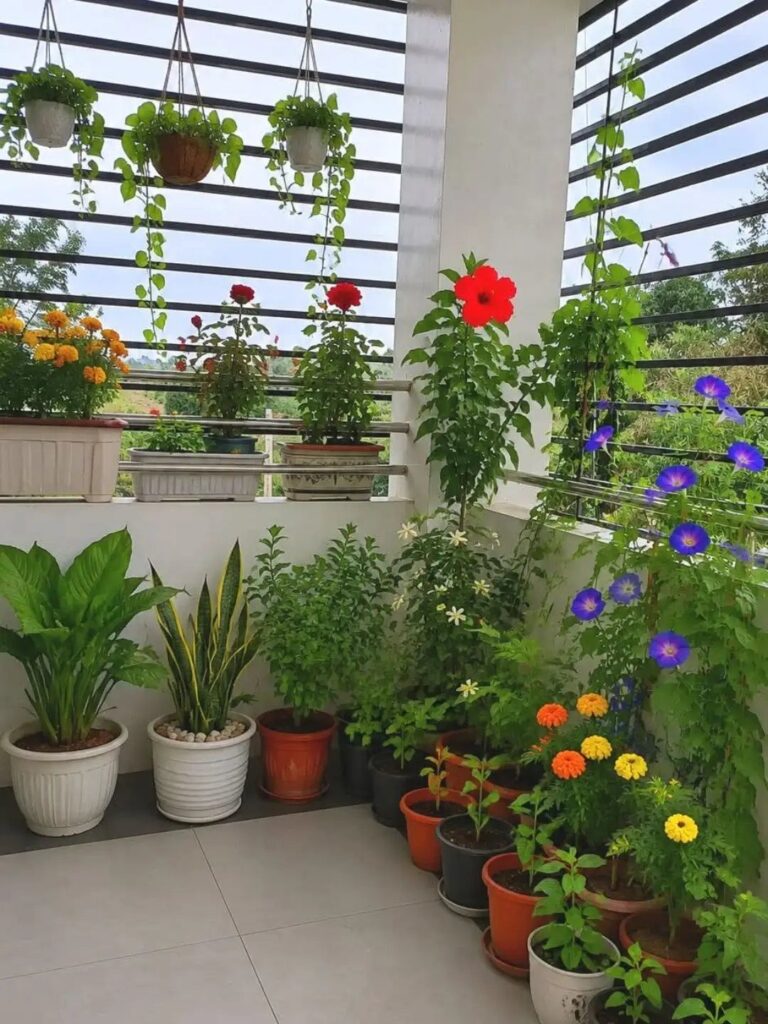
A patio flower garden can run from a packet of morning glory seed to a built-in raised bed with LED strip lighting, and the deciding factor is whether you rent and need everything to move with you or own and can plant in the ground.
I put casters under my containers and check every pot for drainage holes before I buy, because a planter without them rots roots inside a week.
1. Container Gardening
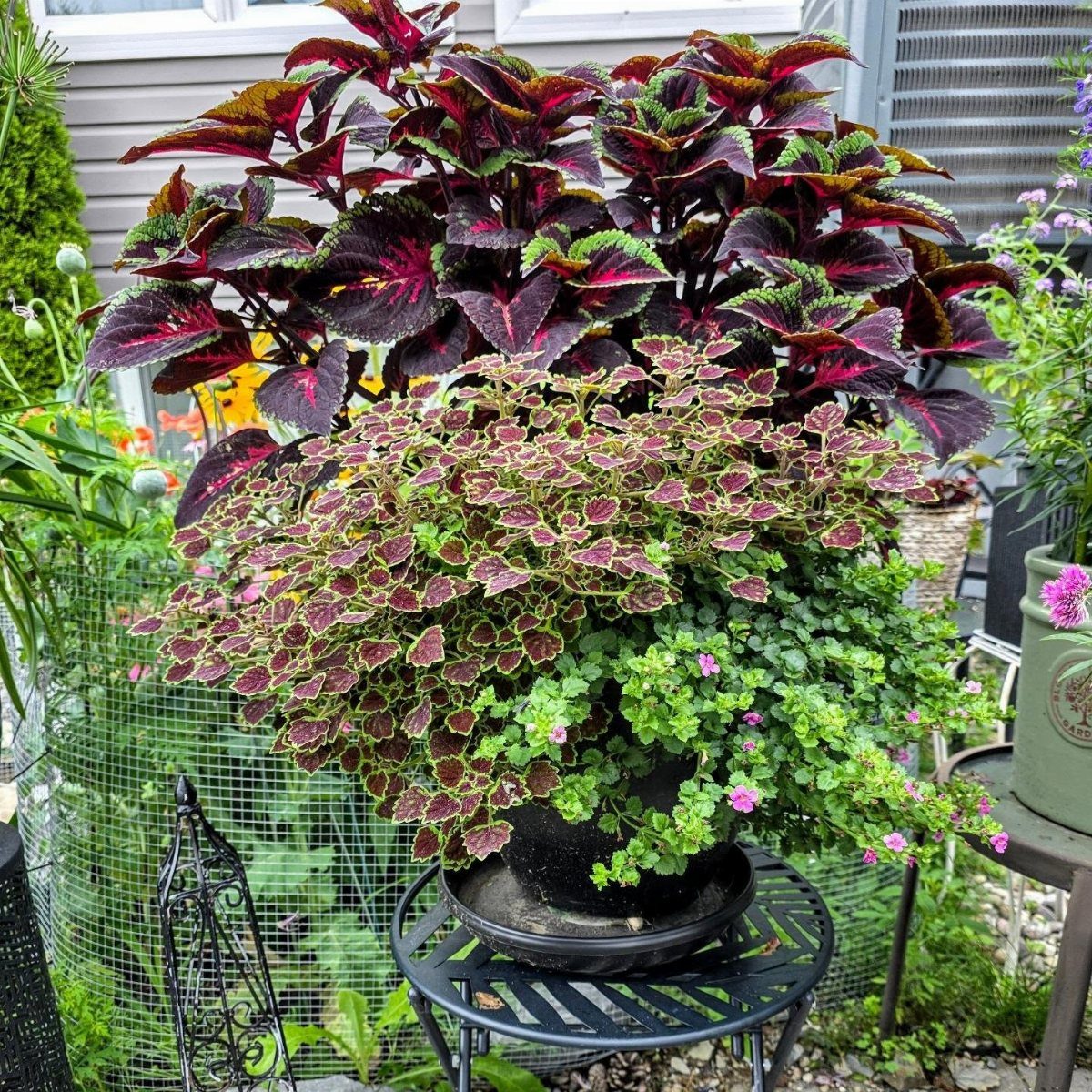
Pots give you a flower garden that moves where you need it. Shade shifts across a patio from April to August; a container on casters or a light plastic pot follows the sun without my help.
Coleus fills out fast, costs little for a starter, and the burgundy-leaf varieties hold color even in part shade.
I group 3 heights: tall dark cultivars in back, patterned midsize in center, trailing foliage spilling the edge. Water daily in July, less if I sink a saucer underneath to hold runoff.
2. Wall Planters
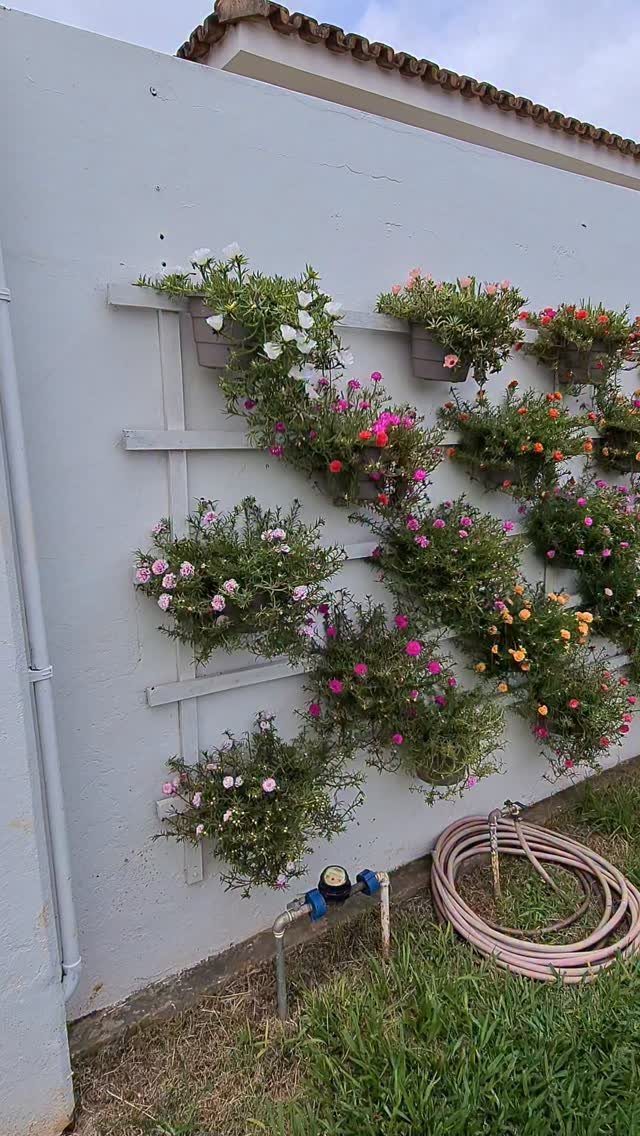
A wall-mounted trellis turns vertical space I already own into planting real estate. A simple cedar frame spaced wide enough to slip pot hooks between slats works here; I would stain it to match the siding rather than fight it.
Standard plastic pots hang from S-hooks, nothing custom. The hose coil below tells me this wall sits near a spigot, which matters more than I thought before I tried hauling a watering can up a ladder twice a week.
3. Cottage-Style Flower Garden
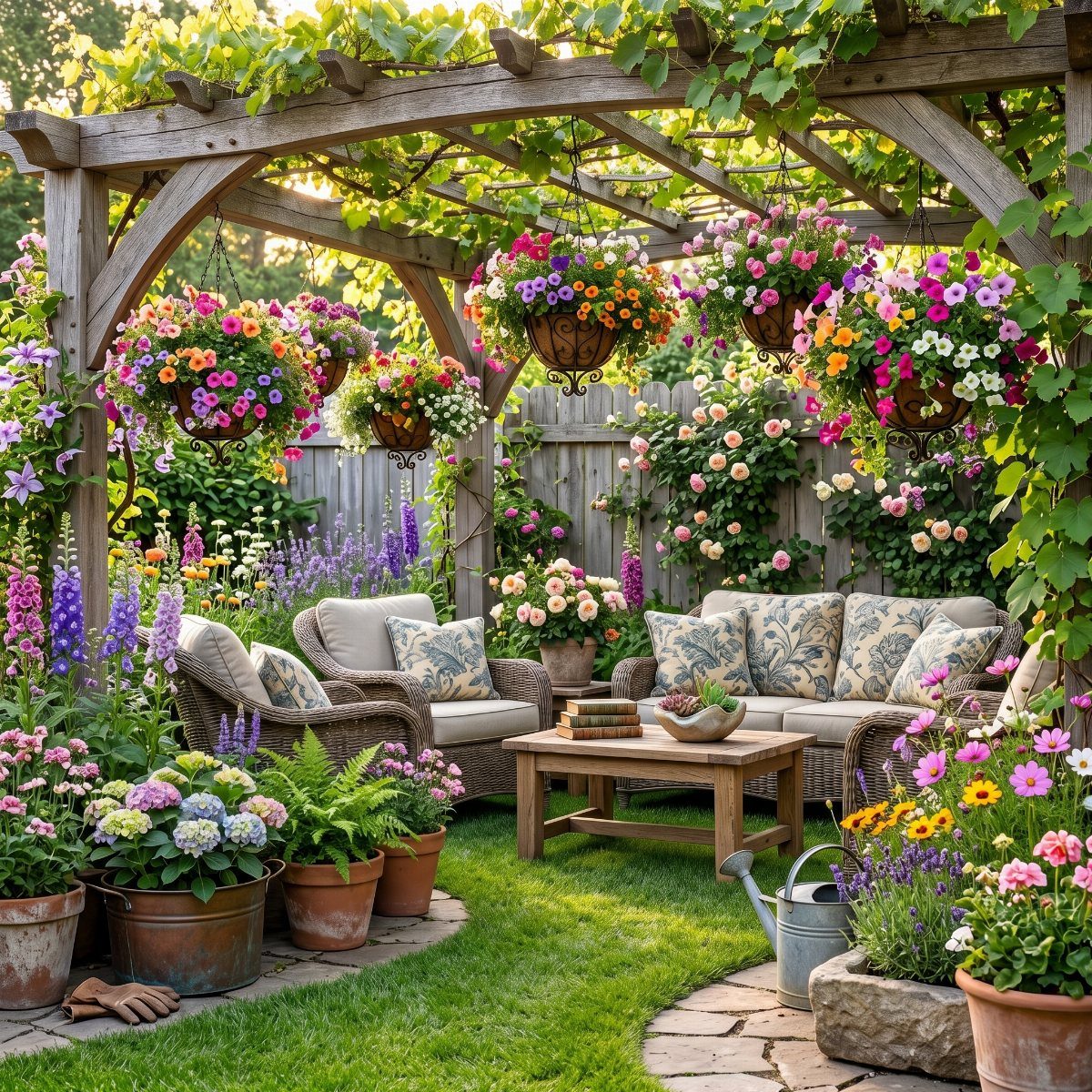
Cottage style lives in the mix, not the match. Wicker, floral cushions, and plant varieties crammed together under a pergola read as effortless when nothing lines up too neatly.
I start with three trailing plants for the hanging baskets (bacopa, verbena, million bells), add potted geraniums for steady color, and tuck in one oddity, something tall like a purple fountain grass, where it blocks no path.
The pergola overhead is doing work: it softens light so blooms last longer and I water less.
4. Pollinator-Friendly Garden
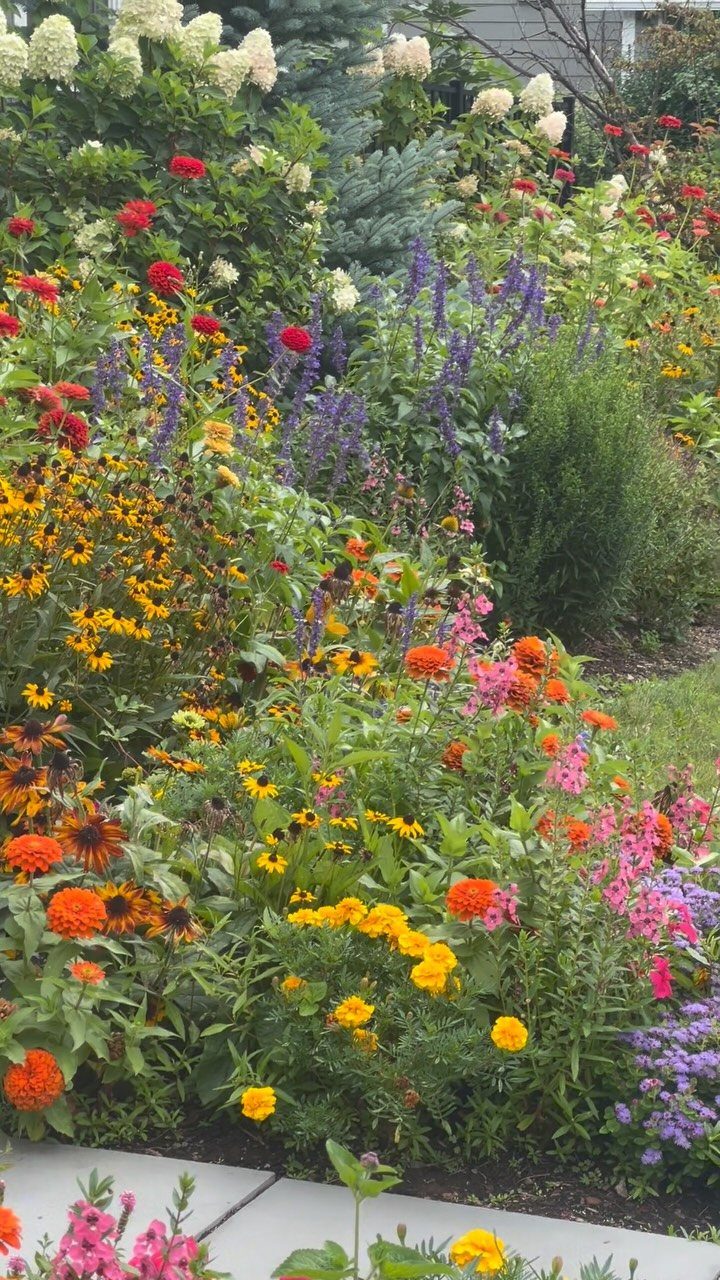
Pollinators need succession bloom from May through frost, so I plant the salvia and early marigolds to start, add zinnia seed directly in warm soil for July, and let the hydrangea carry September.
A stone edge holds heat that butterflies use to warm up mornings; I leave a shallow saucer of water on it, changed daily so mosquitoes do not claim it first.
5. Romantic Escape
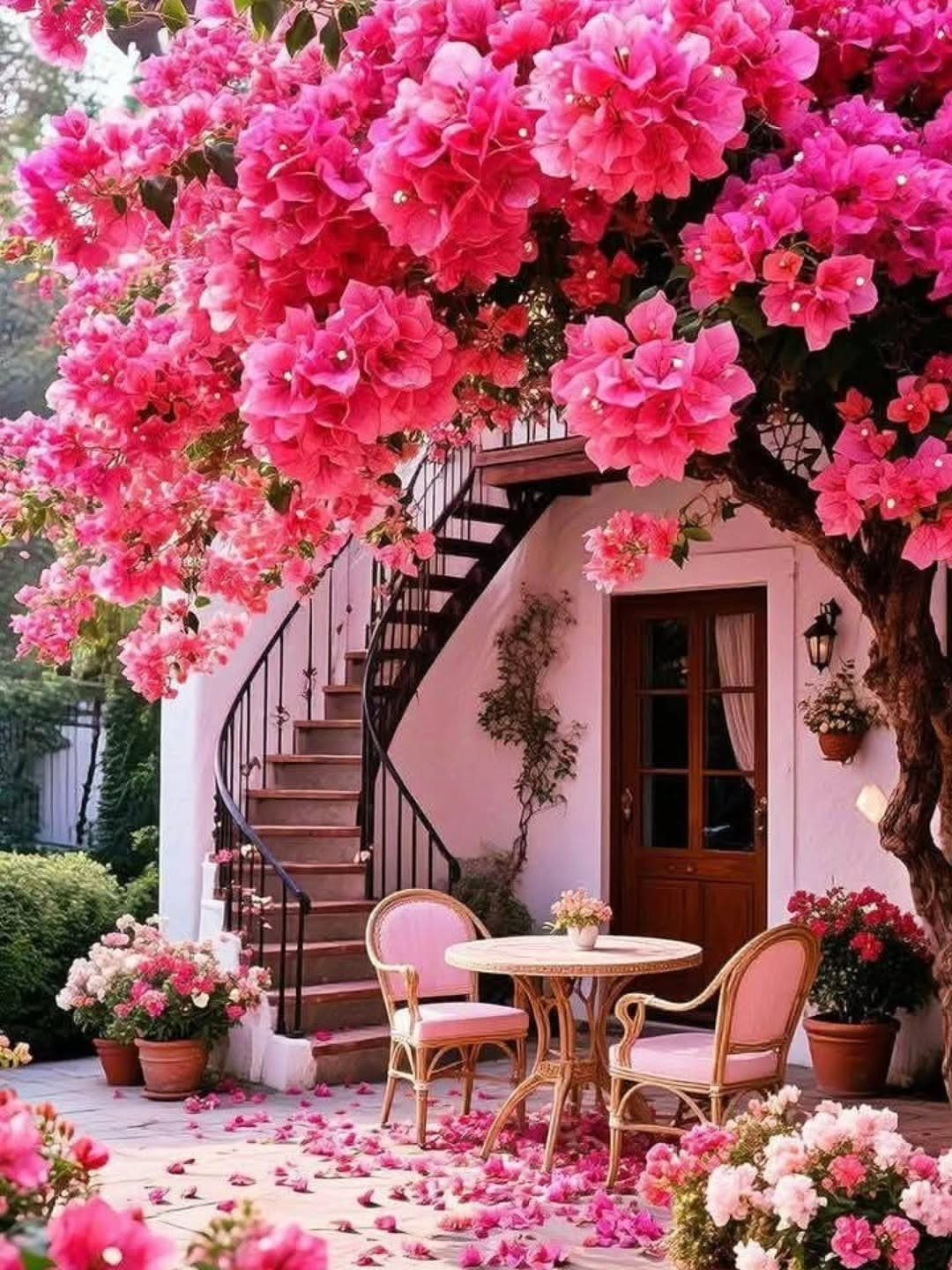
One tree in bloom can carry a whole patio if it is the right tree.
The bougainvillea here is mature, probably years in ground, with a trunk thick enough to shade a small table. I would not try to force that in a season.
I would train a young plant up a temporary obelisk, let it claim the corner, and add the table after. Pink wicker reads soft against the flowers; metal or dark wood would compete.
6. Climbing Bougainvillea Trellis
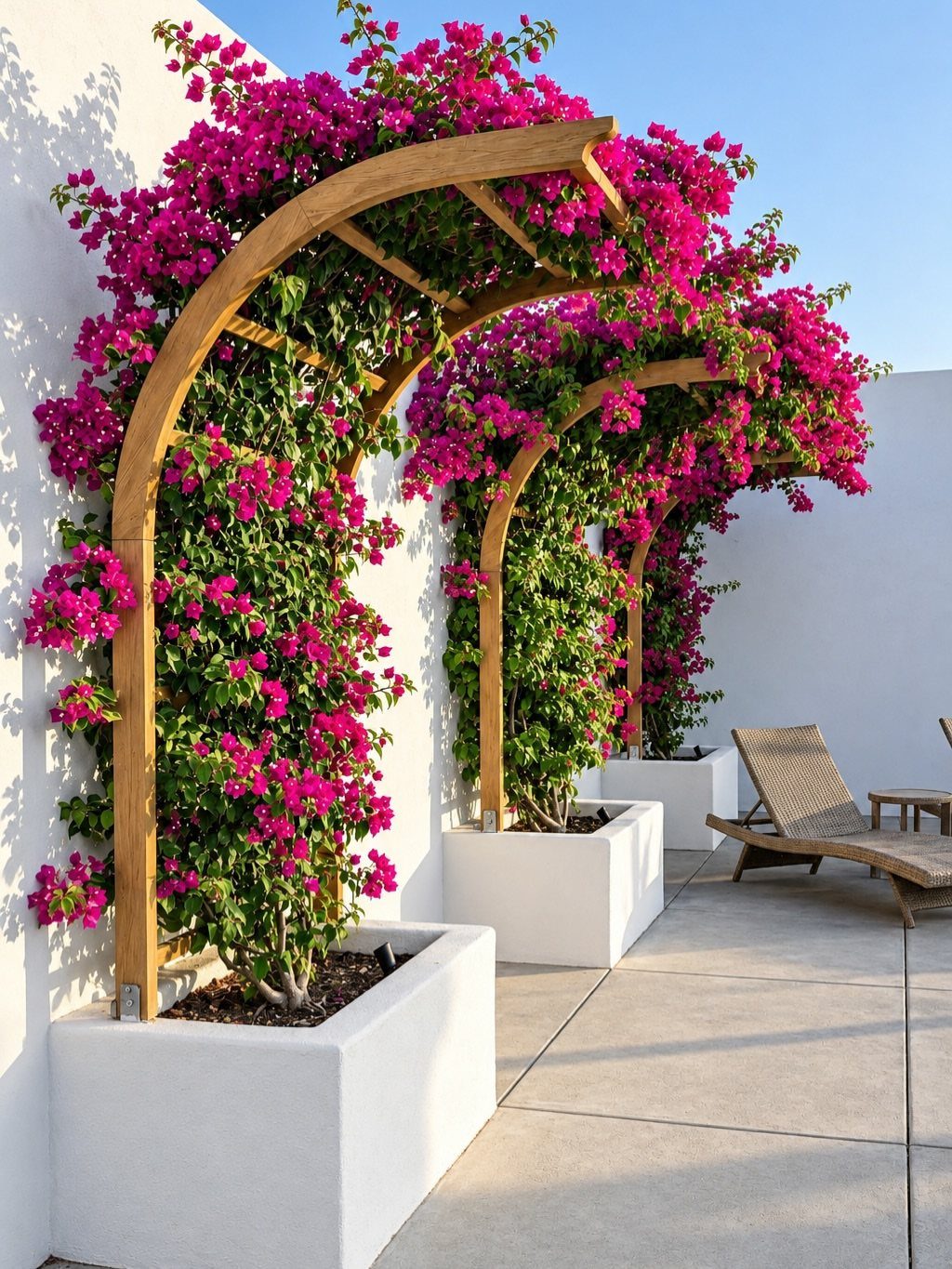
Arched trellises in rectangular planters give height without footprint, which is what most patios lack. Bougainvillea wants root heat, so I would line the box with black landscape fabric, not white, and let the exterior paint do the bright work.
Each arch spans enough width that 3 across a wall read as architecture, not clutter. Water weight in a planter this size runs heavy fully soaked, so I put mine where the slab can take it.
7. Vertical Flower Tower
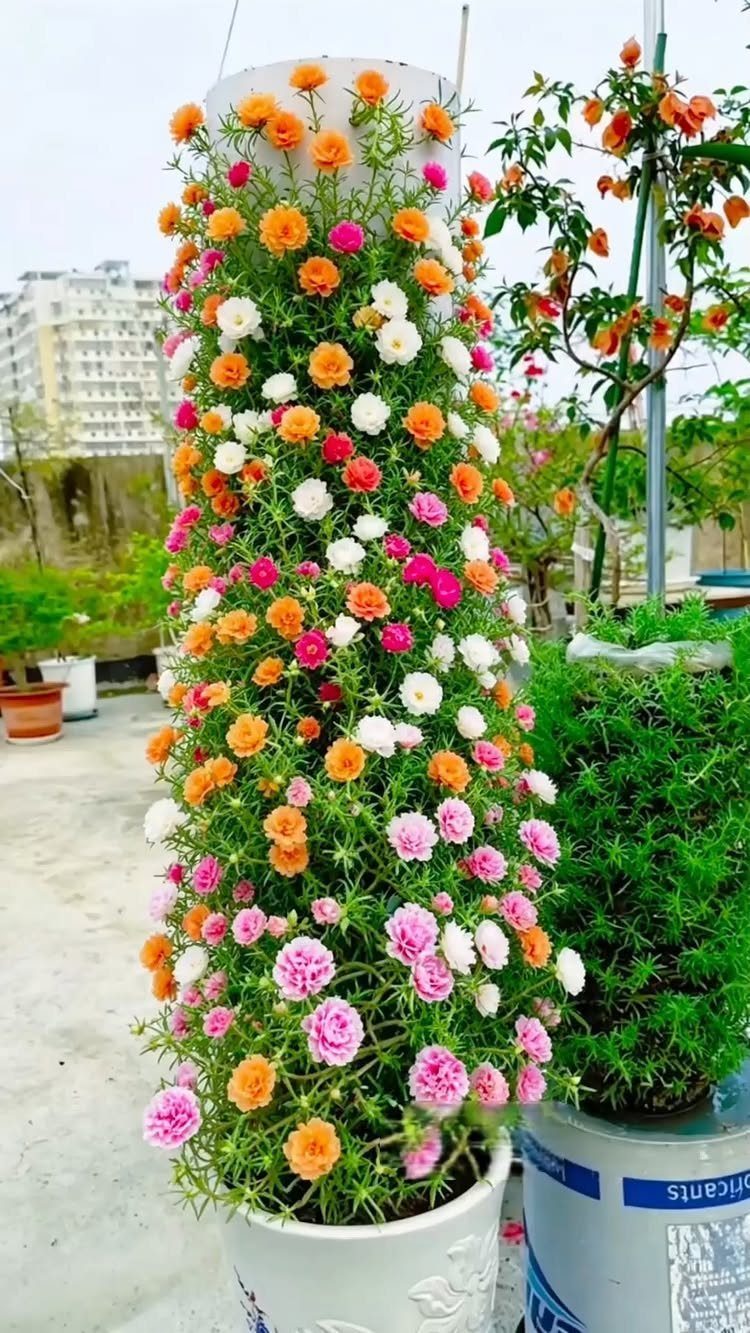
A vertical tower turns one square foot of patio into a wall of bloom on every face. Moss rose, portulaca, or trailing verbena work here because they thrive on heat and shrug off a missed watering.
The cylinder needs a core of potting mix held by wire mesh or a prefab frame with pockets; I would fill from the top and let gravity settle it rather than tamp.
Drainage is the hard part, so I set mine on a saucer or a bed of gravel, not directly on decking I want to keep dry.
8. Tiered Circular Planter
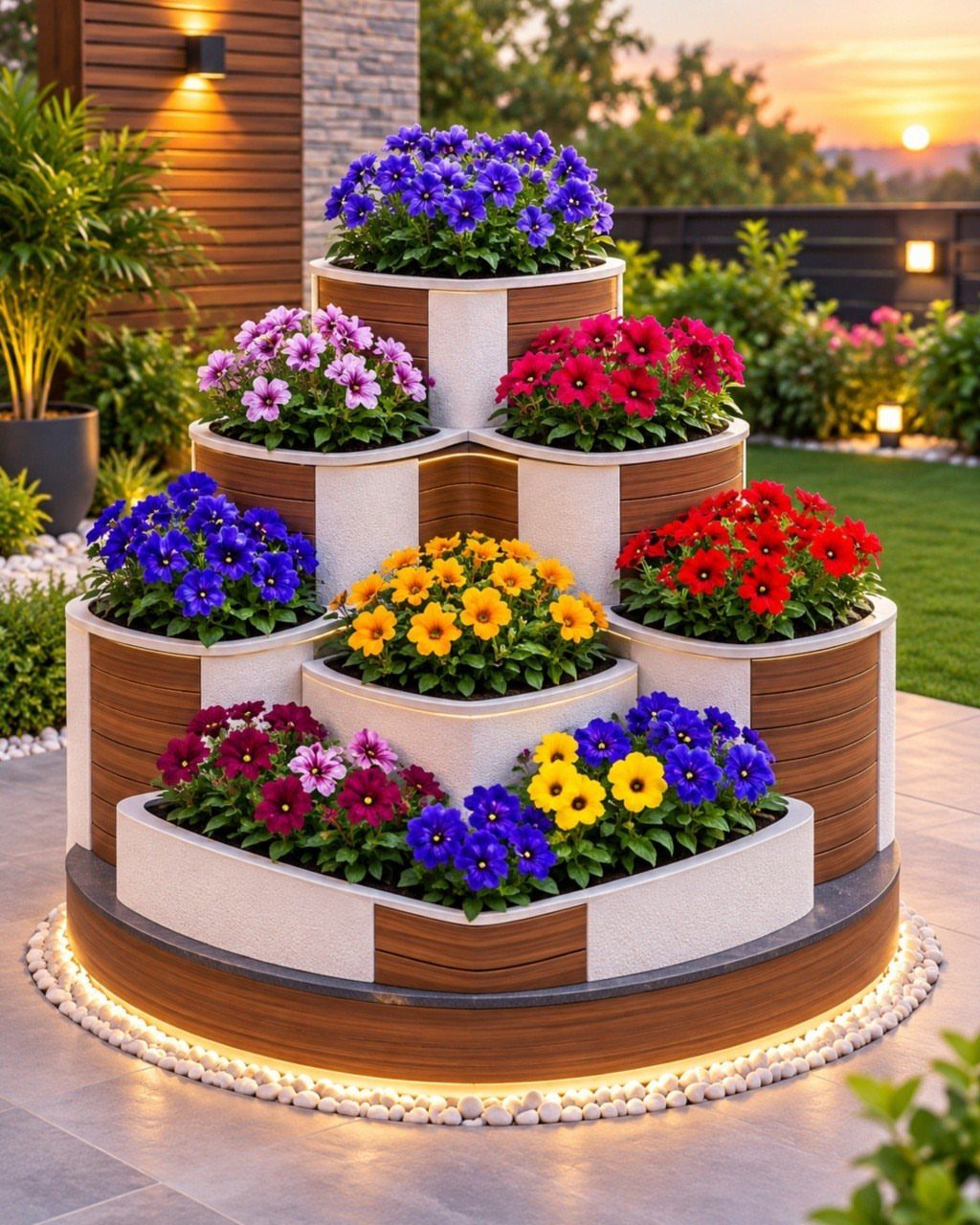
Stone and wood tiers read as built-in even when they are not. LED strip lighting along each rim turns the planter into its own lamp after sunset, which matters on a patio without outlets for string lights.
I would build up from a broad base, narrowing each level so the upper rings do not shade the lower ones to death. Annuals that mound rather than climb, calibrachoa or dwarf dahlias, keep each tier readable from the edge.
9. Wicker Basket Planters
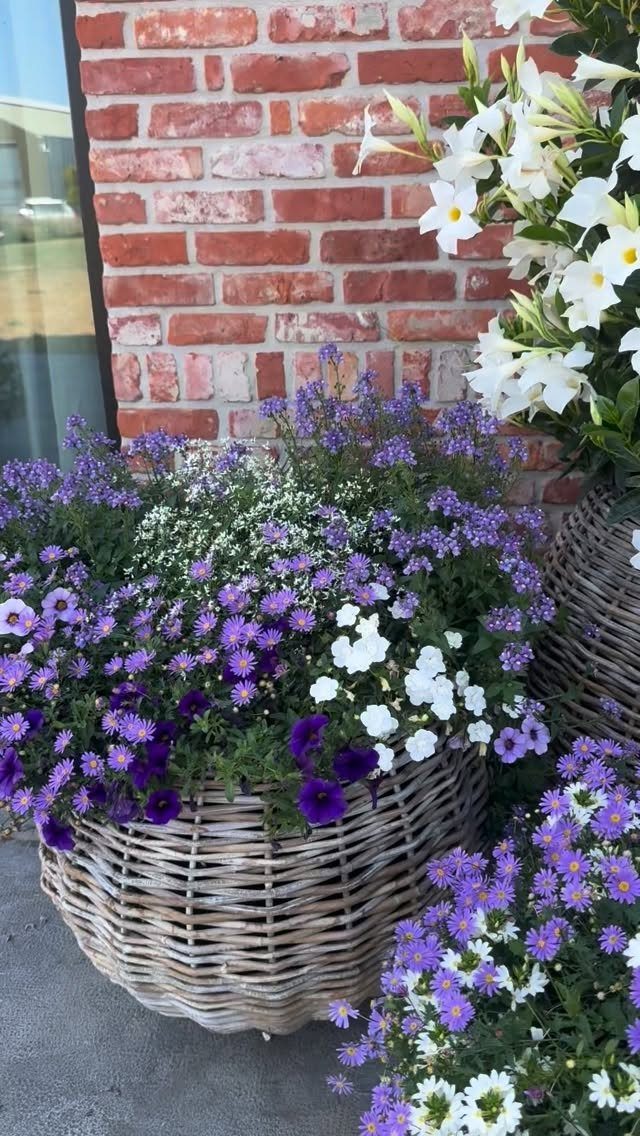
Wicker baskets look like you lifted them from indoors, which is half the idea. A plastic liner inside the weave is not optional; the basket itself will rot through in a season without one.
I drill hidden holes in that liner, set the whole thing on feet or a pallet scrap, and plant with potting mix, not garden soil that compacts. I would stick to 2 colors maximum or the basket detail gets lost.
10. Patio Border Garden Bed
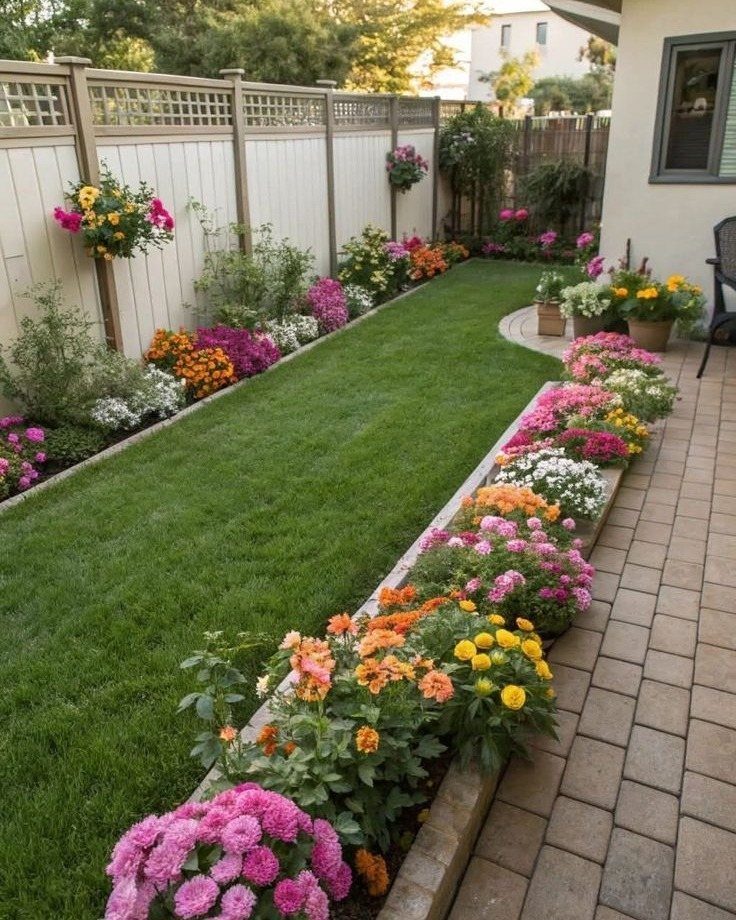
A border bed turns the line where patio meets lawn into something you planted on purpose. The narrow strip here works because the plants are packed shoulder to shoulder: no mulch visible, no bare soil, no weeding invitation.
I would edge with steel or stone to keep the lawn from marching back in, then layer short in front, tall in back.
Perennials save the replanting, but an annual edge of marigold or alyssum brightens the whole thing for pocket change.
11. Flower-Surrounded Patio Lounge
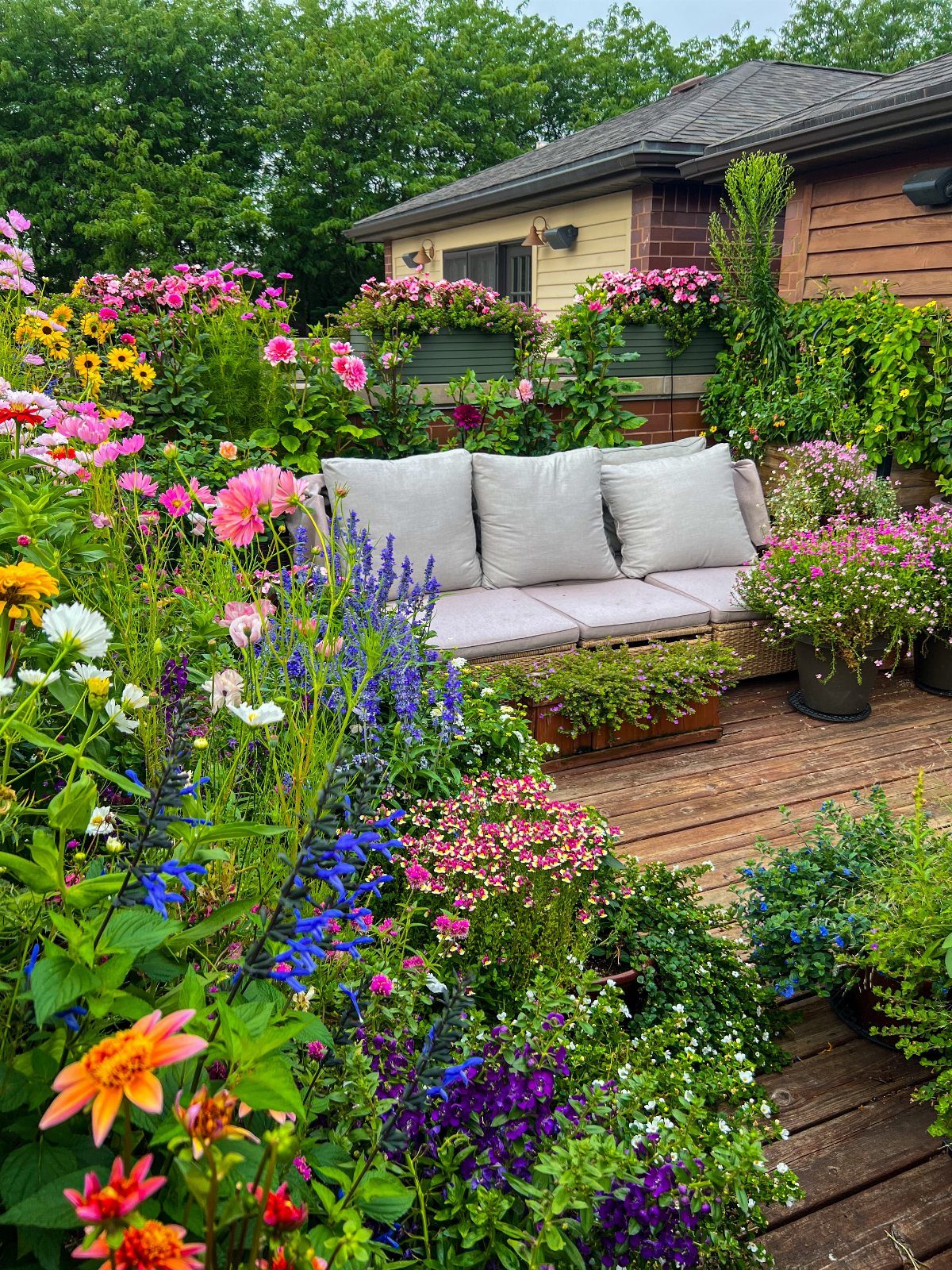
A sofa surrounded by bloom reads as a room with the walls left off.
The raised beds here do the heavy lifting; they keep the roots above any drainage problem in the patio base and let me plant at sitting height.
I would put the tallest plants behind the seating, medium in the side beds, and keep the view corridor clear or the enclosure turns to clutter.
The grey cushions are doing work too, neutral against whatever the flowers do in August.
12. Patio Railing Planter Boxes
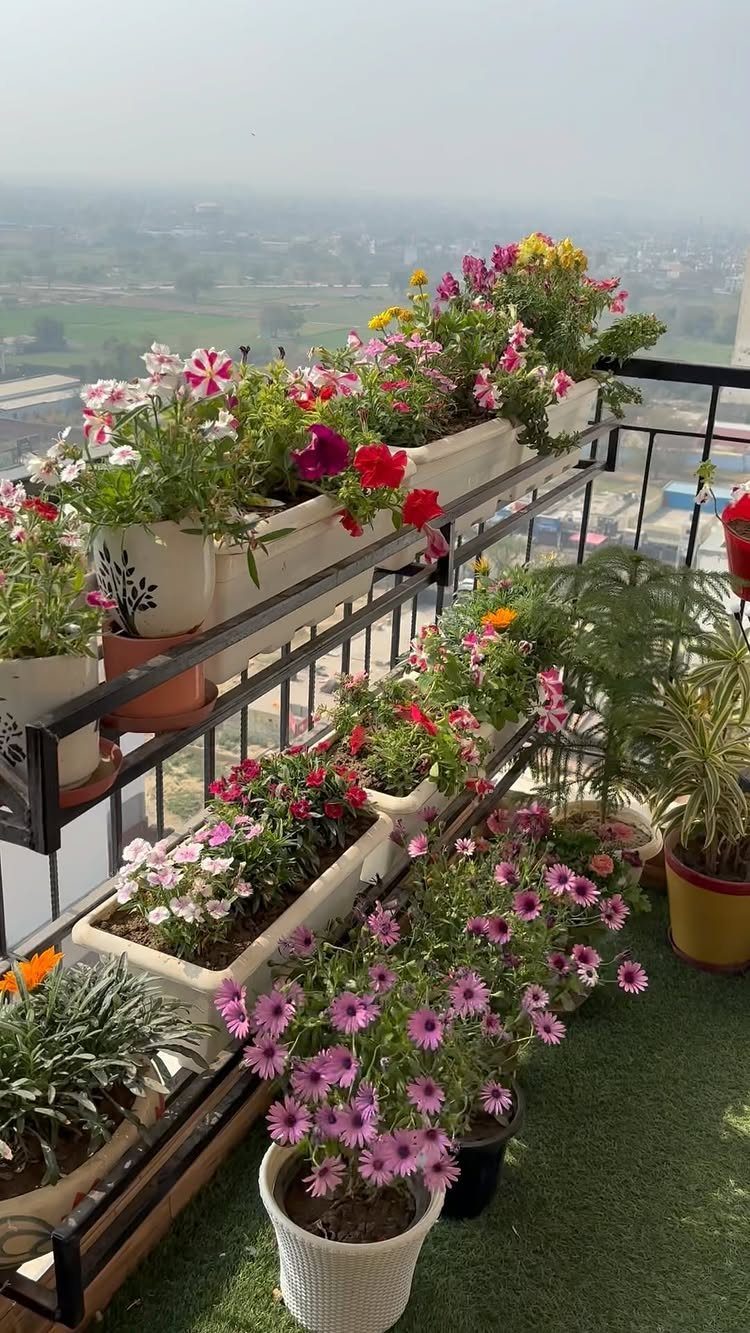
Railing boxes put flowers at eye level for the price of shelf space you were not using. Metal racks that hang on the outside leave the rail free to lean on; inside, they eat the rail I need.
Rectangular boxes fit the geometry, but I check my rail width against the bracket hook before I buy, a half-inch mismatch being enough to make the thing rock in wind.
Annuals with a trailing habit, million bells or lobelia, soften the box edge and read fuller than upright plants would.
13. Climbing Morning Glory Pergola
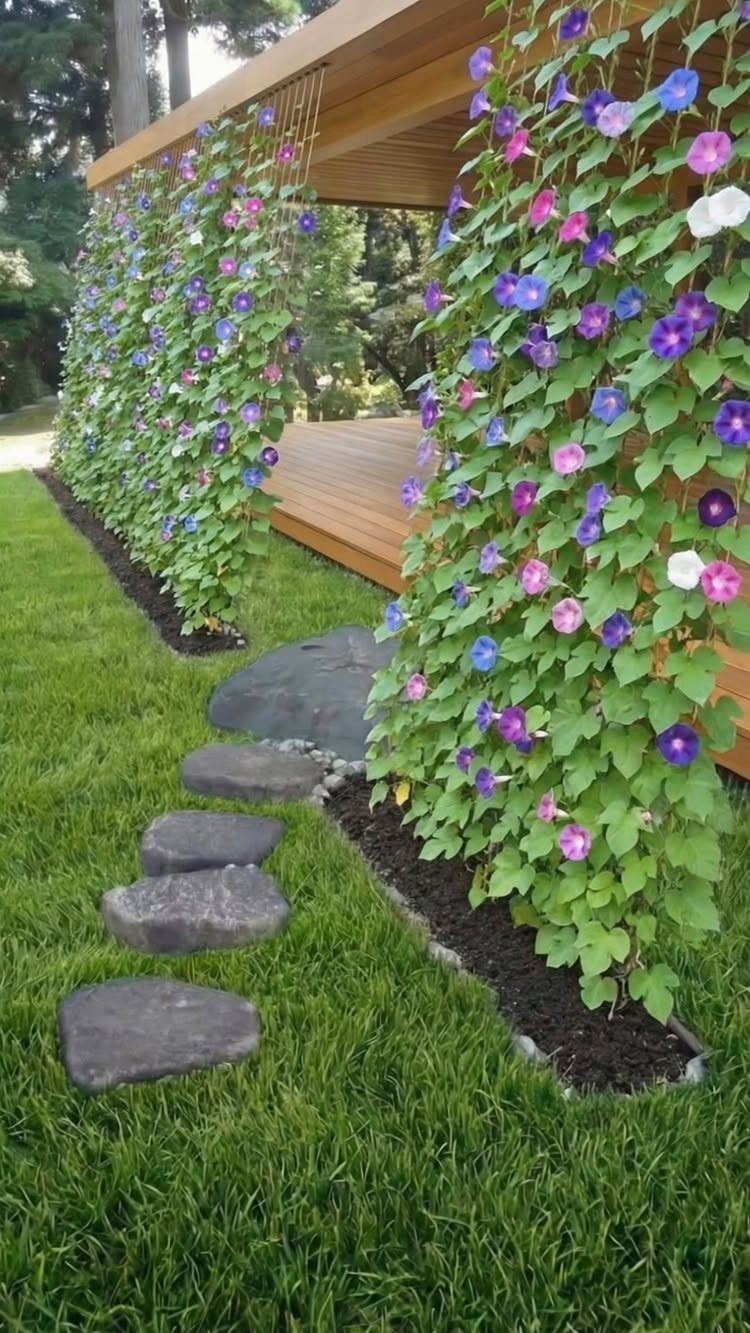
Morning glory on a pergola gives you bloom overhead by late July for the price of a seed packet.
The vines twine counter-clockwise, so I run cord or thin twine from ground level to beam, spaced a foot apart, and let them find it.
Each seed coat is hard; a soak in warm water overnight cracks it and doubles germination. I plant close to post bases, where rain pools and roots stay cool.
Purple and pink cultivars open fresh each dawn and fade by afternoon; that rhythm suits a space you pass through rather than one you sit in all day.
The foliage turns shabby after the first frost, so I pull the whole vine then and let the bare cords winter clean.
Selecting the Right Plants
Climate zone and daily sunlight hours decide what lives and what struggles. I check the plant tag for hardiness before I buy, not after, because a zone mismatch means replanting in June.
Annuals and perennials serve different purposes on a patio. Annuals give one season of color for the price of replanting; perennials come back but some spread fast enough to own the container by year two.
I stay away from varieties described as "vigorous" or "colonizing" in small spaces, and I group by need: drought-tolerant portulaca with moss rose, thirsty coleus with geraniums. Two mismatched plants in one pot means one thrives at the other’s expense.
Container Care Tips
Drainage holes are not optional; I flip every pot in the store to check. Without them, roots sit in water and rot inside a week.
Potting mix matters more than the container price. Garden soil compacts in a pot, so I buy the bagged mix and fill to within an inch of the rim so water stays in instead of running off.
Larger containers hold moisture longer, which saves me daily watering in July, but I remember the weight before I commit to moving it. A fully soaked planter can crack a deck or strain a back.
Durable materials pay for themselves.
Terra cotta breathes well but cracks in a hard freeze; resin or fiberglass weathers the shift from summer sun to a January cold snap without splitting. I spend once on that, not twice on replacements.
Designing for Small Spaces
Vertical elements buy floor space I do not have. Hanging baskets do the same overhead, though I place them where the drip does not land on seating.
Mobility changes everything. Fixed planters lock me into one arrangement; I use them only where the light truly never moves.
Intentional spacing keeps a small patio from reading as crowded.
I leave paths wide enough to walk with a hose, and I cluster by function: cooking area here, seating there, green wall behind. When each piece earns its place, the space feels larger than the square footage says it should.
Frequently Asked Questions
What are the best flowers to grow on a patio?
Compact annuals and perennials that suit your container size and sunlight hours work best. Coleus fills fast and holds color in part shade; geraniums give steady color; portulaca and moss rose shrug off heat and a missed watering.
Hardiness zone is the first thing I look at on the tag; if the plant won’t survive your winter, you’re just renting it until summer.
What is the 3-5-7 rule in landscaping?
This rule suggests planting in odd numbers, 3, 5, or 7 of the same variety, for a balanced look that reads natural rather than regimented.
Cottage-style planting runs on the same instinct: mix the varieties, let them spill together, and never let anything line up like soldiers.
What are some creative ideas for a flower garden layout?
Wall-mounted trellises and hanging baskets pull color up off the floor, which matters when every square foot counts. Tiered planters, arched trellises in rectangular boxes, and railing planters put bloom at eye level without eating square footage.
I group by what happens there, cooking in one spot and seating in another, so each area pulls its weight and the whole space reads bigger.
How do you design a flower bed for a small yard?
Start by sketching the area on graph paper to visualize what you want, then layer short plants in front and tall in back so nothing gets lost.
For a patio border I pack plants tight enough that no soil shows, then edge with steel or stone so the lawn stays on its side.
A front row of marigold or alyssum sets the whole bed glowing from May to frost, and the seed packets cost less than a coffee run.





