
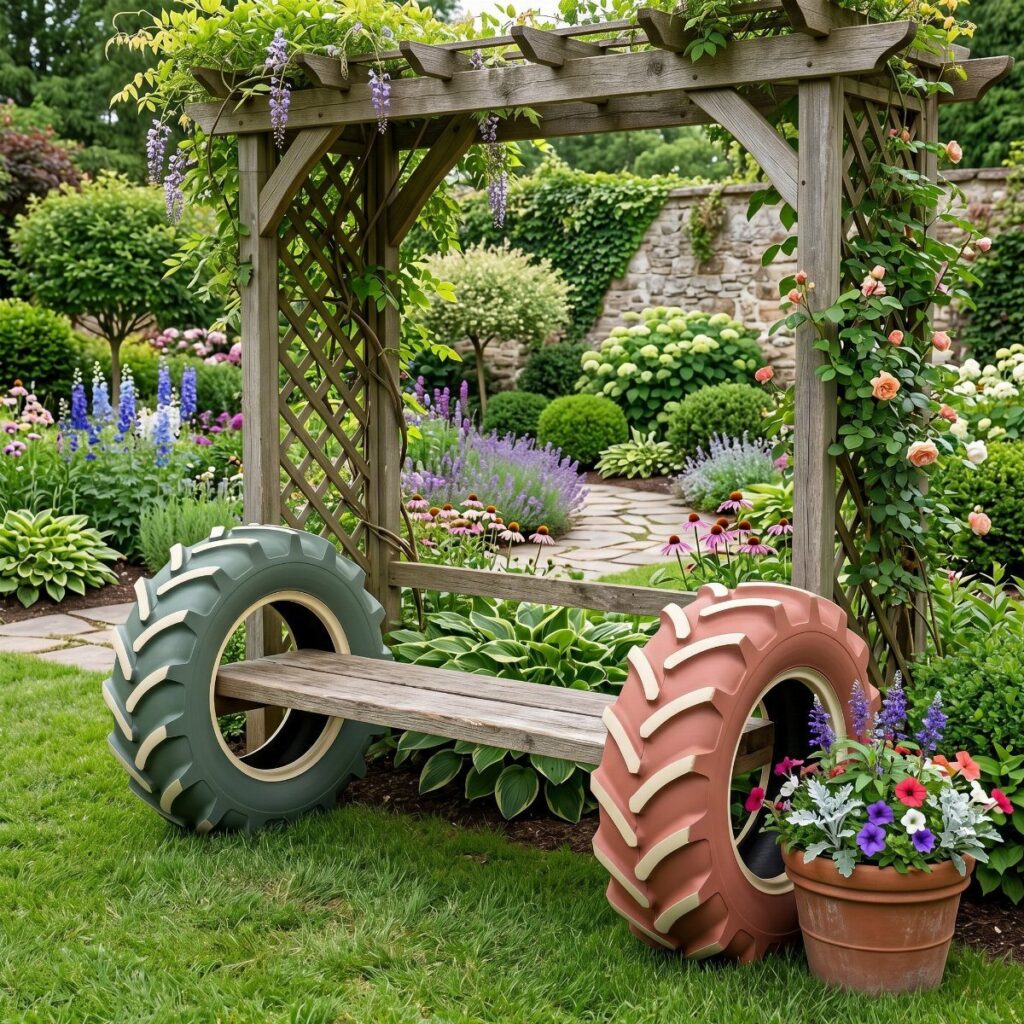
The benches below include a cinder block stack that costs little more than lumber and an afternoon, and a concrete planter bench that needs a hand to move once it cures.
What separates them is not skill level but permanence: the cinder block bench comes apart when the lease ends, while the built-in planter and concrete benches commit to a spot for years.
The fallen tree bench alone needs a season of drying time before it is stable enough to sit on, which tells you where the real cost of outdoor furniture lives.
1. Sturdy Garden Bench
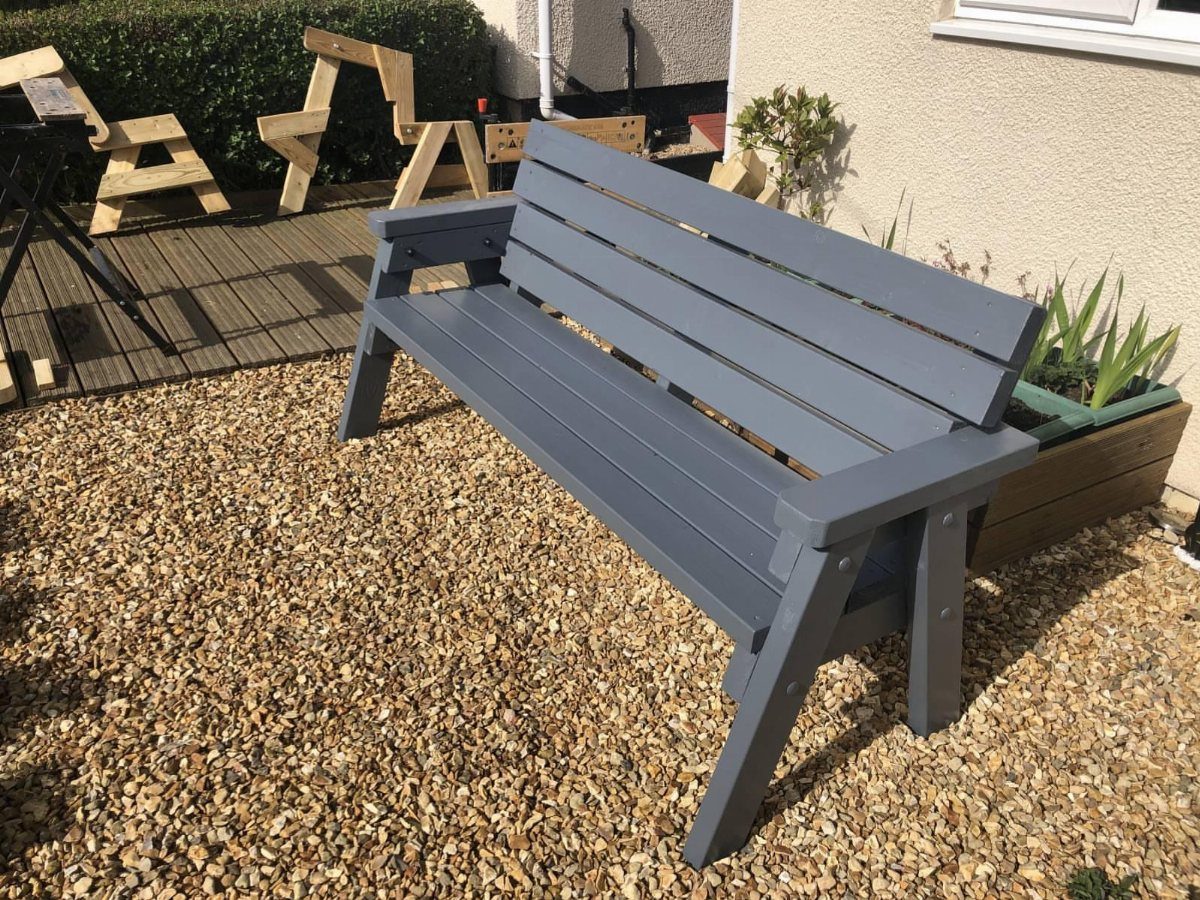
A bench meant for daily family use needs to earn its place through joinery, not just paint. The slatted backrest and solid legs here are built to take weight and weather, and the grey finish buys you time between re-coats.
I would build the frame in pine or affordable white oak and spend my money on exterior-grade fasteners and a deck paint that flexes with the wood.
Assembly takes a Saturday; drying takes two. A bench that moves where you need it and survives the move is worth building right.
2. DIY Garden Bench with Backrest
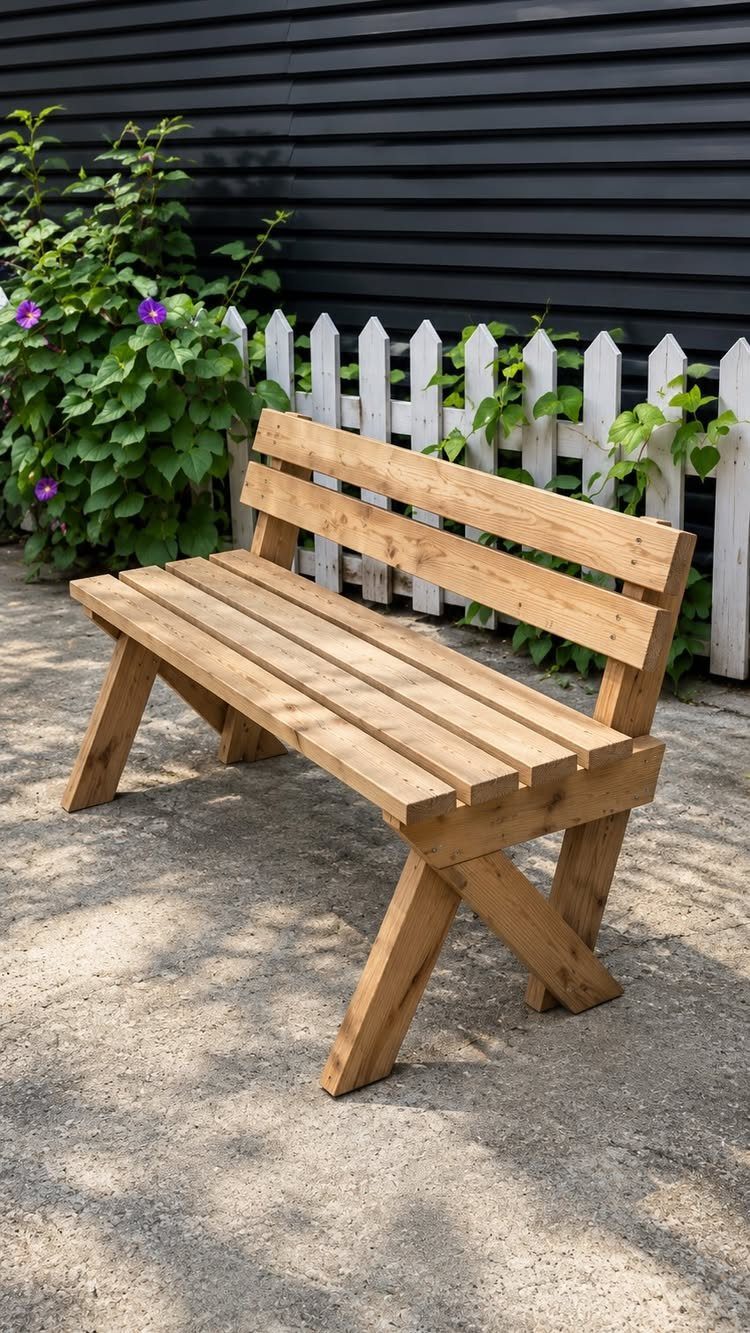
Comfort outdoors comes down to angle. The slanted backrest here sits at enough of an angle to lean into without fighting gravity.
X-frame legs spread the load across more points than a simple pair, so this design suits softer ground or a stone patio with uneven joints.
Build it in cedar if the budget stretches; build it in construction-grade pine if it does not, and stain it dark to hide the grain.
3. DIY Wooden Garden Bench
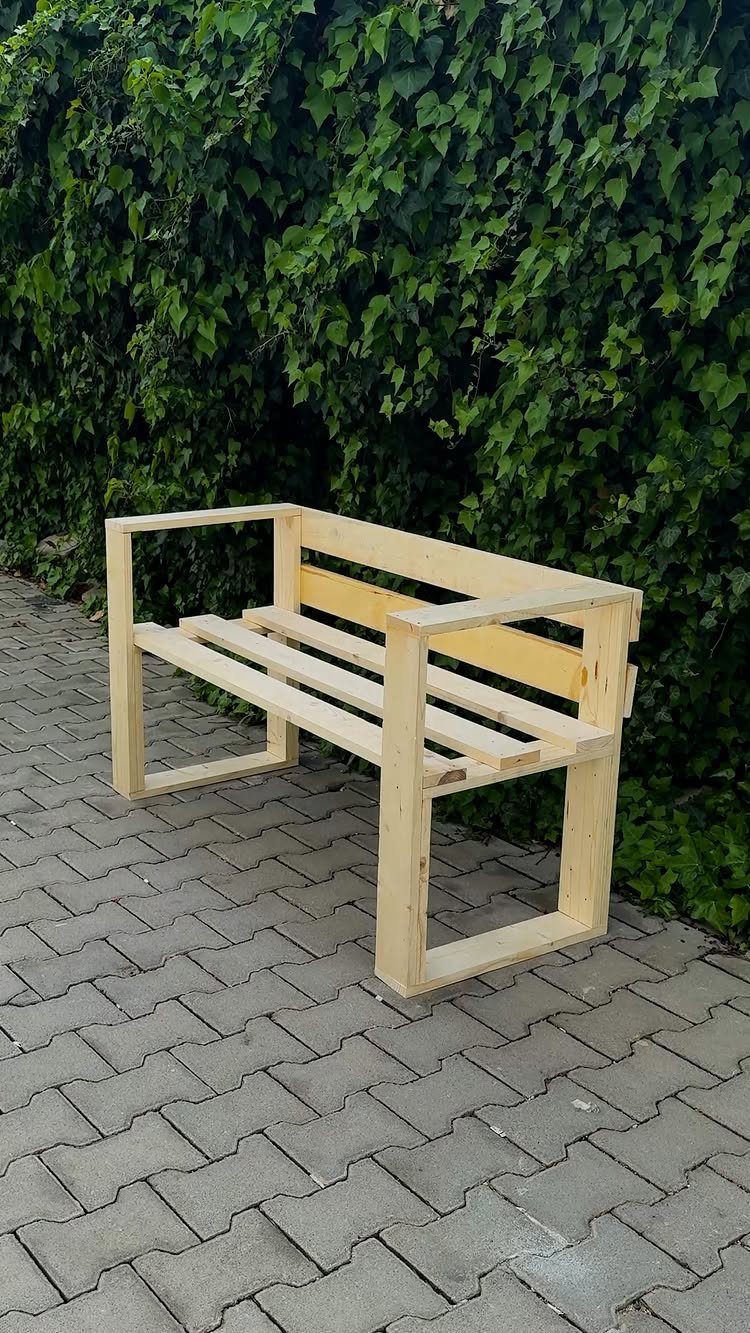
Bare wood against brick and ivy reads as finished already, which saves you a step and a season of fumes. Gaps between slats let rain through so the wood dries faster and the bench lasts longer.
I would rip boards for the slats and set them with a small gap, held by a simple apron frame with legs notched into the corners.
No backrest means no angled cuts, so this goes together in an afternoon with a circular saw and a drill. Leave it raw and let it silver, or oil it once a year.
4. Leopold-style Outdoor Bench
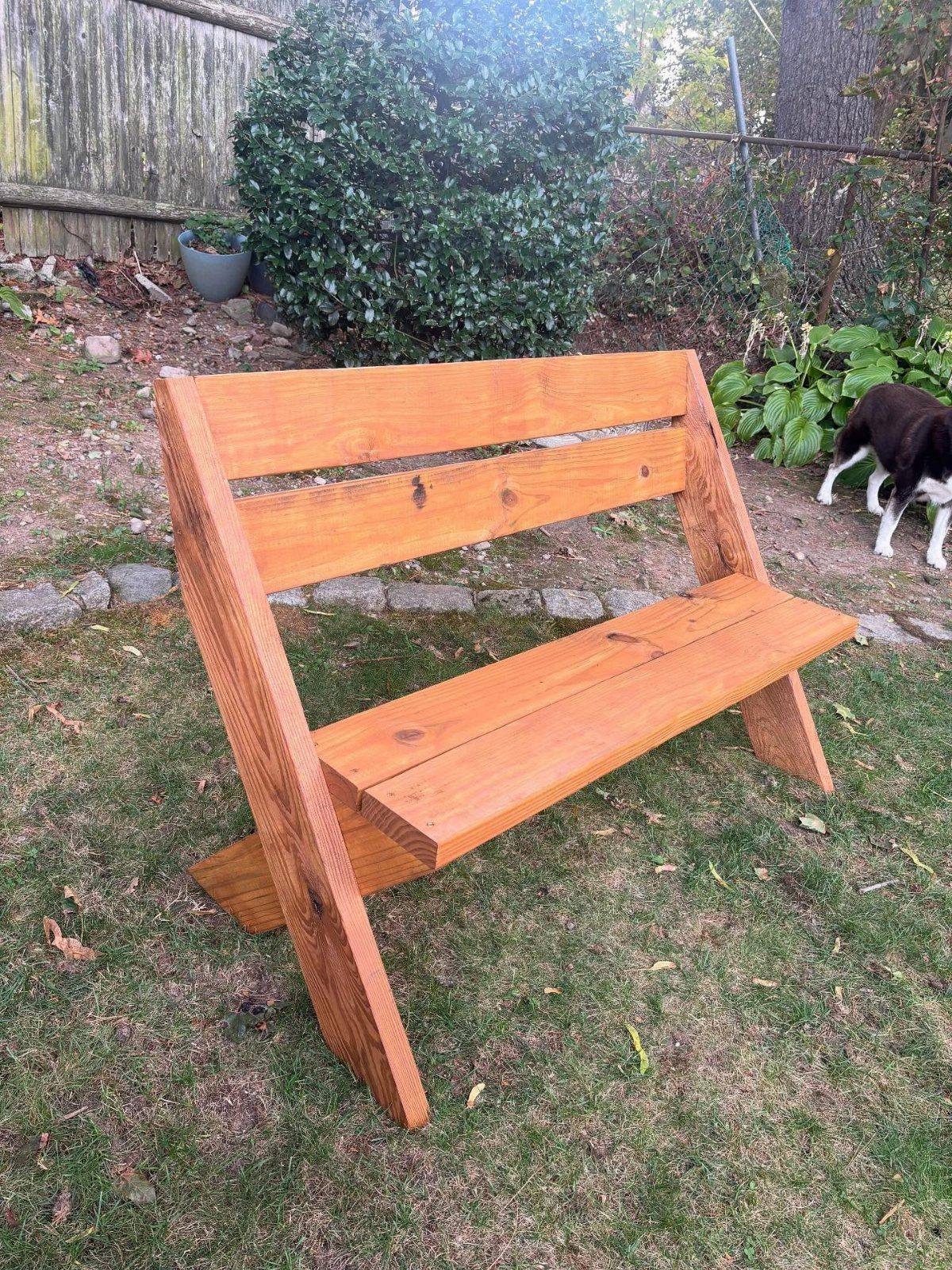
Aldo Leopold built his original bench from planks and not much else, and the design still works because the geometry does the work.
The backrest and seat meet at a comfortable recline without hardware fighting gravity; the wide planks give you room to set down a coffee cup or a pair of pruning shears.
This version in stained hardwood looks formal enough for a lawn but the structure is still 2 end assemblies joined by a front stretcher and a rear brace.
5. Fallen Tree Bench
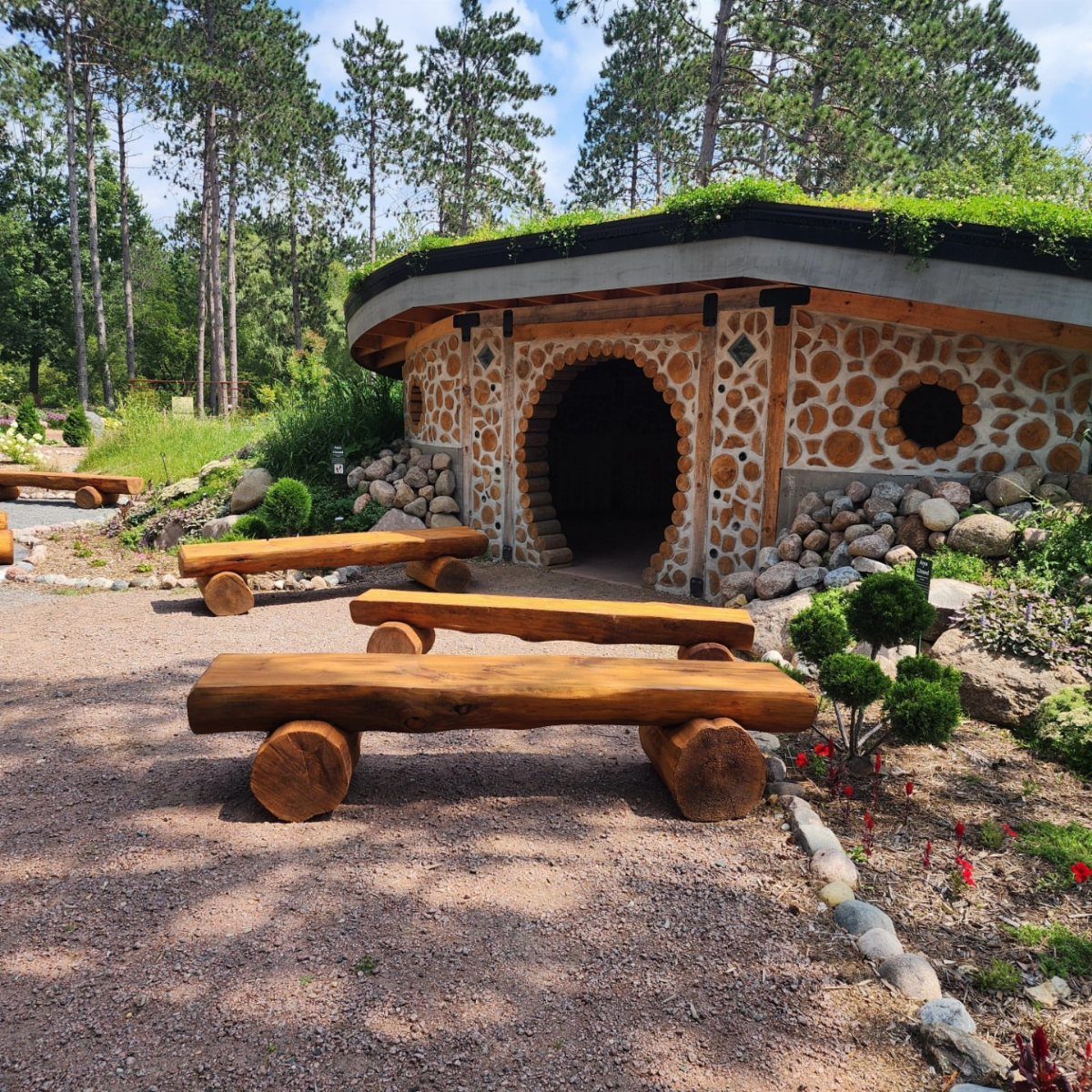
A log split in half and set on round stumps is furniture that makes itself if you have the tools and the tree. The bark side faces down for drainage; the flat side faces up for seating.
You will need a chainsaw mill or a willing sawmill to rip the log lengthwise, and the halves need a season to dry or they will check and warp.
I like this best where the setting is already rough: a gravel path, a woodpile corner, the edge of a vegetable garden. It is not comfortable for long sits, but it is honest and it costs only labor and time.
6. Simple Outdoor Dining Bench
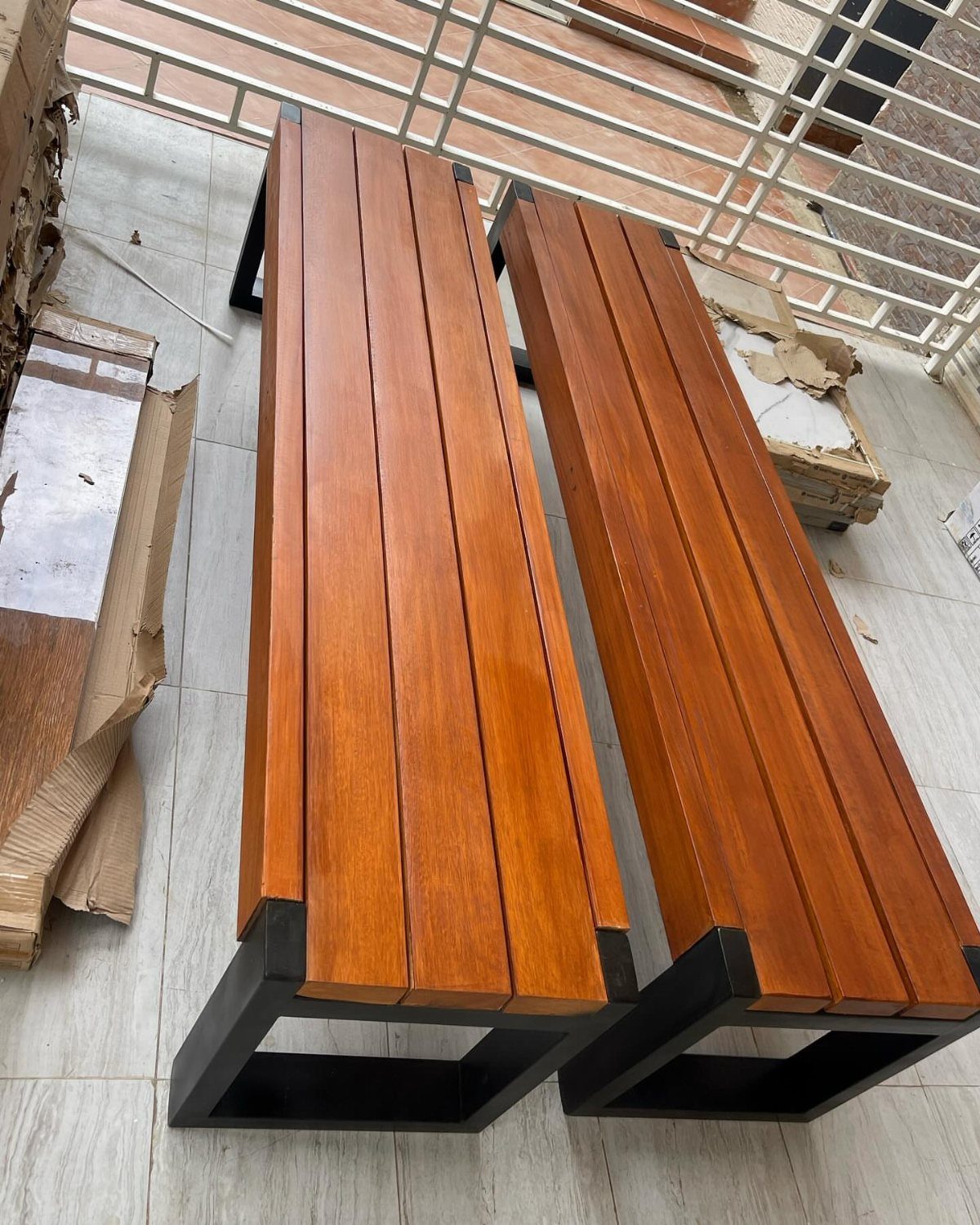
Metal legs and a wooden top split the difference between shop work and site assembly, and that is why this suits a balcony or a patio with tight access.
The black steel frames here are simple rectangular metal legs, bolted to a slatted top built from 1x material ripped to width and spaced for drainage.
I would use pressure-treated pine or cedar for the slats and finish with exterior oil; the steel wants a rust-inhibiting primer if it will sit wet.
The whole thing knocks down flat for moving day, which matters more than it should.
7. Built-in Planter Bench
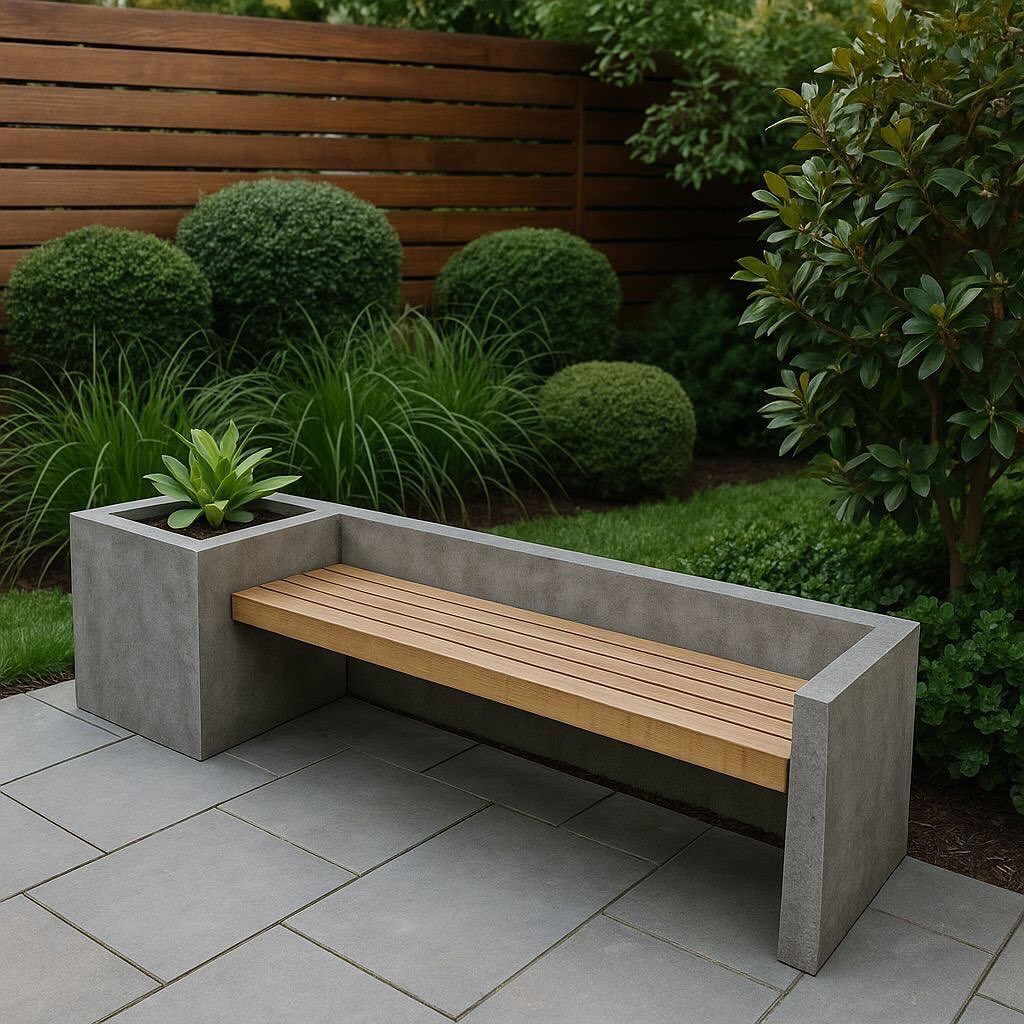
Concrete and wood together solve a problem plain benches ignore: where to put the plant that turns seating into a room.
The cube planter here is cast as part of the bench, not a pot set on top, so the soil mass stabilizes the whole unit against tipping.
I would pour the shell in 2 halves around a wooden form, then drop in a liner to keep moisture from the concrete.
The slatted seat in hardwood lifts out for cleaning. This weighs enough that you will want to decide its place before you build it; moving it later takes more than one person and a hand truck.
8. Cinder Block and Wood Bench
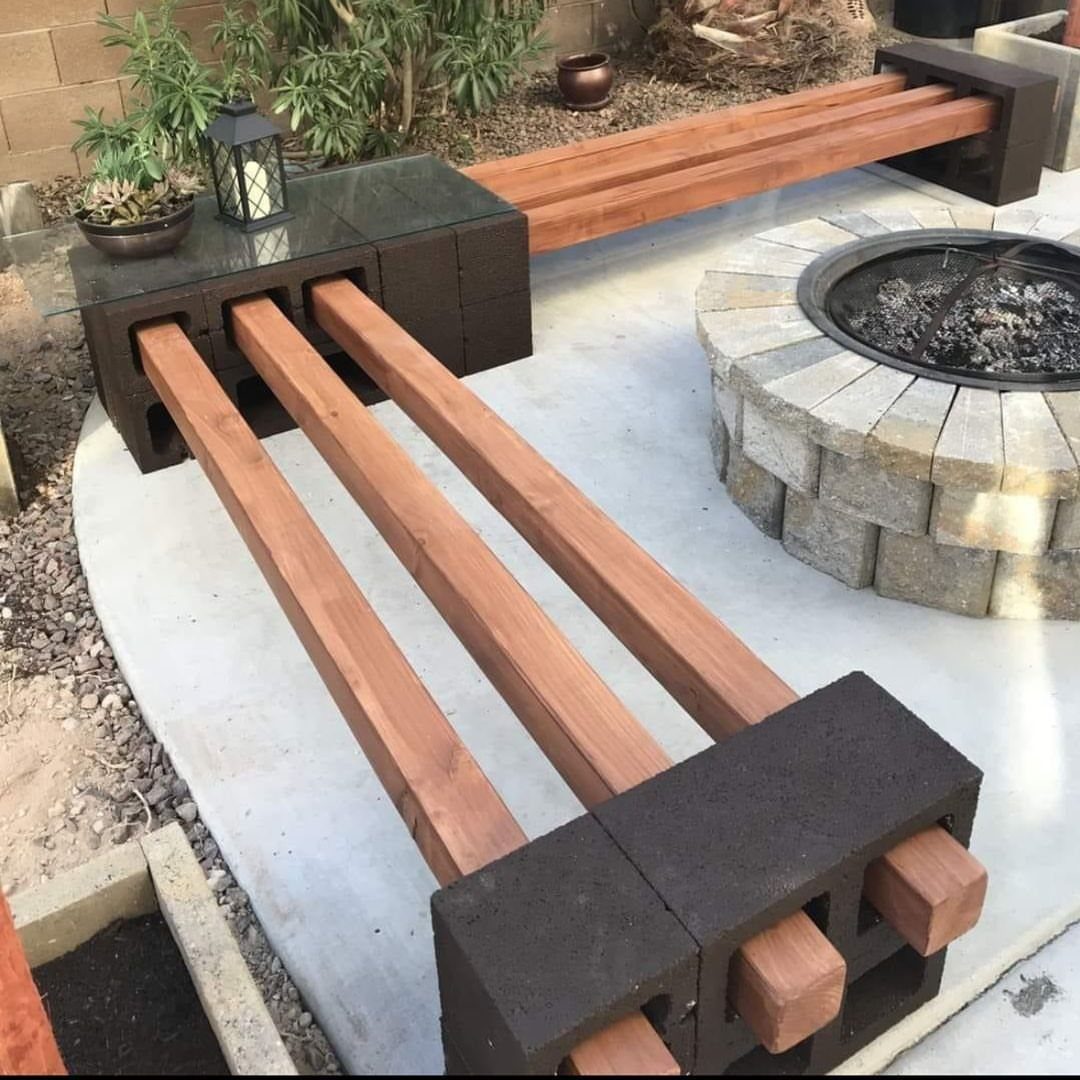
Cinder block benches earn their keep through geometry, not craft. The dark blocks here are stacked two high in an L, their hollow cores cradling 4×4 timbers that run the length of each leg.
No cutting angles, no hardware, no drying time: the wood rests in the channels and gravity does the rest.
I would paint the block with exterior latex to slow moisture, and choose ground-contact-rated timbers for the slats or they will rot where the block holds water.
The trade is comfort; a cushion is almost required for long sits. Take it apart fast when the lease ends or the layout changes.
Tools Needed for Building
A saw, drill, tape measure, and 2 clamps are enough for most builds. A miter saw speeds angled cuts but a circular saw with a square will do; a jigsaw handles curves when they come up.
A 1/8 inch drill bit is the right size for pilot holes, and a damp rag saves your work from excess glue before it skins.
A 60-tooth blade on that circular saw gives cleaner cuts in hardwood than the stock blade. Safety glasses and hearing protection belong on the list too; they cost less than an emergency room visit and you only buy them once.
Choosing the Right Wood
Pressure-treated pine is the default for outdoor work because the treatment resists rot without your help. Cedar and redwood cost more but contain their own preservatives; they weather to a quieter gray than pine and take stain more evenly.
Construction-grade pine is fine for a painted bench or one that lives under cover; bare pine outdoors turns fuzzy and gray in patches.
White oak sits between softwood and cedar on price and holds fasteners better than pine, which matters on a bench that gets moved. Ground-contact-rated lumber is worth the upgrade for legs or any part that touches soil or damp concrete.
Finishing and Maintenance
Sand to 120 grit, then 220, before any finish goes on; the extra step fills pores and catches splinters before the first sit.
Two coats of outdoor stain, sealant, or paint, with six to twelve hours between them, is the standard for weatherproofing. A finish with UV blockers buys time against sun damage and the graying that follows it.
Letting wood silver naturally skips all of this but the window while it bleaches unevenly can look rough; a single coat of exterior oil each spring keeps color longer for less labor than full refinishing.
Re-coat when water stops beading on the surface, not on a schedule.
Frequently Asked Questions
How can I make a cheap outdoor bench?
A Leopold-style bench built from 2x4s costs about $30 in lumber and takes roughly 30 minutes with three power tools.
The design keeps the geometry straightforward, so you are paying for boards and a little stain rather than brackets or specialty joints.
Leave it unfinished and it silvers down on its own, which saves both the cost of stain and the hours of brushing it on.
What type of wood is best for making a garden bench?
Pressure-treated pine is what most outdoor builds start with; the chemical bath does the rot prevention for you.
Cedar and redwood run higher but their own oils fight decay, and they gray out calmer and more uniform than pine ever will.
Painted benches or anything sitting under a roof can get away with common construction pine; left raw in the rain it blotches and fuzzes.





