
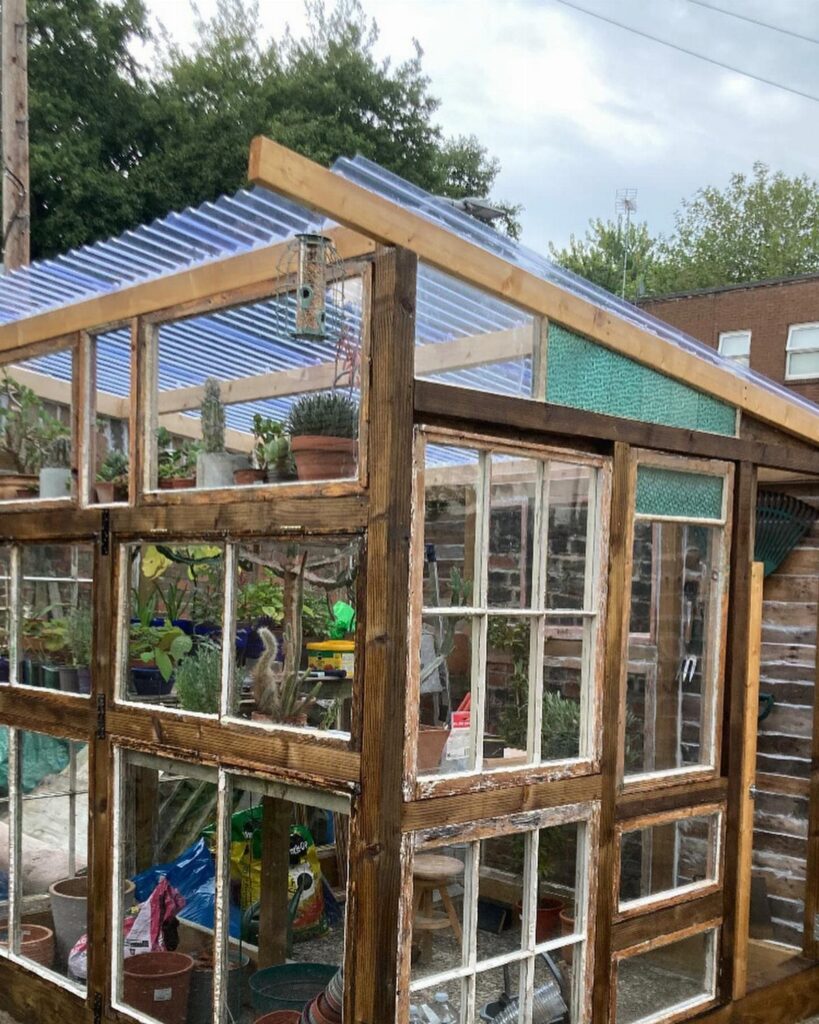
A greenhouse can be a $100 hoop house of PVC and plastic sheeting or a timber-framed Victorian kit that runs thousands before you hang the first pane, and the list below covers both ends of that range plus everything in between.
What picks one over another is not price but whether you need the structure this season or have the patience to hunt demolition yards for matching window sashes, and every option from the quick-build hoop house to the upcycled window greenhouse demands a different answer to that question.
I would call the city about permits before buying anything; some jurisdictions count a lean-to against your house as interior space and want fire separation or egress windows, while a simple cold frame on a raised bed skips the paperwork entirely.
1. Kitchen Greenhouse
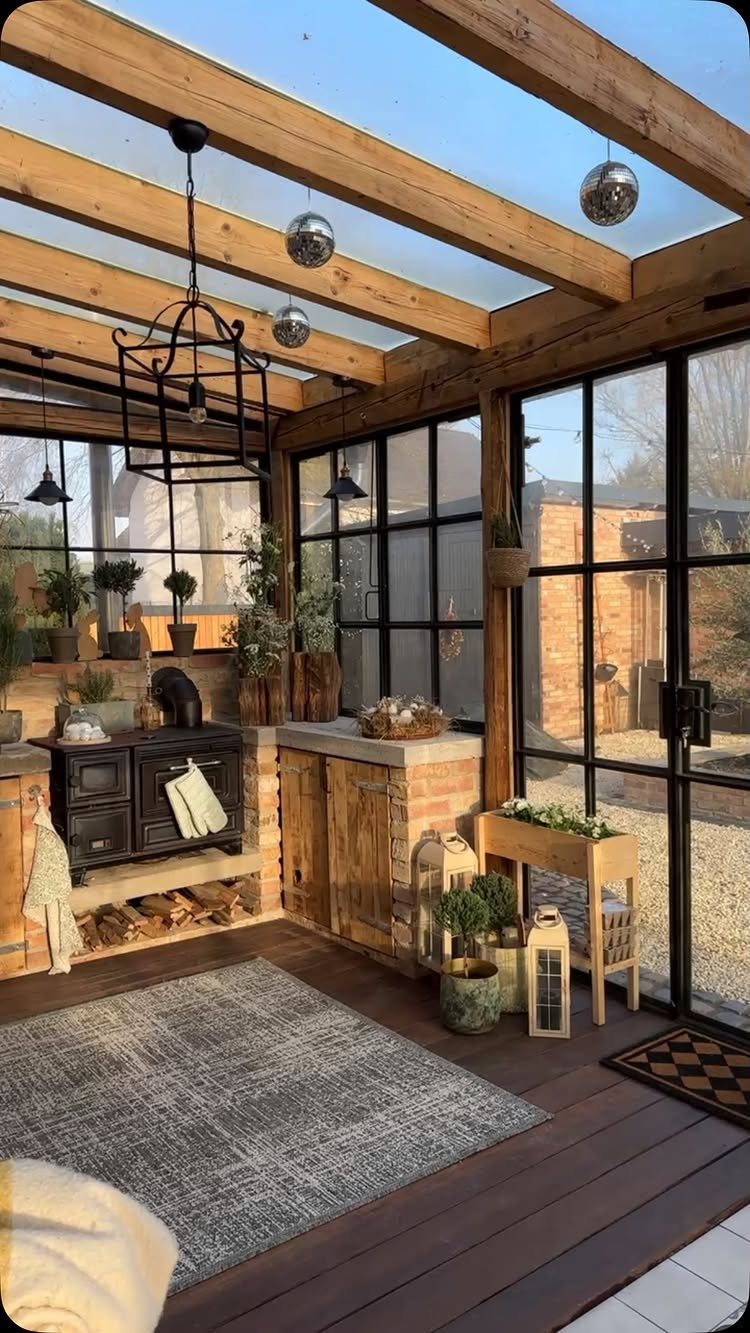
A kitchen inside a greenhouse turns the room itself into a growing space.
Brick counters and a wood stove keep the rustic feel practical, while potted herbs sit where you’d normally park a toaster. I like this for renters who can’t build outside: the structure is already there, you’re just living in it.
Herbs need the light, you need the kitchen; the overlap saves square footage neither side can spare. The disco balls are optional, though I wouldn’t judge you for keeping them.
2. Upcycled Window Greenhouse
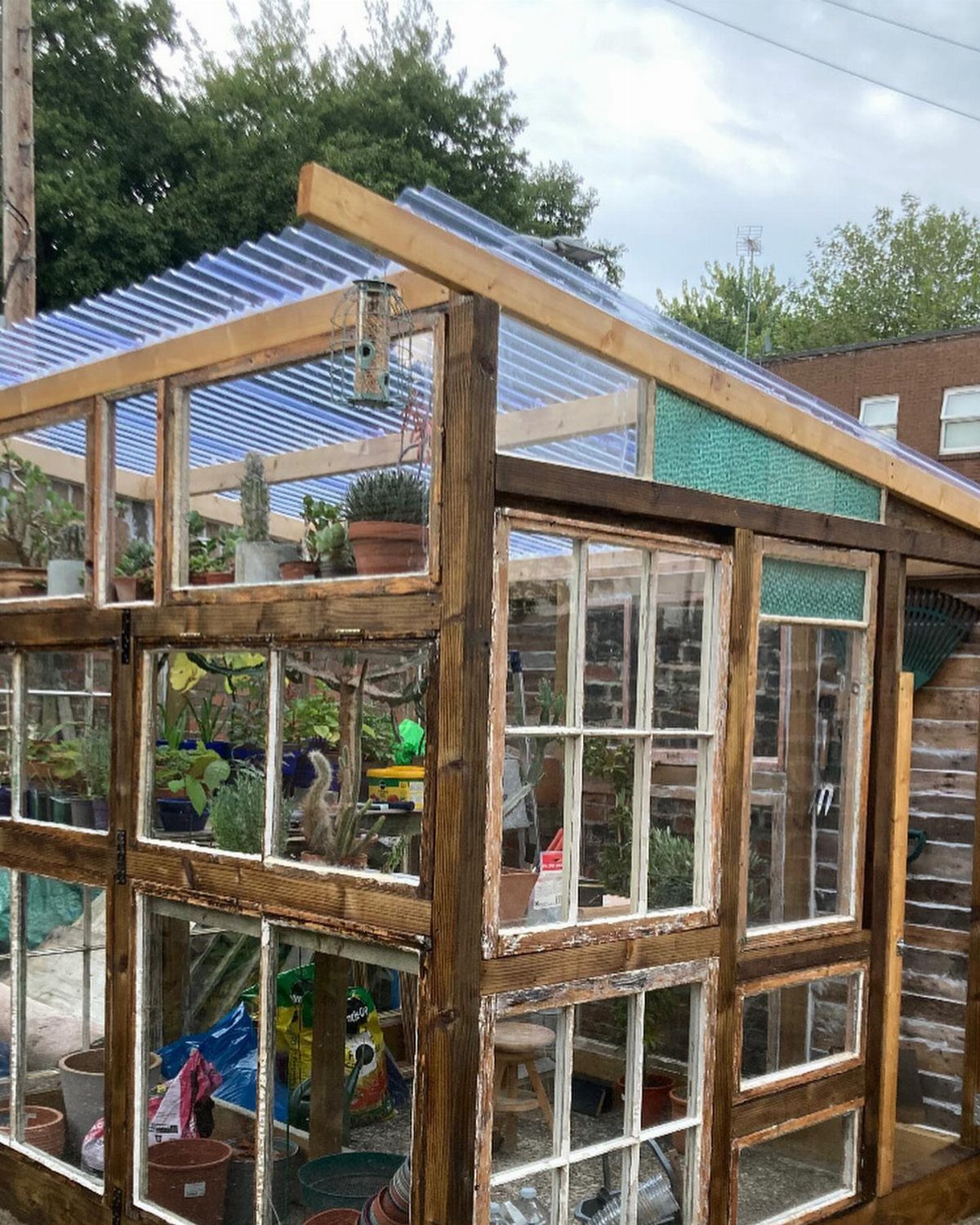
Salvaged window frames give a greenhouse its walls and its story.
Each frame brings its own dimensions, so the build works around what you find rather than forcing a plan. Corrugated translucent roofing above lets light through without the weight of glass overhead.
I would hunt demolition yards and Habitat ReStores for matching sizes; enough matching sashes make a side wall that actually seals. Caulk the gaps, hinge one frame for a door, and the whole thing costs mostly time and patience.
3. Upcycled Container Planters
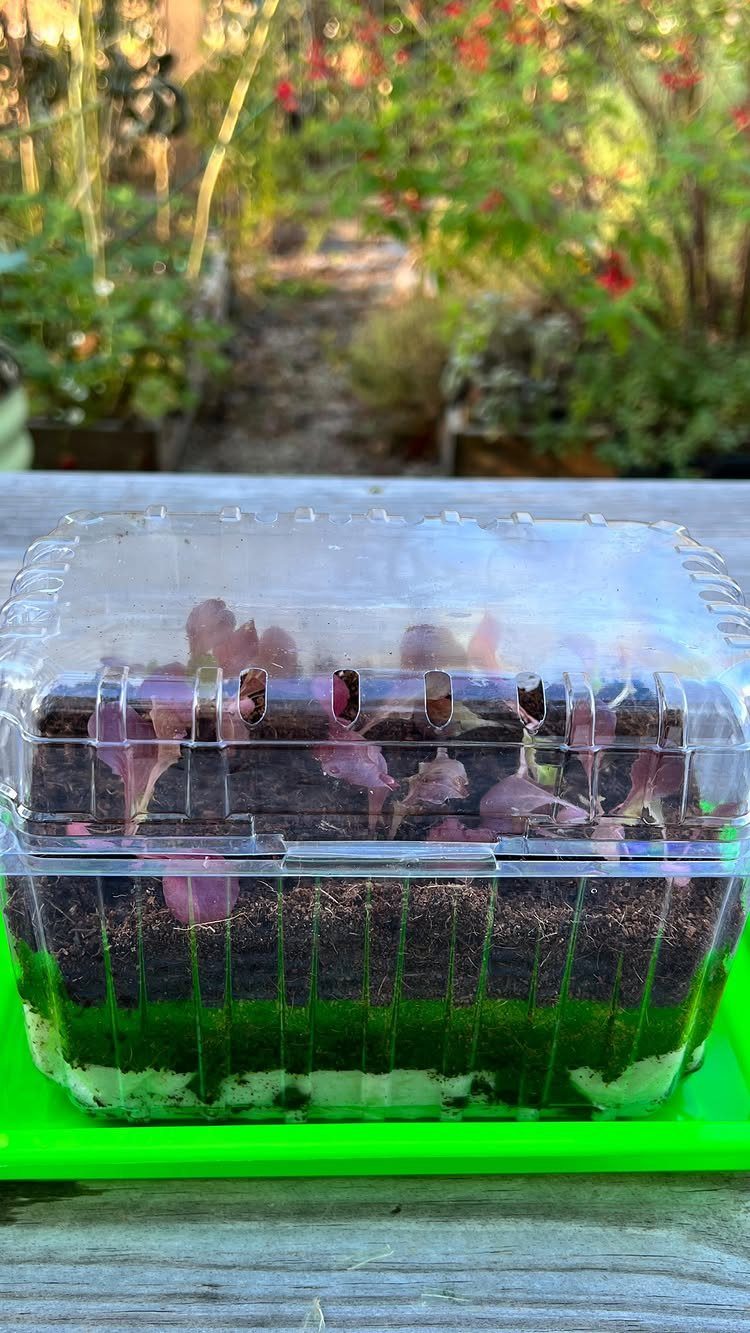
Clear clamshells from the produce aisle make instant mini greenhouses for seedlings.
The hinged lid props open for air, snaps shut for humidity, and the whole thing goes straight on a heat mat. I start tomatoes in these every spring.
Punch a few drainage holes in the bottom first; without them, you get mold instead of roots. Stack them inside a cardboard flat and the setup costs nothing, stores flat, and keeps the kitchen table clean.
4. Hoop House
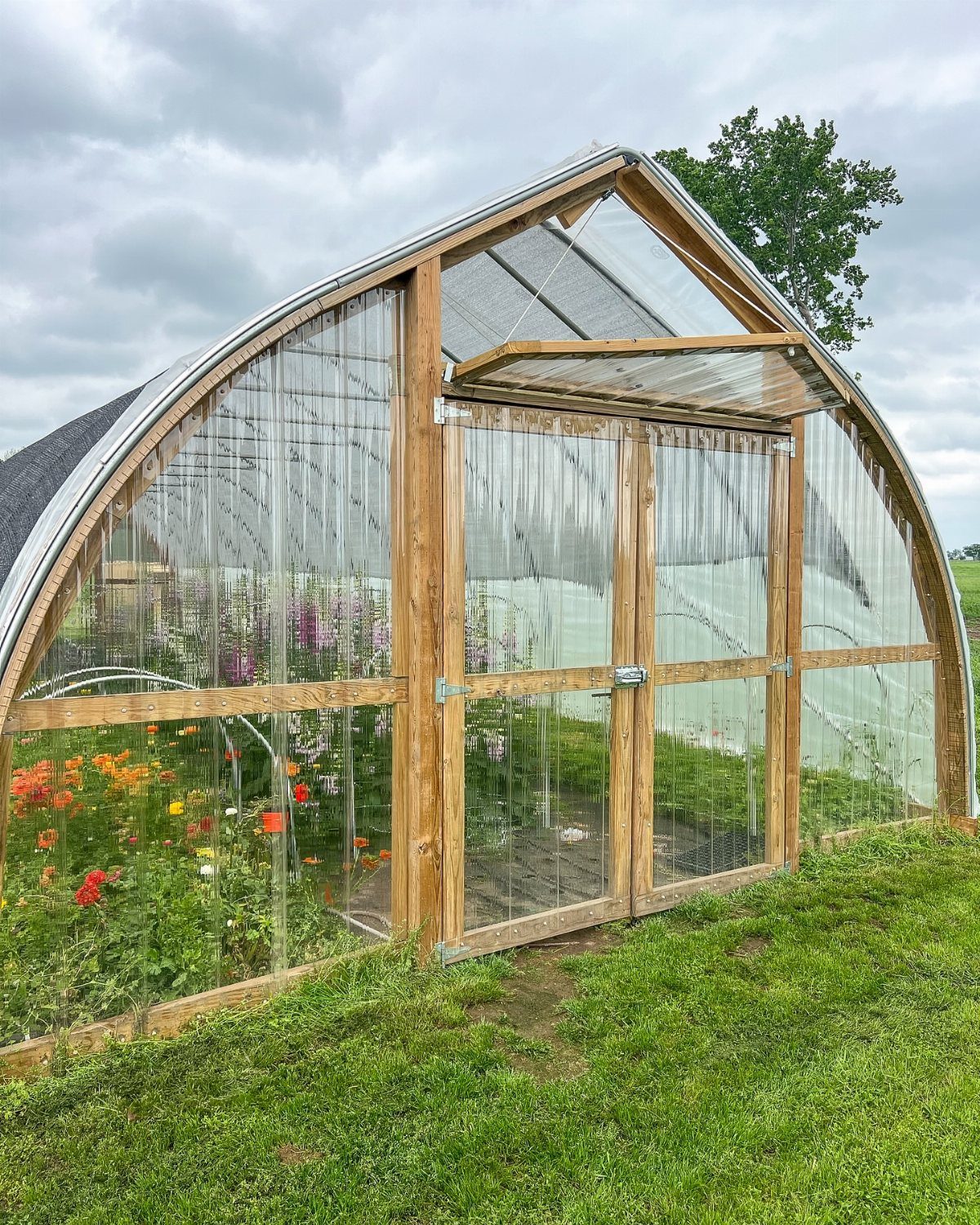
A wooden face frame with corrugated plastic panels gives you a season extender that holds up to wind better than sheeting, though you will spend more on materials.
A wooden face frame adds a door and some stiffness against wind; without it, the hoops skate across the yard. I would sink rebar stakes a foot deep and slip the pipe ends over them.
The plastic sheeting lasts a few seasons depending on your UV exposure; buy the rated greenhouse film, not painter’s drop cloth. One person can build this in a Saturday afternoon.
5. Vertical Gardening in Greenhouse
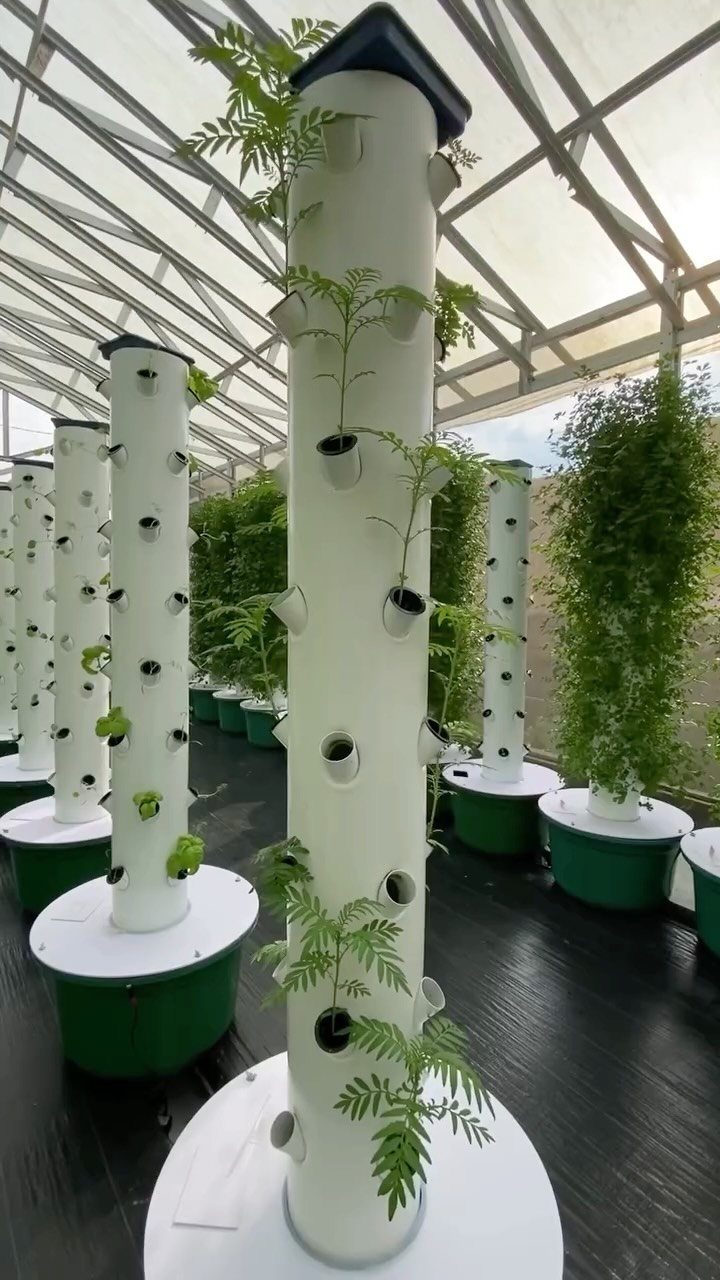
Hydroponic towers turn floor space into wall space, which matters when your greenhouse is a walk-in closet.
The green bases hold a reservoir and small pump that recirculates nutrient water through the column; you add water weekly and swap nutrients monthly.
I see these in commercial setups, but the home versions run on a timer and a standard outlet.
Strawberries and leafy greens do best here; tomatoes want more root room than a tower gives. Start with one column and expand sideways if the harvest justifies it.
6. Lean-To Greenhouse
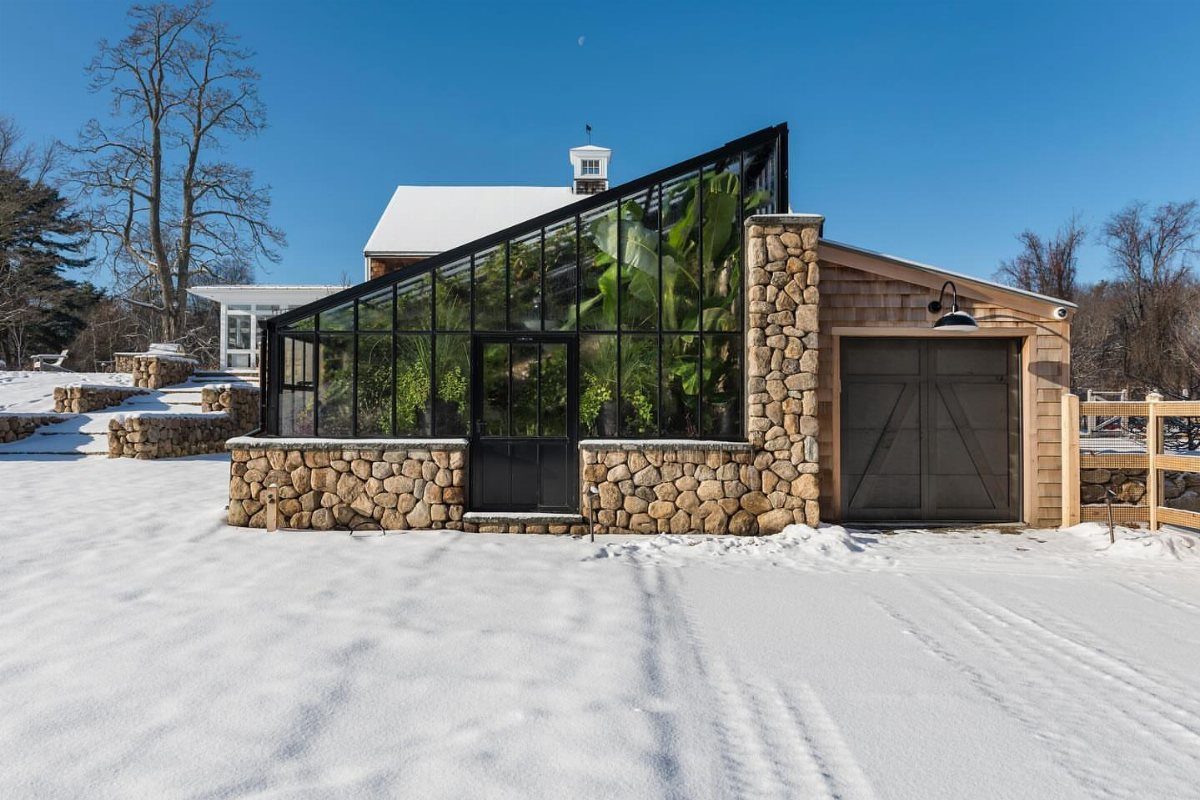
A greenhouse that shares one wall with your house, garage, or shed cuts your build in half and your heating bill with it.
A lean-to against brick or stone uses the existing structure for thermal mass; even in snow, that shared wall stays warmer than freestanding glass.
I would face mine south if possible, and check local code: some jurisdictions count the shared wall as interior space and want egress windows or fire separation.
The slope of the roof matters for snow shedding; a steeper pitch clears itself, shallow ones need brushing.
7. Mini Greenhouse
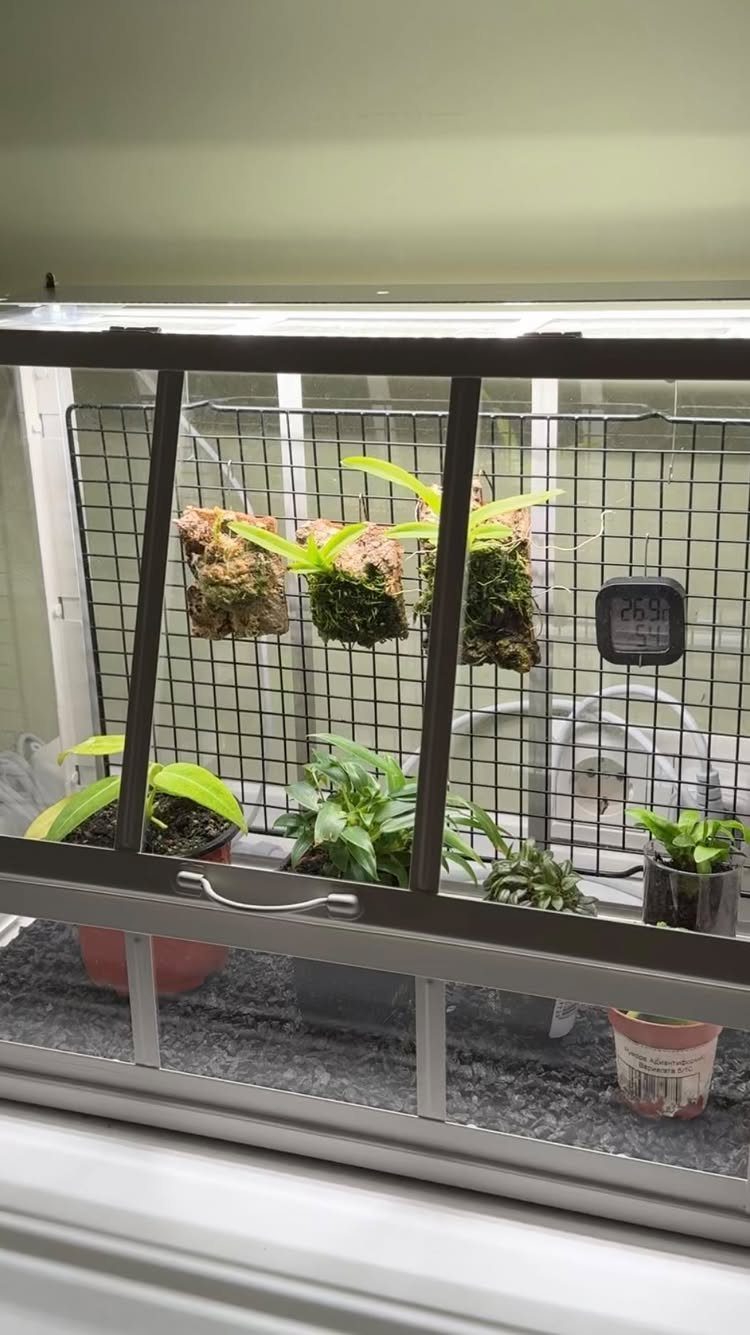
A tabletop greenhouse keeps humidity steady for orchids and ferns without surrendering floor space. The glass panels let you watch moisture bead and evaporate, and the small digital readout tells you when to crack the lid before mold sets in.
I would line the base with pebbles and water rather than mist directly; the humidity rises more evenly that way. An internal light extends your shelf options to spots far from a window.
8. Portable Greenhouse
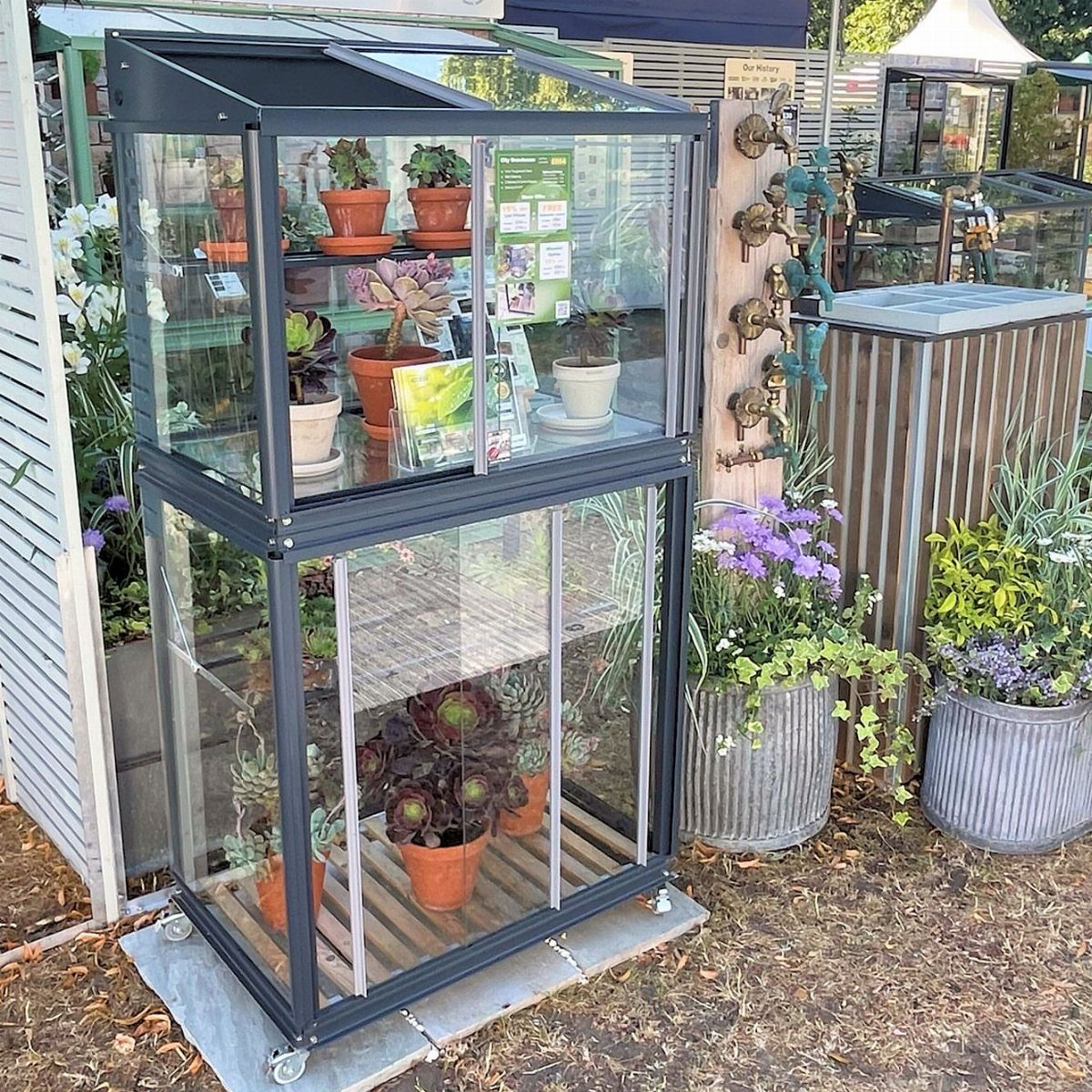
Wheels turn any plant collection into a movable garden. A two-tier metal frame on casters lets you roll tender succulents into sun or shade, or simply sweep underneath without lifting every pot.
I would check the wheel locks before buying; a greenhouse that drifts down a slope in a storm is not doing its job.
The dark finish and clean lines suit a patio or a retail floor equally, which is the point.
9. Victorian 45-Degree Pitch Roof Greenhouse
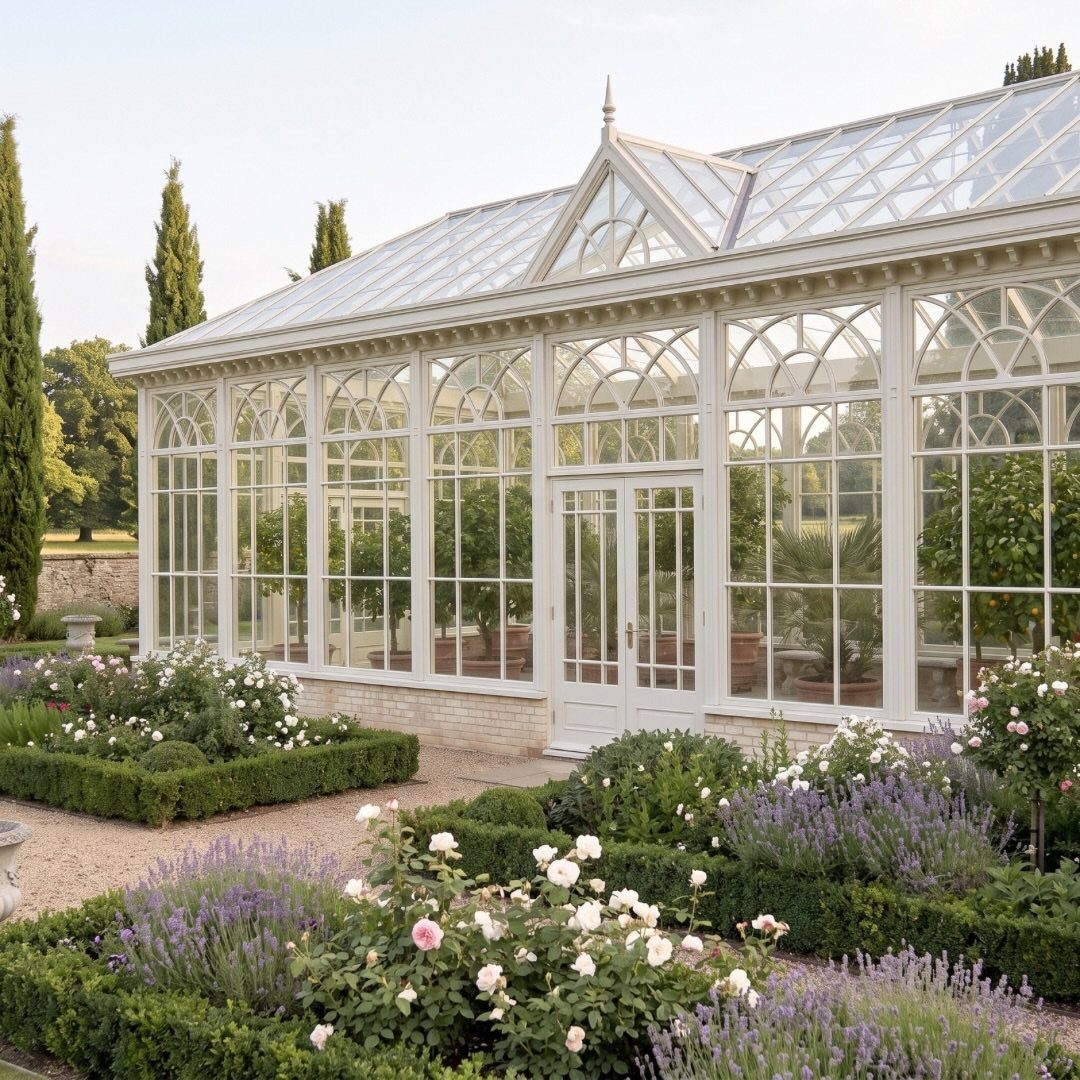
The steep roof pitch of a Victorian greenhouse does more than look romantic. Forty-five degrees throws snow and sheds summer heat, while the extra headroom trains cucumbers up strings without their tops browning against glass.
Arched windows and white framing are the style’s signature, though the structure needs a level base and patience to assemble.
I would plant lavender and roses against the footings, as the example shows; the roots stay outside where they belong, and the scent drifts in through vent windows.
10. Sturdy Greenhouse Kit
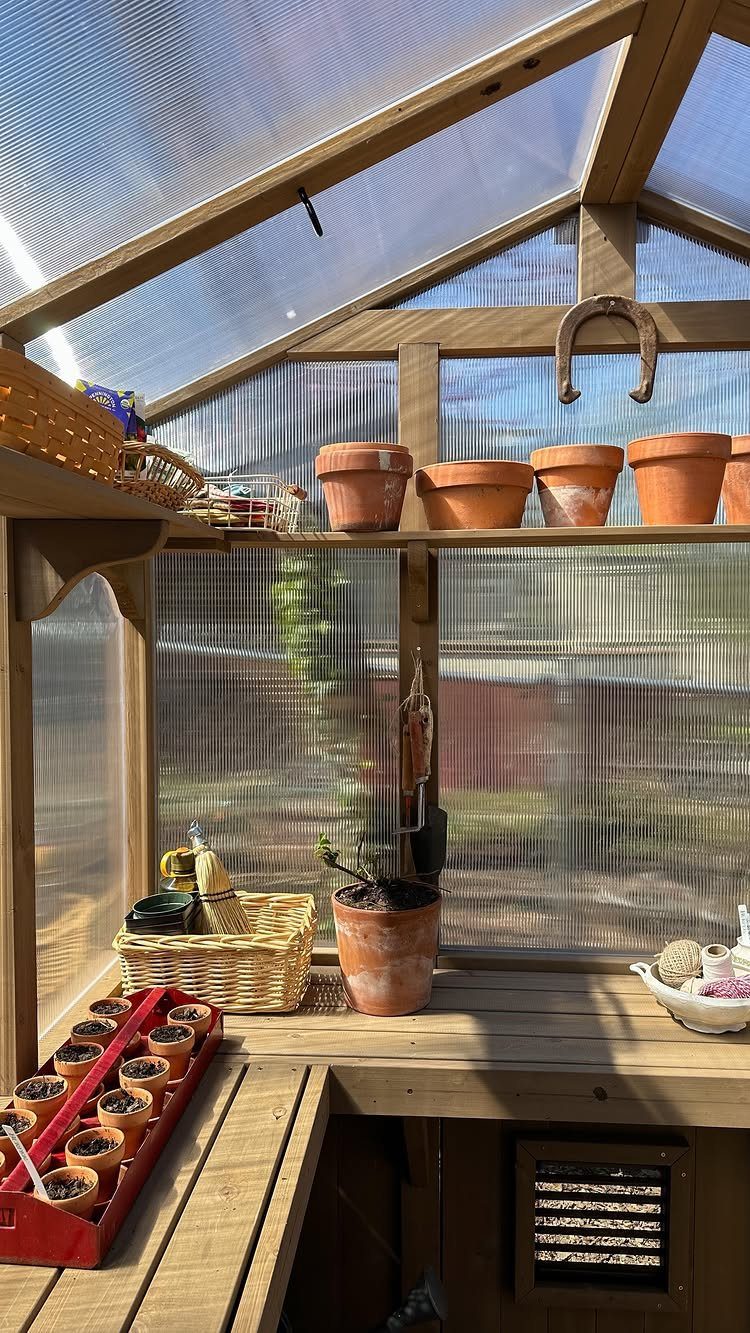
Corrugated polycarbonate on a timber frame gives the permanence of a shed with the light of glass. The panels weigh a fraction and do not shatter, which matters when you are lifting them alone onto a roof.
Inside, a solid workbench holds seedling trays and terracotta without wobbling; I would bolt it to the wall so it stays put when you bump it with a flat of wet soil.
A kit this substantial needs a level gravel pad or concrete piers, not just packed dirt.
11. Raised Bed Greenhouse Combo
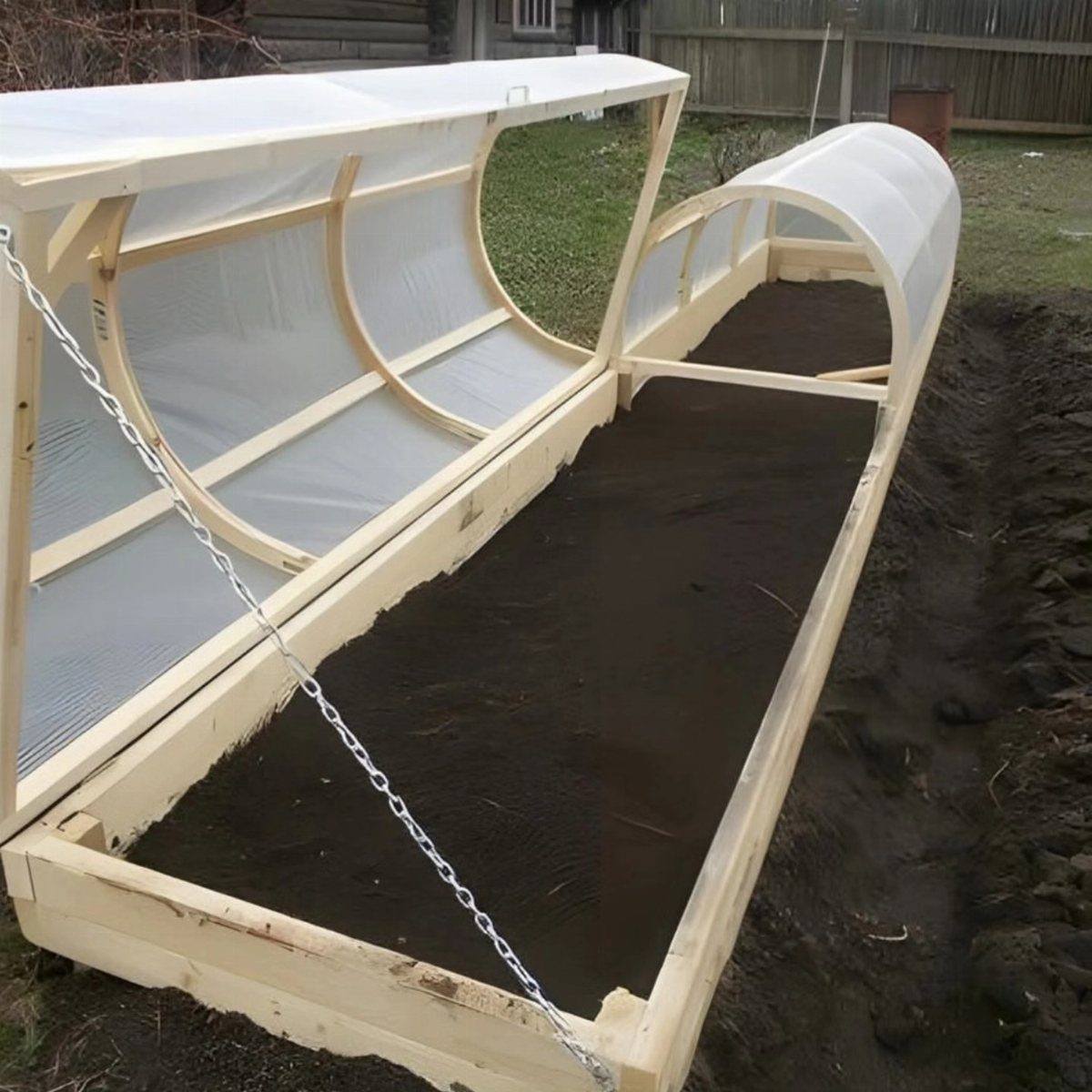
Hinged arched covers over a raised bed turn the same footprint into greenhouse and garden both. The soil sits at waist height for planting, and the plastic hood lifts on chains for harvesting or hardening off.
I would use hardware cloth under the soil to stop voles from tunneling up through the bed; they find the warm soil irresistible.
The covers prop open a few inches for ventilation on mild days, then close tight when frost threatens.
12. Greenhouse with String Lights
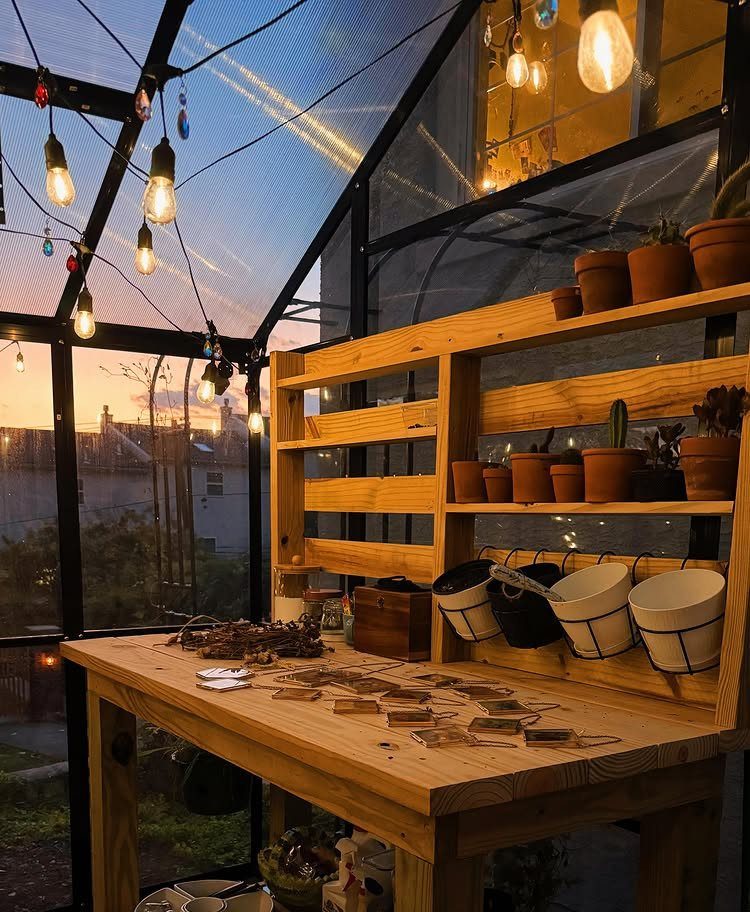
String lights inside a greenhouse extend the hours you want to be there.
Edison bulbs hung along the ridge and down the sides turn potting work into an evening ritual, and the glow against glass makes the structure a garden feature from the outside too.
I would use outdoor-rated LED filaments; they draw less power and the glass stays cooler.
13. Greenhouse Dining Room
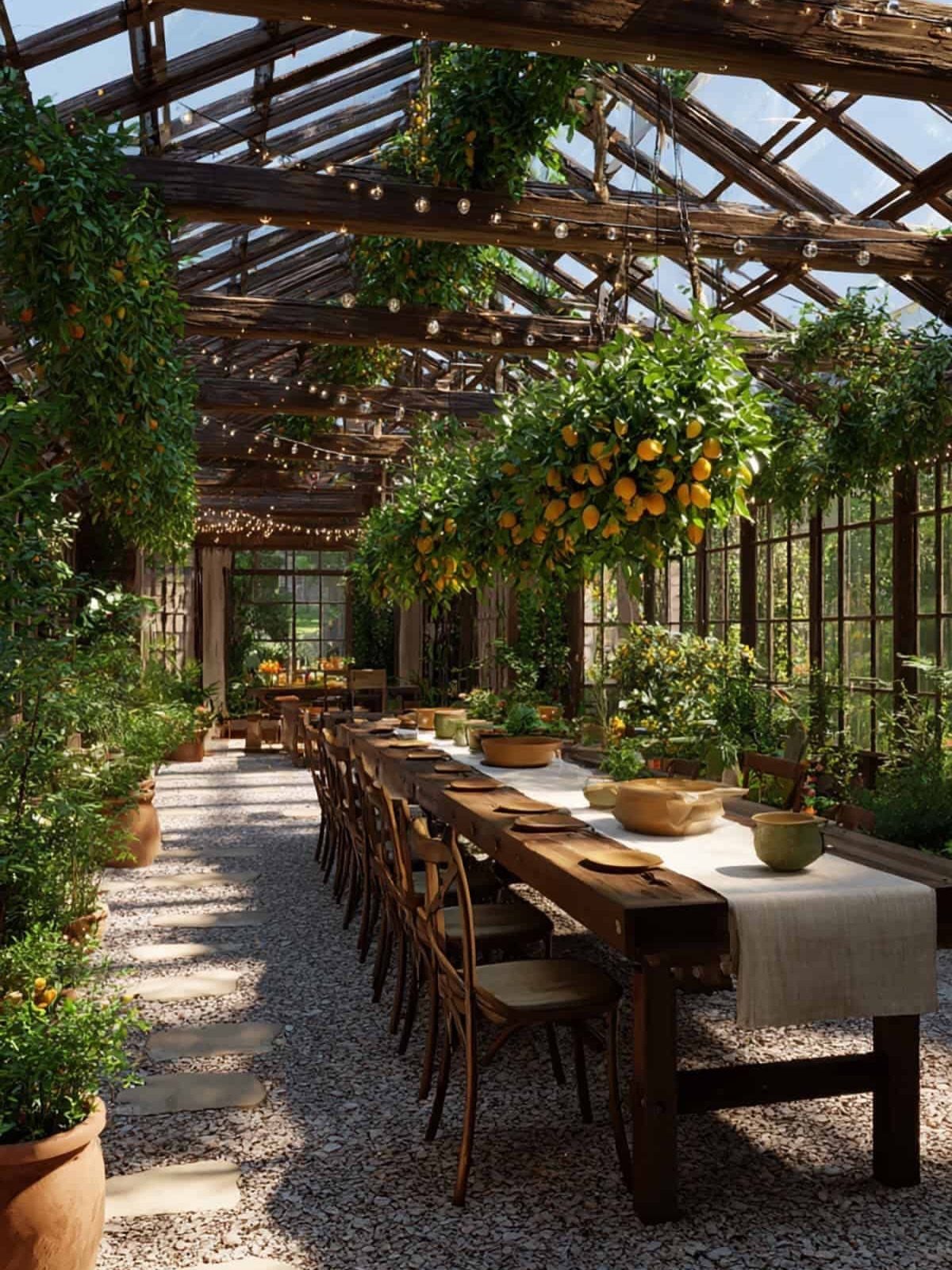
A timber frame and glass walls turn a working greenhouse into a room you actually want to linger in.
The long table gives you space for eight or ten, and the potted citrus overhead drop their scent onto plates instead of pavement.
I would stick to enamel or melamine dishware; terra cotta dust and soil on linen napkins get old fast. The plants do the decorating, so the runner stays simple and the chairs fold for winter storage.
14. Geodesic Dome Greenhouse
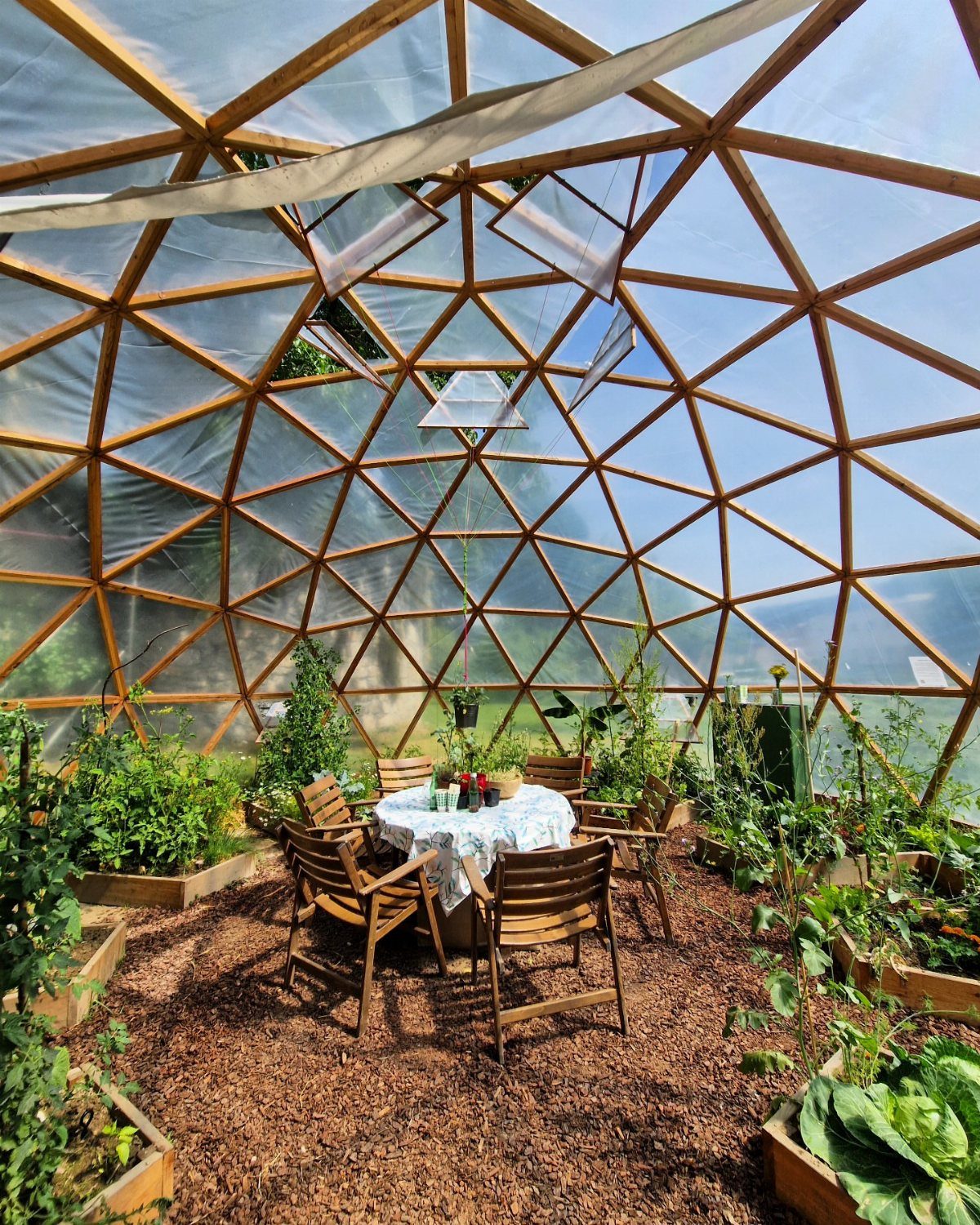
Triangular panels joined into a sphere give the strongest shape for the least material.
A dome sheds wind from every angle and holds heat with less surface to leak from; the geometry is half math, half spectacle. Wood framing softens the look and the interior ground cover keeps mud down in wet seasons.
I would plan the door placement before you cut anything; a dome has no obvious front, but you still want the path to make sense. The table in the center works because the curve gives everyone the same light.
15. Cold Frame Greenhouse
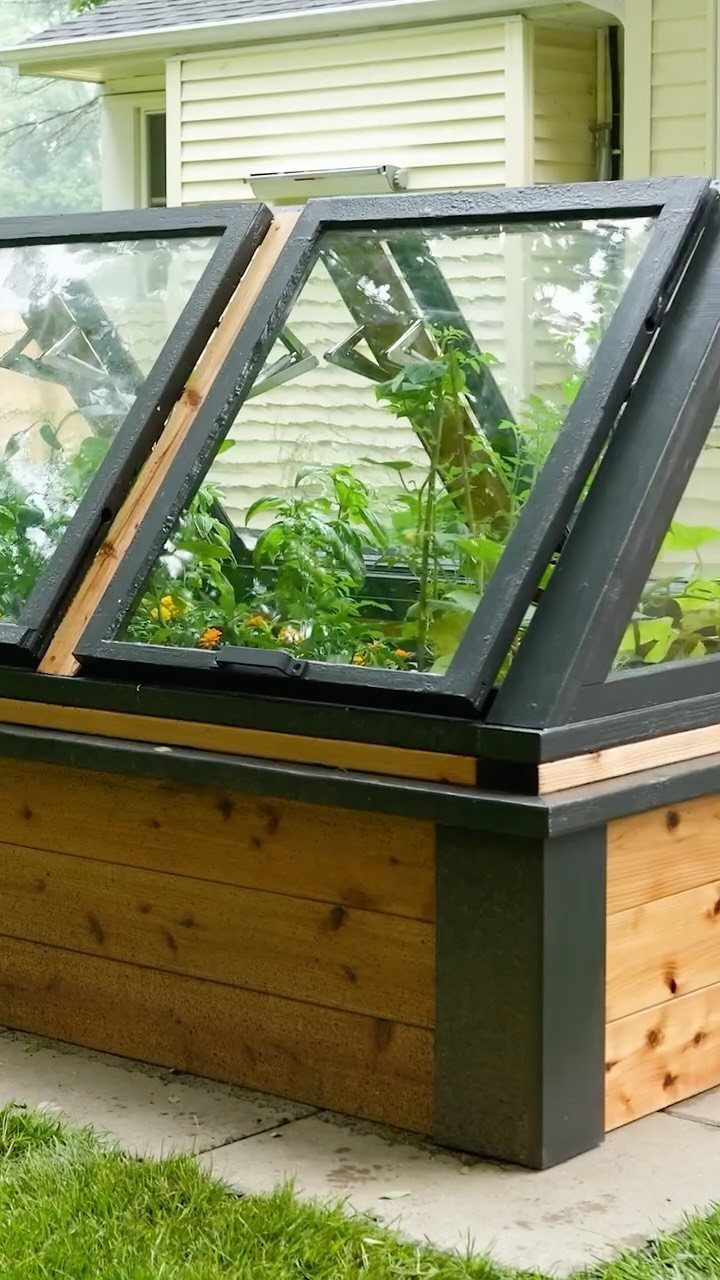
An angled glass lid on a raised bed traps sun through March and April while nights still freeze. The slope faces south, condensation runs to the back, and the black trim absorbs what heat the glass lets through.
I would prop the lid open on a stick come noon; still air inside heats fast, and lettuce bolts once it gets too warm.
The wood frame sits at a height you can reach without kneeling, which matters more than you think by mid-April.
Considerations for Building
Size decides more than you think.
A polyethylene-covered frame goes up in an afternoon for around $100, but a Victorian-style kit with full glazing runs thousands. Glass needs a sturdier frame than polycarbonate, and that structure costs more before you hang a single pane.
Permits follow complexity, not price.
Simple hoop houses and cold frames usually skip the paperwork; elaborate builds with electricity and heating may need the power company out and local sign-off. I would call the city before buying materials, not after.
South-facing placement is standard for sun, but I would also walk the site in morning and late afternoon. A spot that reads "full sun" at noon can be half-shade by four.
Water access matters as much as light: hauling cans gets old by July, and a hose bib changes what you plant. Ventilation and humidity control are the details that separate a working greenhouse from a plant oven.
Benefits of Greenhouses
A greenhouse buys you zones, not miracles. An unheated structure pushes your effective hardiness two USDA zones warmer; zone seven becomes zone nine.
Add a propane heater and poly sheeting, and tropical fruit holds at 15°F outside. Manage expectations, though.
Kale through a snow winter is realistic. Tomatoes in January with three feet of snow is not.
Twin-wall or double-wall glazing adds insulation and wind resistance where storms hit hard.
That matters more than style if your site is exposed. For tight spaces, lean-to and mini designs keep the protection without claiming yard you do not have.
The real benefit is time. Protected plants start earlier, finish later, and skip the pest cycles that reset outdoor beds each season.
Year-round gardening is possible, but it is year-round management too: heating, venting, watering in February. The structure extends the season automatically; keeping it going takes your attention.
DIY Vs. Buying Greenhouses
Salvaged windows and repurposed lumber can run surprisingly cheap if you have the source and the patience to fit mismatched sizes.
I would only chase that route if I already knew a demolition yard with matching sashes in stock. Otherwise, the hunt eats the savings.
Kits cost more up front but save the retrofit headache.
Buying individual parts to self-design often runs higher than expected; parts that "should" fit need brackets, shims, or replacement when they do not. That is where the budget breaks.
Time is the other cost. A kit assembles in a scheduled weekend.
A full DIY build spreads across evenings and weather windows, and the plants wait on your progress. I would kit-build if I needed the structure this season, and DIY only if I had the materials already and no hard deadline.
Skill level is honest too.
Framing square, sealing against wind, and hanging a door that actually latches are not beginner projects. The kit gives you that engineering pre-solved.
Frequently Asked Questions
How do you cool a greenhouse in the summer?
A roof vent opened by hand dumps heat fast on sunny days; no wiring, no fan, just lift and latch.
Shade cloths and fans also help, but moving air through the structure matters more than any single gadget. I would check the vent size when buying: a small vent on a large greenhouse is decoration, not ventilation.
Is it cheaper to build a greenhouse or buy a kit?
Salvaged windows and reclaimed lumber can beat kit prices if you have a steady source with matching sizes already in hand.
What are greenhouse projects?
Greenhouse projects include building new structures from kits or scrap, converting existing spaces like kitchens or dining rooms into growing areas, and creating hybrid designs such as raised beds with hinged covers or lean-tos against house walls.
Greenhouse projects run from tabletop minis you finish in an afternoon to geodesic domes that take a crew, with plenty of upcycled builds in between: clamshell containers, old windows, even discarded doors framed in.
What are some creative garden design ideas that include a greenhouse?
A greenhouse can serve as a dining room with potted citrus overhead, a kitchen where herbs replace countertop appliances, or a reading nook with string lights along the ridge.
Multi-level designs add workspace above growing space, while Victorian styles with steep roofs and arched windows become garden focal points. I would match the structure to your house architecture and face it south for morning and late-day sun.





