
These ideas run from a packet of wildflower seed to the cost of a flagstone patio and a weekend to several seasons, and what settles the choice is water: whether your summers turn grass to straw or your humidity fights the dry look.
Drip irrigation runs far more efficient than sprinklers, and that gap tells you whether a meadow garden or a rockscape belongs in your yard.
1. Pots and Containers
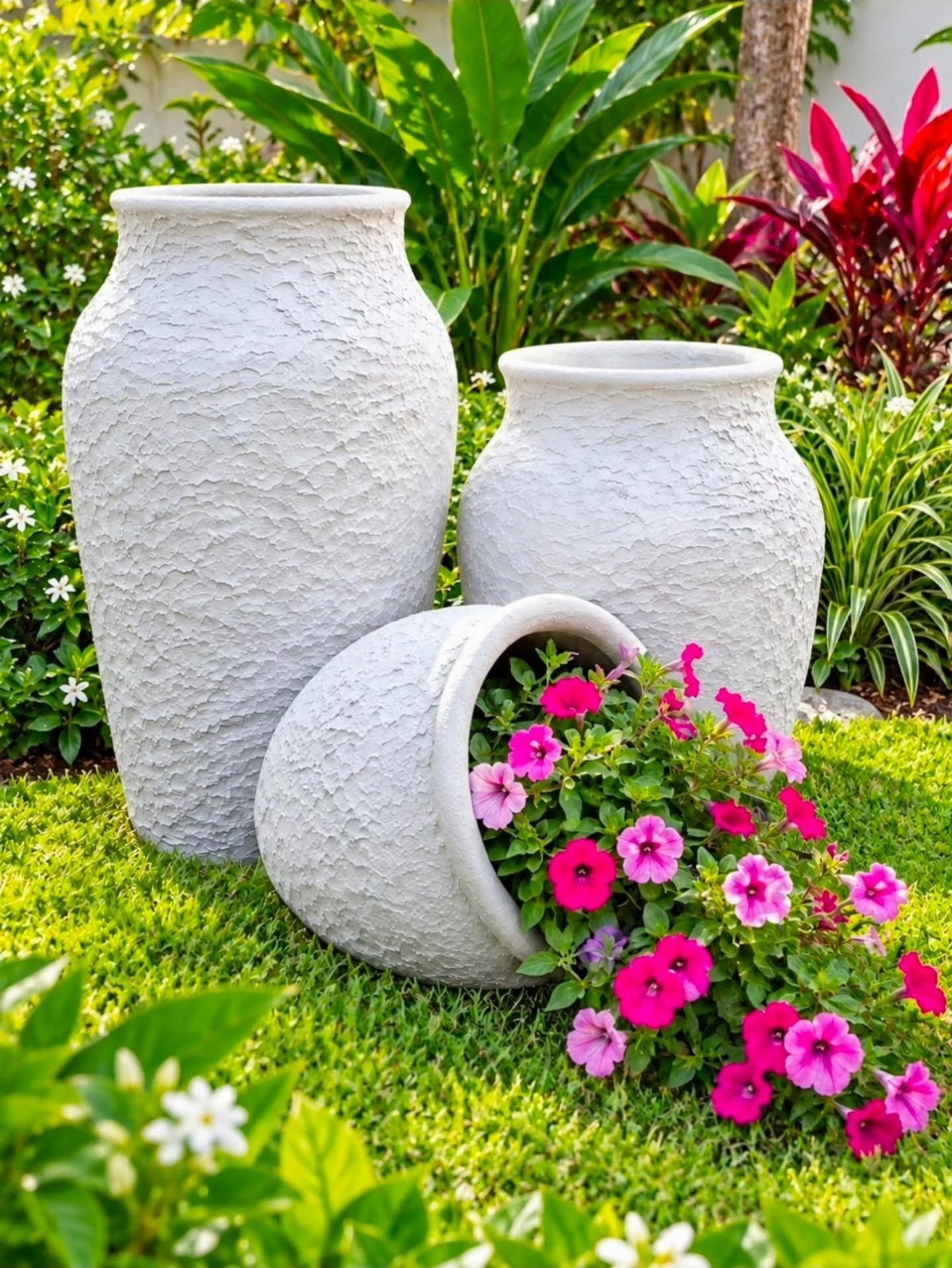
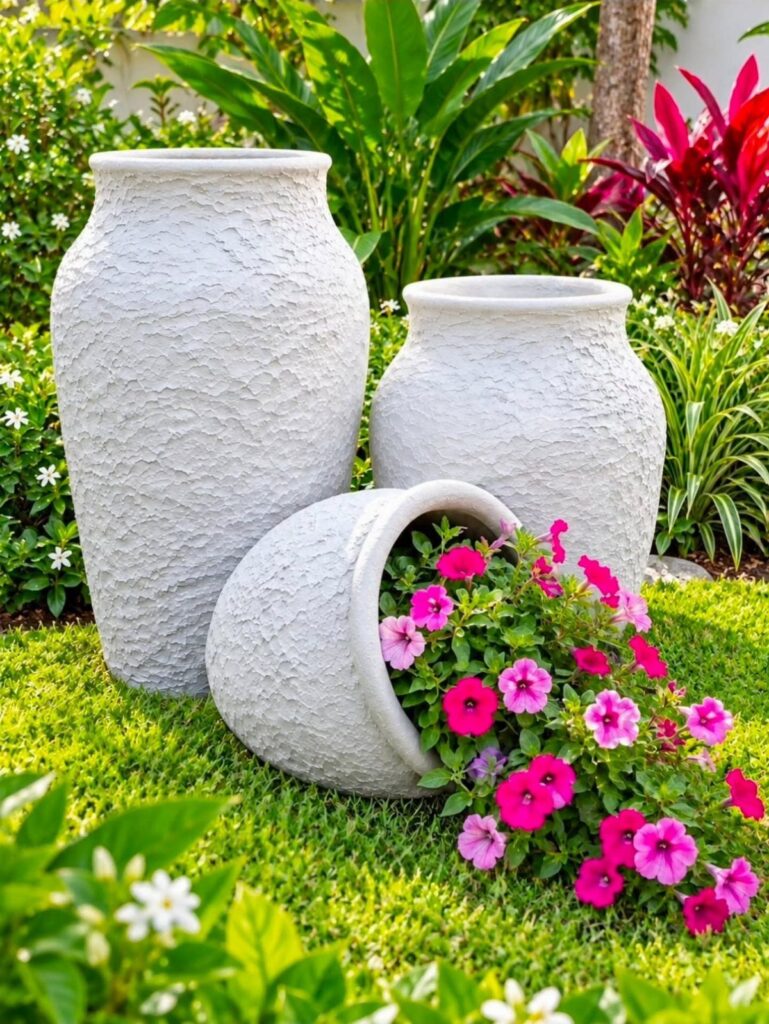
Terracotta, concrete, or glazed ceramic urns let you plant where soil won’t cooperate. I set mine on the lawn itself, in beds, or on gravel strips where grass dies back.
Cluster odd numbers, three or five, at staggered heights.
One tipped pot with spillover petunias turns the arrangement from static to something alive. Drainage holes matter more than the pot material; without them, roots rot in 2 wet seasons.
Replace annually or overwinter tender plants indoors. For renters, this is the only idea on this list that travels with you.
2. Mulch Beds
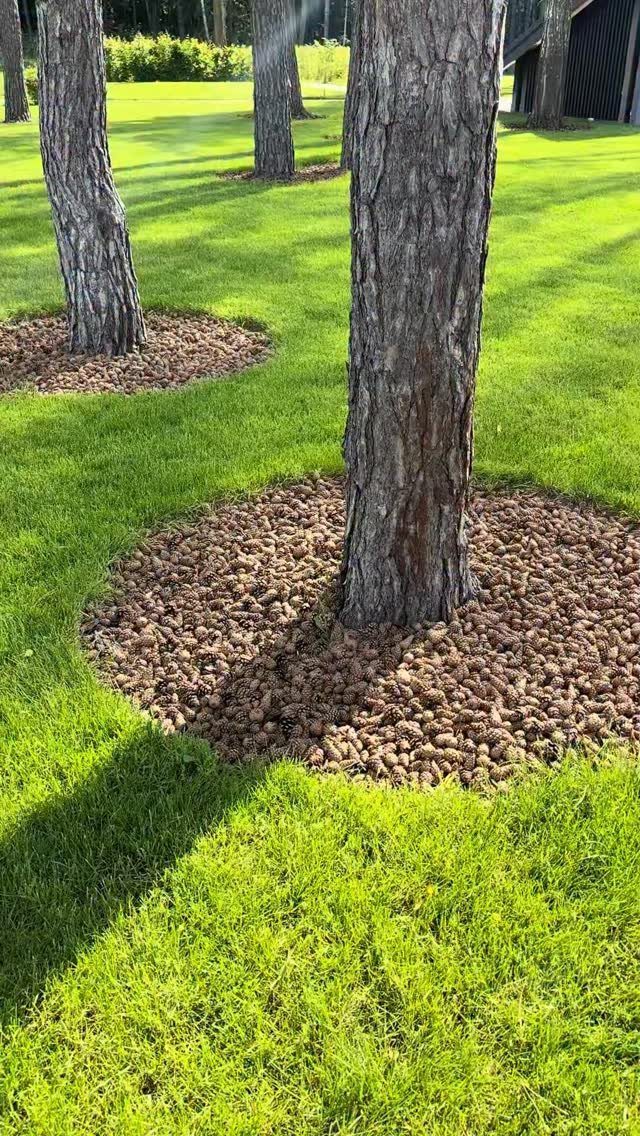
Pine straw, shredded bark, or wood chips starve weeds of light and hold summer moisture.
Around each tree trunk, I cut a shallow ring into the sod, edge it with steel or stone, and fill deep enough to block light without burying the root flare.
Refresh as decomposition settles the layer; the color fades before the mulch actually fails. Pine cones, like those dropped naturally, extend the interval and read as deliberate texture rather than neglect.
Cost stays low if you source arborist chips free; delivery is the usual catch, running a flat fee that eats the savings on small jobs.
3. Groundcovers
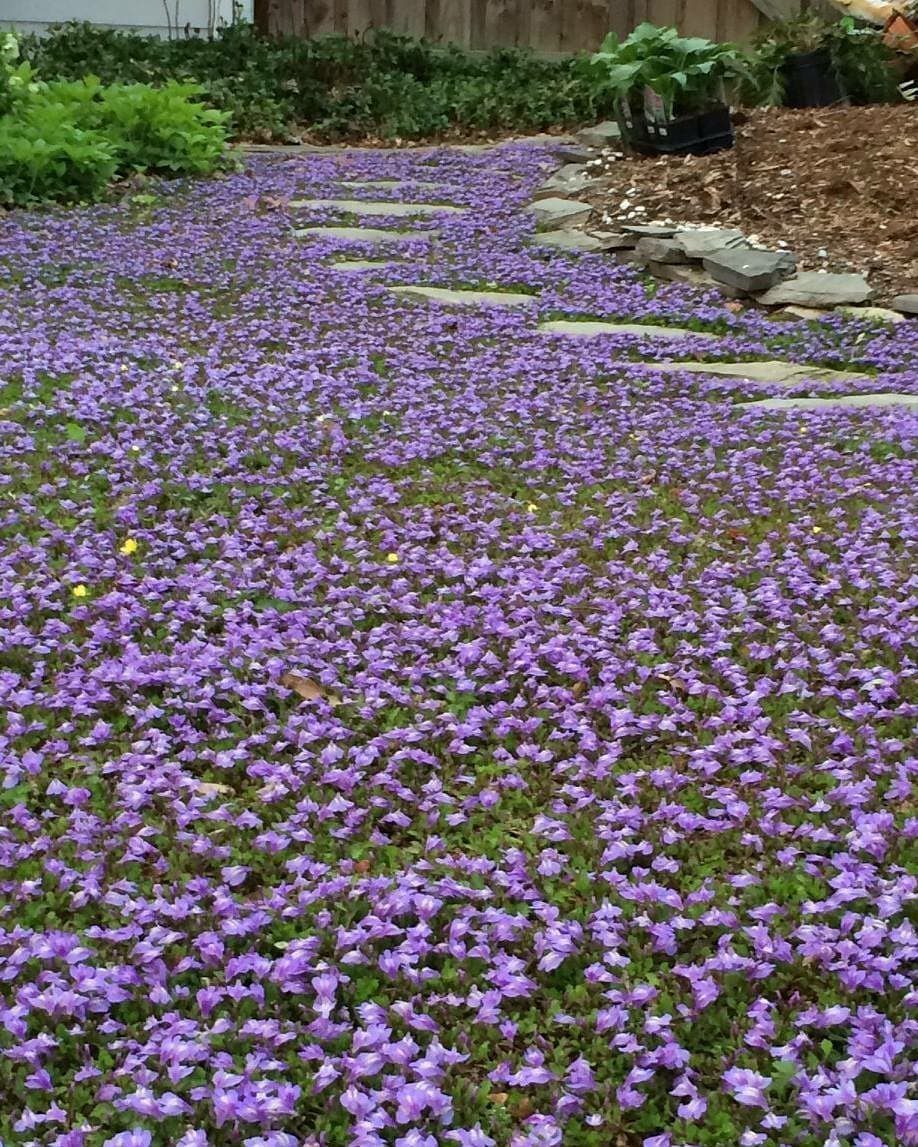
Creeping thyme, sedum, or vinca spreads into living carpet where turf struggles on slopes or tree-rooted shade. I plant plugs close enough to close the gaps by midsummer, water through one season, then let competition do the rest.
Stone steppers set flush with the foliage surface keep the path from becoming a mud route. Purple bloomers, like the ones threading between these stones, peak in June and self-seed lightly if you skip deadheading.
This fails where foot traffic is daily and heavy; there, pavers with gravel joints hold up instead.
4. Rockscaping
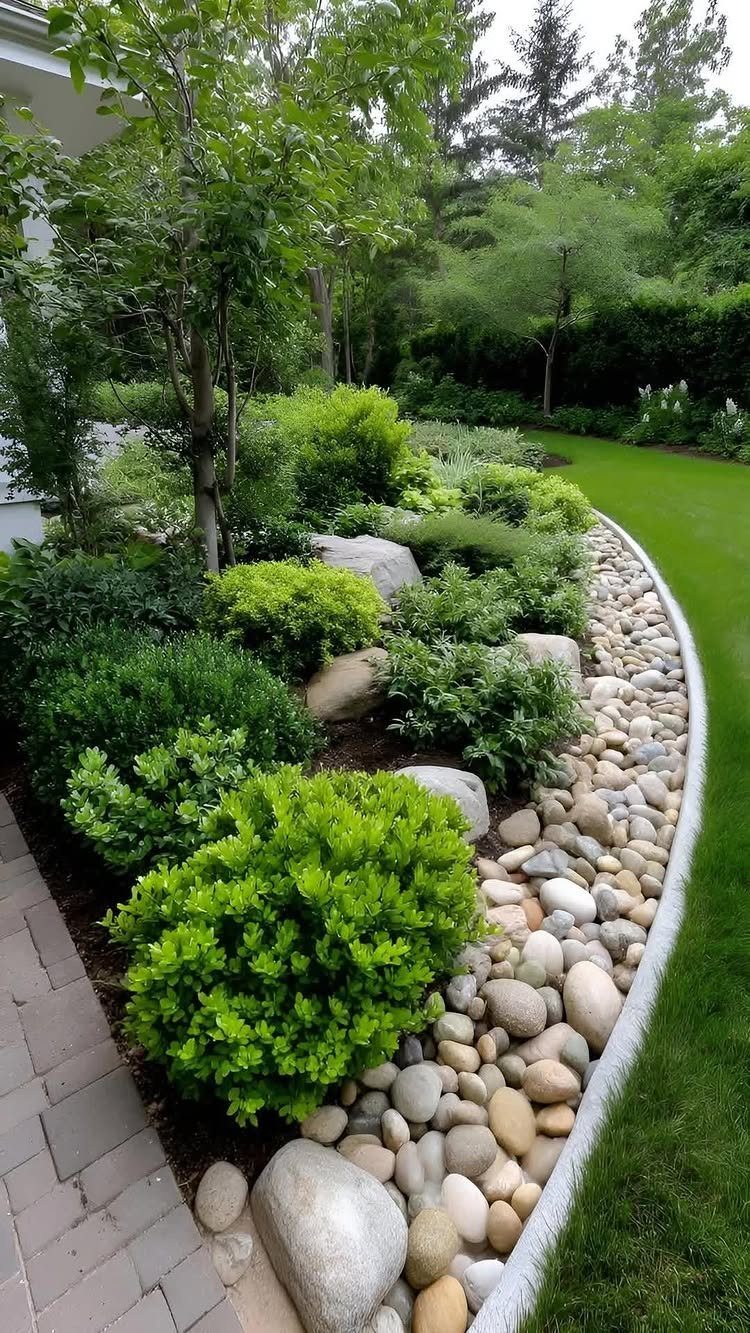
River rock, pea gravel, or fractured granite replaces thirsty lawn with surface that needs no water and no mowing. I lay it deep enough to suppress weeds over landscape fabric, with boulders grouped in odd sets to break the flatness.
The smooth stones edging this bed catch morning light and keep mulch from drifting onto pavement. Darker rock heats more in July; in zone 8 and south, I go lighter or mix in larger shade-throwing stones.
Weeds seed into dust that collects on top. A spring flame-weeding or hand-pulling keeps it honest.
5. Paths and Patios
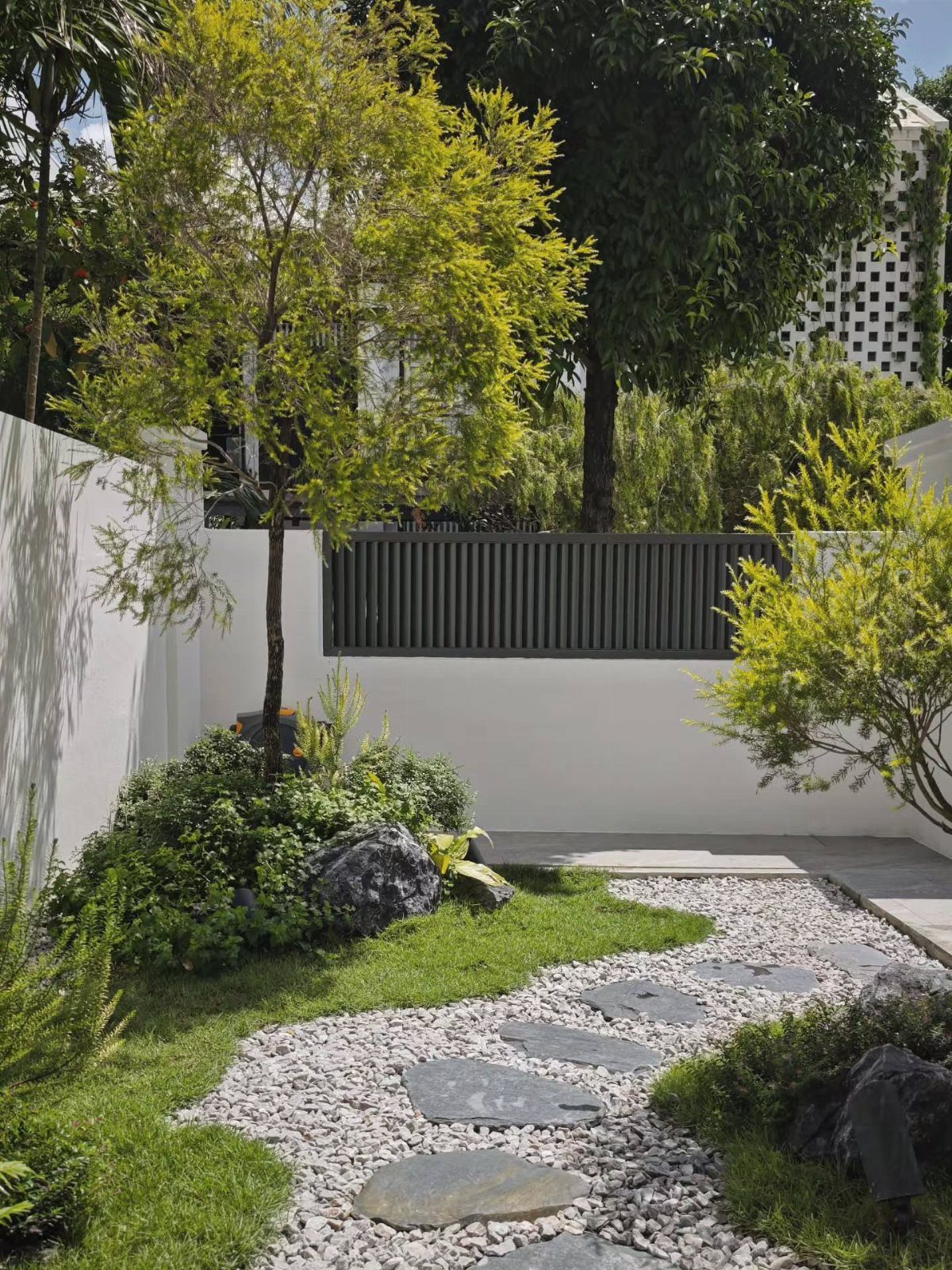
Flagstone on compacted gravel base gives solid footing through planted ground without the concrete commitment. I set pieces with gaps wide enough for groundcover or gravel fill, and pitch slightly toward the edge for drainage.
Dark stone on pale reads as deliberate pattern; reverse it, or match tones, and the path dissolves into the garden. This layout, wall-hugged and winding, slows the walk and frames views you choose.
Budget halves if you use salvaged concrete scored to mimic flagstone; it cracks the same way eventually, but costs a fraction of real stone laid.
6. Ornamental Grasses and Evergreen Plants
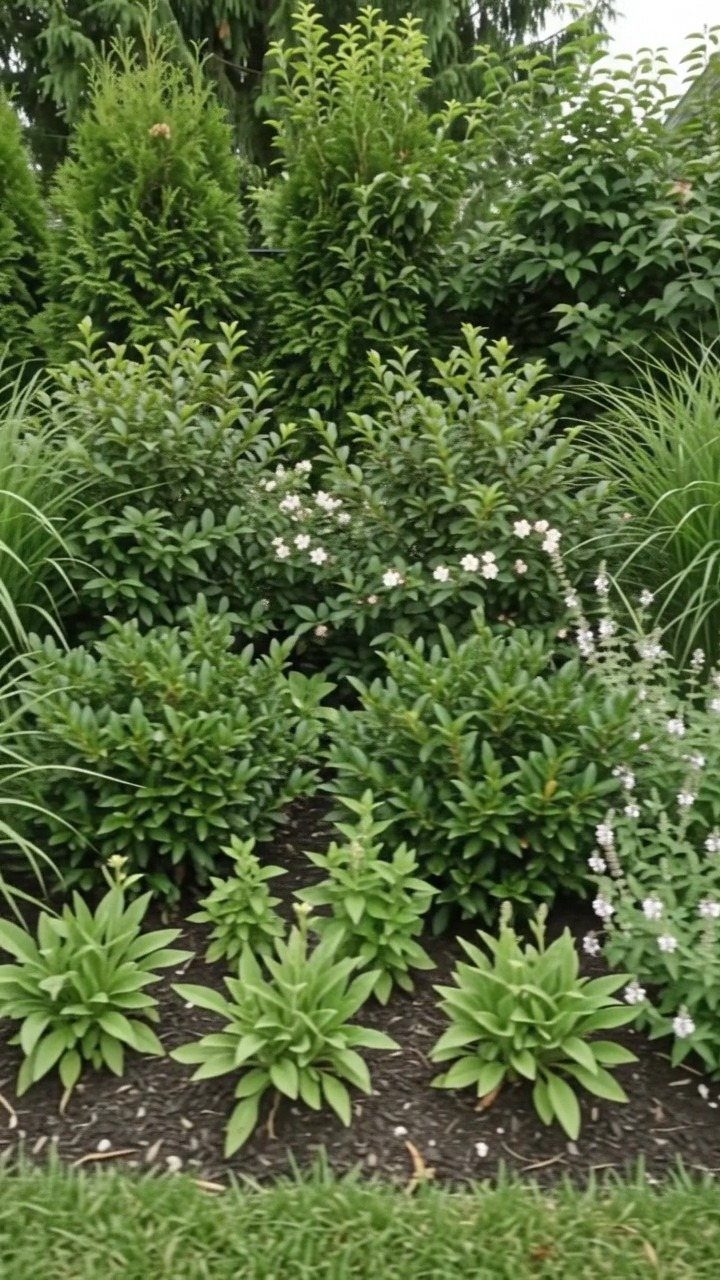
Year-round structure without the lawn mower: arborvitae for vertical, mounded boxwood or juniper for mass, grasses like miscanthus or feather reed for movement.
I plant the tallest at corners or property lines where privacy matters, shorter mounds forward, grasses in drifts of 5–7 for scale that reads from the street.
Dark mulch, spread to block light without smothering stems, unifies the bed and buys time between weeding. Evergreens go in fall so roots establish before summer stress; grasses, spring, so summer growth fills out.
Layered heights of grass and evergreen do the work of a privacy screen without the permit headache or the closed-in feeling.
7. Drought-Tolerant Landscaping
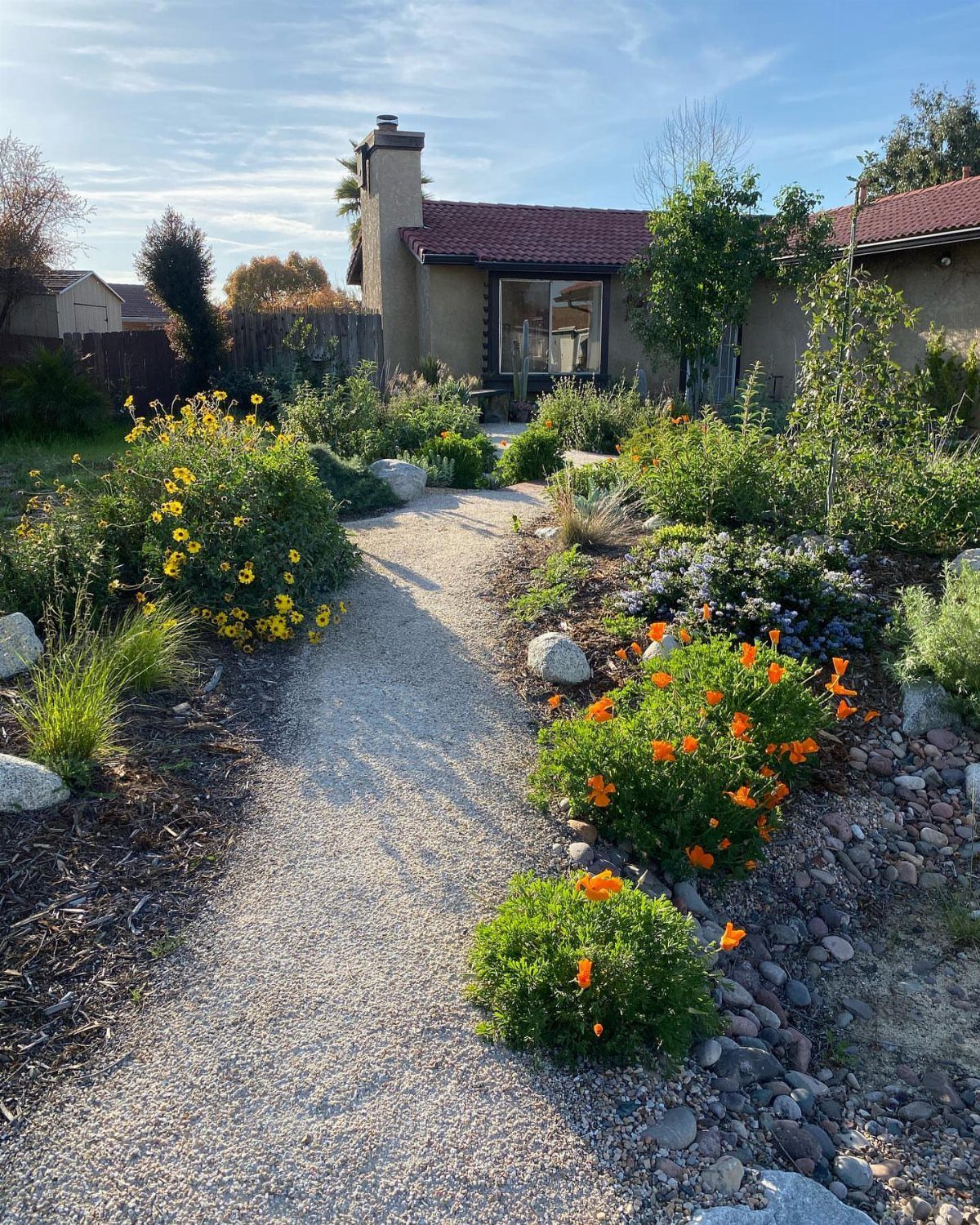
California poppy, black-eyed Susan, and salvias burn less water than turf once their roots find depth.
I plant nursery starts rather than seed in year one, spaced close enough to fill in fast on decomposed granite or crushed rock paths that let rain through and keep mud off shoes.
Boulders half-buried at angles look settled, not dropped. The ones flanking this path catch low sun and hold heat that extends bloom into evening for pollinators.
This style suits the southwest and any zone where July turns Kentucky blue to straw. East of the Mississippi, humidity fights the dry aesthetic; there, I shift toward sedges and switchgrass instead.
8. Wildflower Meadow Garden
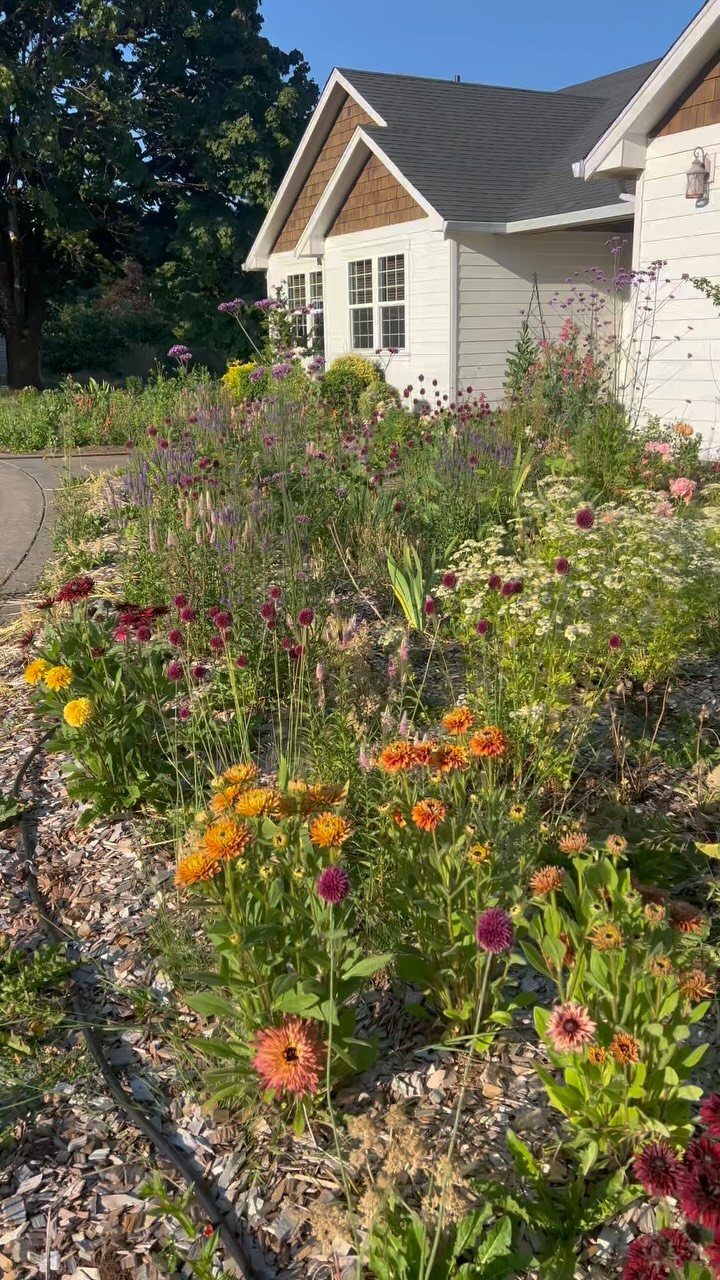
A wildflower mix sown over stripped sod gives color from late spring through first frost without the fertilizer schedule. I rake bare, scatter seed in late fall so winter stratifies it, then walk away until March green-up.
Woodchip mulch between plants suppresses the grasses that outcompete blooms in year one; by year three, self-seeders take over that job and I add only patch seed.
Zinnias, cosmos, and coreopsis reappear where they liked the drainage, not where I planned them. That randomness reads as meadow only from the curb; up close it is chaos, which I prefer to the geometry of edging shears.
Annual seed costs less than flats but demands patience and a season of looking at dirt.
Benefits of Natural Landscapes
Natural landscapes cut outdoor water use by 50–70% against traditional turf, which translates to real savings in arid zones where irrigation runs as high as 70% of household water consumption.
I group plants by thirst, not by color, so the heavy drinkers sit together where a single soaker hose reaches them and the drought-tolerant ones do not sit in runoff they do not need.
Drip irrigation runs 90% efficient versus 50% for sprinklers, and morning timing cuts evaporation loss further. Trees placed to shade the house drop cooling bills 15–25% in summer, which in Phoenix pays back the planting cost inside a couple years.
Established desert plantings move faster at sale and draw higher offers than conventional lawns, according to what brokers in those markets report.
The water math alone justifies the switch; the rest is structure that keeps paying.
Maintenance Tips
A natural yard is not a no-maintenance yard. Seventeen minutes a day is the average for weeding and tending, and that figure holds up: 15 minutes picking a single bed keeps the job from swallowing a whole Saturday.
Neighbors notice the effort, which matters when your unmowed strip sits between their manicured lawns and the sidewalk.
Letting a non-native lawn go feral does not restore ecology.
Kentucky bluegrass left alone fills with mulberry, Siberian elm, honeysuckle, and worse, because these are weeds adapted to outgrow turf, not prairie. Most municipalities will cite you for the result, with fines or forced mowing.
I keep woody volunteers pulled before they fruit, and I prune for structure in late winter when I can see the bones. Tended wildness reads as intention, not neglect, and the curb is where that distinction matters.
In Iowa, nearly all lawns are comprised of non-native grasses, and most of them have some (or many) weeds that are also non-native plants. If you stop managing the lawn, it will not revert to a more natural space.
Planning Your Landscape
A few garden centers will sketch a plan at no charge if you buy the plants from them.
I take the plan in stages, one bed per year, because guessing at mature spread and bloom sequence in year one leads to thinning in year three.
The designer factors sunlight hours, plant height, and hardiness zone; I add whether the "thirstiest" plants sit where I can reach them with a hose.
Permeable pavers and gravel paths let rain through to roots instead of sheeting to storm drains.
I leave turf only where I actually walk or sit, not as default green filler; in dry climates or under HOA rules, that decision may be made for me.
I show neighbors visuals, not Latin names, when I float a plan. Their buy-in matters if I want them tolerant of the transition period, and it opens a conversation about what sprays they use near my pollinator beds.
Over time, aggressive spreaders need thinning to restore balance; the plan is a starting point, not a contract.
Frequently Asked Questions
What are some ideas for a front yard landscape without grass?
Pots and clustered containers, mulch beds with pine straw or wood chips, creeping groundcovers like thyme or sedum, rockscaping with river stone or pea gravel, and flagstone paths on compacted gravel all replace turf without concrete commitment.
Layer ornamental grasses with evergreen structure for year-round form that reads from the street.
Arborist chips are often free if you call around, and salvaged concrete from demo sites can read as flagstone once you lay it; just watch the delivery minimums, which can wipe out the savings on a small strip.
What are some examples of natural garden designs?
Natural gardens include drought-tolerant plantings with California poppy, black-eyed Susan, and salvias on decomposed granite paths; wildflower meadows sown over stripped sod for color from late spring through first frost; and rockscapes with river stone, pea gravel, or fractured granite grouped with boulders in odd sets.
Creeping thyme or vinca will colonize the spots where grass gives up: steep banks, tree shade, that dry strip against the foundation.
What works depends on your rainfall. In the Southwest, those drought-tolerant palettes make sense; east of the Mississippi, I would look at sedges and switchgrass that can handle the humidity.
How do I make my backyard more private?
Ornamental grass and evergreen planted in staggered heights give you the same seclusion as a fence without the paperwork or the boxed-in feeling.
My own mix runs arborvitae for height, mounded boxwood or juniper for bulk, and miscanthus in clumps of five to seven so the mass reads at scale.
A dark mulch bed ties the planting together and stretches the weeks between pulling weeds. This builds structure that keeps paying, unlike a fence that only blocks sightlines.
What are some natural alternatives to grass for a lawn?
Clover, sedum, and creeping thyme all fill in where grass dies off; vinca handles the dry shade under maples.
For a bigger footprint, strip the sod and sow wildflowers for season-long color, or build crushed-rock paths and plant salvias and native perennials that can take the heat.
Woodchips between plants keep the grass from swallowing everything the first season; by the third year, the self-seeders have filled the gaps and you can let the mulch fade.
None of this holds up to daily heavy foot traffic. For that kind of wear, pavers with gravel joints are the only surface that lasts.





