
A side garden can be a dog run with artificial turf and a second gate for mower access, or a bamboo screen backed by root barrier, or a raked gravel Zen garden that stays neat with a leaf blower.
The one detail that decides which idea fits your strip is the width you actually measured: a narrow gap and you are growing vertically, enough room and you can seat people around a fire pit, a wide side yard and you might cool off in a plunge pool.
1. Walkway Path
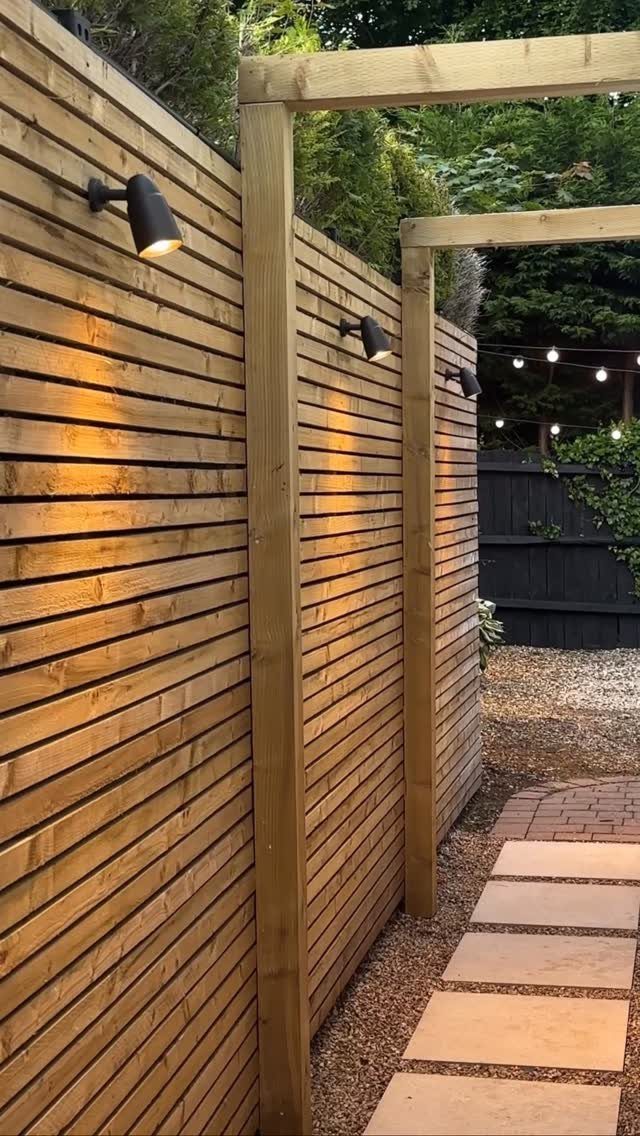
A gravel-and-stone path keeps feet dry and defines traffic through a side yard that otherwise turns to mud.
Rectangular pavers set in clean gravel, spaced for a single-file stride, work best with a horizontal slat fence running the length to narrow the view.
I like the downlights on that fence: they cast enough glow to find the door at night without inviting moths to the porch.
For a weekend build, excavate enough depth to clear your topsoil, lay landscape fabric, then set pavers on a sand and crushed stone bed mixed about even. Tamp each one level as you go.
2. Wall-Mounted Planters
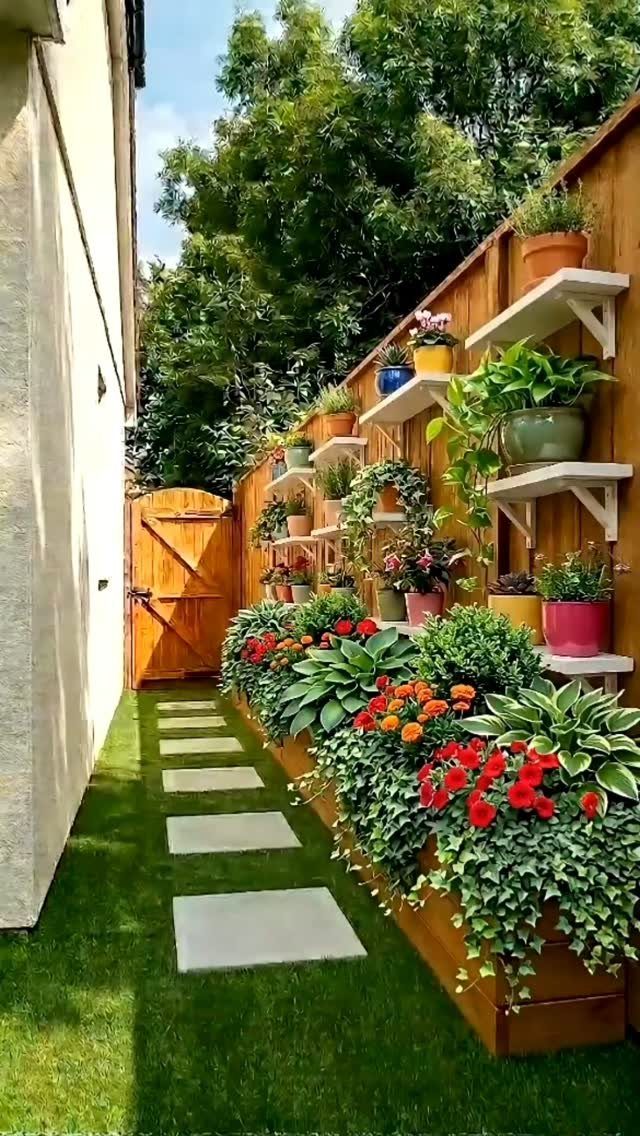
Shelves hung on a fence or house wall turn vertical blank space into growing room when ground space is a foot or 2 across.
White ledges hold potted color at staggered heights, with a planter box below catching runoff and rooting deeper plants.
I would use cedar or a composite shelf board; pine sags and rots within 2 seasons of irrigation splash. Stagger pot sizes so water from the upper tier drips into the lower ones, not onto the soil below.
3. Children’s Playspace
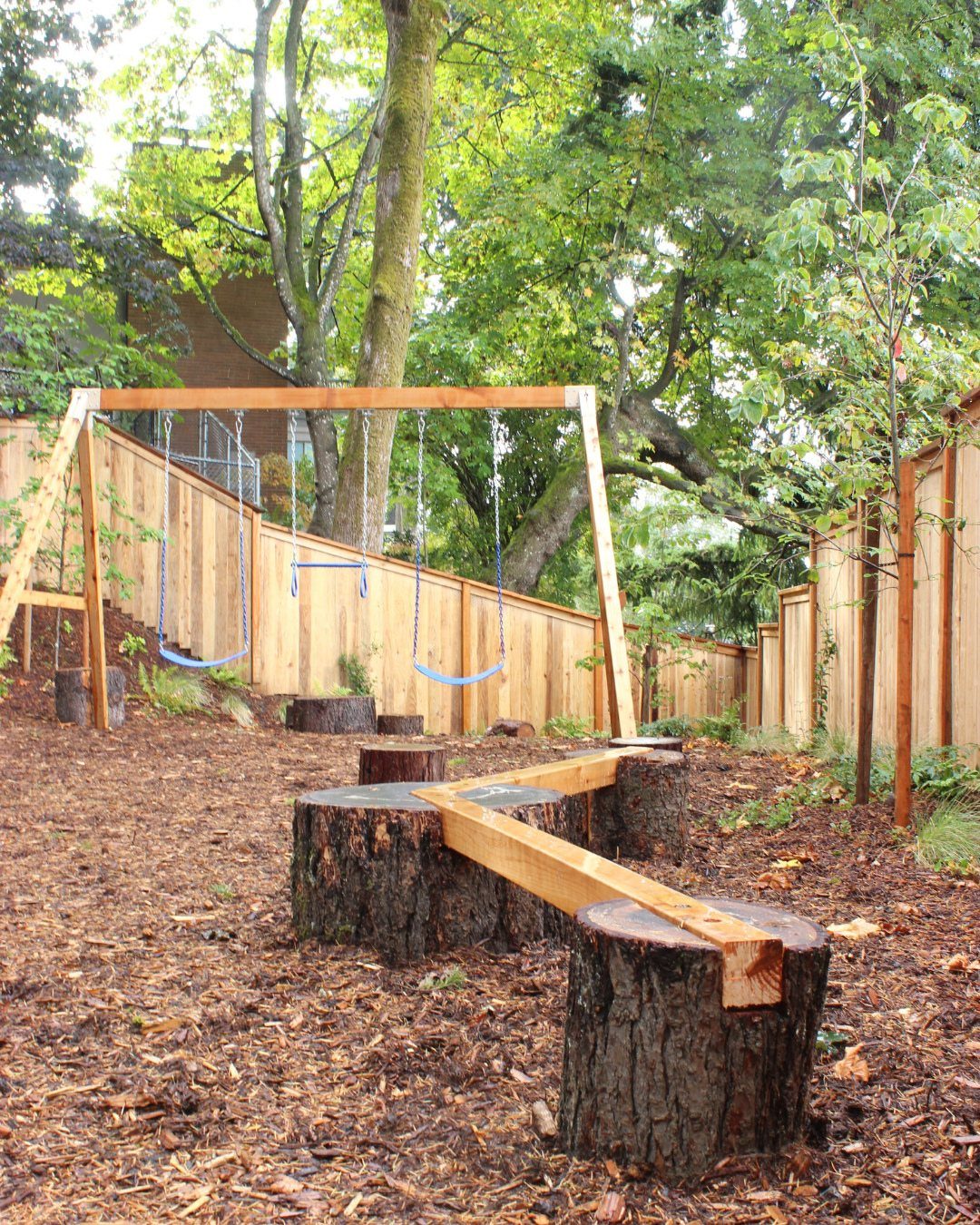
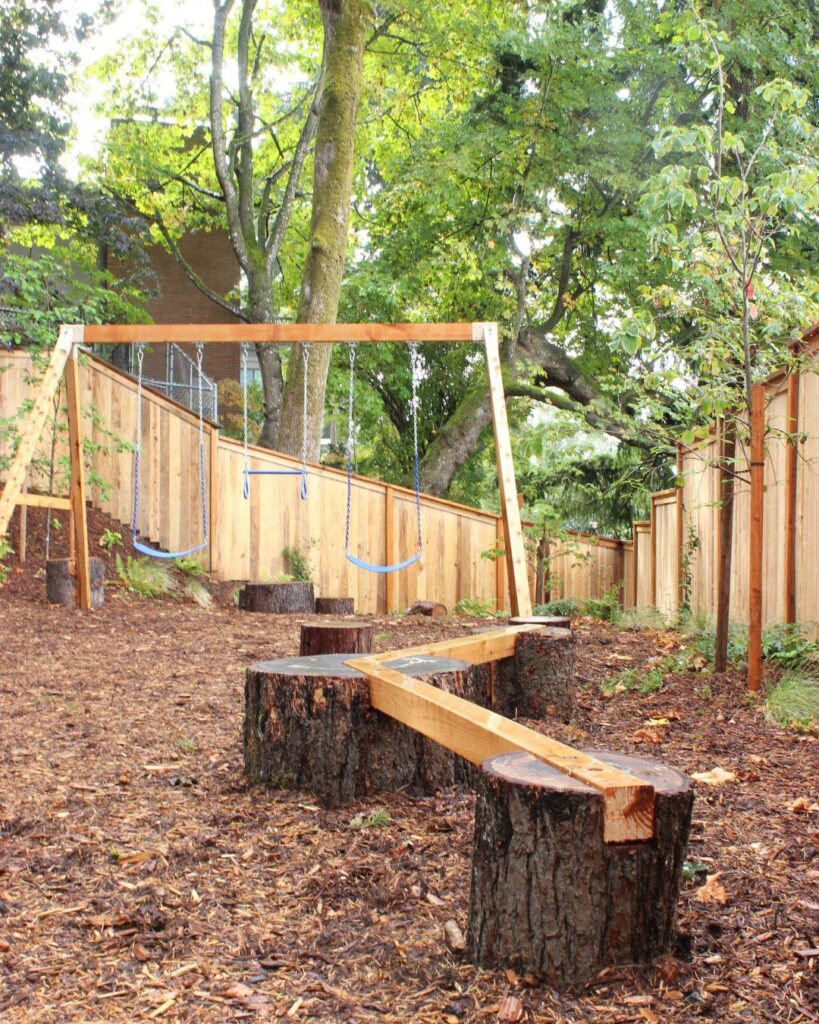
Wood mulch underfoot cushions falls better than any surface I have priced out, including rubber tiles that bake in July.
A setup that swings and balances under tree canopy matters in a side yard that gets brutal afternoon sun. I would lay arborist chips deep enough to cushion a fall, not the bagged dyed stuff, and refresh it every spring.
The stump balance beam costs nothing if you know someone taking down a tree; bore a hole and sink a rebar pin if your kids launch themselves.
4. Garden Beds
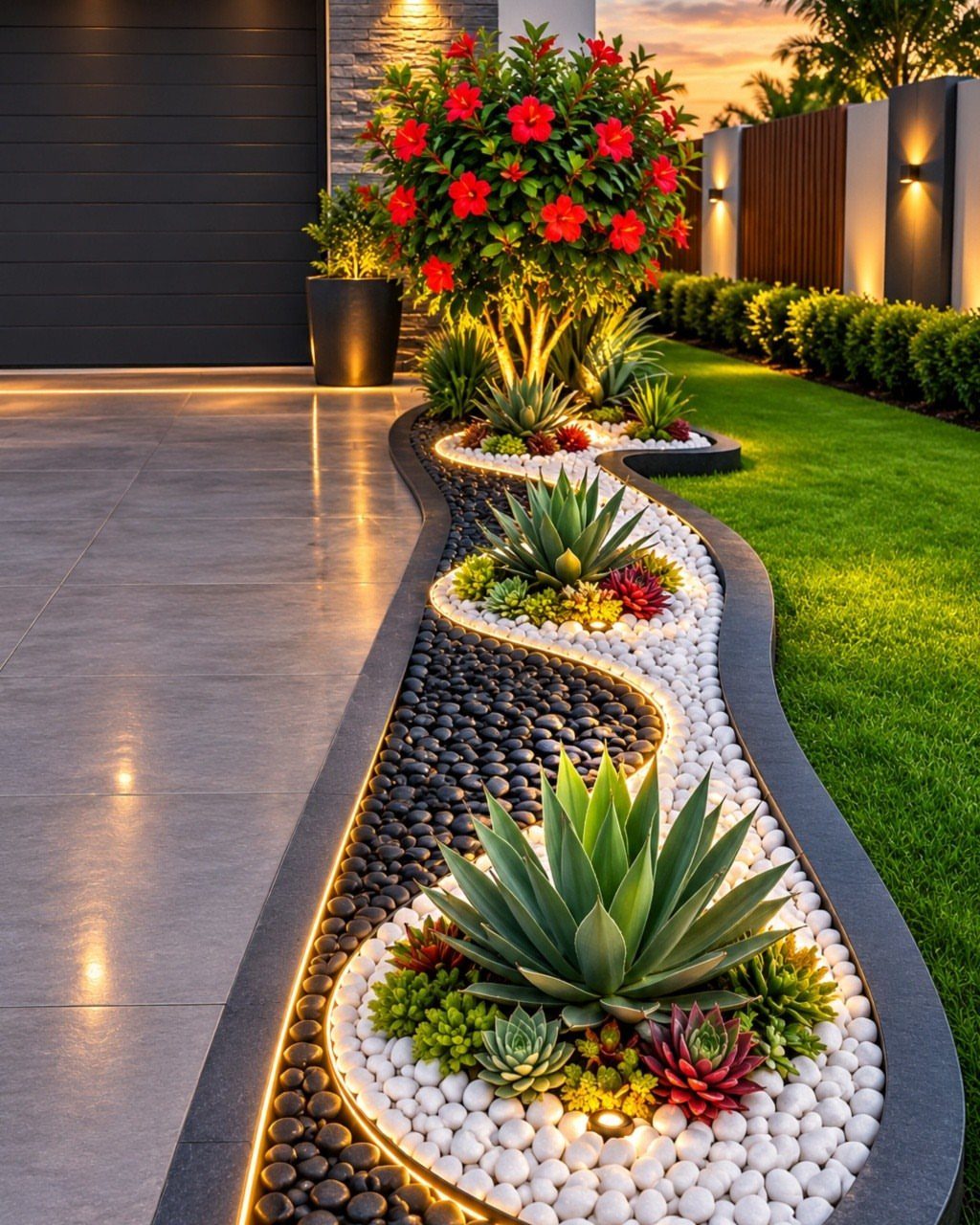
Curved edges read softer against hardscaping than straight lines, and a well-placed curve can turn a driveway border into something intentional.
Black and white pebbles show every leaf and need a blower weekly; I would swap them for small-grade decomposed granite, which still drains fast but stays put under a hose.
The integrated strip lighting is a detail I would borrow exactly: low-voltage LED in an aluminum channel, set into the bed edge before you plant, with a transformer hidden in the garage.
5. String Lights Along Pathways
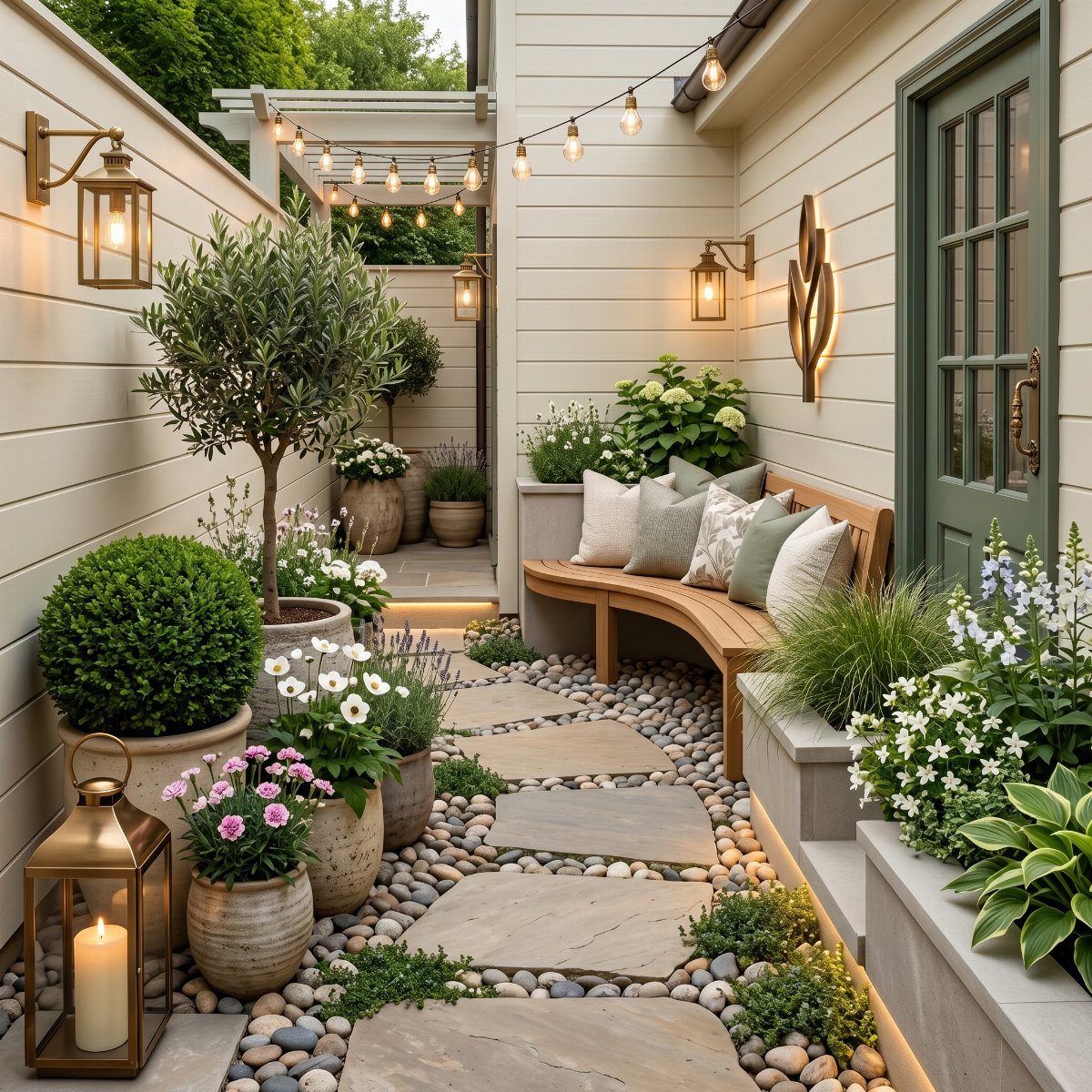
Overhead string lights do the safety work of path lighting with none of the fixture cost, and they make a narrow passage feel like a room.
Stone slab walks run best under a zigzag of bulbs hung high enough to walk under, low enough to read by.
I buy generous spacing on the sockets and use a guide wire if my run is long; sagging cable looks careless in month two.
Solar bulbs have improved, but I still trench a 12/2 line to a weatherproof outlet if the house wall is close.
6. Garden Retreat with Seating
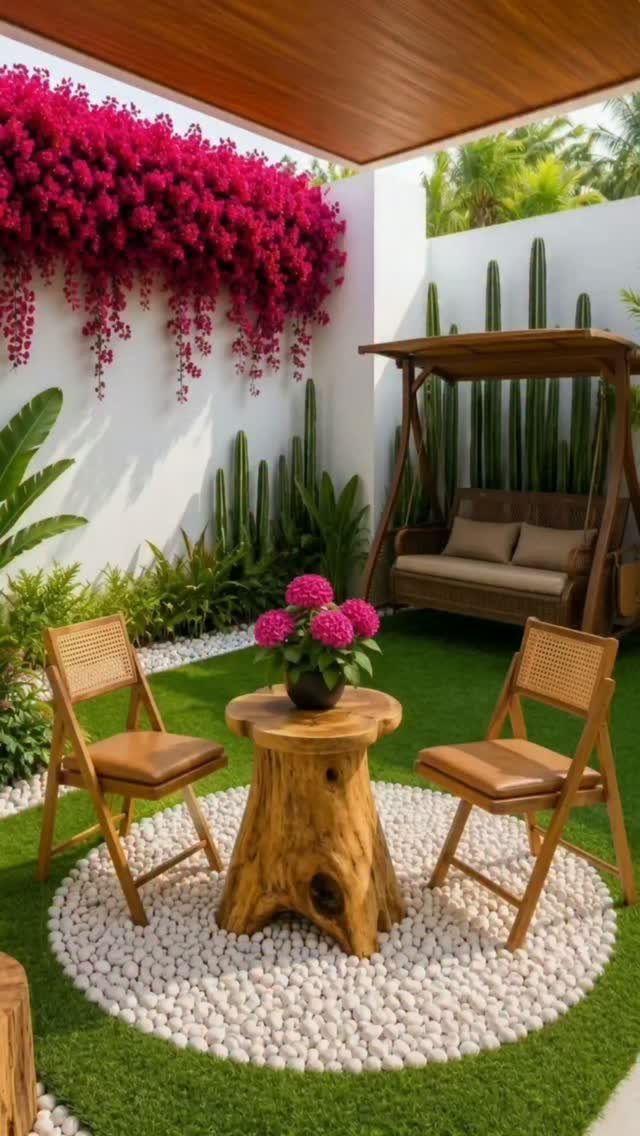
A sitting spot needs 3 things: a surface for a cup, a back that lets you lean, and something overhead or behind that says "this is the place."
A garden nook with a stump table, wooden chairs, and a swing bench backed by bougainvillea on a white wall packs a lot of layers into not much square footage.
I would build this in stages: hardscape first, then the largest piece of seating, then plantings that take 2 seasons to fill in.
The white pebble ground plane reflects light after dark; keep it, or swap it for crushed limestone and cut your material cost.
7. Add a Plunge Pool
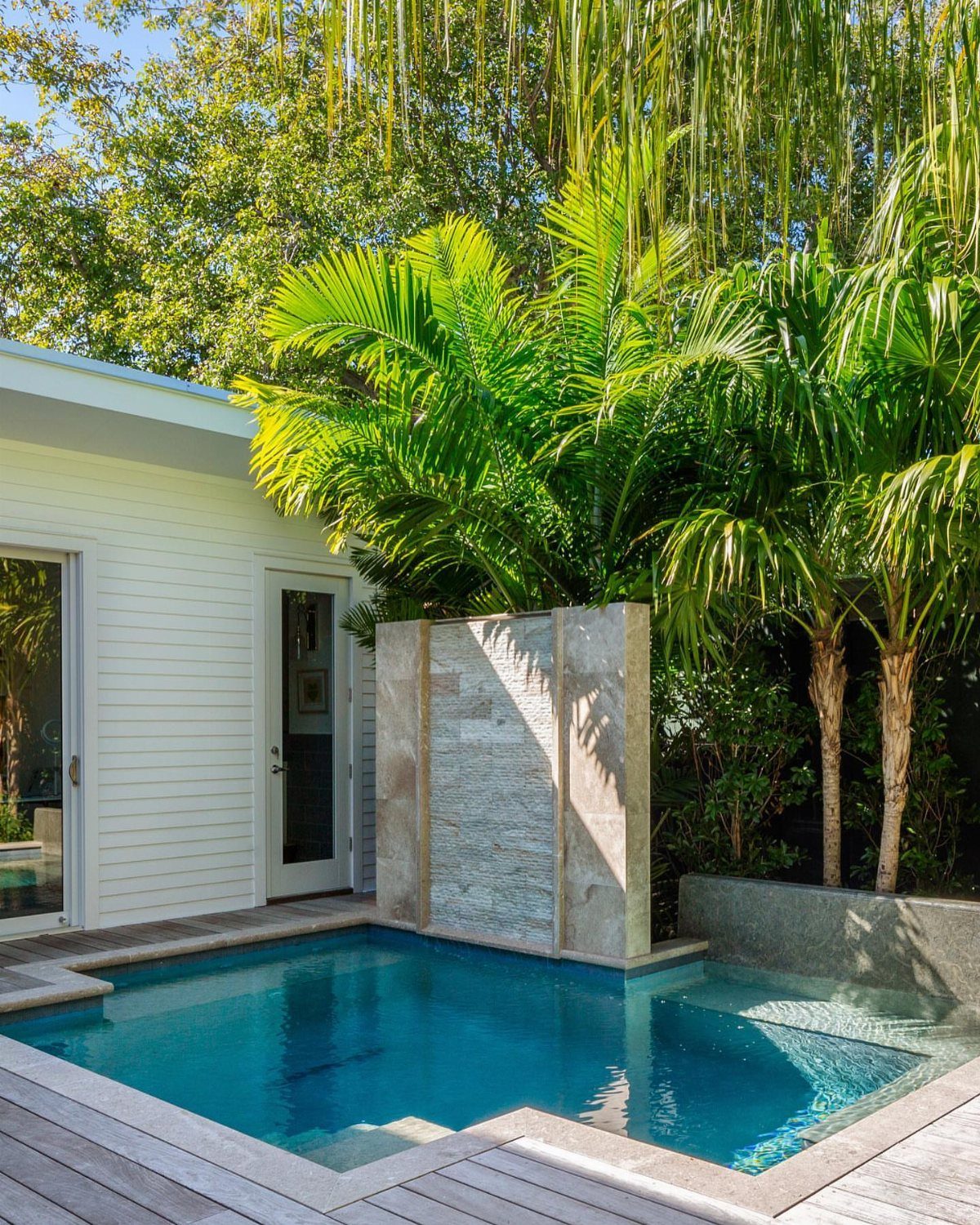
A plunge pool fits where a full pool will not; a footprint just wide enough to stretch out in is enough to cool off in August.
A wood deck with a stacked stone wall spilling water masks pump noise and gives the pool a reason to exist beyond the plunge. Tropical plantings around the edge need winter protection below zone 8.
8. Dog Run
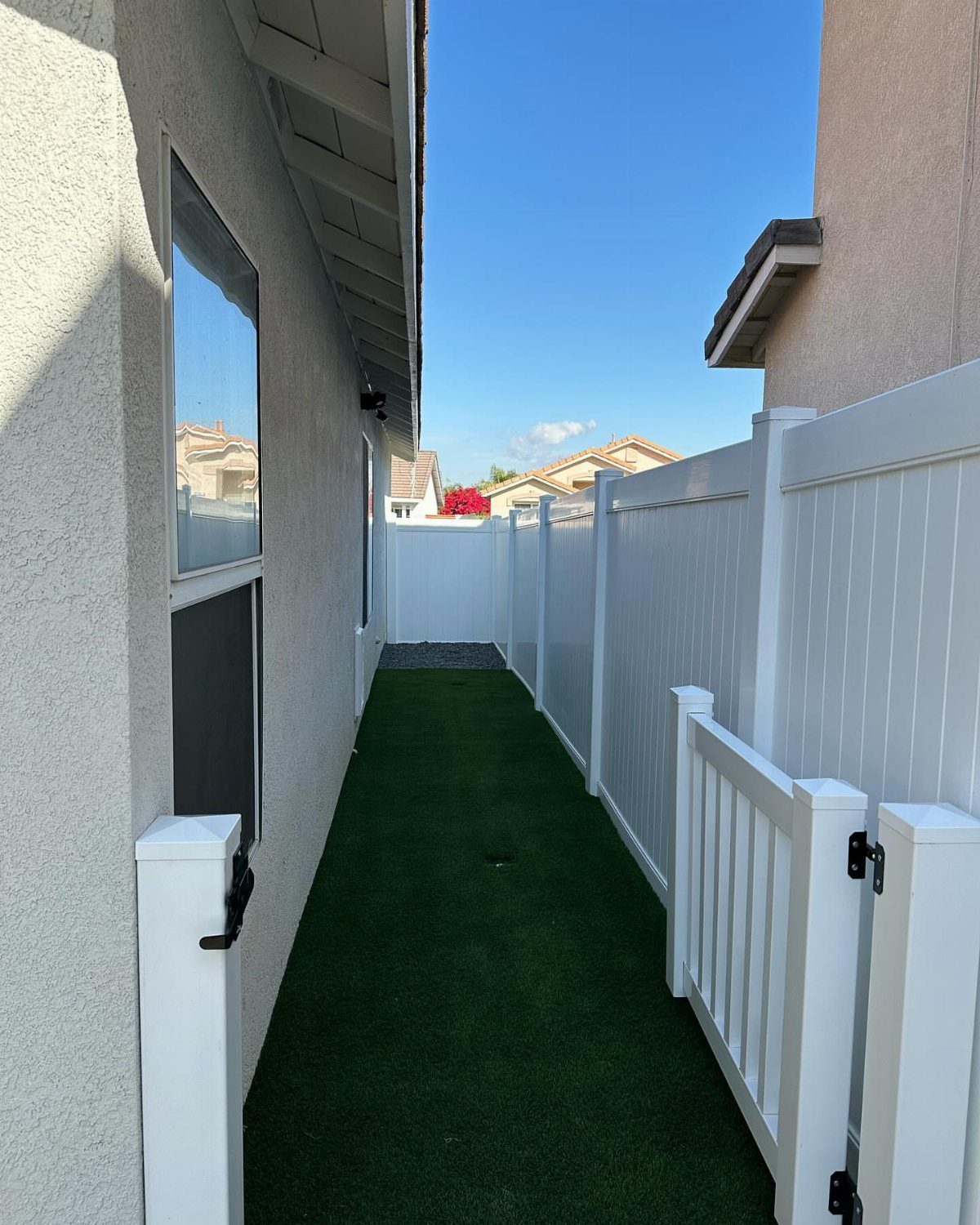
Artificial turf in a side yard dog run solves the wear patch where grass dies anyway, and hosed-off pet waste beats the nitrogen burn of a lawn.
The vinyl fence on one side and house wall on the other make this a corridor; turf keeps it usable after rain without tracking mud indoors.
I would lay a crushed stone base and a permeable weed barrier first, not plastic sheeting, or every downpool puddles.
A second gate at the far end is worth the cost if you ever need to wheel a mower through to the back.
9. Containers with Plants
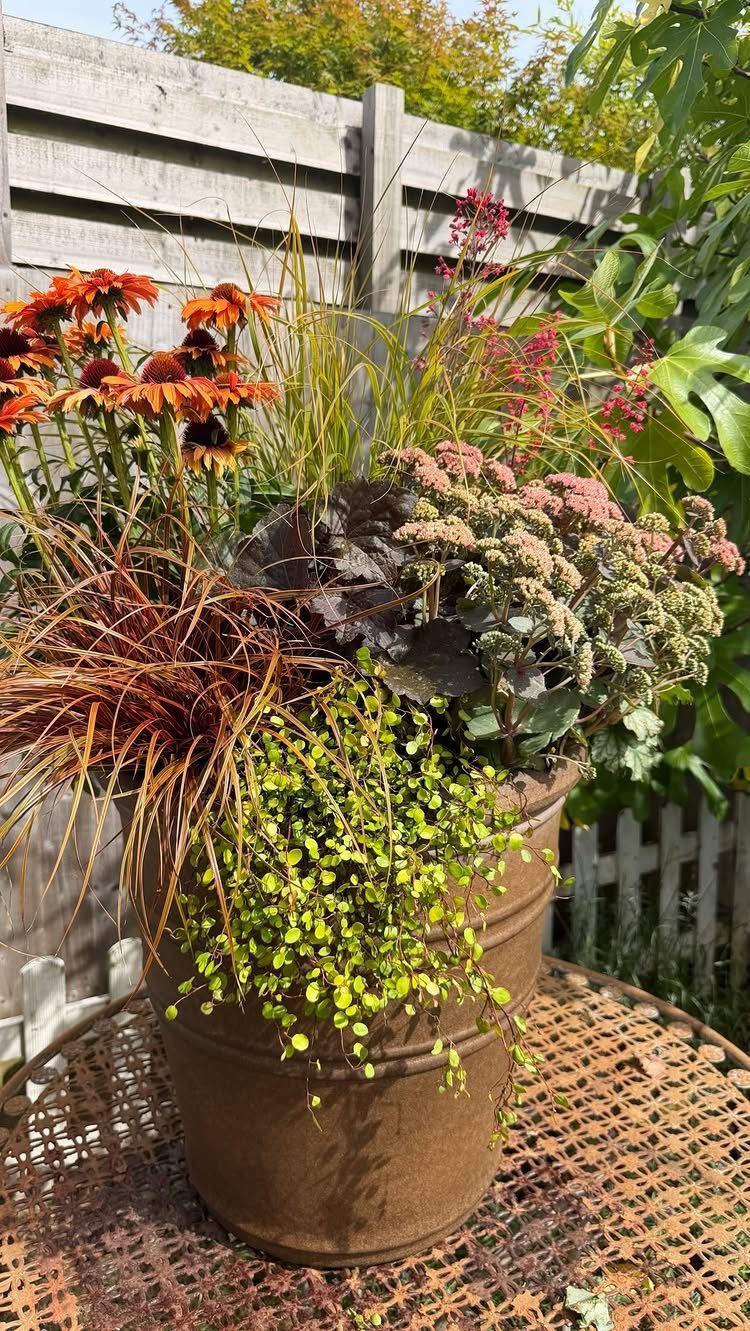
One large container on a stand brings planting height to eye level and keeps rabbits from grazing your annuals bare.
Mix heights inside: upright grasses for structure, mounding bloom for color, trailing stuff to soften the rim. Refresh the soil every spring; container roots exhaust potting mix faster than bed soil.
10. Garden Arches
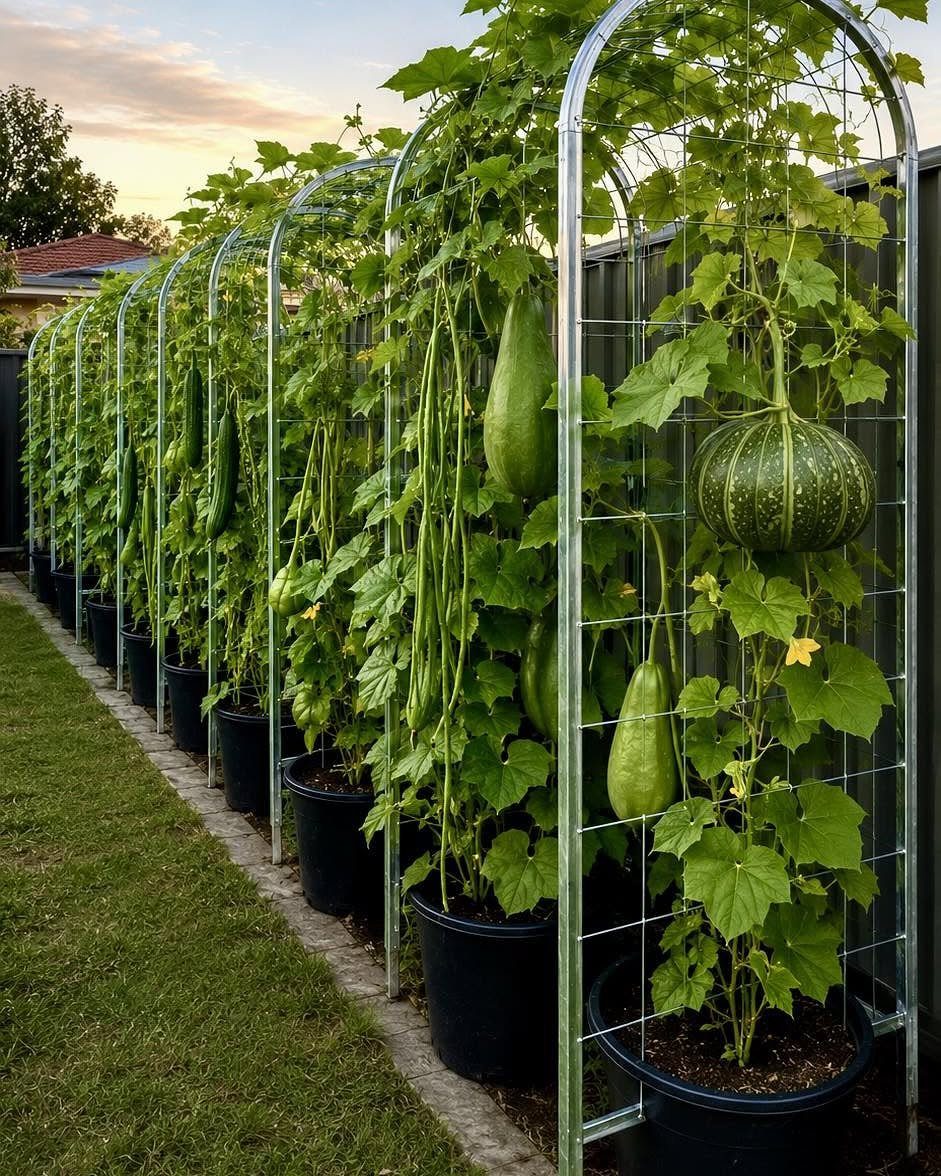
Metal arches in a row make a flat side yard read as a tunnel, which is the closest thing to depth you can build in a narrow strip.
The black pots below are growing gourds upward through the structure; I would use livestock panel or concrete reinforcing mesh lashed to the arches if the vines are heavy fruited.
Squash bugs collect on the undersides, so leave enough gap to inspect. Paint the metal with rust-inhibiting primer before you plant; scraping around tendrils in July is not worth the saved afternoon.
11. Shade Garden with Ferns and Hostas
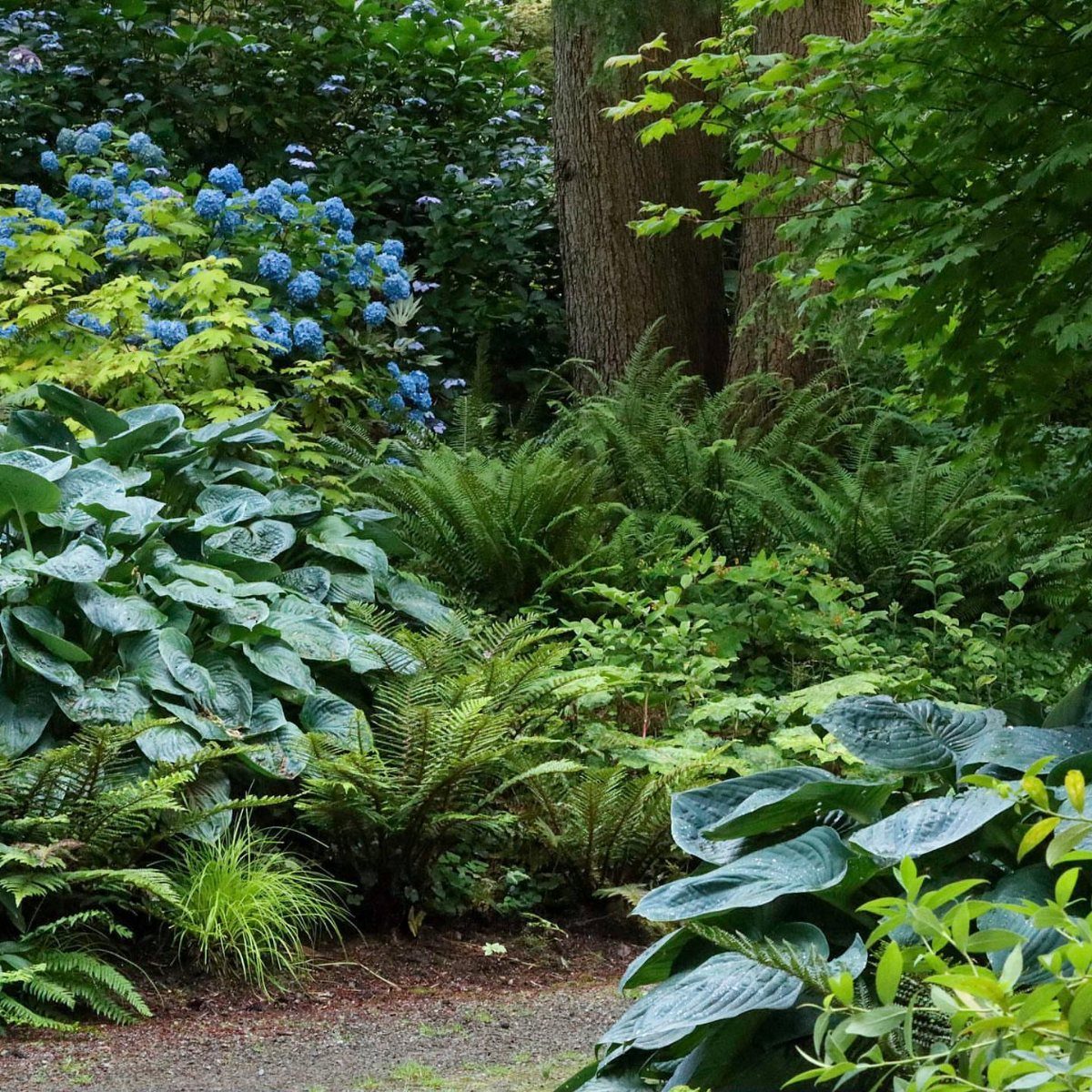
Hostas and ferns are the workhorses of a side yard that gets no direct sun and probably not much of your attention either.
The blue hydrangea in the background wants more water than the rest; plant it slightly low in a pocket of amended soil or it flags by August.
I would mulch with shredded bark, not whole nuggets, because it breaks down into the lean soil these beds usually start with. Slugs are the real maintenance; iron phosphate bait scattered in April beats the beer trap ritual.
12. Layered Plantings
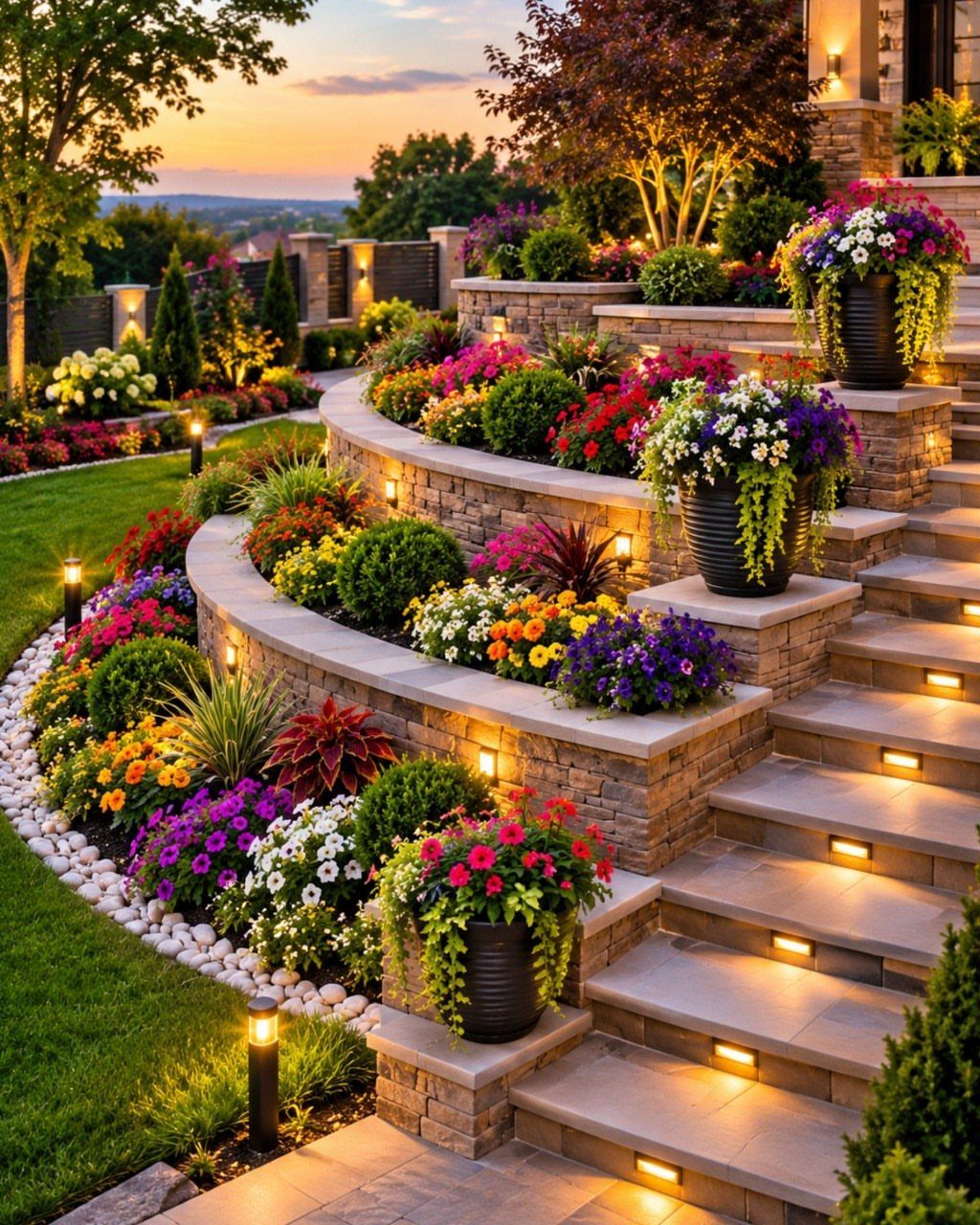
Dry-stacked walls drain well but shift in freeze-thaw; a concrete block core with stone veneer faces stays truer in northern zones. Plant the tallest layer at the top, shortest at the foot, or the lower tiers disappear in shadow.
13. Install a Garden Gate
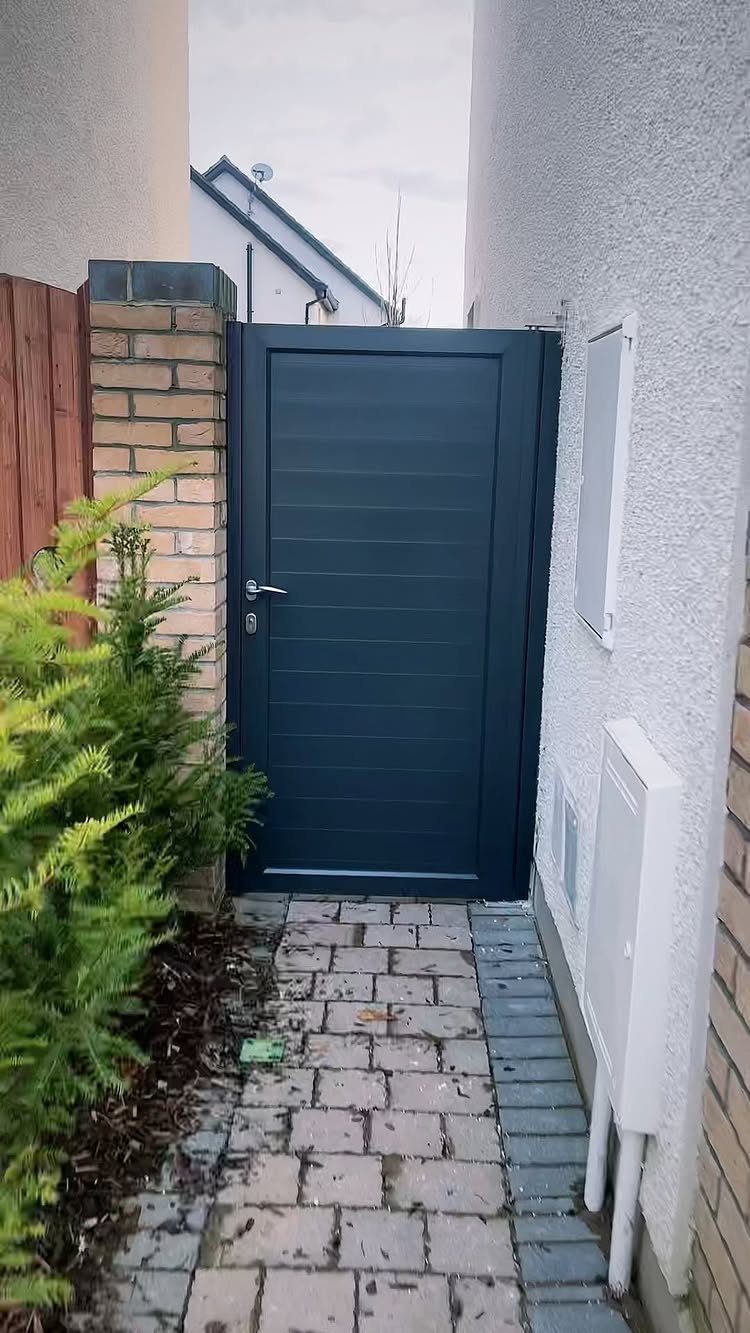
A gate turns a side yard from a service corridor into a place with a beginning and an end.
The dark gray steel panel against brick reads modern without fighting an older house, and the narrow width suits the opening most fence panels leave behind.
I would set the posts in concrete below frost line; a gate that drags in year 2 is a gate that was tamped in dry.
A surface bolt to the brick pillar keeps it closed without hardware showing from the street side.
14. Compost Bins
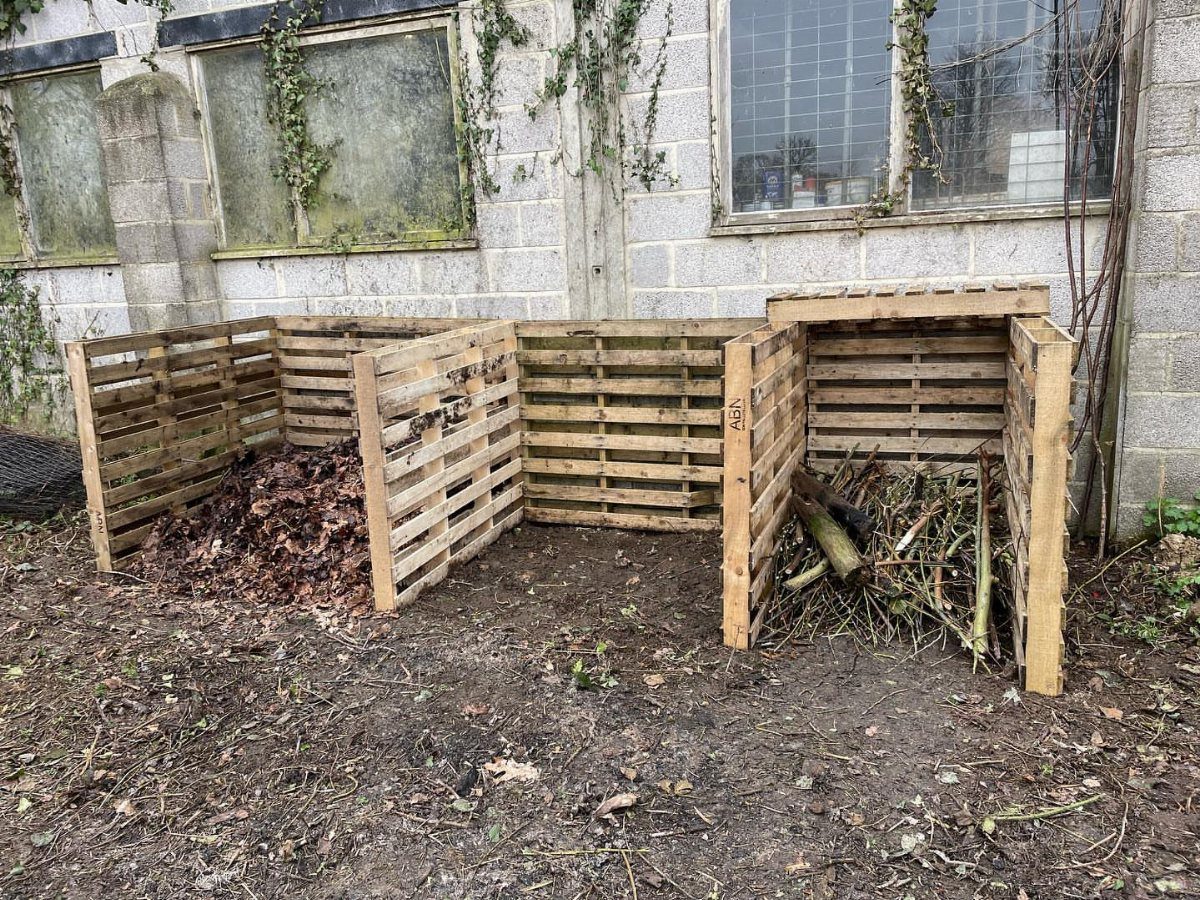
Three bays let one rest while another finishes and a third takes fresh material, which is the rotation that actually makes compost instead of a damp pile of leaves.
Pallet wood is free and breathes, but gaps wide enough to let material through mean lining the sides with hardware cloth.
The "ABN" stamp is just shipping lumber; it will rot in contact with soil, so rest the bottom rail on concrete pavers or stone, not earth.
Turn the active bay monthly with a fork; finished compost in the resting bay screens through fine mesh in spring.
15. Bamboo Privacy Screen
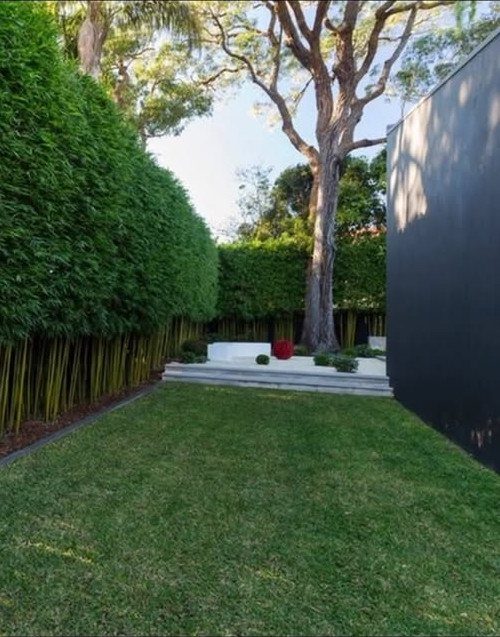
Running bamboo in a lawn bed will cross that grass fast and emerge in the neighbor’s driveway; clumping varieties stay where put, grow tall enough for privacy, and fill a narrow side yard in a few seasons.
A hedge dense enough to block sight lines from a second-story window matters more than blocking at eye level.
I would dig a deep barrier of HDPE root barrier along any property line, even with clumping types, because a bamboo screen that becomes a dispute is not worth the afternoon it saves on installation.
16. Add a Fire Pit
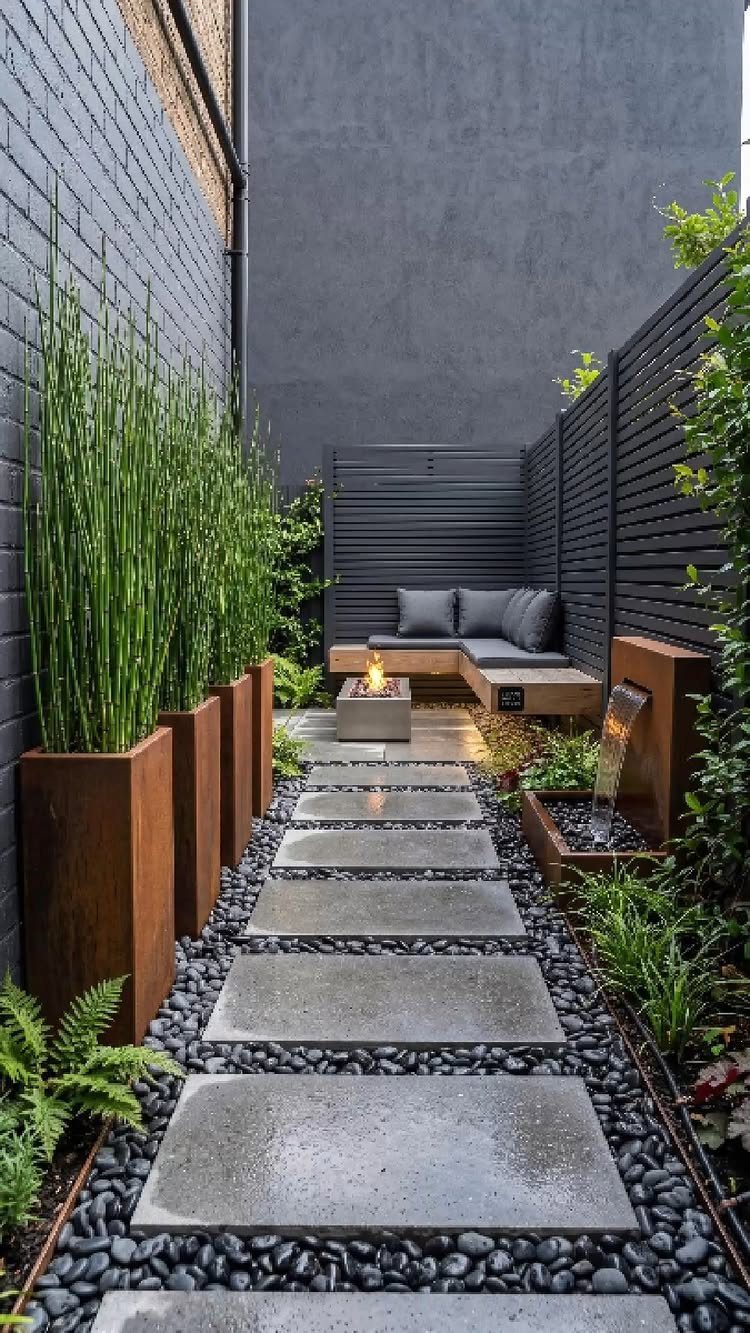
A square fire pit built into a corner bench turns a side yard too narrow for a conversation circle into a place a couple actually face each other.
The stone paver walk in black pebbles carries the same material to the fire, which reads as one design rather than a patio that wandered.
I would keep the pit compact inside for gas or slightly larger for wood; anything too big dominates a tight space. Built-in seating costs more than chairs but never needs storing before snow.
17. Low-Growing Ground Cover Plants
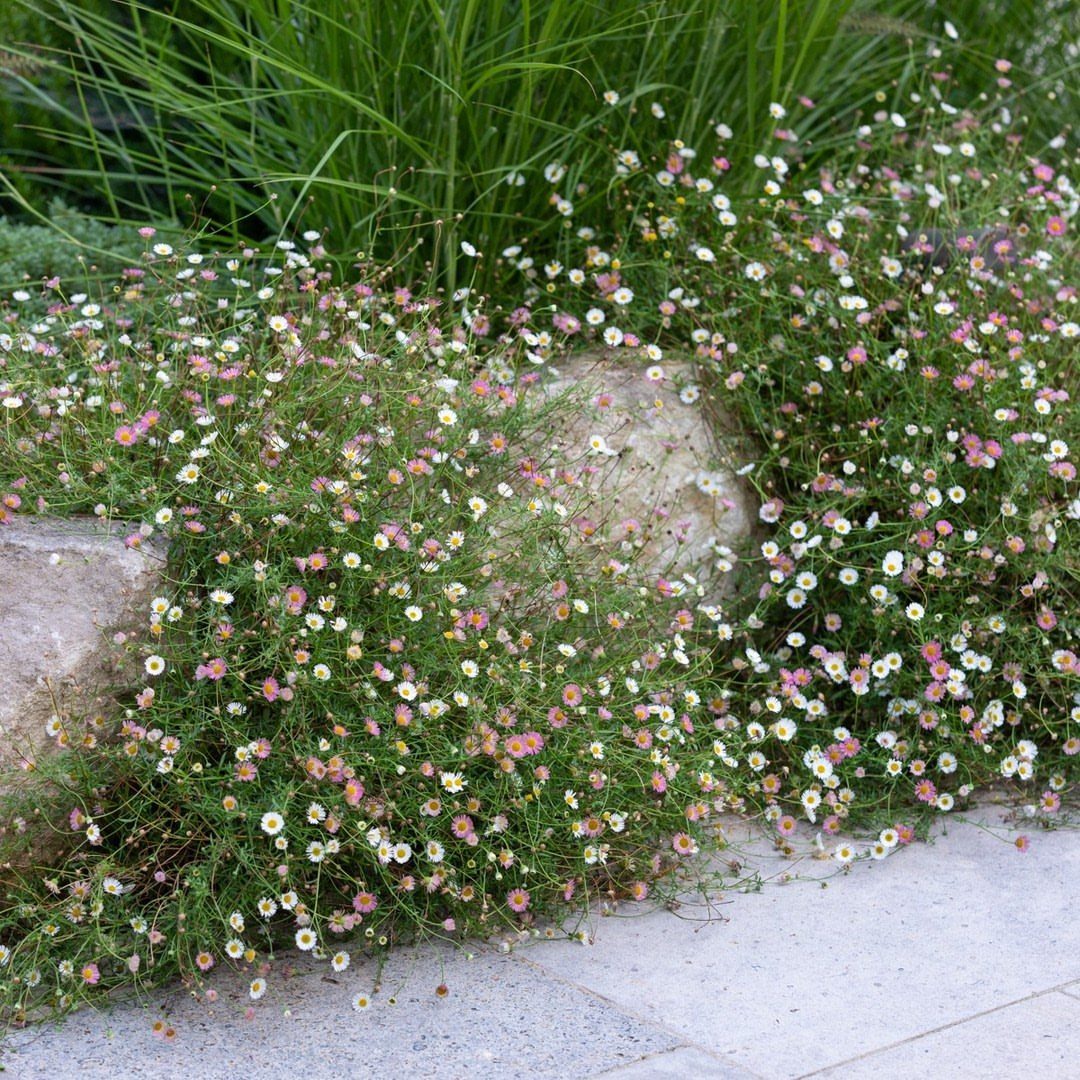
Mexican fleabane threads between stones and boulders where grass would brown and moss would slump, and it reseeds into cracks you did not plan for.
The pink and white blooms sit on low stems that do not need shearing to stay below foot traffic. Plant plugs 12 inches apart in spring; by fall they have knitted into a mat that takes light stepping.
I would not use it on a main path, where winter wet turns the foliage to slime underfoot, but for a border edge or rock garden it outperforms any mulch I have tried.
18. Create a Zen Garden
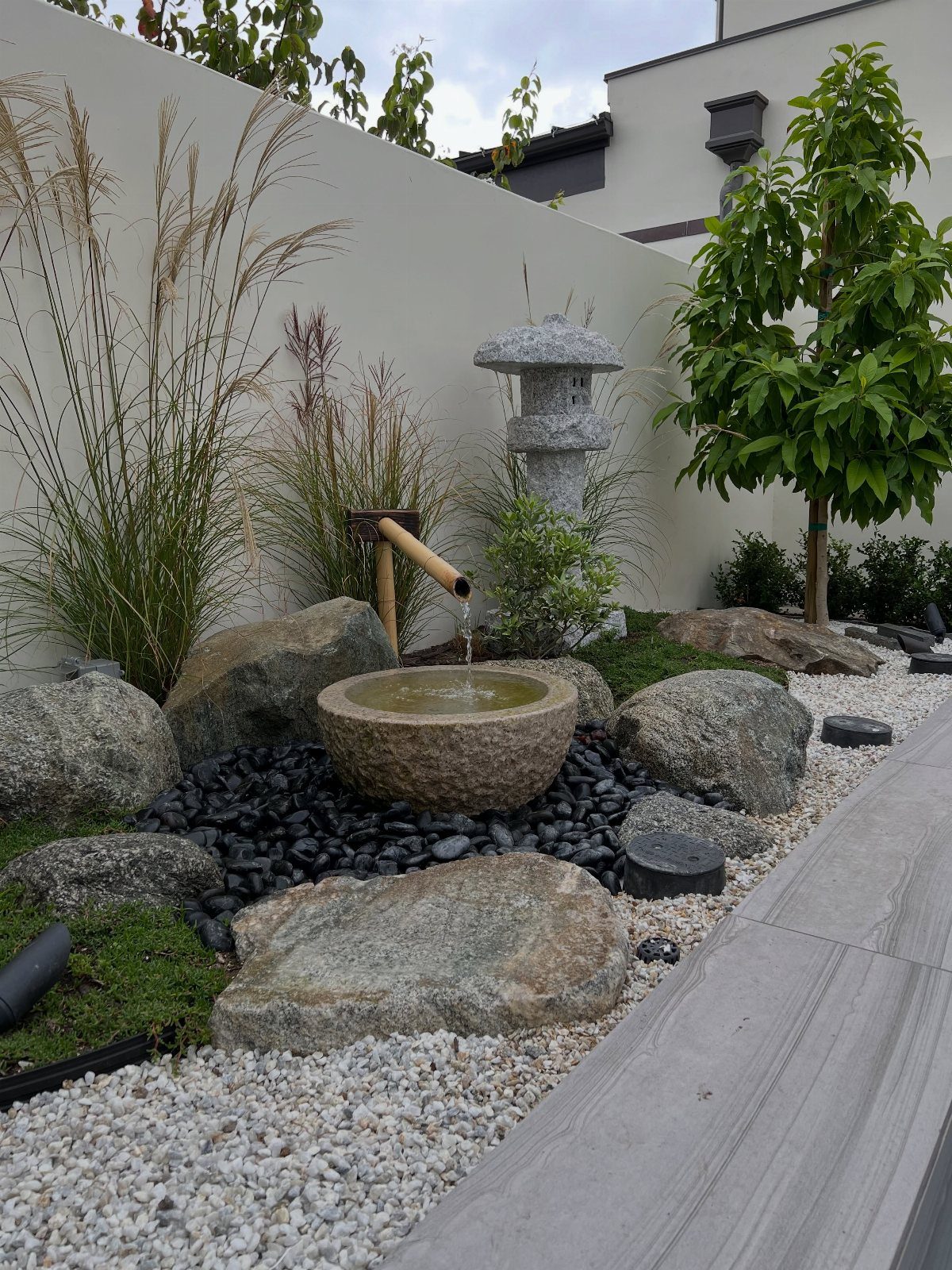
A bamboo spout dripping into a stone basin gives the ear something to follow, which is half the point of a space meant to slow you down.
The black pebbles against white gravel read as water and shore; keep the raked surface crisp or it becomes yard instead of garden in a month.
The pagoda lantern is ornament, but the basin is work: it needs weekly emptying and scrubbing or algae owns it by August.
I would plumb a small recirculating pump rather than depend on a tap, and set the basin slightly high for a seat that lets you tend the stones.
Assessing Side Yard Conditions
Measure your side yard before you buy anything. A tape measure and a sketch of width and length keeps you from ordering materials that do not fit and plants that outgrow the strip.
Check the light at 9 a.m., noon, and late afternoon; the difference between those readings decides whether you are planting hostas or cactus.
Most side yards near houses get compacted soil from years of foot traffic and construction, so dig a test hole and fill it with water.
If it stands for hours, you need drainage work before you plant. Soil pH matters less to hardscaping but tells you which amendments to mix in if you are growing anything edible or ornamental.
Choosing Plants for Side Yards
Match your plant list to the light you actually measured, not the light you wish you had.
A limited palette reads calmer in a narrow space than a crowd of different textures fighting for attention. Check mature sizes before you buy; a shrub tagged "compact" can still spread four feet and block a gate.
Vertical growth buys you layers without sacrificing walkway width. Espaliered trees or climbing vines on a fence or arbor draw the eye up and make a corridor feel less like a trench.
Shade-tolerant plants are the default for most side yards bounded by house and fence; sun lovers belong only where you have watched the light long enough to know they will get what they need.
Sacha McCrae, the founder of Living Gardens Landscape Design, notes how side yards are often forgotten and ‘relegated to a utility area or pass-through for the maintenance gardeners’.
Maximizing Small Spaces
Vertical systems pack planting area into wall space that otherwise does nothing.
A wall-mounted setup against fence or house can hold fifty plants in six square feet of ground, which is the only way to garden when your side yard measures three or four feet across.
Automated drip irrigation is worth the extra cost; hand-watering a vertical stack ends with dry top rows and drowned bottom ones.
A hedge or espaliered fruit tree hugging the property line can block the neighbor’s view without eating into the walking space a planted bed would demand.
Budget roughly $300 to $800 for a basic vertical installation depending on height and whether you are buying modular panels or building your own. Upkeep runs about 2 hours monthly, mostly pruning and checking emitters.
Frequently Asked Questions
What is the 3-5-7 rule in landscaping?
I have not used the 3-5-7 rule in my own projects, so I would rather not guess at how it applies here.
What are some good landscaping ideas for a side yard?
A gravel-and-stone walkway, wall-mounted planters, a small seating nook, or overhead string lights all work well in tight side yards.
A garden arch or espaliered vine trains the eye upward, which helps a narrow side yard feel like a passage instead of a corridor.
Take light readings at 3 times of day before you buy anything; morning, noon, and late afternoon sun can differ more than you expect in a slim space walled by your house and the property line.
How can you make a side yard low-maintenance?
Swap lawn for gravel or hardscaping that needs no mowing, and choose plants that tolerate your actual light and soil conditions without fussing.
Hostas and ferns handle shade with little attention; Mexican fleabane knits into a living mat between stones and reseeds itself.
Drip irrigation timed to run early morning keeps vertical plantings evenly moist; hand-watering almost always leaves the top tier dry and the bottom sodden.
What is the best way to utilize a narrow side yard?
Treat it as a vertical space, not just ground plane. A single-file gravel path with a horizontal slat fence narrowing the view turns even a corridor into a deliberate garden room.





