
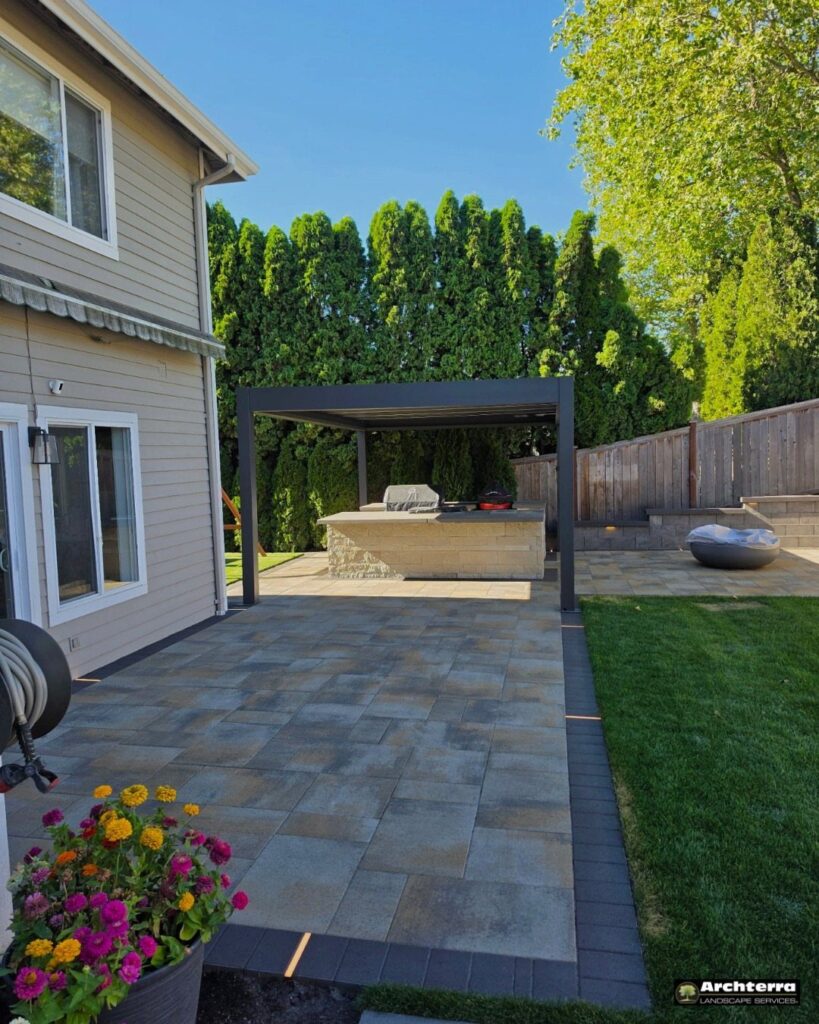
These 21 ideas run from a Saturday afternoon with a bag of white pebbles to engineered beams poured below frost line, so the deciding factor is not taste but hours and dollars you can actually spend this season.
A raised bed in cedar buys you spring weeks but needs shade cloth by July; a dry-laid stone fire pit rings in at a few hundred and only asks for dry wood and someone to tend it.
Match the project to the weekend you have, not the yard you wish you had, because a half-finished patio or pathway frames nothing at all.
1. Outdoor Kitchen
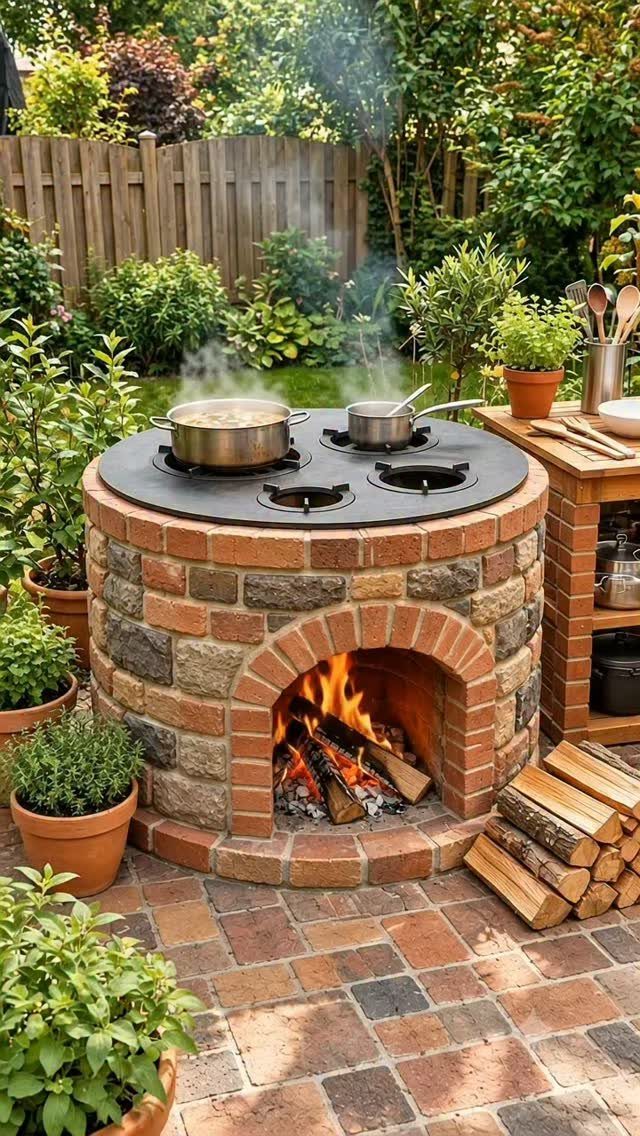
A wood-fired brick stove turns the backyard into a place where cooking happens outside, not just eating. I like this round build because the fire sits at working height; your back thanks you after an hour of tending pots.
For a weekend build, dry-stack brick around a steel barrel or buy a prefab firebox insert; either way, plan on a few hundred for materials that last.
What the photo skips is ventilation: place it where smoke drifts away from seating and windows, or that gathering hub becomes a no-go zone when the wind shifts.
2. Patios
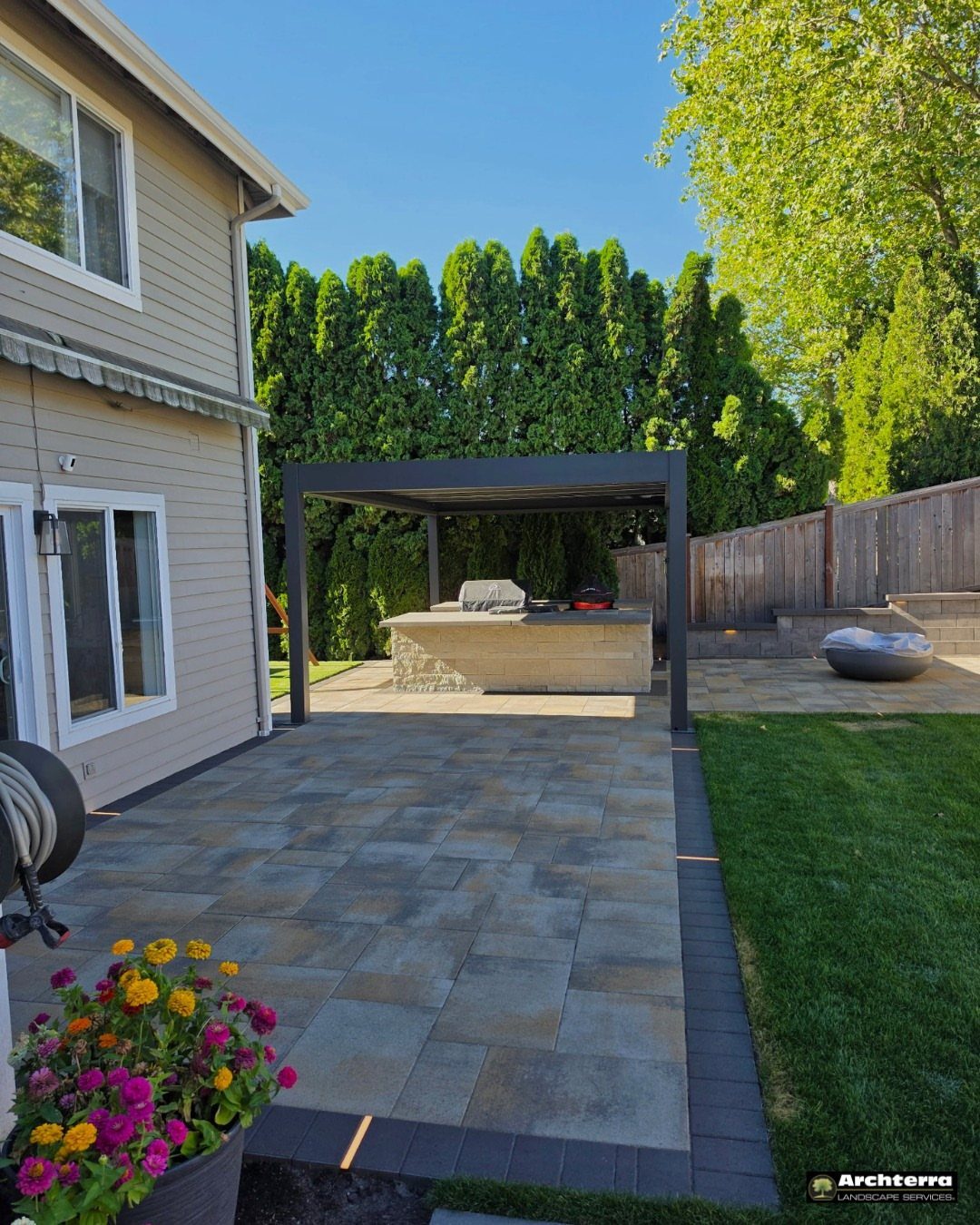
Stone pavers give outdoor furniture something clean and level to sit on, which sounds obvious until you try a chair on bare lawn after rain.
Extend the patio to meet the cover fully, so traffic flows dry-shod even in a drizzle.
Dig down for a proper base, lay crushed stone, then sand, then your pavers locked with edge restraints; a modest patio takes a solid weekend and a few hundred to over a thousand depending on stone choice.
Concrete pavers cost less per square foot but hold heat; light-colored limestone stays cooler underfoot in July.
3. Garden Beds
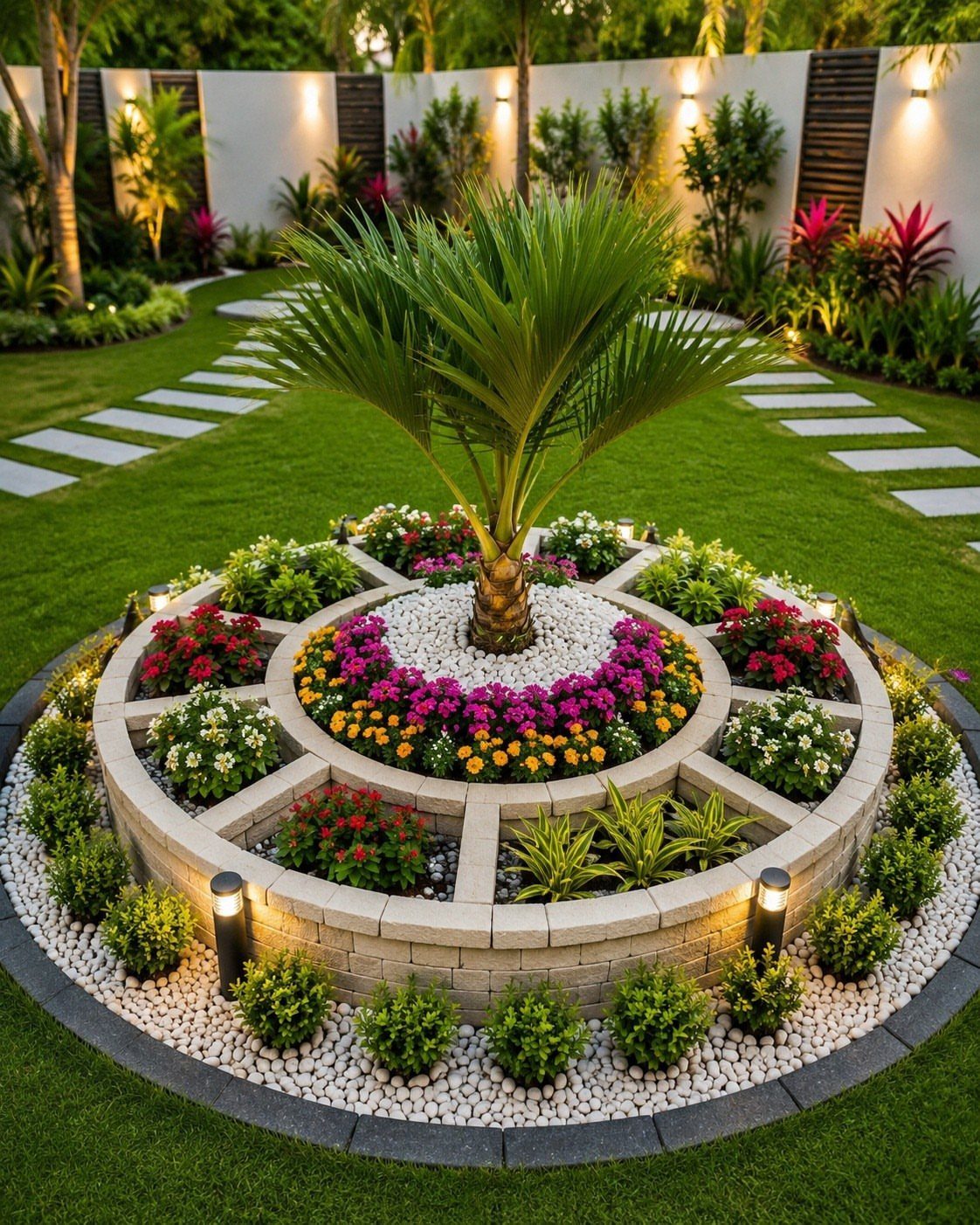
Raised tiers do what flat ground cannot: they let you see every plant from the path, and they drain faster after heavy rain.
The circular build uses stone to hold soil across three levels; line the inside with landscape fabric before filling, or the soil washes through the joints in year two.
Budget a day per tier for stacking and leveling, plus a couple hundred in stone for a bed this size.
A central tree works only if its roots and the bed’s depth match; deep-rooted trees want more room, while shallow-rooted annuals manage with less.
4. Vegetable Garden
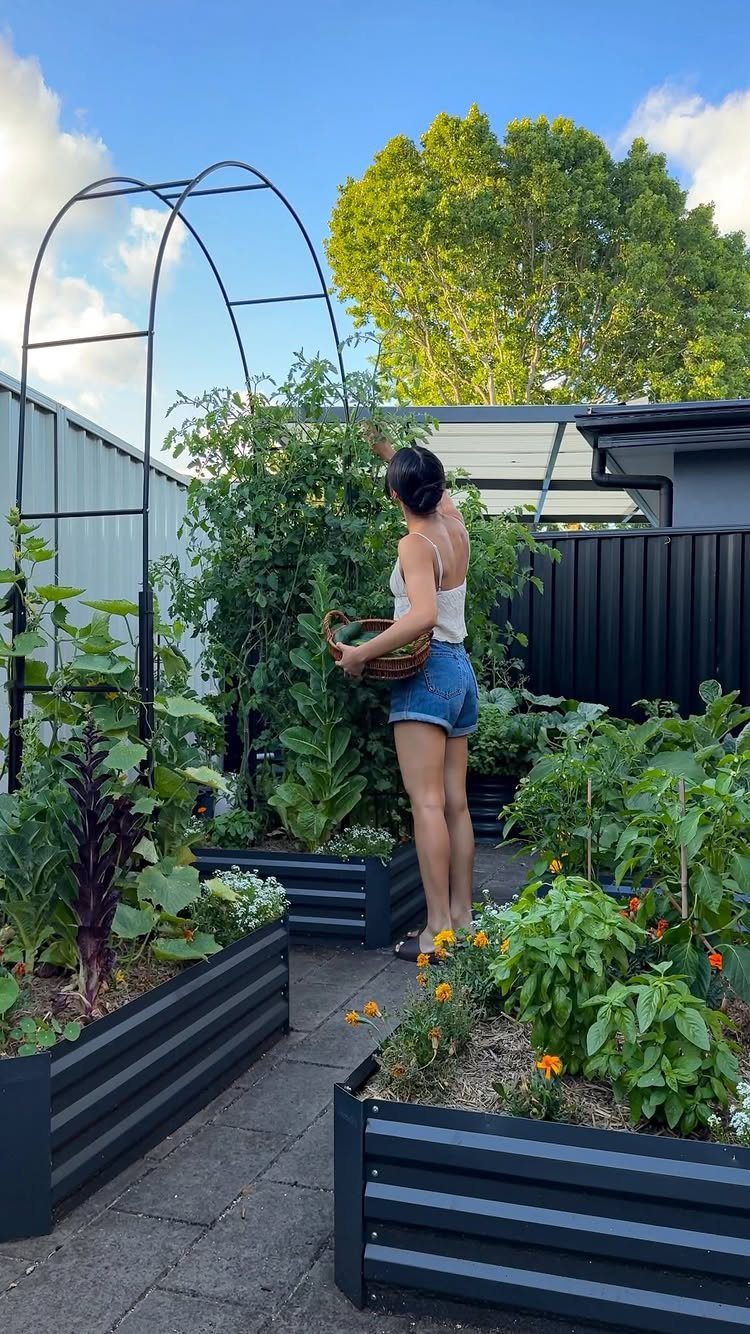
Corrugated metal raised beds warm faster in spring than wood or stone, which buys you extra weeks on tomatoes and peppers.
Face the beds north-south so both rows get even sun, and bolt the trellis to the bed frame itself, not the fence behind it.
A standard bed runs under a couple hundred in materials if you cut and fold the metal yourself; prebuilt kits run double.
The trade-off is heat: black metal in southern zones can cook roots by July, so shade cloth or a lighter color becomes worth considering.
5. Drought-Tolerant Garden
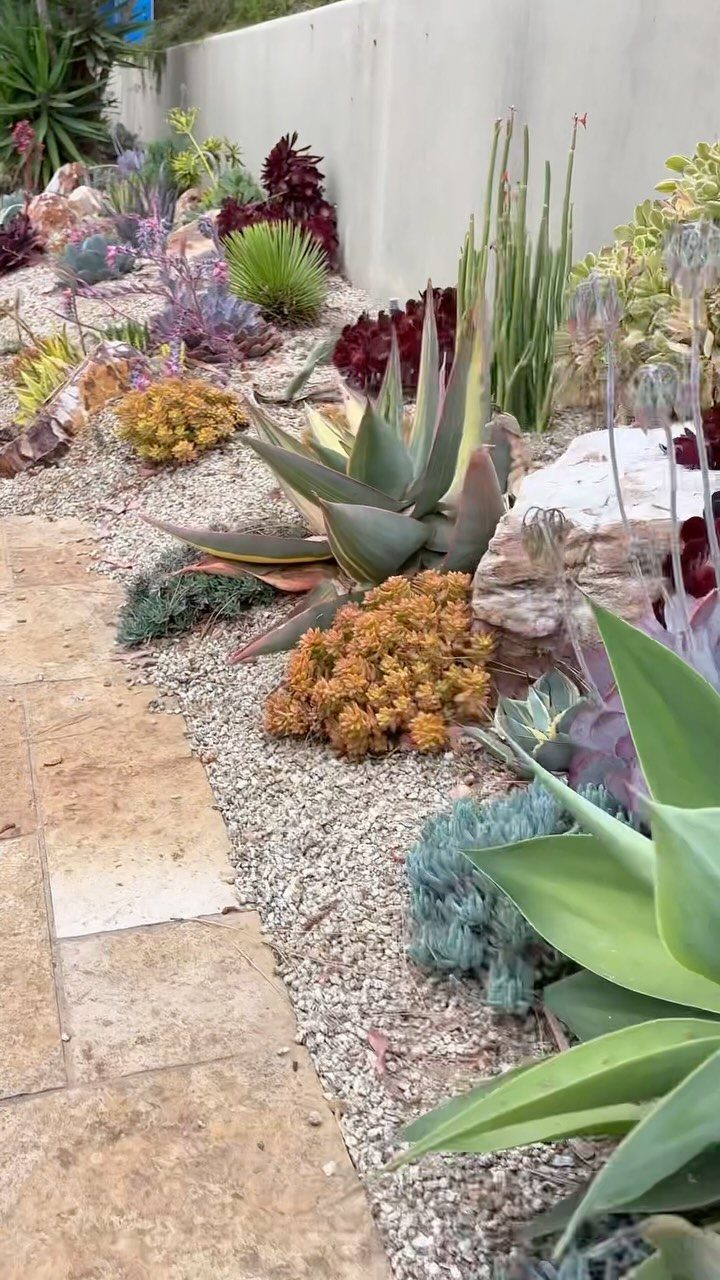
Gravel, boulders, and plants that store their own water skip the sprinkler system entirely. Size the gravel at under half an inch, coarse enough to stay put underfoot but small enough to rake level around root crowns.
This setup suits rental properties or second homes where no one visits daily; the upfront cost runs higher than turf, but the water bill drops to nearly nothing.
One limit: young succulents need occasional deep watering their first summer, so "set it and forget it" starts in year two.
6. Landscape Lighting
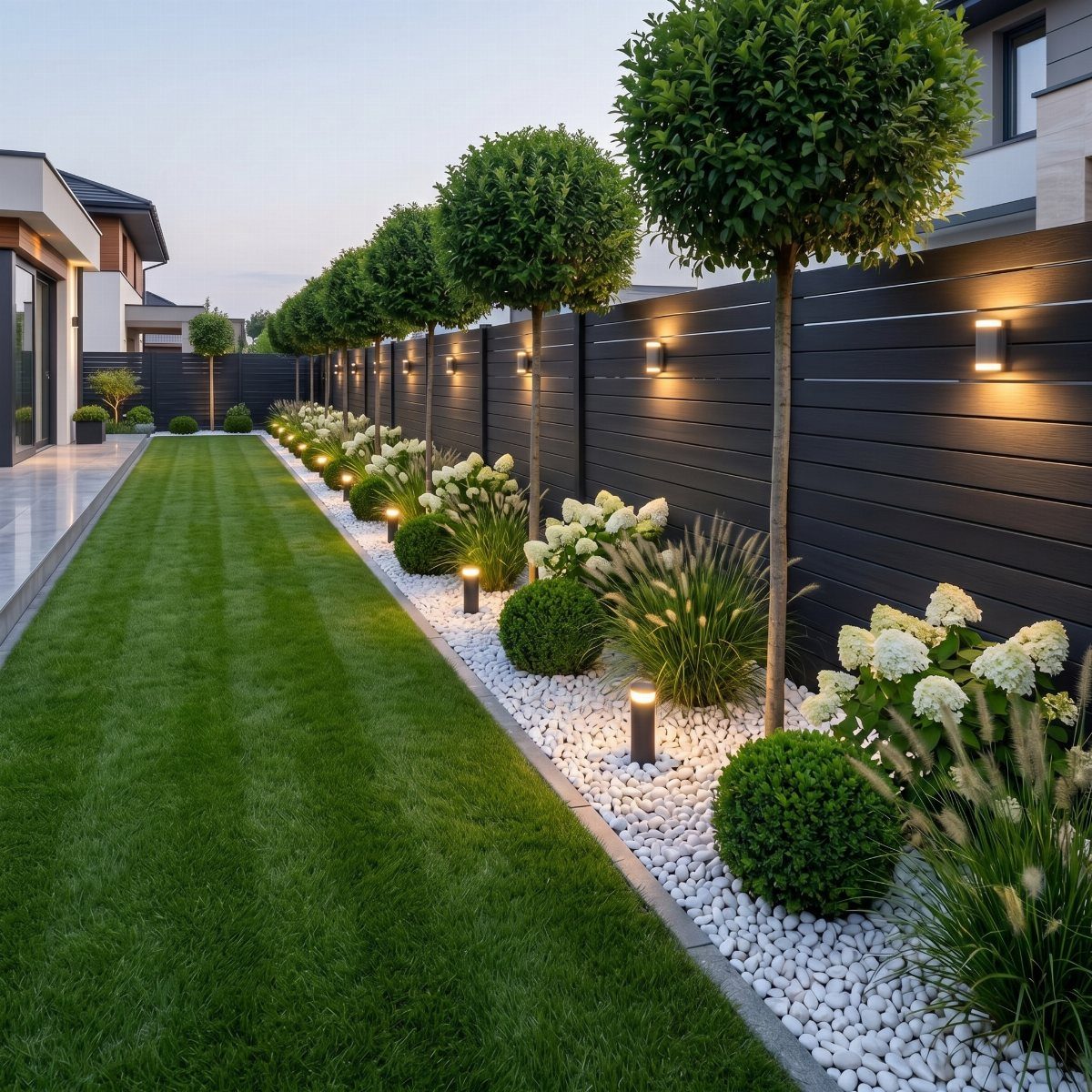
Low bollard lights along a path and sconces on a fence turn a yard you leave at dusk into one you use after dinner.
The photo keeps everything low-watt and warm-toned; I would stick to 2700K LEDs or lower, as anything bluer reads like a parking lot.
Plan for 12V transformers, not 120V direct burial, which is safer to install yourself and easier to move when you redesign.
A full run of path lighting with a transformer runs a few hundred if you buy kits and do your own trenching; rent a spade or hire the digging, but handle the layout yourself, since only you know where you actually walk in the dark.
7. Fire Pit
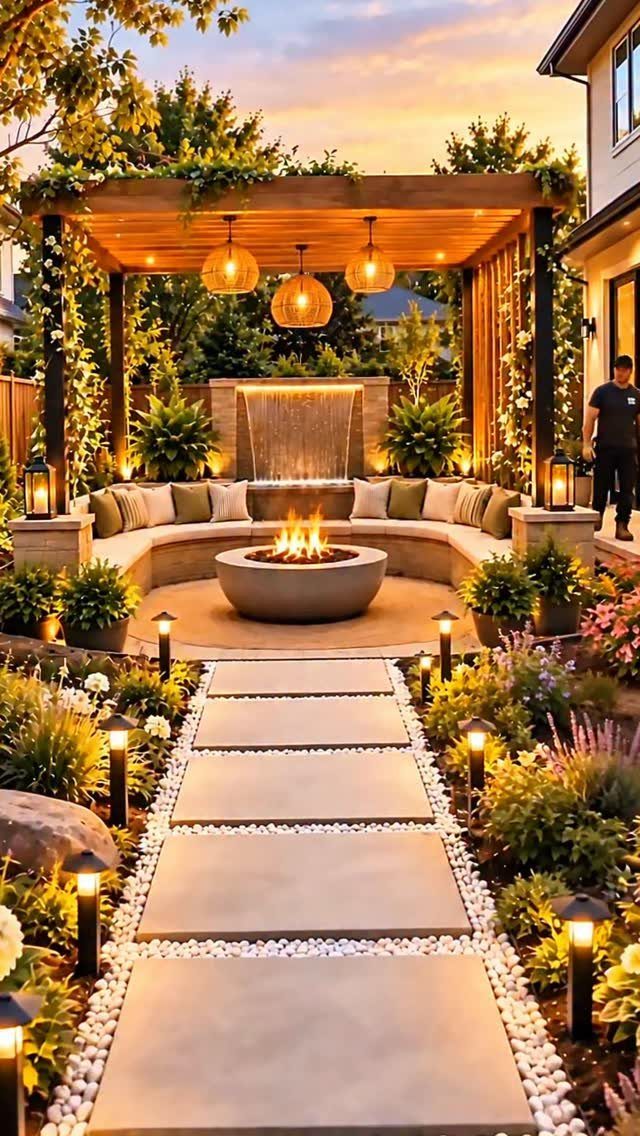
A stone fire pit gives people a reason to stay outside after sunset, gathered around something that does not need a screen.
A circular fire pit under a pergola only works if the slats are spaced for smoke to rise clear; otherwise, keep it open sky and plan seating at a conversational distance, not so close the heat becomes unbearable.
Dry-laid stone rings run a few hundred in local fieldstone or concrete block with a veneer cap, and a gravel base underneath keeps the first ring level through freeze cycles.
Wood burns cheaper but needs tending; propane inserts cost more upfront and remove the ash, but also the smell of real smoke.
8. Privacy Hedges
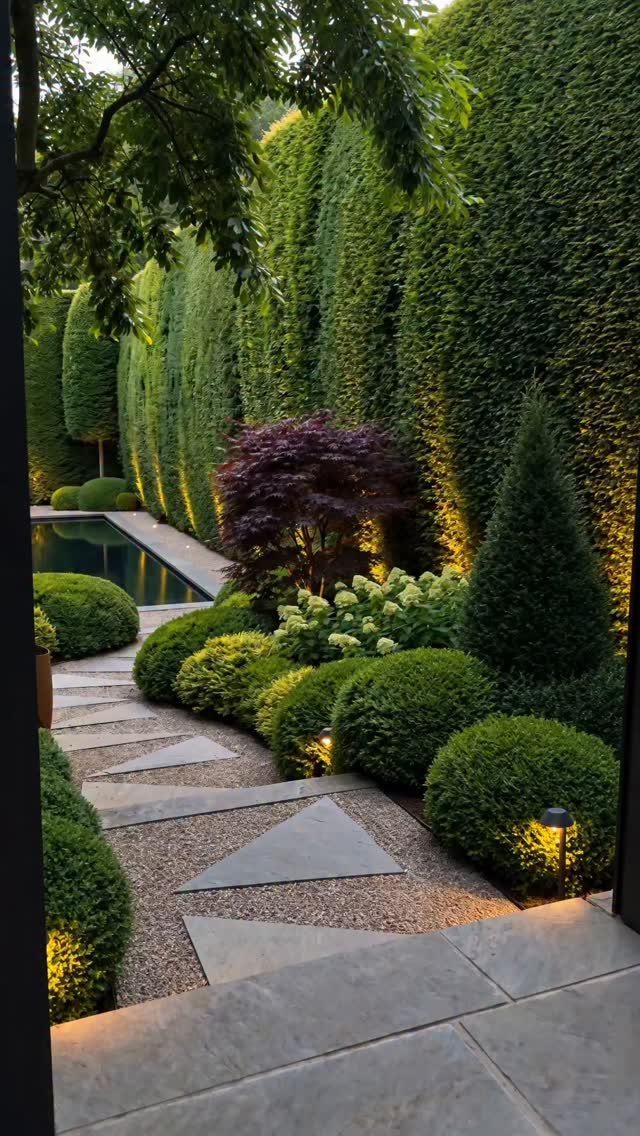
Tall evergreen hedges block sightlines in both directions, which matters when your window faces a neighbor’s deck or your pool sits visible from the street.
Rounded tops on a hedge show a formal shearing style that takes annual maintenance; let them go natural and you gain height faster but lose that tailored look.
Plant arborvitae or hemlock for northern zones, skip laurel or leyland cypress where disease has wiped out local plantings.
A hedge this mature took years from nursery stock, so budget for interim fencing or accept the wait; temporary measures are not failure, they are patience.
9. Pathways
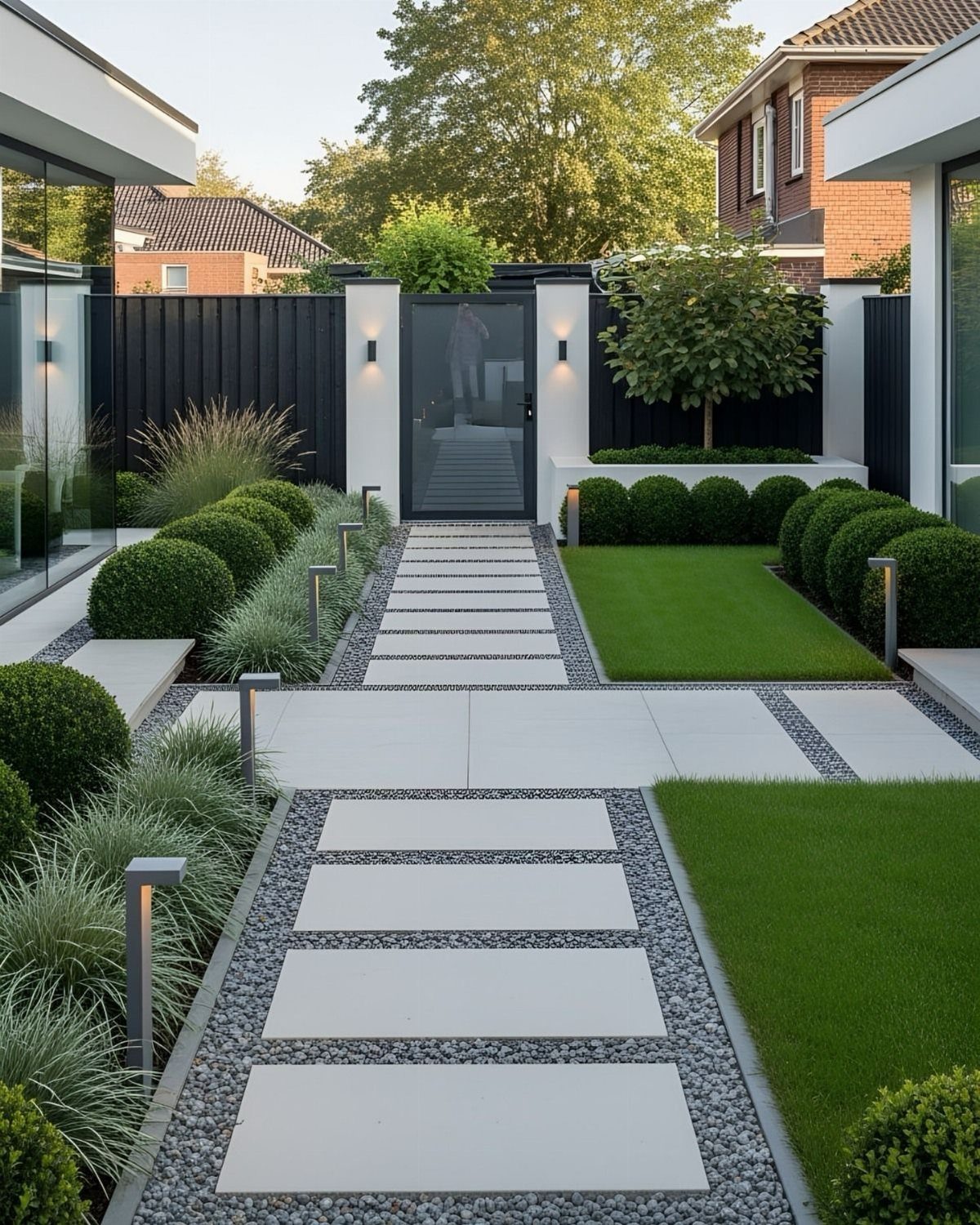
Concrete pavers set in gravel give a clean line through planting that lawn paths cannot hold.
Rectangular light gray units in dark stone give contrast that stays visible in evening light; I would order extra for cuts and future replacement, since matching dye lots disappear fast.
Dig out sod, lay geotextile, then compacted base, then bedding gravel, then level each paver with a rubber mallet; a long run takes a full day if the ground is dry.
The modern look here asks for precision, so rent a plate compactor and do not eyeball the base.
10. Pergola
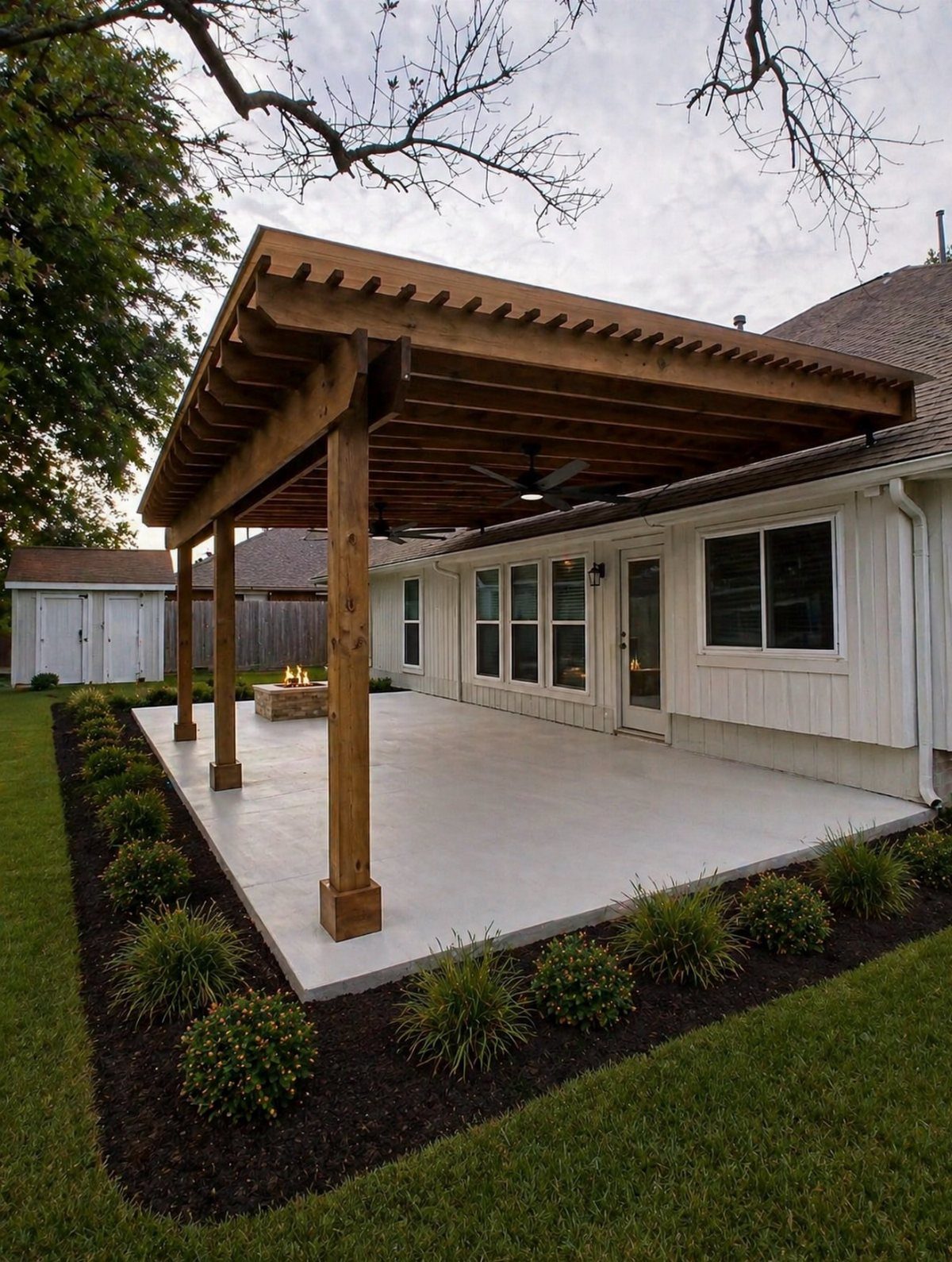
A pergola turns a bare patio into a room with sky for a ceiling, which is enough reason to build one even without vines.
A substantial timber frame attached to the house, with ceiling fans hung below the rafters, needs a licensed electrician for that electrical run in most codes, so plan the budget accordingly.
Cedar or pressure-treated lumber runs a few hundred for a modest span, though the scale here suggests engineered beams and footings poured below frost line.
I would stain rather than paint; paint peels where horizontal surfaces hold water, and stain lets you touch up without stripping.
11. Water Features
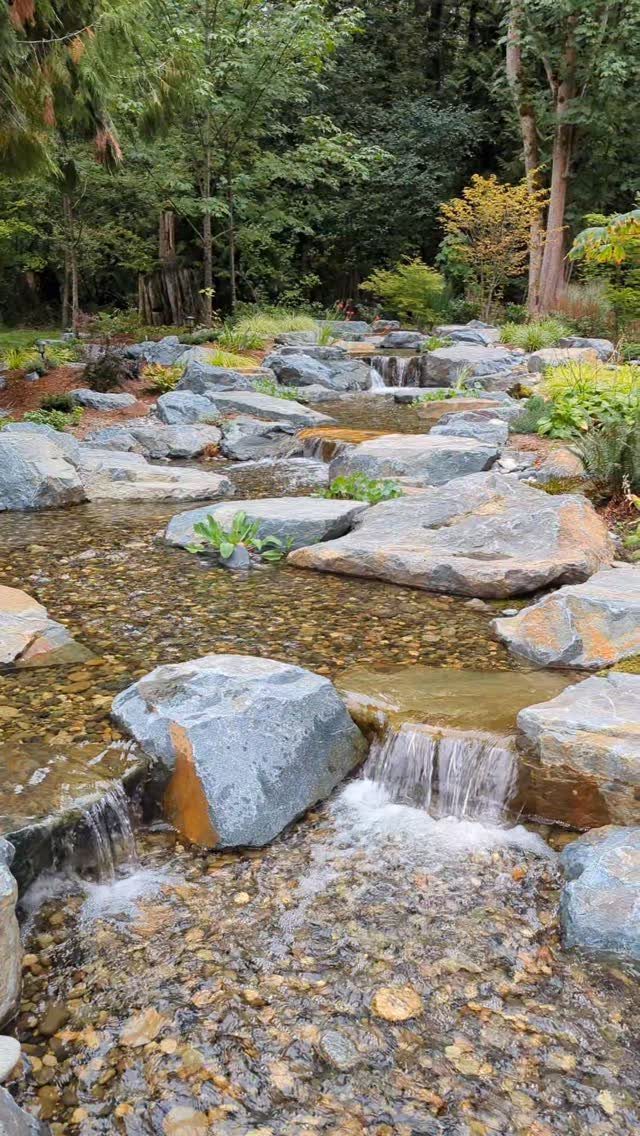
Moving water covers traffic noise and gives birds a reason to visit, which is more than most lawn ornaments manage.
A constructed stream over flat boulders with small falls takes a rubber liner, a recirculating pump sized for the head height, and stone heavy enough not to shift when someone steps near the edge.
A pump this size wants a grounded outlet on its own circuit; the liner and stone add several hundred more.
Clean the filter monthly in leaf season or the flow chokes down to a trickle by October. The sound scales with the drop: a short fall is gentle, more height becomes white noise you hear indoors with windows open.
12. Retaining Walls
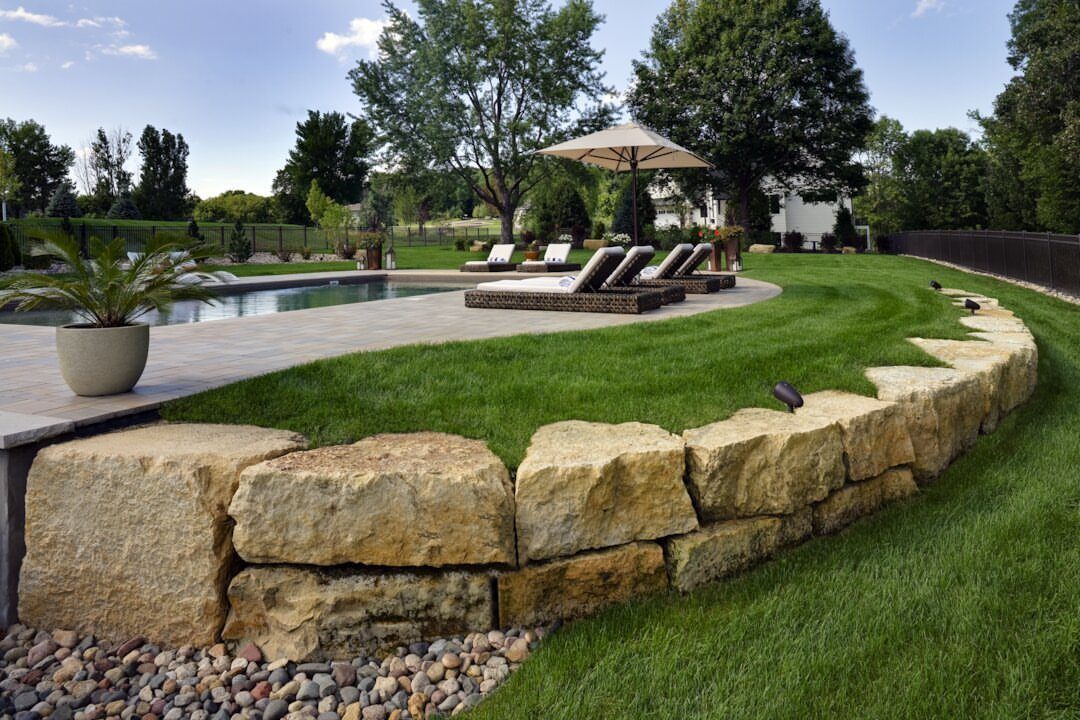
Curved boulder walls hold back slopes that would otherwise erode into unusable grade, and they do it with a look that poured concrete cannot match.
Natural stone in irregular sizes means each piece is selected and fitted rather than laid in courses; a wall this tall wants drainage stone and perforated pipe behind it, or hydrostatic pressure pushes it over in wet winters.
Boulder walls run higher per square face than modular block, but they last longer and handle slight settlement without cracking.
I would hire the excavation and the heaviest stones, then handle the backfill and grading myself to save where the machine cannot reach.
13. Modern Landscape Design
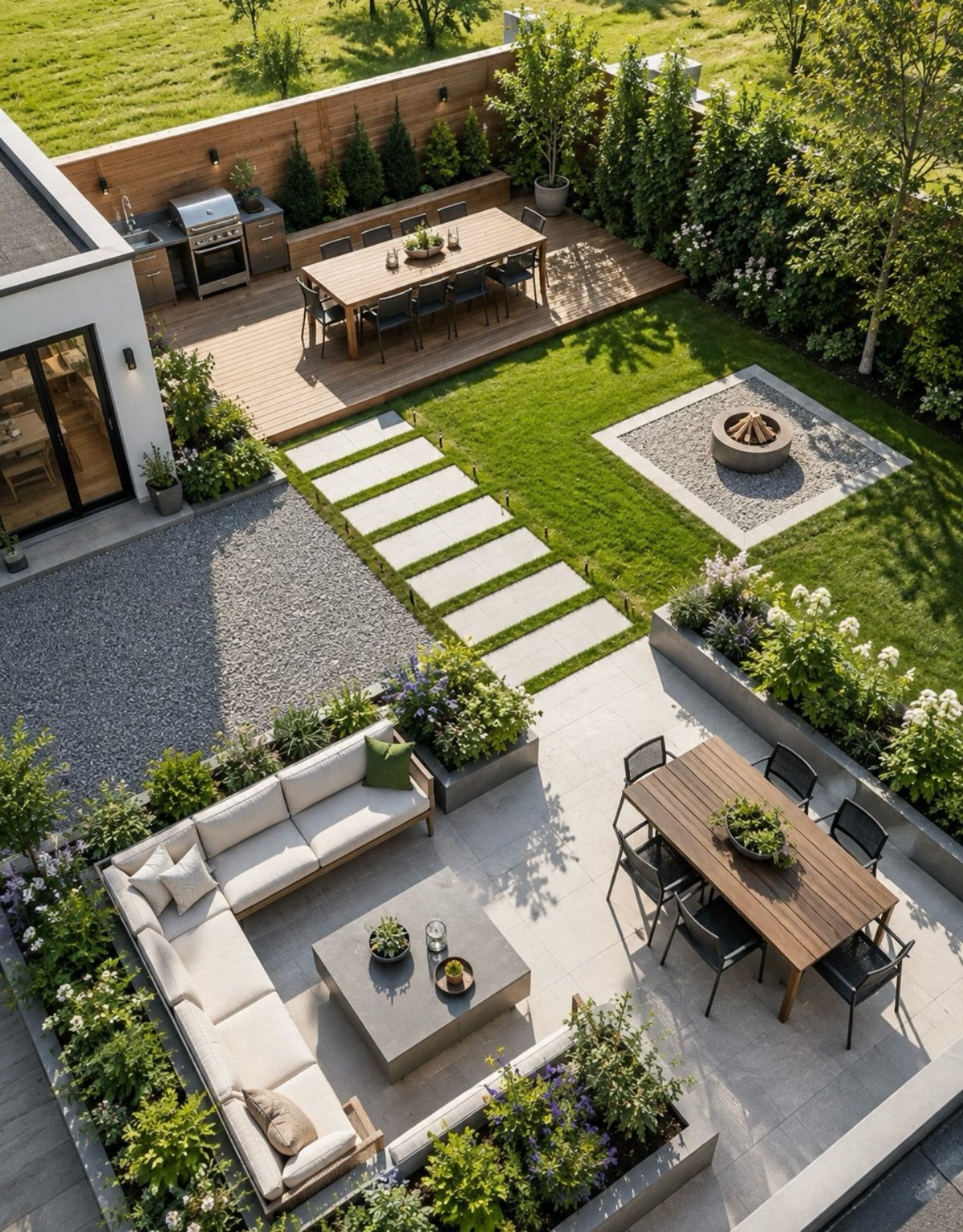
Modern landscape design treats the yard as connected rooms rather than a lawn with accessories.
Stone patio, timber deck, and lawn each get their own zone with clear edges between them; the clean borders are what make this read as designed rather than leftover.
I would keep the palette tight: 2 hardscape materials maximum, plus green, and let the furniture carry any color.
Built-in seating costs more than movable pieces but never blows around in a storm, and the clean lines suit a yard where you want calm more than cottage abundance.
14. Rain Gardens
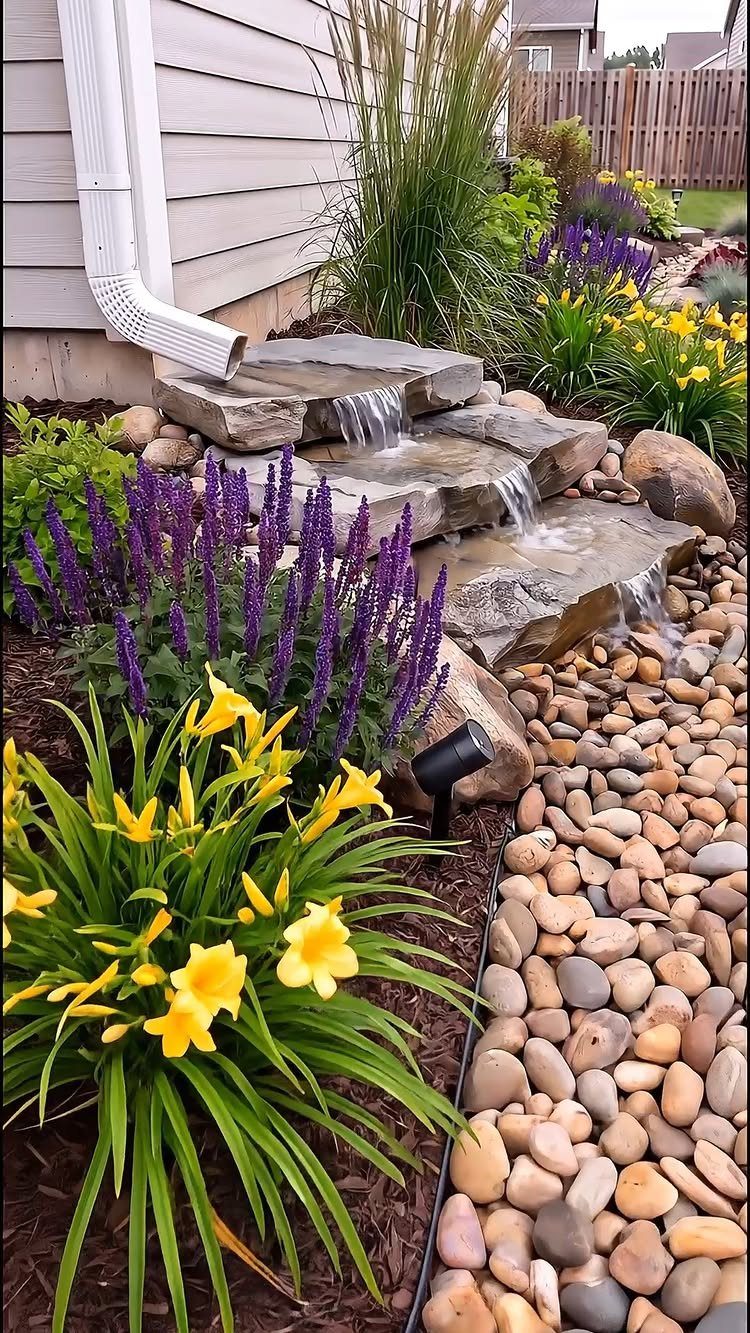
A rain garden turns the water rushing from your downspout into an asset instead of an erosion problem.
The visible setup uses tiered flat stones to slow the flow before it hits river rock, giving runoff time to sink in rather than sheet across the lawn.
Plant the margins with species that handle both wet feet and dry spells: daylilies and salvia work in most zones, though your local extension office has better lists than I do.
Dig the basin a few inches below grade and mound the soil you remove on the downhill side; you can shape it in an afternoon with a shovel.
15. Play Area
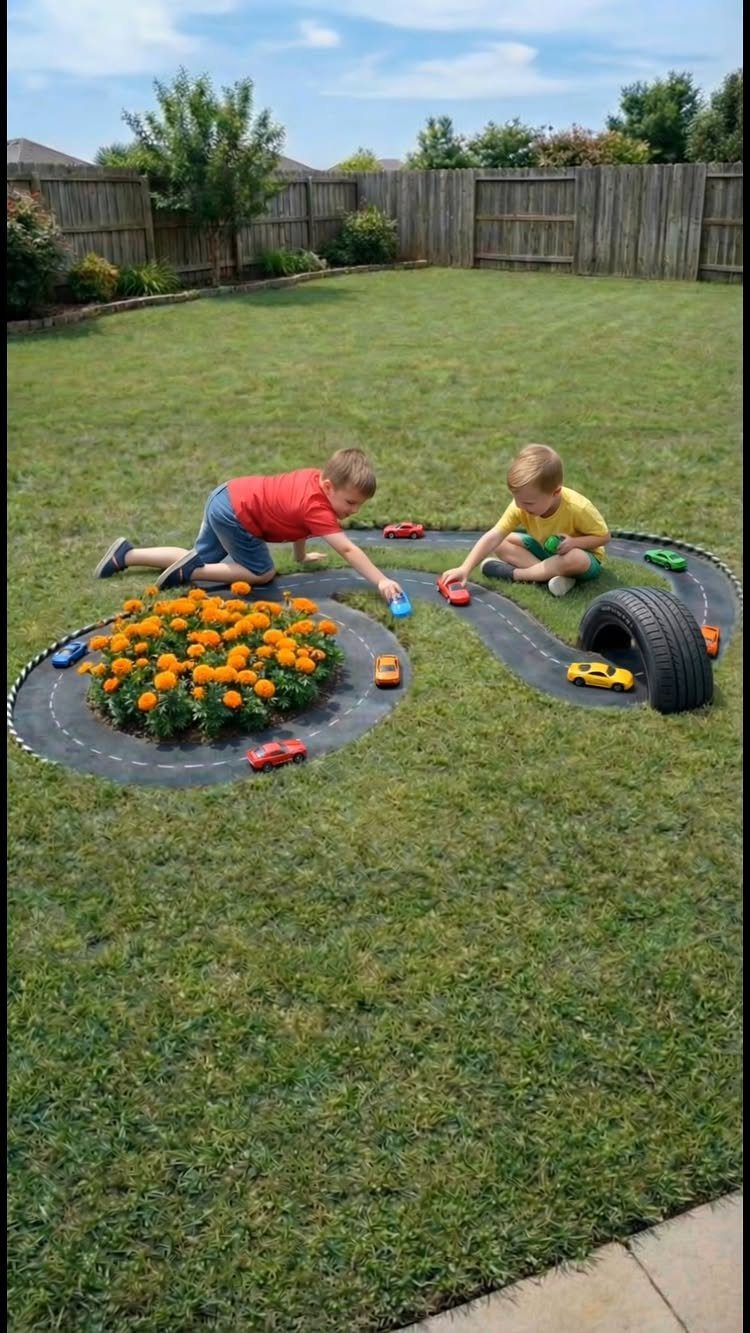
A paved play track keeps toy cars out of the mud and gives kids a surface that stays usable after rain.
The curved layout here winds around an existing flowerbed, which is smart: you work with what grows already rather than clearing new space.
Pour black asphalt patch or use paver base topped with wet-laid concrete, then edge it with the same material as your lawn border so it reads as deliberate, not leftover.
The tire tunnel adds a feature they crawl through, not just drive around, though I would sink it half in the ground for stability.
16. Ground Cover
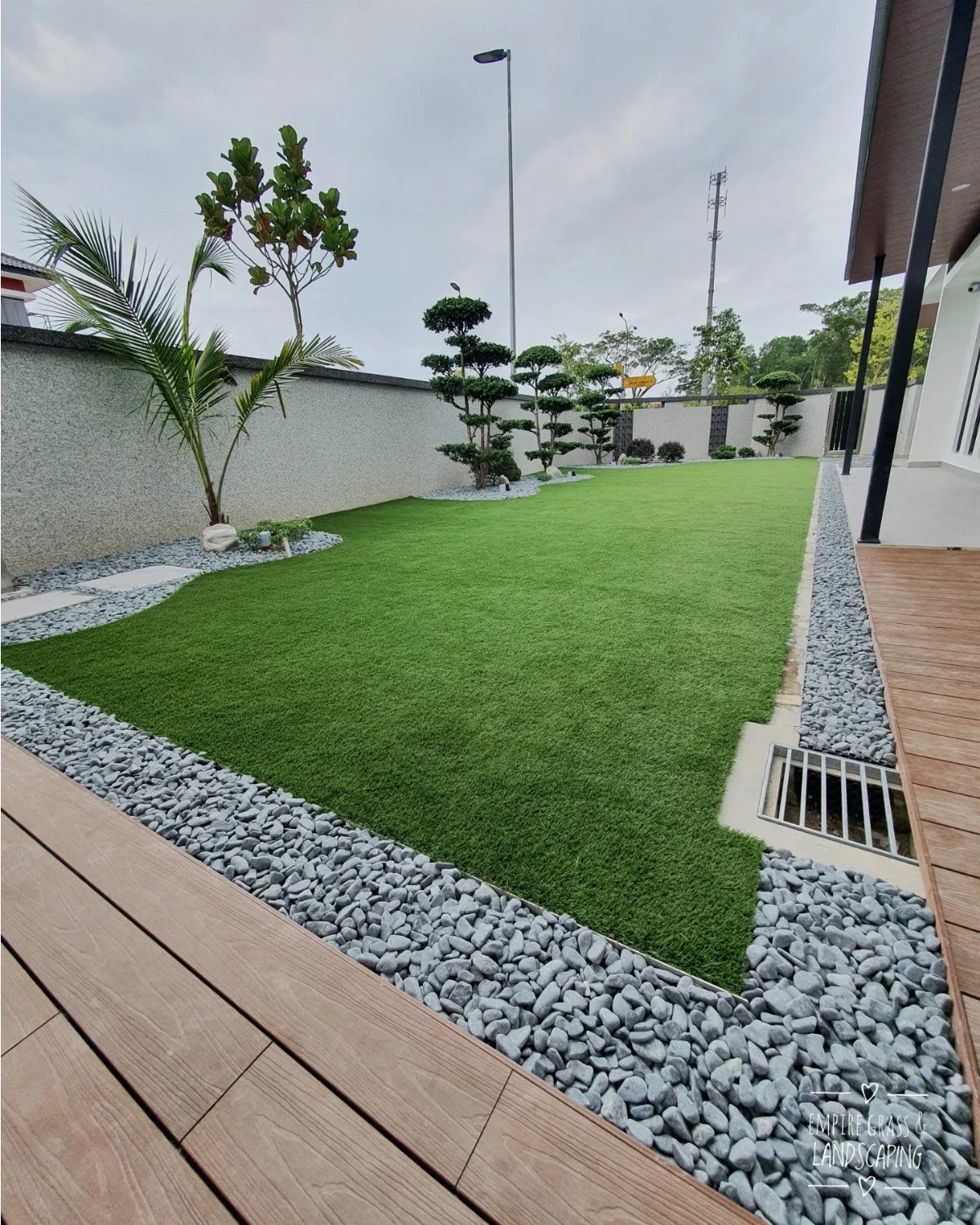
Ground cover replaces lawn with something that stays green without weekly mowing, which matters when your weekends are already full.
Artificial turf bordered with river rock against decking eliminates watering entirely, and the stone edge keeps the fake grass from looking like a carpet remnant.
Real ground cover such as creeping thyme or sedum needs less initial cost but more patience, spreading over two or three seasons to fill. A surface that reads as planted, not neglected, when you stop maintaining grass.
17. She-Shed or He-Shed
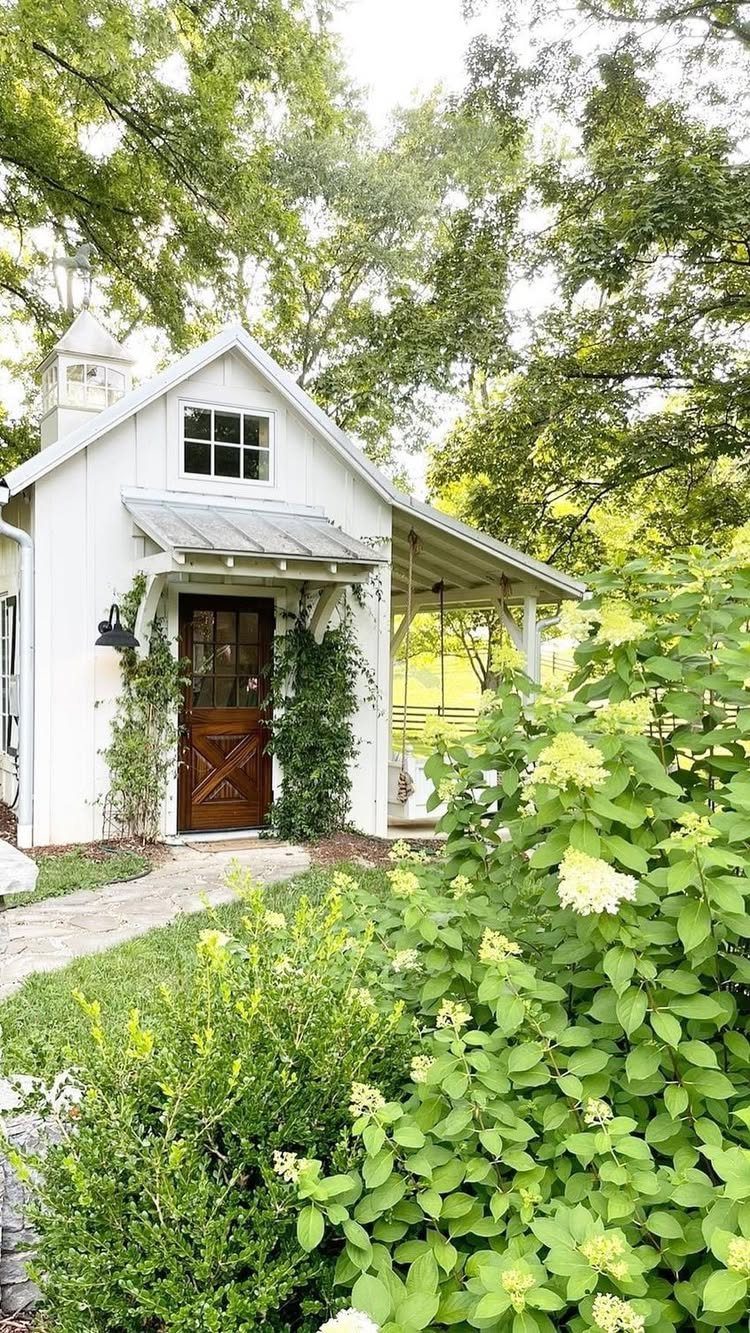
A small shed outfitted as retreat space gives you a door to close that is not the main house.
The white cottage styling here with cupola and porch swing reads garden-tender rather than storage, which is the point: you want to arrive there, not just step in.
Start with any weather-tight shed shell, then add insulation and finish inside when budget allows; the shell itself runs a few hundred for a modest size, and the interior finishes can wait.
I would put it where the morning light hits the porch, since that swing gets more use before noon than after.
18. Greenhouse
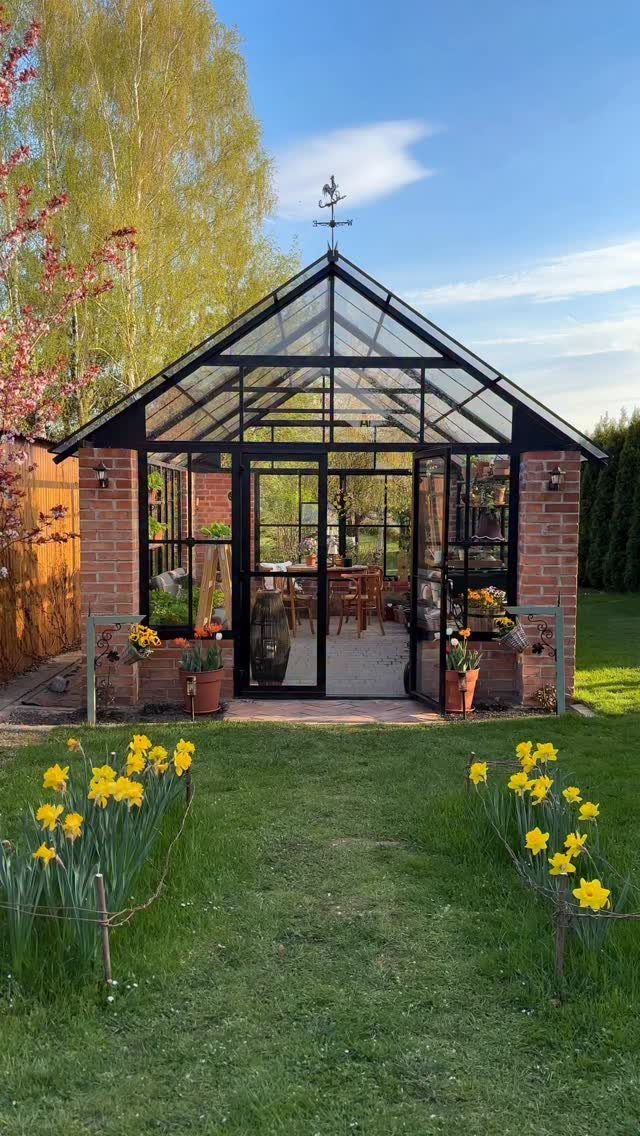
A greenhouse lets you start tomatoes in March and keep lettuce alive into December, which pays out in northern zones where the growing season needs stretching.
A structure this size wants a level pad and anchored base plates, so handle the site prep before the kit arrives.
For a first greenhouse, I would look at polycarbonate panels instead of glass: lighter, harder to break, and diffusing enough that you skip the shade cloth on bright May afternoons.
19. Tool Shed
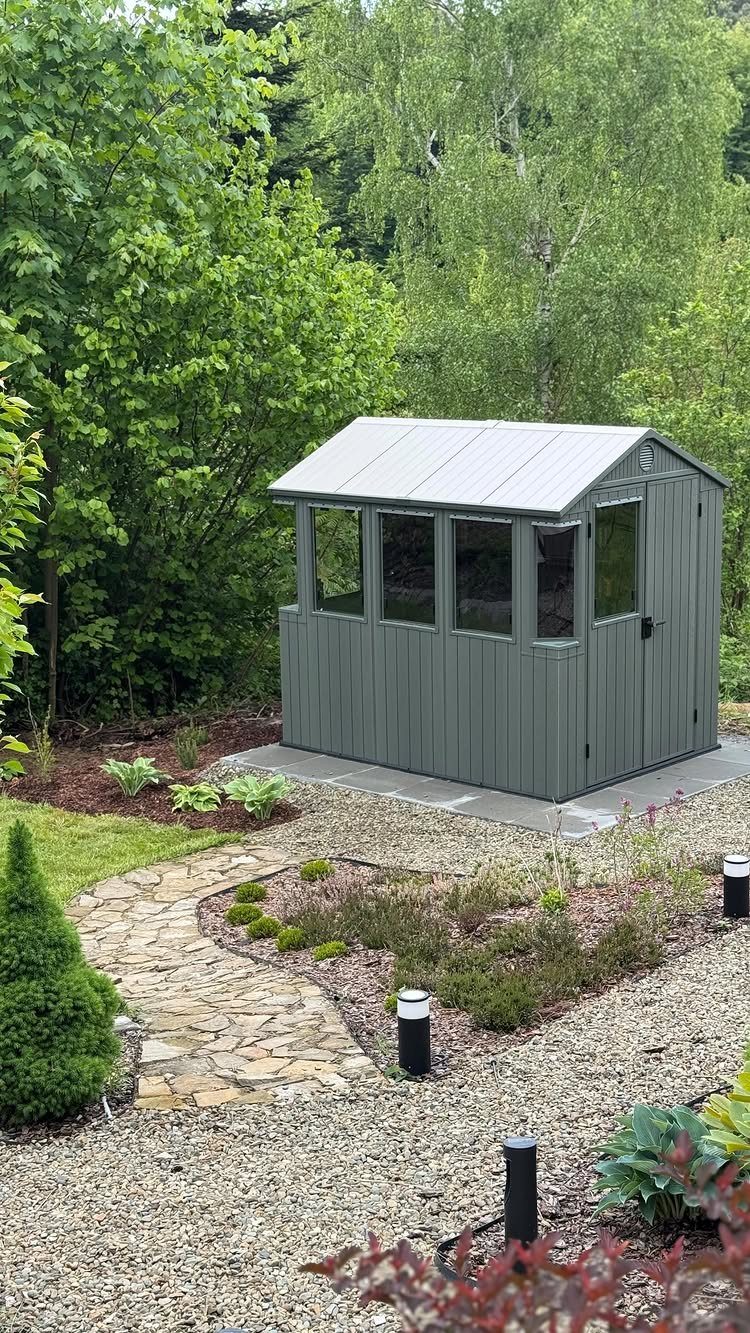
A painted shed with windows gives tools dry storage without turning the garage into a workshop.
I would site it along the garden edge where the path already runs, so fetching a spade or shears stays one trip, not a trek across wet lawn.
A modest prefab unit runs a few hundred if you handle the base and assembly; electrics can wait until you need them for charging.
20. Rock Garden
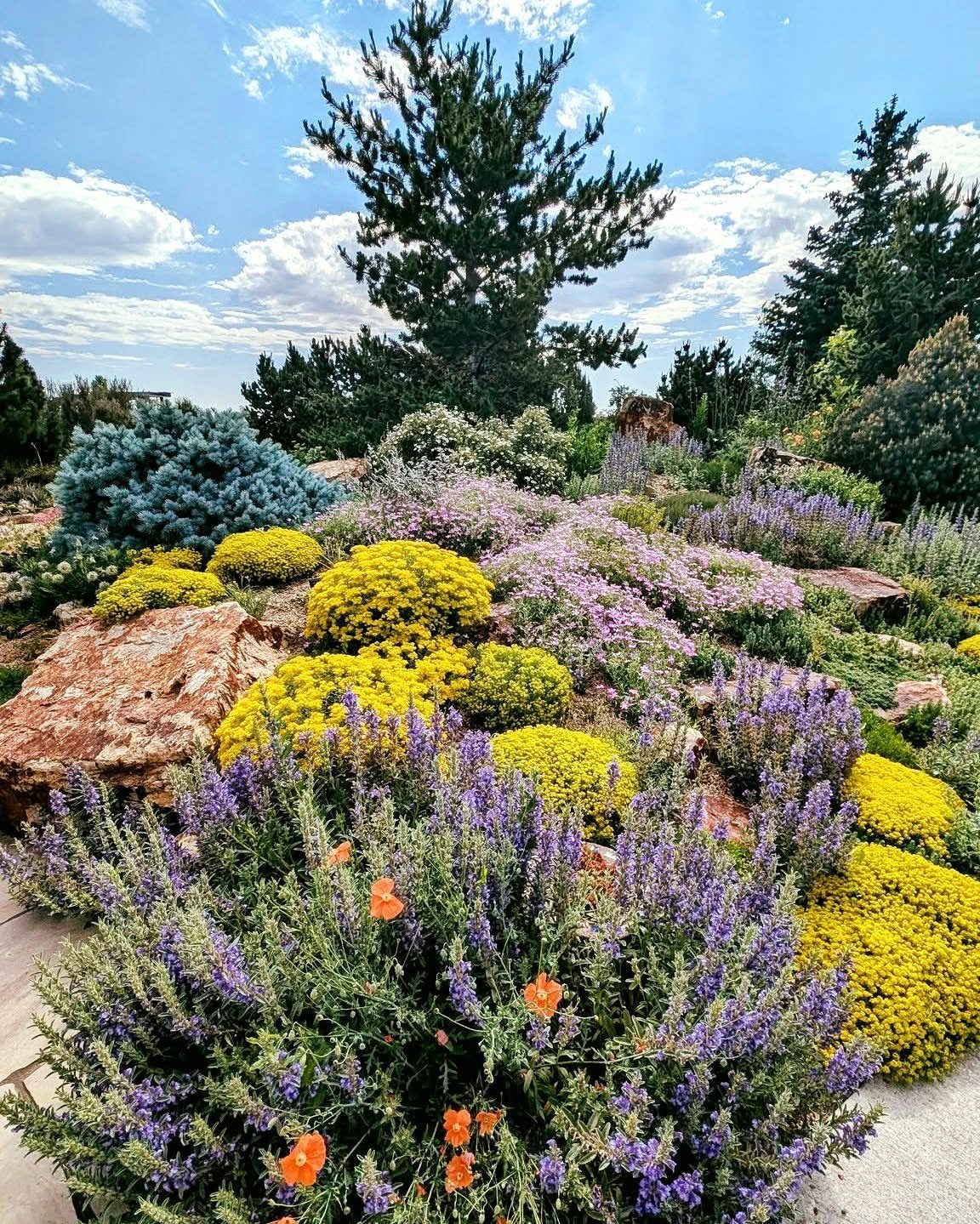
Large boulders set among flowering perennials give structure that stays interesting after bloom season ends.
The purple salvia and yellow groundcover visible here both tolerate the sharp drainage that rocks create, which is the pairing that makes this work: stones shed water fast, so plant into pockets of amended soil rather than expecting roots to grip bare mineral.
Start with the biggest stones you can move, then tuck smaller ones around their bases to look settled in place.
A rock garden this scale shapes up over a weekend of heavy lifting, and the plants fill in on their own schedule.
21. Stepping Stones
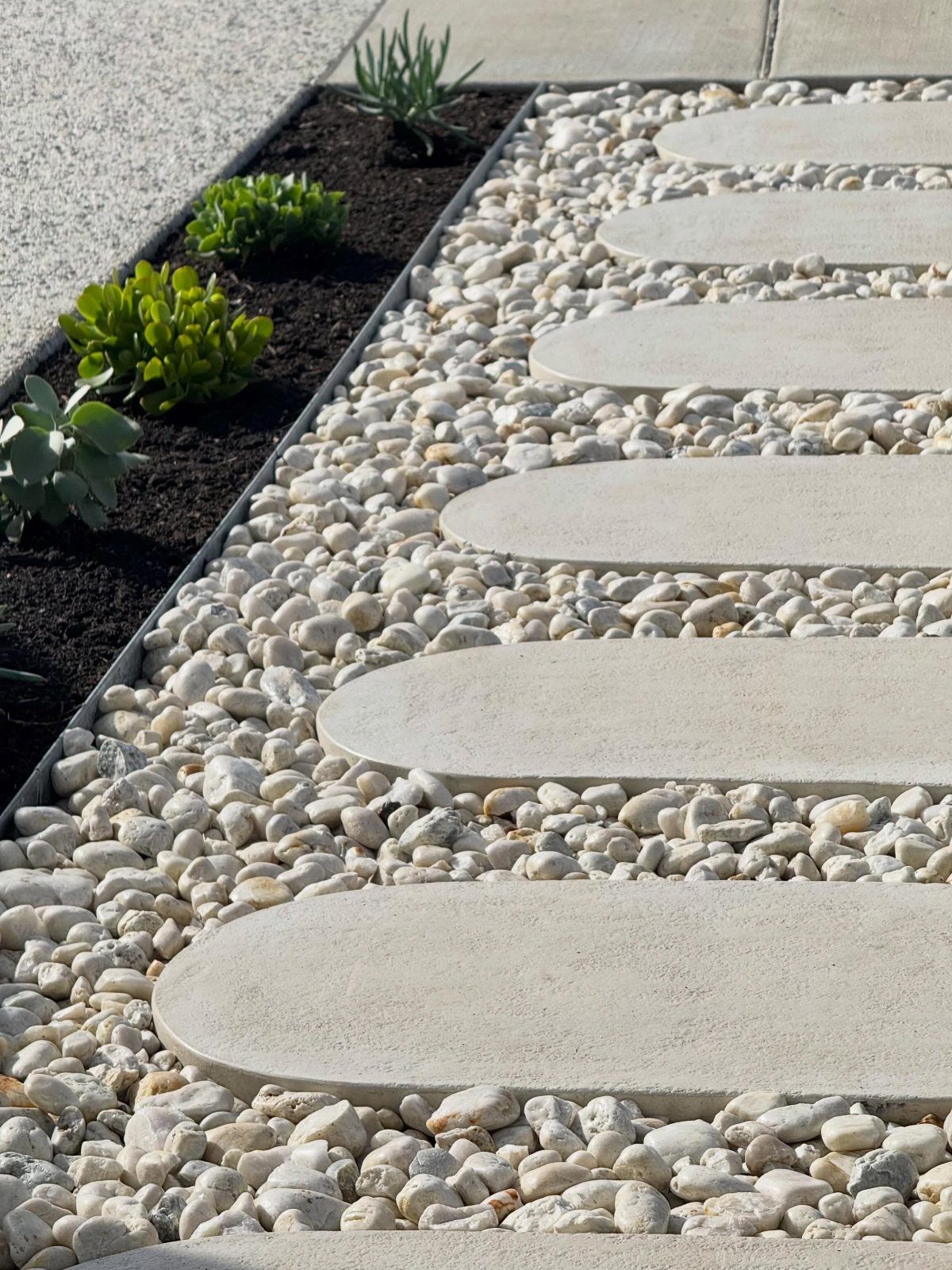
Oval stones set in white pebble give a path that stays clean where shoes are wet, unlike mulch or grass that tracks everywhere.
The metal edging visible here keeps the pebble from migrating into the bed, which is worth installing first so the stones sit at consistent height.
Space them at a comfortable stride, not equal mathematical intervals; I would lay them out and walk the line before setting anything in mortar.
A bag of white stone and a half-dozen pavers runs under a hundred, and the whole job finishes in an afternoon if the bed is already shaped.
Budget Planning
Start with what you can spend, then decide what must happen now and what waits. I start every plan by deciding what matters most, then I price it out before I fall in love with anything.
Plants, pavers, lumber, and soil amendments all cost different amounts depending on where you live and what month it is; call around before you set your number.
If the budget tightens, build the hardscape first and fill plantings in later; a patio or path in place frames the yard even when beds stay empty.
Set aside 10 to 15 percent on top for what you will not foresee: buried rock, bad drainage, a warped lumber delivery. That buffer keeps one surprise from halting everything.
Be honest about which tasks your own hands can finish in a weekend and which need a licensed pro.
Electrical runs for pergola fans, gas lines for fire pits, and tall retaining walls usually pull permits and inspections; paying for that expertise beats rebuilding it later.
Material choice shapes long-term cost as much as upfront price; cheap pavers that hold summer heat or black metal beds that need shade cloth add hidden bills.
Site Assessment
Light changes everything, so I walk the yard at 2 different times of day before I commit a single line to paper.
Mark where sun hits and where shade pools, because a vegetable garden facing the wrong way wastes the trellis you bolt to it.
Soil type decides what grows and what drains, so I dig down a few inches and squeeze a handful to know what I am working with.
Clay holds water and stays wet; sand drains fast and needs more amendment; loam splits the difference.
For larger sites, a twenty-dollar test kit from a hardware store gives pH and texture numbers that tell you which plants will thrive and which will struggle.
Note where water collects after rain and where it never dries out. Drainage patterns decide whether your rain garden sinks runoff or your patio becomes a puddle; one needs a low spot, the other a raised base.
Mark high ground and low points, since a path that looks level on paper may channel water against your house.
Call for utility locates before any digging.
Overhead wires limit pergola height; underground lines decide where you can trench for lighting transformers. Record existing trees, stumps, and root masses; they are harder to move than to build around.
I take photos from every angle and sketch a rough map with the sunny spots, the wet spots, and the slopes marked in. Satellite tools work for remote planning, but boots on the ground catch the slope your screen flattens.
Frequently Asked Questions
What are some budget-friendly tips for designing a backyard landscape?
Start with a simple sketch and build the hardscape first, since a patio or path in place frames the yard even when beds stay empty.
Native plants and low-cost perennials cut water and replacement costs, and swapping divisions with neighbors costs nothing. Gravel, mulch, or concrete pavers run cheaper than stone for paths and patios, and reducing lawn area lowers maintenance bills for years.
Calling around for material prices before setting a number pays off, since plants, pavers, and soil amendments shift by location and season.
How can I ensure my new backyard is low-maintenance?
Choose native and drought-tolerant plants that handle your climate without fuss, and automate watering if possible. Quality mulch suppresses weeds and holds moisture, which cuts the 2 jobs that eat most weekend time.
For hardscape, gravel and quality pavers last decades with minimal upkeep, and a drought-tolerant garden of succulents and rock drops the water bill to nearly nothing after the first summer.
What does a backyard landscape project typically cost?
A modest project runs a few hundred to over a thousand for a single element like a patio or raised bed, while a full landscape with multiple features scales up from there.
For the projects here, I budget a few hundred to a few thousand each and add 10 to 15 percent on top for surprises like buried rock or warped lumber.





