
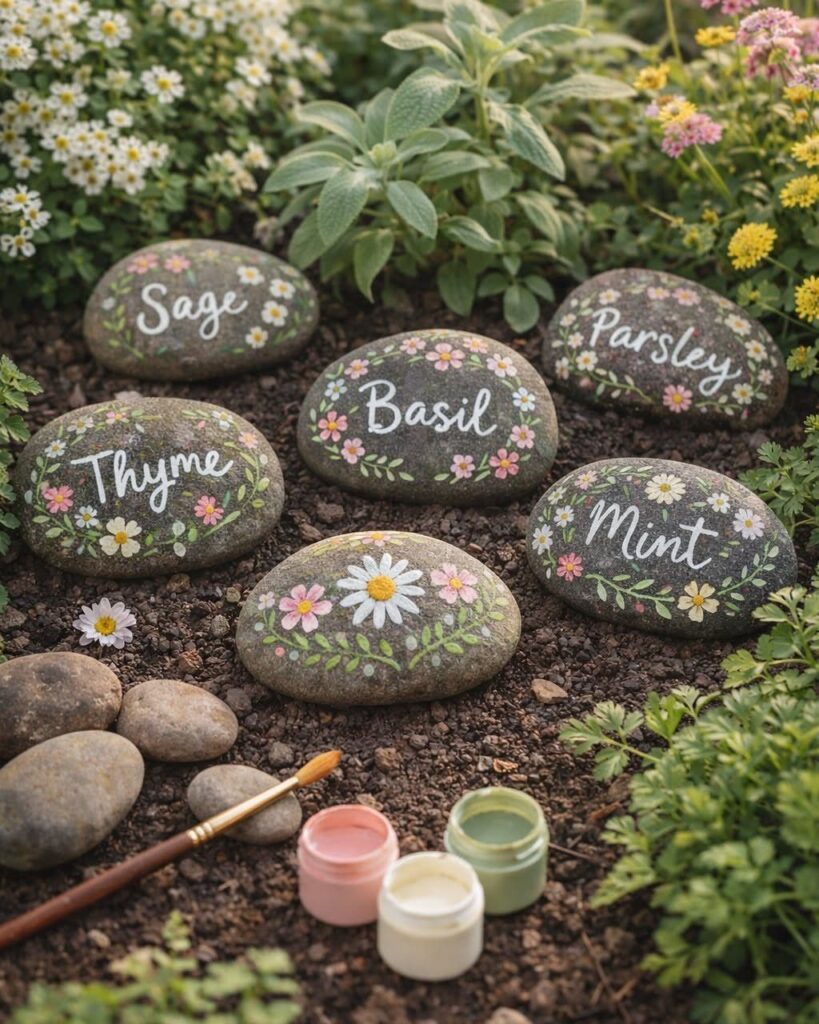
Rock garden markers can be a quick marker job or an hour of clay stamping, and the deciding factor is how permanent you need the label to be.
Temporary beds and rotating container crops call for the flat-stone-and-marker approach, since a quick flip and rewrite beats starting over.
If you want the marker to last years and match the intentional look of an herb garden, polymer clay wins, but you will need letter stamps and oven time to cure it.
1. Paint Rocks to Resemble Vegetables
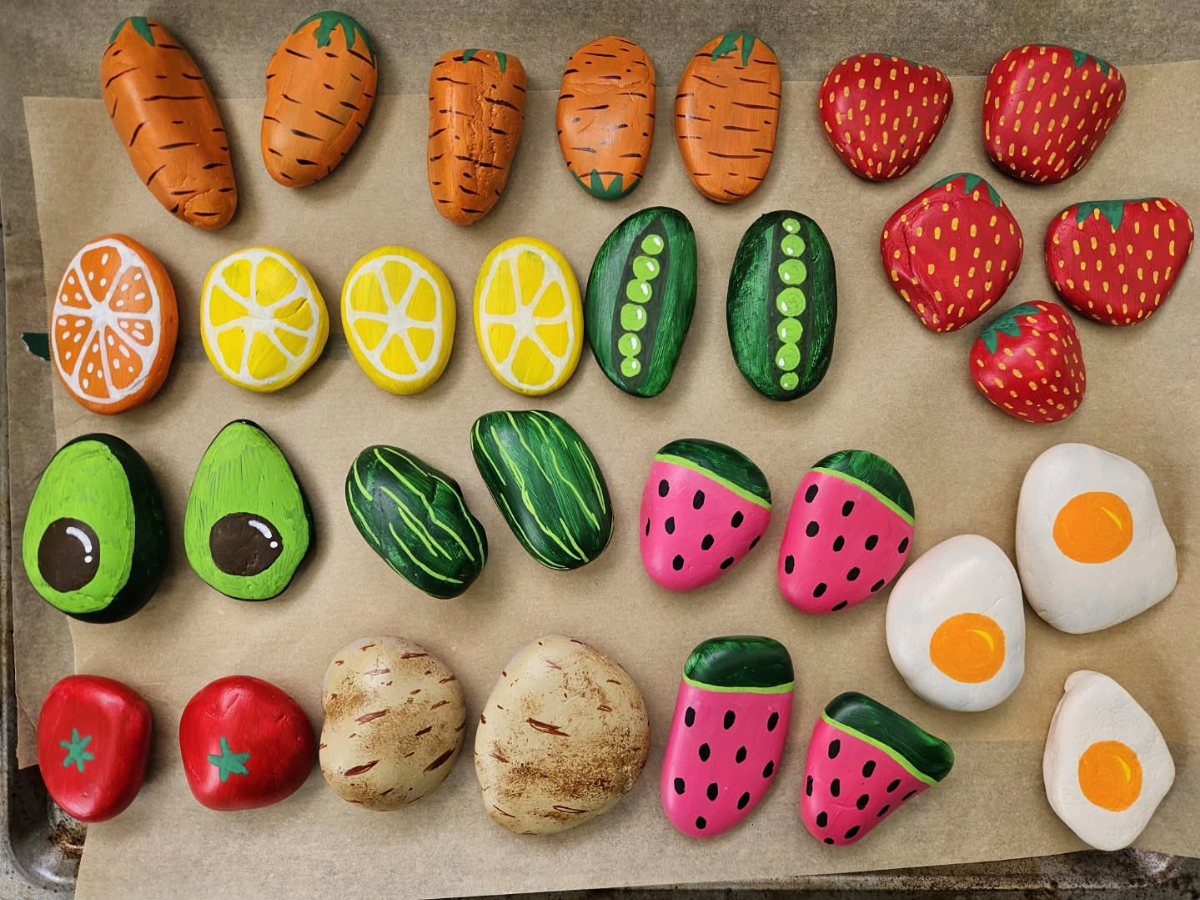
A coat of paint turns smooth river rocks into tiny vegetables that sit at the base of the real thing, easy to pick out from the path.
A carrot-shaped stone or a strawberry-red oval sits flat on soil or mulch, no stake needed, which suits raised beds where wind knocks over thinner markers.
Gather smooth, rounded stones, acrylic craft paint in 2 coats, and a sealer rated for outdoor use.
The shapes do not need to be exact; color and a simple silhouette read clearly at a distance. This one works for gardeners who want markers their kids can help paint, though the detail takes longer than plain lettering.
2. DIY Plant Markers Using Rocks
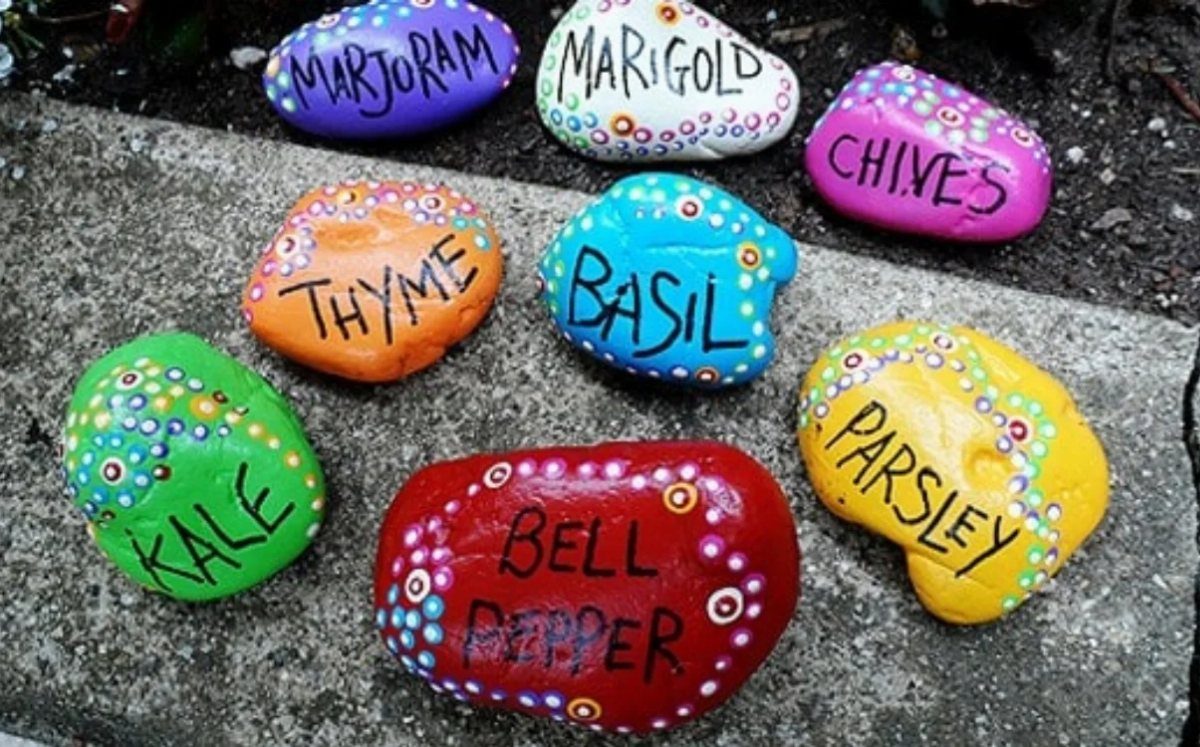
Flat stones labeled with herb and vegetable names in bold marker give you plant markers that cost nothing but time.
A permanent marker on a light-colored rock stays readable for a season or two before fading, longer if you seal it. Pick stones large enough to write on clearly, with at least one flat face.
I like this method for temporary beds and container gardens where you rotate crops; when the label no longer matches the planting, the marker flips and gets rewritten.
It is the fastest option here, and the one least likely to frustrate anyone who has never held a paintbrush.
3. Embossed Clay Rock Herb Markers
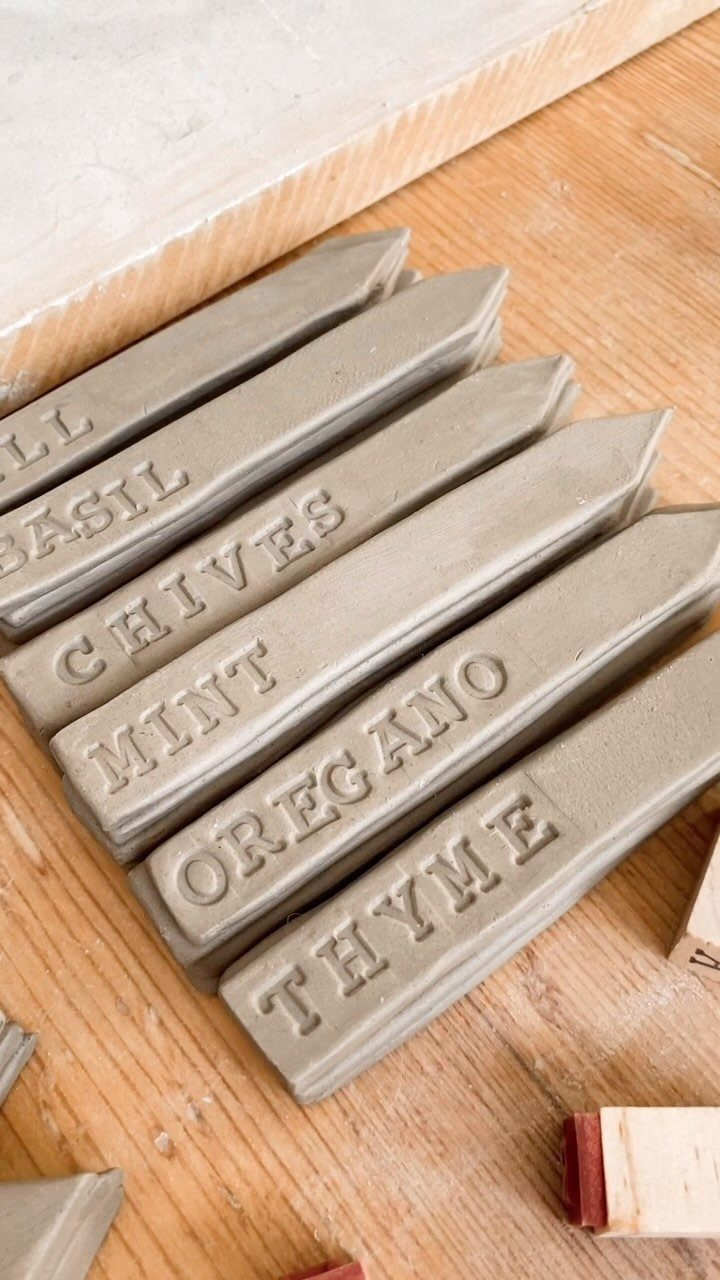
Stamped clay markers shaped like pointed stones carry a cleaner look than paint, with recessed lettering that never wears off.
Roll polymer clay to half-inch thickness, cut a pointed stake shape, press letter stamps firmly before the clay sets, and bake per the product instructions.
Gray clay with dark ink or paint in the impressions reads like real stone but weighs far less, which matters if you move pots around.
The upfront time runs higher than marker on rock, and you need stamps, but the result lasts years and the style suits herb gardens where you want the labels to look as intentional as the planting itself.
Best Paint for Rocks
Acrylic craft paint holds up fine for vegetable-shaped markers, but the finish matters more than the brand.
I use Posca paint pens for the design work; the water-based acrylic sits on the surface instead of soaking in, and it does not bleed under a sealer the way regular Sharpies do.
Hold the can back far enough that the solvent does not re-wet the paint and cause runs.
DecoArt Patio Paint seals itself as it dries, so I can skip the spray step and brush the whole job if I prefer.
Either route, I still budget 10 minutes once a year to mist on a fresh clear coat before the season starts.
It takes about 10 minutes for a full set and buys you another season or two before UV and freeze-thaw cycles fade the color.
Cleaning Rocks Before Painting
Rocks pulled from my own yard carry more than surface dust, so a quick rinse is not enough. I wash them in warm water and run an old toothbrush into every pit and crack where dirt camps out.
Then let them dry completely, which takes longer than it looks. Rocks are porous and hold water inside even when the surface feels dry.
I set mine in the sun for a full day when I have the time. If I am in a hurry, I put them on an oven-safe baking sheet at 100 degrees for several hours.
Water trapped inside will lift paint or sealer from underneath, so the dry time is not optional. Flat, smooth, light-colored stones take paint and marker best, and they look more natural sitting in the bed than the glossier craft-store kind.
Frequently Asked Questions
What kind of marker works best on rocks?
Fine-tip paint pens beat permanent markers for rock labels. Posca paint pens use water-based acrylic that stays on the surface rather than soaking in, and unlike Sharpies they will not bleed when you seal them.
If you only have a permanent marker, let it dry a full hour before sealing and expect to touch up sooner.
What is the best garden marker?
Painted rocks last longer than wood or plastic tags and cost nothing if you gather them yourself. They stay put in wind, sit flat in raised beds, and the bright colors make plants easy to spot from the path.
For a cleaner look, embossed clay markers shaped like stones last years and never fade, though they take more time upfront.
What is the best way to paint rocks for outdoor use?
Start with 2 coats of acrylic craft paint or self-sealing Patio Paint, then add a clear outdoor sealer rated for exterior use.
A fresh mist of clear coat before each growing season, maybe 10 minutes for the whole set, gives another year or two of protection against UV and freeze-thaw.





