
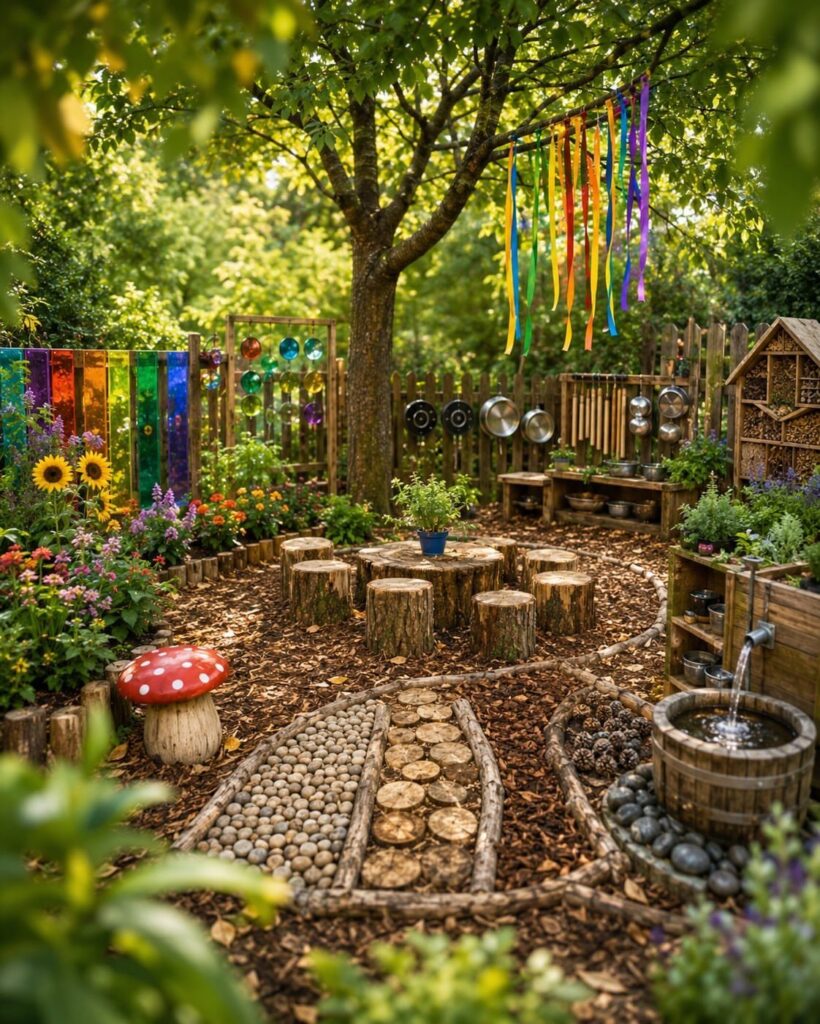
A sensory garden can be as simple as a packet of hyacinth bulbs or as involved as a willow screen with threaded LED tubes, and the difference between them is not money but permanence.
Renters need ideas that lift out when the lease ends: rubber pavers, shepherd’s hooks, solar fountains with buried reservoirs in planters. First-home owners can build raised beds, set up bird feeders, and plant black bamboo behind a sound barrier.
The idea that made me pause was the keyhole garden with its central compost basket, vegetable scraps dropping in and nutrients washing out with rain.
1. Flowing Water
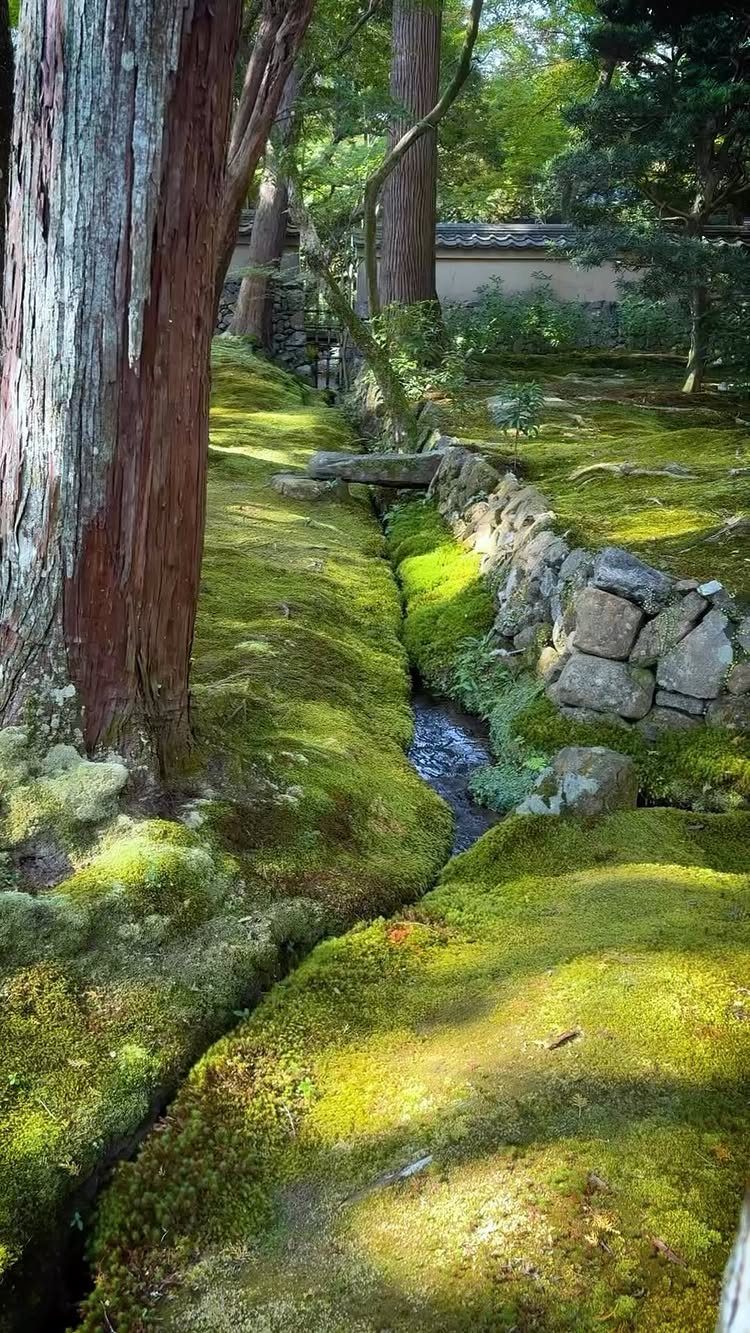
A thin ribbon of water moving over stone or gravel gives a garden its own quiet sound, one that masks traffic and draws people toward it.
For renters, a solar-powered fountain kit sits on a patio or balcony and needs no plumbing; bury the reservoir in a planter if ground space is off limits.
First-home owners with a small yard can cut a shallow channel, line it with pond rubber, and hide the edges under moss for a stream that looks like it was always there.
I would go with recirculating water over a constantly running tap; the pump costs almost nothing in electricity and you never worry about the water bill.
2. Winding Stone Paths
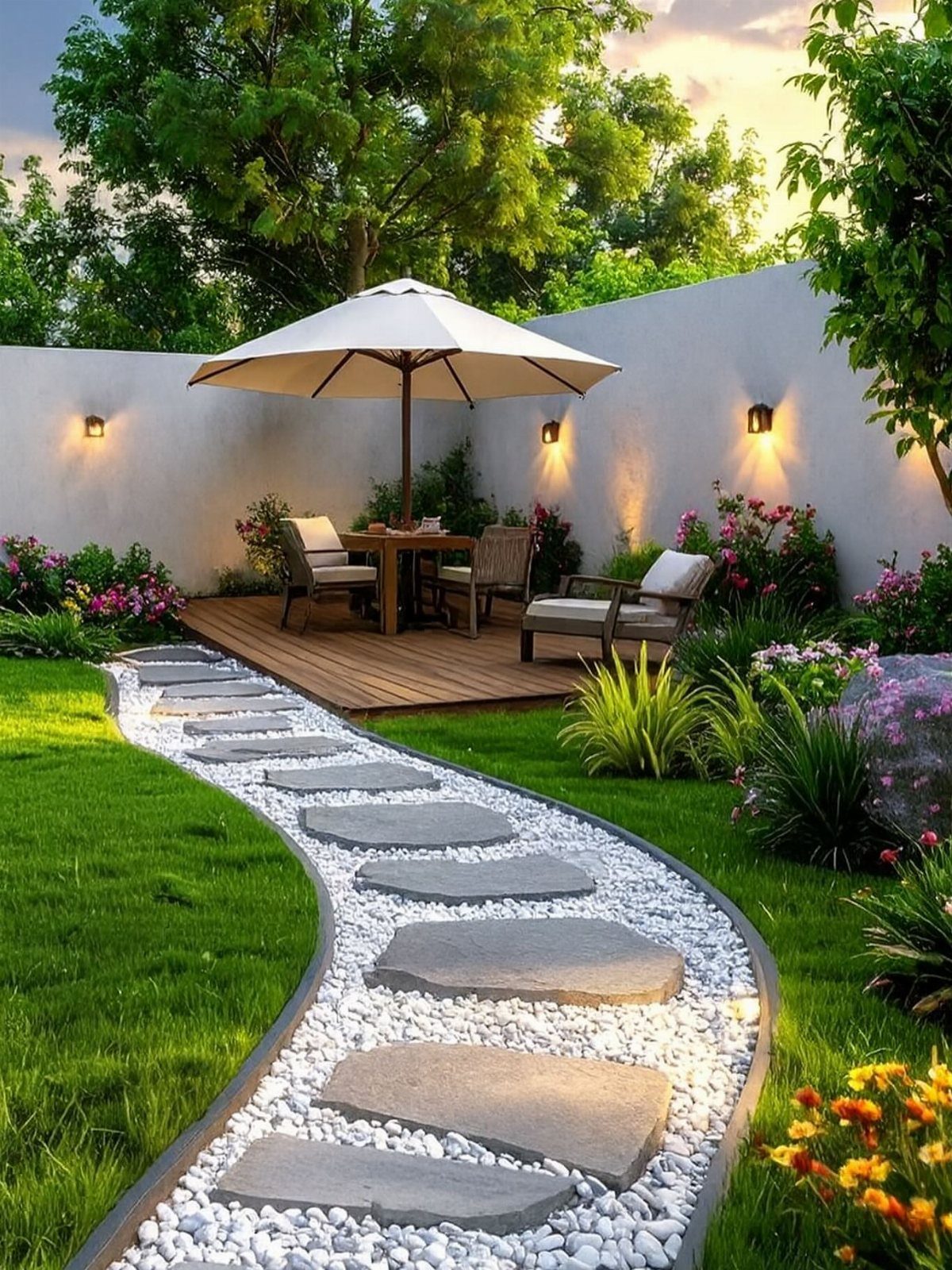
Flat stones set in white gravel make a path you want to follow because you cannot see where it ends.
The curve matters more than the material; a straight line walks you to a destination, but a bend lets a small yard feel larger by hiding what comes next.
Space stones so a person steps comfortably, fill gaps with pea gravel, and edge with steel strip or nothing at all if you like the gravel bleeding into grass.
What I like about this version is the pale gravel against green lawn; it reads as intentional even when the plants are still filling in.
3. Aromatic Plants
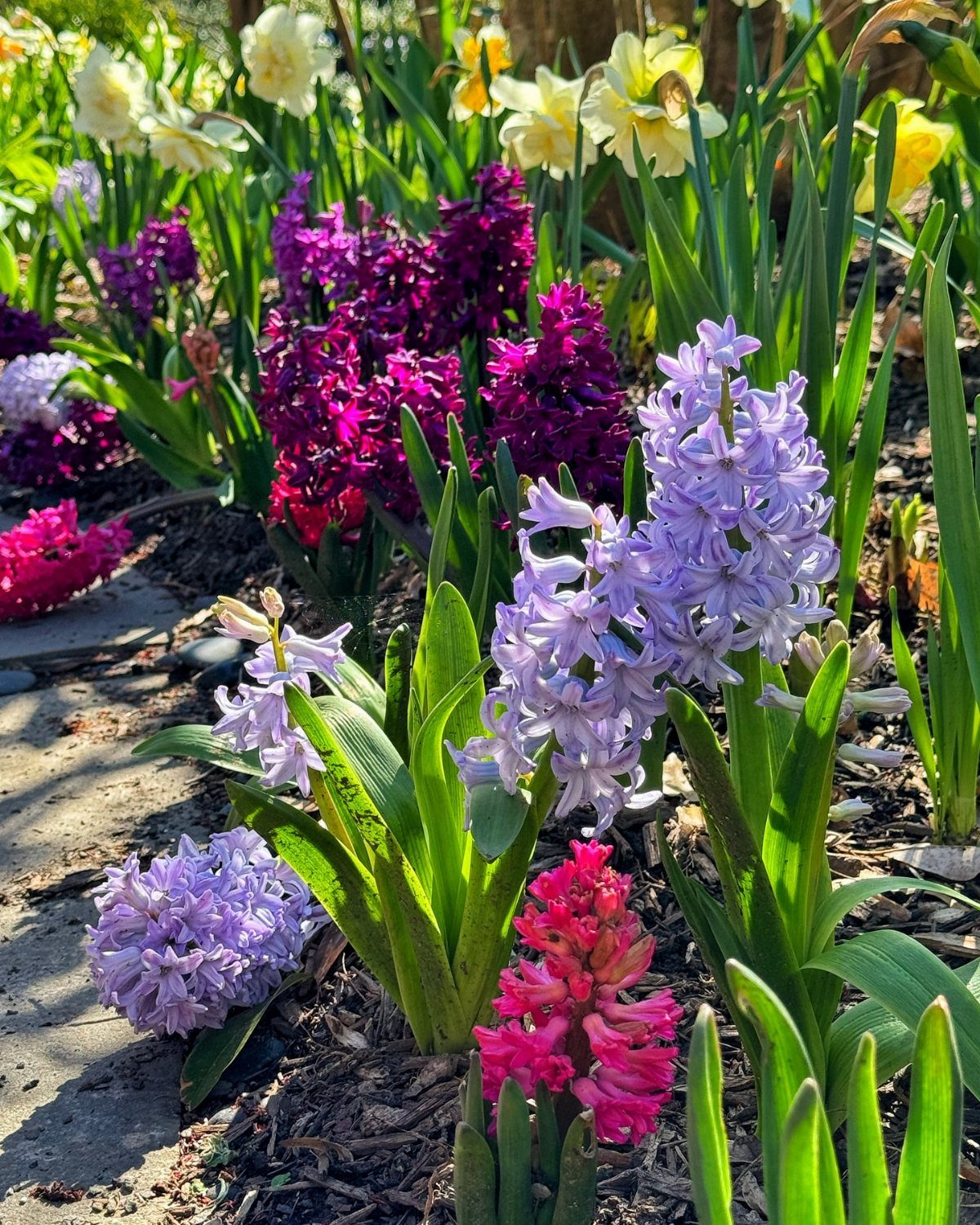
Hyacinths hit hard in April, and their smell carries on cool damp air when little else is ready. Plant them deep in fall, clustered tight rather than spaced out, so the scent pools instead of drifting away.
For a renter’s container, a few bulbs fill a pot and move with you; daffodils in the same pot give you color before the hyacinths open and mask the dying foliage after.
The trade-off is the bloom window, maybe 2 weeks. I plant grape hyacinths nearby for a second, lighter wave, but the big Dutch hybrids are the ones that stop people mid-step.
4. Textured Plants
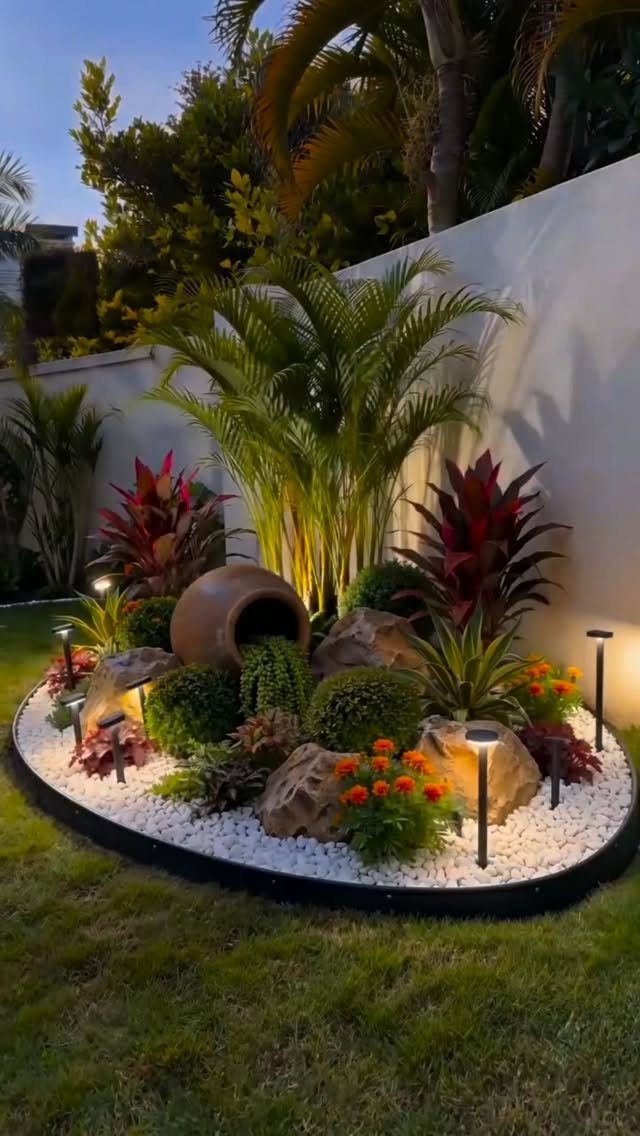
Spiky cordyline, soft pittosporum, and something broad and glossy like fatsia give a bed 3 textures a hand reaches for without thinking.
I place the spikiest plant where the path curves, at arm height for kids and wheelchair height for adults; the round shrubs go at the back as a resting place for the eye.
A single large stone or a piece of textured ceramic in a planter does the same job, cool and rough under your fingers.
Solar lights at the border let you feel the textures after dark, which matters more than people expect.
5. Herb Gardens
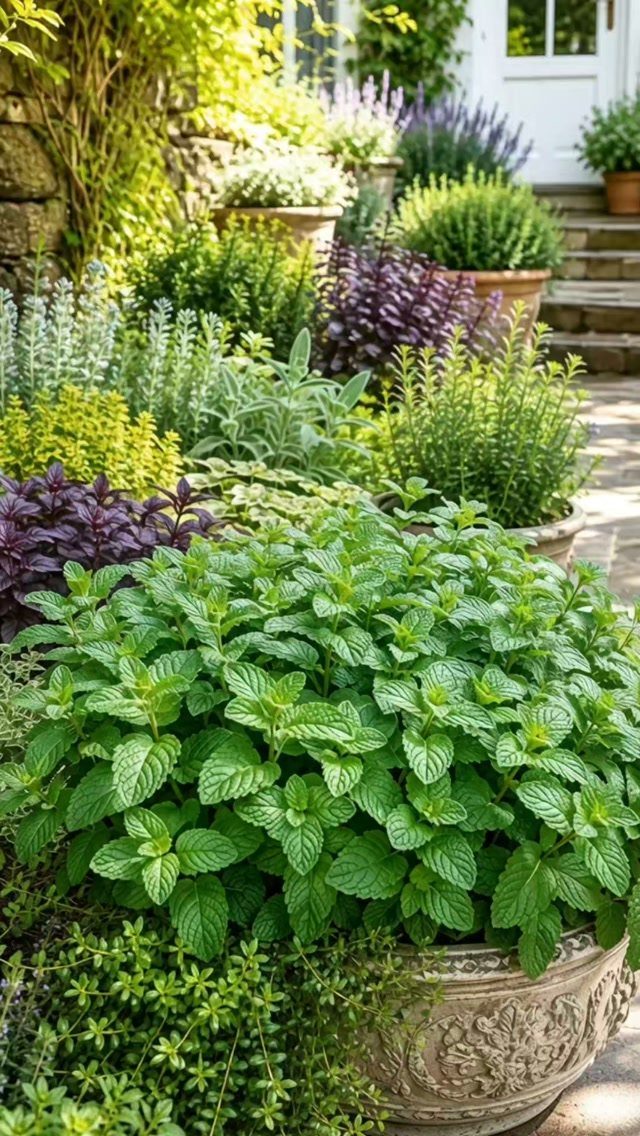
Mint in a bowl is the beginner’s proof that a sensory garden does not require a yard.
That stone planter keeps roots contained; mint in open ground will own your garden by July. I keep rosemary and purple basil within arm’s reach of a chair, so brushing past releases the smell without planning for it.
For a first project, 3 herbs in matching containers on a step cost little and give you smell, taste, and something to do with your hands every evening.
The only maintenance worth mentioning is water; herbs in sun dry fast in July and bounce back if you catch them in time.
6. Bird Feeders
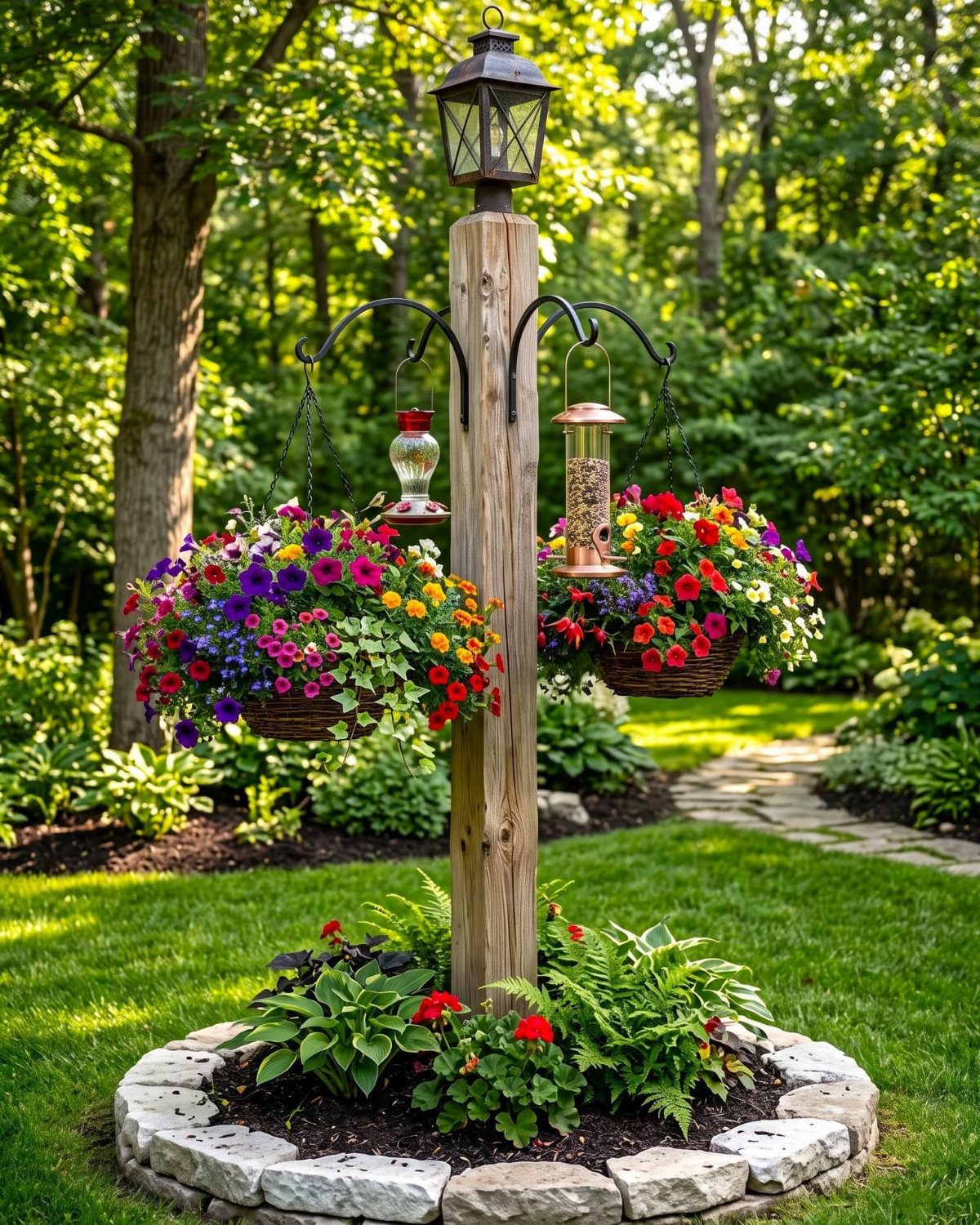
A single post with multiple feeders turns a lawn into something that moves and makes noise without your effort.
Tube feeders for sunflower, suet for woodpeckers, and a platform with millet for ground birds that clean up the spillage; the mix determines which songs you get.
I hang everything well out from trees so squirrels cannot leap, and I accept that squirrels will still find a way.
Flower baskets can do double work, feeding hummingbirds if you add a sugar water feeder among the blooms. For renters, a shepherd’s hook on a balcony holds one tube feeder and still draws chickadees within a week.
7. Interactive Sculptures
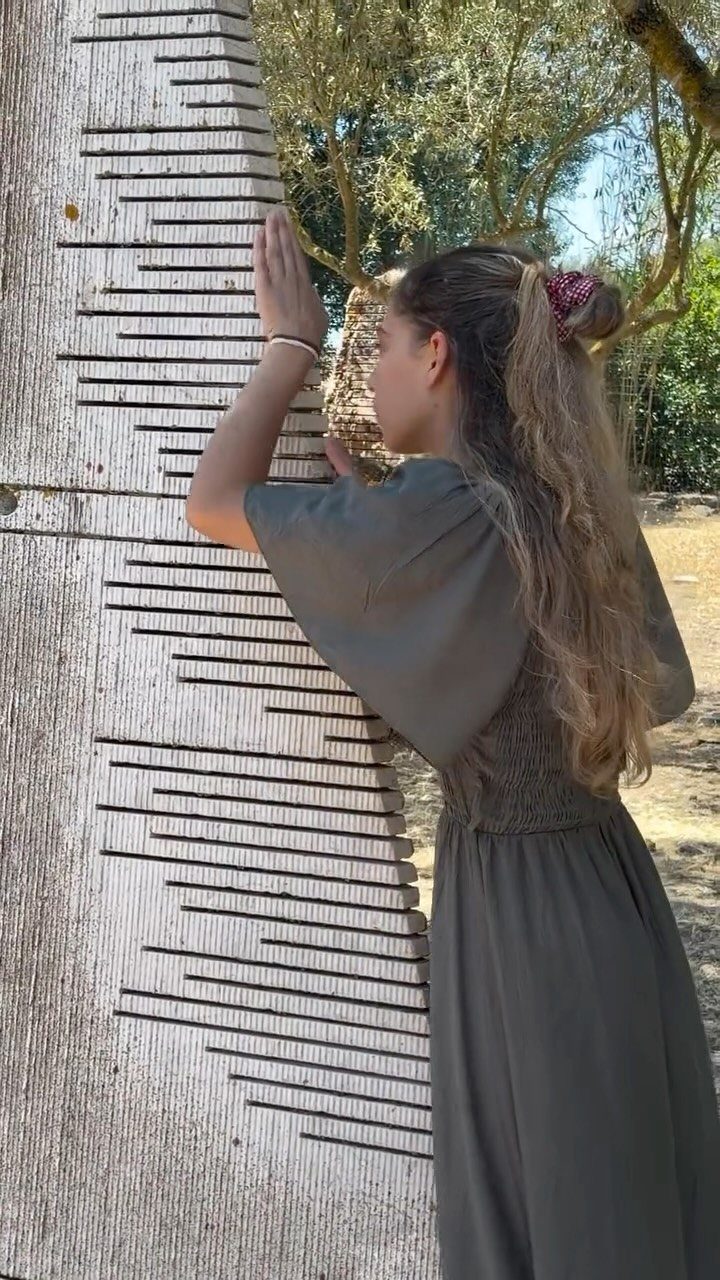
Tall slatted sculpture with grooved channels gives a hand something to trace as you walk past, rough stone or timber both working the same way.
I would place one where the path turns or where a bench faces it, so touching becomes part of pausing rather than an event you plan.
Renters can find smaller carved pieces that sit on a patio table and still invite the same slow hand movement.
Soft wood needs oiling every spring or it grays and splinters, while stone stays put but costs more and needs a dolly to move.
8. Accessible Pathways

A wide smooth curve lets a wheelchair or stroller roll without catching an edge, and the gentle bend slows everyone else down to notice the garden.
I would keep the surface flush with the beds on both sides, so a person can reach soil without a step or a lean.
Solar path caps spaced close together give enough glow to find your way after dark on a first-home owner’s budget. Renters with a flat yard can lay interlocking rubber pavers that lift back up when the lease ends.
9. Sensory Garden Themes
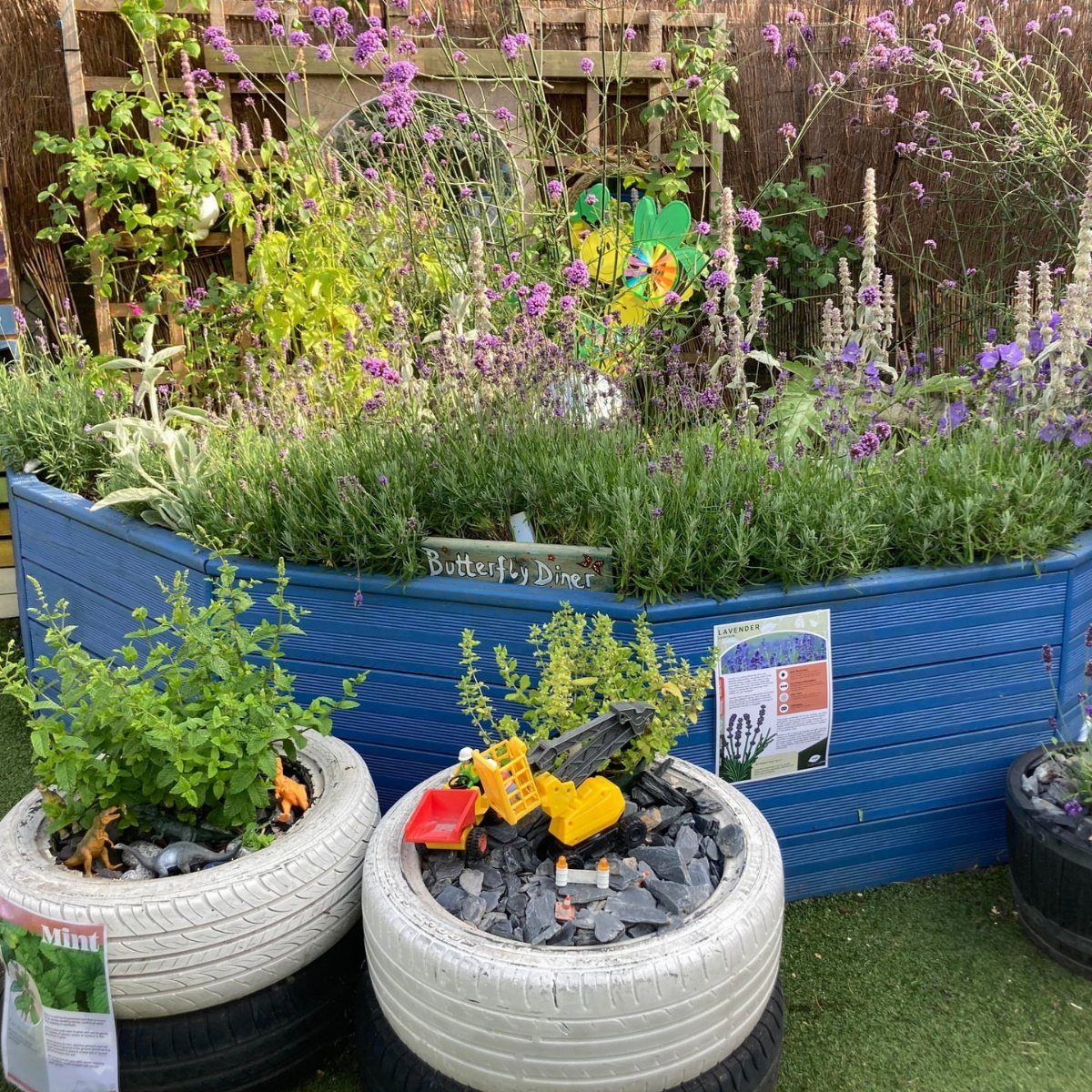
A named corner like the "Butterfly Diner" gives a child a reason to visit daily and check for visitors, the sign doing as much work as the plants.
Paint the bed a color that reads against green so it shows up from the house window as well as up close.
Tire planters in front let smaller kids dig and replant without disturbing the main bed; the toy dinosaurs are optional but they do keep the theme alive in February when nothing blooms.
The plant cards teach patience, since butterflies ignore the schedule.
10. Sensory Paths
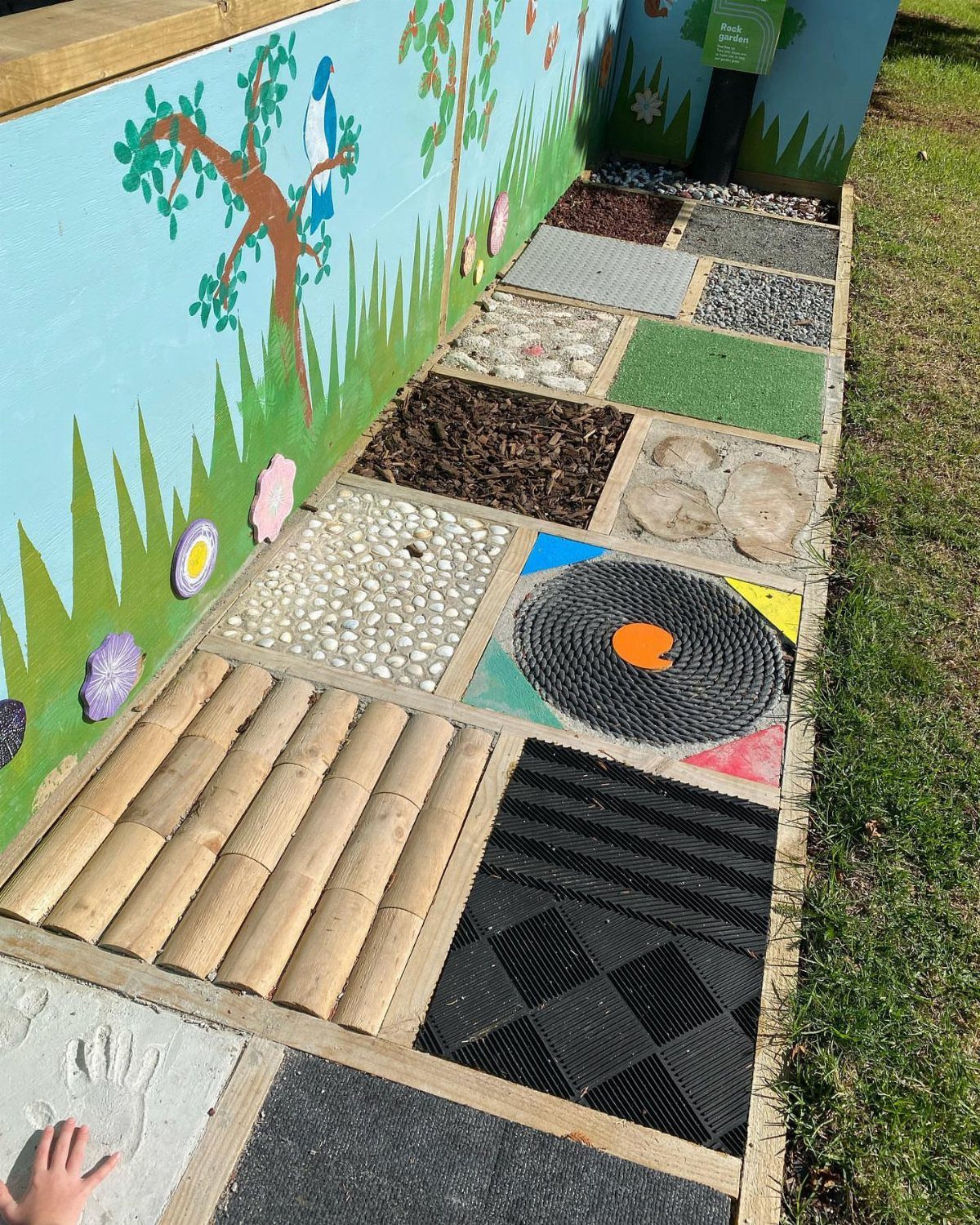
Square frames filled with pea gravel, wood rounds, rope coils, and rubber matting give a toddler’s bare foot changing textures, the wooden border keeping each surface where it belongs.
I would set the frames directly on compacted sand rather than pouring concrete, so a renter can lift and relay them when the lease ends.
The painted wall alongside is the builder’s choice, but a plain fence works as well; the path is the point.
Order the textures rough to smooth or the other way around, never random, so the walk has a rhythm a child learns and anticipates.
11. Wind Chimes

Blue and clear glass tubes catch light as well as sound, the color becoming part of the visual garden before the wind even moves.
I would hang them where the breeze is steady rather than violent, a pergola corner or a sheltered terrace, because cracked glass chimes are only decorative.
For renters, a single bracket screwed into a balcony beam holds enough, and the screw hole fills with spackle when you leave.
Aluminum or bamboo costs less and survives a storm, though the tone is harsher and the light play is gone.
12. Raised Garden Beds
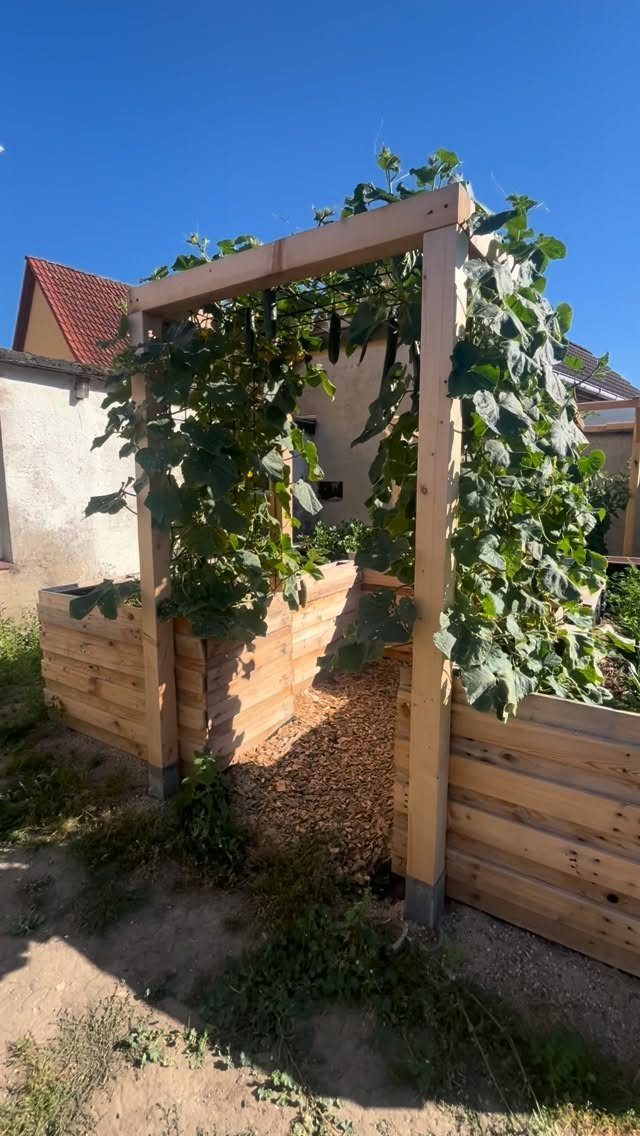
Timber beds high enough to clear your knees let a person weed from a chair or a stool, the garden continuing when bending becomes hard.
An arch trellis turns a straight path into a door you walk through, cucumbers hanging at eye level where you notice them before the beetles do.
I would build the beds from cedar or a rot-resistant composite; pine at this price rots fast and collapses mid-season.
The woodchip path between stays soft underfoot and lets water through, though it needs fresh chips every other spring to keep weeds down.
13. Keyhole Gardens
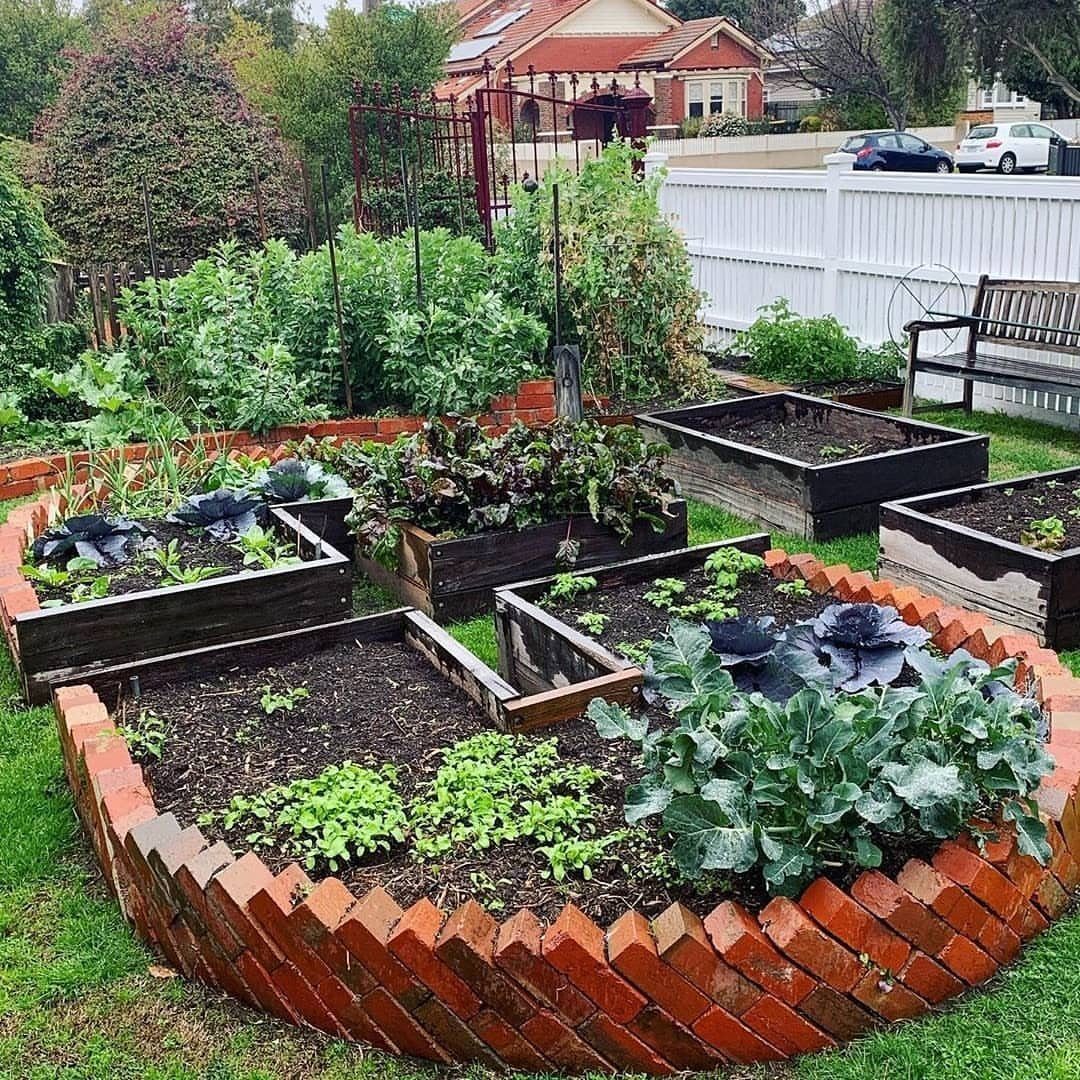
A notch cut into a circular raised bed lets you stand at the center and reach every plant without stepping on soil.
Brick built low like this holds its warm color against green foliage without fighting it. I would line the bottom with cardboard before filling; it smothers grass and rots into the bed by fall.
The central compost basket that true keyhole gardens use is worth adding: vegetable scraps drop in, nutrients wash out with rain. A bed this size feeds a couple through summer if you keep it picked and planted tight.
14. Natural Materials
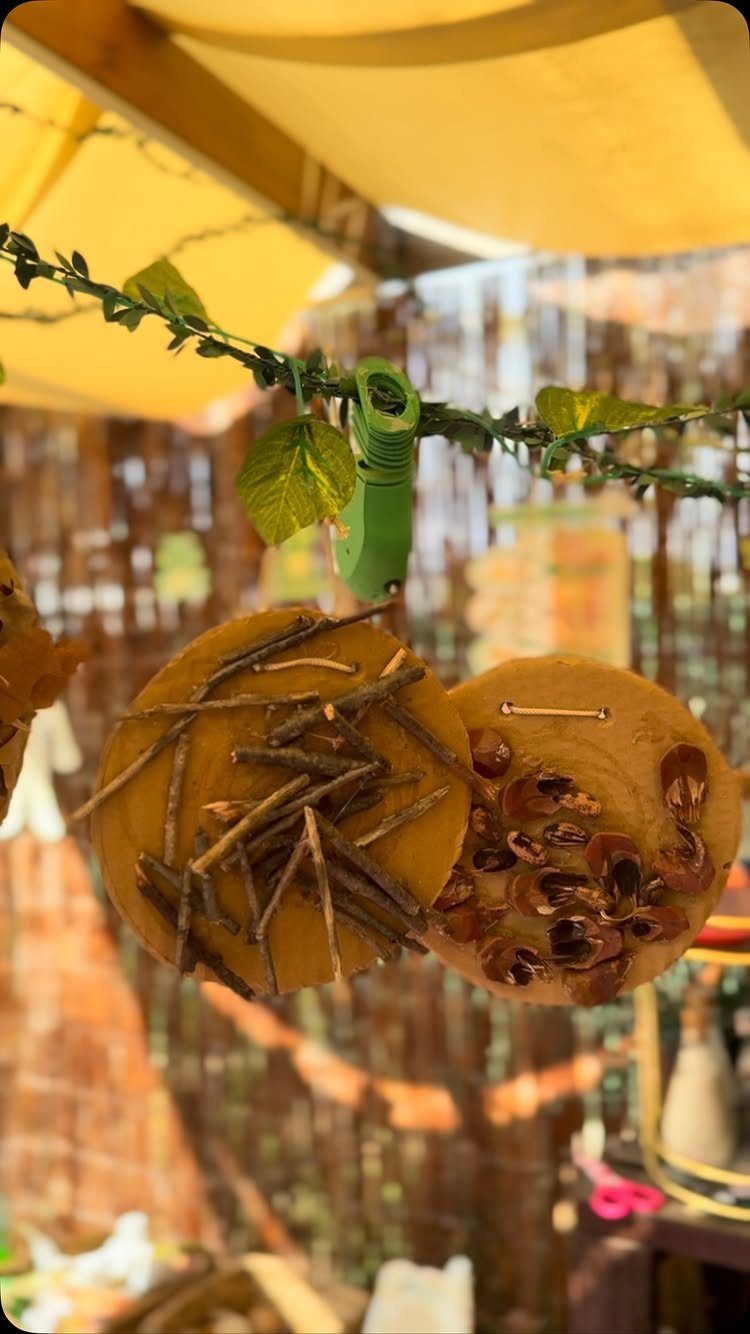
Twigs and seed pods gathered after a storm cost nothing and last a season before they fade.
Circular frames like these work as embroidery hoops or simple rings cut from cardboard, the kind of armature you already have. I would use fishing line rather than twine; it disappears and lets the materials read as floating.
A coat of matte sealant buys you another month or two if you want to keep them past autumn. Children collect the pieces, you provide the structure.
15. Hanging Tactile Mobile
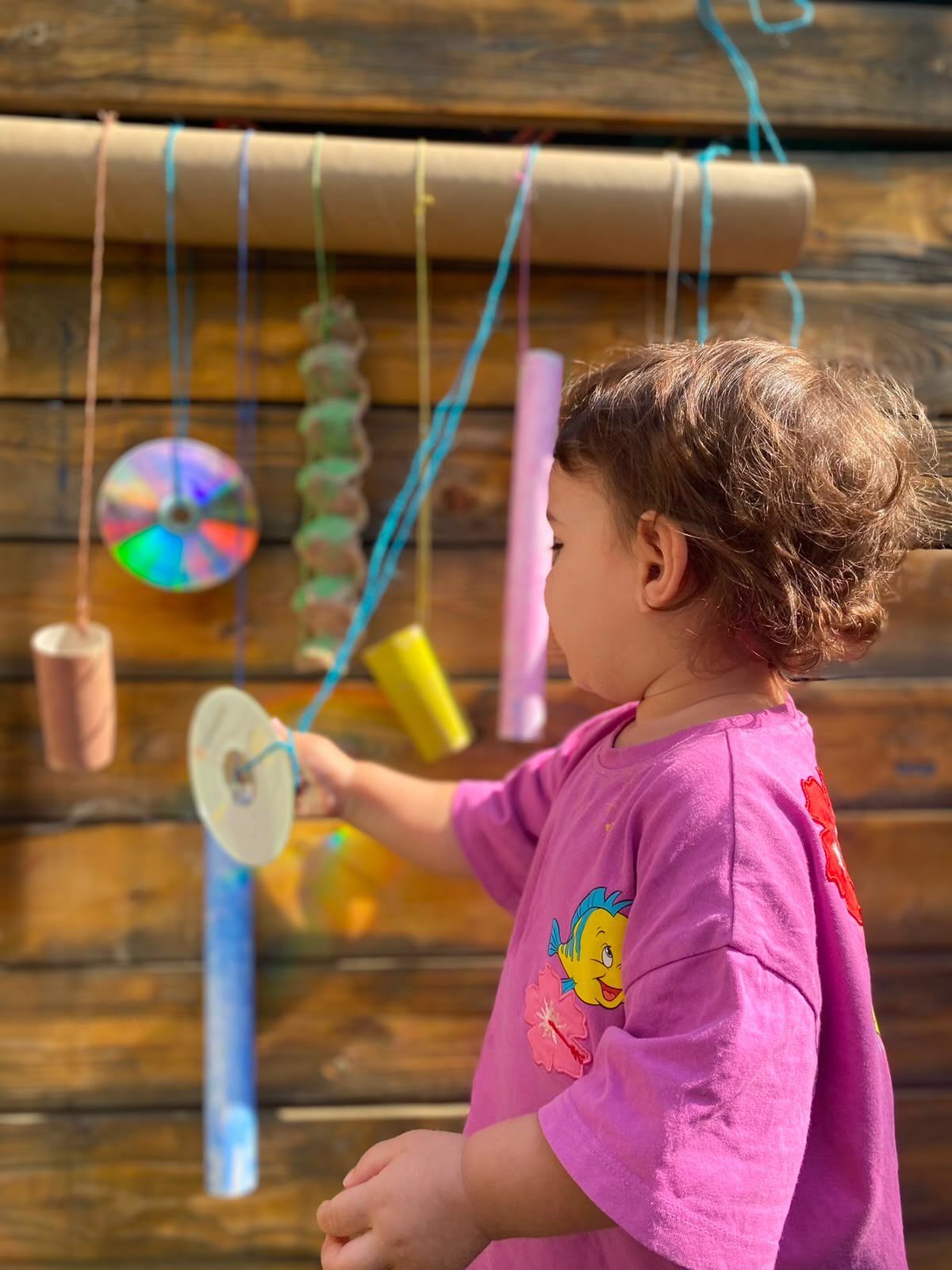
Old CDs flash unpredictable color when they spin, and the cardboard tubes from paper towels give a light rattle in breeze.
The beam is just fence rail or a closet rod screwed between posts; drill holes spaced along it and knot the strings at different lengths so nothing clumps.
I would sand the tube edges where small hands grab, and check the knots weekly. The whole thing comes down fast if weather turns, no tools needed.
16. Colorful Mesh Tunnel
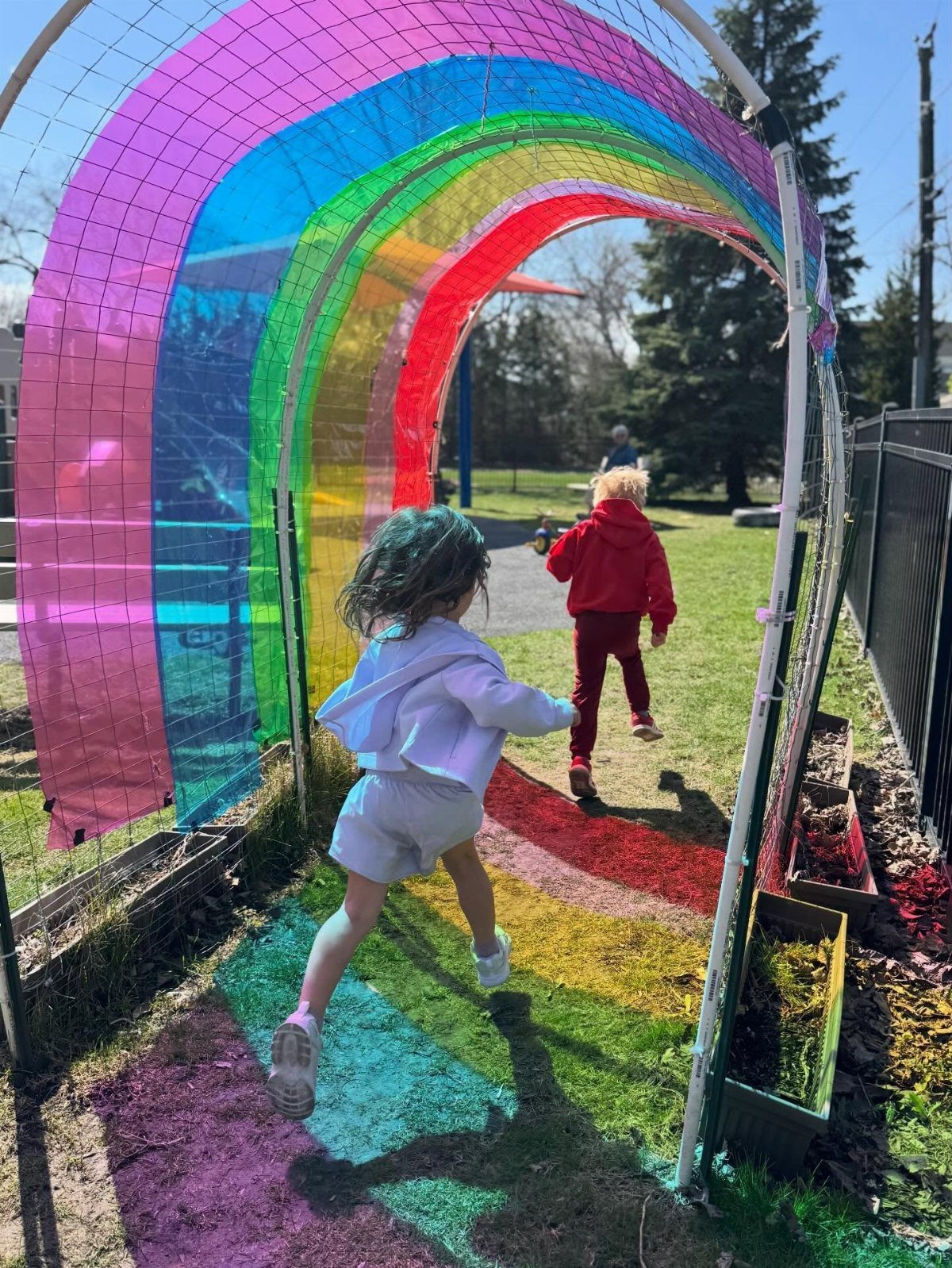
Plastic mesh in rainbow stripe turns a straight run across lawn into something a child sprints toward.
Staked in open grass like this, I would peg the ends deep and check after hard rain, since pulled stakes make a tunnel that collapses mid-crawl.
It stores folded flat in winter, no real space taken. The color against green grass is the whole point; plain green mesh would disappear.
17. Sensory Ribbon Wind Dancer
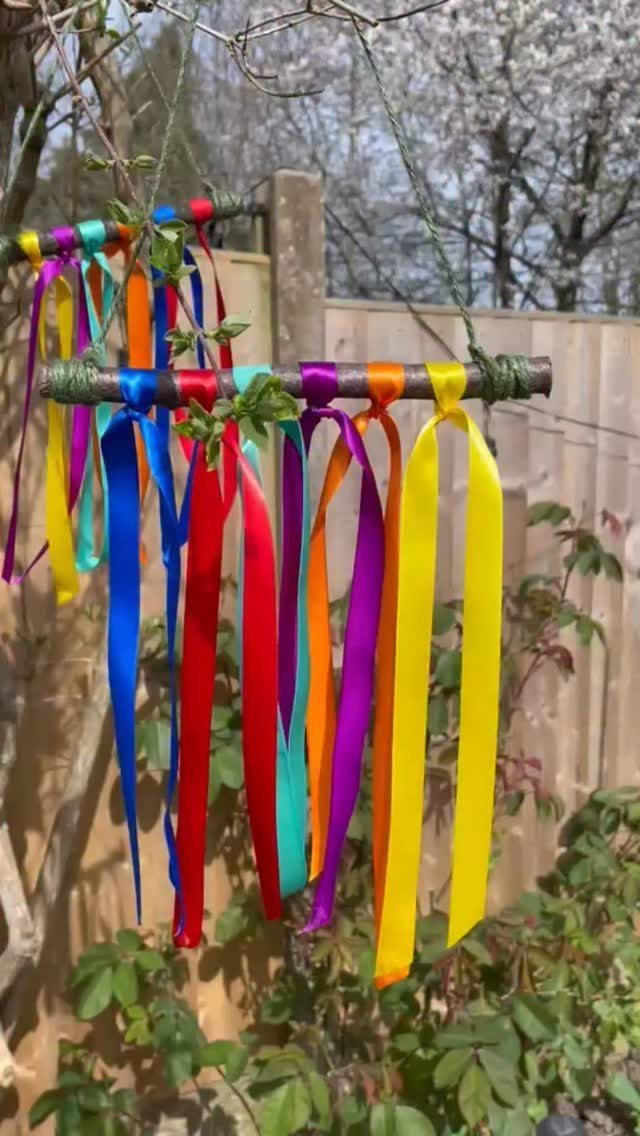
Satin ribbon catches light even on still days, and moves at a breath of air that heavier fabric ignores.
The wooden stick is short enough to handle, drilled with holes close together; I would use a dowel from the hardware bin and seal the end grain so it does not split.
Polyester satin holds color longer than silk outside and costs far less. Hang it where morning or evening light hits sideways; full overhead sun washes the color flat.
18. Trellis Water Wall Activity Station
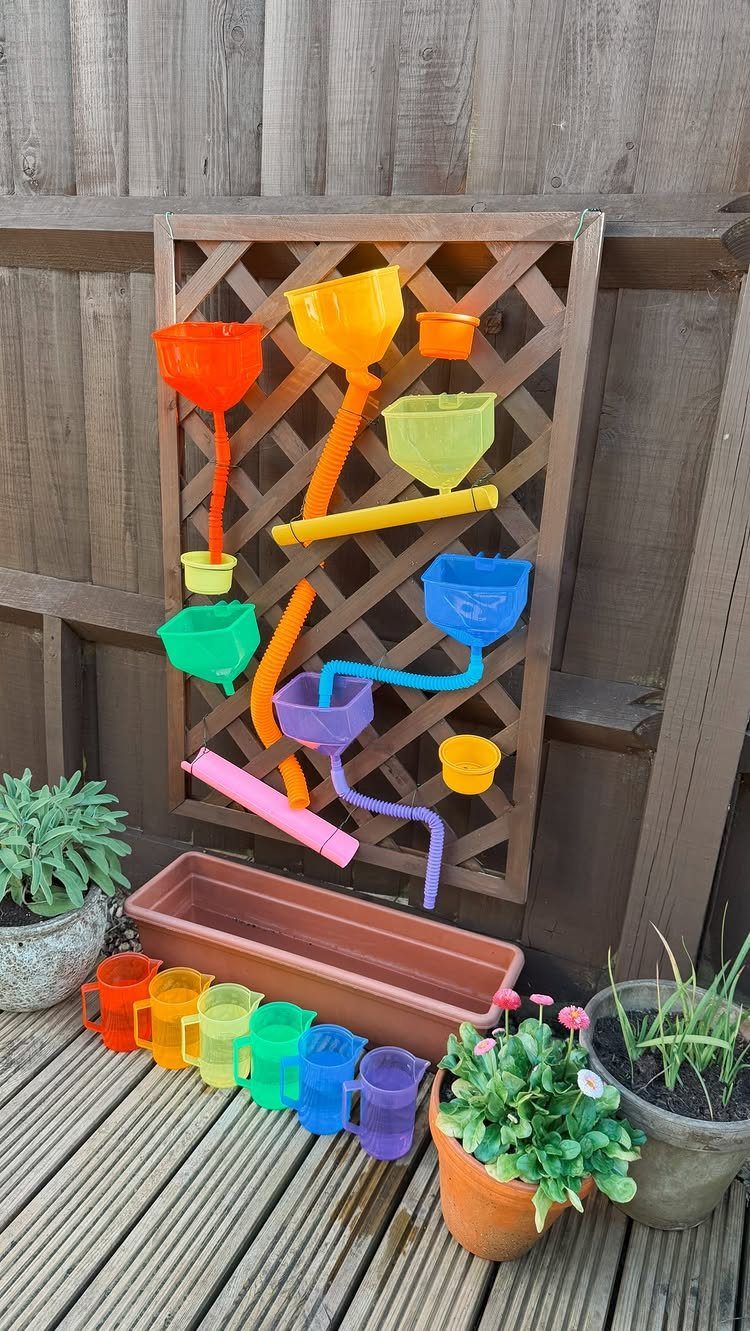
Funnels and tubes screwed to a lattice let a child pour water at the top and watch it find the bottom, physics as play.
Plastic chutes from the dollar store or cut bottles do the trick; I would add a small bucket at the base to catch runoff, then a watering can to carry it back up.
The measuring jugs are the teaching piece, guessing and checking how much fills the funnel.
I would mount the trellis at a slight angle so water moves rather than pooling, and take the whole thing inside before frost cracks the plastic.
19. Edible Tomato Archway

A garden arch thick with tomato vines turns a path into a harvest you walk through. The fruit hangs at face height and above, easy to spot and pick without bending.
For a first-home owner, cattle panel bent into an arch and sunk with T-posts costs little and carries the weight of full vines. I would plant indeterminate varieties trained up each side so they meet at the top by August.
Shade is the cost; anything under the arch gets less sun, so keep the walking surface clear or plant lettuce there early in the season.
Renters can use a freestanding folding arch in a raised bed, moved when the lease ends.
20. Black Bamboo Sound Barrier
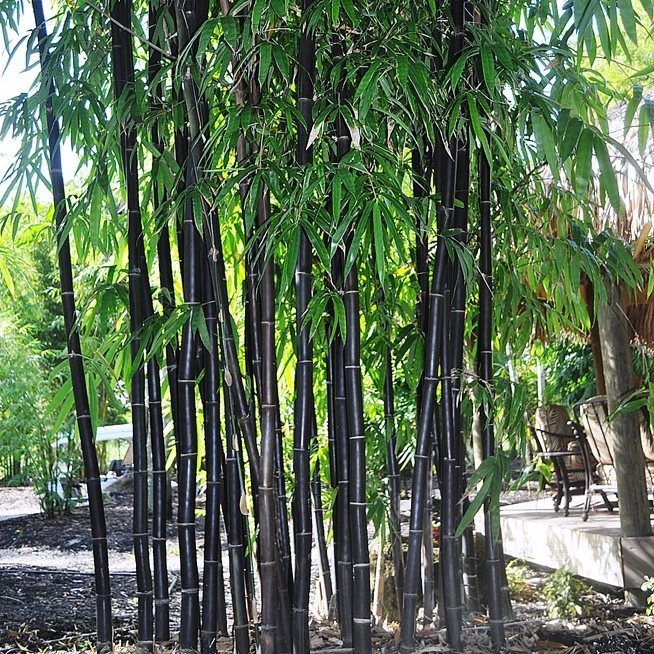
Black bamboo runs dense and tall beside a deck, the canes darkening to near-black in their second year while the foliage stays loud green and rustles at every breeze.
The sound is softer than a hardwood fence and more alive; it masks traffic without pretending to be silence.
I would plant it in a root barrier or a raised bed from the start; bamboo that escapes takes years to regret.
Clumping varieties move slowly and suit small yards better than running types, though they still need watching. The canes mature to their darkest color after a season or two, so the first year looks mostly green.
For renters, a row of tall planters with clumping bamboo gives the same screen without the permanence.
21. Illuminated Willow Twig Screen
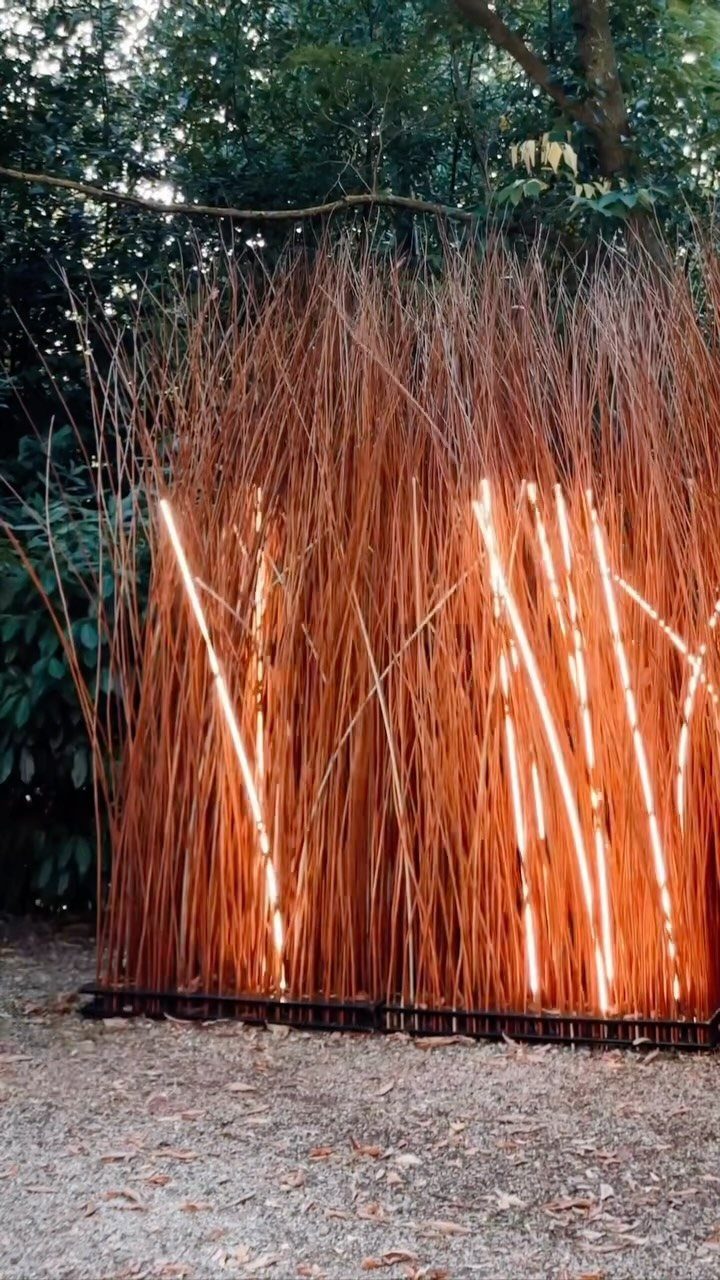
Willow branches set upright in a weighted base become a screen that breathes, the gaps between stems letting light through rather than blocking it outright.
Thread vertical LED tubes among them and the whole thing glows after dark, the warm color of the wood against cool light.
I would soak the willow fresh-cut so it stays supple while bending; dry branches snap before they curve.
The base needs real weight, concrete or sand-filled, or a gust turns your screen into kindling. Solar tubes work if the spot gets daytime sun; wired ones stay brighter but need a plan for the cable.
The screen marks a boundary without a fence permit and lifts out of a rental yard when you leave.
Benefits of Sensory Gardens
A sensory garden works on the nervous system whether you notice it or not. Moving water, shifting light, and changing texture underfoot pull attention outward, which is the same direction mindfulness practice tries to reach.
For children, this matters more concretely; the National Academy for Child Development ties sensory stimulation directly to functional skills like reading and walking. The garden becomes a space where self-regulation happens without being taught.
Physical activity in a sensory garden is not exercise as an event; it is stopping to feel a leaf, pouring water through a funnel station, or walking a textured path with bare feet.
These small movements add up across an afternoon. For adults managing anxiety or depression, the garden offers stress relief through sensory immersion rather than escape; the body stays present while the mind settles.
Children with autism, dementia in older adults, and kids with behavioral challenges all gain from environments built for multiple senses at once.
A blind child explores through touch and sound; a child in a wheelchair needs the same level path to reach the herbs. The benefit is universal because the design is specific.
“A sensory garden is something that allows you to use all your senses and be mindful,” notes Donna Soszynski, a certified horticultural therapist who works with seniors.
— AARP
Accessibility Considerations
Level ground is the starting point, not an upgrade. Cement works, but evenly packed earth paths serve the same function for canes and wheels at lower cost.
An ADA surface pad at the edge gives a cane user the warning they need before the surface changes; the sound of a fountain can serve as a directional cue if the path leads toward it.
For wheelchair users specifically, clear width matters as much as surface; a path that is level but narrow still blocks access.
Engaging Children
Children learn interoception in a garden; smelling herbs before lunch, feeling sun on skin, and doing the heavy work of digging or hauling water sharpens their sense of internal signals like hunger and temperature.
A child who notices they need water because they just watered a plant is connecting body awareness to place. Encourage them to ask for breaks, shade, or snacks; match their needs to what plants need, and the lesson sticks.
Smell-before-taste routines with herbs build timing and patience. A child who brushes rosemary on the way to a chair learns that scent arrives unplanned, which is closer to how nature works than scheduled events.
The heavy work matters too; sustained effort with the body, not just the hands, feeds the sensory systems in ways a screen does not.
When space or budget is tight, choose elements that hit multiple senses at once.
An herb garden gives smell, taste, touch, and something to do with the hands every evening; a textured path gives foot sensation and direction at the same time. The goal is density of experience, not variety of equipment.
Frequently Asked Questions
How can I create a sensory garden?
Start with one element that matters most to you, then build slowly. A solar fountain for sound, 3 herbs in matching containers for smell and taste, or a single textured path gives you the idea without a full redesign.
A sensory garden builds from pieces you add one at a time: a small water feature, herbs you brush past on a path, plants with leaves worth touching, and gravel or bark underfoot.
Each piece fits a renter’s patio or a first-home owner’s corner lot, costs a few hundred dollars, and goes in over a Saturday.
Why do people with ADHD like gardening?
Gardening with attention to scent, texture, and sound pulls the mind outward into the present moment, which is why sensory gardens help people who struggle to settle.
Water that moves, light that shifts, and surfaces that change under your hand give the senses something steady to follow; the body stays busy while the mind quiets down.
Kids get the same benefit from small acts, running soil through fingers or tipping water from can to pot, that build coordination across an afternoon without anyone calling it therapy.





